
Reviewed · SACRED VALLEY TOURS
Guided Tour in the Sacred Valley of the Incas – Cusco
Sacred Valley sights reward an early start. This 12-hour tour links Chinchero, Moray, Maras, Ollantaytambo, Urubamba, and Pisac in one long day, giving you a broad look at Inca farming, colonial life, salt production, mountain views, and fortress ruins. I like the range of places included, and I especially like that private transportation, a guide, lunch, and an oxygen ball are covered.
I also like the small maximum group of 15, which should make questions and movement easier than on a large coach. The main drawback is the packed schedule. You will spend much of the day moving between sites, and admission costs are extra. The description also combines Moray, Maras, and a 7 Colors Mountain viewpoint, so I would confirm the exact route before paying.
In This Review
- Key points to know before booking
- Why this Sacred Valley day works
- Starting at Chinchero’s terraces and colonial church
- Moray and the question of Inca farming
- Maras salt pools and an old Andean tradition
- The 7 Colors Mountain reference needs clarification
- Ollantaytambo’s terraces and fortress walls
- Urubamba lunch and the practical value of a meal break
- Pisac closes the day with terraces and valley views
- Guide quality can shape the whole day
- Is $100 good value for this route?
- Who should book this Sacred Valley tour?
- FAQ
- How long does the tour last?
- Where does the tour begin?
- Where does the tour end?
- What is included in the price?
- Are entrance fees included?
- How many people can join the tour?
- Is lunch included?
- Should you book it?
Key points to know before booking
- Six major stops in one day: Chinchero, Moray, Maras, Ollantaytambo, Urubamba, and Pisac create a broad Sacred Valley overview.
- Ollantaytambo is the star attraction: Its terraces, fortress remains, and broad views give the day one of its most powerful archaeological visits.
- Lunch is included: A buffet meal with regional dishes is served in Urubamba.
- Admission is not fully covered: Budget PEN 150 per person for the Partial Tourist Ticket and Maras entrance.
- A small group helps: The tour accepts no more than 15 people and uses private transportation.
- The schedule is demanding: The tour begins at Plaza Regocijo in Cusco and returns around 7:00 pm after roughly 12 hours.
Why this Sacred Valley day works
At $100 per person, this is not the cheapest way to see the valley, but it can be good value if you want a guide and transport without arranging several separate trips. You get a full day on the road, lunch, and visits to some of the most important sites outside Cusco.
The biggest value is variety. Chinchero shows you agricultural terraces, colonial religion, and textile work. Moray gives you an unusual Inca agricultural site. Maras adds salt pools and local tradition. Ollantaytambo brings monumental stonework, while Pisac closes the day with more ruins and valley views.
That range also creates the tour’s main weakness. Six stops sound attractive on paper, but each visit has a clock attached. You will not have unlimited time to wander, pause for photographs, or explore every corner. I would choose this outing if you want an efficient introduction to the Sacred Valley, not if you prefer slow archaeological study.
The small group limit matters. With up to 15 people, the guide can usually keep instructions clear and answer questions without shouting across a crowded bus. Private transportation also gives the day a more organized feel, although the long route still means a lot of time in the vehicle.
More Sacred Valley days out:
- From Cusco: Moray, Maras Salt Mines & Chinchero Weavers Tour
★ 4.8 · 1,925 reviews - 2-Day Tour: Sacred Valley and Machu Picchu by Train
★ 5.0 · 1,127 reviews - Cusco: Sacred Valley, Pisac, Ollantaytambo, Salt Mines Moray
★ 4.6 · 1,058 reviews
Starting at Chinchero’s terraces and colonial church
The first listed stop is the Complejo Arqueologico Chinchero, with about two hours there. This is a strong opening because it combines several layers of Andean life in one place.
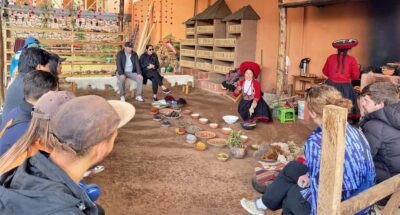
You can look across agricultural terraces built into the hills, then visit the colonial temple. The contrast is important: Inca engineering and Spanish religious architecture occupy the same setting. The stop also includes a chance to see textile production, which adds a living craft tradition to the ruins and church.
I like Chinchero because it prevents the day from becoming a simple march through stone walls. You see how farming, religion, and local production fit together. The textile process is especially useful for anyone who wants something more connected to present-day culture than archaeology alone.
Admission is not included, so keep the extra fee in mind before booking. The two-hour visit should give you enough time to see the main features, but the guide’s pacing will matter. If textile production is a priority for you, stay alert for the explanation and do not let the first photographs use up all your time.
Moray and the question of Inca farming
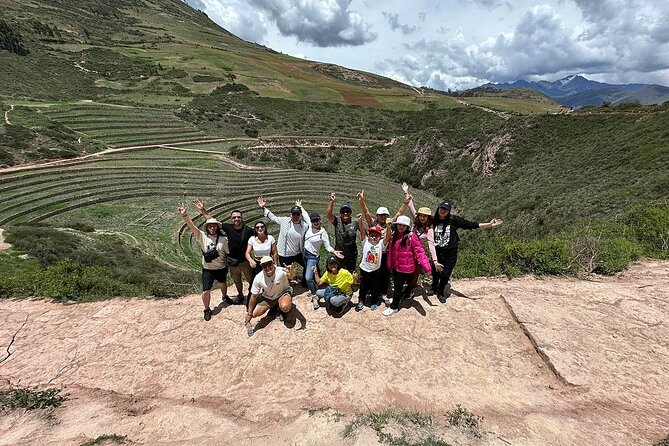
The next portion includes Moray, a site known for its circular agricultural experimentation terraces. These great rings cut into the earth are among the Sacred Valley’s most distinctive sights.
The shape makes Moray memorable, but the real interest lies in its connection to agriculture. The terraces show the care and planning that went into growing food in difficult mountain conditions. You are not simply looking at a ruin. You are looking at a place tied to how the Inca tested and managed crops.
The planned time is about two hours for this section, though the description also includes the Salineras de Maras and a separate mountain viewpoint in the same passage. That makes the timing unclear. Before departure, ask the operator how much time is assigned to Moray, how much to Maras, and whether the 7 Colors Mountain reference is actually part of this route.
That clarification is worth making because Moray rewards a calm visit. The terraces are easy to recognize from above, but a guide can help connect their design to the wider story of Inca food production. If you are trying to photograph the circular terraces, your view may be best from the designated viewing area rather than from a long walk around the site.
Maras salt pools and an old Andean tradition
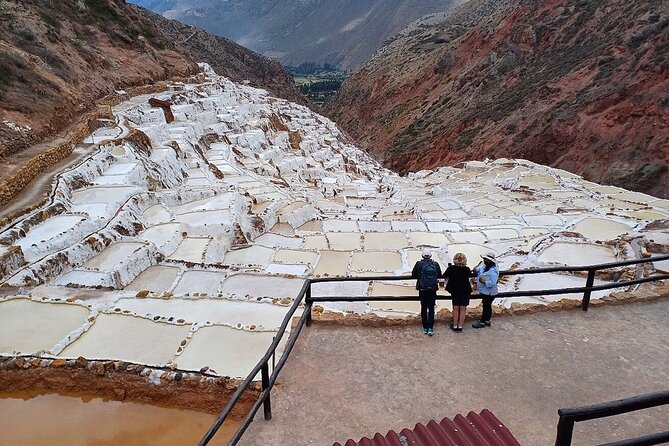
Salineras de Maras adds a completely different type of sight. Here, salt pools run across stepped terraces, creating a striking pattern on the mountainside.
The site also brings a local tradition into the day. You can learn about ancestral salt extraction and see how the pools are linked to a working practice rather than only to an ancient ruin. That gives Maras a different feel from Chinchero, Moray, Ollantaytambo, and Pisac.
The tour information says the Maras entrance is not included. It lists the Partial Tourist Ticket plus Maras entrance at PEN 150 per person. Since ticket rules and access arrangements can change, I would confirm exactly which sites the partial ticket covers and whether the stated amount is still current when you book.
The Maras section is likely to be visually strong, but your time may be limited. The broader route description gives two hours for the Moray and Maras portion, then mentions a 30-minute viewpoint stop connected with mountain colors from red to blue and green. It also refers to Cusipata and lunch before the return trip. Those details do not line up neatly with the main Sacred Valley route, so ask for a written schedule.
A few more Cusco trips worth lining up side by side
- Classic Inca Trail Trek 4D/3N to Machu Picchu (Group Service)
★ 5.0 · 8,653 reviews - Cusco: Rainbow Mountain and Red Valley Day Trip with Meals
★ 4.9 · 4,893 reviews - Machu Picchu: 4-Day Inca Trail Trek with Panoramic Train Ride
★ 5.0 · 4,568 reviews - Salkantay Classic Trek 5 Days from Cusco
★ 5.0 · 4,062 reviews
The 7 Colors Mountain reference needs clarification
A short section of the description refers to a viewpoint with striking mountain colors and a 30-minute visit. It says the limited time is linked to altitude and health concerns, and it mentions a return to Cusipata for lunch.
This sounds like material from a 7 Colors Mountain route rather than a straightforward Sacred Valley circuit. The tour otherwise lists Chinchero, Moray, Maras, Ollantaytambo, Urubamba, and Pisac. Those places form one route, while Cusipata is associated in the description with the mountain viewpoint section.
I would not treat this as a minor wording issue. The exact route affects your expectations, clothing, meal timing, and comfort. Ask JISA ADVENTURE whether the 7 Colors Mountain viewpoint is included, or whether that paragraph was placed in the wrong tour description.
If it is included, the 30-minute limit is practical for an altitude-sensitive stop, but it would make an already full day even more demanding. If it is not included, you should know that before you arrive at Plaza Regocijo.
Ollantaytambo’s terraces and fortress walls
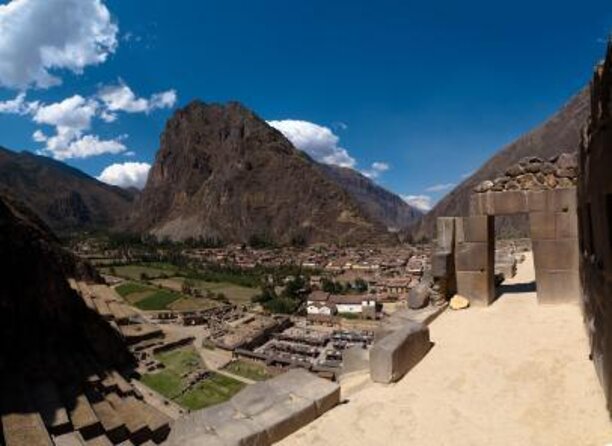
Ollantaytambo is likely to be the most impressive archaeological stop. The visit lasts about two hours and includes the fortress, terraces, archaeological remains, and wide views over the surrounding valley.
I especially like that the schedule gives Ollantaytambo a full two hours. The site needs time because its impact comes from scale. You look up at terraces and stonework, then back across the valley from higher ground. The setting helps you understand why this was more than a small settlement.
One direct account praised Ollantaytambo as a vast citadel that deserves more attention than it receives beside Machu Picchu. That is fair advice. Machu Picchu is the famous name, but Ollantaytambo offers a different experience, with large terraces and fortress remains integrated into a living town.
The listed admission for this stop is free, though the separate ticket information says admission costs are not fully included. Treat the PEN 150 ticket figure as your working budget until the operator confirms what is covered.
Wear shoes that feel secure on uneven archaeological paths. The provided information does not specify the condition of every path, so I would not assume a perfectly level walk. Two hours is enough for the main visit, but not for an unhurried exploration of every terrace.
Urubamba lunch and the practical value of a meal break
Urubamba is the meal stop, with three hours listed for the visit and a buffet lunch of typical regional dishes. The lunch is included in the $100 price.
A proper meal break matters on a 12-hour outing. You are not trying to squeeze through the whole valley on snacks, and a buffet gives you a chance to choose what suits you. The meal also lets you pause between the archaeological stops, which can make the long day feel more manageable.
The information gives Urubamba three hours, but it also describes lunch as part of the Ollantaytambo section. I would ask how much of that block is used for eating and how much is available for anything else in town. Do not assume you will have three free hours to explore.
The meal is a real part of the tour’s value, especially because private transportation and the guide are also included. Still, lunch alone should not determine your booking decision. The main reason to choose this tour is the route and the convenience of seeing several sites in one day.
Pisac closes the day with terraces and valley views
Pisac is the final major stop, with about two hours at the archaeological complex. You can see Inca architecture, agricultural terraces, and broad views across the valley.
Ending here has a clear advantage. After Chinchero, Moray, Maras, and Ollantaytambo, Pisac gives you one more look at how Inca settlements used steep mountain terrain. The terraces help you read the site as an agricultural and defensive place rather than a collection of isolated walls.
The disadvantage is timing. By the time you reach Pisac, you may have spent many hours on the road and on your feet. If you want to appreciate the site properly, save some energy for the final visit. The two-hour allocation is useful, but the return to Cusco still follows, with the tour ending at approximately 7:00 pm.
Pisac is a good final stop for people who want a broad survey of the valley. It may be less satisfying for someone who wants to spend a whole morning at one complex, but that is not the purpose of this outing.
Guide quality can shape the whole day
The guide is one of the most important parts of a tour with six stops. A strong guide can connect the sites so they feel like one story rather than a string of unrelated photo stops.
One particularly positive account names Mihai, who was described as funny, enthusiastic, informative, and kind. When one participant accidentally booked the Spanish tour, Mihai provided a special English translation. That is a useful sign of flexibility, though you should not assume every departure will have the same guide or language arrangement.
Check that you select the correct language when booking. The special translation described above was an act of help, not a service you should count on. If you need English guidance, confirm it in advance.
The guide also carries an oxygen ball, which is included. That may offer reassurance at altitude, but it does not remove the need to pay attention to your own comfort. The description says most people can participate, but the day remains long and involves high-altitude sites.
Is $100 good value for this route?
At $100 per person, the tour offers solid convenience if you want to combine transport, guiding, and lunch. Private transportation is especially useful because the stops are spread across the valley and arranging each transfer independently could take time and planning.
The price is less attractive if you already have transport, prefer to visit only one or two sites, or dislike fixed schedules. You also need to add the stated PEN 150 per person for the Partial Tourist Ticket and Maras entrance, plus tips.
The value improves if you use the guide well. Ask questions at Chinchero about the terraces and textile work, at Moray about agricultural planning, and at Ollantaytambo about the fortress and terraces. A guided day earns its price when the explanations help you see connections you might miss alone.
The tour has a maximum of 15 people, which is a reasonable compromise between cost and personal attention. It is not a private tour for one family, but it should be more manageable than a large bus group.
Who should book this Sacred Valley tour?
I would choose this experience if you have one free day in Cusco and want to cover many major sights without handling the transport yourself. It suits first-time visitors who want a broad introduction, people who value a guide, and anyone who would rather have lunch and transfers arranged.
It also suits travelers who are curious about more than ruins. Chinchero’s textile production and Maras’s salt extraction add cultural and working traditions to the archaeological stops.
I would think twice if you want a slow pace, have limited stamina for a 12-hour day, or need a fully predictable route. The 7 Colors Mountain and Cusipata references should be clarified before booking. The non-refundable policy also means you should be certain about your date and route before paying.
The tour begins at Plaza Regocijo, listed at F2M9+5X2, Cusco 08002, and returns to that meeting point. Confirmation is provided at booking, and the activity is scheduled daily during the stated operating period.
FAQ
How long does the tour last?
The tour lasts approximately 12 hours and is expected to return to Cusco at about 7:00 pm.
Where does the tour begin?
It begins at Plaza Regocijo, F2M9+5X2, Cusco 08002, Peru.
Where does the tour end?
The activity ends back at the original meeting point in Cusco.
What is included in the price?
The $100 price includes an official tourism guide, private transportation, lunch, and an oxygen ball.
Are entrance fees included?
No. The Partial Tourist Ticket and Maras entrance are listed as an additional PEN 150 per person. Tips are also not included.
How many people can join the tour?
The tour has a maximum of 15 participants.
Is lunch included?
Yes. Lunch is included and is described as a buffet featuring typical dishes from the region, served in Urubamba.
Should you book it?
Book this tour if you want a full Sacred Valley overview in one day, with transport, a guide, and lunch handled for you. The combination of Chinchero, Moray, Maras, Ollantaytambo, Urubamba, and Pisac gives you a useful mix of ruins, farming, crafts, salt production, and mountain views.
Before paying, confirm the language, the exact order of stops, and the confusing 7 Colors Mountain and Cusipata references. If the route is confirmed and you can manage a long day, $100 is a fair price for the convenience. If you prefer more time at each site, choose a shorter or more focused outing instead.
Added recently around Cusco
- Guided tour of the mountain of colors in Cusco★ 5.0 · 11 reviews
- 2-Day Private Short Inca Trail to Machu Picchu★ 5.0 · 15 reviews
- San Pedro Market Tour with Peruvian Cooking Class★ 5.0 · 31 reviews
- City Tour Cusco – Group★ 5.0 · 4 reviews
- Tour Sacred Valley with Maras and Moray★ 5.0 · 15 reviews
- Walking Culinary Experience★ 5.0 · 41 reviews
- City Tour in Cusco★ 4.5 · 10 reviews
- One Day Tour to Humantay Lagoon★ 5.0 · 8 reviews
Sacred Valley Tours, compared.
Sacred Valley & Maras Salt Mines Tour with Lunch
Read our review →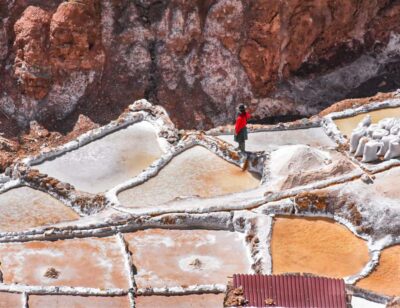
Moray, Maras Salt Mines & Chinchero Weavers Tour
Read our review →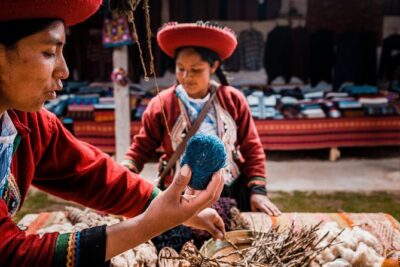
2-Day Tour: Sacred Valley and Machu Picchu by Train
Read our review →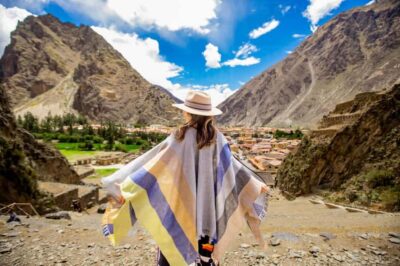
Sacred Valley, Pisac, Ollantaytambo, Salt Mines Moray
Read our review →
Chinchero,Moray & Salt Mines drop-off in Ollantaytambo
Read our review →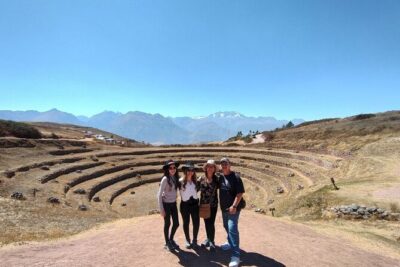
Sacred Valley and Maras Moray Tour with Full Day Buffet Lunch
Read our review →

Browse the lists this tour appears in