
Reviewed · CITY TOURS
Guided tour of the city of Arequipa in private service
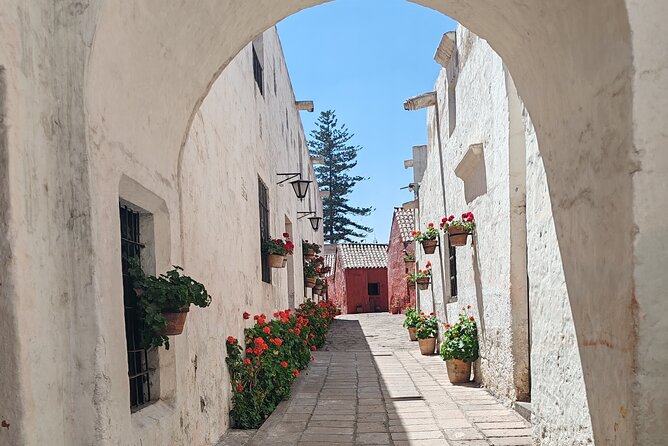
White stone gives Arequipa its bright signature. This private four-hour tour brings together San Lázaro’s sillar lanes and the remarkable Santa Catalina Monastery, two places I especially like for seeing the city’s character quickly. I also like the personal format, since only your group takes part and guides such as Gisela, Giselle, Abelardo, and Maya have been praised for clear explanations and friendly help.
The main consideration is pace. Six stops in about four hours means you get a useful first look, but Santa Catalina and the market deserve time, and the walking can feel brisk if you pause often for photos. The tour costs $59 per person, a fair price for a private guide plus both major entrance tickets, though it is less appealing if you only want a short orientation around the main square.
In This Review
- What makes this Arequipa tour worth considering
- Why this four-hour route works for a first visit
- San Lázaro and the city’s white volcanic stone
- Mundo Alpaca, with llamas and fiber products
- Santa Catalina Monastery deserves the longest stop
- The Church of the Society of Jesus and San Ignacio Dome
- Plaza de Armas and the Cathedral exterior
- San Camilo Market shows everyday Arequipa
- The private guide is the main advantage
- Timing, walking, and practical value
- Who should book this city tour?
- Should you book it?
- FAQ
- How long does the Arequipa city tour last?
- What is the price per person?
- Is this a private tour?
- Where does the tour begin?
- Where does the tour end?
- Is Santa Catalina Monastery admission included?
- Is admission to the Church of the Society of Jesus included?
- Are tips included in the price?
- Can I cancel for a full refund?
- What happens if bad weather cancels the tour?
What makes this Arequipa tour worth considering
- San Lázaro begins the tour with white volcanic stone, narrow streets, small squares, and the oldest group of houses in Arequipa.
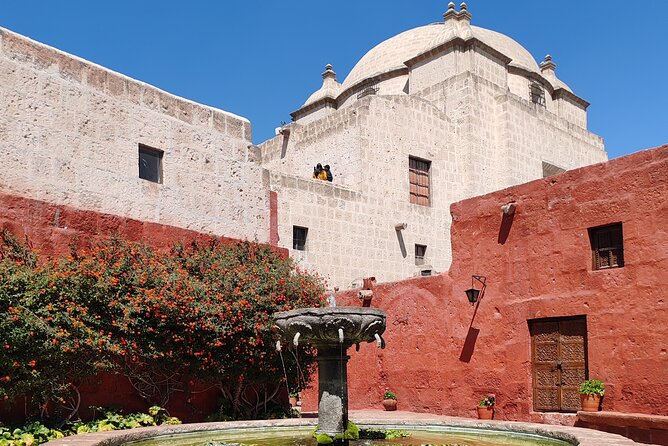
- Santa Catalina Monastery receives a full hour, giving you time to see former cells, cloisters, and important sections of the convent.
- The private format keeps the visit personal, with your own group rather than a large shared party.
- Mundo Alpaca combines animal viewing with shopping, including llamas, alpacas, and fiber products.
- San Camilo Market shows everyday Arequipa, from potatoes and fruit to meat stalls and alternative medicine.
- The tour ends at Plaza de Armas, leaving you in the center of the city with an easy starting point for more sightseeing.
Why this four-hour route works for a first visit
Arequipa can seem easy to understand at first. The Plaza de Armas is compact, the historic center is walkable, and many buildings use the same pale volcanic stone. Yet the city makes more sense when someone explains how its architecture, convents, churches, markets, and regional products fit together.
This route gives you that basic framework without spending a whole day in a vehicle. You move through traditional streets, a fiber shop and animal center, a major convent, a Jesuit church, the main square, and a working market. That mix is more useful than a tour that only circles the postcard sights.
The tour begins at C. Zela 200 B and finishes in the central area, normally at Plaza de Armas. Since only your own group participates, you can ask questions as you go. Guides have also offered a choice between English and Spanish, which is worth confirming when you meet.
At $59 per person, the value depends partly on group size. For one or two people, the private service costs more than a basic shared walking tour, but the fee includes entrance to Santa Catalina and the Church of the Society of Jesus. For a small family or group of friends, the price becomes easier to justify because the guide’s attention is not divided among strangers.
More City Tours in Arequipa
- Arequipa: Walk through the Historic Center of the City
★ 4.9 · 87 reviews - Arequipa Walking Tour city center and drinks experience
★ 5.0 · 72 reviews - Arequipa Food Tour: Ancestral Cuisine & City Tour
★ 5.0 · 52 reviews
San Lázaro and the city’s white volcanic stone
San Lázaro is a smart opening stop because it introduces Arequipa through its buildings rather than through a lecture. It is described as the oldest group of houses in the city, and its homes, streets, and small squares are made largely from sillar, the white volcanic stone used across Arequipa.
Allow about 20 minutes here. That is enough for an introduction and some photographs, especially if your guide points out how the stone shapes the city’s appearance. The pale walls catch the light well, making this one of the better places for photos and selfies at the start of the day.
I like this stop because it gives context before you enter the grander monuments. Arequipa’s churches and mansions can look impressive on their own, but San Lázaro helps you see that the material is part of the city’s identity, not just a decorative choice.
The drawback is the short visit. You will not get a long neighborhood walk in 20 minutes. Think of San Lázaro as a visual introduction, not a detailed exploration of every lane.
Mundo Alpaca, with llamas and fiber products
The next stop lasts about 30 minutes at Mundo Alpaca. The visit combines animal viewing with an explanation of products made from llama and alpaca fibers, which are valued for their quality.
This is a lighter stop after the architecture. You can see the animals and look at the range of fiber goods, while your guide explains the differences between llama and alpaca products. That distinction is useful if you plan to shop later and want to understand what you are buying rather than choosing by appearance alone.
The stop is described as a zoo store, so it is not a full wildlife visit. You should expect a compact commercial and educational experience, not a long rural encounter with herding communities. Still, it adds a local industry to the day and gives families a change of pace.
One guide, Abelardo, was specifically praised for explaining the differences between alpaca and llama products. That is the kind of small detail that can make this stop more worthwhile. If you are interested in textiles, ask direct questions about the fibers and the products on display.
Santa Catalina Monastery deserves the longest stop
Santa Catalina is the centerpiece of the tour, with about one hour inside. The entrance is included, and that matters because this is the stop where the tour’s admission costs begin to earn their keep.
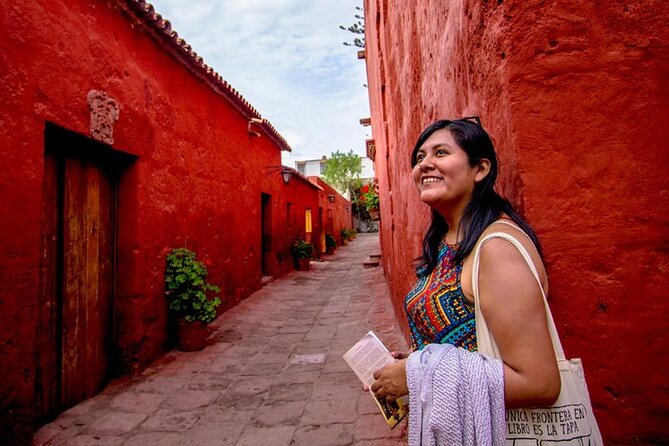
The convent is one of Latin America’s most striking religious complexes. You move through former cells and other important areas where cloistered nuns lived out their religious commitments. Your guide provides the background that turns a series of colorful rooms, walls, and courtyards into a place with human stories.
I like the way this visit balances architecture and daily life. You are not only looking at painted surfaces and stonework. You are also considering how women lived inside the convent, how their cells functioned, and why the complex became such an important part of Arequipa’s past.
One hour is a useful amount of time, but it is not excessive. If you enjoy photography, you may want more time than the schedule allows. The tour includes the main sections, yet you should avoid lingering too long in the first courtyard if you want to keep pace with the guide.
Several strong responses to the tour singled out Santa Catalina as one of the best parts of the experience. That makes sense. It is the site most likely to reward a guided visit because the setting is visually striking, while the background information gives the rooms real meaning.
A few more Arequipa trips worth lining up side by side
- 2 day 1 night trek / Colca Canyon
★ 5.0 · 1,069 reviews - From Arequipa: Colca Canyon Full-Day Guided Tour with Meals
★ 4.5 · 982 reviews - Tour to the Salinas Lagoon and National Reserve in Arequipa
★ 4.5 · 548 reviews - From Arequipa: Sillar Route Trek
★ 4.2 · 461 reviews
The Church of the Society of Jesus and San Ignacio Dome
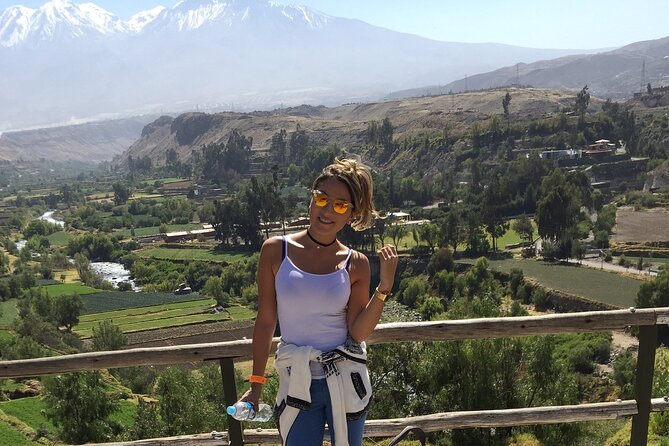
The Church of the Society of Jesus receives about 30 minutes. You will first see its 18th-century Mestizo Baroque façade, then enter to view the Dome of San Ignacio and its detailed artwork. Admission is included.
This stop adds a different architectural style to the convent. The exterior uses the city’s familiar volcanic stone, but the decoration is more elaborate. Inside, the dome gives you a chance to see the visual side of Jesuit religious art, while the nearby cloisters show the former Jesuit college and its use of local stone.
The time is short, so this is another place where the guide’s explanations matter. Without context, you may spend the whole visit looking at ornament. With a good guide, you can connect the façade, dome, cloisters, and former college to the religious institutions that shaped the city.
The Church of the Society of Jesus was also singled out as a highlight. I would pay close attention here, especially if you enjoy architecture or religious art. If Santa Catalina is the tour’s most atmospheric stop, this church is its most concentrated burst of decoration.
Plaza de Armas and the Cathedral exterior
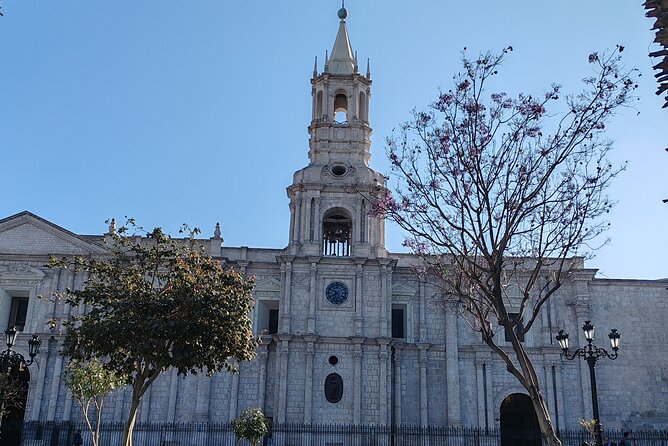
The Plaza de Armas takes about 20 minutes. Your guide explains the history of Arequipa and points out the Cathedral, described as a Minor Basilica. The visit focuses on the exterior, so do not expect cathedral interior access as part of this tour.
The square is a natural place for the guide to connect the earlier stops. You have seen residential sillar buildings, a convent, a Jesuit church, and local products. Here, those pieces come together in the city’s main civic setting.
The short stop also has a practical benefit. The tour ends in this central area, so you can remain nearby after the guide leaves. You may want to return for more photos, find a restaurant, or continue exploring on your own.
Because the Plaza de Armas is a public space, this part of the tour is more about orientation than entry. If you prefer interior visits, Santa Catalina and the Society of Jesus will be more satisfying.
San Camilo Market shows everyday Arequipa
The final major stop is San Camilo Market, with about 45 minutes. This is where the tour shifts from monuments to daily life. You see sections for meat, potatoes, fruit, and alternative medicine, along with the regional products that give the market its local feel.
I like this part because markets show a city in use. Grand buildings tell you how a city wanted to present itself. A food market shows what people buy, sell, cook, and discuss in ordinary life.
Your guide can also help you handle the social details. One guide gave practical advice about customary behavior when entering a market and buying from merchants. That kind of help is more useful than a list of stall names. It can keep you respectful and make the visit feel less awkward.
The market may not suit everyone. Meat areas and alternative medicine stalls can be direct and visually intense, and you should expect a working market rather than a polished food hall. If you prefer carefully arranged displays, this may be your least comfortable stop. If you want a closer look at local customs, it is one of the most useful.
Forty-five minutes is enough for an introduction, but not enough to examine every section. Keep your group together and listen for the guide’s instructions. The market is part of the tour’s value, but it is also the point where you should be most alert to your surroundings and belongings.
The private guide is the main advantage
The strongest feature of this experience is not simply the route. It is the guide. A private service gives you room to ask about architecture, religion, local products, or market customs without waiting for a large group to catch up.
Guides named Gisela, Giselle, Gysela, Abelardo, and Maya have been associated with especially warm feedback. The recurring praise centers on friendliness, clear explanations, patience, and the ability to make the walk enjoyable. Gisela was also praised for asking whether the group preferred English or Spanish, then adapting to that choice.
That personal attention matters in Arequipa. A guide can point out details in sillar, explain why a convent was organized as it was, and help you understand the difference between llama and alpaca goods. Those are small moments, but they give the day more purpose.
The experience is not built around speed or a long list of obscure stops. It is a well-shaped introduction. You see the major sights, receive historical and cultural context, and finish with a market visit that feels less formal than the churches and convent.
Timing, walking, and practical value
The tour lasts approximately four hours and includes several walking stops. The information provided says most people can participate, the route is near public transportation, and service animals are allowed.
The meeting point is C. Zela 200 B in Arequipa. The endpoint is in the central area, such as Plaza de Armas. Since the finish is not a return to the starting point, plan the rest of your day from the square rather than assuming you will be taken back.
The tour is usually booked about 27 days ahead. That does not prove every date fills early, but it is a useful planning signal if your schedule is fixed. Confirmation arrives at booking.
The price includes the guide, Santa Catalina admission, and admission to the Church of the Society of Jesus. Tips are not included. At $59 per person, I see the best value for people who want an efficient introduction and personal help understanding the sights. It is less compelling if you already know the historic center or prefer to visit each site independently.
You should also account for the weather rule. The experience requires good weather, and if poor weather causes cancellation, you are offered another date or a full refund. For your own cancellation, you must cancel at least 24 hours before the start time for a full refund. Changes or cancellations inside that period are not accepted.
Who should book this city tour?
I would recommend it to a first-time visitor who wants the main historic sights without arranging separate admissions, guides, and market visits. It also suits people who prefer conversation and questions over a large scheduled group.
Families may appreciate the changing rhythm. San Lázaro offers photos, Mundo Alpaca adds animals and textiles, Santa Catalina supplies the major cultural visit, and San Camilo provides a more everyday setting. The route does not ask you to stare at churches for four straight hours.
It is also a good choice if you want both English and Spanish support, since guides have asked guests which language they prefer. Art and architecture fans will get the most from Santa Catalina and the Society of Jesus, while shoppers may find Mundo Alpaca especially useful.
I would hesitate if you want a slow photographic walk, a full market visit, or extensive time inside every church. The schedule is practical, but it is packed. You will see the highlights rather than explore each stop at length.
Should you book it?
Book this tour if you want a private, well-paced introduction to Arequipa with Santa Catalina, the Society of Jesus, sillar architecture, alpaca products, and San Camilo Market in one morning or afternoon.
At $59 per person, it is a sensible deal when you value a guide’s explanations and are traveling with a small group. The main tradeoff is limited time at each stop, especially if you photograph everything. For a first visit, though, the mix is strong, the endpoint is convenient, and the guides’ friendly approach can help you get your bearings before exploring Arequipa on your own.
FAQ
How long does the Arequipa city tour last?
The tour lasts approximately four hours.
What is the price per person?
The listed price is $59 per person.
Is this a private tour?
Yes. Only your group participates in the activity.
Where does the tour begin?
The meeting point is C. Zela 200 B, Arequipa 04000, Peru.
Where does the tour end?
The tour ends in central Arequipa, such as Plaza de Armas.
Is Santa Catalina Monastery admission included?
Yes. Admission to the Monastery of Santa Catalina is included.
Is admission to the Church of the Society of Jesus included?
Yes. Admission to the Church of the Society of Jesus is included.
Are tips included in the price?
No. Tips are not included.
Can I cancel for a full refund?
Yes, if you cancel at least 24 hours before the experience start time. Cancellations made less than 24 hours before the start are not refunded.
What happens if bad weather cancels the tour?
You will be offered a different date or a full refund if poor weather causes the experience to be canceled.
Added recently around Arequipa
- gazebos cannon of the coca★ 5.0 · 28 reviews
- Sillar Route★ 5.0 · 4 reviews
- Salinas Lagoon + Mini Volcano DE Lojen★ 5.0 · 9 reviews
- Full Day Tour To The Salt Lake Salinas in Arequipa★ 4.5 · 34 reviews
- 3-Day Colca Canyon trek with Professional Guide★ 5.0 · 40 reviews
- Trekking, Waterfalls and Thermal Baths★ 4.5 · 47 reviews
- Walking Tour Arequipa Including Santa Catalina Monastery★ 4.0 · 8 reviews
- Walking City tour including the Monastery of Santa Catalina★ 5.0 · 6 reviews
City Tours, compared.
Lima Half-Day City Walking Tour (Small Groups)
Read our review →
Half-Day City Tour with Sacsayhuaman and Q’enco
Read our review →
City Tour Panoramic Bus Departure From Larcomar
Read our review →
City Tour Cusco Qoricancha Sacsayhuaman y Tambomachay
Read our review →
Lima’s Vibrant Heritage: Exploring the City’s Landmarks Half-day
Read our review →
Sightseeing Tour of the City on an Open-Top Bus
Read our review →
Lima City, Central Market & Catacombs Tour (Pick-up & Drop Off)
Read our review →Browse the lists this tour appears in