
Reviewed · LAKE TITICACA TOURS
Lake Titicaca Tour from Cusco along the Sun Route
Lake Titicaca earns its place on your Peru itinerary. This two-day journey combines the Sun Route’s churches, Inca ruins, and high mountain scenery with a calmer visit to the Uros Floating Islands and Taquile Island. I like the practical overnight in Puno, and I like that guides such as Hannah, Ruben, Abel, and Ricardo have been praised for being warm, patient, and clear. The main drawback is altitude: La Raya reaches 4,335 meters, and both days include long stretches of road and walking.
At $231 per person, the tour gives you a useful bundle: tourist-class transport from Cusco, a three-star Puno hotel, guides, boat transport, entrance fees to Uros and Taquile, and meals. You still pay for the Sun Route admission fees, dinner, personal costs, and the optional reed boat ride, so keep a little extra cash handy.
In This Review
- Key points at a glance
- Why this Cusco to Puno route works well
- Andahuaylillas and the painted Church of San Pedro
- Raqchi, where Inca engineering meets worship
- Sicuani lunch and the long climb to La Raya
- Pucará and the story behind the toritos
- A proper overnight in Puno
- Uros Floating Islands: culture, reeds, and careful expectations
- Taquile Island and its uphill path
- What the $231 price really covers
- Who should book this two-day experience?
- My verdict: a strong bridge between Cusco and the lake
- FAQ
- Where does the tour start in Cusco?
- Where does the experience finish?
- How long is the tour?
- Is the tour offered in English?
- How large is the group?
- Is accommodation included?
- Are the Uros and Taquile entrance fees included?
- Are the Sun Route entrance fees included?
- Is lunch included?
- How much does the optional Uros reed boat ride cost?
Key points at a glance
- La Raya reaches 4,335 meters: Step out briefly for mountain views, alpacas, and a sharp reminder that the Altiplano is serious high country.
- The Sun Route is more than a transfer: Andahuaylillas, Raqchi, and Pucará give the journey cultural weight before you reach the lake.
- The overnight in Puno improves the pace: You avoid cramming the Cusco road journey and island boat trip into one exhausting day.
- Taquile includes a real uphill walk: The views and local lunch are rewarding, but this is not a sit-down-only island visit.
- Uros is a living community visit: You learn how totora reeds form the islands and can pay about 15 soles for a traditional reed boat ride.
- The group is capped at 15 people: That is small enough for guide interaction without the cost of a private tour.
Why this Cusco to Puno route works well
The road from Cusco to Puno is often treated as a necessary transfer. That is a mistake. The Sun Route turns the trip into a full day of Andean culture, architecture, archaeology, food, and scenery.
You leave from Av. Pacifico 9 in Cusco at 7:30 a.m. The tourist-class bus includes onboard amenities, and a professional bilingual guide accompanies the journey. The group size is limited to 15, which matters at the smaller cultural sites. You can ask questions without having to compete with a busload of people.
The tour is offered in English, with guiding in English and Spanish. That makes it suitable if you want explanations rather than a simple point-to-point ride. The guides praised most warmly by name are Hannah, Ruben, Abel, and Ricardo. Their strengths were friendliness, patience, humor, and the ability to explain local traditions in a way that stayed engaging.
The route is long, though. You should see it as a full sightseeing day, not a quick shuttle. The reward is that the major stops break up the ride and show you several layers of southern Peru before Lake Titicaca comes into view.
More Lake Titicaca Tours in Cusco
- 6-Day Best of Peru: Cusco, Machu Picchu, and Lake Titicaca Tour
★ 5.0 · 123 reviews - Full Day Lake Titicaca Tour from Cusco
★ 4.5 · 91 reviews - From Cusco: 2-Day Lake Titicaca Tour
★ 4.4 · 74 reviews
Andahuaylillas and the painted Church of San Pedro
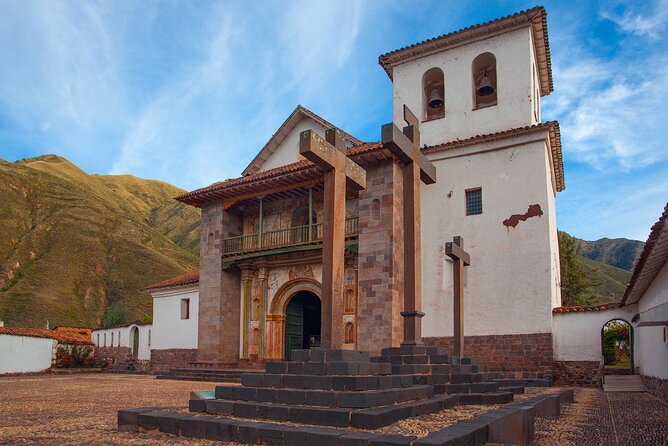
Your first stop is Andahuaylillas, where you spend about 45 minutes inside the 17th-century Church of San Pedro. From the outside, the church may look modest. Inside, it is a dense display of murals, gilded altars, ornate woodwork, and baroque decoration associated with the Cusco School.
I find this stop valuable because it explains cultural change through art. Your guide can point out how Catholic imagery was presented within an Andean setting, helping you see the church as more than a pretty colonial building. The murals and ceiling decoration were meant to teach, persuade, and reshape belief.
Admission is included at this stop. Forty-five minutes is enough for a focused visit, though anyone fascinated by colonial painting may wish for more time. Keep your attention on the details overhead and around the altars. This is one of those interiors that rewards looking slowly rather than taking a quick photograph and moving on.
Raqchi, where Inca engineering meets worship
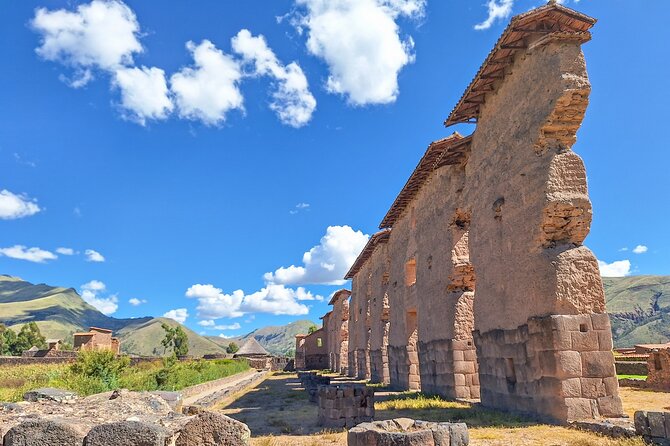
At the Parque Arqueologico de Raqchi, you spend about an hour among the remains of an important Inca sanctuary dedicated to Wiracocha, the creator god. The site includes the remains of the Great Temple’s tall central wall, storehouses, ceremonial spaces, and aqueducts.
Raqchi is especially good for showing the practical side of Inca power. The storehouses point to organized food distribution, while the aqueducts reveal careful management of water. The temple remains add the religious setting, so your guide can connect engineering, ceremony, and imperial administration in one place.
The entrance fee is not included. You pay it directly, and this is one reason to carry local currency. The supplied information does not give the exact admission price, so check the current amount before you go rather than assuming the $231 covers every Sun Route site.
The site is open and exposed. I would use this stop to adjust to the sun, wind, and altitude. The visit is not technically described as difficult, but uneven archaeological ground and high elevation can make an hour feel longer than it sounds.
Sicuani lunch and the long climb to La Raya
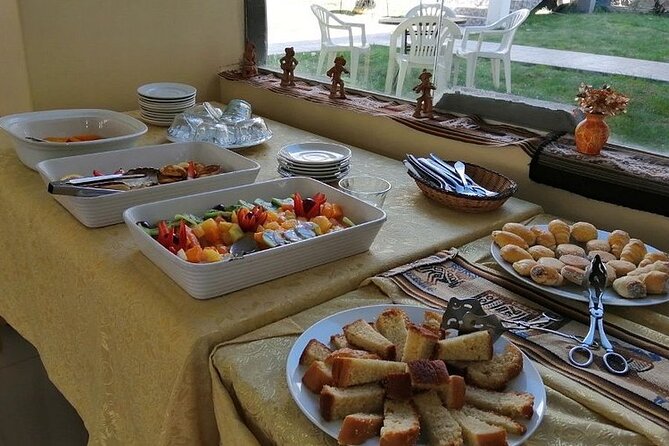
The Sicuani stop gives you about an hour for a buffet lunch. The meal includes regional Andean food such as soups, vegetables, quinoa dishes, and grilled meats. It is a useful pause after the morning sites, and the restaurant provides a comfortable place to sit before the road climbs higher.
This is not the moment to expect a long, leisurely meal with endless choices. Think of it as a well-timed refueling stop. You can try several local flavors, eat something familiar if the altitude has affected your appetite, and get ready for the next part of the route.
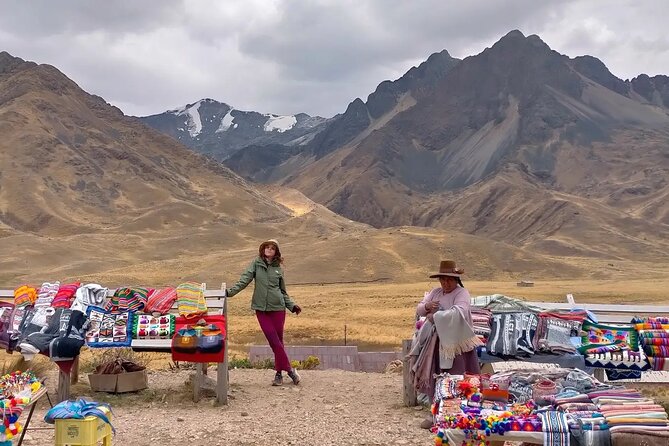
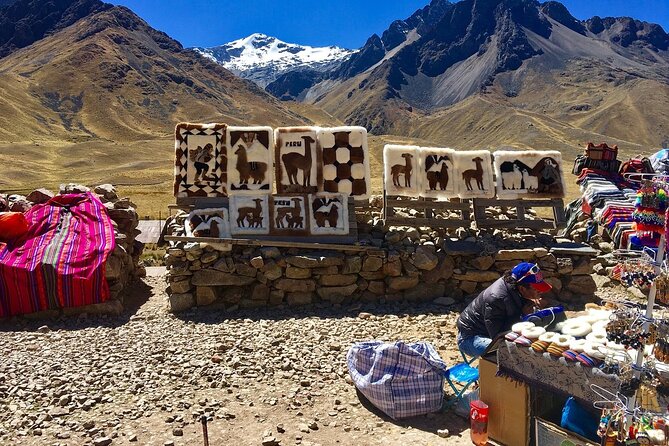
La Raya Pass is the high point of the journey at 4,335 meters. You stop for about 15 minutes to see snow-capped peaks, broad high-altitude plains, and grazing alpacas. The short stop is enough for photographs and fresh air, but the altitude is no joke.
If you are sensitive to elevation, move slowly when stepping off the bus. Do not sprint toward the best photograph. The pass marks a natural divide in the Andes, and the guide explains its geography and cultural importance. Even with only 15 minutes, it can become one of the most memorable moments of the road trip.
More of Lake Titicaca by boat:
- From Cusco: Titicaca Lake – Full day tour with sleeper bus
★ 3.9 · 72 reviews - From Cusco: 2-Night Lake Titicaca Excursion
★ 3.7 · 62 reviews - From Cusco to Lake Titicaca: 2-Day Homestay Tour
★ 4.5 · 56 reviews - Lima Machupicchu and Lake Titicaca Tour 9 days
★ 5.0 · 51 reviews
Pucará and the story behind the toritos

The final cultural stop on the route is Pucará, where you spend about 40 minutes in the Lithic Museum. The collection includes carved monoliths, ceremonial figures, and pottery linked to the ancient Pucará culture, which developed in the Altiplano long before the Inca period.
This stop gives you useful context. Without it, Lake Titicaca can seem like a place defined only by the Inca and modern island communities. Pucará reminds you that the high plateau supported complex societies for centuries before the empire most visitors know best.
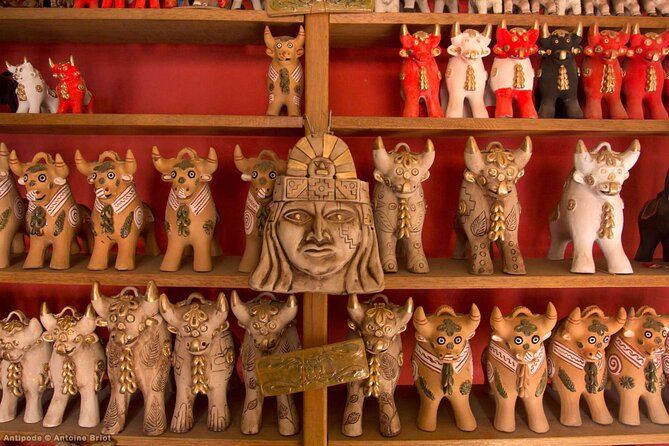
You also learn about the famous Toritos de Pucará. These small ceramic bulls are associated with protection and prosperity and remain a familiar symbol in the region. The museum is compact, so 40 minutes is a sensible amount of time.
The admission fee is listed as free for this stop, while the wider Sun Route entrance costs are not included. That distinction is worth noting because the package includes transport and guiding, but not every archaeological admission along the road.
A proper overnight in Puno
You arrive in Puno in the late afternoon and stay at a three-star hotel with breakfast. This overnight is one of the tour’s smartest features. Instead of reaching Puno and immediately rushing to a boat, you have an evening to rest, eat dinner on your own, or take a short walk around the lakeside city.
Dinner is not included, nor are evening drinks, snacks, or personal purchases. That keeps the package price reasonable, but you should budget for the evening. The hotel is described as comfortable rather than luxurious, so book this tour for convenience and location in the schedule, not for a resort-style stay.
The overnight also gives you a chance to adjust before the lake excursion. Puno is high, and the following day includes a boat trip and an uphill walk on Taquile. A night in town is much kinder to your body than a rushed same-day connection from Cusco.
The package includes breakfast at the hotel. At the end of the lake day, you are taken to the Puno bus terminal or your hotel, depending on your onward plans. That final transfer is particularly useful if you are continuing by bus and do not want to arrange a taxi while carrying luggage.
Uros Floating Islands: culture, reeds, and careful expectations
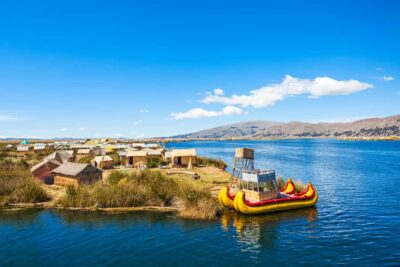
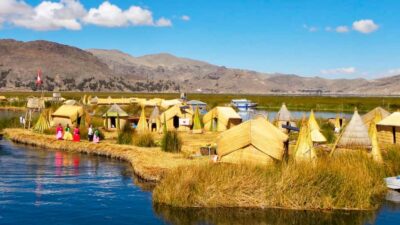
The Lake Titicaca portion begins with the Uros Floating Islands. You spend about 90 minutes learning how the islands are built from totora reeds and meeting local families who maintain the platforms using traditional techniques.
The construction itself is the key lesson. The islands are not simply a scenic platform placed on the lake for tourists. They require ongoing work and a relationship with the reeds, water, weather, and community. Your guide explains how daily life and older customs continue in this unusual setting.
An optional traditional reed boat ride costs about 15 soles, paid directly to the community. It is not included, so decide on the spot based on your interest and budget. You should also carry money for small personal expenses and souvenirs.
The Uros visit is brief. You will get an introduction rather than a complete picture of community life. Keep that in mind and listen carefully to the explanations. The visit works best when you treat the island as a living community, not just a photo stop.
Taquile Island and its uphill path

Taquile is the more extended island visit, with about four hours allocated to walking, food, local culture, and views across the lake. The island is known for its textile traditions, communal way of life, and wide views over Lake Titicaca.
You should expect a scenic uphill walk. The supplied details do not give a distance or exact grade, but the walk is an important part of the visit. At this altitude, even a modest climb can take effort. Walk at your own pace and do not spend all your energy at the start.
Taquile’s textile art is central to the experience. Your guide explains the island’s weaving traditions and the social value of the work. The island is also known for community gathering points, where the connection between craft, local identity, and shared life becomes easier to understand.
Lunch is prepared by a local family and is included. The meal is more than a practical break. It lets you eat in a setting you would be unlikely to arrange independently, while supporting the people who live and work on the island. Previous visitors have singled out both the food and the location as highlights.
The boat timing is designed to give you time on both Uros and Taquile before returning to Puno in the late afternoon, around 4:30 to 5 p.m. You are not simply stepping off the boat, taking one photograph, and hurrying back. Still, the schedule is fixed, so stay aware of meeting times.
What the $231 price really covers
At $231 per person, this is not the cheapest way to get from Cusco to Puno. A basic bus ticket would cost less. The value comes from combining transport with interpretation, multiple cultural stops, a hotel night, meals, boat transport, and the final Puno transfer.
Included in the price are:
- Tourist-class bus from Cusco to Puno on the Sun Route
- Professional bilingual guide
- Three-star hotel in Puno with breakfast
- Round-trip boat transportation on Lake Titicaca
- Entrance fees to the Uros and Taquile communities
- Buffet lunch in Sicuani
- Traditional lunch on Taquile
- Local taxes and service charges
- Drop-off at a Puno hotel or bus terminal
You should add money for dinner, snacks, drinks, souvenirs, tips, insurance, the optional reed boat, and Sun Route admission fees. Tips for guides, drivers, and boat staff are optional but appreciated.
For me, the strongest value is the overnight structure. The tour does not force you to choose between the Sun Route and Lake Titicaca. You get both, with a night to pause in Puno. If you already have transport and a hotel arranged, the package may feel less useful. If you want one organized connection between Cusco and the lake, it is a practical deal.
Who should book this two-day experience?
I would recommend this tour to you if you want cultural variety and prefer not to organize several separate bookings. It suits first-time visitors to southern Peru who want to see colonial art, Inca remains, the Altiplano, Puno, Uros, and Taquile in one coordinated trip.
It also works well for people who value a guide. The named guides, including Abel’s energetic style and Ricardo’s friendly, engaging approach, have been praised for making the history and traditions easier to follow. Hannah and Ruben were especially appreciated for patience and help with questions.
You may want another plan if you dislike scheduled group transport, long road days, or high-altitude walking. The maximum group size of 15 keeps the experience personal enough, but it is still a group tour with fixed departure times.
Book at least 24 hours before departure if you want the stated free-cancellation option. Cancellation inside that window is not refundable, and last-minute changes are not accepted.
My verdict: a strong bridge between Cusco and the lake
I would book this tour if I wanted the Sun Route and Lake Titicaca without piecing together buses, hotels, boats, and local visits myself. The combination is unusually complete, and the overnight in Puno gives the trip a much better rhythm than a rushed one-day connection.
You should book it if you can handle the altitude, the early start, the long first day, and Taquile’s uphill walk. Bring water, sun protection, warm layers, and some soles for the reed boat and other personal costs. If you want a polished, culture-focused route with strong guide support, this two-day journey earns its place on a Peru itinerary.
FAQ
Where does the tour start in Cusco?
The tour starts at Av. Pacifico 9, Cusco 08006, Peru. Departure is at 7:30 a.m.
Where does the experience finish?
The experience ends in Puno. You can be dropped at your hotel or at the Puno bus terminal, depending on your onward plans.
How long is the tour?
The experience lasts approximately two days. The first day follows the Sun Route from Cusco to Puno, with an overnight hotel stay. The lake visits and return transfer take place the next day.
Is the tour offered in English?
Yes. The experience is offered in English, and the guide service is bilingual in English and Spanish.
How large is the group?
The group has a maximum of 15 people.
Is accommodation included?
Yes. One night in a comfortable three-star hotel in Puno is included, along with breakfast.
Are the Uros and Taquile entrance fees included?
Yes. Entrance fees to the Uros and Taquile communities are included.
Are the Sun Route entrance fees included?
No. Admission fees for the Sun Route sites on the first day are paid directly at each site.
Is lunch included?
Yes. The package includes a buffet lunch in Sicuani and a traditional lunch prepared by a local family on Taquile Island. Dinner in Puno is not included.
How much does the optional Uros reed boat ride cost?
The traditional reed boat ride costs approximately 15 soles. You pay the community directly, and the ride is optional.
Added recently around Cusco
- Visit Pisac from Cusco: Private Transport★ 4.6 · 9 reviews
- Trek to Choquequirao 4 days★ 3.8 · 4 reviews
- Trek to Humantay Lake from Cusco★ 4.9 · 8 reviews
- Super valley or vip valley★ 5.0 · 13 reviews
- the Incas’ Sacred Valley★ 5.0 · 27 reviews
- Sacred Valley of the Incas Day Trip from Cusco★ 5.0 · 6 reviews
- Small-Group Tour: Rainbow Mountains Hiking from Cusco★ 4.0 · 5 reviews
- Excursion to the Sacred Valley of the Incas from Cusco★ 5.0 · 8 reviews
Lake Titicaca Tours, compared.
Tour to Uros and Taquile Islands in a Fast Boat
Read our review →
Uros and Taquile Islands on New and Comfortable SpeedBoat
Read our review →
Lake Titicaca (Day Trip) Uros & Taquile Islands
Read our review →
Lake Titicaca 2-Day Tour to Uros, Amantani and Taquile
Read our review →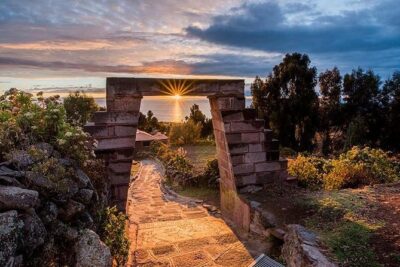
Full-Day Tour of Lake Titicaca and Uros & Taquile
Read our review →Browse the lists this tour appears in