
Reviewed · SACRED VALLEY TOURS
Maras and Moray salt mines | Half day |
Salt and stone make a fine Cusco outing. I like this tour because it pairs Moray’s unusual circular terraces with the Maras salt ponds, two very different sights in one six-hour trip. I also like the small maximum group of 16 and the useful hotel pickup within Cusco’s Historic Center.
The main catch is that entrance tickets are extra, and the morning includes an artisan stop in Chinchero before Moray. If your priority is spending every minute at the archaeological sites, that added visit and the road time may feel like a trade-off.
In This Review
- Key points to know before booking
- Why Moray and Maras work well together
- Starting in central Cusco
- Chinchero’s camelid-fiber demonstration
- Moray and the Inca agricultural terraces
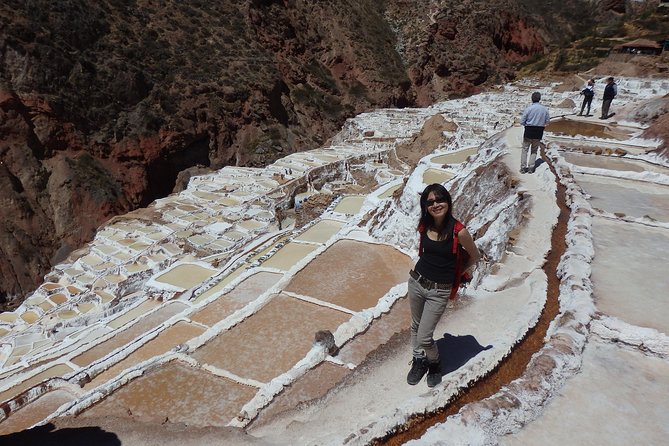
- Maras and its 3,000 salt ponds
- Transport, timing, and group size
- Guide quality and the value of explanation
- What the price does and does not cover
- Weather, cancellation, and practical planning
- Who will enjoy this Cusco excursion most
- Should you book Maras and Moray?
- FAQ
- Where does the tour begin?
- What time does the tour start?
- How long does the experience last?
- What places are visited?
- Are entrance tickets included?
- What is included in the price?
- How many people can join the tour?
- What happens if bad weather cancels the tour?
Key points to know before booking
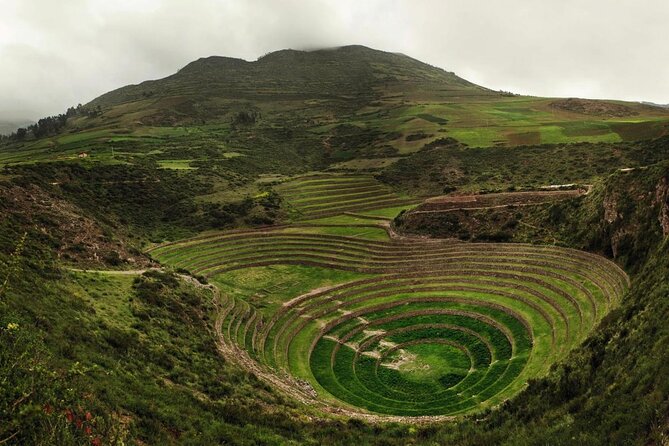
- Moray’s circular terraces offer one of the most unusual Inca sites near Cusco, with broad stone rings descending into a bowl-shaped formation.
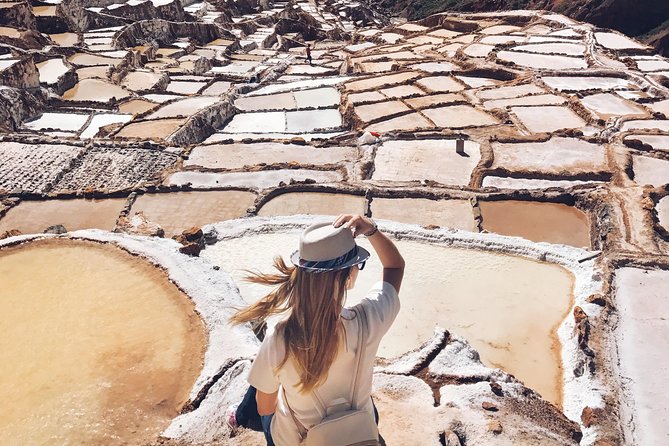
- Maras includes more than 3,000 salt ponds, creating a striking patchwork of white and earthy tones on the mountainside.
- Chinchero adds a textile demonstration, including how camelid fiber receives its color.
- Pickup is available from central Cusco hotels between about 8:00 and 8:30 a.m., with an 8:30 a.m. stated start time.
- The price is $26.09 per person, including round-trip tourist transport and a specialized guide, but not park admission.
- The group can reach 16 people, a reasonable size for keeping costs down without joining a huge coach crowd.
Why Moray and Maras work well together
Moray and Maras are close enough to combine, yet they feel completely different. Moray is an archaeological site built around form, engineering, and agricultural use. Maras is still tied to a working local tradition, with thousands of small salt ponds spread across the slope.
That contrast gives the outing a good rhythm. At Moray, you look into a great circular depression and try to understand how the Incas shaped the site. At Maras, you look outward across a dense field of salt pools, where water and mineral deposits create the pattern.
I like this pairing for a first visit to the Cusco area because neither stop feels like a repeat of the other. You get ruins, local craft, mountain scenery, and a working salt-making site before returning to the city in the afternoon.
The tour lasts about six hours. Pickup begins around 8:00 to 8:30 a.m., and the return to Cusco is expected at approximately 3:00 p.m. That timing leaves the evening open, which is useful if you have dinner plans, a train connection on another day, or simply need time to rest at altitude.
More Sacred Valley days out:
- From Cusco: Moray, Maras Salt Mines & Chinchero Weavers Tour
★ 4.8 · 1,925 reviews - 2-Day Tour: Sacred Valley and Machu Picchu by Train
★ 5.0 · 1,127 reviews - Cusco: Sacred Valley, Pisac, Ollantaytambo, Salt Mines Moray
★ 4.6 · 1,058 reviews
Starting in central Cusco
Pickup is offered at your hotel if it is inside Cusco’s Historic Center. If your accommodation is outside that area, the meeting point is the Plazoleta Regocijo.
This detail matters. Cusco’s central streets can be narrow and busy, so a hotel pickup inside the stated zone is convenient. If you are outside the zone, plan your morning around reaching the plaza on time rather than expecting the vehicle to come to your door.
The stated meeting time is 8:30 a.m., while pickup may begin earlier, from 8:00 onward. Keep your phone available and be ready before the pickup window. A morning tour that waits for late passengers can lose valuable time at each stop.
The price of $26.09 is reasonable for what is included: round-trip tourist bus transport and a specialized guide. You are not paying for a private vehicle, so the tour works best if you value a straightforward shared excursion over personal control of the schedule.
The maximum group size is 16. That is large enough to keep the price modest but smaller than a typical full-size bus outing. You should still expect some waiting when the group gathers, especially at the artisan house or before boarding the vehicle.
Chinchero’s camelid-fiber demonstration
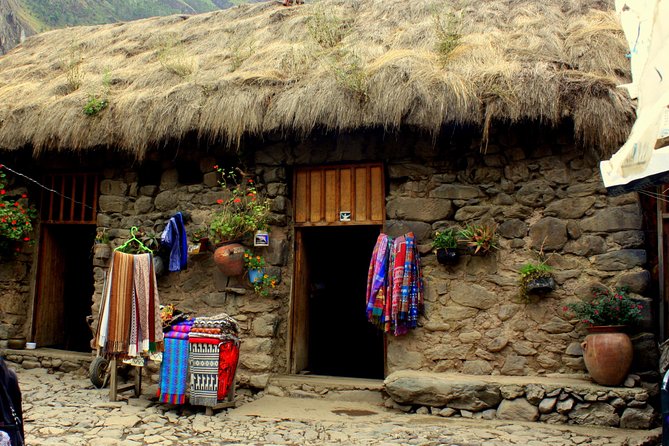
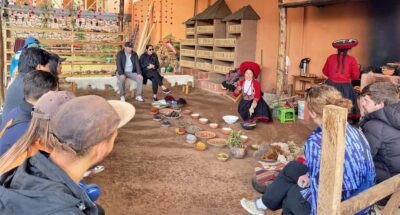
The first planned stop is the town of Chinchero, where you visit an artisan house. The focus is the coloring of camelid fiber, the material associated with alpaca and other South American camelids.
This is more than a quick photo stop if you pay attention to the process. You can see how natural or prepared pigments are used to give fiber different colors. The stop also provides a practical introduction to Andean textile work before the larger archaeological sites take over the day.
I find this kind of visit useful because it connects the scenery to everyday craft. Moray and Maras show large-scale systems shaped by the Incas and local communities. Chinchero shows a smaller, human-scale tradition that continues through handwork and textile production.
The trade-off is time. The tour is marketed as Moray and Maras, but Chinchero comes first. The description does not give a precise duration for the artisan visit, so you should allow for it as part of the morning rather than treating it as an optional extra.
If you are interested in textiles, this stop adds real value. If you have already visited several artisan workshops in Cusco or the Sacred Valley, it may feel less essential. Keep an open mind, but remember that the tour’s total time is fixed.
Moray and the Inca agricultural terraces
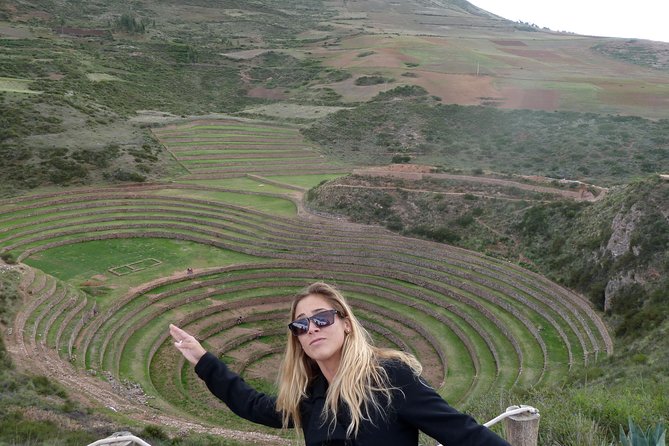
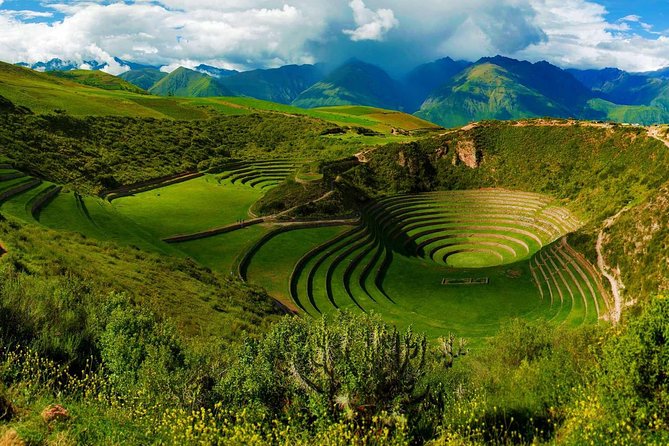
Moray is the main archaeological stop. Its circular, stepped terraces descend into a large depression, forming one of the most recognizable sites in the Cusco region.
The terraces are commonly described as an agricultural laboratory, though the exact purpose remains a matter of interpretation. The useful point for you is that Moray was not simply a scenic construction. Its carefully shaped levels suggest that the Incas were testing or managing growing conditions in a highly organized way.
At the site, the visual experience does much of the work. From above, the terraces appear almost geometric. As you look downward, the repeated curves draw your eye toward the center. The place feels carefully designed rather than accidental.
Your guide is important here. Without context, you may simply see a series of rings in the ground. With a clear explanation, you can begin to understand why the site matters and how it fits the Incas’ wider approach to agriculture.
The admission ticket is not included, so budget for a separate entrance payment. The supplied information does not state the current ticket price or the exact ticket type required. Check those costs before booking if you are keeping your Cusco budget tight.
Allow about an hour for the Moray portion, since the itinerary gives one hour for the archaeological visit. That is enough for an orientation, photographs, and a walk around the main viewing areas, but it is not an open-ended visit.
Moray is especially good for photographers because the terraces create strong patterns from the viewpoints above. The site is also a good fit for people who prefer unusual ruins to grand walls and temples. If you need a long, slow archaeological visit, the scheduled group format may feel brisk.
A few more Cusco trips worth lining up side by side
- Classic Inca Trail Trek 4D/3N to Machu Picchu (Group Service)
★ 5.0 · 8,653 reviews - Cusco: Rainbow Mountain and Red Valley Day Trip with Meals
★ 4.9 · 4,893 reviews - Machu Picchu: 4-Day Inca Trail Trek with Panoramic Train Ride
★ 5.0 · 4,568 reviews - Salkantay Classic Trek 5 Days from Cusco
★ 5.0 · 4,062 reviews
Maras and its 3,000 salt ponds
The final major stop is the Maras salt mines, also called the Maras salt ponds. More than 3,000 deposits cover the slope, giving the site its memorable appearance.
Salt production here depends on water flowing through the area and leaving mineral deposits behind as it evaporates. The result is a dense collection of small pools, each with its own color and texture. Depending on conditions, you might see bright white salt, pale beige surfaces, or darker tones where water and minerals remain.
The scale is what makes Maras special. One pond alone would not be remarkable. Thousands packed together across the slope create the striking view.
A previous visitor described being surprised by the variety of salts and the beauty of the site. That matches the practical appeal of Maras: you are not just looking at a historical structure, but at a place where local production gives the scenery its shape.
The tour includes transport and a guide, but entrance to the parks is not included. The exact access fee is not provided, so confirm it before departure. Also note that the itinerary does not describe a hands-on salt-making activity. You should expect a guided visit and views of the ponds, not a workshop.
The Maras stop can be rewarding even if you have seen plenty of ruins. It gives the day a different subject and a different kind of photograph. The white ponds against the surrounding hills are among the most memorable sights on this route.
Transport, timing, and group size
Round-trip tourist bus transport is included. The vehicle is shared, and the maximum group size is 16. One account praised the vehicle’s comfort and the attention given by the guide during the outing, though comfort can vary with the particular vehicle and the day’s road conditions.
The schedule begins in the morning and ends around 3:00 p.m. That is a sensible length for a half-day-style excursion, although the total duration is listed as approximately six hours. The name half day should not be read too literally, since pickup, road time, and stops fill most of the morning and early afternoon.
You should expect the usual compromises of a shared tour:
- You follow the group schedule rather than choosing how long to stay.
- Delays at pickup can affect later stops.
- The guide must explain things to the whole group.
- The lower price comes from sharing transport and time.
The 16-person limit helps. It is easier to hear a guide and regroup with 16 people than with a much larger crowd. Still, this is not a private tour, and the description does not promise a private vehicle or flexible departure time.
One important warning comes from the provider’s response to a separate complaint about a wider set of excursions. The dispute involved an ambitious, rearranged schedule connecting several distant destinations, including a connection to the Maras, Moray, and salt mines route. The practical lesson is simple: do not add extra destinations or rely on an improvised connection unless every change is confirmed clearly in advance.
For this tour, stick to the published route and pickup plan. A simple itinerary is more likely to run as intended than a packed schedule built around several unrelated excursions.
Guide quality and the value of explanation
A specialized tourist guide is included. That is important at both Moray and Maras, where the visual impact is immediate but the background adds meaning.
At Moray, you want an explanation of the terraces and their possible agricultural role. At Maras, you want to understand how the salt ponds work and why there are so many individual deposits. At Chinchero, the guide can help connect the fiber demonstration to Andean textile traditions.
Past feedback about this provider praised guide attention, clear explanations, and answers to questions. No guide’s name is supplied, so you cannot request a particular guide based on the information available.
The strongest value here is not simply getting from Cusco to two scenic places. It is having someone organize the transport and explain what you are seeing. If you prefer to read everything yourself and move at your own pace, an independent visit may suit you better. If you want the day handled for you, the included guide earns much of the $26.09 price.
What the price does and does not cover
At $26.09 per person, the outing is aimed at budget-conscious visitors who want a simple organized route. The price includes:
- Hotel pickup in the Historic Center of Cusco
- Round-trip tourist bus transport
- A specialized tourist guide
It does not include entrance tickets to the parks or other items not specifically listed. You should set aside extra money for admission and avoid assuming that meals, drinks, purchases, or optional activities are covered.
The low price is strongest when you compare it with arranging transport to several sites yourself. You would otherwise need to organize a vehicle, coordinate timing, and find explanations at Moray and Maras. Here, those basic pieces are bundled together.
The value is weaker if you already have private transport or plan to spend a long time at one site. The tour’s fixed schedule and shared format are part of the bargain.
Weather, cancellation, and practical planning
The experience requires good weather. If poor weather causes cancellation, you are offered another date or a full refund. You can also cancel for a full refund if you do so at least 24 hours before the start time.
Changes or cancellations made less than 24 hours before the experience are not accepted for a refund. The cutoff follows local time in Cusco, so make your decision early if the forecast looks poor.
The information provided does not list a detailed packing list or accessibility guidance. For a high-altitude outing from Cusco, practical preparation is wise: wear comfortable walking shoes, carry water, and bring sun protection and a layer for changing conditions. These are general sensible precautions rather than specified tour requirements.
The route includes archaeological ground, terraces, and salt ponds. You should be prepared for outdoor walking and uneven surfaces, though the exact walking distance is not given.
Who will enjoy this Cusco excursion most
I would recommend this tour to you if you want to see two distinctive sites outside Cusco without spending a full day on a long, complicated route. It suits first-time visitors who want an organized introduction and people who appreciate a guide’s explanations.
It is also a good fit if you are watching your budget. The shared vehicle, group limit, and included guide keep the cost down while covering the main practical needs.
You may want another option if you dislike scheduled stops, have already visited Chinchero’s textile workshops, or want to photograph Moray and Maras at your own pace. A private arrangement would offer more control, though it would likely cost more.
Be careful if you are building a tight multi-tour itinerary. The previous scheduling dispute connected to this provider shows why you should not assume that one excursion can be joined halfway through another without losing a stop. Confirm the exact pickup, meeting point, and route before you travel.
Should you book Maras and Moray?
Book it if you want efficient sightseeing at a fair price. Moray gives you a memorable Inca site, Maras delivers the day’s most unusual scenery, and Chinchero adds a useful look at camelid-fiber coloring. The guide and round-trip transport make the $26.09 fare easy to justify, provided you budget separately for admission.
I would skip it only if you need a private schedule or want to linger at each place. For most people based in central Cusco, this is a practical way to fit three different experiences into one morning and early afternoon, with enough structure to keep the route manageable.
FAQ
Where does the tour begin?
Pickup is available from hotels located within Cusco’s Historic Center. If your hotel is outside that area, the meeting point is the Plazoleta Regocijo.
What time does the tour start?
The stated start time is 8:30 a.m. Hotel pickup takes place between approximately 8:00 and 8:30 a.m.
How long does the experience last?
The tour lasts approximately six hours and is expected to return to Cusco at about 3:00 p.m.
What places are visited?
The route includes an artisan house in Chinchero, the Moray archaeological site, and the Maras salt mines.
Are entrance tickets included?
No. Entrance tickets to the parks are not included in the tour price.
What is included in the price?
The price includes pickup from an eligible hotel in Cusco, round-trip tourist bus transport, and a specialized tourist guide.
How many people can join the tour?
The maximum group size is 16 people.
What happens if bad weather cancels the tour?
If poor weather causes cancellation, you are offered a different date or a full refund. Free cancellation is also available when you cancel at least 24 hours before the start time.
Added recently around Cusco
- Guided tour of the mountain of colors in Cusco★ 5.0 · 11 reviews
- 2-Day Private Short Inca Trail to Machu Picchu★ 5.0 · 15 reviews
- City Tour Cusco – Group★ 5.0 · 4 reviews
- Tour Sacred Valley with Maras and Moray★ 5.0 · 15 reviews
- San Pedro Market Tour with Peruvian Cooking Class★ 5.0 · 31 reviews
- City Tour in Cusco★ 4.5 · 10 reviews
- Walking Culinary Experience★ 5.0 · 41 reviews
- One Day Tour to Humantay Lagoon★ 5.0 · 8 reviews
Sacred Valley Tours, compared.
Sacred Valley & Maras Salt Mines Tour with Lunch
Read our review →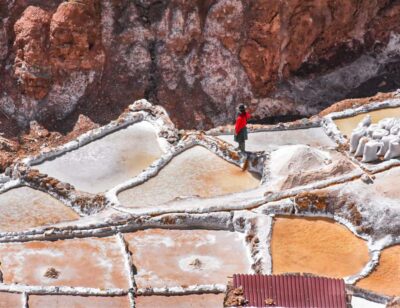
Moray, Maras Salt Mines & Chinchero Weavers Tour
Read our review →
2-Day Tour: Sacred Valley and Machu Picchu by Train
Read our review →
Sacred Valley, Pisac, Ollantaytambo, Salt Mines Moray
Read our review →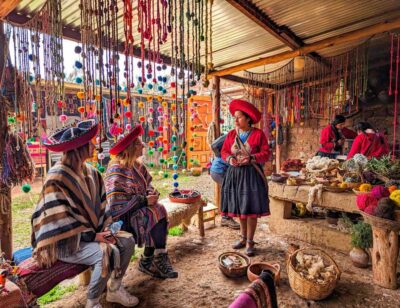
Chinchero,Moray & Salt Mines drop-off in Ollantaytambo
Read our review →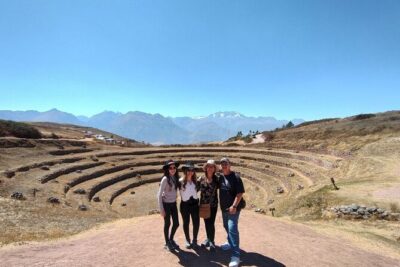
Sacred Valley and Maras Moray Tour with Full Day Buffet Lunch
Read our review →

Browse the lists this tour appears in