Reviewed · SACRED VALLEY TOURS
Peru Off-the-Beaten-Track: Maras, Moray, and Salineras from Cusco
Salt, terraces, and big Andean views make a fine day. This five-hour tour from Cusco links three places that feel quite different from the city and the better-known Machu Picchu route. You visit the old salt pools at Salineras de Maras, the unusual circular terraces of Moray, and a mountain viewpoint in the Sacred Valley.
I like the small maximum group of 10, which should make it easier to hear the guide and ask questions. I also like the strong local focus: Maras salt is still produced by more than 600 families using methods passed down through generations. The main point to consider is timing. Although the tour is advertised at about five hours, one guest reported returning after roughly six hours, so do not schedule a tight afternoon connection.
In This Review
- Four details that shape the experience
- Why this half-day trip works from Cusco
- Salineras de Maras: salt made from mountain water
- Moray: the Inca terraces built in circles
- Sacred Valley picnic: an hour to slow down
- Guides, transport, and group size
- Timing, altitude, and practical comfort
- Is $138 a fair price?
- Who should book this Cusco day trip?
- Final call: book it if the mix appeals
- FAQ
- Where does the tour start?
- What time does the tour start?
- Is hotel pickup included?
- How long does the experience last?
- Which places does the tour visit?
- Are entrance tickets included?
- Is food included?
- Is the tour offered in English?
- How many people can join the tour?
- Is a passport required?
Four details that shape the experience
- More than 600 families work the Maras salt pools, keeping an old production system in daily use.
- Moray’s circular terraces create different growing conditions, possibly allowing the Incas to test crops at several heights.
- A picnic stop in the Sacred Valley gives you an hour to enjoy mountain views rather than rushing from ruin to ruin.
- The group is limited to 10 people, a useful size for a guided archaeological outing.
- Central Cusco hotel pickup and drop-off are included, while pickup outside the central area costs an additional $6.
- Guide Antonio earns special praise for his humor and photo stops, while another booking included two guides and a driver.
Why this half-day trip works from Cusco
Cusco gives you plenty of grand Inca sites, but it can also become a parade of stone walls and busy viewpoints. This outing changes the rhythm. Instead of concentrating on one major ruin, you see how salt production, farming, settlement, and mountain geography fit together.
The route reaches about 3,000 meters above sea level at Salineras de Maras. That altitude matters. You should expect a moderate level of exertion, and the operator asks for a moderate physical fitness level. The tour is not described as a strenuous hike, but you will be outdoors at high elevation and visiting uneven archaeological areas.
The experience is offered in English, though the guide may be multilingual in English and Spanish. That is worth noting if you want long explanations in English. The small group should help, but the exact guide assigned to your departure can vary. Antonio is specifically praised for his humor, clear explanations, and willingness to take people to good photo spots.
At $138 per person, this is not a bargain-priced shared shuttle. The value comes from having a local professional guide, transport from central Cusco, admission tickets, local taxes, snacks, and a planned picnic stop bundled into one outing. I would compare it with the cost and effort of arranging transport to three separate places, especially if you care about interpretation rather than simply being dropped at the entrances.
One detail needs care: the highlights describe a picnic lunch, while the included section lists a snack and says food and drinks are not included. One guest reported receiving plenty of snacks, food, and drinks. I would confirm exactly what lunch provides before booking, especially if you have dietary needs or are counting on a full meal.
More Sacred Valley days out:
- From Cusco: Moray, Maras Salt Mines & Chinchero Weavers Tour
★ 4.8 · 1,925 reviews - 2-Day Tour: Sacred Valley and Machu Picchu by Train
★ 5.0 · 1,127 reviews - Cusco: Sacred Valley, Pisac, Ollantaytambo, Salt Mines Moray
★ 4.6 · 1,058 reviews
Salineras de Maras: salt made from mountain water
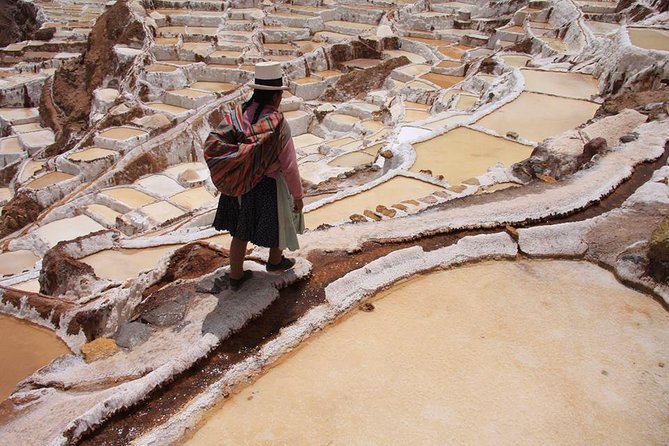
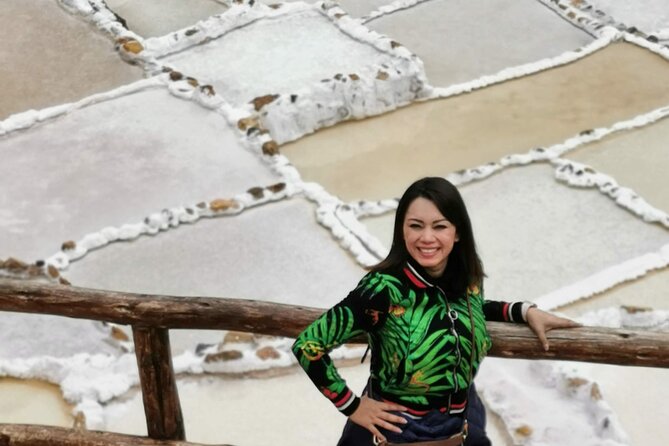
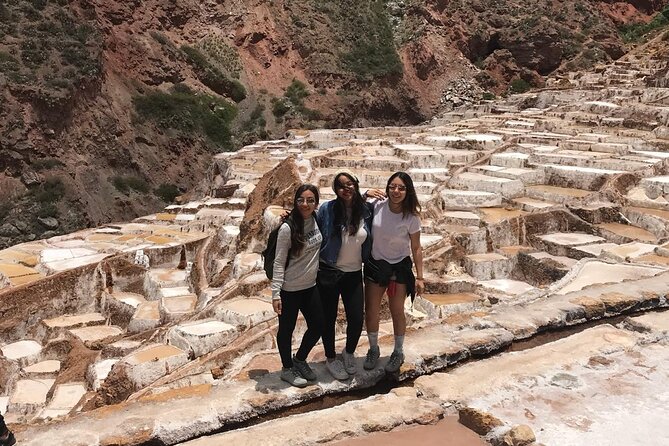
The first major stop is Salineras de Maras, also called the Maras salt mines. The site sits around 3,000 meters above sea level in the Andes of the Sacred Valley. It is not a modern industrial mine. Instead, hundreds of small evaporation pools spread across the slope, producing salt through a simple process linked to local water and high Andean conditions.
The key point is that production continues today. More than 600 families are responsible for Maras salt, and the work relies on techniques inherited from one generation to the next. That gives the stop a practical human dimension. You are not looking at a dead archaeological site. You are seeing an old system still tied to local households and income.
The scheduled visit lasts about 45 minutes, with admission included. That is enough time for an explanation, views of the pools, and photographs, but it is not a long independent exploration. Your guide should help explain how the salt works are organized and why this place has mattered across generations.
I like this stop because the subject is easy to understand once you see the terraces. The rows of salt pools create a strong visual pattern against the Andes, and the story is more grounded than a simple tale about an ancient monument. You can connect the setting, water, labor, and local trade in one visit.
The drawback is that the stop is short. If you want a slow photographic session or a detailed look at every part of the salt-making process, 45 minutes may feel brief. The altitude can also affect your pace. Take your time, listen to your body, and avoid treating the visit like a race to the best viewpoint.
Moray: the Inca terraces built in circles
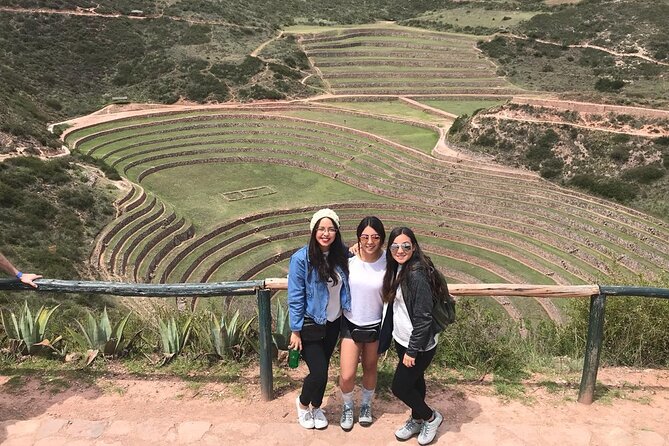
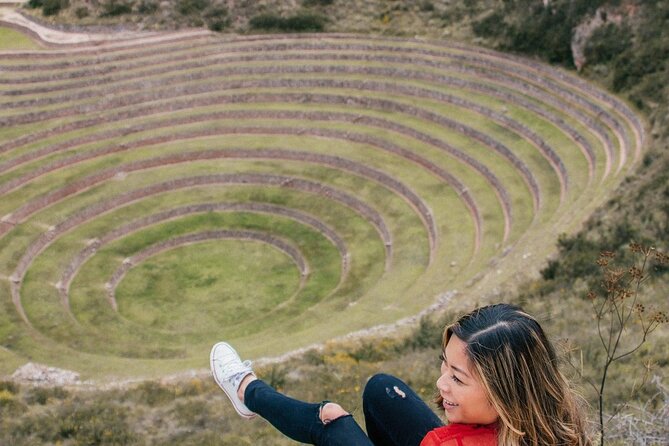
Moray is the most unusual archaeological stop on this route. Its great circular terraces sink into the earth in a series of broad rings. From above, the arrangement looks almost too neat to be agricultural, but the leading explanation is that Moray may have served as an Inca agricultural research center.
The theory is tied to temperature. The terraces create different microclimates as they descend and rise again. The center of the circles is warmer, while the outer levels become cooler. The arrangement may have allowed the Incas to test crops at different heights, with as many as 20 types of microclimates possible within the site.
The important word is possibly. Moray’s purpose is not presented as absolute fact, and that uncertainty makes the guide’s interpretation useful. A good explanation can separate what you can see from what scholars infer. You can look at the terraces, then consider how the Incas may have used altitude as a tool for farming.
The visit lasts about an hour, and admission is included. That gives you more time here than at the salt pools. You can take in the full shape of the site, hear the agricultural theory, and use the surrounding mountain views to understand why elevation mattered so much in Andean life.
Moray is also a good place to think about the scale of Inca engineering. The terraces are not just decorative circles. They show careful planning, controlled levels, and an attempt to work with the Andes rather than against them.
You should still keep expectations realistic. The tour information does not promise access to every part of the terraces or a long hike around the site. The main appeal is the view, the explanation, and the chance to understand the agricultural idea behind the design. If you prefer an archaeological site with many carved buildings and intact walls, Moray may feel sparse. If you enjoy unusual engineering, it can be the most memorable stop.
Sacred Valley picnic: an hour to slow down
After the two main sites, the outing includes about an hour in the Sacred Valley with a picnic and a view of the mountains. This is more than a meal break. It gives your day a pause after high-altitude sightseeing and lets you take in the scale of the valley without another formal lecture or entrance gate.
One guest especially enjoyed lunch beside a local lake. That exact setting may depend on the route and conditions, so I would not treat a lakeside picnic as guaranteed. Still, the meal stop is a useful part of the design. Many short tours squeeze in one attraction after another and leave you tired. Here, you have a planned hour for food, scenery, and a breather.
The supplied details are slightly unclear about what you receive. The tour highlights say picnic lunch is included, while the inclusions list snack and the exclusions say food and drinks are not included. Another booking described plenty of food, drinks, and snacks. Ask the operator what is provided on your date, and bring extra water or food if you prefer certainty.
This stop also gives the tour a more local feel. You are not spending every minute in a ticketed ruin. You are sitting with views of the Sacred Valley and having time to notice the mountains. For me, that balance is one of the better reasons to choose this route instead of a purely transfer-based excursion.
A few more Cusco trips worth lining up side by side
- Classic Inca Trail Trek 4D/3N to Machu Picchu (Group Service)
★ 5.0 · 8,653 reviews - Cusco: Rainbow Mountain and Red Valley Day Trip with Meals
★ 4.9 · 4,893 reviews - Machu Picchu: 4-Day Inca Trail Trek with Panoramic Train Ride
★ 5.0 · 4,568 reviews - Salkantay Classic Trek 5 Days from Cusco
★ 5.0 · 4,062 reviews
Guides, transport, and group size
The tour begins at 8:30 a.m. from Plaza de Armas in Cusco, at Del Medio 123, with the activity ending back at the meeting point. Hotel pickup and drop-off in central Cusco are included, and the operator contacts you to arrange the pickup time. If your hotel lies outside central Cusco, expect a $6 fee.
The transport details are simple but important. You are visiting places outside the city, so a shared vehicle saves you from negotiating separate taxis or trying to combine public transport with fixed entrance times. A group of no more than 10 people is small enough to feel more personal than a large coach, while still keeping the price below a private tour in many cases.
The guide is a major part of the value. The tour is not just transport between three photo stops. You want someone who can explain why Maras remains active, how Moray may have been used, and how the Sacred Valley fits into the wider Inca world. The strongest praise goes to Antonio, who is described as funny, attentive, and willing to help with photographs. Another booking included two guides and a driver, with the sites well explained.
Exact staffing can change, so I would not book solely on the promise of one named guide. But the feedback points to the kind of service you should hope for: on-time pickup, a capable driver, clear narration, and help finding good views.
The operator may use a multilingual guide in English and Spanish. If your English is limited or you want a Spanish-speaking guide, confirm the arrangement in advance.
Timing, altitude, and practical comfort
The advertised duration is approximately five hours, but the actual day may run closer to six. That difference can come from pickup arrangements, road time, group coordination, or the length of the picnic. I would keep the rest of your schedule open after the return.
The itinerary is compact, but not weightless. Salineras is high, and Moray is an archaeological site with outdoor walking. The operator recommends moderate physical fitness, and children must be accompanied by an adult. Bring sensible walking shoes, sun protection, and water. Those are practical choices for any Andean outing, and they matter more than trying to pack the day with extra activities.
You also need a current valid passport on the day of the tour. Confirmation is issued at booking, and free cancellation is available if you cancel at least 24 hours before the start time. Cancellations or changes made inside that window are not refunded or accepted.
Pickup coordination deserves a little patience. The listed start time is 8:30 a.m., but the operator will contact you to organize your exact pickup time. Keep your phone available and make sure the company has the correct hotel details.
Is $138 a fair price?
At $138 per person, the tour makes the most sense if you want convenience and explanation. You receive central hotel transport, a local professional guide, admission tickets, local taxes, and some form of snack or picnic arrangement. You also avoid having to arrange three separate rides in an unfamiliar region.
The cost is harder to justify if you only want transport and quick photographs. Independent transport may cost less, though the supplied information does not give a comparison price, and arranging it yourself may take more time and planning. This tour’s value rests on the guide and the compact organization.
The small group helps the price feel more reasonable. With a limit of 10 people, you are less likely to spend the day in a large coach with a guide addressing a crowd. The positive feedback also points to reliable pickup, thoughtful explanations, and extra help with photographs.
Before paying, confirm the food arrangement. A proper picnic can make the price more appealing, while a small snack-only setup gives you a different value calculation. If lunch is important to you, ask exactly what is supplied and whether drinks are included.
Who should book this Cusco day trip?
I would recommend it to you if you want three distinct experiences in one outing: living salt production, a strange and thought-provoking Inca site, and a relaxed Sacred Valley stop. It suits first-time visitors who want more than the standard city sights but do not have time for a full multi-day Sacred Valley program.
It is also a good match if you prefer a small guided group and want someone to explain what you are seeing. The named guide feedback suggests that a warm personality and help with photographs can add real value to the day.
I would hesitate if you need a strict five-hour schedule, dislike shared transport, or want a full meal with no uncertainty. I would also reconsider if high altitude and moderate outdoor walking are difficult for you. The operator asks for moderate physical fitness, and the day is not designed as a completely effortless ride.
Final call: book it if the mix appeals
Book this tour if you want local salt production, unusual Inca engineering, and mountain views without spending a full day on a major circuit. The 10-person limit, central pickup, included admissions, and praised guiding make it a practical choice from Cusco.
Before booking, confirm the picnic details and allow up to six hours rather than relying on the shortest estimate. With those points settled, this is a well-shaped introduction to the quieter side of the Sacred Valley, especially for you if authentic working traditions matter as much as famous ruins.
FAQ
Where does the tour start?
It starts at Plaza de Armas de Cusco, at Del Medio 123, Cusco 08000, Peru.
What time does the tour start?
The listed start time is 8:30 a.m. The operator will contact you to organize your exact pickup time.
Is hotel pickup included?
Yes. Hotel pickup and drop-off are included for hotels in central Cusco. Pickup outside the central area has a $6 fee.
How long does the experience last?
The tour is listed as approximately five hours. One booking described a total duration of about six hours, so allow extra time.
Which places does the tour visit?
The route includes Salineras de Maras, Moray, and a Sacred Valley stop with mountain views and a picnic.
Are entrance tickets included?
Yes. Admission is included for Salineras de Maras and Moray.
Is food included?
The highlights describe a picnic lunch, while the inclusions list a snack and the exclusions say food and drinks are not included. Confirm the exact food arrangement with the operator before departure.
Is the tour offered in English?
Yes. The tour is offered in English, and it may be operated by a multilingual guide speaking English and Spanish.
How many people can join the tour?
The maximum group size is 10 people.
Is a passport required?
Yes. You must bring a current valid passport on the day of travel.
Added recently around Cusco
- the Incas’ Sacred Valley★ 5.0 · 27 reviews
- Sacred Valley of the Incas Day Trip from Cusco★ 5.0 · 6 reviews
- Super valley or vip valley★ 5.0 · 13 reviews
- Small-Group Tour: Rainbow Mountains Hiking from Cusco★ 4.0 · 5 reviews
- Excursion to the Sacred Valley of the Incas from Cusco★ 5.0 · 8 reviews
- Maras + Moray & Textile Experience★ 5.0 · 14 reviews
- Tour EN Cuatrimoto POR la Montaña 7 Colors Hike 5 Minutes★ 4.5 · 32 reviews
- rainbow mountain★ 4.0 · 4 reviews
Sacred Valley Tours, compared.
Sacred Valley & Maras Salt Mines Tour with Lunch
Read our review →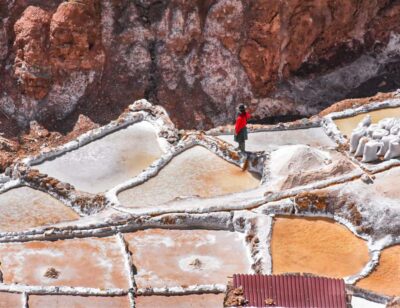
Moray, Maras Salt Mines & Chinchero Weavers Tour
Read our review →
2-Day Tour: Sacred Valley and Machu Picchu by Train
Read our review →
Sacred Valley, Pisac, Ollantaytambo, Salt Mines Moray
Read our review →
Chinchero,Moray & Salt Mines drop-off in Ollantaytambo
Read our review →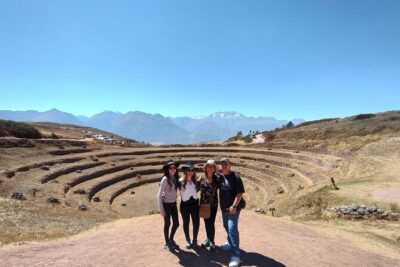
Sacred Valley and Maras Moray Tour with Full Day Buffet Lunch
Read our review →