
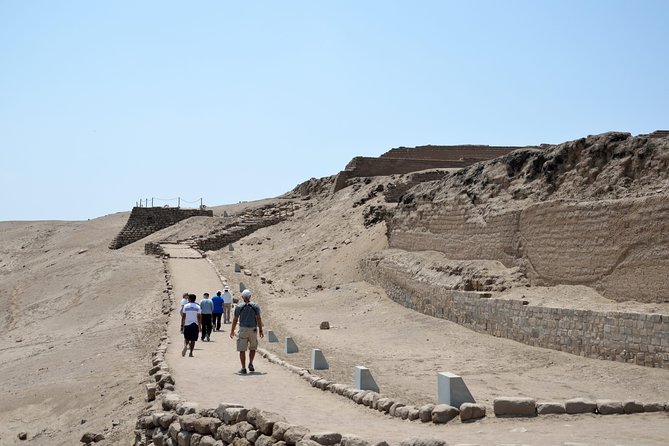
Reviewed · INCA RUINS & ARCHAEOLOGICAL SITES
Private Local Artisans and Pachacamac Tour
Ancient temples, living traditions, one thoughtful day. This private Lima tour links Pachacamac’s pre-Inca and Inca ruins with the working homes and studios of Ayacucho artisans who rebuilt their community outside the city. I like the rare mix of archaeology and present-day culture, and I like that lunch takes place with a local artisan family rather than at a standard restaurant. The main consideration is the price, $202 per person, which makes the most sense if you value private transport, a full seven-hour day, and direct support for the artisan cooperative.
You should also be ready for some walking over an extensive archaeological site, changing weather, and guided explanations that may vary in clarity. The outing is private, so your group controls the pace more than on a large bus tour. Guides named Elen, Eline, and Daniel have received especially warm praise for their care and explanations, though one person found the local guide at Pachacamac difficult to understand.
In This Review
- Five reasons this Lima day tour is different
- Why combine Pachacamac with local craft?
- Starting with Pachacamac’s 2,000-year story
- What the Pachacamac visit does well, and where it may test you
- Lunch in an Ayacucho artisan family’s home
- Pottery, weaving, and the work behind the souvenirs
- A private group makes the seven hours easier
- Is $202 per person a fair price?
- Who should book this Pachacamac experience?
- Should you book it?
- FAQ
- How long does the Private Local Artisans and Pachacamac Tour last?
- What is included in the tour price?
- Is the tour private?
- What should I wear and bring?
- Can I buy handicrafts during the tour?
- What is the cancellation policy?
Five reasons this Lima day tour is different
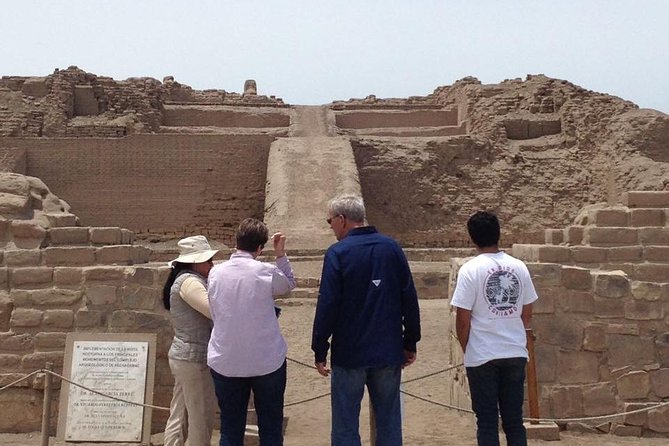
- Pachacamac covers more than 50 temples: You see remains from several pre-Inca cultures and the Inca period, not a single isolated monument.
- Lunch takes place in an artisan’s home: This gives you a direct look at family life, work, and food in the community.
- Ayacucho traditions continue in Lima: The neighborhood was shaped by families who fled the violence of Peru’s guerrilla conflict in the 1980s and 1990s.
- Workshops show the making process: You may see pottery, textiles, wool preparation, looms, ceramics, and finished pieces.
- The tour supports a cooperative: Your booking includes a contribution, while purchases at the workshops remain optional.
- Private transport saves time: Hotel pickup and drop-off make this easier than arranging separate rides to Pachacamac and Lurin.
Why combine Pachacamac with local craft?
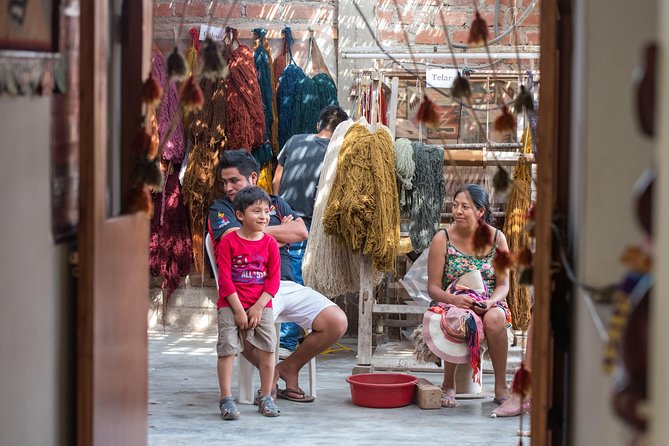
Lima can feel like a modern capital pressed against older worlds. This tour lets you see both in one day. In the morning, you walk among sacred buildings raised centuries ago. Later, you meet people keeping regional art alive through pottery, weaving, and family workshops.
That pairing matters. Pachacamac is not presented as a detached ruin with a few labels. The artisan visit gives you another way to think about Peru’s past: traditions are not only preserved in museums. They continue through hands, tools, patterns, teaching, and sales.
I especially like that the second half is not simply a stop at a souvenir shop. The visit includes lunch, workshop demonstrations, and an explanation of how the community formed. The artisans’ cooperative also receives a contribution, so the cultural exchange has a practical side.
Still, this is not the right choice if you want a quick temple visit followed by free time in central Lima. The day runs about seven hours, and the neighborhood visits are a substantial part of the program. You are paying for access, interpretation, transportation, and time with working artists, not just admission tickets.
More Ruins & Archaeology Tours in Lima
- Lima: Pachacamac Ruins & Barranco Half-Day Guided Tour
★ 4.6 · 296 reviews - Pre Inca Temple of Pachacamac Half-Day Tour from Lima
★ 4.5 · 283 reviews - Tour to the Archaeological Sanctuary of Pachacamac (small group)
★ 5.0 · 260 reviews
Starting with Pachacamac’s 2,000-year story
Pachacamac is one of the most important archaeological sites on the coast of Peru. The earliest elements here date to about AD 200, and later societies added their own temples and structures. The result is a large complex with remains linked to several pre-Inca cultures as well as the Inca.
Your guide begins at the site museum. This is a smart first step because the artifacts give you context before you face the size of the ruins. Excavated objects help explain how the site functioned and why it held such importance for early Peruvian peoples.
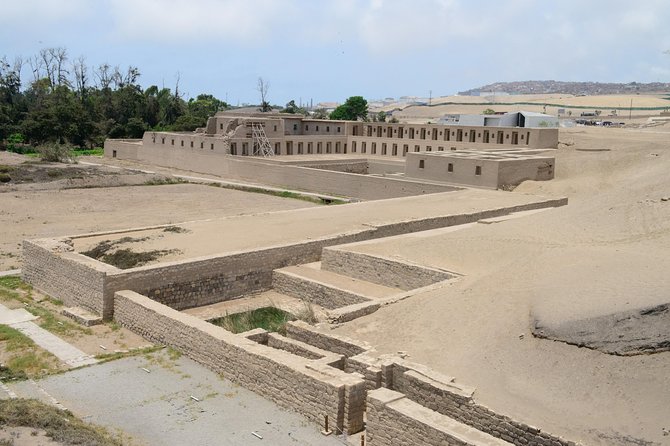
After the museum, private transport takes you around the broad archaeological area. You stop at different sections, then walk a little at each one to inspect the remains. The vehicle is useful here. With more than 50 temples spread across the site, seeing everything on foot would make the two-hour visit much harder.
Do not expect every structure to look intact. Much of the experience comes from reading the shapes of walls, platforms, and temple remains with help from your guide. A passionate local guide can make a major difference, as Daniel did for one group, turning scattered adobe remains into a meaningful story.
The setting is part of the reward. From the complex, you get wide views over the surrounding area and toward the Pacific Ocean. It can feel surprising to find such a large ancient site so close to metropolitan Lima. That contrast is one of Pachacamac’s strongest qualities.
Plan on comfortable closed shoes or sneakers. You will not be marching for hours, but some stops require walking over an expansive outdoor site. From October through May, bring sunscreen, a hat, and water. From June through October, cooler weather and slight drizzle are possible, so dress in layers and carry a light rain layer.
What the Pachacamac visit does well, and where it may test you
The museum and ruins work best together. The museum offers objects and explanation, while the outdoor visit shows the scale of the religious center. If you only see the ruins, some of the meaning may be lost. If you only see the museum, you miss the extraordinary setting.
The main weakness is that the experience depends heavily on communication with the guide. One person had trouble understanding the local guide at Pachacamac, while others found the explanations highly informative. If you have difficulty hearing or following an accent, tell your private guide early and ask for key points to be repeated.
The site also requires patience. You are looking at remains from different periods, and the ancient cultures did not leave behind a single neat monument. Your guide’s storytelling is important, but you should also give yourself time to notice the views and the scale of the place.
The two-hour allocation feels useful rather than rushed. You get the museum, transport between areas, and short walks at several stops. It is enough for an introduction, though not an exhaustive archaeological study.
Lunch in an Ayacucho artisan family’s home
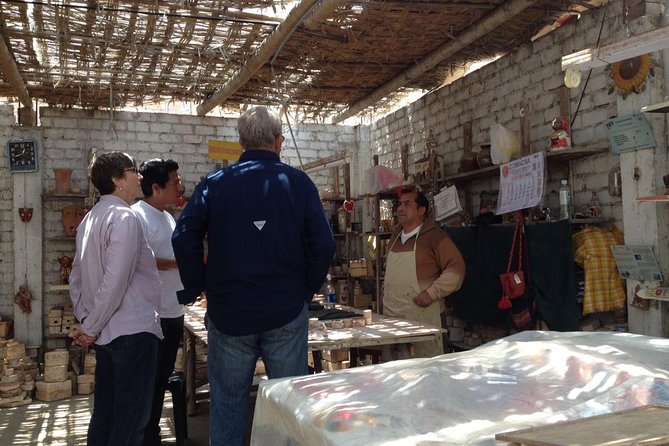
After Pachacamac, you go to a nearby neighborhood associated with artisans from Ayacucho. Many families moved to Lima’s outskirts after fleeing the violence of the guerrilla war during the 1980s and 1990s. Your guide explains this painful part of Peru’s recent past, giving the workshop visits a human and historical setting.
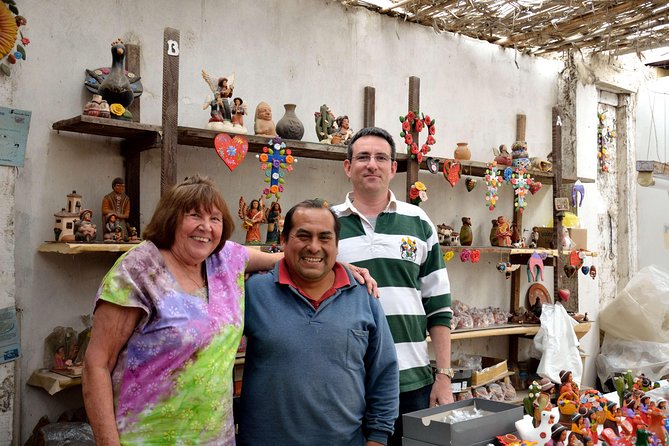
Lunch is served with one local artisan family in their home. This is the emotional center of the tour for me. A meal in a family setting feels more personal than stopping at a commercial restaurant, and it gives you a chance to see how art and daily life fit together.
The family may include the artisan, a spouse, and children. One particularly memorable visit involved a potter who sells work internationally and teaches at a local university. He showed how he creates figures and pots before the group visited another ceramic workshop nearby.
The food itself received strong praise, but the greater value is the setting. You are not being rushed through a display room. You are sitting with people whose work supports their household and helps maintain their traditions.
Dietary needs should be given when booking. The provided information does not specify a fixed menu, so advance notice is the sensible way to handle allergies, vegetarian requirements, or other restrictions.
More ruins and archaeology near Lima:
- From Pyramids & Bohemian Streets: Lima Miraflores & Barranco Tour
★ 5.0 · 257 reviews - Caral, The Oldest Civilization in the Americas:Day Trip from Lima
★ 5.0 · 199 reviews - Lima: Pachacamac Inca Archaeological Complex Tour
★ 4.8 · 164 reviews - Lima Bike Tour Miraflores – Barranco + Huaca Pucllana!
★ 4.5 · 137 reviews
Pottery, weaving, and the work behind the souvenirs
The workshop visits show several forms of Ayacucho craft, including ceramics, textiles, and other traditional Peruvian handicrafts. You can ask questions about how the pieces are made and see the difference between a finished object and the process behind it.
The pottery stops can be especially useful for comparison. One artisan’s quality may differ from another’s, and that is not necessarily a problem. It gives you a better sense of individual style, skill, and price before you decide to buy anything.
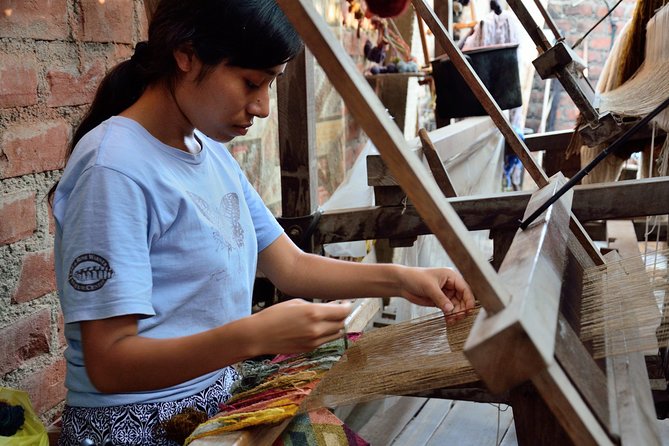
At the weaving workshop, you may see the process from the beginning. One account described a visit timed just as the artisan was making balls of wool. He explained how the wool is obtained, spun, prepared, and dyed. His family worked together in the workshop, and he had made looms of different sizes for each family member.
That kind of detail changes how you look at a rug or wall hanging. You see the labor in the material, the colors, and the pattern. A shop elsewhere in Lima may show you a finished textile, but this visit helps you understand how it came to be.
Purchasing is optional. The tour includes a contribution to the artisan cooperative, so you do not need to buy something to justify the visit. If you do find a rug, ceramic figure, or textile you like, buying directly from the makers can be a meaningful way to support the community. Ask about prices and payment methods during the visit because those details are not specified here.
A private group makes the seven hours easier
Private transportation, hotel pickup, and hotel drop-off are included. You need to confirm your hotel name and address when booking, which matters in a large city where a small pickup error can waste time.
The private format is one of the strongest practical benefits. Only your group participates, so the guide can spend more time on questions, adjust the pace at the ruins, and make the artisan visits feel less like a production line.
The total duration is about seven hours. That gives the tour room to include both Pachacamac and the artisan neighborhood without reducing either to a rushed photo stop. It is also a full day commitment, so I would not pair it with another major scheduled excursion.
Transport is particularly valuable because Pachacamac and the artisan neighborhood are outside the areas most people visit on a first trip to Lima. You avoid arranging separate taxis, navigating unfamiliar roads, and trying to coordinate a museum visit with several private workshops.
The tour is suitable for most people, and service animals are allowed. You should still be comfortable with short walks around an outdoor archaeological complex. Closed walking shoes are the best choice.
Is $202 per person a fair price?
At $202 per person, this is not a budget outing. The price becomes easier to justify when you add up what is included: private transport, hotel pickup and drop-off, entrance fees, a seven-hour guide service, lunch, all listed activities, and a contribution to the artisan cooperative.
You are also paying for access that would be difficult to arrange on your own. A self-guided Pachacamac visit would not include a family lunch, introductions to working artists, or background on the Ayacucho community. Separate taxi rides and admissions would also require planning.
The value is strongest for couples, families, and small groups who want a more personal day. If you have several people sharing the private vehicle and guiding service, the cost may feel more reasonable. Solo visitors should compare it carefully with a group excursion.
I would not book this solely for shopping. Souvenirs are optional, and the workshops are valuable even if you leave empty-handed. Book it for the combination of archaeology, lunch, craft knowledge, and direct community support.
The experience has received a 4.9 rating from 16 reviews, with 100 percent recommending it. The most praised elements are consistent: the excellent lunch, personable guides, the chance to see how pottery and textiles are made, and the feeling of having a day that goes beyond the usual Lima route.
Who should book this Pachacamac experience?
You will likely enjoy this tour most if you:
- Want ancient Peru explained in context rather than viewed quickly from a bus.
- Prefer private transportation and a flexible small-group pace.
- Care about meeting artists and seeing how objects are made.
- Enjoy home cooking and direct cultural exchange.
- Have seven hours available outside the standard central Lima circuit.
- Want the option to buy authentic, fair-trade-style pieces directly from artisans.
You may want another plan if you prefer independent sightseeing, dislike workshop visits, or want a short archaeological stop. The outdoor site can also be less comfortable in strong sun or drizzle, so clothing and footwear matter.
Cancellation is flexible up to 24 hours before the start time for a full refund. Changes or cancellations made less than 24 hours ahead are not accepted, based on local time.
Should you book it?
Book this tour if you want Lima to be more than a starting point for Machu Picchu. Pachacamac gives you ancient Peru, while the Ayacucho neighborhood shows how displaced families have built a working community and kept their art alive.
The best reason to go is the connection between the two halves. You see temples shaped by centuries of cultural change, then sit with an artisan family whose own traditions are still being practiced and taught. The cost is substantial, but the private transport, lunch, guide time, entrance fees, and cooperative contribution make it a sensible choice for a full cultural day.
If you book, wear sturdy closed shoes, bring sun protection and water in warmer months, dress for cool drizzle in winter, and share dietary needs in advance. Give the guides room to explain, ask questions at the workshops, and treat shopping as optional. That approach lets the day work as a cultural visit first and a buying opportunity second.
FAQ
How long does the Private Local Artisans and Pachacamac Tour last?
The tour lasts approximately seven hours, including the Pachacamac visit, transportation, lunch, and artisan workshops.
What is included in the tour price?
The price includes lunch, private transportation, all activities, entrance fees, hotel pickup and drop-off, and a contribution to the artisan cooperative.
Is the tour private?
Yes. Only your group participates in this private tour or activity.
What should I wear and bring?
Wear comfortable closed walking shoes or sneakers. From October to May, bring sunscreen, a hat, and a bottle of water. From June to October, dress for cooler weather and slight drizzle.
Can I buy handicrafts during the tour?
Yes. You may purchase souvenirs at the artisans’ workshops, but purchases are not included in the tour price and are completely optional.
What is the cancellation policy?
You can cancel at least 24 hours before the experience’s start time for a full refund. Cancellations or changes made less than 24 hours before the start time are not accepted.
Added recently around Lima
- Yoga Classes in Miraflores, Lima★ 4.5 · 20 reviews
- Magic Water Circuit Tour★ 4.0 · 5 reviews
- Private Walking Tour Lima Heritage Downtown Half Day★ 4.5 · 12 reviews
- Wonders of Peru & Huaraz 16-Day Tour★ 5.0 · 8 reviews
- Water Magic Circuit Lima Night Tour by Panoramic Bus★ 4.5 · 11 reviews
- Visit to the Larco Museum in Lima★ 5.0 · 5 reviews
- Guided Tours in Colonial and Modern Lima★ 5.0 · 54 reviews
- Bizarre Foods Tour for Adventurous Foodies★ 5.0 · 9 reviews
Inca Ruins & Archaeological Sites, compared.
Half-Day City Tour with Sacsayhuaman and Q’enco
Read our review →
City Tour Cusco Qoricancha Sacsayhuaman y Tambomachay
Read our review →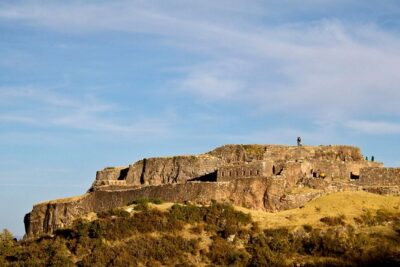
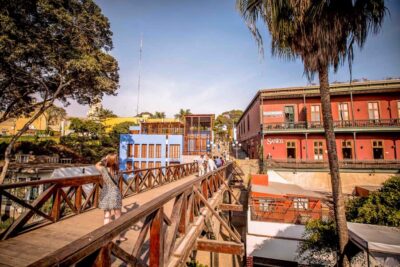
Pachacamac Ruins & Barranco Half-Day Guided Tour
Read our review →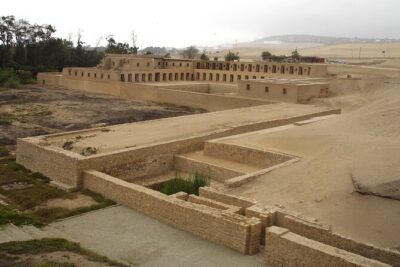
Pre Inca Temple of Pachacamac Half-Day Tour from Lima
Read our review →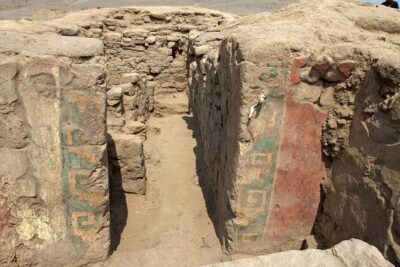
Tour to the Archaeological Sanctuary of Pachacamac (small group)
Read our review →
From Pyramids & Bohemian Streets: Lima Miraflores & Barranco Tour
Read our review →
City Tour | Half-Day Tour to 4 Archaeological Sites
Read our review →Browse the lists this tour appears in