
Reviewed · LAKE TITICACA TOURS
Puno: 2-day Uros Kayak Tour with Homestay at Amantani Island
Start with a paddle across Lake Titicaca. This two-day trip combines a kayak approach to the Uros Floating Islands, a family homestay on Amantani, and a visit to Taquile Island. I like the small group of up to 12 people and the chance to eat home-style Andean food rather than rush through the lake on a standard sightseeing boat.
I also like the overnight stay with a local family, especially because the experience includes more than a bed. You share meals, see something of island life, and join a community party in the evening. The main drawback is that the kayaking time may be shorter than you expect, with one experience lasting about 45 minutes instead of the advertised 1 hour and 20 minutes.
The $86 price covers transport, boats, kayaking equipment, four meals, a guide, accommodation, and hot drinks. That is a solid package for two days, though you should be ready for basic conditions, high altitude, steep walking, and a night without electricity.
In This Review
- Key points before you book
- Why this two-day Lake Titicaca trip works
- Morning pickup and the launch from Puno
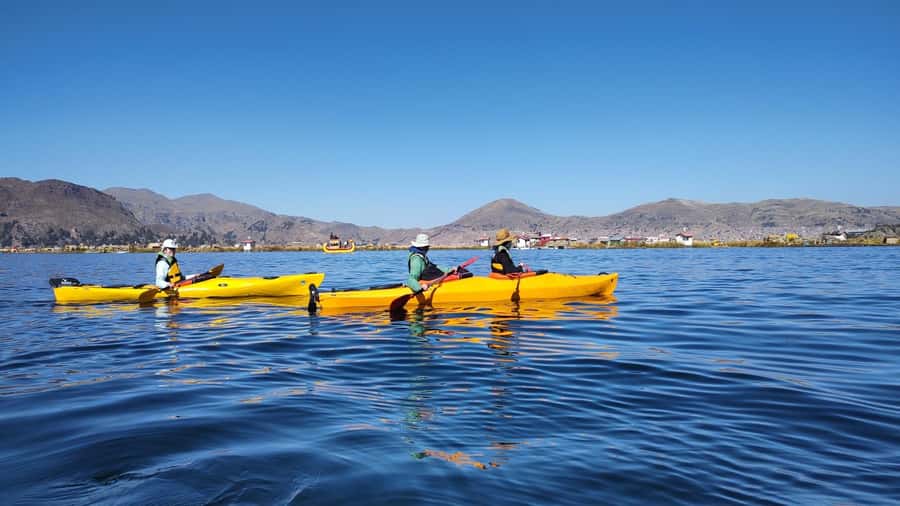
- Paddling toward the Uros Floating Islands
- The regular boat to Amantani Island
- Andean food and an evening on Amantani
- Walking uphill to Pachatata
- Early breakfast and the boat to Taquile
- Taquile’s textiles tell social stories
- What the $86 price really covers
- What to pack for the high-altitude conditions
- Who should book this experience?
- Should you book this Puno tour?
- FAQ
- How long does the tour last?
- What islands does the tour visit?
- How long is the kayaking portion?
- Is accommodation included?
- Are meals included?
- Is a guide provided in English?
- Is electricity available on Amantani Island?
- What hotels are excluded from pickup?
- Who should not take this tour?
Key points before you book
- Kayak across Puno Bay for roughly 45 minutes to 1 hour and 20 minutes, with a support boat nearby.
- Visit the Uros Floating Islands and meet members of the Uro community, whose homes are built on handmade reed islands.
- Sleep in a basic family home on Amantani, where the most praised part of the experience is the warmth of hosts such as Antonia and Sebastián.
- Climb toward Pachatata for broad views over Lake Titicaca and the surrounding mountains.
- Explore Taquile’s textiles, handmade pieces that express identity, gender, social position, and community traditions.
- Expect simple logistics and high-altitude exertion, including regular group boats, limited electricity, and walking on island paths.
Why this two-day Lake Titicaca trip works
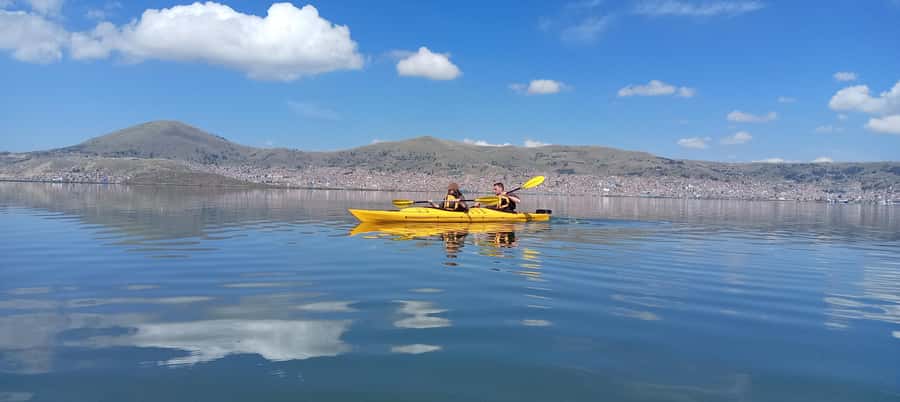
Lake Titicaca sits at about 3,800 meters above sea level, so this is not just a boat outing. You are working at high altitude, exposed to sun and wind, and moving between islands where transport is basic. That gives the trip a slower, more local feel, but it also means comfort and stamina matter.
I like the way the itinerary connects three different parts of lake life. Uros introduces you to handmade floating islands and the Uro people. Amantani gives you a night inside a local community. Taquile adds textiles, a museum option, and another island culture. You get variety without cramming several unrelated sights into one long day.
The tour earns a rating of 4.6 from four ratings, with especially strong praise for the family stay. One visitor described the home of Antonia and Sebastián as exceptional, while another had an unexpectedly private kayak outing during the quieter season. Those details point to the tour’s real strength: personal contact, not polished resort comfort.
More of Lake Titicaca by boat:
- From Puno: Uros, Amantaní & Taquile Islands 2-Day Tour
★ 4.5 · 452 reviews - Tour to Uros and Taquile Islands in a Fast Boat
★ 5.0 · 419 reviews - From Puno: Floating Islands of the Uros Half-Day Tour
★ 4.4 · 394 reviews
Morning pickup and the launch from Puno
Your day begins with pickup from a hotel in central Puno and transfer to the port. Pickup does not apply to several hotels outside the city center, including Hotel Jose Antonio, Hotel El Mirador del Titikaka, B&B Winay Pacha, and Taypikala Hotel Lago. If you are staying at one of them, confirm your own way to the meeting point before booking.
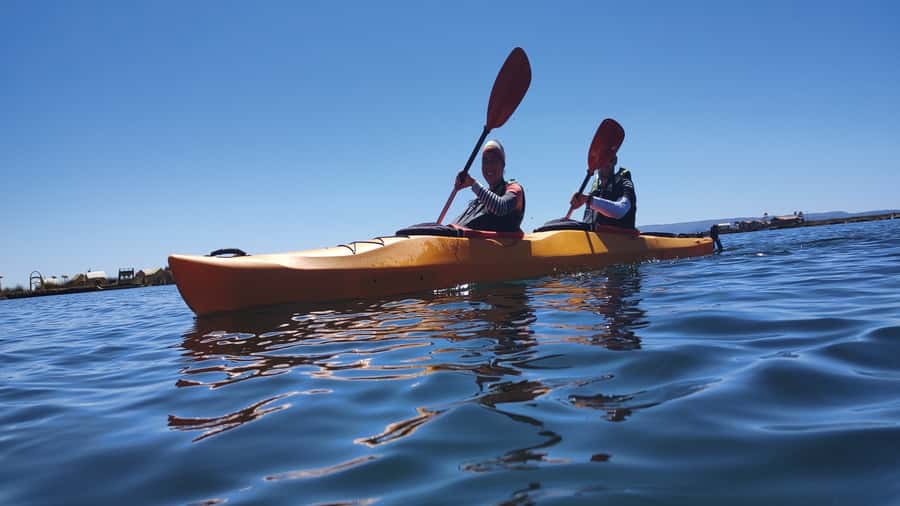
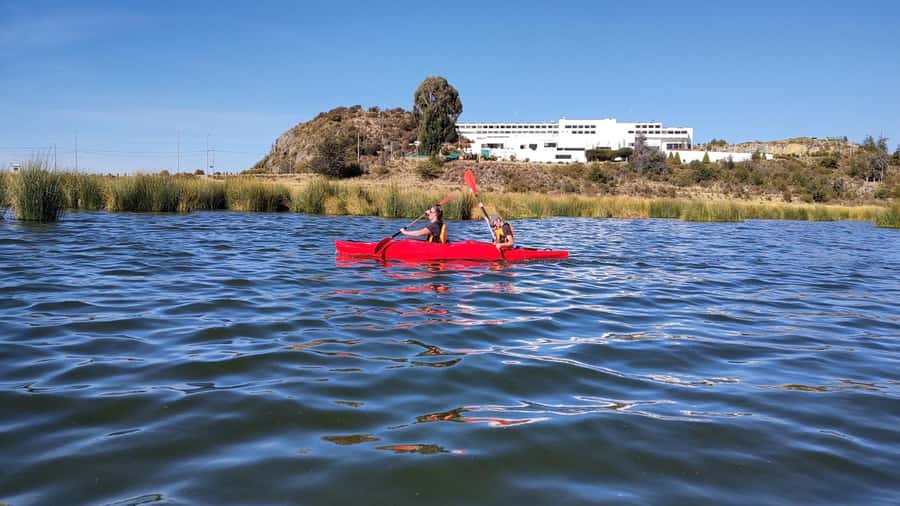
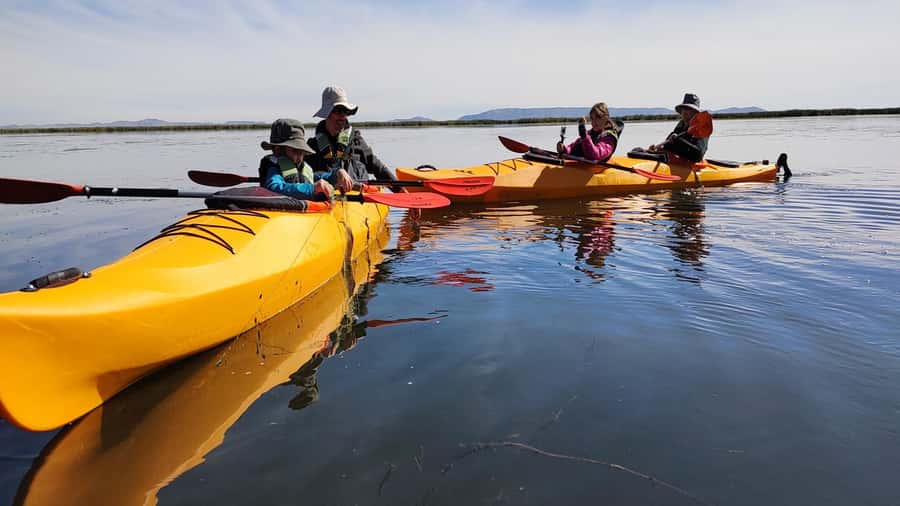
At the port, the kayak team provides the equipment and life jacket. A support boat accompanies the paddling group, which is reassuring on a large, high-altitude lake. You should still bring a jacket, sunscreen, sunglasses, a hat, water shoes, and a charged phone.
The kayak section is described as lasting about 1 hour and 20 minutes, but the actual duration can vary. One outing lasted around 45 minutes, while another extended to nearly two hours because the regular boat was delayed and the guide continued paddling. In other words, treat the stated time as a guide rather than a promise.
That variation matters if kayaking is your main reason for booking. If you want a serious paddling workout or a long open-water route, this may feel too short. If you see kayaking as a quiet way to approach Uros, the time should be enough to make the boat transfer feel more memorable.
Paddling toward the Uros Floating Islands
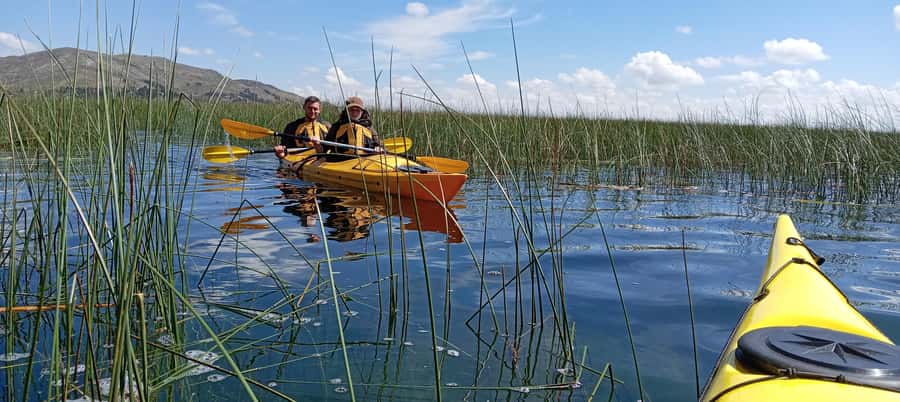
The route crosses part of Puno Bay, with views of the lake, reeds, and surrounding mountains. The water and air can look calm, but the altitude makes even moderate activity feel harder than it would at sea level. Keep your pace easy and tell the guide if you need a rest.
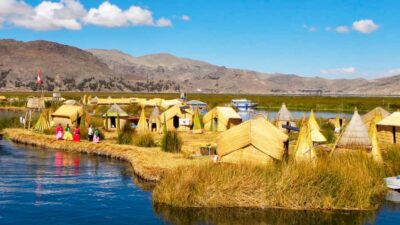
The Uros Islands are handmade artificial islands built from layers of totora reeds. The Uro community has constructed and inhabited these floating platforms for centuries. The visit gives you a useful first look at how people have adapted daily life to the lake rather than simply viewing the islands from a large boat.
You will meet local residents and learn about the islands during the stop. The visit is brief compared with the overnight stay, so think of Uros as an introduction rather than a full community experience. The kayak approach is the special touch here. You arrive under your own power, then continue the journey by regular boat.
The Uros stop also has a practical lesson for your expectations. This is a working community as well as a cultural attraction. You may find the visit more meaningful if you pay attention to the construction of the islands and the people who maintain them, rather than treating the reeds as a photo backdrop.
The regular boat to Amantani Island
After Uros, you board a regular group boat to Amantani. This is a slower part of the day, but it gives you time to rest after the kayak and watch the lake change around you. The transfer is part of the cost, so you are not paying for separate transport between each island.
On arrival, you are assigned to a local family and taken to a basic home for the night. The accommodation is not a hotel, and there is no electricity on Amantani. Bring your phone, camera, and other devices fully charged from Puno. A small power bank would also be useful, though the information provided specifically emphasizes arriving with equipment at 100 percent.
The simplicity is central to the experience. You are not choosing Amantani for room service or a private bathroom. You are choosing it to share time with a Quechua-speaking island community that has preserved many ancestral customs. One especially positive account describes the family hosts as very welcoming, with Antonia and Sebastián receiving particularly warm praise.
A few more Puno trips worth lining up side by side
- Rafting Arequipa – Chili River Canoeing – Cusipata Rafting Arequipa
★ 5.0 · 332 reviews - Puerto Maldonado: Sandoval Lake Full-Day Trip with Canoeing
★ 4.5 · 38 reviews - Canopy Tower, Zipline, Kayak, and Monkey Island …
★ 3.6 · 11 reviews - Tambopata: Zipline Adventure & Kayak to Monkey Island
★ 3.9 · 7 reviews
Andean food and an evening on Amantani
Lunch on Amantani includes quinoa soup, lake fish, and coca tea. Dinner is also included, as is breakfast the next morning. On a trip at this altitude, included meals are more than a budget convenience. They save you from searching for food after arrival and give you a direct taste of ordinary Andean cooking.
Hot drinks such as coca tea and muña tea are included as well. These are welcome in the cool air, especially after the boat ride or a walk uphill. Extra food and drinks are not included, so bring some personal spending money if you want anything beyond the planned meals.
Amantani’s appeal comes from the combination of calm scenery and community life. Most of the population is Indigenous Quechua, and local traditions remain part of daily life. The island has wide views over Lake Titicaca and the mountains, giving you a quieter counterpoint to Puno.
In the evening, the community organizes a local party. This is a social event rather than a formal stage show, and it gives you a chance to participate in a shared island tradition. The exact style of the party can vary, but you should expect a lively gathering after a fairly full day.
Walking uphill to Pachatata
Pachatata is one of Amantani’s key viewpoints, located on a hill above the island. Reaching it involves walking uphill, so this is where your physical condition matters most. At nearly 3,800 meters, a slope that seems modest on a map can feel demanding.
I would take this walk slowly, drink water, and avoid treating it as a race. The reward is a broad view of Lake Titicaca and the surrounding mountains. If clouds or weather reduce visibility, the walk still offers a look at the island’s rural setting, but clear conditions make the viewpoint much more satisfying.
The tour is not suitable for people with mobility impairments, back problems, pre-existing medical conditions, or children under eight. That restriction makes sense given the kayak, boat transfers, uphill walking, and high altitude. You should also be in good physical condition even if you do not plan to paddle hard.
Early breakfast and the boat to Taquile
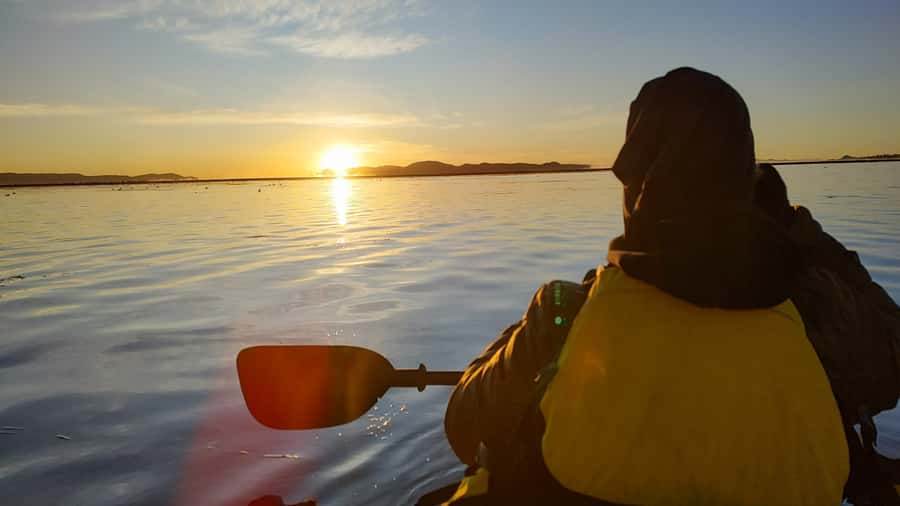
Day two begins with breakfast at the family home, followed by a regular boat ride to Taquile Island. The crossing takes about an hour. An early start helps fit the island walk, lunch, and return trip into the day, but it also means you should not expect a lazy morning.
Taquile has its own strong cultural identity and a community way of life that has preserved older traditions. From the landing point, you walk to the small main square. That walk is part of the visit, not just a route between two transport points, so comfortable shoes are important.
The island’s setting is one of its pleasures. You get open lake views and a sense of distance from the mainland. The walk may feel tiring after the previous day, especially at altitude, but the pace is generally shaped by the group and the guide.
Taquile’s textiles tell social stories
Taquile is best known for its handwoven textiles. Local weavers use techniques passed down through generations, creating pieces with colors and patterns linked to Andean beliefs, community history, gender, identity, and social position.
This makes the textile shops more interesting than a standard souvenir stop. You are not simply looking at decorative fabric. The designs can communicate something about the person who wears them and the community that produced them. If you buy a piece, ask about its pattern and use rather than judging it only by color.
You can also visit the local museum, although that stop is optional. The main square gives you time to browse textile shops or explore at your own pace before lunch. I would prioritize the textiles if your time is limited, since they are the clearest expression of Taquile’s cultural importance on this itinerary.
Lunch takes place at a local restaurant. It is included in the price, which keeps the day simple and avoids the need to arrange food independently. After lunch, you return to Puno by regular boat and then transfer back to your hotel.
What the $86 price really covers
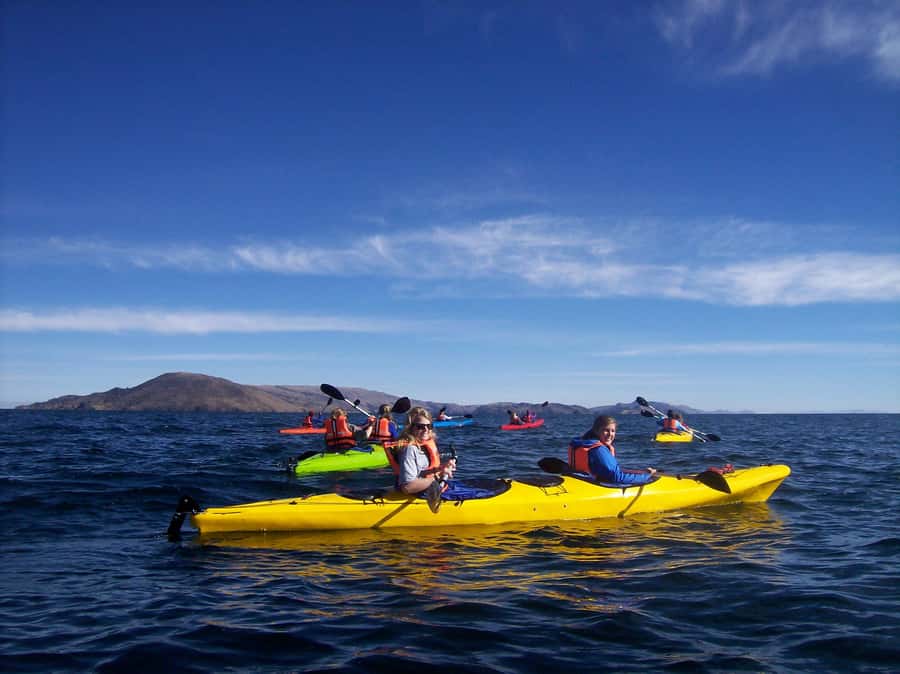
At $86 per person, this is good value if you want a full two-day experience rather than a single island excursion. The price includes hotel-to-port transfers, kayak equipment, a life jacket, a support boat, regular group boats, an English and Spanish guide, four meals, hot drinks, and basic accommodation.
The family stay is the part that gives the price its character. A standard hotel night in Puno would be easier, but it would not provide the same contact with Amantani residents. You are paying for access to a community experience as much as for transport and food.
The package is less attractive if you mainly want extended kayaking. The duration can be shorter than expected, and much of the itinerary uses regular group boats. You should also budget for personal expenses and extra food or drinks, which are not included.
A small group of no more than 12 people is a useful middle ground. You avoid the scale of a large excursion, but the tour remains a shared experience rather than a private trip. During the quieter season, the group can feel even smaller. One outing became a private kayak trip with a guide, partly because the regular boat was delayed.
What to pack for the high-altitude conditions
Pack lightly, but prepare for sun, cold, water, and limited services. Your core list should include:
- Sunglasses and strong sunscreen
- A hat and warm jacket
- A towel
- Water shoes
- A charged smartphone
- Your passport
- Personal water or snacks if you want something beyond the included food
Water shoes are especially practical for the kayak section and boat landings. A jacket matters even when the sun is bright, since the lake air can feel cold. Keep your passport secure because it is specifically listed among the items to bring.
Do not count on charging your phone on Amantani. There is no electricity on the island, so charge everything before leaving Puno. That includes cameras, phones, and any device you plan to use for navigation or photographs.
Who should book this experience?
I would recommend this trip to you if you want a mix of outdoor activity, local food, island scenery, and a family stay. It suits people who value personal contact and cultural context more than polished facilities. It is also a useful choice if you want to see both Amantani and Taquile without organizing several separate boat rides.
You should be comfortable with basic accommodation and group transport. The tour has a clear physical side, including kayaking, boat boarding, walking across islands, and an uphill route to Pachatata. High altitude can make all of that feel more demanding.
I would hesitate if your priority is a long kayak expedition, private transport, or a comfortable hotel room. The trip works best when you accept that the overnight stay is simple and the schedule can shift slightly with boat timing.
Should you book this Puno tour?
Book it if the family homestay is your main interest and the kayak is an appealing extra. The strongest part of the trip is the chance to stay with an Amantani family, eat traditional food, join the evening party, and see how island communities live. The visit to Taquile then adds one of Lake Titicaca’s most distinctive textile traditions.
Book with realistic expectations about the paddle. The advertised route lasts about 1 hour and 20 minutes, but actual outings have ranged from about 45 minutes to nearly two hours. At $86, the overall package remains worthwhile because it includes so much, but this is a cultural island journey with kayaking, not a dedicated kayak tour.
FAQ
How long does the tour last?
The experience lasts two days and includes one night on Amantani Island.
What islands does the tour visit?
The itinerary visits the Uros Floating Islands, Amantani Island, and Taquile Island.
How long is the kayaking portion?
The planned kayak journey lasts about 1 hour and 20 minutes. Actual time can vary, with one outing lasting around 45 minutes and another lasting about two hours because of a delayed boat.
Is accommodation included?
Yes. You spend one night in basic accommodation at a local family home on Amantani Island.
Are meals included?
Yes. The package includes lunch, dinner, and breakfast on Amantani, plus lunch on Taquile Island. Extra food and drinks are not included.
Is a guide provided in English?
Yes. A live guide is available in English and Spanish.
Is electricity available on Amantani Island?
No. There is no electricity on Amantani, so you should charge your phone and other equipment fully in Puno.
What hotels are excluded from pickup?
Pickup is not valid from Hotel Jose Antonio, Hotel El Mirador del Titikaka, B&B Winay Pacha, or Taypikala Hotel Lago.
Who should not take this tour?
The tour is not suitable for children under eight, people with mobility impairments, people with pre-existing medical conditions, or people with back problems. You should also be in good physical condition.
Added recently around Puno
- Sun island and Copacabana | From Puno or La Paz / Day Trip★ 4.1 · 5 reviews
- Aymara Route Mystical Cultural Tour★ 4.7 · 27 reviews
- Puno: Uros and Taquile Islands Full-Day Tour with Lunch★ 4.5 · 17 reviews
- Puno: History and Culture Walking Tour★ 4.1 · 13 reviews
- Puno: Lake Titicaca, Uros, and Taquile Full-Day Tour★ 4.5 · 4 reviews
- Puno: 3-hour trip to the floating Uros Islands★ 4.5 · 9 reviews
- Puno: Lake Titicaca Day Tour★ 4.5 · 17 reviews
- Puno: 2 Day Visit to Uros, Amantani and Taquile★ 4.5 · 13 reviews
Lake Titicaca Tours, compared.
Tour to Uros and Taquile Islands in a Fast Boat
Read our review →
Uros and Taquile Islands on New and Comfortable SpeedBoat
Read our review →
Lake Titicaca (Day Trip) Uros & Taquile Islands
Read our review →
Lake Titicaca 2-Day Tour to Uros, Amantani and Taquile
Read our review →
Full-Day Tour of Lake Titicaca and Uros & Taquile
Read our review →Browse the lists this tour appears in