
Reviewed · SACRED VALLEY TOURS
Sacred Valley: Chinchero, Moray, Ollantaytambo & Pisac+Lunch
The Sacred Valley packs a lot into one long day. This $25 shared tour links Chinchero, Moray, Maras, Urubamba, Ollantaytambo, and Pisac with transport, a guide, and buffet lunch included. I like the sheer range of places covered, and I especially like that the day combines major Inca sites with textiles, salt production, local shopping, and Peruvian food.
The tradeoff is pace. Ollantaytambo and Pisac can feel short, since this is essentially two days of sightseeing squeezed into roughly 12 hours. Still, guides such as Victor, Rudy, William, and Guillian have earned strong praise for keeping the day lively and explaining Inca culture clearly. If your time in Cusco is tight, this is a remarkably useful introduction.
In This Review
- Key points at a glance
- Why this Sacred Valley day trip works
- Chinchero begins the morning at high altitude
- Moray’s circular terraces show Inca experimentation
- Maras adds salt, shops, and a commercial pause
- Urubamba lunch is the day’s best surprise
- Ollantaytambo deserves more than 50 minutes
- Pisac closes the ruins portion with big views
- What the guides add to a very full schedule
- The real cost and value of the tour
- Altitude, comfort, and who should book
- Should you book this Sacred Valley tour?
- FAQ
- How long does the Sacred Valley tour last?
- Does the tour pick me up at my hotel?
- Which places are included?
- Is lunch included?
- Are entrance tickets included?
- What languages are available?
- How high does the tour go?
- What should I bring?
- Who should not take this tour?
Key points at a glance
- Six major stops in one day: Chinchero, Moray, Maras, Urubamba, Ollantaytambo, and Pisac.
- A surprisingly good lunch: The Urubamba buffet includes a wide range of Peruvian and Novo-Andean dishes.
- Best for limited schedules: You see far more than you could manage independently in one day without arranging several transfers.
- Expect a fast pace: The archaeological sites receive guided visits and photo time, but not long, leisurely exploration.
- Altitude matters: Chinchero, Moray, and Maras sit at about 3,762 meters, or 12,342 feet.
- Bring extra soles: The tourist ticket costs 70 soles, and the Maras salt mines charge 20 soles separately.
Why this Sacred Valley day trip works
The main appeal is efficiency. From Cusco, you head north through several different parts of the valley, moving from high plains to lower, warmer Urubamba and then back toward the mountains. You see farming terraces, ceremonial and military architecture, salt pans, weaving traditions, market life, and local food in one sweep.
That variety gives you a better sense of the region than a day devoted only to ruins. I like that Chinchero and the salt mines add living traditions to the archaeological stops. You are not only looking at stones. You also see how communities work with wool, minerals, and food.
The tour uses shared tourist transport, with pickup from your Cusco hotel or accommodation. Pickup is scheduled about 30 minutes before departure. In practice, the vehicle may leave later than the stated meeting time, so do not plan an important evening activity too tightly. The return to Cusco is generally around 6:30 or 7 p.m., and some outings have arrived after 7.
The vehicle ride is a large part of the day. That is not necessarily a problem, since the route covers considerable ground, but you should be ready for a full day on the move. Drivers have received praise for smooth, safe driving, and one guide, Rudy, was especially good at using the road time for music and extra explanations.
More Sacred Valley days out:
- From Cusco: Moray, Maras Salt Mines & Chinchero Weavers Tour
★ 4.8 · 1,925 reviews - 2-Day Tour: Sacred Valley and Machu Picchu by Train
★ 5.0 · 1,127 reviews - Cusco: Sacred Valley, Pisac, Ollantaytambo, Salt Mines Moray
★ 4.6 · 1,058 reviews
Chinchero begins the morning at high altitude
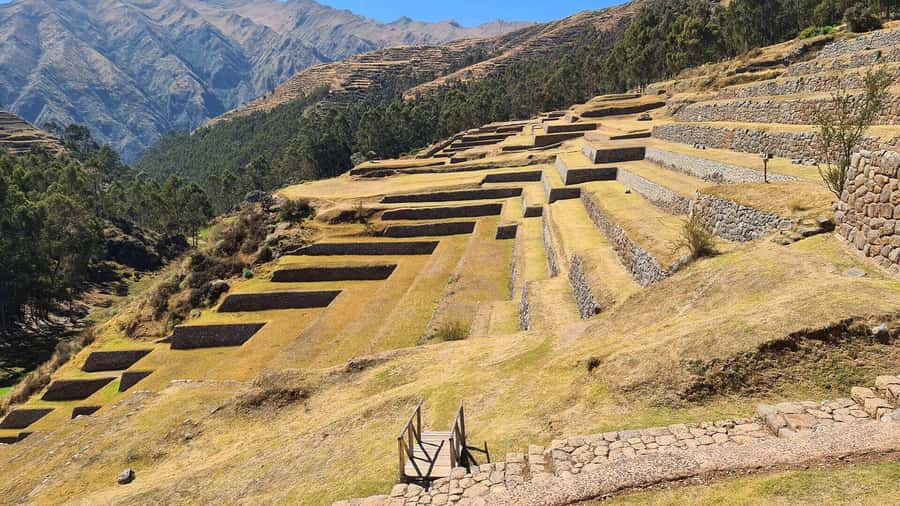
The first stop is the archaeological site of Chinchero, reached after about 45 minutes by bus. The visit lasts roughly 40 minutes and includes a guided walk, photographs, free time, and shopping.
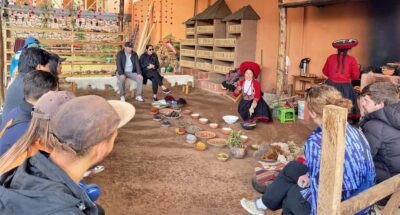
Chinchero is also the place to learn about local weaving. The tour visits a community textile interpretation center, where you can see how Andean textiles are made and learn about the materials and techniques used. This was one of the more warmly praised parts of the day because it connects the surrounding mountain communities with a skill still practiced today.
You may also find alpaca products and demonstrations at stops like this. The shopping is part of the experience, but it is still shopping. Go in expecting an introduction to local crafts, not a quiet archaeological visit with no commercial element.
Chinchero sits at 3,762 meters. That is higher than Cusco, so the first climb or set of steps may feel harder than expected, especially if you have just arrived in Peru. I would take the morning slowly, drink water, and avoid treating the first site like a race.
Moray’s circular terraces show Inca experimentation
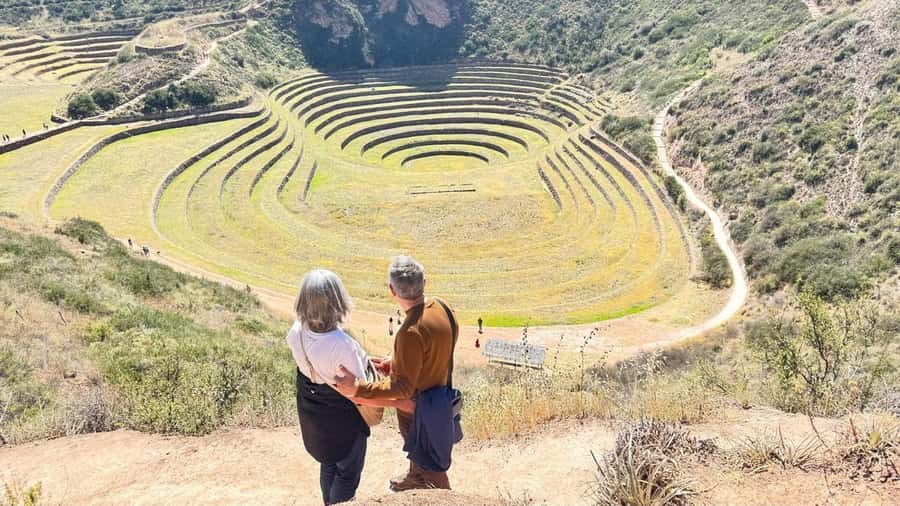
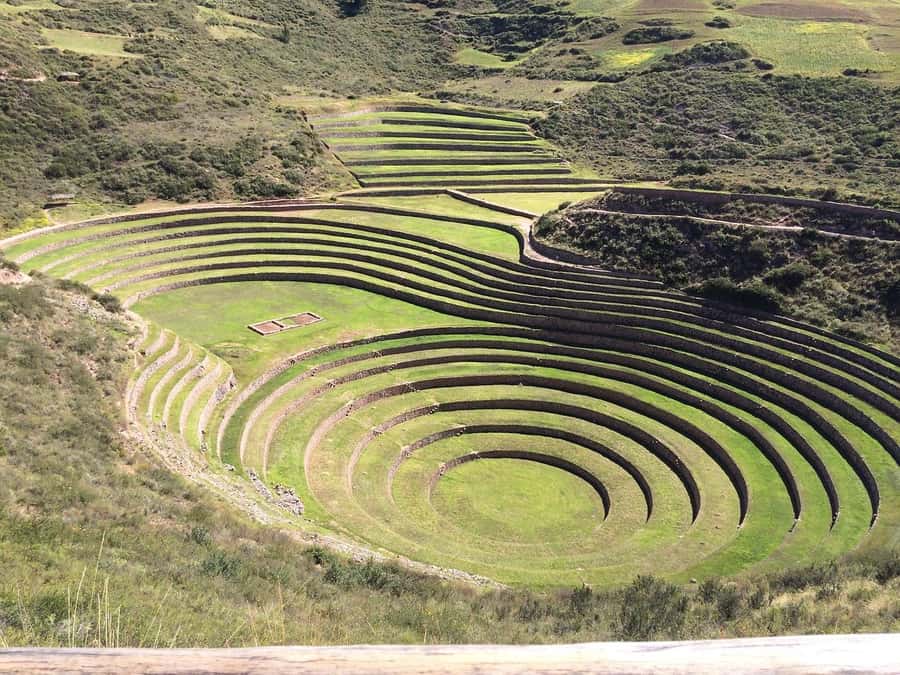
After about 30 minutes on the road, you reach Moray. The guided visit lasts around 35 minutes, with time for photographs and a walk around the site.
Moray is known for its enormous circular terraces cut into the earth. The site is often described as an Inca agricultural laboratory, and the design makes it easy to understand why. The rings descend in broad steps, creating different growing conditions at different levels.
Your guide’s explanation adds real value here. Without context, Moray can look like a striking series of circles. With an explanation of agriculture, altitude, and the Inca interest in growing crops across varied environments, the site becomes easier to appreciate.
Again, the altitude is about 3,762 meters. The paths are manageable, but the combination of thin air, sun, and walking can tire you. You receive less than an hour here, so this is a guided look rather than an extended exploration.
Maras adds salt, shops, and a commercial pause
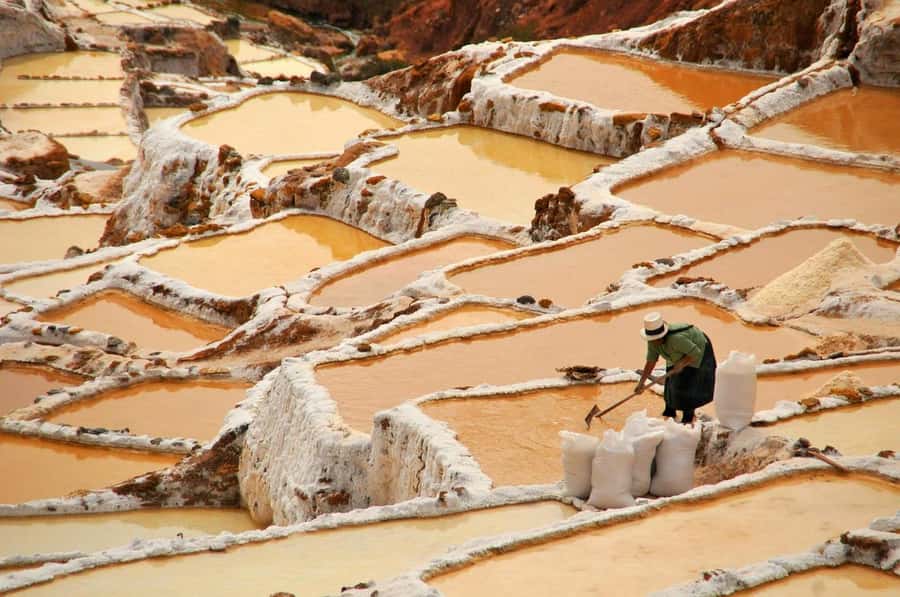
A short 20-minute drive brings you to the Maras salt mines. The visit is scheduled for about 20 minutes and includes a guide and photo time.
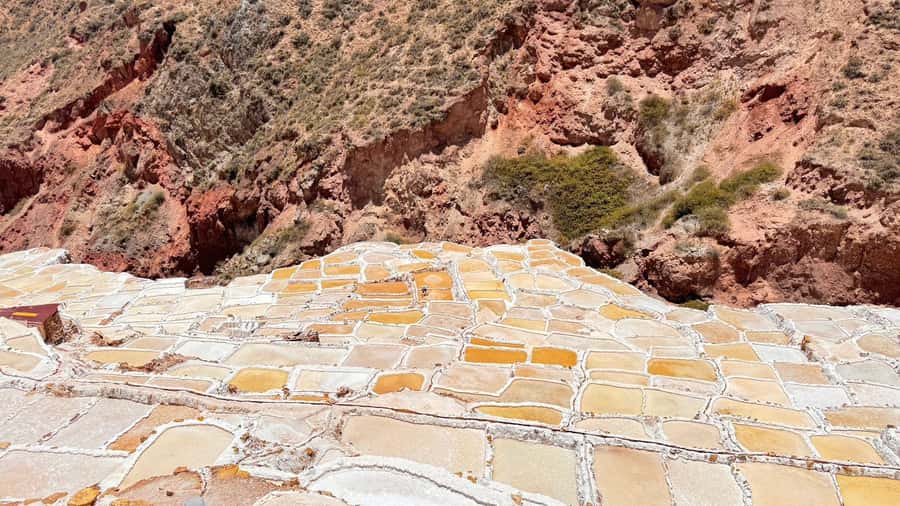
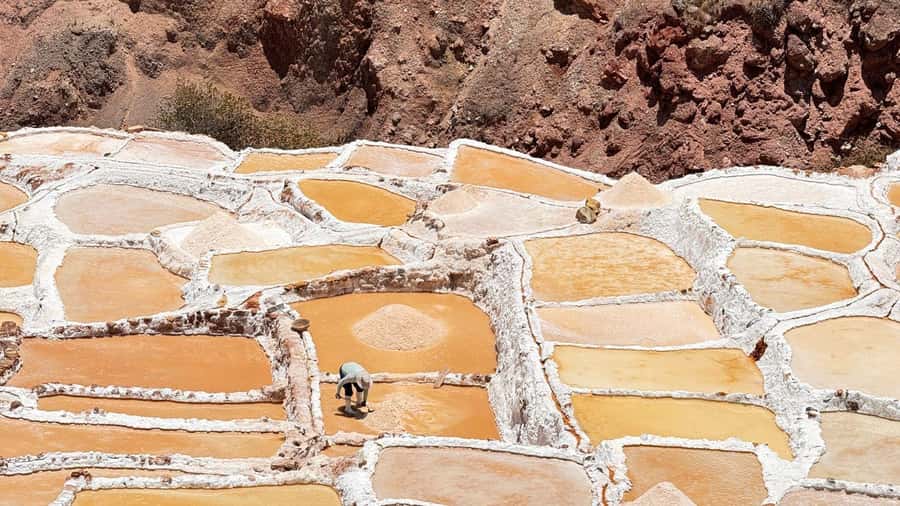
The salt pans spread across the mountainside in hundreds of small pools. Mineral-rich water flows through the system, and salt is collected from the evaporation process. The view is unusual, and it gives the day a welcome change from stone terraces and temples.
The salt mine entrance is not included. The stated cost is 20 soles. You should also carry cash for other purchases and fees, since card payment may not be available at every stop.
This is one place where expectations matter. The route can include a salt shop or a stop selling local specialties, and some people find these pauses unnecessary. One useful tip is to compare prices before buying. A salt shop outside the main mine area may sell similar products at a lower price.
I would treat the shopping as optional. If you are interested in salt products, it can be worthwhile. If not, use the stop to take photographs and enjoy the view, but do not expect all of the 20 minutes to feel like a formal archaeological visit.
A few more Cusco trips worth lining up side by side
- Classic Inca Trail Trek 4D/3N to Machu Picchu (Group Service)
★ 5.0 · 8,653 reviews - Cusco: Rainbow Mountain and Red Valley Day Trip with Meals
★ 4.9 · 4,893 reviews - Machu Picchu: 4-Day Inca Trail Trek with Panoramic Train Ride
★ 5.0 · 4,568 reviews - Salkantay Classic Trek 5 Days from Cusco
★ 5.0 · 4,062 reviews
Urubamba lunch is the day’s best surprise
The bus then drops into Urubamba, at about 2,780 meters. This lower elevation usually feels more comfortable than Chinchero, Moray, or Maras, and the tour stops for a buffet lunch lasting about 50 minutes.
The meal is one of the strongest reasons this outing offers good value. The restaurant is described as pleasant and spacious, with a broad buffet of Peruvian and Novo-Andean dishes. The menu includes enough choice to suit different tastes, and one meal was also reported as workable for a vegetarian diner and someone with celiac disease.
I like the inclusion of a proper buffet because it saves you from hunting for lunch in an unfamiliar town during a tightly timed day. You can sample several dishes at once, and the meal provides a real break from the minibus.
The drawback is timing. Fifty minutes passes quickly when a whole group must eat, and the lunch stop is not a chance to wander around Urubamba. Still, for a $25 tour that includes transport, a guide, and lunch, this meal adds a surprising amount of value.
Ollantaytambo deserves more than 50 minutes
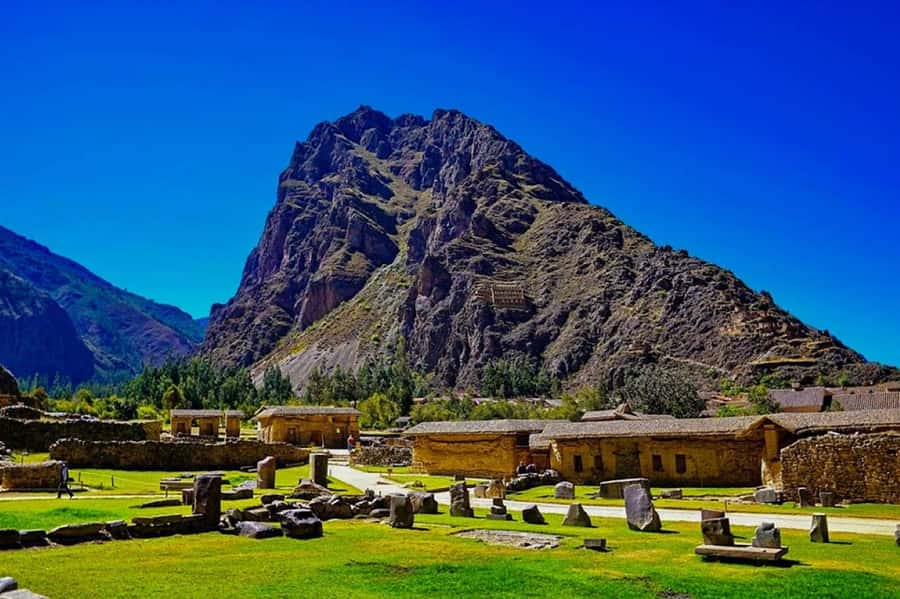
After lunch, you spend about 30 minutes traveling to Ollantaytambo. The archaeological visit lasts approximately 50 minutes and includes a guided tour and photographs.
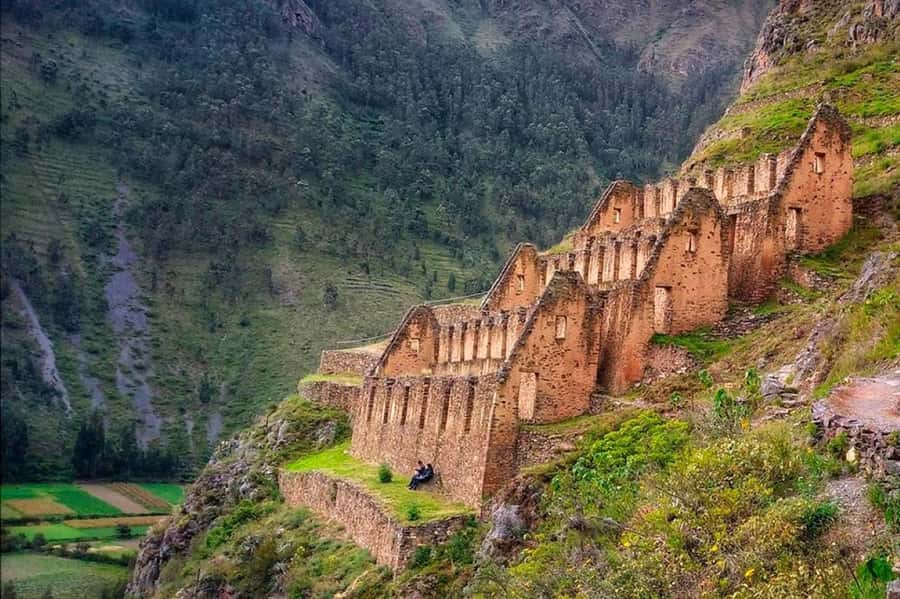
Ollantaytambo was an Inca tambo, or resting place, and it later became an important starting point for the route toward Machu Picchu. The site is known for its huge stone terraces, the Temple of the Sun, and the Princess Baths fountain.
This is one of the most impressive stops because the scale of the stones and the steep terraces give you a strong feel for Inca engineering. The location also matters. Ollantaytambo is not an isolated ruin in the hills. It connects architecture, transport, water management, and the living town nearby.
Fifty minutes is enough for a guide to explain the main structures and point out good photographs. It is not enough if you want to climb every terrace, linger over the stonework, and explore at your own speed. Several guests found Ollantaytambo and Pisac a little rushed, and I think that is the fairest criticism of the schedule.
If you have a spare day in Cusco, Ollantaytambo is a strong candidate for a slower visit. On this tour, listen closely during the guide’s explanation, since you may have little time to study every detail independently.
Pisac closes the ruins portion with big views
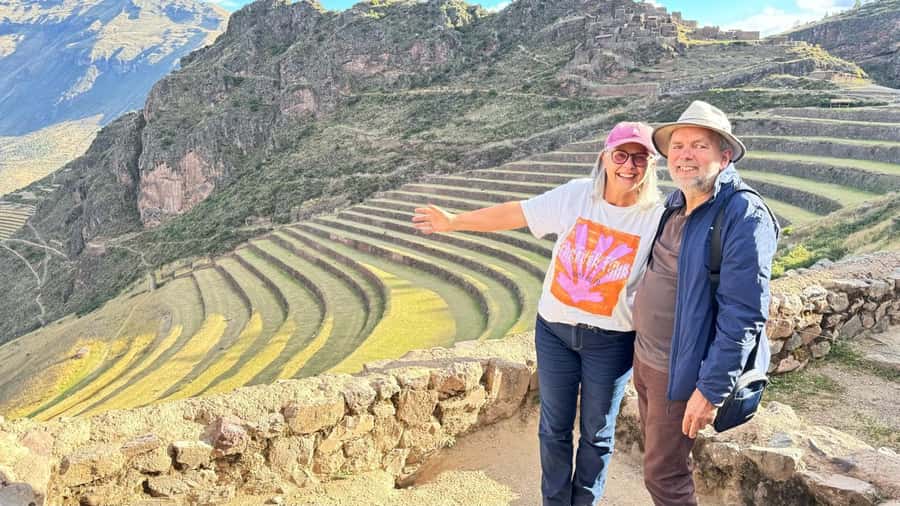
The bus ride from Ollantaytambo to Pisac takes about 80 minutes. That is the longest transfer of the day, but it brings you to the Pisac Archaeological Park, built high on a mountain above the town.
The guided visit lasts around 45 minutes and includes photographs, walking, sightseeing, and some free time. Pisac is a memorable final ruin because the terraces and mountain views spread widely around you. The setting gives the site a strong visual finish after the enclosed circles at Moray and the monumental walls at Ollantaytambo.
Pisac sits at about 3,300 meters, lower than Chinchero but still high enough to affect your breathing. There are climbs and uneven paths, so comfortable sportswear and practical shoes matter more than fashionable clothing.
After the upper site, the tour returns to the town of Pisac for its artisan market. Local craftspeople are known for working with minerals, and you can browse or buy souvenirs. Prices vary, so compare items before purchasing. This is a useful place to shop if you already planned to buy something, but it can feel like another commercial stop if you are focused only on ruins.
What the guides add to a very full schedule
The guide can make or break a fast group tour. This experience uses English and Spanish-speaking professional guides, and several names have drawn particularly warm praise.
Victor is often described as friendly, passionate, and strong on Inca culture. Rudy brings energy, humor, and a good sense of timing, while also moving between English and Spanish for a mixed group. William or Willian is praised for clear explanations and enthusiasm for Peru’s past. Guillian has also been credited with giving useful information before and during every stop.
These guides do more than recite dates. They help you understand why a site matters before you walk into it, which is important when you have only 35 or 50 minutes. A good guide also keeps the group moving without making the day feel like military training.
The pace remains the pace, though. Even the best guide cannot create more time at Ollantaytambo or Pisac. If you prefer long solo walks, quiet photographs, or detailed study of one site, a private or two-day plan will suit you better.
The real cost and value of the tour
At $25 per person, the price is unusually low for a 12-hour outing with hotel pickup, shared transport, a bilingual guide, and buffet lunch. You still need to pay 70 soles for the tourist ticket and 20 soles for the salt mines, so include those costs when setting your budget.
You should also carry cash for food, drinks, souvenirs, and any additional shopping. The tour asks you to bring a passport, camera, daypack, sportswear, food and drinks, and cash. Drinks are not allowed inside the vehicle, so carry them for use during stops rather than while riding.
The value is strongest if you are short on time. Hiring separate transport to reach six destinations would be more complicated, and you would need to arrange your own meals and site explanations. The value is weaker if your priority is quiet, slow sightseeing, since the schedule is built around coverage rather than lingering.
The tour ends at Plaza San Francisco, with drop-off listed at Plaza Kusipata or Calle Plateros depending on the arrangement. Those central locations are useful if you want to continue into Cusco on foot, but you should confirm your exact drop-off point.
Altitude, comfort, and who should book
Cusco sits at 3,350 meters, or about 10,990 feet. Chinchero, Moray, and Maras rise to 3,762 meters, while Urubamba and Ollantaytambo are much lower. That change in elevation is one of the interesting features of the route, but it can also make the walking feel uneven from stop to stop.
I would not make this your first demanding activity immediately after landing if you are sensitive to altitude. One person found the second day in Cusco difficult, with numb hands and trouble breathing, even though the tour still felt worthwhile. That is a reminder to be sensible, rest when needed, and tell the guide if you feel unwell.
The outing is not considered suitable for pregnant women or people over 220 pounds, or 100 kilograms. Drones are not allowed, and the usual rules prohibit littering, fires, fireworks, fishing, and similar activities.
You can cancel up to 24 hours before departure for a full refund, and the reserve-now, pay-later option keeps your plans flexible. Those policies are useful, but the bigger planning issue is time: keep your evening open after the stated return window.
Should you book this Sacred Valley tour?
Book it if you have one free day, want to see the main sights around Cusco, and value a guide and lunch more than unhurried time. The combination of Chinchero textiles, Moray terraces, Maras salt pans, Urubamba food, Ollantaytambo stonework, and Pisac views gives you a broad introduction for very little money.
Skip it if you have several days and want to savor each place. In that case, split the route across at least two days, giving Ollantaytambo and Pisac the time they deserve.
For most short-stay visitors, I would book it, bring cash, wear good walking clothes, expect altitude, and accept that the day will be a fast-moving sampler. At this price, the lunch and transport alone make the decision easier. Just do not mistake VIP wording for a private, leisurely outing. This is a busy shared tour that delivers a lot.
FAQ
How long does the Sacred Valley tour last?
The advertised duration is 12 hours. The planned return to Cusco is around 6:30 or 7 p.m., although the exact timing can vary.
Does the tour pick me up at my hotel?
Yes. Pickup is provided from hotels or accommodations in the city of Cusco, with collection planned about 30 minutes before departure.
Which places are included?
The route includes Chinchero, Moray, Maras salt mines, Urubamba, Ollantaytambo, and Pisac Archaeological Park, followed by the Pisac artisan market.
Is lunch included?
Yes. A buffet lunch in Urubamba is included, featuring Peruvian and Novo-Andean dishes.
Are entrance tickets included?
The tourist ticket costing 70 soles is not included. The Maras salt mine entrance, listed at 20 soles, is also separate.
What languages are available?
The tour offers live guiding in English and Spanish.
How high does the tour go?
Chinchero, Moray, and Maras are listed at 3,762 meters, or 12,342 feet. Cusco is at 3,350 meters, Pisac Archaeological Park at 3,300 meters, and Urubamba and Ollantaytambo at about 2,780 meters.
What should I bring?
Bring your passport, camera, cash, food and drinks, a daypack, and sportswear.
Who should not take this tour?
The experience is not suitable for pregnant women or people weighing more than 220 pounds, or 100 kilograms.
Added recently around Cusco
- Guided tour of the mountain of colors in Cusco★ 5.0 · 11 reviews
- 2-Day Private Short Inca Trail to Machu Picchu★ 5.0 · 15 reviews
- City Tour Cusco – Group★ 5.0 · 4 reviews
- Tour Sacred Valley with Maras and Moray★ 5.0 · 15 reviews
- San Pedro Market Tour with Peruvian Cooking Class★ 5.0 · 31 reviews
- Walking Culinary Experience★ 5.0 · 41 reviews
- City Tour in Cusco★ 4.5 · 10 reviews
- One Day Tour to Humantay Lagoon★ 5.0 · 8 reviews
Sacred Valley Tours, compared.
Sacred Valley & Maras Salt Mines Tour with Lunch
Read our review →
Moray, Maras Salt Mines & Chinchero Weavers Tour
Read our review →
2-Day Tour: Sacred Valley and Machu Picchu by Train
Read our review →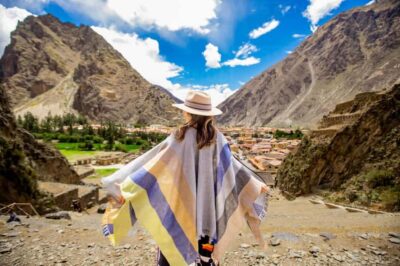
Sacred Valley, Pisac, Ollantaytambo, Salt Mines Moray
Read our review →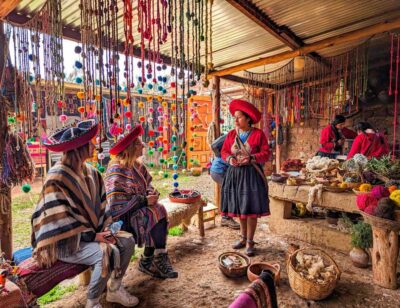
Chinchero,Moray & Salt Mines drop-off in Ollantaytambo
Read our review →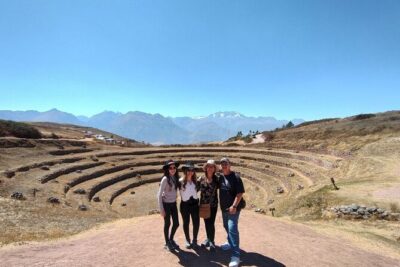
Sacred Valley and Maras Moray Tour with Full Day Buffet Lunch
Read our review →

Browse the lists this tour appears in