
Reviewed · SACRED VALLEY TOURS
Sacred Valley Chinchero Moray Salineras Ollantaytambo with buffet
Six Sacred Valley stops, one very full day. This $34 tour links Chinchero, Moray, the Maras salt pools, Urubamba, Ollantaytambo, and Pisac in about 11 hours, giving you a broad look at Inca engineering, Andean village life, and mountain scenery. I especially like the small group limit of 17 people and the included buffet lunch, which make a long day easier to manage.
I also like that the route reaches places with very different moods: Chinchero feels like a working highland village, Moray reveals bold agricultural planning, and Ollantaytambo brings you into one of the Sacred Valley’s most impressive Inca settlements. The main drawback is simple: the schedule is packed, and the altitude, transport time, and steep archaeological sites can make the day tiring.
In This Review
- Key things to know before booking
- What this $34 Sacred Valley tour really covers
- Chinchero at 3,765 meters: village life and Inca stonework
- Moray’s 330-foot agricultural circles
- Maras salt pools and a separate S/20 entry fee
- Urubamba lunch at Restaurant 14 Inkas
- Ollantaytambo: terraces, temples, and a defended valley entrance
- Pisac’s stonework and ceremonial complex
- The guide, group size, and pace
- Who should book this Sacred Valley day trip?
- Should you book it?
- FAQ
- How long does the Sacred Valley tour last?
- What places does the tour visit?
- Is hotel transportation included?
- Is lunch included?
- Are entrance tickets included in the $34 price?
- What languages does the guide speak?
- What is the maximum group size?
Key things to know before booking
- Chinchero begins the day at 3,765 meters, with adobe buildings, traditional clothing, and a famous Inca stone wall.
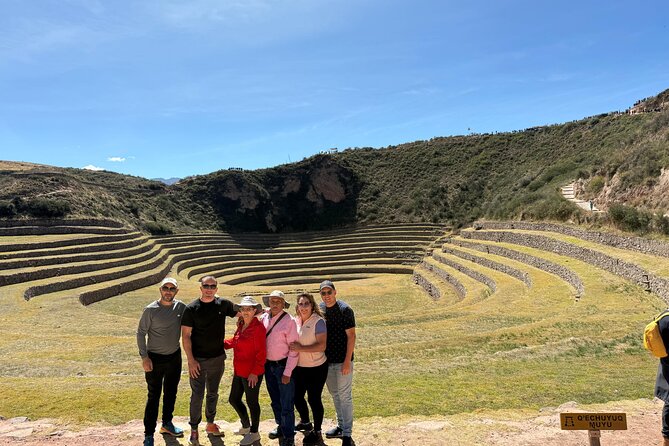
- Moray’s circular terraces reach about 330 feet deep, creating one of the most unusual sights in the Cusco region.
- The Maras salt pools are included in the route, but not in the tour price, so budget S/20 for entry.
- A buffet lunch at Restaurant 14 Inkas in Urubamba gives you a proper two-hour break between ancient sites.
- The partial ticket costs S/70 and covers the archaeological parks at Ollantaytambo, Pisac, Chinchero, and Moray.
- Ollantaytambo and Pisac require energy, with steep terraces, large stonework, and plenty of walking.
What this $34 Sacred Valley tour really covers
At $34 per person, this is an aggressive price for a full-day route through six major stops. You get transport from your Cusco hotel, an English and Spanish-speaking guide, guided visits, and a buffet lunch. The price does not cover the main archaeological admission ticket or entry to the Maras salt mines, so the real cost is higher once you add S/70 for the partial ticket and S/20 for Maras.
That still makes the outing good value if you want to see many major Sacred Valley sights in one day. Buying separate transport between Chinchero, Moray, Maras, Urubamba, Ollantaytambo, and Pisac would be awkward and likely more expensive. The tradeoff is time. You will spend many hours moving between sites, with less freedom to linger than you would have on a private trip.
The group size is capped at 17 people. That is small enough for a guide to answer questions without the outing feeling like a moving crowd, but it is not a private tour. If you want to set your own pace, especially at Pisac or Ollantaytambo, a private arrangement would suit you better.
The day lasts about 11 hours. That matters in Cusco, where early starts, high altitude, steep paths, and long drives can take more out of you than expected. I would treat this as a sightseeing marathon, not a relaxed village ramble.
More Sacred Valley days out:
- From Cusco: Moray, Maras Salt Mines & Chinchero Weavers Tour
★ 4.8 · 1,925 reviews - 2-Day Tour: Sacred Valley and Machu Picchu by Train
★ 5.0 · 1,127 reviews - Cusco: Sacred Valley, Pisac, Ollantaytambo, Salt Mines Moray
★ 4.6 · 1,058 reviews
Chinchero at 3,765 meters: village life and Inca stonework
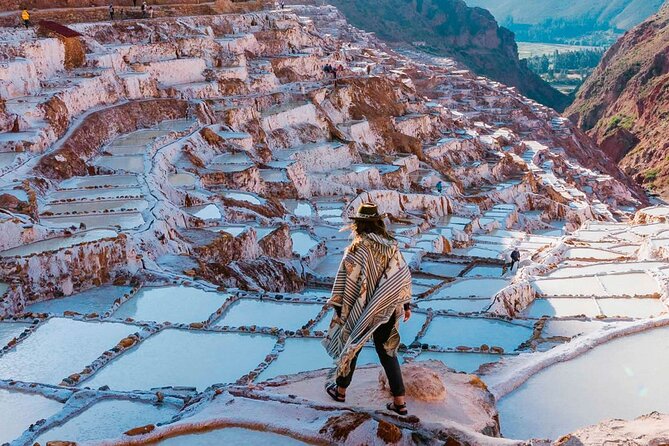
After about an hour of transport, you reach Chinchero, a high Andean village on the windswept plains of Anta. At 3,765 meters, it is higher than Cusco, so your first stop is also a reminder to keep your pace calm and carry water.
Chinchero is linked to the old story that it was the mythical birthplace of the rainbow. The setting helps explain the legend. From the village, you can see across the Sacred Valley toward the Vilcabamba Range, with snowy Salkantay visible on the western horizon when conditions are clear.
The village itself is made up largely of adobe houses. Local people still go about daily business in traditional dress, giving the stop a more grounded feel than a purpose-built sightseeing site. Chinchero is also known for its Sunday market, which is less geared toward visitors than the market at Pisac. This itinerary does not specify a Sunday departure, so do not assume the market will be operating.
The key sight is the huge stone wall beside the main square. Its ten trapezoidal niches are a fine example of Inca stonework and give you a strong first lesson in the builders’ precision. The visit is scheduled for two hours, enough time for the village and archaeological remains, though admission is not included in the base price.
Because Chinchero is the first stop, you may still be adjusting to the altitude. I would avoid rushing up stairs or treating the first hour as a workout. The point here is to notice how Inca remains and present-day village life share the same small setting.
Moray’s 330-foot agricultural circles
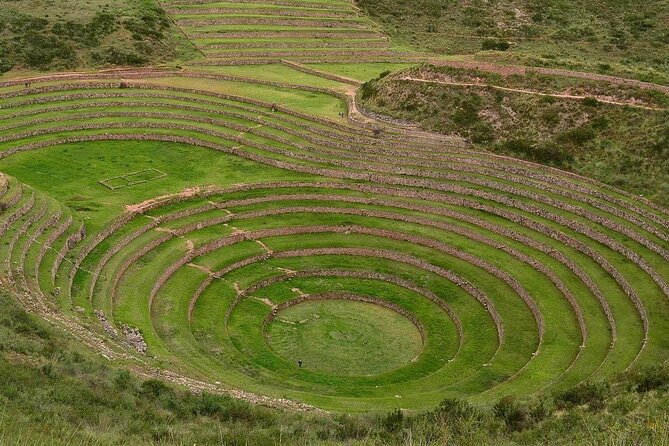
A drive of about 30 minutes brings you to Moray. The site is famous for its huge circular terraces, which descend as much as 330 feet. From above, the rings look almost like a natural amphitheater, but their shape reflects careful planning.
Moray shows that Inca achievement was not limited to temples and fortresses. The terraces, retaining walls, and irrigation system were tied to agriculture. The design is commonly understood as a way to create different microclimates, allowing people to test or grow various crops at different levels.
That idea makes Moray more interesting than a quick photo stop. You are looking at a place where farming, water management, and engineering worked together. A guide can help connect the terraces to the wider Inca system of food production, which is especially useful if you have already seen agricultural terraces elsewhere in Peru.
The visit lasts about one hour, and admission is separate from the $34 tour price. The site is open and exposed, with little shelter mentioned in the tour information, so practical clothing matters. You will get the best sense of Moray from an elevated viewpoint, but the value of the visit comes from looking closely at the repeated walls and imagining the labor needed to shape the circles.
Maras salt pools and a separate S/20 entry fee
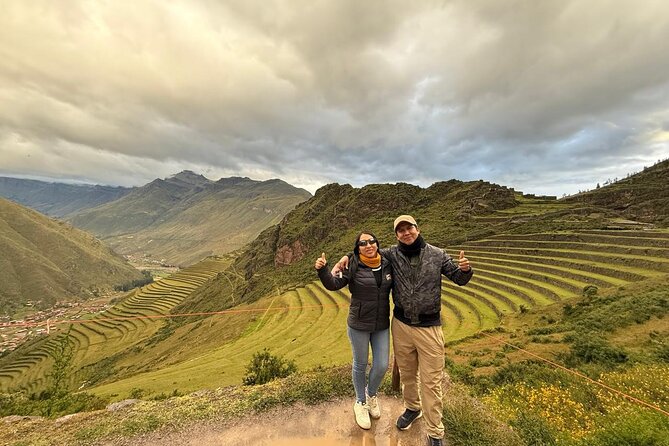
After another half-hour of transport, the route reaches the Maras salt mines, also called the salt pools of Maras. They are located in the rural community of Pichingoto and are one of the day’s strongest photography stops.
The pools spread across the mountainside in a striking pattern. Salt water flows into the individual basins, where it evaporates and leaves salt behind. The result is a scene that looks completely different from Moray, even though the two sites are close enough to be visited on the same day.
Entry to Maras is not included. You should plan for the stated S/20 admission fee in addition to the S/70 archaeological ticket. This is an important cost detail because the headline price makes the outing look almost all-inclusive at first glance.
The route is also linked with walking and mountain-biking paths connecting the salt mines with Tarabamba and Pichingoto. This organized visit is not presented as a hiking tour, so you should not expect a long trail outing. Still, the information suggests why the area appeals to walkers and cyclists as well as photographers.
The wider Maras area includes the Moray site and the adobe Sanctuary of Tiobamba, a colonial church with Cusco School paintings, including a Last Supper. The schedule specifically gives you Moray and the salt pools, not a separate Tiobamba visit, so consider the church an additional point of local interest rather than a promised stop.
A few more Cusco trips worth lining up side by side
- Classic Inca Trail Trek 4D/3N to Machu Picchu (Group Service)
★ 5.0 · 8,653 reviews - Cusco: Rainbow Mountain and Red Valley Day Trip with Meals
★ 4.9 · 4,893 reviews - Machu Picchu: 4-Day Inca Trail Trek with Panoramic Train Ride
★ 5.0 · 4,568 reviews - Salkantay Classic Trek 5 Days from Cusco
★ 5.0 · 4,062 reviews
Urubamba lunch at Restaurant 14 Inkas
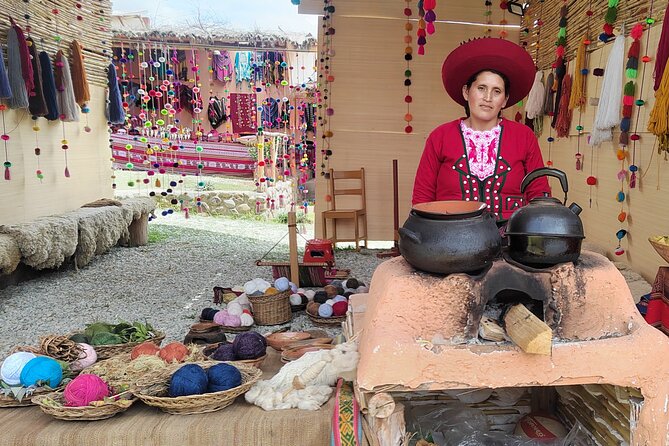
After roughly 45 minutes on the road, you arrive in Urubamba for a two-hour rest and lunch. This pause is more valuable than it may sound. By this stage, you have already covered a high-altitude village, a major agricultural site, and the salt pools.
Lunch is a buffet at Restaurant 14 Inkas, with a range of national and typical local dishes. Soft Andean music accompanies the meal. A buffet works well for a mixed group because you can choose familiar food, try local dishes, and control how much you eat before the afternoon’s walking.
I like that lunch is not treated as a rushed roadside stop. A proper break gives you time to sit down, recover, and prepare for Ollantaytambo and Pisac. The schedule allows two hours, though that period includes the meal stop rather than two hours of eating.
The tour description does not list the exact buffet menu, so I would keep expectations sensible. You are getting a broad selection rather than a private tasting menu. For a budget group outing, the included lunch adds real value and removes one common worry on a long day.
Ollantaytambo: terraces, temples, and a defended valley entrance
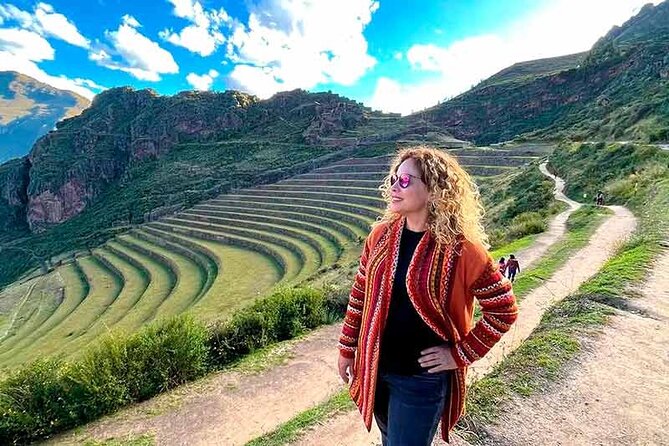
The road to Ollantaytambo takes about an hour. The village sits at roughly 9,160 feet and is known for preserving the layout of its Inca buildings. Its position between mountains helped make it a defensive gateway into the valley.
The archaeological complex includes a ceremonial temple connected with water worship and a fortress built to guard against invasion. Large terraces climb the hillside, and the stonework gives the site a sense of scale that smaller ruins cannot match.
You may also hear about the Temple of the Sun, Incamisana, the Baths of the Ñustas, Cachiccata’s funeral towers, and the steep stepped terraces along the hill. The route allows two hours here, which is useful because the site is not a single monument. It is a collection of terraces, walls, religious spaces, and defensive structures spread across uneven ground.
This is one of the day’s more demanding stops. The staircase to the upper terraces is steep, and the altitude makes each climb feel harder. You do not need to race to the top to appreciate the site. I would focus on the stone terraces, the valley entrance, and the way the village still follows the old Inca plan.
Admission to Ollantaytambo is covered by the S/70 partial ticket, not by the base tour price. Keep the ticket safe because it also covers the other three named archaeological parks.
Pisac’s stonework and ceremonial complex
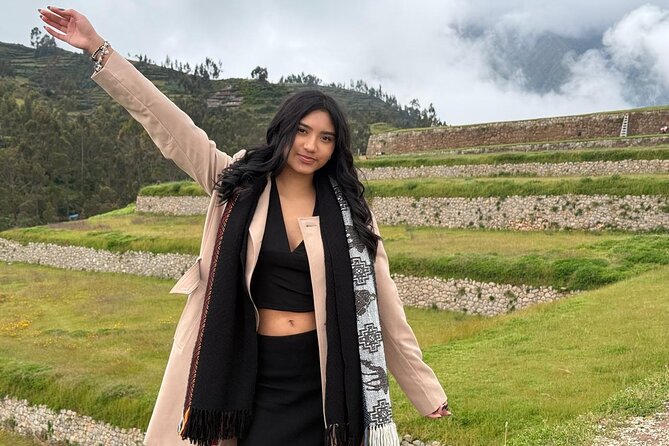
The final listed stop is Pisac, with two hours scheduled for the visit. The site is known for carefully fitted stone walls, terraces, ceremonial buildings, palaces, towers, and connecting paths.
Pisac comes from a Quechua word meaning partridge, a bird found in the area. The complex is often linked with the Inca Pachacutec and is described as a site with both ceremonial and residential functions. Its buildings use sedimentary rock, and the precise joints are a good place to notice the careful proportions that define Inca construction.
The word Pisac is often associated with the market in the town below, but this itinerary focuses on the archaeological complex. Do not assume that the market is included, particularly because the tour description gives no separate market time.
Two hours lets you see a fair amount, but the same practical warning applies as at Ollantaytambo. Expect walking, uneven surfaces, and steep terraces. After a full day, Pisac can feel like a final test of your legs. On the other hand, ending with another major Inca complex gives the day a strong finish.
The admission information needs attention here. The S/70 partial ticket is said to cover Pisac, Ollantaytambo, Chinchero, and Moray. The stop description lists Pisac admission as free, but the separate ticket information indicates that you should budget for the partial ticket. I would follow the stated ticket requirement and confirm the current rules when booking.
The guide, group size, and pace
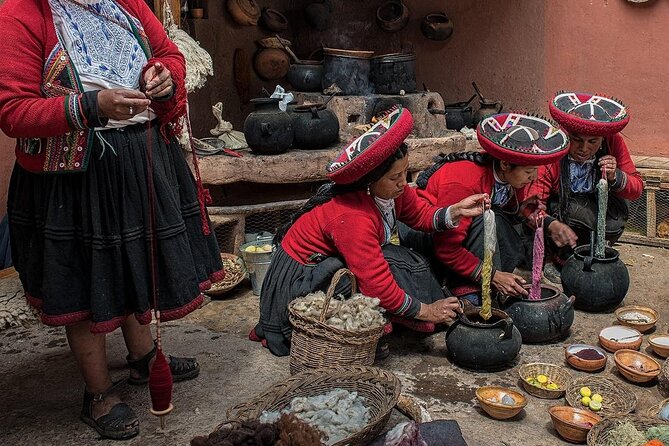
The bilingual guide leads the visits in English and Spanish and provides explanations at each archaeological site. The only direct guide feedback provided is strongly positive: the guide was praised for explaining how the Inca people lived, pointing out details along the way, and answering questions.
That is exactly where a guide adds value. Without context, Moray is a set of circles, Chinchero is a wall, and Ollantaytambo is a steep pile of impressive stones. With clear explanations, you can connect farming, religion, defense, water, and settlement planning.
A maximum of 17 people keeps the group manageable. Still, your pace will be shaped by the whole group and by the fixed transport schedule. I would choose this outing if I value seeing a wide range of places more than lingering at one ruin.
Who should book this Sacred Valley day trip?
This tour suits you if you have limited time in Cusco and want a broad introduction to the Sacred Valley. It is especially useful if you want one organized day covering village life, agricultural engineering, salt production, a buffet meal, and two major Inca complexes.
It is also a good fit if you appreciate having transport arranged between scattered sites. The itinerary covers enough ground that independent connections would take planning, patience, and probably more money.
I would think twice if you dislike early starts, long road periods, or structured group schedules. The day is also a poor match for anyone hoping to explore Chinchero’s Sunday market at leisure, hike extensively around Maras, or spend half a day at Ollantaytambo alone.
Altitude deserves attention. Chinchero reaches 3,765 meters, and Ollantaytambo is listed at about 9,160 feet. The tour says most people can participate, but the combination of elevation, stairs, and an 11-hour schedule still calls for a measured pace.
Should you book it?
Book this tour if your priority is maximum Sacred Valley coverage for a low starting price. The included hotel transfer, bilingual guide, guided visits, small group limit, and buffet lunch make $34 a strong value before admission fees.
Skip it if you want a slow, personal day or if you already plan separate visits to Pisac and Ollantaytambo. For everyone else, this is a practical first look at the region, provided you budget S/70 for the four archaeological parks, S/20 for Maras, and enough energy for a very full day.
Free cancellation is available up to 24 hours before the start time. The outing requires good weather, and poor conditions may lead to a new date or a full refund.
FAQ
How long does the Sacred Valley tour last?
The tour lasts approximately 11 hours.
What places does the tour visit?
The route includes Chinchero, Moray, Maras, Urubamba, Ollantaytambo, and Pisac.
Is hotel transportation included?
Yes. Transfer from a Cusco hotel is included.
Is lunch included?
Yes. The tour includes a buffet lunch at Restaurant 14 Inkas in Urubamba, with national and local dishes and soft Andean music.
Are entrance tickets included in the $34 price?
No. The partial ticket for Chinchero, Moray, Ollantaytambo, and Pisac costs S/70. Entry to the Maras salt mines costs S/20.
What languages does the guide speak?
The guide provides service in English and Spanish.
What is the maximum group size?
The tour has a maximum of 17 people.
Added recently around Cusco
- Super valley or vip valley★ 5.0 · 13 reviews
- the Incas’ Sacred Valley★ 5.0 · 27 reviews
- Sacred Valley of the Incas Day Trip from Cusco★ 5.0 · 6 reviews
- Small-Group Tour: Rainbow Mountains Hiking from Cusco★ 4.0 · 5 reviews
- Excursion to the Sacred Valley of the Incas from Cusco★ 5.0 · 8 reviews
- Maras + Moray & Textile Experience★ 5.0 · 14 reviews
- Tour EN Cuatrimoto POR la Montaña 7 Colors Hike 5 Minutes★ 4.5 · 32 reviews
- rainbow mountain★ 4.0 · 4 reviews
Sacred Valley Tours, compared.
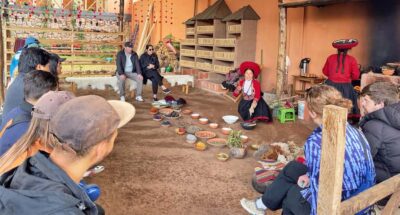
Sacred Valley & Maras Salt Mines Tour with Lunch
Read our review →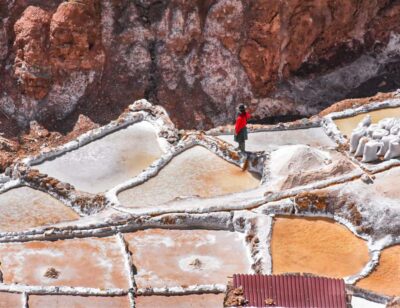
Moray, Maras Salt Mines & Chinchero Weavers Tour
Read our review →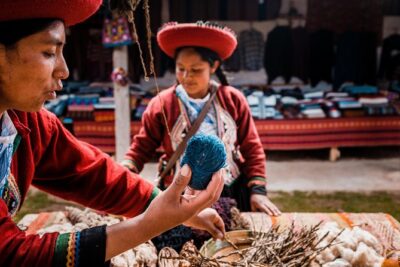
2-Day Tour: Sacred Valley and Machu Picchu by Train
Read our review →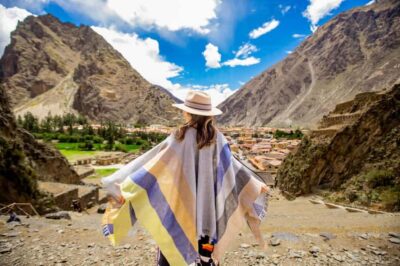
Sacred Valley, Pisac, Ollantaytambo, Salt Mines Moray
Read our review →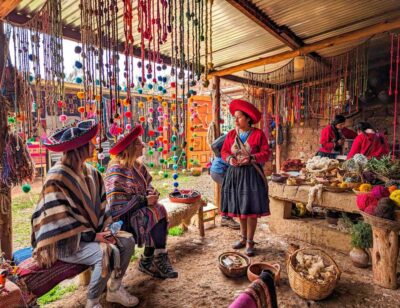
Chinchero,Moray & Salt Mines drop-off in Ollantaytambo
Read our review →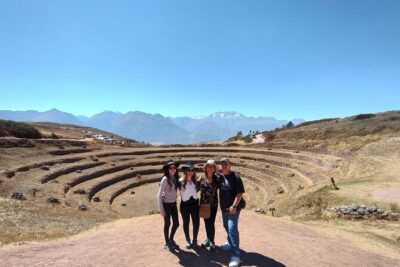
Sacred Valley and Maras Moray Tour with Full Day Buffet Lunch
Read our review →

Browse the lists this tour appears in