
Reviewed · SACRED VALLEY TOURS
Sacred Valley Max: Small Group Tour with Local Lunch
The Sacred Valley packs a lot into one day. This 11-hour small-group outing links Pisac, Ollantaytambo, Maras, Moray, and Chinchero with an English-speaking guide, hotel pickup, and a local lunch. I especially like the mix of major Inca sites and living Andean traditions, plus the group limit of 12, which should make questions and pacing easier.
I also like that the guides, including Marcelo, Reny, Renaldi, and José Luis, are praised for clear explanations and attentive service. The main caution is simple: this is a very full day, beginning at 6:30 a.m., and the additional PEN 90 archaeological entrance fee is not included in the $119 price.
In This Review
- Key points before you book
- Why this Sacred Valley route works
- The early start from Cusco
- Pisac: ruins above the valley and a colorful market
- The Sacred Valley drive: scenery with a purpose
- Ollantaytambo: the day’s great stonework
- Local lunch in the middle of a long day
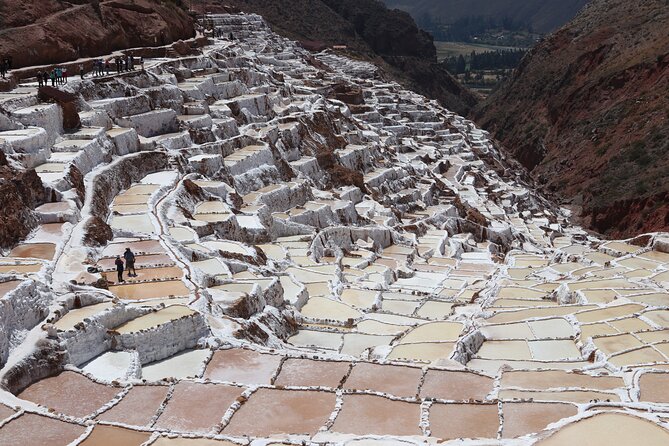
- Maras: thousands of salt pools on the mountainside
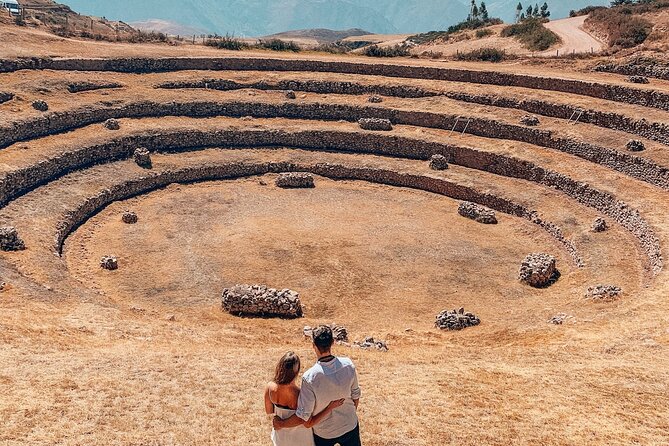
- Moray: circular terraces and Inca farming
- Chinchero: church, Inca foundations, and living textiles
- Guide quality and the value of a small group
- Is $119 a fair price?
- Who should book this tour?
- FAQ
- What time does the tour start?
- How long does the Sacred Valley Max tour last?
- What places does the tour visit?
- Is lunch included?
- Is the archaeological entrance fee included?
- How large is the tour group?
- Is hotel pickup available?
- Should you book it?
Key points before you book
- Five major stops plus a market and weaving demonstration: You see ancient terraces, salt pools, an Inca town, a colonial church, and present-day craft traditions in one day.
- Small group capped at 12 people: This is a more personal setup than a large coach tour, with a better chance to hear the guide and ask questions.
- A local lunch is included: Food is part of the package, though snacks and drinks are not.
- PEN 90 entrance fee is extra: The archaeological admission can be purchased directly at the entrance of the first site.
- 6:30 a.m. departure and about 11 hours on the road: You get a broad look at the valley, but this is not a lazy sightseeing day.
- Return near Cusco’s main square: The end point is useful if you want to keep exploring central Cusco afterward.
Why this Sacred Valley route works
Many day trips from Cusco focus on one or two headline sights. This one aims for the full picture. You move from a market in Pisac to the stone terraces of Ollantaytambo, then to the salt pans at Maras, the circular terraces of Moray, and the textile traditions of Chinchero.
That variety is the tour’s main strength. You are not spending the whole day looking at similar ruins. Instead, you see how the Inca shaped stone, farmed difficult terrain, managed natural resources, and influenced communities that remain active today.
I also like the built-in driving time through the Sacred Valley. The route includes traditional villages and broad mountain views, with short stops for photos and guide commentary. Those stretches help connect the separate sights into one larger story.
The tradeoff is time. Each stop has a listed visit of roughly one to two hours, but there are many stops, so you should expect a brisk schedule. You will see a lot. You will not have unlimited time at every location.
More Sacred Valley days out:
- From Cusco: Moray, Maras Salt Mines & Chinchero Weavers Tour
★ 4.8 · 1,925 reviews - 2-Day Tour: Sacred Valley and Machu Picchu by Train
★ 5.0 · 1,127 reviews - Cusco: Sacred Valley, Pisac, Ollantaytambo, Salt Mines Moray
★ 4.6 · 1,058 reviews
The early start from Cusco
Pickup begins at 6:30 a.m., which is early even by sightseeing standards. The benefit is that you have the whole day available for the long route, and the schedule gives each major site a useful amount of time.
Secure transport and optimized logistics are included. The group size is limited to 12, and most people can participate. The tour is offered in English and provides a mobile ticket, which keeps the booking process simple.
The drive itself is part of the experience. The route passes through the Sacred Valley, with traditional settlements and high mountain scenery along the way. One particularly useful feature is that the guide provides context during the drives, rather than treating the vehicle as dead time.
Altitude is worth taking seriously. One person described still adjusting to the elevation while finding that the guide kept a comfortable pace. That is encouraging, but I would still plan a gentle first day or two in Cusco if you are newly arrived. This tour involves several walking stops, uneven archaeological ground, and a full day away from your hotel.
Pisac: ruins above the valley and a colorful market
Pisac is the first major stop, with about two hours allotted. The ruins sit high above the valley, giving you wide views and an immediate sense of how carefully the Inca used steep terrain.
The site is more than a collection of old walls. The elevated position, terraces, and mountain setting show why this area mattered for farming, defense, and settlement. Your guide’s explanations are especially valuable here because the remains can be hard to interpret on your own.
After the ruins, you visit the local market. This is a chance to see handwoven textiles, silver jewelry, and other Andean crafts in one place. If you are shopping for a souvenir, this is one of the better moments to compare colors, patterns, and prices before buying.
Keep your expectations realistic. A market visit can be lively and colorful, but it is also a commercial stop. You may prefer browsing, while someone else in the group may want to shop. The small group size should make the transition easier, but the tour still needs to keep moving.
Admission is listed as free at this stop, though the separate archaeological ticket described below applies to the first archaeological site.
The Sacred Valley drive: scenery with a purpose
The central Sacred Valley portion lasts about an hour and a half. It is not a single monument but a scenic section of the route, with brief stops to look around and hear about the region.
This is where the tour gains some of its sense of place. You see traditional villages and changing mountain views instead of jumping from one isolated attraction to another. The drive also gives you a break after Pisac before the next major archaeological stop.
I would use this part of the day to ask questions. The guides are repeatedly praised for explaining Inca history and local culture in clear, friendly terms. Marcelo is described as balancing useful explanations with time to explore independently, while Reny is praised for making the historical context easy to understand.
That balance matters. A good guide should not talk over every moment, and the feedback here suggests that the stronger guides allow quiet time for photographs and personal exploration.
A few more Cusco trips worth lining up side by side
- Classic Inca Trail Trek 4D/3N to Machu Picchu (Group Service)
★ 5.0 · 8,653 reviews - Cusco: Rainbow Mountain and Red Valley Day Trip with Meals
★ 4.9 · 4,893 reviews - Machu Picchu: 4-Day Inca Trail Trek with Panoramic Train Ride
★ 5.0 · 4,568 reviews - Salkantay Classic Trek 5 Days from Cusco
★ 5.0 · 4,062 reviews
Ollantaytambo: the day’s great stonework
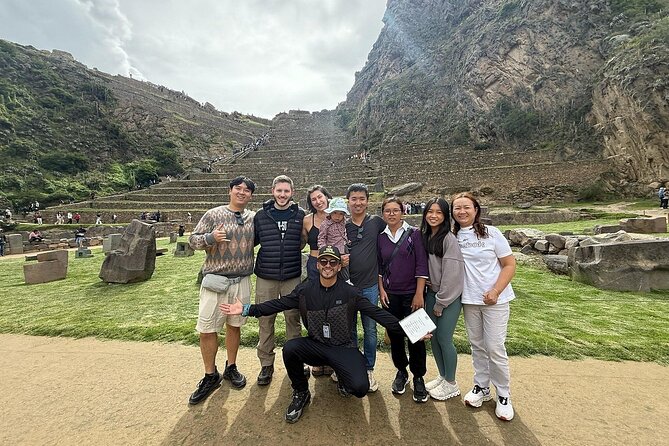
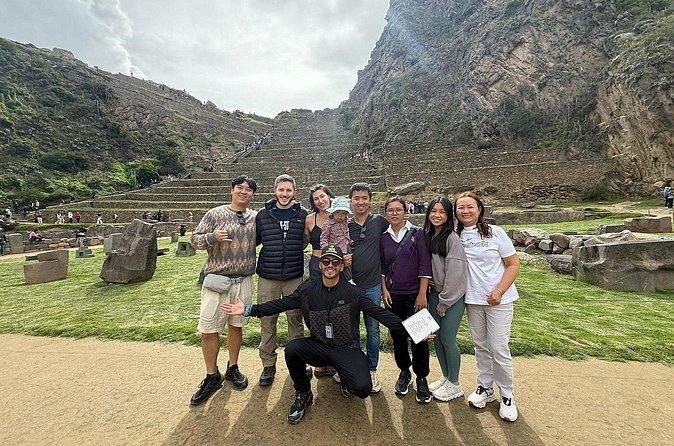
Ollantaytambo receives about 90 minutes, and it may be the most impressive ruin on the route. It is a living Inca town, with enormous stone terraces rising above it and the Temple of the Sun forming the dramatic centerpiece.
This is a stop where scale matters. The terraces show the labor and planning behind Inca construction, while the town below helps you picture how ancient design still shapes the present settlement. The site also carries stories of resistance, giving the guide a chance to explain more than construction techniques.
The stonework is the star. Massive blocks, steep steps, and terraces make this one of the places where a guide’s interpretation adds real value. Without context, you see walls and stairs. With context, you begin to understand engineering, defense, agriculture, and political power.
Ninety minutes is useful but not generous. You should arrive ready to walk and pay attention rather than treating this as a quick photo stop. If Ollantaytambo is your main reason for visiting the valley, a separate visit might give you more time. On this tour, the benefit is seeing it as part of a much wider day.
Local lunch in the middle of a long day
A local lunch is included, which is a meaningful advantage on an 11-hour excursion. You do not need to organize a meal while moving between distant sites, and the food becomes part of the regional experience rather than just a roadside interruption.
The meal has received especially warm praise, with one person calling it some of the best food they had eaten during their stay. The exact restaurant and menu are not specified, so I would treat that as a positive possibility rather than a promised culinary program.
Snacks and beverages are not included. Bring money for those, and do not assume the lunch package covers everything you may want to drink during the day. Since the tour starts early, having a small snack available is sensible.
Maras: thousands of salt pools on the mountainside
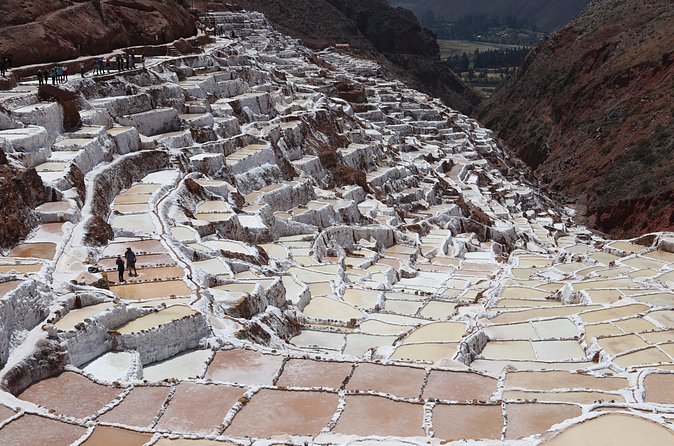
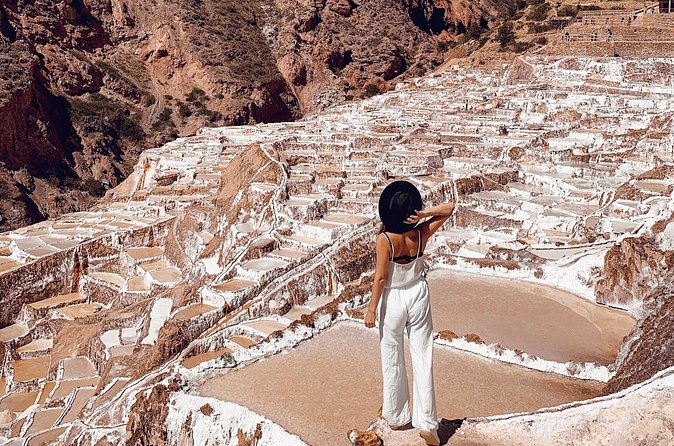
Maras is allotted one hour. Here, thousands of white salt pools spread across a mountainside, creating one of the most unusual sights near Cusco.
The pools have been used since Inca times and are still harvested by local families. That living connection makes Maras more interesting than a simple scenic viewpoint. You are seeing an old resource system that remains tied to local work and income.
The white pools contrast sharply with the surrounding rock and mountains. This is a strong photography stop, but I would also listen for the explanation of how salt collection works and why the terraces were built in this particular place.
One hour should be enough to appreciate the view and take photographs. It may feel short if you want to linger, especially when the light is good. Still, including Maras gives the route a useful change of pace after Ollantaytambo’s heavy stone architecture.
Moray: circular terraces and Inca farming
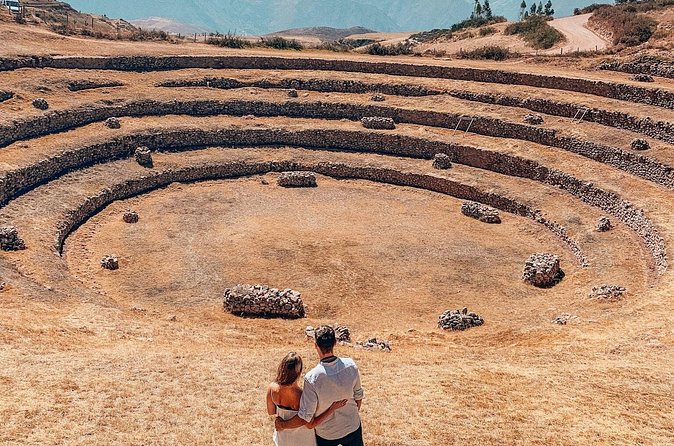
Moray takes about an hour and requires an additional admission fee. The site consists of large circular terraces sunk into the ground, often described as an ancient Inca agricultural laboratory.
The design is striking even before you know the theory behind it. The terraces create different growing conditions at different levels, offering a clue to the Inca understanding of farming, temperature, and altitude.
Your guide can help turn the shapes into a practical story about agriculture and adaptation. That context is important because Moray’s design is easy to admire but harder to understand from a quick glance.
Admission is not included here, and the tour information states that the archaeological entrance fee is PEN 90 per person, payable directly at the entrance of the first archaeological site. Confirm the payment process when you meet the guide, and keep local currency available if needed.
Chinchero: church, Inca foundations, and living textiles
Chinchero is the final featured stop, with about an hour. The village is known for Andean culture, a colonial church built over Inca foundations, and a live weaving demonstration by local women.
This may be the most human stop on the route. Ruins explain the past, but the weaving demonstration shows traditions still being practiced and taught. You can see how textile skills continue to carry cultural meaning, not just decorative value.
The church and its Inca base also show how layers of history overlap in Peru. Rather than treating the colonial period and the Inca period as separate subjects, the stop places them in the same physical setting.
The demonstration may also be a shopping opportunity, although the tour description does not promise that you will buy anything. I would view it first as a chance to understand the work behind Andean textiles. If you do want to purchase something, ask about materials and how the item was made.
Guide quality and the value of a small group
The strongest theme across the available feedback is guide quality. Marcelo is praised for professional, clear explanations and for staying attentive to the group. Reny receives similar praise for historical and cultural insight, while Renaldi is credited with passion, patience, and a good pace. José Luis is described as pleasant and attentive.
That consistency matters because this route has many locations that can blur together without a strong narrative. The guide is the person who connects a salt pool to local families, a terrace to farming, and a colonial church to Inca foundations.
A maximum of 12 people is another practical plus. You should have a better chance of hearing explanations, asking questions, and keeping track of the group at busy stops. It also makes the experience feel less like being moved through a checklist.
Still, group tours require compromise. You will follow a shared schedule, and the amount of time at each location is fixed. If you prefer to set your own pace, linger for long photographs, or skip markets, a private tour would give you more control.
Is $119 a fair price?
At $119 per person, the package includes hotel pickup, transport, an English-speaking guide, the full route, and lunch. For a day covering this much ground, that is a reasonable value, particularly with a 12-person limit rather than a large group.
The extra PEN 90 entrance fee changes the final cost, so include it in your budget. Snacks, drinks, and tips are also separate. The price is strongest for someone who wants a single organized day and values explanations, transport, and meal planning.
The value is less obvious if you plan to spend several days in the Sacred Valley. In that case, you might prefer to visit fewer places at a slower pace. This tour is designed for breadth, not a relaxed stay in one village.
Who should book this tour?
I would choose this tour if you have limited time in Cusco and want a broad introduction to the Sacred Valley. It suits history fans, first-time visitors, photographers, and anyone who wants both archaeological sites and present-day Andean culture.
It also works well as preparation for Machu Picchu, or as a follow-up after visiting it. The route gives you more context for Inca building, farming, trade, and community life without requiring a multi-day trek.
You should think twice if you dislike early starts, long drives, or full schedules. The day is rewarding because it covers so much, but you need enough energy to walk several sites and stay engaged from morning until evening.
Pickup is offered, and the tour returns you near Cusco’s main square after the day’s discoveries. Free cancellation is available if you cancel at least 24 hours before the local start time. A later cancellation or last-minute change is not refundable.
FAQ
What time does the tour start?
The tour starts at 6:30 a.m.
How long does the Sacred Valley Max tour last?
The experience lasts approximately 11 hours.
What places does the tour visit?
The route includes Pisac, the Sacred Valley, Ollantaytambo, Maras, Moray, Chinchero, and a return to Cusco near the main square.
Is lunch included?
Yes. A local lunch is included in the tour price. Snacks and beverages are not included.
Is the archaeological entrance fee included?
No. The entrance fee is listed as PEN 90 per person and can be acquired directly at the entrance of the first archaeological site.
How large is the tour group?
The tour has a maximum of 12 travelers.
Is hotel pickup available?
Yes. Pickup is offered, with the tour beginning at 6:30 a.m. and ending near Cusco’s main square.
Should you book it?
Book this tour if you want to see the Sacred Valley’s major highlights in one carefully organized day, with a small group, local lunch, and a guide who can explain the meaning behind the sites. The best parts are the range of experiences, the manageable group size, and the repeated praise for guides such as Marcelo, Reny, Renaldi, and José Luis.
Just budget for the PEN 90 entrance fee, bring money for drinks and snacks, and prepare for an early, active day. If that sounds like a fair trade for Pisac, Ollantaytambo, Maras, Moray, and Chinchero in one outing, the Sacred Valley Max tour offers strong value.
Added recently around Cusco
- Super valley or vip valley★ 5.0 · 13 reviews
- the Incas’ Sacred Valley★ 5.0 · 27 reviews
- Sacred Valley of the Incas Day Trip from Cusco★ 5.0 · 6 reviews
- Small-Group Tour: Rainbow Mountains Hiking from Cusco★ 4.0 · 5 reviews
- Excursion to the Sacred Valley of the Incas from Cusco★ 5.0 · 8 reviews
- Maras + Moray & Textile Experience★ 5.0 · 14 reviews
- Tour EN Cuatrimoto POR la Montaña 7 Colors Hike 5 Minutes★ 4.5 · 32 reviews
- rainbow mountain★ 4.0 · 4 reviews
Sacred Valley Tours, compared.
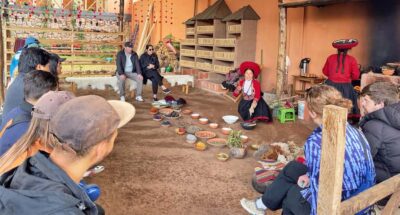
Sacred Valley & Maras Salt Mines Tour with Lunch
Read our review →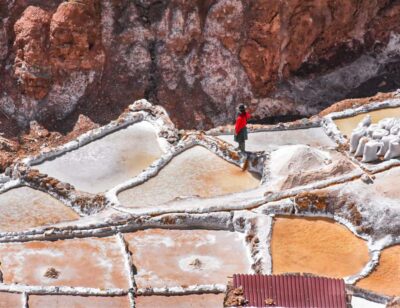
Moray, Maras Salt Mines & Chinchero Weavers Tour
Read our review →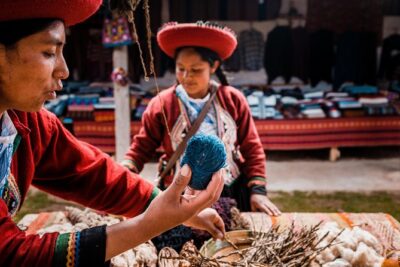
2-Day Tour: Sacred Valley and Machu Picchu by Train
Read our review →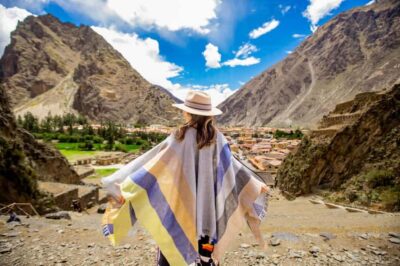
Sacred Valley, Pisac, Ollantaytambo, Salt Mines Moray
Read our review →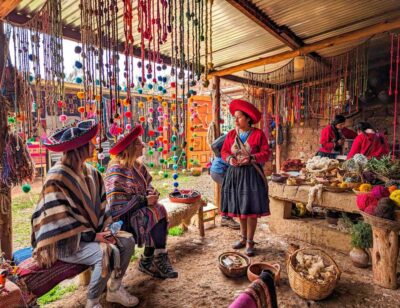
Chinchero,Moray & Salt Mines drop-off in Ollantaytambo
Read our review →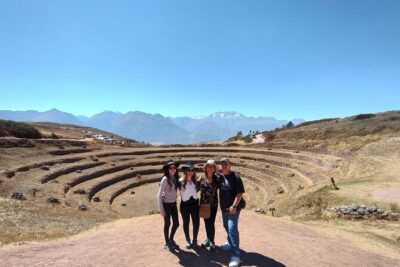
Sacred Valley and Maras Moray Tour with Full Day Buffet Lunch
Read our review →

Browse the lists this tour appears in