Reviewed · SACRED VALLEY TOURS
Sacred Valley of the Incas–Discover 5 Iconic Sites +Maras & Moray
Five Inca sites in one long day. This $26.10 Sacred Valley tour packs Chinchero, Moray, Maras, Ollantaytambo, and Pisac into roughly 12 hours, with transport, a guide, and buffet lunch included. I like the sheer variety, from Inca terraces and temples to salt pools and living streets, and I like that the group is capped at 17 people. The main drawback is the pace: you will spend much of the day climbing, walking, and riding winding roads.
You should also budget another $28 per person for the listed archaeological and salt mine tickets, bringing the basic total to about $54.10. The cultural demonstrations and shopping stops can add interest, but some people may find the sales pressure distracting, and non-Spanish speakers should confirm how much translation will be provided.
In This Review
- Key things to know before booking
- Five Inca sites, one packed schedule
- Chinchero: textiles beside an Inca residence
- Moray: circular terraces and Inca farming experiments
- Maras salt mines: thousands of pools on a mountainside
- Ollantaytambo: an Inca town still used today
- Pisac: terraces, temples, and a late finish
- The buffet lunch is a genuine strength
- Three shopping stops: useful, but know the tradeoff
- Altitude, transport, and the physical effort
- Language and guide quality can shape the day
- Is the low advertised price good value?
- Pickup and drop-off details worth checking
- Should you book this Sacred Valley tour?
- FAQ
- How long is the Sacred Valley tour?
- What time does the tour begin?
- Where does the tour start?
- Where does the tour end?
- Which archaeological sites are included?
- Are entrance fees included in the tour price?
- Is lunch included?
- How many people can join the group?
- What is the cancellation policy?
Key things to know before booking
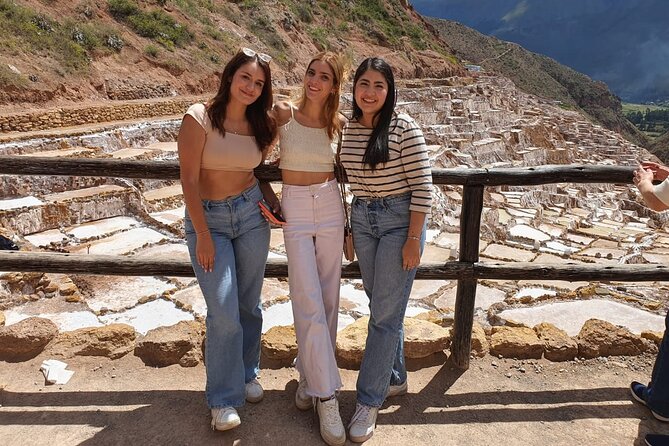
- Five major Sacred Valley sites in one day: Chinchero, Moray, Maras, Ollantaytambo, and Pisac each show a different side of Inca life.
- The price is only the starting point: Add 70 soles for the partial archaeological ticket and 20 soles for the salt mines.
- A huge buffet lunch is included: Expect a broad selection and a welcome break in the middle of a demanding schedule.
- Three commercial stops may be added: Textile, salt and chocolate, and jewelry shops are part of the day as described by participants.
- Altitude and stairs matter: Cusco sits high, and the tour includes repeated walking and climbing at several archaeological sites.
- The day begins early and may end near the main square: Pickup is offered in central Cusco, but the exact meeting and drop-off point may require a short walk.
Five Inca sites, one packed schedule
This is an efficient orientation to the Sacred Valley, not a slow archaeological study. You get roughly one hour at Chinchero, 40 minutes at Moray, 45 minutes at the salt mines, one hour at Ollantaytambo, and 45 minutes at Pisac.
That timing gives you enough room for a guided introduction and photographs, but not enough for a leisurely visit. I would choose this outing if you have limited time in Cusco and want to see the major stops in one sweep. If you prefer quiet ruins, long walks, or detailed explanations at every site, a private or two-day plan would suit you better.
The transport is shared, with a maximum of 17 people. That is a reasonable group size for a low-cost full-day outing, though loading and unloading everyone at five sites can make the schedule feel tight. The day starts around 6:30 a.m. at Plaza Regocijo, and the listed end point is Plaza de Armas in central Cusco.
More Sacred Valley days out:
- From Cusco: Moray, Maras Salt Mines & Chinchero Weavers Tour
★ 4.8 · 1,925 reviews - 2-Day Tour: Sacred Valley and Machu Picchu by Train
★ 5.0 · 1,127 reviews - Cusco: Sacred Valley, Pisac, Ollantaytambo, Salt Mines Moray
★ 4.6 · 1,058 reviews
Chinchero: textiles beside an Inca residence
Chinchero begins the historical side of the tour. Inca ruler Túpac Yupanqui chose this area for his residence, and the town remains closely linked to traditional textile production.
The appeal here is not only the archaeological complex. Chinchero is also known for handmade designs and textile work that continue an old local craft tradition. This gives you a useful connection between the Inca past and present-day village life.
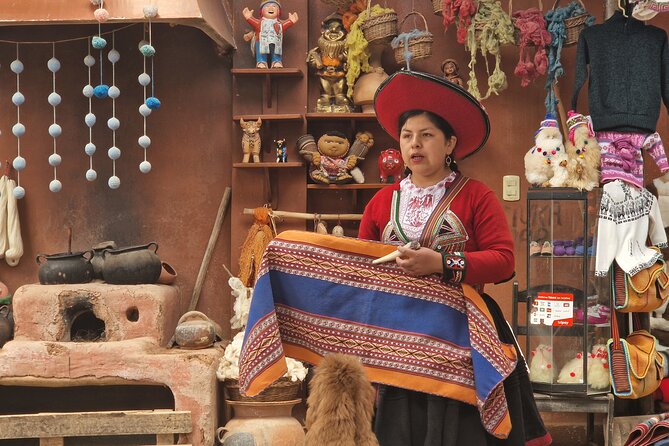
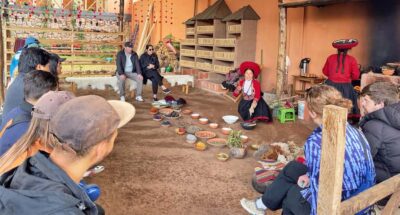
The formal stop lasts about an hour. That is enough to see the main area and listen to an introduction, but your time may also include a textile presentation. One described version included cleaning wool with a traditional root, spinning llama yarn, and watching local dancing.
I like this kind of demonstration when it is presented as a window into local work rather than as a shopping pitch. The difficulty is that the boundary can feel thin. A textile shop may offer attractive goods, but prices can be higher than those found in Cusco markets. You are not required to buy anything, so treat the demonstration as the main event and shopping as optional.
Moray: circular terraces and Inca farming experiments
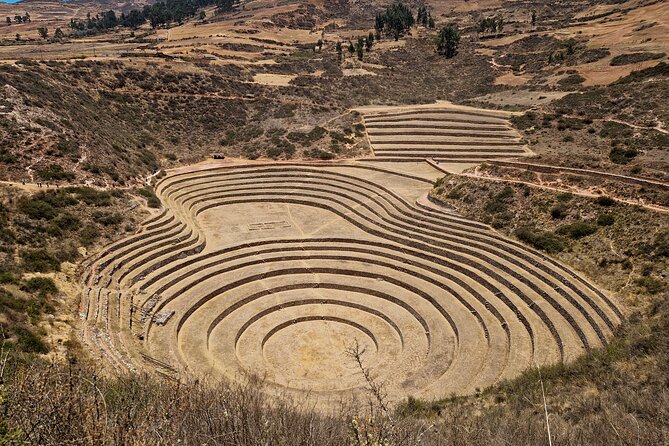
Moray is one of the most unusual stops on the route. Its enormous circular terraces sink into the earth like a series of green-brown bowls, creating a striking pattern that is easy to understand from the viewing area.
The site is described as an Inca agricultural research center, with as many as 20 different microclimates or temperature zones. The terraces likely date from the period between 1438 and 1533, and they show how carefully the Incas managed water, soil, elevation, and crops.
You get around 40 minutes here. That is a short visit, but Moray is a compact stop visually. You can take in the shape of the terraces quickly, then use the guide’s explanation to understand why this was more than an impressive construction project.
The short visit has one advantage: you do not spend too long in the sun or at altitude. Still, if Moray is one of the places you most want to study, you may wish for more time. This itinerary favors coverage over close examination.
Maras salt mines: thousands of pools on a mountainside
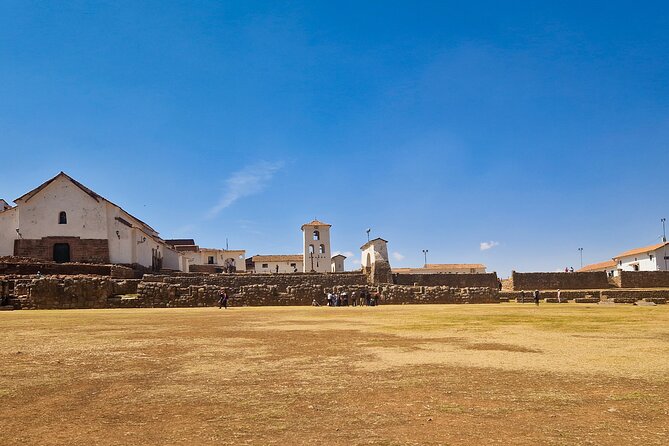
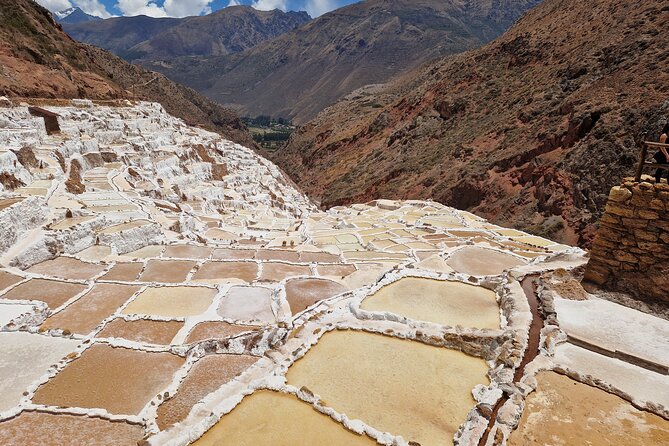
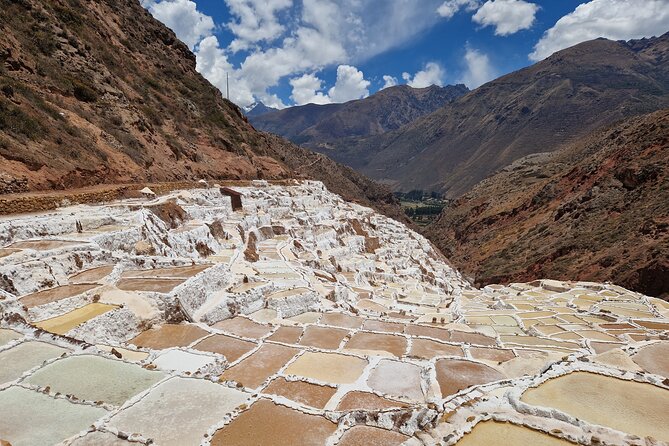
The Maras salt mines bring a completely different sight. More than 3,000 shallow pools cover the slope of Pichingoto Hill, each fed by underground water that flows through the ravine and crystallizes under strong sunlight.
Salt production here is said to reach back to the time of Tahuantinsuyo, the Inca imperial realm. The source of the water remains uncertain, which adds a small note of mystery to an otherwise practical working site.
The mines are listed at about 3,000 meters above sea level. You should expect bright sun, strong reflections, and uneven ground. The official stop is 45 minutes, but the actual viewing time can vary. One particularly negative account described only about 15 minutes at a high viewpoint, with no close approach to the pools.
That difference matters. Before booking, I would ask the operator how much time is planned at Maras on your date and exactly where the vehicle will stop. The salt mine entrance is not included in the advertised base price. The listed cost is 20 soles per person, or about $6, and the archaeological ticket is a separate 70 soles, about $22.
A small salt and chocolate stop may also follow. You can look at local products without buying them, but prices may be higher than in Cusco, including San Pedro Market. Bring cash in Peruvian soles if you plan to purchase anything, and compare prices before committing.
A few more Cusco trips worth lining up side by side
- Classic Inca Trail Trek 4D/3N to Machu Picchu (Group Service)
★ 5.0 · 8,653 reviews - Cusco: Rainbow Mountain and Red Valley Day Trip with Meals
★ 4.9 · 4,893 reviews - Machu Picchu: 4-Day Inca Trail Trek with Panoramic Train Ride
★ 5.0 · 4,568 reviews - Salkantay Classic Trek 5 Days from Cusco
★ 5.0 · 4,062 reviews
Ollantaytambo: an Inca town still used today
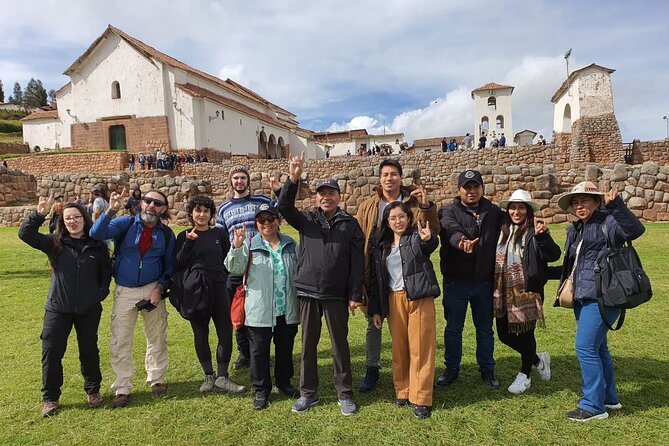
Ollantaytambo is often the emotional center of this route. The archaeological complex served military, religious, and agricultural purposes, and its terraces and stonework reveal the scale of Inca planning.
The site is also valuable because the town around it retains Inca street patterns. Narrow cobbled lanes and old foundations are part of a living settlement rather than a fully abandoned ruin. For that reason, Ollantaytambo offers more than a ceremonial complex. You can see how ancient urban design still shapes daily movement.
The scheduled visit lasts about an hour. Expect steps, terraces, and uneven paving. The scale of the walls is impressive, but the visit can be physically demanding after Chinchero, Moray, and Maras.
I especially like the mix of archaeology and ordinary town life here. You are not just looking at stones behind a fence. You are walking through a place where the old street plan remains visible and local clothing and customs are still part of the scene.
Pisac: terraces, temples, and a late finish
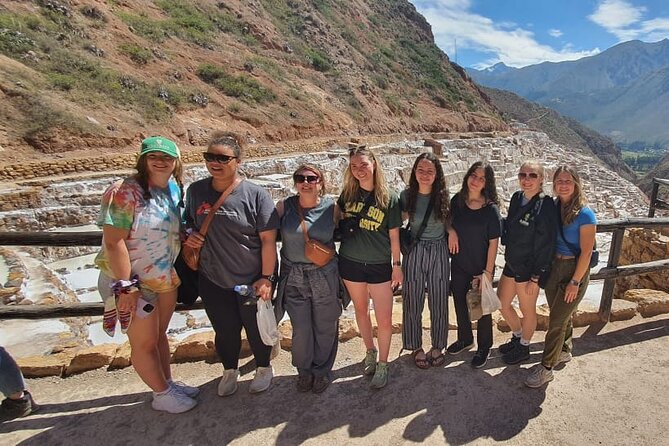
Pisac closes the archaeological circuit. Its terraces run along a steep setting, supported by irrigation channels and carefully designed stairways. The engineering is easy to appreciate even before you reach the temples.
The site includes finely worked stone structures such as the Intihuatana. The combination of farming terraces, water management, access stairs, and ceremonial buildings makes Pisac a useful final lesson in how the Incas joined agriculture, religion, and city planning.
The scheduled time is about 45 minutes. That is enough to reach important viewpoints with a brisk guide, but the stop may feel rushed if the day has run late. One account described reaching Pisac close to closing time, which created extra stress.
This is a good reason to keep your morning moving and avoid lingering too long at optional shopping stops. Pisac is not the place where you want the schedule to unravel. It is also the last major site, so fatigue will be real by then.
The buffet lunch is a genuine strength
Lunch is included, and the buffet receives some of the warmest praise. It is described as unusually large, with many dishes and good flavor. After a morning of altitude, stairs, and road time, a substantial meal is not a minor perk.
A buffet also works well for a mixed group. You can choose what appeals to you and control the size of your meal before the afternoon sites. I would keep lunch moderate, though. Ollantaytambo and Pisac still require walking, and a heavy plate can make the final hours harder.
The supplied tour details do not specify the restaurant, menu, or dietary arrangements. If you have a serious food restriction, ask before departure rather than assuming the buffet will meet your needs.
Three shopping stops: useful, but know the tradeoff
The core itinerary names five sites, but the day may also include three commercial stops:
- A textile or weaving center
- A salt, chocolate, and coffee shop
- A jewelry workshop
These stops can show how local products are made. A demonstration of wool preparation, llama yarn spinning, or jewelry work can add a human side to the archaeological sites.
The problem is time and pressure. Some products may cost more than similar items in Cusco. One comparison involved a synthetic poncho priced at 180 soles at a weaving center and a similar item found for 90 soles in Cusco. Aromatic salt was also reported at a much higher price than the same brand at San Pedro Market.
You can decline to buy. If you dislike sales presentations, tell the guide early that you want to focus on the sites. Also ask how many shopping stops are planned, especially if Maras and Pisac are priorities.
Altitude, transport, and the physical effort
This is not a gentle sightseeing ride. You will climb steps and walk across archaeological sites throughout the day. Cusco and the Sacred Valley are at high altitude, and the salt mines are around 3,000 meters above sea level.
One person became seriously affected by altitude sickness after arriving from a flight and had to stop climbing and sit frequently. I strongly recommend allowing a day or two to adjust in Cusco before taking this tour. Drink water, walk slowly, and tell the guide if you feel unwell.
The roads include steep and narrow sections. Some people find the bus rides scenic; others may find them uncomfortable, particularly after many hours. A complaint also described a warm bus with little or no air conditioning. Since vehicle conditions can vary, dress in light layers and bring water.
The tour is meant for most people who can participate in a full day of walking, but it is not a good match if stairs or high-altitude exertion are a serious concern.
Language and guide quality can shape the day
The guide is central to this experience because each site receives limited time. Guides José and Alex received particularly warm praise for being attentive, engaging, and helpful. Alex even paid an entrance fee upfront for a solo participant who had run out of cash, allowing that person to continue the route.
That kind of practical help matters on a long group outing. The guide may also point out good photo positions and keep the group moving when the schedule is tight.
Language is an important question. One account reported that most of the explanations were in Spanish, with only the key points translated into English. If you do not speak Spanish, ask in advance whether the tour will be bilingual and how much English explanation you can expect.
Is the low advertised price good value?
At $26.10, the starting price looks excellent for 12 hours of transport, a professional guide, and buffet lunch. But you should count the extra fees before deciding.
The partial archaeological ticket for Chinchero, Moray, Ollantaytambo, and Pisac is listed at 70 soles, about $22. The Maras salt mine entrance is listed at 20 soles, about $6. That makes the basic outing about $54.10 per person before optional purchases.
Even at that total, the value is strong if you want five major stops and do not have time to arrange separate transport. A private driver would offer more control but would cost more. The tradeoff here is your time: you pay less money, but you give up flexibility.
Carry Peruvian soles. One person nearly missed part of the tour after running out of cash, and the guide had to help. There is reportedly no ATM along the route, so withdraw enough before the 6:30 a.m. start.
Pickup and drop-off details worth checking
Hotel pickup is offered in central Cusco, but the practical arrangement may involve walking to the vehicle. One person was asked to walk a block from the hotel, and the operator explained that narrow or blocked streets can prevent direct access.
The listed start point is Plaza Regocijo, and the listed end point is Plaza de Armas. In practice, the vehicle may stop one or two blocks away because of traffic restrictions. That is not a major issue at the beginning of the day, but it can feel significant after 12 hours on your feet.
Confirm the exact meeting point the day before. Keep the confirmation message available, and allow extra time for the early departure.
Should you book this Sacred Valley tour?
I would book it if you want maximum coverage at a low cost, have only one open day, and are comfortable with a brisk schedule. The mix is excellent: textiles at Chinchero, agricultural engineering at Moray, salt production at Maras, living Inca streets at Ollantaytambo, and terraces and temples at Pisac.
I would skip it in favor of a slower plan if you have just arrived in Cusco, dislike shopping stops, need extensive English commentary, or want guaranteed time at Maras and Pisac. Ask about the language, commercial visits, vehicle air conditioning, and Maras timing before paying.
For the best experience, acclimatize first, carry soles, wear shoes suited to steps, bring sun protection and water, and treat every shop as optional. With those expectations, this is a demanding but worthwhile introduction to the Sacred Valley.
FAQ
How long is the Sacred Valley tour?
The tour lasts approximately 12 hours, including transportation and lunch.
What time does the tour begin?
The stated start time is 6:30 a.m.
Where does the tour start?
The listed meeting point is Plaza Regocijo in Cusco. Hotel pickup is available in the city center, but you may be asked to walk a short distance to the vehicle.
Where does the tour end?
The listed end point is Plaza de Armas in central Cusco. The vehicle may stop one or two blocks away because of traffic or access restrictions.
Which archaeological sites are included?
The route visits Chinchero, Moray, Ollantaytambo, and Pisac. Maras salt mines are also included as a separate attraction.
Are entrance fees included in the tour price?
No. The partial ticket for Chinchero, Moray, Ollantaytambo, and Pisac is listed at 70 soles per person. The Maras salt mine entrance is listed at 20 soles per person.
Is lunch included?
Yes. A buffet lunch is included in the tour.
How many people can join the group?
The tour has a maximum group size of 17 people.
What is the cancellation policy?
You can cancel at least 24 hours before the start time for a full refund. Cancellations or changes made less than 24 hours before departure are not refunded or accepted. If poor weather or an insufficient number of bookings cancels the tour, you are offered another date or a full refund.
Added recently around Cusco
- Super valley or vip valley★ 5.0 · 13 reviews
- the Incas’ Sacred Valley★ 5.0 · 27 reviews
- Sacred Valley of the Incas Day Trip from Cusco★ 5.0 · 6 reviews
- Small-Group Tour: Rainbow Mountains Hiking from Cusco★ 4.0 · 5 reviews
- Excursion to the Sacred Valley of the Incas from Cusco★ 5.0 · 8 reviews
- Maras + Moray & Textile Experience★ 5.0 · 14 reviews
- Tour EN Cuatrimoto POR la Montaña 7 Colors Hike 5 Minutes★ 4.5 · 32 reviews
- rainbow mountain★ 4.0 · 4 reviews
Sacred Valley Tours, compared.
Sacred Valley & Maras Salt Mines Tour with Lunch
Read our review →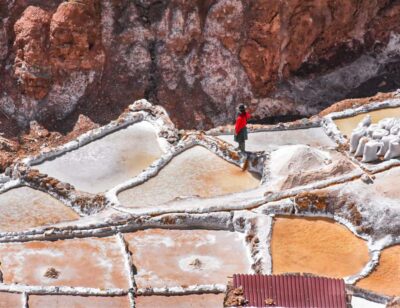
Moray, Maras Salt Mines & Chinchero Weavers Tour
Read our review →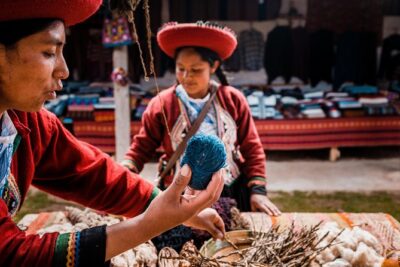
2-Day Tour: Sacred Valley and Machu Picchu by Train
Read our review →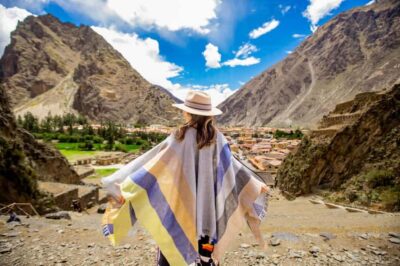
Sacred Valley, Pisac, Ollantaytambo, Salt Mines Moray
Read our review →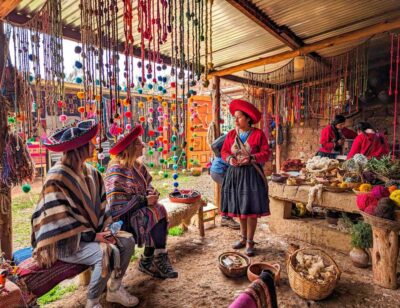
Chinchero,Moray & Salt Mines drop-off in Ollantaytambo
Read our review →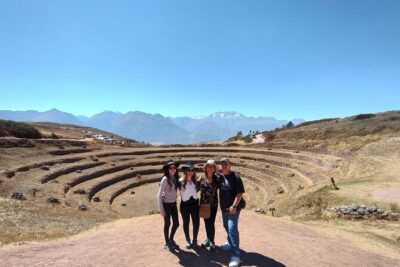
Sacred Valley and Maras Moray Tour with Full Day Buffet Lunch
Read our review →