
Reviewed · SACRED VALLEY TOURS
Sacred Valley Tour Vip Chinchero Ollantaytambo and Pisac
Big views, long day, low price. This Sacred Valley tour packs Chinchero, Moray, Maras, Urubamba, Ollantaytambo, and Pisac into roughly 11 to 12 hours from Cusco. I like the excellent range of Inca sites and the buffet lunch with mountain views and Andean music. I also like that the group is capped at 19 people, a useful middle ground between a private tour and a large bus outing.
The trade-off is time. Six stops, long drives, lunch, and possible shopping visits leave limited room at some major sites. I would choose this outing for a first look at the Sacred Valley and a strong budget, but not if you want a slow, detailed archaeological visit.
In This Review
- Key points to know before booking
- What this Sacred Valley route does well
- Chinchero at 3,765 meters
- Moray and the Inca farming experiment
- Maras salt pools and extra stops
- Urubamba buffet lunch and a needed pause
- Ollantaytambo, the day’s great fortress
- Pisac terraces, temples, and stonework
- Transport, pace, and altitude
- What the $29 price really includes
- Who should book this day out
- Should you book the Sacred Valley VIP tour?
- FAQ
- How long does the Sacred Valley tour last?
- What time does the tour start?
- Is hotel transfer from Cusco included?
- Which places does the tour visit?
- Is lunch included?
- Are entrance tickets included?
- Is the tour offered in English?
- How large is the group?
- Can I cancel for a full refund?
Key points to know before booking
- Six major stops in one day: You see Chinchero, Moray, Maras, Urubamba, Ollantaytambo, and Pisac.
- The entry fees are extra: Budget for the 70 soles partial archaeological ticket and 20 soles for the Maras salt mines.
- The day begins early: Pickup starts at 6:30 a.m. and the full outing lasts about 11 to 12 hours.
- Guides can make a real difference: Guides named Rudy, William, Samuel, and Virgil have been praised for clear and entertaining explanations.
- Lunch is a strong part of the package: The Urubamba buffet includes national and local dishes, mountain views, and live Andean music.
- This is a highlights tour: You get a broad introduction, but the schedule can feel rushed at the most important ruins.
What this Sacred Valley route does well
At $29 per person, this is an unusually inexpensive way to cover a large section of the Sacred Valley. The price includes Cusco hotel transfer, a bilingual English and Spanish guide, a guided visit, and buffet lunch. That is good value before you add the admission charges.
The route also gives you variety. Chinchero introduces Andean village life and Inca stonework. Moray shows how the Incas experimented with farming. Maras brings a striking salt-mining site. Ollantaytambo supplies the grand fortress and ceremonial remains, while Pisac adds terraces, temples, walls, and mountain views.
I find that variety useful on a first day in the region. You are not seeing six versions of the same ruin. Each stop gives you a different clue about how the Inca world worked, from agriculture and water to religion, defense, and trade.
The group limit of 19 matters. It is still a shared excursion, so you should not expect the flexibility of a private car. Still, a group this size is easier to manage at steep stairways and crowded viewpoints than a full-size coach group.
The strongest guides can also improve the day. Rudy is praised for explaining the sites well, while William is described as a certified guide who found quieter places at crowded locations for his talks. Samuel and Virgil also received strong praise for making the information clear, entertaining, and personal. Guide quality can vary by departure, but these names are useful to note if the operator allows requests.
More Sacred Valley days out:
- From Cusco: Moray, Maras Salt Mines & Chinchero Weavers Tour
★ 4.8 · 1,925 reviews - 2-Day Tour: Sacred Valley and Machu Picchu by Train
★ 5.0 · 1,127 reviews - Cusco: Sacred Valley, Pisac, Ollantaytambo, Salt Mines Moray
★ 4.6 · 1,058 reviews
Chinchero at 3,765 meters
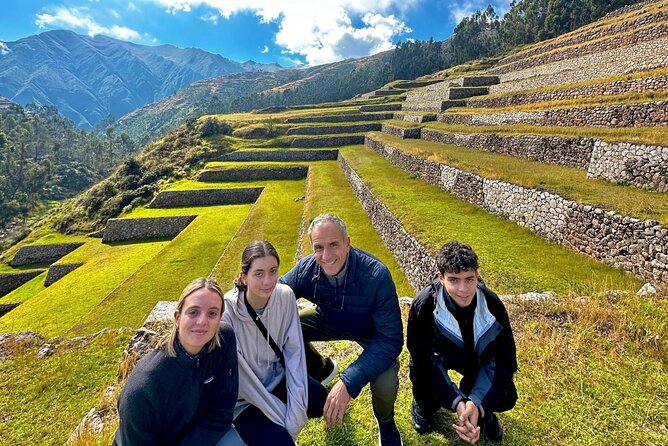
After about an hour on the road, you reach Chinchero, a small Indigenous Andean town high on the Anta plains. At 3,765 meters, it is one of the higher stops, so the cool air and altitude may be noticeable, especially early in the morning.
Chinchero is linked with the Andean story of the rainbow’s birthplace. Its setting is a major part of the appeal. You can see across the Sacred Valley toward the Vilcabamba range, with snow-capped Salkantay on the western horizon when conditions are clear.
The town’s adobe houses and traditional clothing give this stop a more local feel than some of the larger archaeological sites. The main square contains a huge Inca stone wall with ten trapezoidal niches, a simple but powerful reminder of the precision of Inca construction.
The famous Sunday market is less aimed at tourists than the market at Pisac, but the tour schedule does not say that the visit is timed for Sunday. I would therefore treat the market as a bonus, not the main reason to book this departure.
You have about two hours here, including the guided visit. That is enough to get a useful introduction, but admission is not included. Chinchero is part of the 70 soles partial archaeological ticket.
Moray and the Inca farming experiment
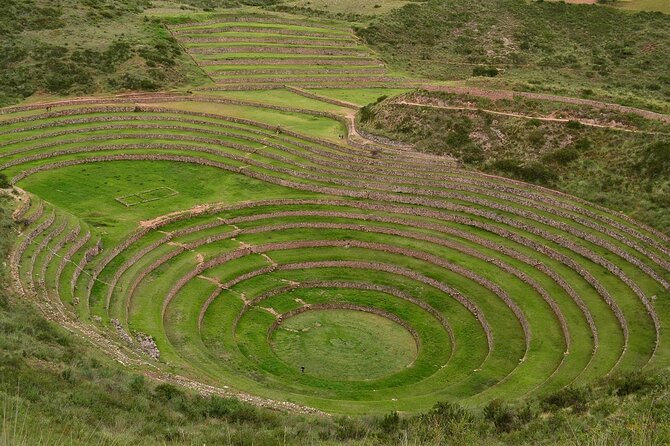
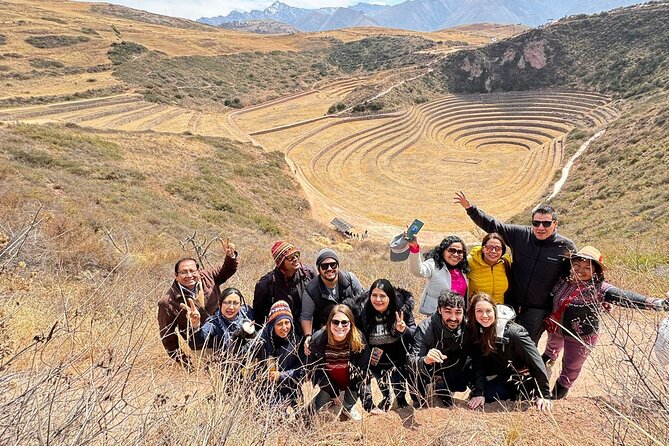
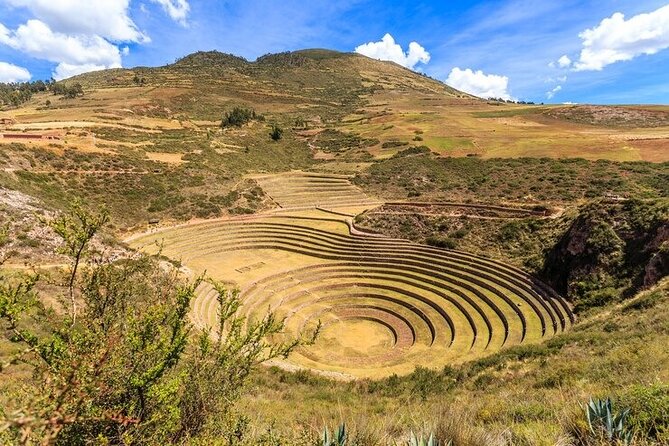
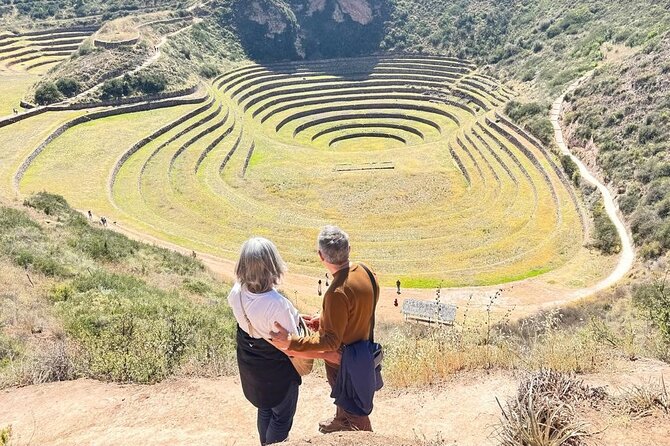
A drive of about 30 minutes brings you to Moray, where broad circular terraces descend into the ground. The largest terraces reach about 330 feet in depth, making this one of the most unusual sights in the Cusco region.
The terraces were built with retaining walls and an irrigation system. Their changing heights and positions created different growing conditions, so Moray is often understood as a place where the Incas tested crops in varied microclimates.
I like this stop because it shifts the focus from temples and armies to food. The Incas needed to feed a large state across difficult mountain country. Moray helps you see that agriculture was not a side matter. It was central to their power.
The scheduled visit lasts about 90 minutes. That gives your guide time to explain the terraces and gives you room for photographs, though the site is mostly about viewing the great circles from above rather than walking through a large collection of buildings.
Moray is also covered by the 70 soles partial archaeological ticket. If you are watching your budget, remember that the low tour price does not mean the main entrance costs disappear.
Maras salt pools and extra stops
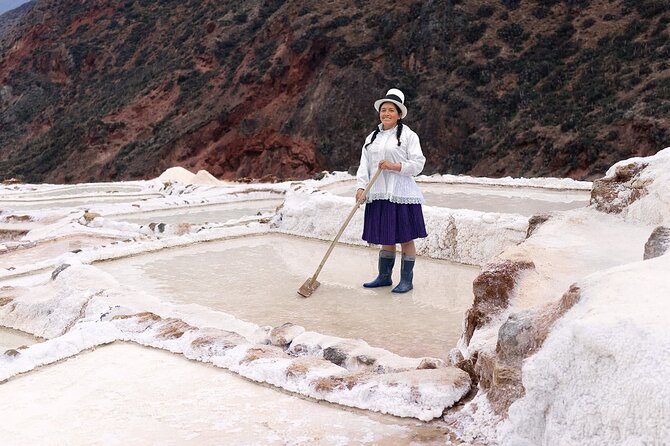
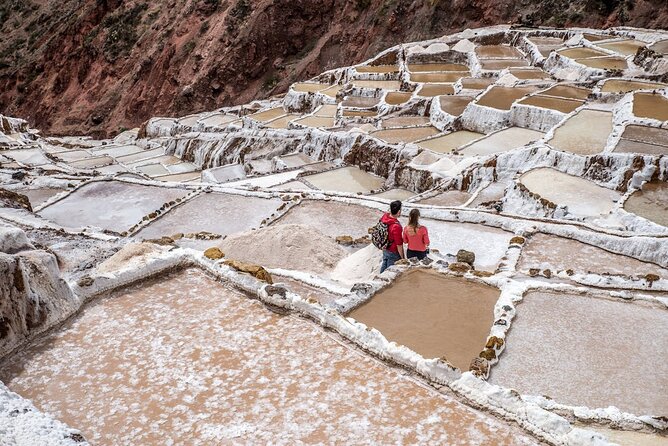
After another roughly 30-minute drive, the route reaches the Maras salt mines in the rural community of Pichingoto. Hundreds of salt pools spread across the mountainside, supplied by salty spring water that flows through channels into the shallow basins.
The white and brown pools create one of the best photographic scenes on the route. Their appearance can change with weather and light, so this is a good place to keep your camera ready. The site also connects with hiking and mountain-biking routes toward Tarabamba and Pichingoto, although this organized day does not leave time for a full route.
The tour information lists Maras as free in the itinerary, but the admission section separately specifies a 20 soles entrance fee for the salt mines. I would budget for that charge.
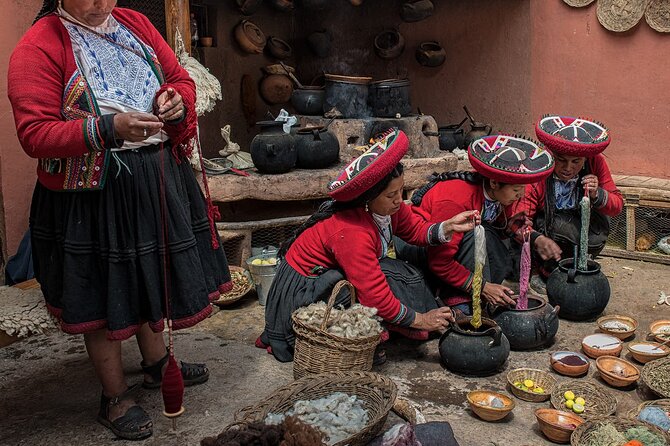
The day may also include commercial stops. One account describes a salt-tasting visit and a stop to learn about locally made jewelry. These can be pleasant if you enjoy seeing regional products, but they reduce time at the archaeological sites. The stop is worth treating as part of the bargain-tour format, not as a surprise.
The scheduled Maras visit is about 90 minutes. That is plenty for the viewpoint and an explanation of how the pools work. It is less time than you would want for a long walk through the surrounding area.
A few more Cusco trips worth lining up side by side
- Classic Inca Trail Trek 4D/3N to Machu Picchu (Group Service)
★ 5.0 · 8,653 reviews - Cusco: Rainbow Mountain and Red Valley Day Trip with Meals
★ 4.9 · 4,893 reviews - Machu Picchu: 4-Day Inca Trail Trek with Panoramic Train Ride
★ 5.0 · 4,568 reviews - Salkantay Classic Trek 5 Days from Cusco
★ 5.0 · 4,062 reviews
Urubamba buffet lunch and a needed pause
After about 45 minutes of transport, you reach Urubamba for a two-hour break and lunch. This pause is practical as well as enjoyable. By this point, you have been up early, driven through mountain country, and walked at altitude.
The included meal is a buffet with national dishes and local specialties. Andean music accompanies lunch, and the dining setting is described as a large, attractive restaurant overlooking the mountains.
I consider this one of the better inclusions for a $29 tour. A basic packed meal would keep the price down, but a proper buffet gives you a chance to rest, choose what suits you, and prepare for the afternoon ruins. Food quality is always personal, yet the meal has received especially warm praise, including from someone who had already spent 15 days touring Peru.
The two-hour stop also gives you breathing room in an otherwise packed schedule. You may not need all of it for eating, but the extra time helps prevent the day from feeling like one continuous march from van to ruin.
Ollantaytambo, the day’s great fortress
The route then spends about an hour on the road before reaching Ollantaytambo. This town preserves an Inca street plan and building designs, and its altitude is listed at about 9,160 feet.
Ollantaytambo is one of the most impressive stops because it combines a living town with a huge ceremonial and defensive complex. The steep terraces climb the hillside, and the upper temple area looks across the valley. Reaching the top requires a demanding stair climb, so take your time and watch your footing.
The site includes a ceremonial temple connected with water worship and a fortress built between two mountains to guard the valley. You can also see areas associated with the sun god, Incamisana, the baths of the Ñustas, funerary towers at Cachiccata, and steep stepped terraces.
The schedule allows two hours. That is helpful, but Ollantaytambo deserves close attention. A guide who gives a clear explanation here can help you understand why the site mattered as both a sacred center and a defensive gateway.
Ollantaytambo is included in the 70 soles partial ticket. The main challenge is not admission but energy. It comes after several stops, so you may feel tired just when the steepest climb begins.
Pisac terraces, temples, and stonework
The final major stop is Pisac, reached after about 45 minutes of transport. The visit lasts about two hours and focuses on the archaeological complex above the town.
Pisac takes its name from a Quechua word for partridge, a bird found in the area. The ruins include terraces, palaces, walls, towers, and ceremonial buildings connected across the hillside. The carefully fitted stonework is especially striking, with blocks joined without mortar.
The Intihuatana is the key religious area. Its buildings use sedimentary rock, and the complex helps explain how Inca settlements combined farming, ceremony, housing, and defense in one organized place.
Pisac can feel crowded, especially around its best viewpoints and at the town market. A guide who can find a quieter spot for the explanation is a real advantage. William is specifically praised for doing this, but the exact guide on your departure is not guaranteed.
Two hours gives you a respectable introduction, though not an unhurried study of every section. Since Pisac comes late, you may appreciate the guide’s overview more than an attempt to cover every terrace and wall.
Pisac is also part of the 70 soles partial ticket. If your main interest is Pisac, consider visiting it on a separate day rather than relying on this fast circuit.
Transport, pace, and altitude
The 6:30 a.m. start is necessary if the operator is to fit all six stops into one day. Pickup is included from your Cusco hotel, but the exact pickup pattern can affect how quickly the morning begins.
This is a road-heavy outing. The listed drives total several hours, and the tour lasts 11 to 12 hours overall. That means you should expect a full day in a shared vehicle, with short breaks between sites and limited control over how long you stay.
The altitude deserves attention. Chinchero is at 3,765 meters, and the Sacred Valley sites are still high by most standards. The tour information says most people can participate, but it does not promise an easy pace or special altitude support. If you are already feeling unwell in Cusco, a six-stop day may be too ambitious.
The group maximum is 19 people. That keeps the experience more manageable than a large coach tour, but it does not remove the usual shared-tour limits. You will follow the group timetable, and waiting for pickups or slower walkers can affect the day.
What the $29 price really includes
The advertised $29 cost is excellent for transport, a bilingual guide, guided visits, and lunch across this much territory. It is especially good if your aim is to see the main Sacred Valley sights without paying for a private vehicle.
You must add 70 soles for the partial archaeological ticket covering Ollantaytambo, Pisac, Chinchero, and Moray. The Maras salt mines require another 20 soles, making 90 soles in additional entrance fees.
That changes the final cost, but the package can still be strong value. The right comparison is not $29 against a more expensive tour. Compare the full amount, then ask how much you value the included lunch, hotel transfer, guide, and the convenience of connecting six stops in one day.
The main thing you give up is depth. One account found the attractions and commercial stops received nearly equal attention, leaving only 15 to 30 minutes of free time at some locations. Another account considered the same full schedule tiring but worthwhile, especially because of the guide, driver, lunch, and low price.
Both reactions make sense. This is a broad sampler, not a specialist archaeological tour.
Who should book this day out
I would recommend it if you have only one open day for the Sacred Valley, want to keep costs low, and prefer seeing many headline sights in one outing. It also suits you if lunch, hotel transfer, and a bilingual guide simplify your planning.
It is a good fit for photographers who want Chinchero’s mountain views, Moray’s circular terraces, Maras’s salt pools, and the stonework at Ollantaytambo and Pisac. Keep in mind that the schedule may limit the time available for careful photographs.
I would be more cautious if you want long guided talks, quiet ruins, or time to explore villages on your own. The possible jewelry and salt-related stops may also bother you if you want every minute devoted to archaeology.
You can cancel for a full refund up to 24 hours before the start time. Changes made within 24 hours are not accepted for a refund. The operator can also cancel for poor weather or if the minimum group size is not met, offering another date or a full refund.
Should you book the Sacred Valley VIP tour?
Book it if you want maximum coverage for a low starting price and accept a long, tightly planned day. The best parts are the range of sites, the buffet lunch, the manageable group size, and the chance of an excellent guide such as Rudy, William, Samuel, or Virgil.
Skip it if you would rather give half a day to Ollantaytambo or Pisac alone. For a first overview of Cusco’s Sacred Valley, though, this is a practical deal. Add the entrance fees before booking, start rested, and think of the day as a fast sampler with several memorable stops.
FAQ
How long does the Sacred Valley tour last?
The tour lasts approximately 11 to 12 hours.
What time does the tour start?
The stated start time is 6:30 a.m.
Is hotel transfer from Cusco included?
Yes. Cusco hotel transfer is included.
Which places does the tour visit?
The route visits Chinchero, Moray, Maras, Urubamba, Ollantaytambo, and Pisac.
Is lunch included?
Yes. A buffet lunch in Urubamba is included, with national and local dishes accompanied by Andean music.
Are entrance tickets included?
No. The 70 soles partial ticket for Chinchero, Moray, Ollantaytambo, and Pisac is extra. Maras requires a separate 20 soles entrance fee.
Is the tour offered in English?
Yes. A bilingual guide provides service in English and Spanish.
How large is the group?
The activity has a maximum of 19 participants.
Can I cancel for a full refund?
Yes, if you cancel at least 24 hours before the experience starts. Cancellations made less than 24 hours in advance are not refunded.
Added recently around Cusco
- Super valley or vip valley★ 5.0 · 13 reviews
- the Incas’ Sacred Valley★ 5.0 · 27 reviews
- Sacred Valley of the Incas Day Trip from Cusco★ 5.0 · 6 reviews
- Maras + Moray & Textile Experience★ 5.0 · 14 reviews
- Small-Group Tour: Rainbow Mountains Hiking from Cusco★ 4.0 · 5 reviews
- Excursion to the Sacred Valley of the Incas from Cusco★ 5.0 · 8 reviews
- Tour EN Cuatrimoto POR la Montaña 7 Colors Hike 5 Minutes★ 4.5 · 32 reviews
- rainbow mountain★ 4.0 · 4 reviews
Sacred Valley Tours, compared.
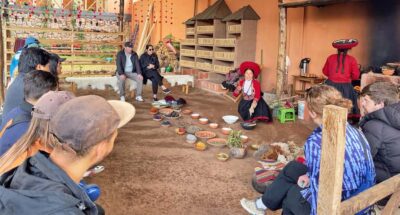
Sacred Valley & Maras Salt Mines Tour with Lunch
Read our review →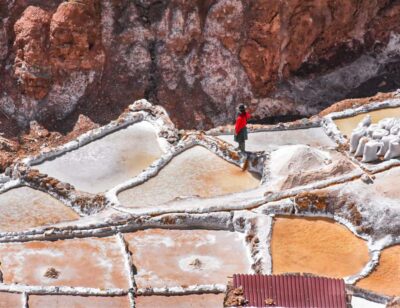
Moray, Maras Salt Mines & Chinchero Weavers Tour
Read our review →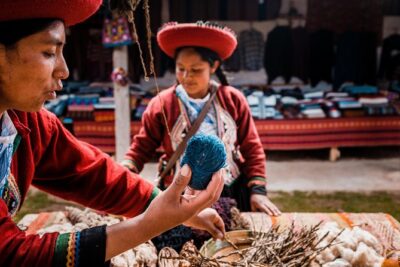
2-Day Tour: Sacred Valley and Machu Picchu by Train
Read our review →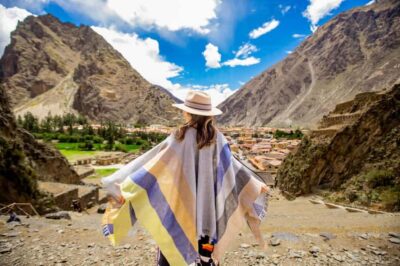
Sacred Valley, Pisac, Ollantaytambo, Salt Mines Moray
Read our review →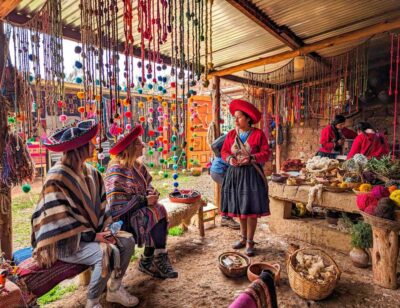
Chinchero,Moray & Salt Mines drop-off in Ollantaytambo
Read our review →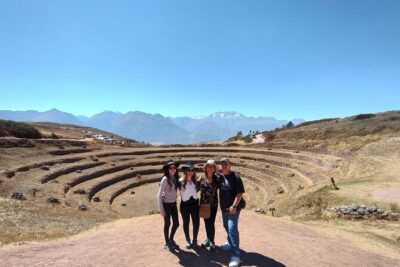
Sacred Valley and Maras Moray Tour with Full Day Buffet Lunch
Read our review →

Browse the lists this tour appears in