
Reviewed · SACRED VALLEY TOURS
Super Sacred Valley: Chinchero – Salt Mines – Moray & Ollantaytambo
Four major Sacred Valley sights fit into one busy day. This private trip from Cusco works well if you want a broad first look without arranging several taxis, drivers, and tickets yourself. You begin high in the Andes at Chinchero, then descend through Moray and the Maras salt pools before finishing among the massive Inca terraces at Ollantaytambo.
I like the private vehicle and guide, since you can focus on the views instead of watching the road or coordinating strangers. I also like the mix of living culture and archaeology: weaving in Chinchero, farming experiments at Moray, salt production at Maras, and monumental stonework at Ollantaytambo. The main catch is the pace. Four stops, plus lunch, make this a full day with plenty of driving and limited time at each site.
The strongest praise goes to the guides and drivers. Jenny, Yeny, Ronald, Nohemi, Jonathan, Papa Freddy, and Ernesto Cusi are all singled out for clear explanations, kindness, patience, and help with photos or family members. Guide assignments can change, but the pattern is clear: a good guide adds real value here.
In This Review
- Key points to know before booking
- Why this route works for a first Cusco visit
- Chinchero: weaving, market life, and thin mountain air
- Moray: Inca terraces shaped like giant bowls
- Maras Salt Mines: thousands of pools on one mountainside
- Lunch near Urubamba and the cost of convenience
- Ollantaytambo: the grand finish
- Guides, drivers, and the private-tour difference
- Is this route suitable for you?
- Should you book the Super Sacred Valley tour?
- FAQ
- How long does the Super Sacred Valley tour last?
- What time does the tour start?
- Where does the tour begin and end?
- Which places are visited?
- Are entrance fees included?
- Is lunch included?
- Is this a private tour?
Key points to know before booking
- Chinchero begins the day at 3,800 meters: The weaving demonstration and market offer a useful cultural start, but the altitude may feel demanding.
- Moray is an unusual Inca site: Its deep, circular terraces are easy to visit and visually striking, with an agricultural purpose at the heart of the explanation.
- Maras has more than 3,000 salt pools: A small stream feeds the pools, creating a bright, geometric pattern across the mountainside.
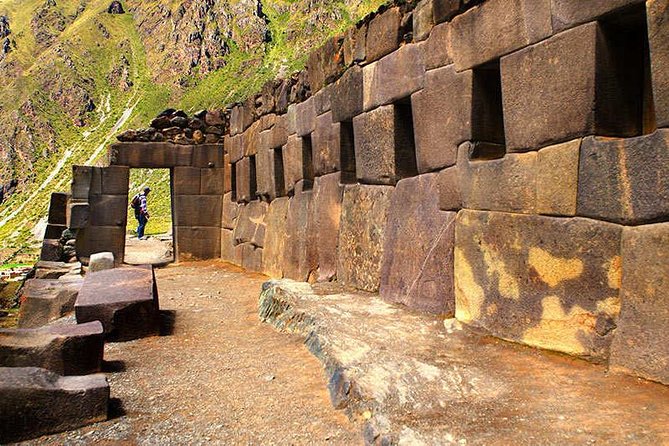
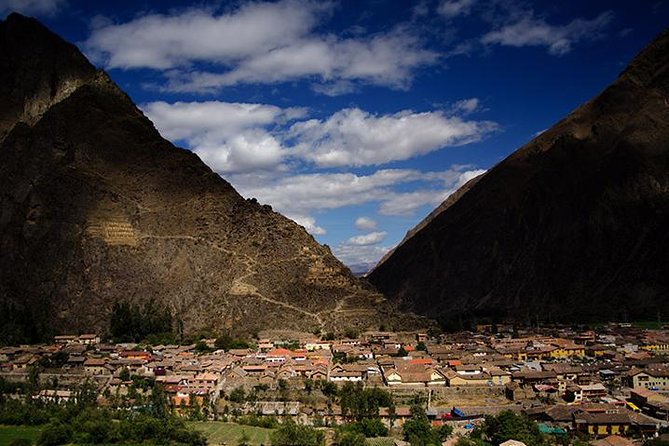
- Ollantaytambo brings the biggest stonework: Terraces rise directly from the village, making this the most imposing archaeological stop.
- The private format gives you flexibility: Only your party joins, and private transportation means no large coach routine.
- The advertised price is not the final cost: At $135 per person, you still pay S/. 70, or about $25, for the archaeological ticket, S/. 10, or about $3.30, for the salt mines, and extra for lunch.
Why this route works for a first Cusco visit
The Sacred Valley is spread across a broad area, and its best sights do not feel like one compact attraction. This route helps you connect several pieces in a single outing. You see textile traditions, agricultural engineering, salt production, and military or ceremonial construction without needing to arrange separate transport.
That convenience matters in Cusco. The roads between the sites take time, and some sections climb or descend sharply. With a private driver, you can watch the changing scenery and arrive at each stop without negotiating local transport. Miguel, one of the drivers praised for this experience, was described as careful and experienced, with a comfortable car and a reassuring manner.
The private setup is also helpful for families and mixed-ability groups. Jonathan and Eddy received particular praise for helping a grandmother who used a wheelchair or had limited mobility. That does not mean every path is fully accessible, so you should discuss your needs when booking, but private service gives the guide more room to adapt than a fixed group departure.
The route is marketed as approximately one day, with about six hours listed for the main sightseeing portion. In practice, you should allow extra time for lunch, traffic, photo stops, and the drive back to Cusco. The stated start time is 12:30 am, which is unusually early and may be a data error or a special departure arrangement. Confirm the exact pickup time before you pay or go to bed.
More Sacred Valley days out:
- From Cusco: Moray, Maras Salt Mines & Chinchero Weavers Tour
★ 4.8 · 1,925 reviews - 2-Day Tour: Sacred Valley and Machu Picchu by Train
★ 5.0 · 1,127 reviews - Cusco: Sacred Valley, Pisac, Ollantaytambo, Salt Mines Moray
★ 4.6 · 1,058 reviews
Chinchero: weaving, market life, and thin mountain air
Chinchero sits at about 3,800 meters, or 12,500 feet. That makes it the highest point on this route and the place where altitude deserves your attention first. Walk slowly, drink water, and avoid treating the opening stop like a race.
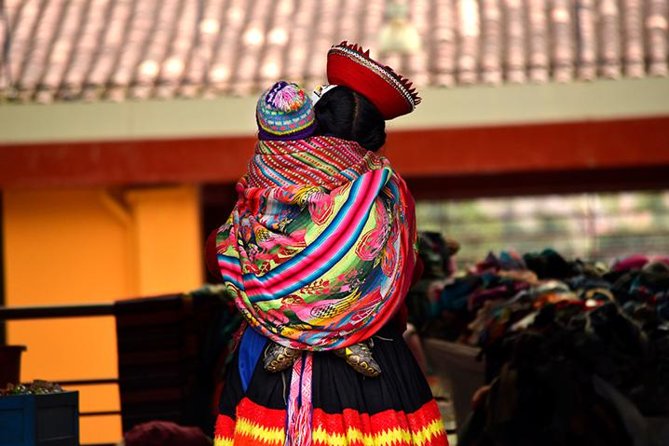
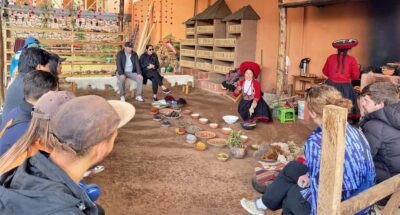
The village is known for traditional weaving. At the weaving house, you can watch a demonstration of dyeing and weaving techniques, see traditional clothing, and, according to the experience details, possibly enjoy songs performed by the local women. This is more than a quick photo stop. It gives you a way to understand how Andean textiles are made and why color, pattern, and clothing remain important parts of local identity.
You may also have a chance to try on traditional clothing. That can feel touristy if rushed, but with a good guide it becomes a friendly introduction rather than a simple sales presentation. Yeny was especially praised for making this part fun and for explaining the sites in a way that helped the experience feel personal.
The Chinchero market adds another layer. Markets can change from day to day, and the experience does not promise a particular set of stalls or products. Still, it is a useful place to see the village as more than an archaeological backdrop. If shopping matters to you, ask how much time is available and compare prices before buying.
The drawback is the altitude. If you have just arrived in Cusco, Chinchero may feel harder than its short walking distances suggest. The high point comes before you have had much time to settle into the day, so take the first stop at an easy pace.
Moray: Inca terraces shaped like giant bowls
From Chinchero, the route descends toward Moray. The change in elevation is welcome, and the ride gives you a chance to take in the high Andean scenery without worrying about driving.
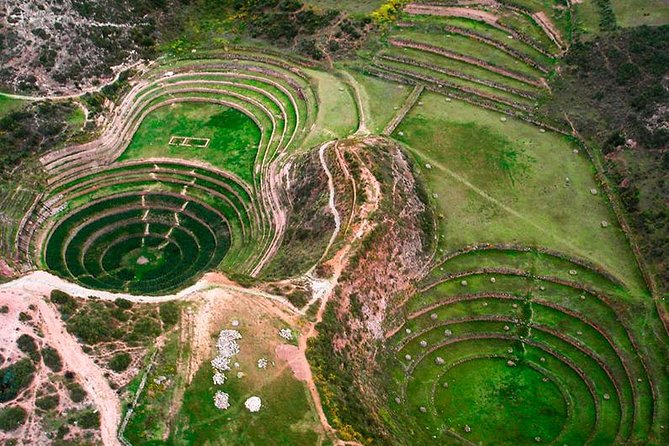
Moray consists of three large, bowl-shaped terraces cut into the earth. Their circular form makes the site immediately memorable. The terraces are traditionally understood as an Inca agricultural testing ground, a place where different conditions could be studied to find suitable growing environments for crops.
Your guide matters here. Without an explanation, Moray can look like a set of unusual rings in the ground. With context, you begin to notice the engineering: the depth of the terraces, the way they are arranged, and the effort needed to shape such a site. Guides such as Ronald and Nohemi were praised for explaining Inca culture and the meaning behind each stop, which is exactly the kind of help Moray needs.
Do not expect a long independent walk through a large complex. The attraction is concentrated, and the visit is mainly about viewing the terraces, hearing the explanation, and taking in the setting. The private format can help you pause for photographs or ask questions without holding up a busload of people.
The archaeological ticket is not included. Budget S/. 70, or about $25, per person for the tourist ticket that covers the archaeological sites. Confirm the current ticket rules before departure, since admission arrangements can change.
Maras Salt Mines: thousands of pools on one mountainside
The salt mines are only about two miles from Moray, but they feel entirely different. Instead of broad earth terraces, you see more than 3,000 small salt pools cut into the mountainside. A little stream fills them each day, and the water gradually leaves salt behind.
This is one of the most photogenic stops on the route, but the visual appeal is not the whole point. Maras is a working production area with roots thought to reach back to pre-Inca times. The pools show how a simple water source can support a long-running local industry when carefully divided across the slope.
The arrangement is especially easy to understand from a viewpoint. Rows of pale pools spread across the mountainside, each one shaped by walls and fed by the same small stream. Your guide can help explain how the system works and how salt is collected.
The salt mine charges a separate entrance fee of S/. 10, or about $3.30, per person. It is a small extra cost, but it is important to include it when comparing the tour price with a self-arranged day.
Be prepared for a stop that is more about viewing and walking than entering every pool. Conditions may affect how close you can get, and the paths may not suit everyone. If you have limited mobility, mention it before the day begins. The private vehicle and guide can make the visit easier to manage, but the operator does not promise full accessibility.
A few more Cusco trips worth lining up side by side
- Classic Inca Trail Trek 4D/3N to Machu Picchu (Group Service)
★ 5.0 · 8,653 reviews - Cusco: Rainbow Mountain and Red Valley Day Trip with Meals
★ 4.9 · 4,893 reviews - Machu Picchu: 4-Day Inca Trail Trek with Panoramic Train Ride
★ 5.0 · 4,568 reviews - Salkantay Classic Trek 5 Days from Cusco
★ 5.0 · 4,062 reviews
Lunch near Urubamba and the cost of convenience
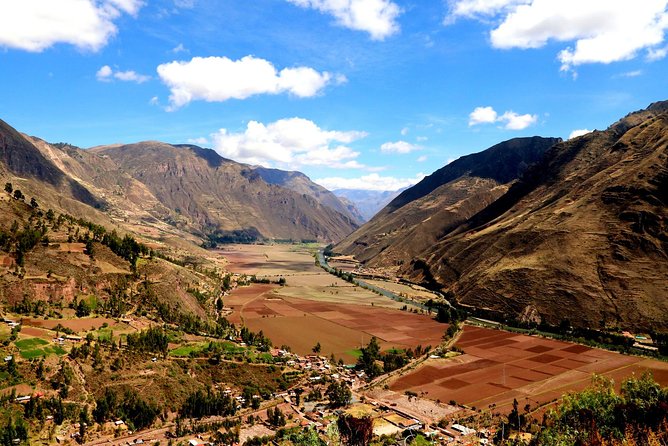
After Moray and Maras, the route descends into the Sacred Valley toward Urubamba. Lunch is not included, so the meal is an additional cost. The supplied details do not specify a restaurant or fixed menu, which means you should ask the operator where the stop will be and how much time you will have.
That missing detail is worth clarifying because lunch affects the pace of the afternoon. A long meal may reduce your time at Ollantaytambo, while a quick meal keeps the sightseeing schedule moving. If you have dietary needs, ask in advance rather than assuming the stop will suit you.
At $135 per person, the tour is not a budget group excursion. But the comparison is not simply $135 versus a cheaper bus. You are paying for private transportation, a private guide, hotel pickup and drop-off in Cusco, and a route that links four widely separated places.
Add the archaeological ticket, salt entrance, and lunch, and the final price rises. The value improves when you are traveling with family or friends who can share the vehicle and when you place a high value on convenience. Solo visitors or couples on a tight budget may want to compare the total cost with a group tour, though the private service offers more personal attention.
Ollantaytambo: the grand finish
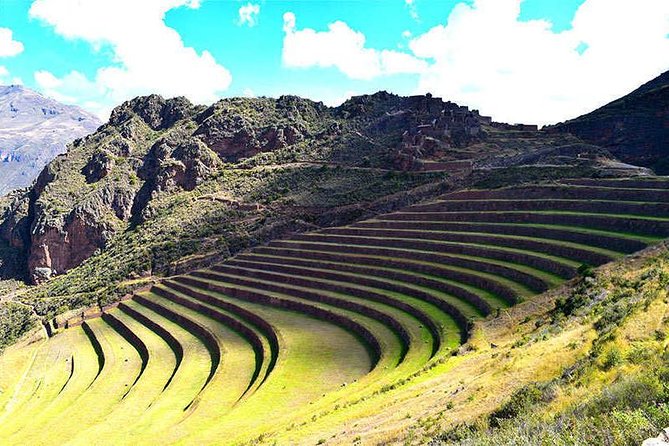
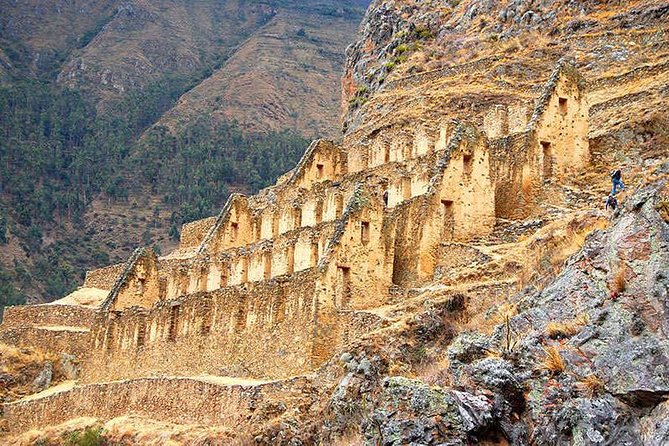
Ollantaytambo is the strongest closing stop because the scale changes again. The village is framed by a major set of terraces that rise above the center. Their size and position make it easy to see why this site is often treated as one of the Sacred Valley’s essential visits.
This is where a guide can connect the physical remains to the wider story of Inca planning, construction, and control of the valley. Ernesto Cusi was praised for explaining the people, culture, and land in a way that made the trip feel much more meaningful. Papa Freddy was also praised for covering the sights efficiently and helping with group photographs.
The main limitation is time. Ollantaytambo deserves more than a hurried final stop, but this route has already included Chinchero, Moray, Maras, and lunch. If you want a slower look at the terraces or more time in the village, ask how long you will have before leaving Cusco.
The route finishes with a return to Cusco. If you are planning to stay in the Sacred Valley, note that the normal service begins and ends in Cusco. Starting in the valley requires an additional payment, so it is not automatically a practical one-way transfer.
Guides, drivers, and the private-tour difference
The human side of this experience receives unusually strong praise. Jenny was described as clear and engaging. Yeny was remembered for kindness, cultural explanations, and making the textile presentation enjoyable. Ronald, Nohemi, Jonathan, Papa Freddy, and Ernesto Cusi were all praised for friendly service, useful information, patience, or help with photographs.
Those details matter because this route contains several places that need interpretation. Moray and Maras are visually clear but historically less obvious. At Chinchero, the guide can help you understand the textile work rather than simply watch a demonstration. At Ollantaytambo, the scale of the terraces becomes more meaningful when someone points out what you are seeing.
A private guide also changes the rhythm. You can ask questions, request a short pause, and avoid being locked into the needs of a large group. The tradeoff is that the quality of your day depends heavily on the individual guide assigned. You may request one of the praised guides, but the information does not guarantee a particular person.
The drivers matter just as much. A careful driver lets you relax on winding mountain roads and keeps the day moving. Eddy was praised for helping with family photos and assisting a wheelchair user, while Miguel was praised for safe, comfortable driving.
Is this route suitable for you?
I would choose this trip if you are visiting Cusco for the first time, have only one day for the Sacred Valley, and want the main highlights handled in one private vehicle. It is also a good fit for families, photographers, and groups that value personal attention.
You should think twice if you dislike early starts, long road days, or tightly scheduled sightseeing. Chinchero begins at high altitude, lunch is not included, and the four-stop plan leaves limited time for lingering. This is a sampler of the Sacred Valley, not a slow village-to-village journey.
Most people can participate, but the altitude and walking surfaces deserve attention. Anyone with mobility concerns should discuss the route before booking, even though private service has helped families manage limited mobility in the past.
Cancellation is free if you cancel at least 24 hours before the local start time. Less than 24 hours before departure, the amount paid is not refunded, and late changes are not accepted.
Should you book the Super Sacred Valley tour?
Book it if you want maximum variety in one day, private transportation, and a guide who can add meaning to four very different places. The combination of Chinchero’s weaving, Moray’s circular terraces, Maras’s salt pools, and Ollantaytambo’s huge stone terraces gives you a strong first introduction to the region.
Skip it if you want a relaxed Sacred Valley stay or if the total cost, including tickets and lunch, feels high. Before booking, confirm the 12:30 am start time, ask where lunch will be, discuss mobility needs, and request a guide known for clear English and patient explanations. With those details settled, this is a practical and worthwhile way to cover a lot of Cusco’s surrounding country in a single day.
FAQ
How long does the Super Sacred Valley tour last?
The main sightseeing portion is listed as approximately six hours, while the overall experience is described as one day. Allow additional time for lunch, transportation, and the return to Cusco.
What time does the tour start?
The stated start time is 12:30 am. Because this is unusually early for the route described, confirm the exact pickup time with Waman Adventures before departure.
Where does the tour begin and end?
The tour begins and ends in Cusco, with hotel pickup and drop-off included. Starting in the Sacred Valley requires an additional payment.
Which places are visited?
The route visits Chinchero, Moray, the Maras Salt Mines, and Ollantaytambo. Chinchero includes a traditional weaving center and market visit.
Are entrance fees included?
No. The archaeological tourist ticket costs S/. 70, or about $25, per person. The Maras Salt Mines entrance costs S/. 10, or about $3.30, per person.
Is lunch included?
No. Lunch in Urubamba is not included in the tour price.
Is this a private tour?
Yes. Only your group participates, and private transportation and a private tour guide are included.
Added recently around Cusco
- Guided tour of the mountain of colors in Cusco★ 5.0 · 11 reviews
- 2-Day Private Short Inca Trail to Machu Picchu★ 5.0 · 15 reviews
- City Tour Cusco – Group★ 5.0 · 4 reviews
- Tour Sacred Valley with Maras and Moray★ 5.0 · 15 reviews
- San Pedro Market Tour with Peruvian Cooking Class★ 5.0 · 31 reviews
- Walking Culinary Experience★ 5.0 · 41 reviews
- City Tour in Cusco★ 4.5 · 10 reviews
- Sightseeing Bus Tour from Cusco to Puno with Buffet Lunch★ 4.5 · 22 reviews
Sacred Valley Tours, compared.
Sacred Valley & Maras Salt Mines Tour with Lunch
Read our review →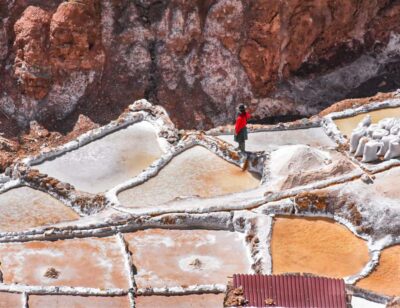
Moray, Maras Salt Mines & Chinchero Weavers Tour
Read our review →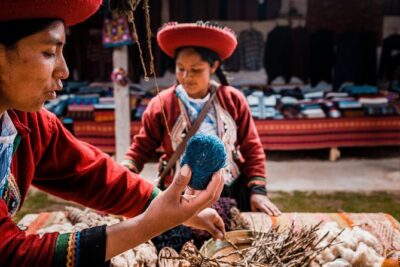
2-Day Tour: Sacred Valley and Machu Picchu by Train
Read our review →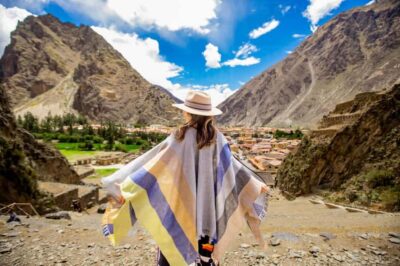
Sacred Valley, Pisac, Ollantaytambo, Salt Mines Moray
Read our review →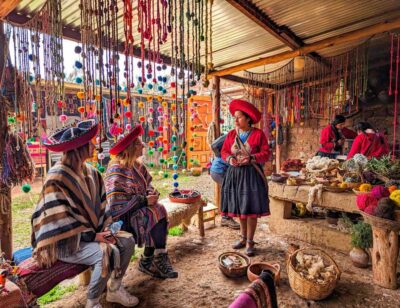
Chinchero,Moray & Salt Mines drop-off in Ollantaytambo
Read our review →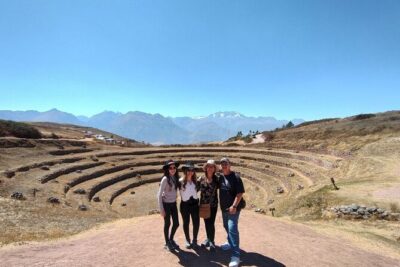
Sacred Valley and Maras Moray Tour with Full Day Buffet Lunch
Read our review →

Browse the lists this tour appears in