Reviewed · SACRED VALLEY TOURS
Super Sacred Valley in group – Full day
One long day, five major Sacred Valley stops. This $50 group tour packs Chinchero, Moray, Maras, Ollantaytambo, and Pisac into a single outing, with an English-speaking guide, an air-conditioned vehicle, and lunch beside the Urubamba River. I like the sheer amount of ground covered, and I like that the group is limited to 15 people rather than filling a large coach. The main drawback is the pace: you leave very early, spend about 12 hours on the road, and may finish with a shopping stop when you are ready to head back.
I also like the practical design for a short stay in Cusco. You can see the valley’s textiles, farming terraces, salt pans, Inca stonework, and market culture without arranging several separate trips. But this is not a quiet, slow exploration. You need to accept a tightly scheduled day and pay extra for admission tickets.
In This Review
- Five things to know before booking
- Why this route works for a first visit
- Chinchero, where textiles still carry family traditions
- Moray and the Inca approach to farming
- Maras, where mountain salt is still collected by hand
- Ollantaytambo, the day’s strongest Inca site
- Lunch beside the Urubamba River
- Pisac, textiles and a wide valley view
- The 12-hour schedule and group size
- What the $50 price really includes
- Who should book this Sacred Valley day trip
- Booking and cancellation details
- Should you book the Super Sacred Valley tour?
- FAQ
- How long does the tour last?
- What places does the tour visit?
- Is lunch included?
- Are entrance tickets included?
- Is breakfast included?
- Are dinner and alcoholic drinks included?
- Is hotel pickup offered?
- Where does the tour end?
- How large is the group?
Five things to know before booking
- Five major Sacred Valley sites in one day: Chinchero, Moray, Maras, Ollantaytambo, and Pisac form a very full route.
- About 12 hours away from Cusco: The early start and late return make this a serious full-day commitment.
- Admission costs extra: One review reports paying 80 Peruvian soles, about $20, for entrance tickets beyond the tour price.
- Lunch is included: The meal is at a local restaurant with views over the Urubamba River.
- Small group, maximum 15 people: This gives you a better chance to hear the guide than on a large bus.
- Pickup is arranged the day before: The exact pickup details are coordinated one day before departure.
Why this route works for a first visit
The Sacred Valley is not one single sight. It is a long corridor of villages, farms, archaeological sites, steep slopes, and river valleys spread between Cusco and Machu Picchu. That makes independent sightseeing awkward if you have only one free day. This tour links the main attractions in a logical, if demanding, circuit.
I like the variety. In the morning, you may be watching wool turn into brightly colored textile designs. Later, you are looking down into circular farming terraces, then seeing salt collected by hand, then walking among huge Inca walls. By the end, Pisac adds a strong commercial and cultural note with its textile tradition and commanding view over the valley.
The value depends on how you travel. At $50 per person, the tour covers transport, a guide, and lunch. That is a fair starting price for a vehicle covering this much distance. Your real cost is higher once you add the admission tickets, which are not included. One person paid 80 soles, roughly $20, so budget for that extra charge before you decide the tour is a bargain.
The biggest tradeoff is time. Five stops plus lunch require constant movement. You will see much more than you could easily manage alone, but you will not have long, unhurried hours at every site. I would choose this route for breadth, not solitude.
More Sacred Valley days out:
- From Cusco: Moray, Maras Salt Mines & Chinchero Weavers Tour
★ 4.8 · 1,925 reviews - 2-Day Tour: Sacred Valley and Machu Picchu by Train
★ 5.0 · 1,127 reviews - Cusco: Sacred Valley, Pisac, Ollantaytambo, Salt Mines Moray
★ 4.6 · 1,058 reviews
Chinchero, where textiles still carry family traditions
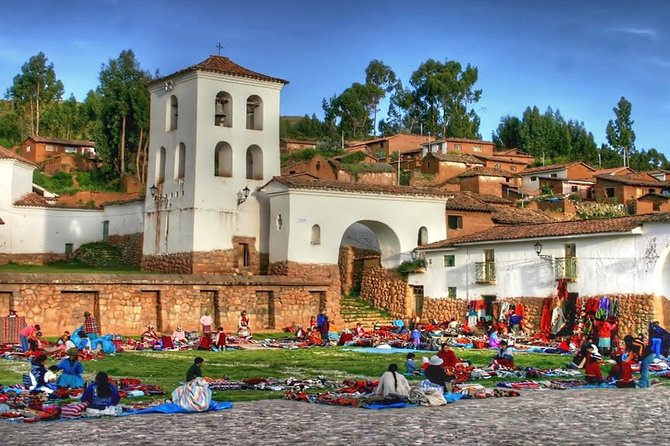
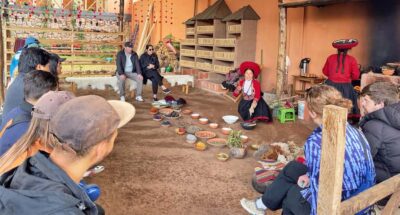
Your first stop is Chinchero, where local families continue traditional textile practices. The focus is on how wool is processed and how natural colors are produced for the bright woven designs associated with the Andes.
This is a useful opening because it gives you something human and hands-on before the large archaeological sites begin. The color-making process helps explain why Andean textiles are so admired, and the family setting connects the craft to daily life rather than presenting it as a museum display.
You should listen closely to the guide here, since the value comes from explanation. Without context, you might simply see wool and finished cloth. With a good presentation, you can follow the chain from raw material to dyed fiber to textile.
The practical caution is familiar from many organized shopping stops: you may feel pressure to buy. The tour information does not promise a purchase, so you are free to look and listen. If you want to support local makers, this can be a worthwhile place to consider a purchase, but do not mistake the craft demonstration for a required part of the day.
Moray and the Inca approach to farming
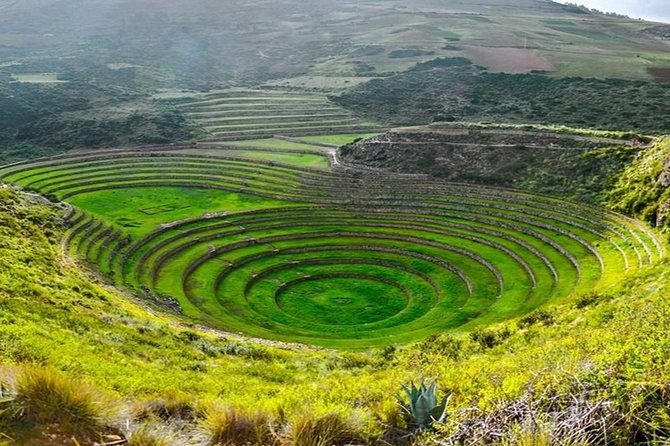
Moray is one of the most unusual sites on the route. Its broad circular terraces drop into the earth in a series of rings, creating a sight that looks almost theatrical from above.
The site is often described as a place of agricultural experimentation. The terraces may have helped the Incas study how crops responded to different conditions, including changes in temperature and elevation. The important point for you is not just the shape. Moray shows that Inca engineering served food production as much as religion, ceremony, or empire.
I find this stop especially useful because it challenges the simple picture of the Incas as builders of stone walls. Here, the achievement is tied to farming and adaptation. The terraces show how carefully Andean societies worked with difficult mountain conditions.
Your time here will be part of a busy schedule, so the guide’s explanation matters. Ask yourself what you are seeing from the viewpoint: a monumental garden, a farming research site, or both? The experience is visual first, but the agricultural context gives it weight.
Maras, where mountain salt is still collected by hand
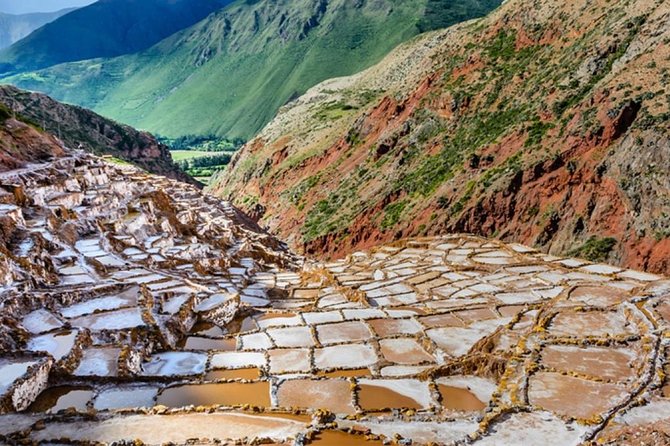
The Maras salt pans offer a sharp change of scenery. White and tan salt pools spread across the mountainside, fed by salty water that comes through the rock. The salt is collected by hand, and the work remains tied to local families.
This stop is less about grand ruins and more about a working tradition. You can see how a natural resource becomes a useful product through many small pools and repeated human effort. The contrast with Moray is part of the appeal: one site shows planned agricultural terraces, while Maras shows people managing a natural mineral spring.
I like the human scale here. The salt pans are not just a pretty viewpoint. They are also a place of labor, and the hand collection gives the stop a direct connection to local livelihoods.
The tour’s wording describes the area as welcoming, but the schedule may not let you linger. You should also keep the extra admission cost in mind, since access tickets for the Sacred Valley sites are not covered by the $50 fare. Bring cash in Peruvian soles if possible, though the supplied information only confirms that extra entrance payment is required, not the exact payment method.
A few more Cusco trips worth lining up side by side
- Classic Inca Trail Trek 4D/3N to Machu Picchu (Group Service)
★ 5.0 · 8,653 reviews - Cusco: Rainbow Mountain and Red Valley Day Trip with Meals
★ 4.9 · 4,893 reviews - Machu Picchu: 4-Day Inca Trail Trek with Panoramic Train Ride
★ 5.0 · 4,568 reviews - Salkantay Classic Trek 5 Days from Cusco
★ 5.0 · 4,062 reviews
Ollantaytambo, the day’s strongest Inca site
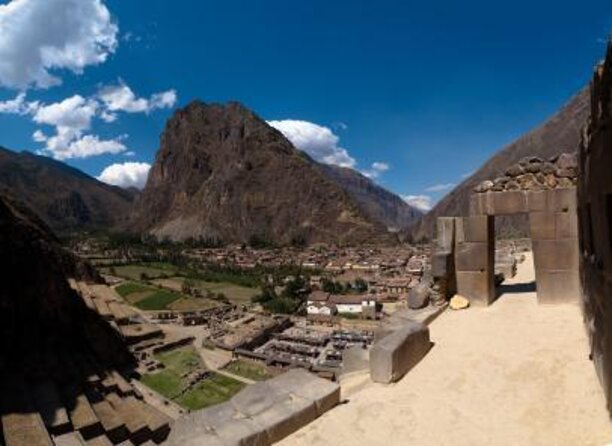
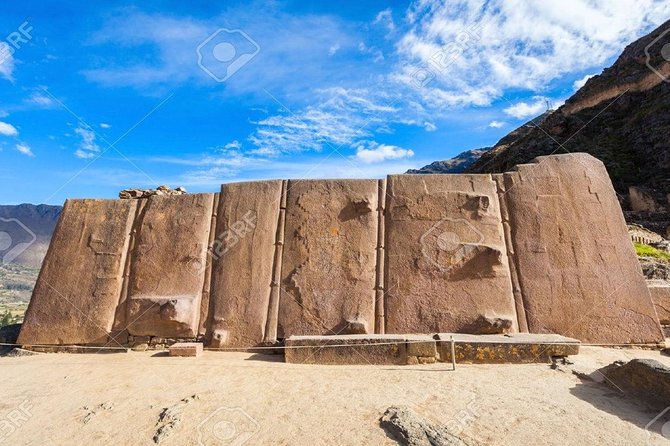
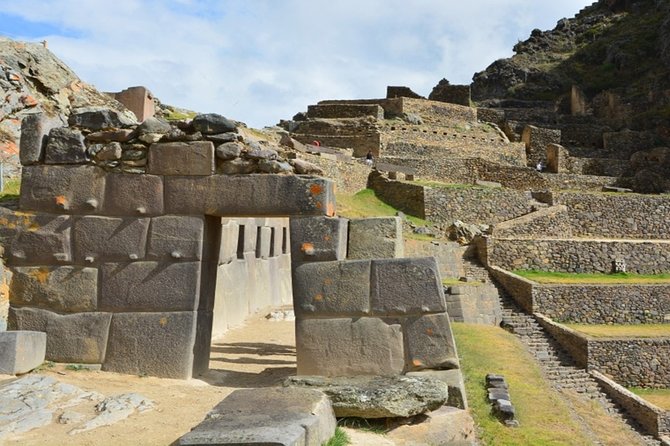
Ollantaytambo is likely the architectural high point of the day. It was one of the most important complexes in the Inca Empire and is known for its broad terraces rising up the mountain slopes.
The terraces had agricultural purposes, but the site also carries military importance. It is remembered as one of the few places where Spanish conquerors lost a battle. That detail changes how you read the stones. Ollantaytambo was not simply a ceremonial ruin. It was a place with food production, strategic value, and control over movement through the valley.
The scale can be impressive even during a short visit. Look up at the terraces and notice how they connect the valley floor with the mountainside. The construction is not confined to a single temple or plaza. It shapes the whole slope.
This is also the stop where a rushed schedule may frustrate you most. Ollantaytambo rewards time because there are many levels and details to take in. On a group outing covering five sites, you will need to follow the guide’s meeting instructions and return promptly to the vehicle.
Still, I would not skip this tour simply because the pace is brisk. For many people, Ollantaytambo will provide the clearest sense of Inca planning and power during the day.
Lunch beside the Urubamba River
Lunch is included at a local restaurant in the Sacred Valley, with views over the Urubamba River. That matters after a morning of early departure and sightseeing. You do not need to find a restaurant while trying to keep up with the group, and the river setting gives you a short break from the vehicle and ruins.
The supplied details do not specify the menu, so I would not book this expecting a particular dish or dietary arrangement. What you can count on is lunch being part of the tour price. Breakfast and dinner are not included, and alcoholic drinks are also excluded.
Because the day starts very early, breakfast deserves attention. The tour does not provide it. You may want to arrange breakfast at your hotel or carry something with you, but the confirmed information only says that breakfast is not included. The same applies to the evening meal after you return to Cusco.
Pisac, textiles and a wide valley view
Pisac brings the route back to both Inca administration and local craft. It is described as a center connected with the lands of the sun, the Inca, and the people. The site is also known for textiles and its commanding view across the Sacred Valley.
This is a fitting final major stop because it combines history, agriculture, trade, and scenery. You are not seeing an isolated ruin. You are looking at a place linked to land management and the wider valley below.
The view is part of the attraction. From Pisac, the valley’s size becomes easier to grasp, especially after seeing the individual sites one by one. Chinchero, Moray, Maras, Ollantaytambo, and Pisac can otherwise feel like separate attractions. Here, the geography ties them together.
You should be prepared for a commercial element around the day’s stops. One very negative account described being taken to an unnecessary jewelry shop near the end of the outing. That issue may not affect every departure, but it is a real consideration. If you dislike shopping diversions, ask the guide early in the day whether a jewelry or retail stop is planned and how much time it will take.
The 12-hour schedule and group size
The experience is advertised as a full-day outing lasting about 12 hours. A separate duration field gives a confusing range of 12 to 30 minutes, which does not fit the detailed route. The itinerary itself clearly describes a 12-hour day, so plan around the full-day schedule rather than the shorter figure.
Pickup is offered, but the exact arrangement is coordinated one day before departure. The listed starting point is Plaza de Armas in Cusco, and the ending point is on Calle Saphy, two to three blocks from the Plaza de Armas. That means you should pay attention to the final pickup message instead of assuming the vehicle will collect you at your hotel.
The air-conditioned vehicle is a practical plus. You will spend substantial time moving between sites, and an enclosed vehicle is more comfortable than arranging a series of separate local rides. The group maximum is 15 people, small enough to make questions and guide commentary more manageable, though it is still a group tour with fixed departure times.
The tour is offered in English. Confirmation is provided at booking, and the activity is near public transportation. The supplied information says most people can participate, but it does not give specific details about terrain, stairs, or accessibility at each archaeological site. If walking ability is a concern, ask the operator for current site conditions before booking.
What the $50 price really includes
The $50 fare gives you three important things: transportation in an air-conditioned vehicle, lunch, and guided access to a route that would take planning to reproduce independently. For someone with limited time in Cusco, that is useful.
It does not include admission tickets. One account reports an additional payment of 80 soles, approximately $20, for entrance fees. Since the precise ticket arrangement can change, treat that figure as a practical guide rather than a guaranteed current rate.
The total cost is therefore closer to $70 per person based on that reported extra charge. At that level, the tour can still offer good value if you want all five sites in one day and do not want to organize transport. It is less attractive if you prefer to spend several hours at only one or two places.
I would also set aside money for anything you choose to buy at textile or craft stops. Those purchases are optional, and alcohol is not included. The best value comes from using the tour as transportation and interpretation, not from assuming every stop is a shopping opportunity.
Who should book this Sacred Valley day trip
I would recommend this tour to you if:
- You have only one day for the Sacred Valley.
- You want to see the major sites in a single outing.
- You prefer an English-speaking guide to exploring without context.
- You are comfortable with an early start and roughly 12 hours away from Cusco.
- You like a small group but do not need a private tour.
- You want lunch and transport handled for you.
I would hesitate if you want a slow, reflective day. The itinerary is packed, and the route may include a retail stop that feels unnecessary. It is also not the best choice if paying extra for entrance tickets would stretch your budget.
The tour suits an energetic first-time visitor more than a repeat visitor who already knows the valley. It also makes sense for people who value variety. You will see textiles, farming terraces, salt production, Inca engineering, and valley views in one sweep.
Booking and cancellation details
The tour normally sells ahead of time, with bookings averaging about 23 days before departure. That suggests you should not leave it until the last minute if the date matters, although availability can change.
Free cancellation is available up to 24 hours before the experience begins. Canceling or changing the booking less than 24 hours before departure does not qualify for a refund. The cutoff uses local time.
Should you book the Super Sacred Valley tour?
Book it if your priority is maximum coverage in one day. The combination of Moray, Maras, Ollantaytambo, and Pisac gives you a broad look at the valley, while Chinchero adds living textile traditions. Transport, lunch, and a small group make the $50 starting price reasonable, even after allowing for separate admission fees.
Skip it if you want long visits, quiet pauses, or complete control over the schedule. A 12-hour route with five major stops can feel rushed, and the reported jewelry-shop detour may test your patience.
My practical advice is simple: confirm the pickup time and meeting place the day before, budget about 80 soles for entrance tickets, bring breakfast since it is not included, and ask about any shopping stop. If you can handle the pace, this is an efficient and useful introduction to the Sacred Valley.
FAQ
How long does the tour last?
The detailed route describes a full day of about 12 hours. A separate duration field shows 12 to 30 minutes, but that does not match the full itinerary, so you should plan for approximately 12 hours.
What places does the tour visit?
The route includes Chinchero, Moray, Salineras de Maras, Ollantaytambo, and Pisac in the Sacred Valley of the Incas.
Is lunch included?
Yes. Lunch is included at a local restaurant in the Sacred Valley with views over the Urubamba River.
Are entrance tickets included?
No. Admission tickets are not included in the tour price. One reported payment was 80 Peruvian soles, approximately $20, for entrance tickets.
Is breakfast included?
No. Breakfast is not included.
Are dinner and alcoholic drinks included?
No. Dinner and alcoholic beverages are not included.
Is hotel pickup offered?
Pickup is offered, but the details are coordinated one day before departure. The listed start point is Plaza de Armas in Cusco.
Where does the tour end?
The listed ending point is Calle Saphy in Cusco, two to three blocks from the Plaza de Armas.
How large is the group?
The group can have a maximum of 15 people. The tour is offered in English.
Added recently around Cusco
- the Incas’ Sacred Valley★ 5.0 · 27 reviews
- Sacred Valley of the Incas Day Trip from Cusco★ 5.0 · 6 reviews
- Super valley or vip valley★ 5.0 · 13 reviews
- Small-Group Tour: Rainbow Mountains Hiking from Cusco★ 4.0 · 5 reviews
- Excursion to the Sacred Valley of the Incas from Cusco★ 5.0 · 8 reviews
- Maras + Moray & Textile Experience★ 5.0 · 14 reviews
- Tour EN Cuatrimoto POR la Montaña 7 Colors Hike 5 Minutes★ 4.5 · 32 reviews
- rainbow mountain★ 4.0 · 4 reviews
Sacred Valley Tours, compared.
Sacred Valley & Maras Salt Mines Tour with Lunch
Read our review →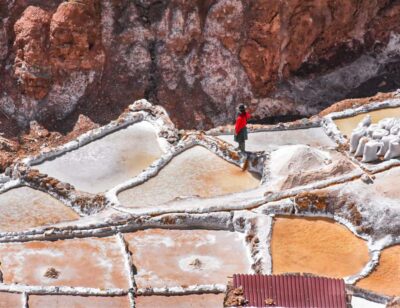
Moray, Maras Salt Mines & Chinchero Weavers Tour
Read our review →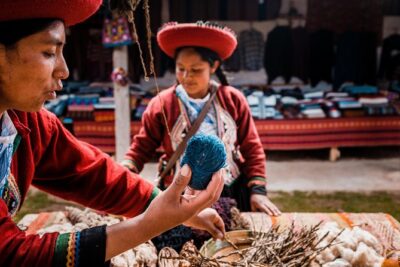
2-Day Tour: Sacred Valley and Machu Picchu by Train
Read our review →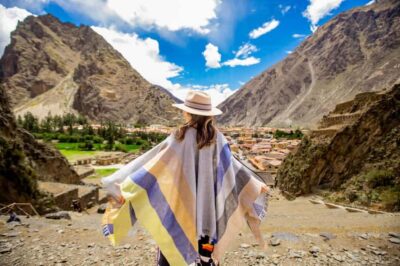
Sacred Valley, Pisac, Ollantaytambo, Salt Mines Moray
Read our review →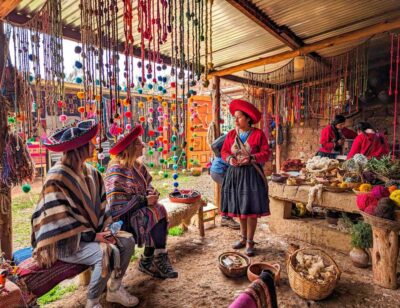
Chinchero,Moray & Salt Mines drop-off in Ollantaytambo
Read our review →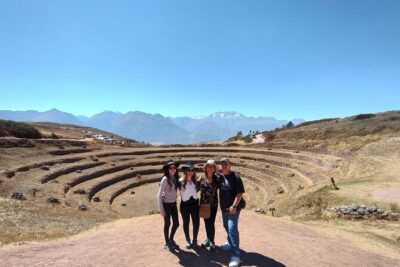
Sacred Valley and Maras Moray Tour with Full Day Buffet Lunch
Read our review →