
Reviewed · HISTORICAL TOURS
Walking tour in the Historic Center of Arequipa
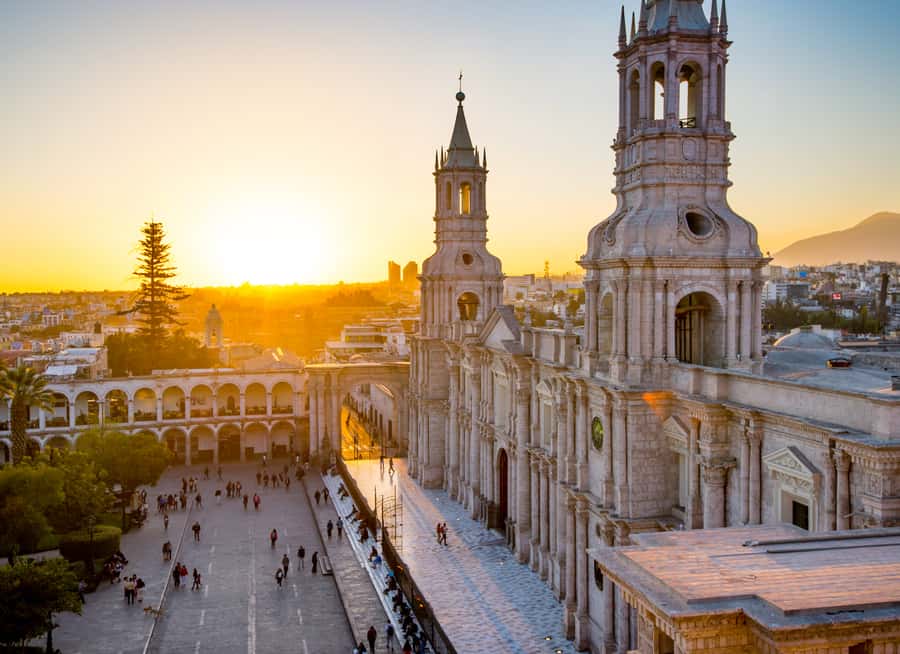
Arequipa reveals itself one street at a time. This two-hour walking tour links the Plaza de Armas, colonial courtyards, volcano viewpoints, alpacas, and the old San Lazaro neighborhood in one useful first look at the city. I like the mix of grand architecture and everyday local life, especially the stop at Mundo Alpaca and the view toward Misti, Chachani, and Pichu Pichu. I also like that guides such as Edgar, Johan, Jorge Echeandia, Beatriz, and Francisco add humor, food advice, and plenty of local context.
The main catch is the payment system. The reservation costs $10, but you are expected to leave a voluntary tip at the end, commonly 30 to 50 soles per person according to one recent participant. Some people may find that higher than expected for a so-called free walking tour. The route can also feel rushed if you want long photo stops.
In This Review
- Key Points Before You Book
- Starting Near the Plaza de Armas
- Reading the Plaza de Armas
- The Company Cloisters and Colonial Details
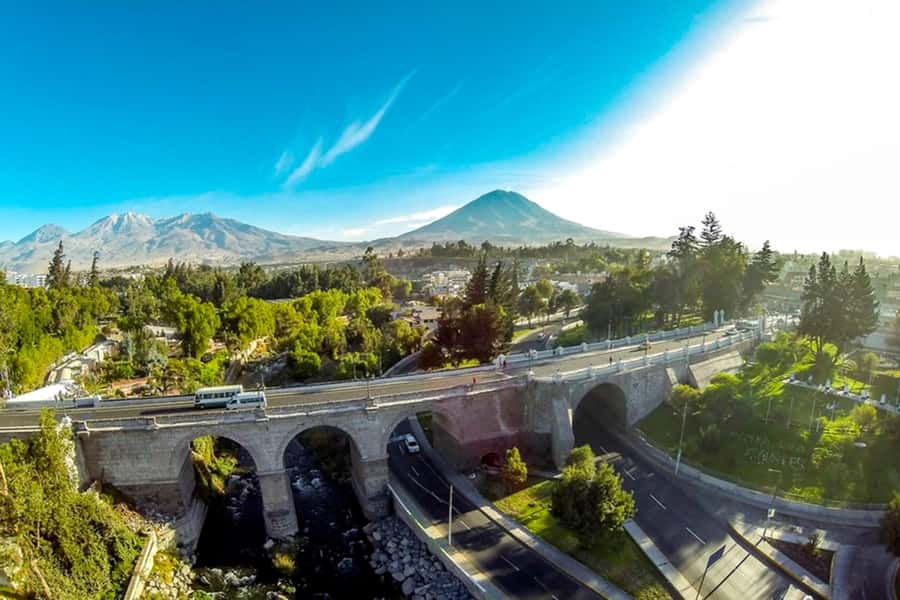
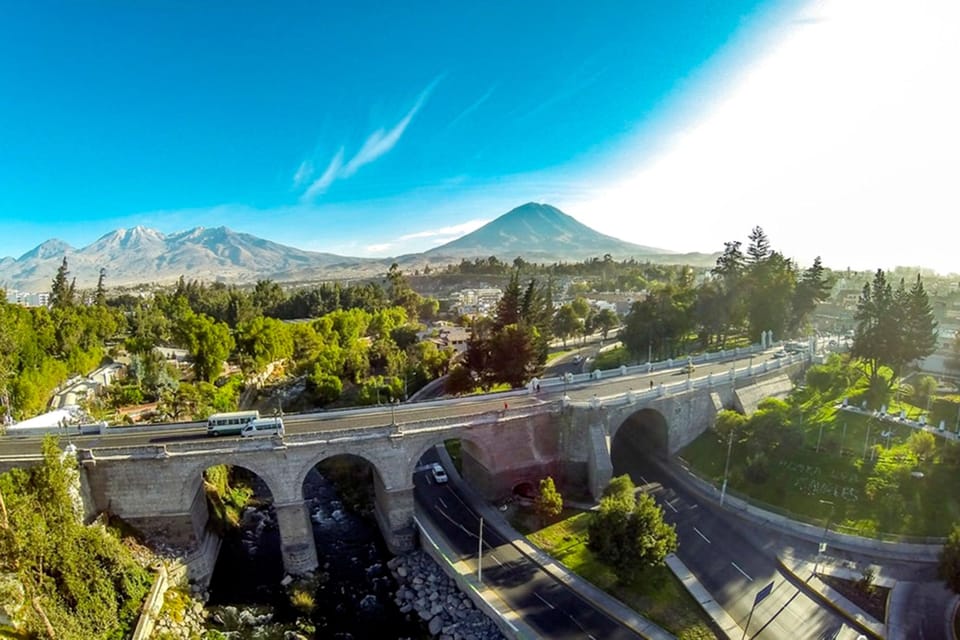
- El Puente Grau and Three Volcano Views
- Meeting Llamas and Alpacas at Mundo Alpaca
- San Lazaro, the City’s First Settlement
- What the $10 Price Really Means
- How the Guides Shape the Experience
- Who Should Book This Arequipa Walk?
- Should You Book It?
- FAQ
- How long does the walking tour last?
- Where does the tour meet?
- What languages are available?
- Does the tour include transportation?
- Are Santa Catalina Convent and the Juanita mummy museum included?
- Can I cancel or pay later?
Key Points Before You Book
- A useful first walk through Arequipa: You cover the central square, colonial architecture, city views, camelids, and San Lazaro without arranging transport.
- Mundo Alpaca adds an unusual twist: You can see llamas, alpacas, Suri alpacas, and vicuñas near the city center.
- The volcano viewpoint is a highlight: El Puente Grau offers views toward Misti, Chachani, and Pichu Pichu when conditions are clear.
- The guide makes or breaks the morning: Edgar, Johan, Beatriz, Francisco, and Jorge Echeandia have received especially warm praise for humor and local insight.
- Budget carefully: The $10 booking fee is only part of the expected payment because a tip is requested at the end.
- Extra museums cost more: Santa Catalina Convent and the Juanita mummy museum can be added only with separate admission and, according to the arrangements, an internal guide.
Starting Near the Plaza de Armas
The meeting point is Santa Catalina Street 204, about one block from Arequipa’s Plaza de Armas. Look for a guide carrying an umbrella. That simple marker matters in the busy center, where several streets feed into the main square and a first-time arrival can easily wait in the wrong place.
The route begins and ends near the same address, so you do not need to work out a complicated return. The stated duration is about two hours, although one participant described a walk closer to two and a half hours. I would allow a little extra time, especially if the group stops for questions or the guide adds a food, market, or viewpoint stop.
The tour is offered in English or Spanish. You walk the entire route, so wear shoes suited to uneven city streets and bring water. Arequipa sits at high altitude, and even a short city walk can feel more demanding than the clock suggests.
One practical caution: a recent booking got off to a poor start when the guide was not at the meeting point and the organizer did not answer immediately. The group eventually connected with Beatriz and continued, but I would arrive a few minutes early, keep the meeting instructions handy, and confirm the location before setting out.
More Walking Tours in Arequipa
- Arequipa: Walk through the Historic Center of the City
★ 4.9 · 87 reviews - Arequipa Walking Tour city center and drinks experience
★ 5.0 · 72 reviews - Excursion to the Sillar Route with Walk in Culebrillas
★ 4.0 · 25 reviews
Reading the Plaza de Armas
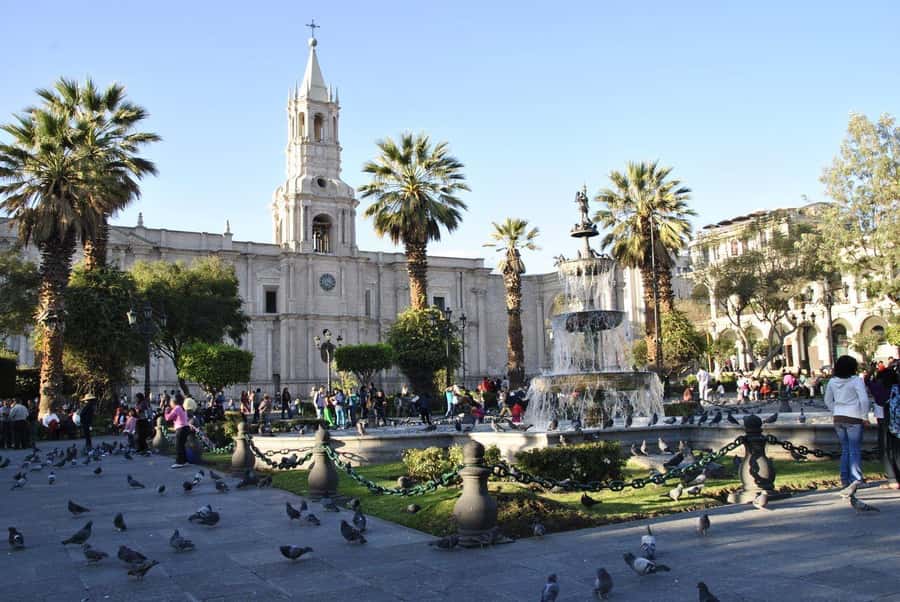
The Plaza de Armas is the right place to begin because Arequipa’s identity gathers around it. The guide explains the square’s history, then points out the traditional arches and the portals that frame the open space. This gives you a useful map of the city center before the walk moves into smaller streets.
The value here is not only the view. A good guide helps you read the square as a record of Arequipa’s past, showing how public space, religion, and colonial construction fit together. The tour is particularly useful if you have just arrived, since it gives you a sense of direction for the rest of your stay.
Edgar was praised for explaining both major events and small present-day details, including a long line of people waiting to renew national identity cards. That kind of observation keeps the tour from becoming a parade of old buildings. You get a glimpse of how the city works now, not only how it looked in the past.
The drawback is time. Two hours is enough for an introduction, not a slow architectural study. If you like photographing every facade, you may need to return to the square later on your own.
The Company Cloisters and Colonial Details
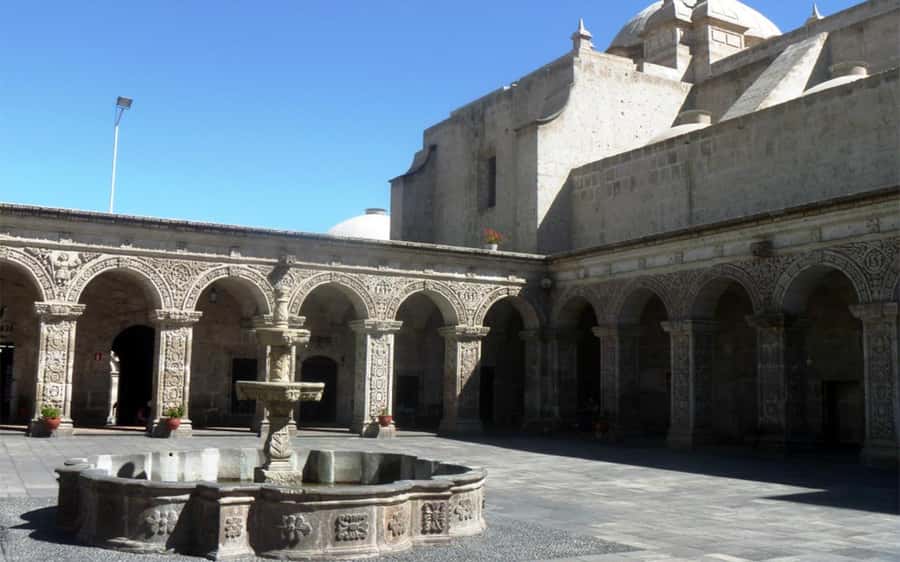
From the main square, the walk continues to the Cloisters of the Company. This is one of the prettiest architectural stops, with arcades and carved details that show the skill of Arequipa’s builders. The tour treats the cloisters as more than a photo backdrop, explaining the religious art and architectural meaning behind what you see.
Beatriz was singled out for making religious architecture and art easier to understand. That is important in Arequipa, where a quick glance at a facade can miss the symbols, stories, and practical purpose built into it.
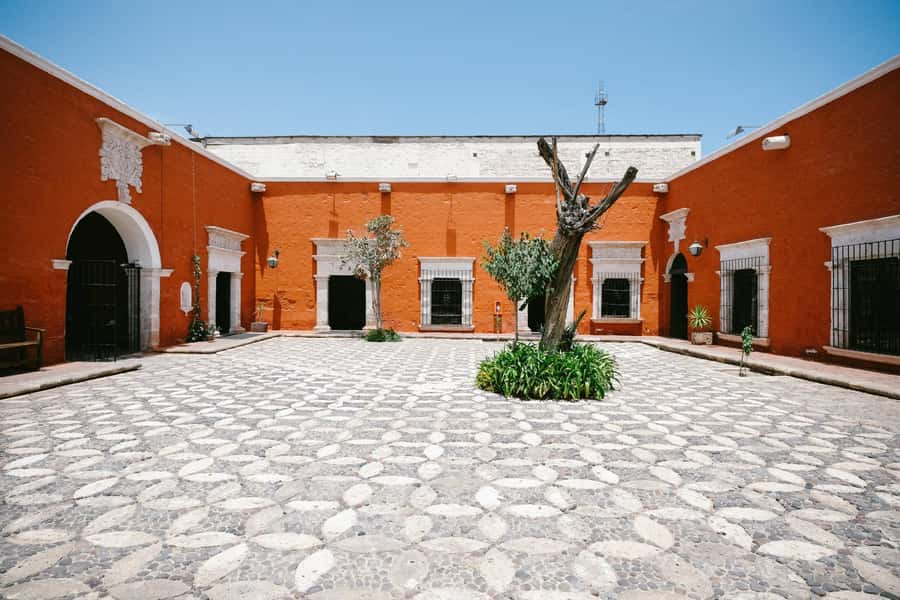
The city’s old mansions and gardens add another layer. You pass through streets near the center where colonial houses, courtyards, and planted spaces offer a quieter side of Arequipa. These stops are less famous than the main square, but they help you see how the city’s grand public buildings connect with private homes and enclosed gardens.
Some participants found parts of the tour slower than others. That makes sense here: the cloisters and older houses reward explanation, but you may prefer the outdoor views and camelids later in the route. If your interests are strongly focused on architecture, ask questions. If you mainly want photographs, be ready to keep moving.
El Puente Grau and Three Volcano Views
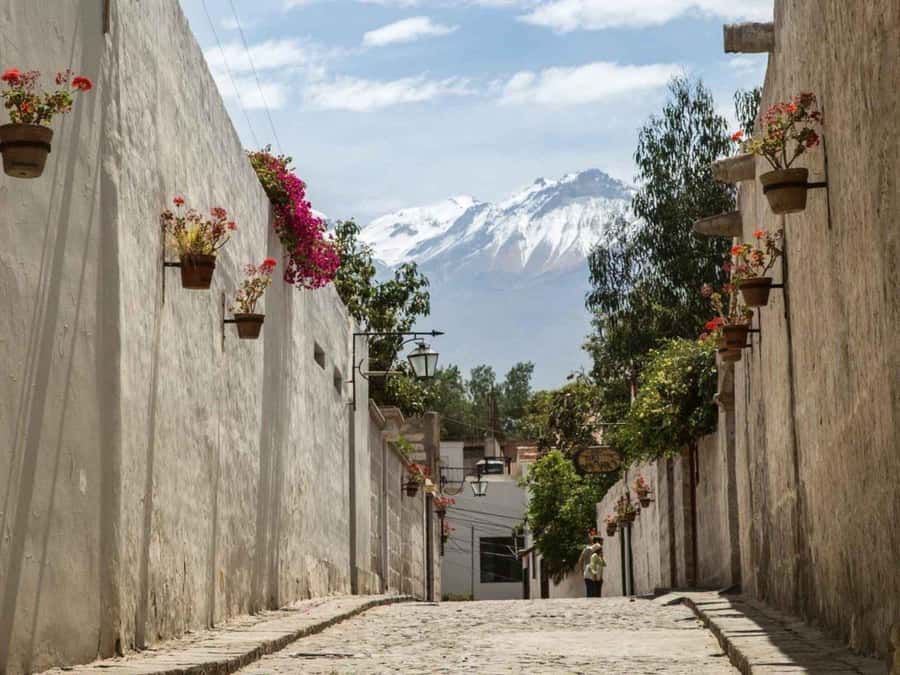
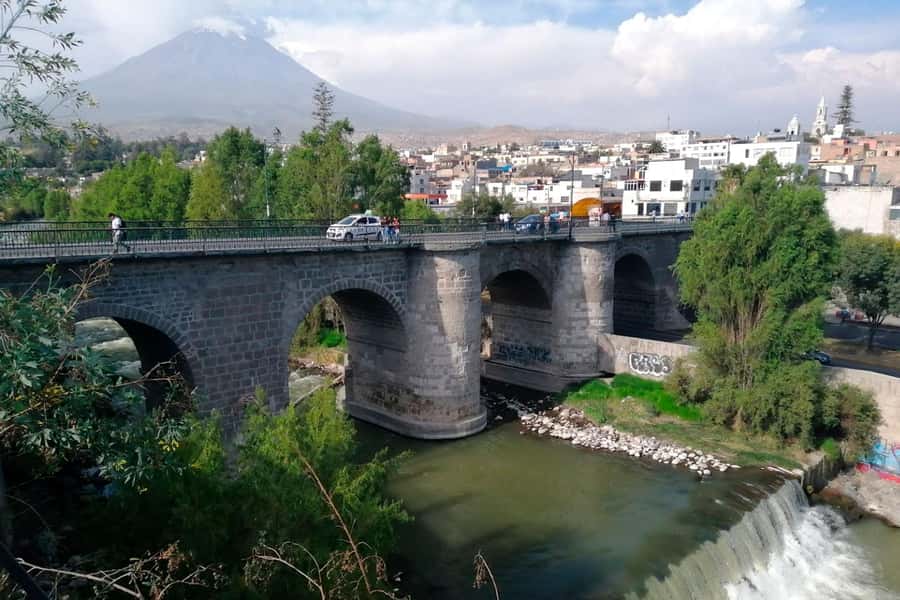
One of the tour’s strongest moments comes at a strategic viewpoint near El Puente Grau. From here, you may see Misti, Chachani, and Pichu Pichu, the volcanoes that shape Arequipa’s setting.
The view gives the city a sense of place. Until this point, you are studying plazas, arches, and narrow streets. At the bridge, the frame opens and the surrounding peaks explain why Arequipa feels so distinctive. Several people specifically praised the volcano views, and I can see why this is a worthwhile pause on a city walk.
Visibility will affect what you see, so keep expectations sensible. The tour promises a viewpoint, not perfect mountain conditions. If the sky is clear, this can be a major photo stop. If clouds or haze interfere, the guide can still explain the volcanoes and their importance to the city.
A small complaint is that some groups may not get much time for pictures. If the view is clear, tell the guide you would like a moment to photograph it. You will not want to discover later that your best chance passed while the group was already heading down the street.
More history to walk through in Arequipa:
- Arequipa, Historic and Colonial City and Santa Catalina Monastery
★ 4.5 · 42 reviews - Walking Tour through the Historic Center of Arequipa
★ 4.5 · 18 reviews - Discover Lima: Love Park, Historic Center, and its Catacombs.
★ 5.0 · 696 reviews - Street Food, Market & Old Eateries Tour in Lima’s Historic Center
★ 5.0 · 656 reviews
Meeting Llamas and Alpacas at Mundo Alpaca
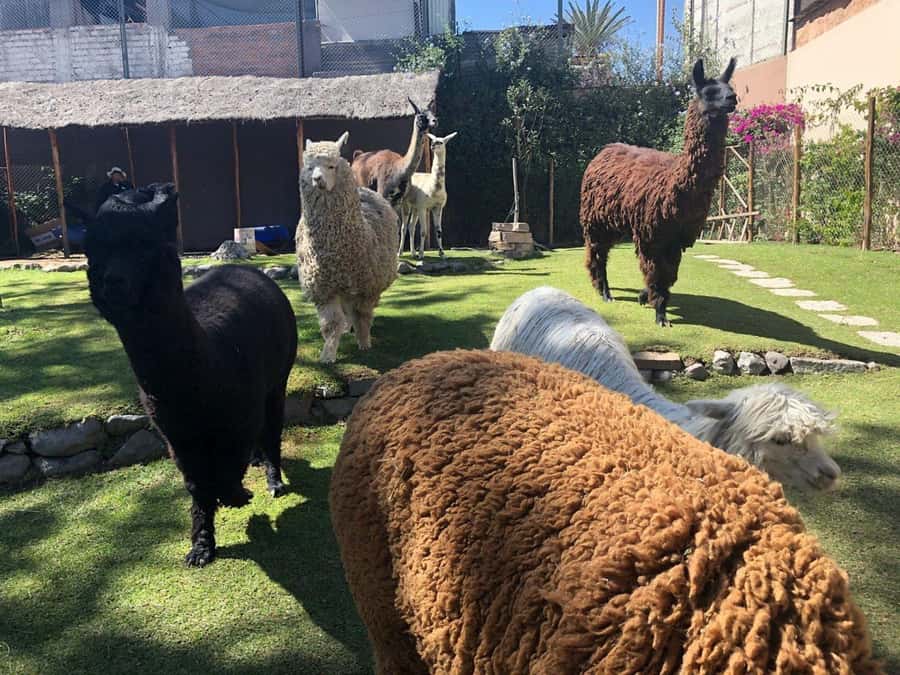
Mundo Alpaca changes the rhythm of the walk. Instead of another church, mansion, or plaza, you visit an old breeding farm for Andean camelids. You may see llamas, alpacas, Suri alpacas, and vicuñas, including young animals. One person called seeing a baby llama and alpaca the highlight of the tour.
This stop gives useful context to a material closely tied to Peru. You can learn about the animals and see fabrics made from their fiber. There is also the option to buy woven goods at the same location, but shopping is optional. I would treat the store as a chance to look rather than a required part of the tour.
For families and anyone who wants a break from formal history, Mundo Alpaca is a welcome surprise. It also makes the route feel more local and varied. You are not simply moving from one monument to the next.
The stop may not appeal as much if you want a strictly architectural tour. It also takes time from the historic center, so you should decide what matters most to you. For most first-time visitors, the animals make the walk more memorable, especially after a morning of stone facades and religious buildings.
San Lazaro, the City’s First Settlement
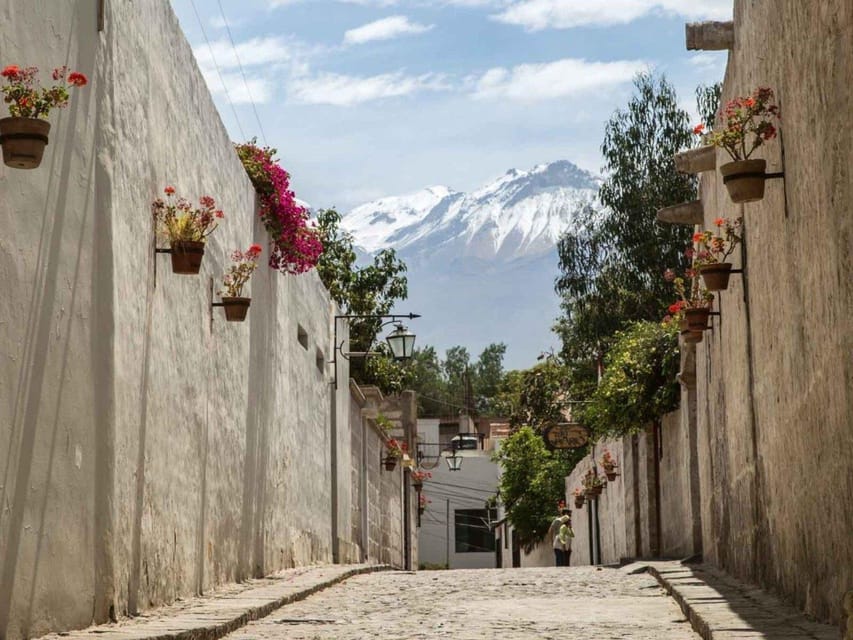
The final major neighborhood is San Lazaro, described as the first town founded in what became the White City. Its narrow streets and older character offer a different feel from the formal Plaza de Armas.
This is where the tour helps you connect Arequipa’s central monuments with its beginnings as a lived-in town. The neighborhood is not presented as a separate museum. You walk through it, listen to the local story, and notice how the city’s older identity survives in the streets.
The route then returns toward the center and finishes near Santa Catalina Street 204. That ending is convenient if you want to continue sightseeing, find lunch, or revisit a place that went by too quickly.
Some guides add small local touches along the way. Francisco was praised for knowing the city well, while Beatriz offered food advice, and another guide included cocktails and queso helado in the experience. These extras may depend on the guide and the day, so do not book expecting a guaranteed tasting. Still, it is worth asking for restaurant suggestions before the walk ends.
What the $10 Price Really Means
At first glance, $10 for two hours and a professional guide looks like a strong bargain. It is a low-cost way to see a wide range of Arequipa sights without paying for a private tour or arranging taxis between stops.
The important detail is that the $10 is a reservation payment, not the full expected cost. At the end, you are asked to leave a voluntary tip to help cover guide service and maintenance connected with the places visited. One participant reported an expected tip of 30 to 50 soles per person and felt that amount was steep.
That does not automatically make the tour poor value. If your guide is as engaging as Edgar, Johan, Jorge Echeandia, Beatriz, or Francisco, you receive a long introduction to the city, practical restaurant advice, historical explanations, volcano views, and the Mundo Alpaca visit. Several people considered the experience excellent value even after the tip.
Still, you should know the arrangement before booking. If you prefer a clearly fixed price, the final amount may frustrate you. If you are comfortable with a tip-based model, the combined cost can remain modest for the amount covered.
Admission details need close attention. The standard outing includes the planned visit points, but entering Santa Catalina Convent or museums such as the Juanita mummy collection requires an extra fee. Those visits also involve hiring an internal guide. Ask about the additional price before agreeing to add them.
How the Guides Shape the Experience
The strongest praise centers on the guides, not only the route. David was described as funny, entertaining, and full of information. Edgar received repeated praise for humor, local knowledge, and recommendations. Johan was called engaging, while Jorge Echeandia was praised for being friendly, helpful, and well informed.
That range of comments tells you what to look for: a guide who can explain a building, answer questions, and notice ordinary life around the group. The best moments are likely to come from the stories between the official stops.
The tour is also suitable for questions. Nicolas appreciated a guide who welcomed questions, and Nelly found Edgar kind, funny, and open to conversation throughout the walk. If you want a silent route with only a few facts, this may feel too talkative. If you want context, ask freely and use the guide as your first source for food and museum advice.
Guide quality can vary. One participant had a delayed start, and another felt portions were boring or rushed. A two-hour group walk cannot satisfy every interest, so your experience will improve if you tell the guide early that you care most about architecture, food, volcanoes, or local life.
Who Should Book This Arequipa Walk?
I would choose this tour if I had just arrived in Arequipa and wanted to get oriented quickly. It covers the main square, colonial details, volcano views, animals, and an old neighborhood in a short period. That makes it a good opening activity before visiting the Santa Catalina Convent or other museums at your own pace.
It also suits you if you want:
- A low-cost introduction to the historic center
- A mix of architecture and ordinary city scenes
- English or Spanish guiding
- A fully walking-based route
- A guide who can suggest food and later sightseeing
- A short outing that includes children-friendly animal viewing
I would hesitate if you dislike tip-based pricing, want guaranteed long photo stops, or prefer a tightly timed private itinerary. Visitors who want detailed access to Santa Catalina Convent or the Juanita mummy museum should plan those as separate paid visits.
Free cancellation up to 24 hours before the start and reserve-now, pay-later booking make the plan flexible. The duration is listed as two hours, but allow extra time in case the walk runs longer or you continue talking with the guide afterward.
Should You Book It?
Yes, if you want a broad first look at Arequipa and you understand the tip arrangement. The route makes good use of two hours, and the combination of the Plaza de Armas, Company cloisters, El Puente Grau, Mundo Alpaca, and San Lazaro is more varied than a standard old-town walk.
Before booking, budget for the $10 reservation plus a possible 30 to 50 soles tip, and keep separate money for Santa Catalina Convent or museum admission. Arrive early at Santa Catalina Street 204, look for the umbrella, and speak up if you need time for photos.
For a first day in Arequipa, this is a practical choice. You get your bearings, meet a local guide, see the volcanoes, and finish with a better idea of where to spend the rest of your time.
FAQ
How long does the walking tour last?
The stated duration is two hours. One participant described a walk of about two and a half hours, so allowing extra time is sensible.
Where does the tour meet?
The meeting point is Santa Catalina Street 204, about one block from the Plaza de Armas. The guide should be carrying an umbrella.
What languages are available?
The tour is offered with a live guide in English or Spanish.
Does the tour include transportation?
No. The entire route is completed on foot, and it returns near Santa Catalina Street 204.
Are Santa Catalina Convent and the Juanita mummy museum included?
Entry to those sites is not part of the standard visit. They can be added with separate admission costs and internal guides, subject to prior coordination.
Can I cancel or pay later?
You can cancel up to 24 hours in advance for a full refund. The reservation can also be made with payment later, so you do not have to pay immediately when booking.
More Walking Routes through Arequipa
- Walking Tour Arequipa Including Santa Catalina Monastery
★ 4.0 · 8 reviews - Arequipa: Walking Tour and Santa Catalina Monastery
★ 4.4 · 7 reviews - Walking City tour including the Monastery of Santa Catalina
★ 5.0 · 6 reviews - Arequipa Walking Tour and Santa Catalina Monastery
★ 5.0 · 4 reviews
Added recently around Arequipa
- gazebos cannon of the coca★ 5.0 · 28 reviews
- Sillar Route★ 5.0 · 4 reviews
- Salinas Lagoon + Mini Volcano DE Lojen★ 5.0 · 9 reviews
- Full Day Tour To The Salt Lake Salinas in Arequipa★ 4.5 · 34 reviews
- 3-Day Colca Canyon trek with Professional Guide★ 5.0 · 40 reviews
- Trekking, Waterfalls and Thermal Baths★ 4.5 · 47 reviews
- Walking Tour Arequipa Including Santa Catalina Monastery★ 4.0 · 8 reviews
- Walking City tour including the Monastery of Santa Catalina★ 5.0 · 6 reviews
Historical Tours, compared.

Discover Lima: Love Park, Historic Center, and its Catacombs.
Read our review →
Street Food, Market & Old Eateries Tour in Lima’s Historic Center
Read our review →
Lima’s Vibrant Heritage: Exploring the City’s Landmarks Half-day
Read our review →
A Journey Through Time: Lima’s Historic Center & Catacombs Tour
Read our review →
Historic Center Street Food, Market, and Eateries Tour
Read our review →
Historic Walking Tour with Pisco Sour and Local Music
Read our review →
Top Attractions in Lima: Historic Center, Love Park & Catacombs
Read our review →
Food History + Local Markets Tour & Fruit Tasting
Read our review →Browse the lists this tour appears in