
Reviewed · WALKING TOURS
Excursion to the Sillar Route with Walk in Culebrillas
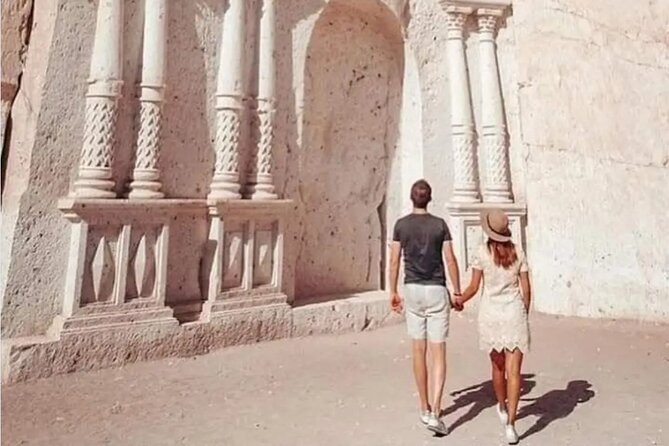
Arequipa is built from volcanic stone. This half-day trip takes you from the city to the Sillar Route, where workers extract and shape the white rock used in the White City’s churches and houses. I like the chance to see that building material at its source, and I also like the walk through Culebrillas, where pink sillar forms a narrow natural canyon.
The price is appealing at $12.50 per person, especially since an air-conditioned vehicle and professional guide are included. The main caution is timing: one visit reached the quarry only 30 minutes before closing, which made the explanation feel rushed. Confirm the schedule and guide language before you pay.
In This Review
- Key points to know
- Why Sillar Matters to Arequipa
- The Opening Stop in Arequipa
- Reaching the Cerro Colorado Sillar Quarries
- What You See Along the Sillar Route
- Walking Into Culebrillas Canyon
- How the Four to Five Hours Feel
- Price, Included Features, and Real Value
- Meeting Points and Practical Planning
- Who Will Like This Excursion
- Should You Book the Sillar Route and Culebrillas?
- FAQ
- How long does the Sillar Route and Culebrillas tour last?
- How much does the tour cost?
- Is transportation included?
- Where does the tour start and finish?
- How long is the walk in Culebrillas?
- Can I cancel for a full refund?
Key points to know
- White sillar in its natural setting: See how Arequipa’s famous volcanic stone is extracted, carved, and shaped.
- Pink rock at Culebrillas: Walk for about 25 minutes through a naturally formed canyon with striking pink sillar walls.
- A low-cost half-day outing: The tour lasts about four to five hours and costs $12.50, with entry charged separately.
- Small group transport: The vehicle carries no more than 14 people, though comfort can depend on the minibus.
- Guide language matters: A guide booked for English was reported to speak only Spanish, so confirm this point in advance.
- Simple city pickup and drop-off: Meet at C. Álvarez Thomas 115 and finish at Av. La Marina 400 in central Arequipa.
Why Sillar Matters to Arequipa
Arequipa is often called the White City because so much of its traditional architecture uses sillar, a pale volcanic stone. The material gives churches, courtyards, and old homes their soft white appearance, but the stone can feel abstract when you see it only in finished buildings.
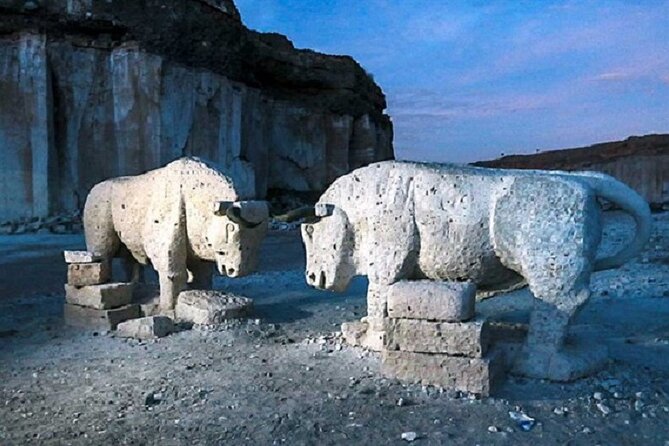
This excursion connects the finished city with the work behind it. At the quarries in Cerro Colorado, you can see the raw rock being taken from the earth and prepared for construction or decoration. The visit also includes examples of carving and large-scale sculpting, so you are not only looking at a quarry wall.
I find this kind of stop more useful than a quick photo break. It explains why Arequipa looks the way it does. You see that the city’s color and architectural style are tied to local geology, labor, and craft.
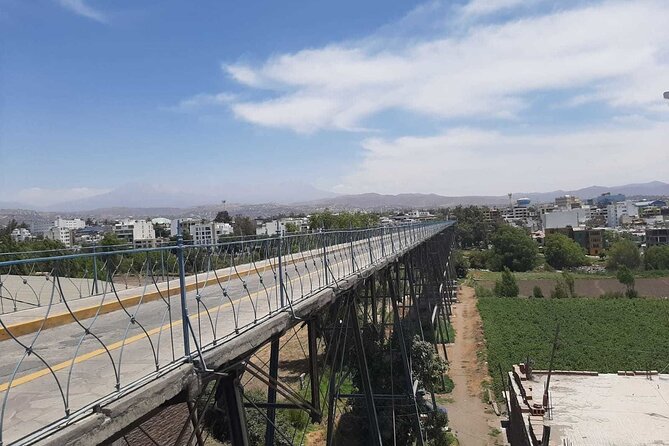
The quarry area also offers broad views and unusual rock formations. Keep your expectations sensible, though. The first city stop is described as a square or main point where you can look toward the volcanoes and the Arequipeña countryside. In a built-up setting, buildings, cables, and wires may interrupt the view. This is an introduction, not a dedicated volcano viewpoint.
More Walking Tours in Arequipa
- Walking tour in the Historic Center of Arequipa
★ 4.4 · 180 reviews - Arequipa: Walk through the Historic Center of the City
★ 4.9 · 87 reviews - Arequipa Walking Tour city center and drinks experience
★ 5.0 · 72 reviews
The Opening Stop in Arequipa
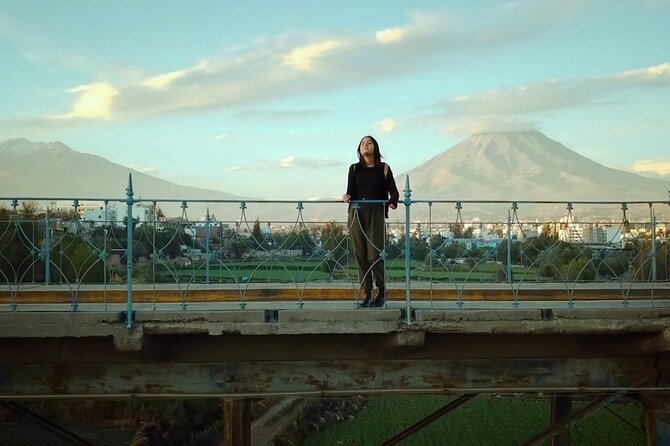
The tour begins with about 20 minutes in Arequipa. The group stops at a central square or another main point, giving the guide time to introduce the area and point out the volcanoes and countryside before the vehicle continues toward the quarries.
This short pause helps you get your bearings, but it should not be the reason you book the excursion. The stop is free, brief, and dependent on the exact location used that day. If you are hoping for a clear, wide view of the volcanoes, ask the guide where the stop will be and how much time you will have.
I would treat this part as a useful orientation. The real value begins outside the city, where the stone is still connected to the ground rather than finished into walls and arches.
Reaching the Cerro Colorado Sillar Quarries
The ride to the main quarry area takes about 30 minutes, followed by the return journey later in the visit. The vehicle is air-conditioned, which is welcome during a warm, dusty outing. The group size is capped at 14 people, small enough for a more personal experience than a large coach tour.
There is one practical warning about the ride. One poor assessment described the bus as uncomfortable and the tour as rushed, while another described the minibus ride as smooth and punctual. That difference may reflect the vehicle used or the timing on a particular day. I would not book this expecting luxury transport. Think of it as basic, efficient transportation to a site that is difficult to reach on foot from central Arequipa.
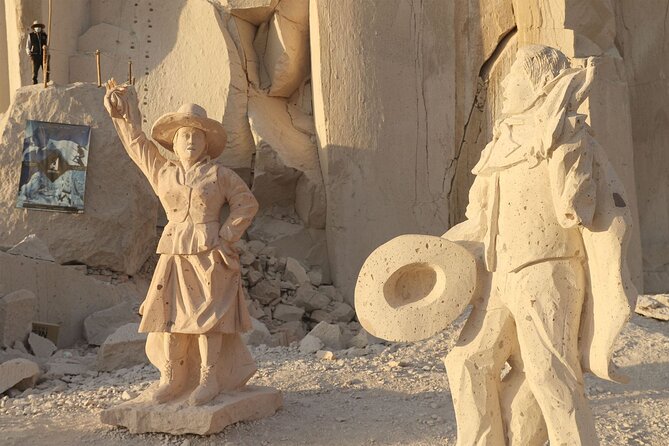
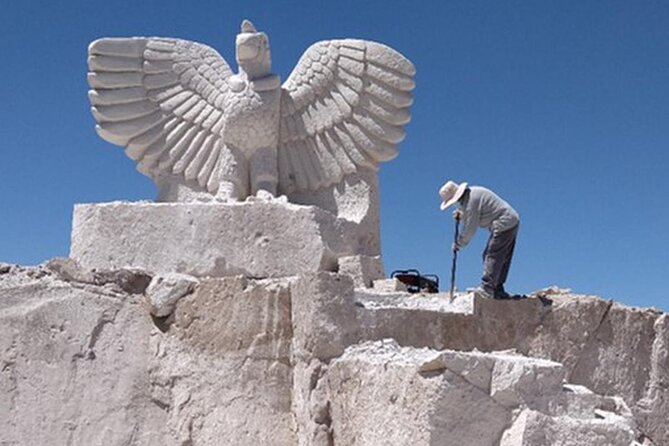
Once at the quarries, the guide should explain the extraction process. You can expect to learn how sillar is removed, cut, carved, and shaped. The visit also includes artistic works made from the stone, including large carvings that show how a practical building material becomes sculpture.
The quarry is valuable because it gives scale to the material. Sillar is not simply a smooth white block waiting to be installed in a church. It comes from a working stone area, and the process of turning rough volcanic rock into architectural pieces requires skill and labor.
What You See Along the Sillar Route
The Sillar Route combines industrial activity with dramatic natural scenery. At the quarry, look closely at the contrast between freshly exposed stone and finished carvings. The white rock can appear almost bright under strong Andean light, while the cut faces show the marks of extraction and shaping.
The tour description allows about two and a half hours at the quarry area, including the visit and transport connected with the site. That gives you more time than a quick roadside stop, at least when the schedule runs properly. The main risk is arriving late. If you reach the site shortly before closing, the allotted time can shrink quickly.
For that reason, I would ask two questions before departure:
- Is the quarry visit scheduled early enough to allow the full visit?
- Will the guide explain the stone-working process in my preferred language?
Those questions are especially important for an English-language booking. One customer booked English but received a guide who spoke only Spanish, and the result was little explanation. The stone itself is interesting, but without interpretation you may miss the connection between the quarry, Arequipa’s buildings, and the carving work.
The entrance fee is not part of the advertised tour price. The supplied details list a charge of 12 soles per person. A provider response to a price complaint clarified the amount as $3, or about 11 soles at that exchange rate. Since the figures do not match perfectly, I would carry at least 12 soles per person and confirm the current amount before the visit.
More walking routes through Arequipa:
- Walking Tour through the Historic Center of Arequipa
★ 4.5 · 18 reviews - Walking Tour Arequipa Including Santa Catalina Monastery
★ 4.0 · 8 reviews - Arequipa: Walking Tour and Santa Catalina Monastery
★ 4.4 · 7 reviews - Walking City tour including the Monastery of Santa Catalina
★ 5.0 · 6 reviews
Walking Into Culebrillas Canyon
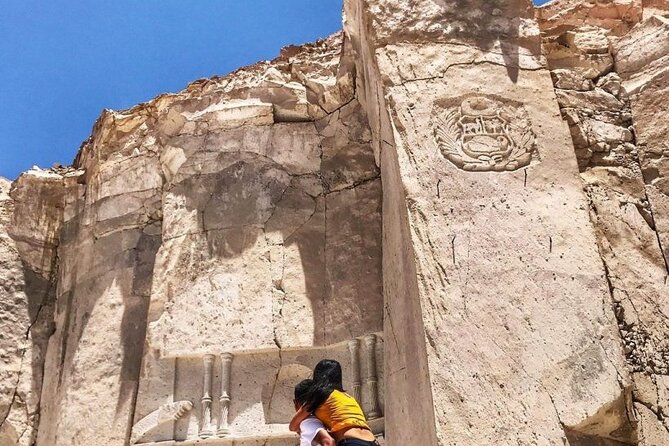
After the main quarry visit, the vehicle takes about 30 minutes each way from the Añashuayco quarry area to Culebrillas. The canyon is naturally formed and made from pink sillar, giving it a different appearance from the pale stone associated with central Arequipa.
The walk inside the ravine lasts about 25 minutes. It is not a long hike, but the group is told to proceed with care. The route leads toward the origin of the sillar formation, with pink rock walls and views that change as you move through the narrow section.
This is the most distinctive part of the outing for me. The quarry explains how people work with sillar, while Culebrillas shows what nature created before human hands cut and shaped the stone. The two stops belong together, even though they offer different experiences.
A particularly appealing feature is the mention of grottoes and a waterfall at Culebrillas. The exact conditions may vary, but these details add interest to the short walk. You are not just stopping at a quarry for photographs. You are also entering a natural formation with its own shapes, colors, and water features.
The walk requires attention to footing. The route is described as one to be taken carefully, so comfortable shoes make sense. Do not expect a long trek or a fully developed trail experience. The attraction is the rock itself, and the short walk gives you a close look without taking up an entire day.
How the Four to Five Hours Feel
On paper, four to five hours is a good length. You get an introduction in Arequipa, the quarry visit, transport between the sites, and a short walk at Culebrillas without giving up a full day in the city.
The schedule includes several 30-minute drives. That means the time passes partly in the vehicle, not only at the attractions. If you dislike road time, the excursion may feel less substantial than the total duration suggests. If you want a short outing beyond Arequipa, the balance works well.
The main issue is not the number of hours but how they are managed. A late arrival at the quarry can turn a detailed visit into a hurried one. I would choose a departure that leaves enough time at the site, particularly if the quarry has a fixed closing hour.
The small maximum group of 14 is helpful. A guide can usually speak to the group without needing a microphone, and moving through the canyon should be easier than with a large coach. Still, a small group does not guarantee a comfortable vehicle or an English-speaking guide. Those are separate points to verify.
Price, Included Features, and Real Value
At $12.50 per person, this is one of the cheaper ways to see the Sillar Route from Arequipa. The price includes an air-conditioned vehicle and a professional guide, which makes the outing more convenient than arranging transport to both the quarries and Culebrillas yourself.
You should add the entrance fee to your budget. Based on the supplied information, carry 12 soles per person for admission. Also remember that the value depends heavily on the guide’s language and the amount of time available at the quarry.
I see this as a good-value trip for someone who wants the main sights at a modest price. It is less convincing for someone seeking a polished, slow-paced cultural tour with extensive commentary. The low cost helps explain the simple transport and brisk schedule, but it does not excuse a guide failing to provide the language promised at booking.
The overall rating is 4.2 out of 5 from 25 ratings. That suggests the experience works well for many people, but the lower assessments point to clear risks: rushed timing, uncomfortable transport, poor views from the city stop, and a mismatch between the booked and delivered guide language.
Meeting Points and Practical Planning

The tour starts at C. Álvarez Thomas 115 in Arequipa and ends at Av. La Marina 400. Both points are in Arequipa, so check the map carefully and allow time to reach the starting location.
Confirmation is provided when you book. The activity accepts service animals, and most people can take part. The supplied information does not give a detailed accessibility description for the quarry or canyon, so ask the provider if you need specific information about surfaces, steps, or walking conditions.
I would bring water, sun protection, and shoes suitable for a careful walk on uneven ground. These items are practical rather than luxurious, and they matter more at Culebrillas than at the city stop. Keep a little extra local currency for the entrance fee.
The tour is often booked about 16 days ahead. That does not mean you must reserve that early, but it tells me that advance planning is sensible during busy periods. Free cancellation is available if you cancel at least 24 hours before the local start time. A cancellation within 24 hours is not refundable, and late changes are not accepted.
Who Will Like This Excursion
I would recommend this outing if you want to understand Arequipa through its building stone rather than only through churches and plazas. It also suits you if you have a half-day free and want a low-cost trip with both a working quarry and a natural canyon.
Couples and independent visitors looking for a simple, inexpensive excursion should find the format appealing. The short Culebrillas walk adds variety, and the small group limit is a plus.
I would be more cautious if you need a guaranteed English explanation, a relaxed pace, or comfortable premium transport. Ask the provider to confirm the language and departure timing in writing. If the answer is vague, the experience may still be scenic, but the educational part could be thin.
Families may find the short walk manageable, but the canyon should be approached carefully. The details say most people can participate, but they do not promise a completely accessible route.
Should You Book the Sillar Route and Culebrillas?
Book it if you want a budget-friendly introduction to the stone behind Arequipa’s white architecture, plus a short walk among pink volcanic formations. The combination of quarry, carving, canyon, and waterfall makes the outing more varied than its low price suggests.
Skip it if your priority is a detailed, unhurried guided lesson or high-comfort transport. Before booking, confirm the guide language, ask how much time you will have at the quarry, and budget the separate 12-sol entrance fee. With those points settled, this is a useful half-day addition to an Arequipa visit.
FAQ
How long does the Sillar Route and Culebrillas tour last?
The excursion lasts approximately four to five hours, including the city introduction, travel to the quarries, the quarry visit, transport to Culebrillas, and the walk through the canyon.
How much does the tour cost?
The listed price is $12.50 per person. Admission is not included, and the supplied details state that the entrance fee is 12 soles per person.
Is transportation included?
Yes. The experience includes an air-conditioned vehicle. The group size is limited to a maximum of 14 people.
Where does the tour start and finish?
The tour starts at C. Álvarez Thomas 115 in Arequipa and ends at Av. La Marina 400 in Arequipa.
How long is the walk in Culebrillas?
The walk inside the ravine lasts approximately 25 minutes. The route should be taken carefully, and the transfer between the Añashuayco quarries and Culebrillas takes about 30 minutes each way.
Can I cancel for a full refund?
Yes, if you cancel at least 24 hours before the experience start time. Cancellations or changes made within 24 hours are not accepted for a refund.
Added recently around Arequipa
- gazebos cannon of the coca★ 5.0 · 28 reviews
- Sillar Route★ 5.0 · 4 reviews
- Salinas Lagoon + Mini Volcano DE Lojen★ 5.0 · 9 reviews
- Full Day Tour To The Salt Lake Salinas in Arequipa★ 4.5 · 34 reviews
- 3-Day Colca Canyon trek with Professional Guide★ 5.0 · 40 reviews
- Trekking, Waterfalls and Thermal Baths★ 4.5 · 47 reviews
- Walking Tour Arequipa Including Santa Catalina Monastery★ 4.0 · 8 reviews
- Walking City tour including the Monastery of Santa Catalina★ 5.0 · 6 reviews
Walking Tours, compared.

Lima Half-Day City Walking Tour (Small Groups)
Read our review →

Food & Art: Lima Colors and Flavors Walking Tour
Read our review →
Historic Walking Tour with Pisco Sour and Local Music
Read our review →
Walking tour in the Historic Center of Arequipa
Read our review →
Curious Monkey Cusco- Eat the Streets, Walking Food Tour
Read our review →

Miraflores Trending Flavors Half-Day Walking Tour
Read our review →Browse the lists this tour appears in