
Reviewed · WALKING TOURS
Cusco: Walking Tour with an Experienced Local Guides
Cusco makes more sense on foot. This two-hour walking tour links Inca walls, colonial churches, artisan streets, and high city views with a local guide who knows how to turn stones and street names into a readable story. I like the efficient route and the human touch from guides such as Isaias, Joshua, Joel, and Luis. I also like the useful restaurant and sightseeing advice shared along the way.
The main caution is altitude and uphill walking. The tour ends in San Blas after a steep section, and it is not suitable for wheelchair users. The price is listed as $10 per person, while the experience is presented as a free tour with discretionary tips, so check the current booking terms before you go.
In This Review
- Key points at a glance
- Why this is a smart first walk in Cusco
- Meeting the purple umbrella in central Cusco
- The Main Square and the layered city
- The Twelve-Angle Stone and Inca masonry
- Qorikancha, the Inca Sun Temple
- Kusicancha, Inca Roca Street, and the story in the walls
- Loreto Street and the last Inca street
- San Blas, craft traditions, and the uphill reward
- What the $10 price really gives you
- Practical preparation for the two-hour walk
- Who will get the most from this tour?
- Should you book the Cusco walking tour?
- FAQ
- How long does the Cusco walking tour last?
- What languages are available?
- Where does the tour meet?
- Where does the tour finish?
- What should I bring?
- Is the tour suitable for wheelchair users?
Key points at a glance
- Nine useful city stops: You see the Main Square, Twelve-Angle Stone, Qorikancha, Loreto Street, San Blas, and several lesser-known historic sites.
- A strong first-day activity: The route gives you a quick working map of central Cusco, plus restaurant and bar suggestions.
- Guides make the difference: Isaias, also called Isa, and Joshua received especially warm praise for clear English, humor, local knowledge, and friendly delivery.
- Good value for two hours: You cover a lot without entering a long museum program or committing to a full-day excursion.
- Expect an uphill finish: The walk to the San Blas viewpoint brings excellent city views, but you need comfortable shoes and time to adjust to Cusco’s altitude.
- English and Spanish tours: A certified guide leads the walk, with permanent assistance and private groups available.
Why this is a smart first walk in Cusco
Cusco can feel confusing at first. The streets twist, the Inca foundations sit beneath Spanish buildings, and the most important places are sometimes marked by an ordinary-looking wall. A guided walk gives you a framework before you start exploring on your own.
This route works well because it does not spend the entire two hours in one square. You move through the city center, follow old Inca streets, examine masonry, visit the San Blas area, and finish above the central streets. That variety helps you understand how Cusco developed from an Inca capital into a Spanish colonial city and then into the destination you see today.
I would schedule it early in your stay. The walk gives you practical bearings, and several guides have offered advice on places to eat, drink, and visit afterward. It is also short enough to fit around a train arrival, museum visit, or afternoon plan.
The guides appear to have different personalities. Joshua has been praised for his energy, games, humor, and ability to keep a group involved. Isaias, known as Isa, is especially strong in English and has been described as clear, patient, funny, and comfortable answering questions beyond the planned route. Joel offers a more detailed style, while Luis has paid close attention to how people are handling the altitude.
That variation is normal with a walking tour, but the common thread is important: the guide shapes the experience. This is not simply a march between photo stops. The best guides explain why the architecture matters and connect the physical city with Quechua culture and local traditions.
More Walking Tours in Cusco
- Cusco: Historic Walking Tour with Pisco Sour and Local Music
★ 5.0 · 190 reviews - Curious Monkey Cusco- Eat the Streets, Walking Food Tour
★ 5.0 · 160 reviews - Cusco Highlights Walking Tour: History, Culture, Traditions
★ 4.9 · 72 reviews
Meeting the purple umbrella in central Cusco
The meeting point is Free Tour Cusco Peru, marked by a purple umbrella and a purple polo shirt with Free Tour Cusco printed on it. The listed coordinates are -13.5174197, -71.9786609.
Look for the guide rather than relying only on a street address. Central Cusco has busy pedestrian areas and similar-looking corners, so arriving a little early helps. Have your booking details ready, and keep your phone accessible in case the meeting place is crowded.
The walk is conducted in English or Spanish. Private groups are available, but the supplied information does not give a standard group size. If you prefer a quieter pace or have specific questions, a private option may be worth considering.
The advertised duration is two hours. That is enough time for a broad introduction, not enough for long interior visits at every site. Several stops are photo and explanation points, so think of the tour as an outdoor orientation to Cusco rather than a substitute for a full archaeological or church tour.
The Main Square and the layered city
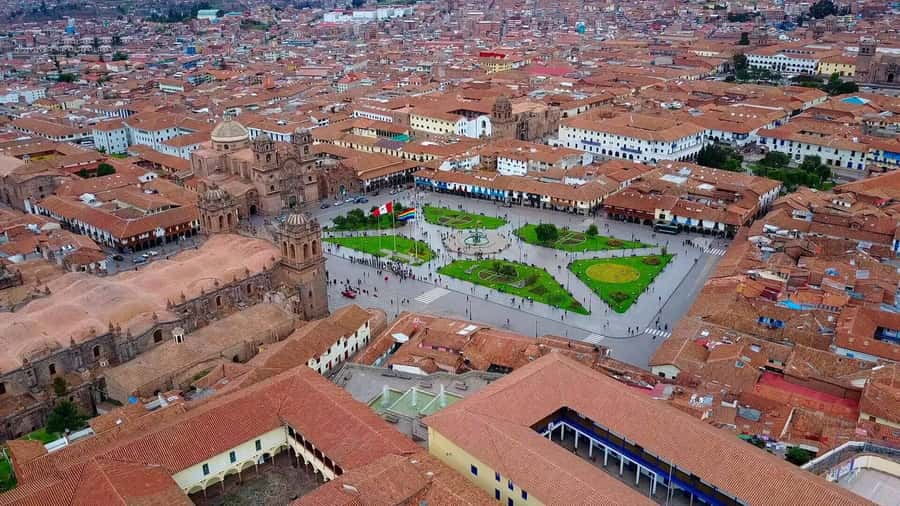
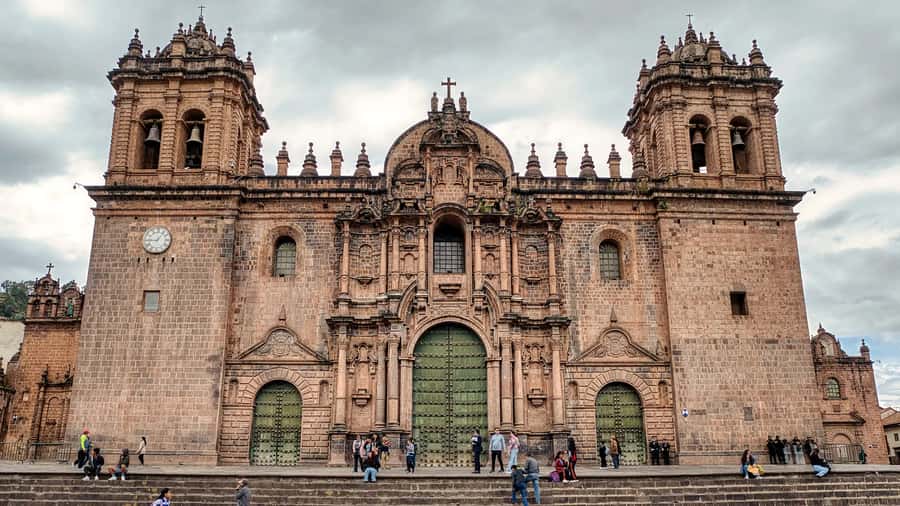
The route begins with Cusco’s Main Square, a place that has been sacred since Inca times. Today, two beautiful 16th-century churches frame the square, giving you an immediate lesson in the city’s layered identity.
This is a useful opening stop because it places the major themes of the walk in front of you: Inca foundations, Spanish religious architecture, and modern city life occupying the same space. Your guide can help you notice details that are easy to miss when you are simply crossing the plaza.
Allow yourself time to look up and around. The square is one of Cusco’s most photographed areas, but the explanation is more valuable than the picture alone. You learn why the site mattered before the colonial period and how the buildings changed its appearance.
The stop is listed with about 30 minutes for a visit, guided explanation, photos, and free time. That makes it one of the longer pauses on the route. If you are still feeling the effects of altitude, it is also a comfortable place to listen without walking continuously.
The Twelve-Angle Stone and Inca masonry
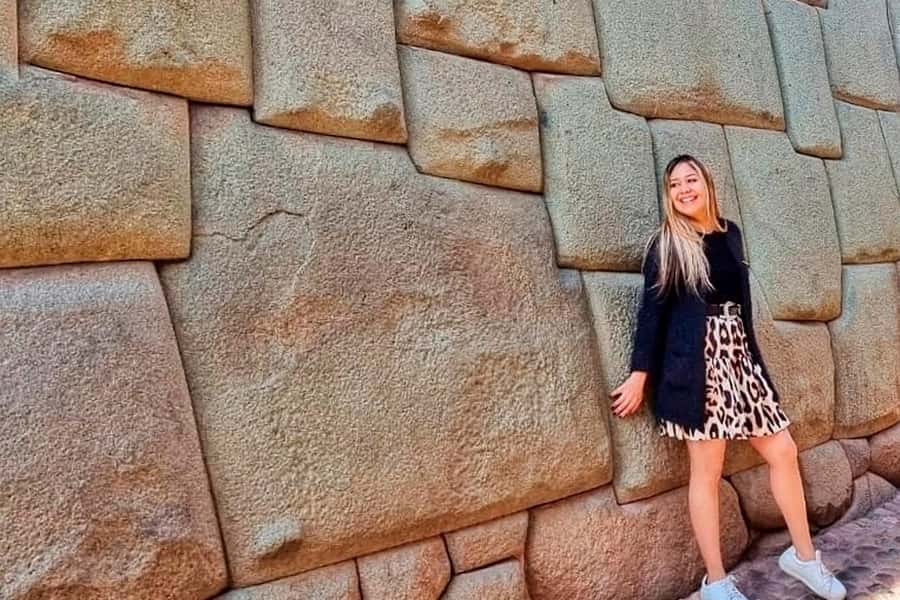
The Twelve-Angle Stone is one of Cusco’s essential stops. Its carefully fitted edges show the precision of Inca stonework, and it symbolizes the city’s 12 Inca neighborhoods.
The guide’s explanation is what makes this stop worthwhile. On your own, you may see a famous stone in a wall and take a photograph. With context, you can begin to understand why Inca masonry remains such a central part of Cusco’s identity.
The stop lasts about 10 minutes, including photos, a visit, and explanation. That is brief, but appropriate. The stone is a focused architectural lesson rather than a place where you need a long stay.
Bring a camera, but do not let the photo replace the details. Look at the joins between the stones and compare the tight construction with later walls nearby. The contrast helps explain the city’s architectural story better than a lecture alone.
More walking routes through Cusco:
- Cusco: Historic Walking Tour with Pisco Sour and Music Show
★ 4.6 · 65 reviews - Cusco Food Walking Tour & Central Market
★ 5.0 · 48 reviews - Cusco: Historic Walking Tour & Scenic Views with local drink
★ 5.0 · 45 reviews - Walking Culinary Experience
★ 5.0 · 41 reviews
Qorikancha, the Inca Sun Temple
Qorikancha, also written Coricancha, was the revered Temple of the Sun and one of the most important buildings in the Inca Empire. The route includes around 15 minutes here for a visit, photos, explanation, and free time.
This is one of the strongest parts of the walk because Qorikancha connects religious belief, political power, and architecture. The guide can help you see why the site mattered to the Inca state and how the colonial city reused important Inca spaces.
Do not expect an extended museum visit within this two-hour format. The tour is designed to explain the site from the route, not to give you an exhaustive examination of every room and object. If Qorikancha becomes one of your main interests, return later with more time.
I like the way this stop follows the earlier masonry discussion. By the time you reach Qorikancha, you have already seen the precision of Inca construction. The temple gives that architectural skill a larger cultural and religious setting.
Kusicancha, Inca Roca Street, and the story in the walls
The walk continues to Kusicancha Palace, described as an ancient government residence with a classic Inca grid layout and central courtyards. This stop helps you picture how the Inca capital was organized, rather than treating the old city as a collection of unrelated stones.
You also visit Inca Roca Street, known for Inca architectural details featuring serpent and puma figures. The puma is especially important to the way Cusco is understood, since the city is often described as having the shape of a puma.
These sections are valuable because they shift your attention from famous individual monuments to the city plan itself. You begin to see that streets, courtyards, wall angles, and carved forms carried meaning. That is the sort of information you can use later as you walk independently.
The itinerary gives several 10 to 15 minute segments for these locations. Expect concise explanations and photo opportunities, not long stops at one building. The pace suits people who want a broad introduction, though anyone seeking detailed archaeology may want a separate specialist tour.
Loreto Street and the last Inca street
Intiquiqllu Street, commonly known as Loreto Street, is described as the last Inca street. It features the historic Amrucancha and Aqllawasi buildings, making it a particularly good place to see how the old city survives within the modern street plan.
This is the kind of stop you might pass without realizing its importance. The street does not need a grand entrance to be interesting. Its value lies in the surviving walls and the way the route reveals connections between buildings, power, religion, and daily movement.
The stop takes about 15 minutes for photos and a guided explanation. Listen for the way your guide describes the buildings and their former roles. A good explanation here can change how you look at the rest of central Cusco.
Loreto Street also reinforces a central lesson of the tour: Cusco is not a city where the Inca past is confined to a distant ruin. It is built into the streets you use for lunch, shopping, and getting back to your hotel.
San Blas, craft traditions, and the uphill reward
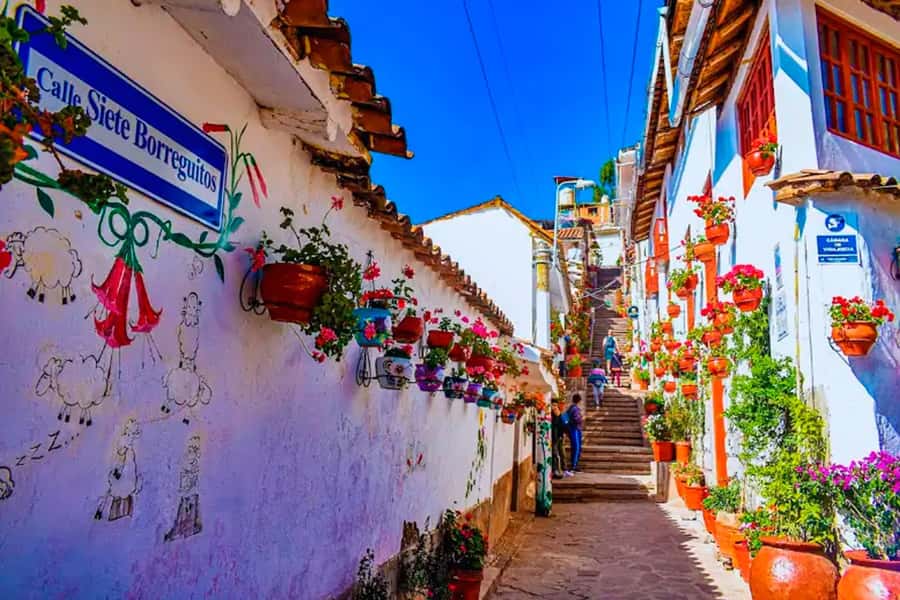
The tour finishes at Plazoleta de San Blas, after walking toward the city’s artisan district. San Blas is known for charming 16th and 17th-century streets, small workshops, and a different feel from the formal Main Square.
The Olave Family House is one of the route’s more distinctive stops. It is the workshop of a famous Cusqueño artisan associated with intricate balcony carvings and Cusqueña imagery. This brings the story forward from Inca and colonial architecture to living artistic traditions.
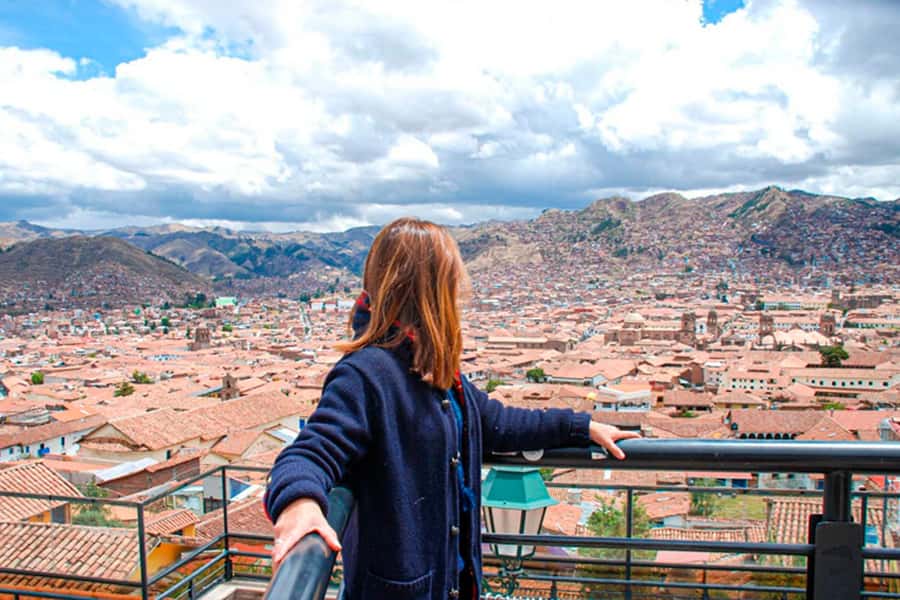
The final destination is the San Blas viewpoint, where you get panoramic views across Cusco. Several accounts praise the view, and one guide included a drink at the end. Some people also received small snacks or refreshments, though these extras may vary, so do not book the tour solely for them.
The walk uphill can be steep. One account specifically notes that the final climb was demanding but worth it, and another guide regularly checked that people were feeling well at high altitude. That is a good sign of attentive guiding, but you still need to manage your own pace.
Wear comfortable shoes, carry water, and avoid treating the last section as a race. If you have just arrived in Cusco, the climb may feel harder than the distance suggests. The viewpoint is a fitting finish because it lets you look back over the streets and sites you have just connected.
What the $10 price really gives you
At $10 per person, this is an inexpensive way to get two hours with a certified professional guide in English or Spanish. The value is strongest if you are new to Cusco and want context before choosing which churches, museums, and archaeological sites deserve a longer visit.
The experience is also described as a free tour, and several people understood it as a tour supported by discretionary tips. Because the displayed price and the free-tour wording can be read differently, check the current terms when booking and carry cash for a tip if you feel the guide earned one.
The low price does not mean you should expect private attention in a standard group. You may be part of a mixed group, and the route must keep moving. On the other hand, the short format limits your financial and time commitment, which is useful if you are testing how much walking you can handle at altitude.
A drink or snack has sometimes been included, and guides have offered pisco sour instruction or a small local tasting. These are pleasant extras, but they should be treated as possible additions rather than guaranteed features.
Practical preparation for the two-hour walk
Bring a passport or ID card, comfortable clothes, sunglasses, a sun hat, sunscreen, water, a camera, cash, and a small daypack. Cusco’s sun can be strong, and the combination of bright light, walking, and altitude makes basic protection worthwhile.
Comfortable shoes matter more than stylish ones. You will walk on city streets and finish with an uphill section, so stable footwear will make the experience easier.
The tour does not allow pets, weapons or sharp objects, smoking in the vehicle, alcohol or drugs, fireworks, explosives, or nudity. The vehicle reference is not central to this walking route, but the restrictions are part of the activity information.
This experience is not suitable for wheelchair users. If mobility is a concern, ask the provider about a private alternative before booking, but do not assume the steep route can be modified.
Free cancellation is available up to 24 hours before the start for a full refund, and you can reserve now and pay later. Starting times vary, so check availability for the date you want.
Who will get the most from this tour?
I would recommend it most strongly to first-time visitors, solo travelers, couples, and families with older children who want a quick introduction to central Cusco. It is also useful if you have a free morning or afternoon and want local suggestions before spending the rest of your stay exploring alone.
English speakers should feel comfortable booking. Isaias and other guides have been praised for clear English, and one replacement guide apologized for not usually leading English walks, then delivered a strong tour anyway. The guide should speak loudly enough for the group and answer questions directly, but the experience will still depend on who leads that day.
This is less suitable for anyone wanting a long, quiet archaeological study. The tour covers many locations in two hours, so explanations are focused. You will learn the main ideas and see the places, then decide where to return for more detail.
Should you book the Cusco walking tour?
Yes, if you want an affordable orientation with a clear route through Cusco’s Inca and colonial center. The strongest reasons are the range of stops, the guides’ practical advice, the excellent English reported for several leaders, and the final San Blas viewpoint.
Book it for your first day or two if possible. Just plan for altitude, wear proper shoes, and understand that the route is a fast city introduction rather than a full archaeological tour. If the current price is $10, the value is very good, and if the tour operates on a tip-based model, carry cash and judge the guide’s work fairly at the end.
FAQ
How long does the Cusco walking tour last?
The tour lasts two hours. It includes guided walks, photo stops, visits, and short periods of free time at several locations.
What languages are available?
The tour is available in English and Spanish. A certified professional guide leads the experience.
Where does the tour meet?
Meet at Free Tour Cusco Peru, where you should look for a purple umbrella and a purple polo shirt marked Free Tour Cusco. The listed coordinates are -13.5174197, -71.9786609.
Where does the tour finish?
The walk finishes at Plazoleta de San Blas, near the San Blas artisan district and viewpoint.
What should I bring?
Bring identification, comfortable shoes, sunglasses, a sun hat, sunscreen, water, comfortable clothes, a camera, cash, and a daypack.
Is the tour suitable for wheelchair users?
No. The experience is listed as unsuitable for wheelchair users, and the route includes an uphill section toward San Blas.
Added recently around Cusco
- Guided tour of the mountain of colors in Cusco★ 5.0 · 11 reviews
- 2-Day Private Short Inca Trail to Machu Picchu★ 5.0 · 15 reviews
- City Tour Cusco – Group★ 5.0 · 4 reviews
- Tour Sacred Valley with Maras and Moray★ 5.0 · 15 reviews
- San Pedro Market Tour with Peruvian Cooking Class★ 5.0 · 31 reviews
- Walking Culinary Experience★ 5.0 · 41 reviews
- City Tour in Cusco★ 4.5 · 10 reviews
- One Day Tour to Humantay Lagoon★ 5.0 · 8 reviews
Walking Tours, compared.
Lima Half-Day City Walking Tour (Small Groups)
Read our review →
Food & Art: Lima Colors and Flavors Walking Tour
Read our review →
Historic Walking Tour with Pisco Sour and Local Music
Read our review →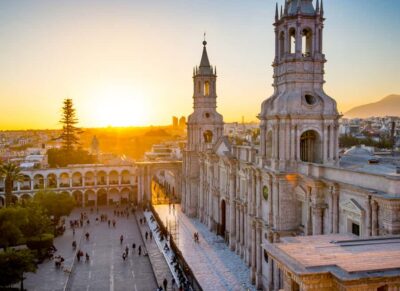
Walking tour in the Historic Center of Arequipa
Read our review →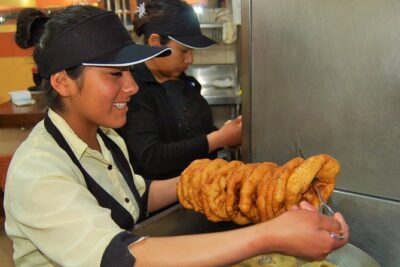
Curious Monkey Cusco- Eat the Streets, Walking Food Tour
Read our review →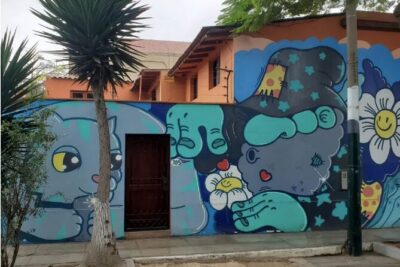

Miraflores Trending Flavors Half-Day Walking Tour
Read our review →
Lima Walking Tour: Historic Center, Market & Monastery
Read our review →Browse the lists this tour appears in