
Reviewed · HISTORICAL TOURS
Cusco Highlights Walking Tour: History, Culture, Traditions
Cusco reveals itself one stone at a time. This $15 small-group walk is a smart first look at the city, linking the Plaza de Armas, Inca walls, Coricancha, San Blas, and the 12-Angle Stone in only two hours. I like the way it mixes famous sights with ordinary local life, including chocolate, possible chicha tasting, and a stop to meet llamas and alpacas.
I also like the friendly English-speaking guides, especially Waldo, who has earned repeated praise for clear explanations, photos, food tips, and patient answers. The main consideration is pace: two hours covers plenty of ground, and the route includes cobbled streets and uphill sections, so you should wear good shoes and expect a brisk walk.
In This Review
- Key points to know before booking
- Why this two-hour walk makes sense in Cusco
- Starting at the Plaza de Armas
- Calle Loreto and the logic of Inca stone
- Coricancha, the Temple of the Sun
- Nazarenas, Inka Roca, and the 12-Angle Stone
- San Blas, where the walk feels more personal
- Chicha and chocolate: small tastes with real context
- What the guides add to the experience
- Walking conditions, timing, and what to bring
- Who should book this Cusco walk?
- Should you book Cusco Highlights Walking Tour?
- FAQ
- How much does the Cusco Highlights Walking Tour cost?
- How long does the walking tour last?
- Where does the tour meet?
- What language is the tour offered in?
- How large is the tour group?
- Is entrance to Coricancha included?
- Is chocolate tasting included?
- Can I try chicha on the tour?
- Is the tour wheelchair accessible?
- What should I bring?
Key points to know before booking
- The route packs Cusco’s major themes into two hours: Inca engineering, Spanish colonial power, local food, and modern city life all appear in one short walk.
- Coricancha is viewed from outside: The tour explains the Temple of the Sun, but entrance is not included in the $15 price.
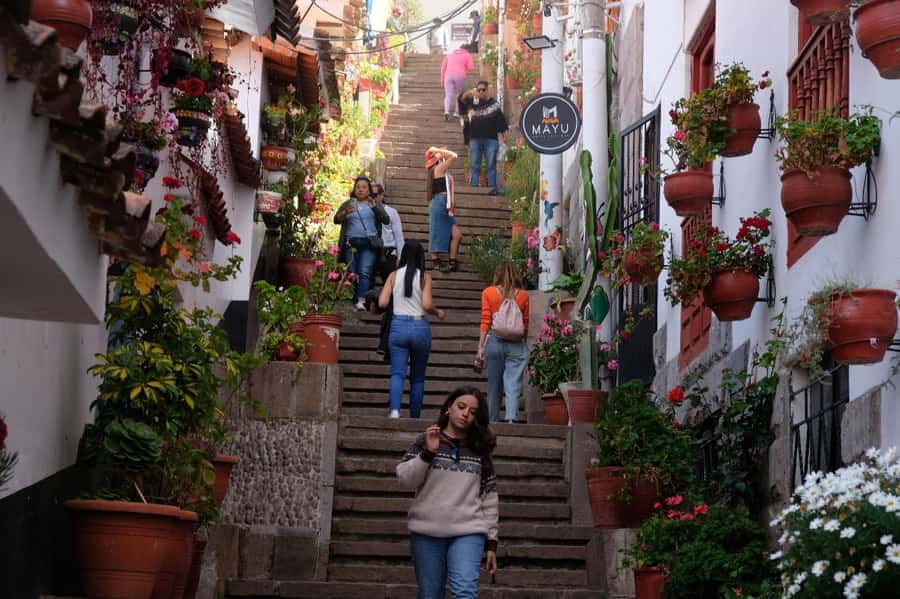
- San Blas gives the walk its local character: Artisan streets, the Sapantiana aqueduct, and 7 Borreguitos Street feel less formal than the main square.
- Waldo is a major strength: He is praised for fluent English, useful city advice, photos, and a warm way of handling questions.
- Tastings add value: You may sample Peruvian chocolate, and chicha can be available if the local vendor is in San Blas.
- Small groups make a difference: The advertised maximum is 10 people, though some departures may be much smaller.
Why this two-hour walk makes sense in Cusco
At $15 per person, this is an inexpensive way to get your bearings before spending money on museums, churches, restaurants, or longer excursions. I would especially consider it for your first morning in Cusco, when you want the basic city map in your head before tackling Machu Picchu, the Sacred Valley, or independent sightseeing.
The route does not try to replace a full archaeological tour. Instead, it gives you a connected story. You see how the Inca capital was planned, how Spanish buildings were placed over Inca foundations, and how neighborhoods such as San Blas still carry a different mood from the grand center.
The 10-person limit is useful. A guide can usually respond to questions more easily than on a large bus-style walk, and the activity can feel almost private when few people book. One departure was described as a one-person tour, while another guide took time to help a participant who climbed more slowly.
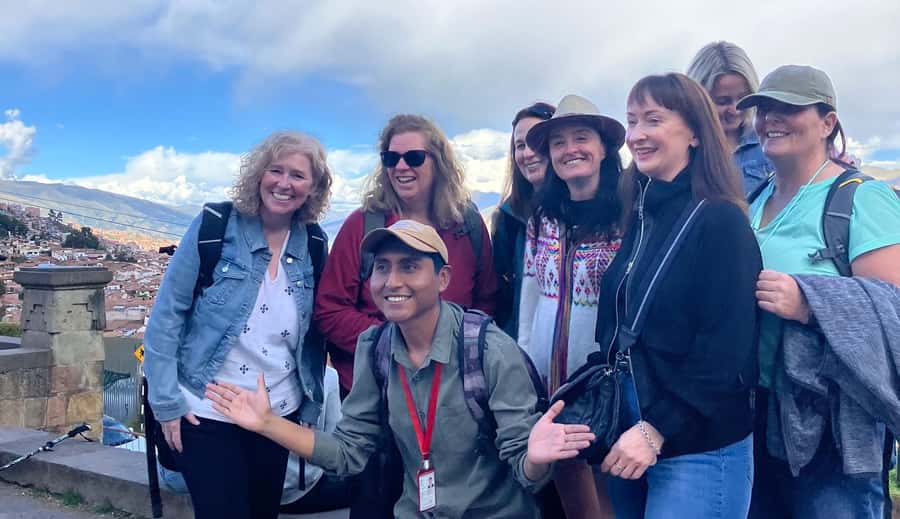
The advertised guides include Waldo and Nilo. Waldo receives the most praise for strong English, local pride, historical explanations, and practical recommendations. He also uses visual material at times to explain Inca buildings, important figures, and objects, which can help when the stonework alone feels hard to interpret.
More Historical Tours in Cusco
- Cusco: Historic Walking Tour with Pisco Sour and Local Music
★ 5.0 · 190 reviews - Cusco: Historical Guided City Tour with 4 Inca Ruins
★ 4.5 · 99 reviews - Cusco: Historic Walking Tour with Pisco Sour and Music Show
★ 4.6 · 65 reviews
Starting at the Plaza de Armas
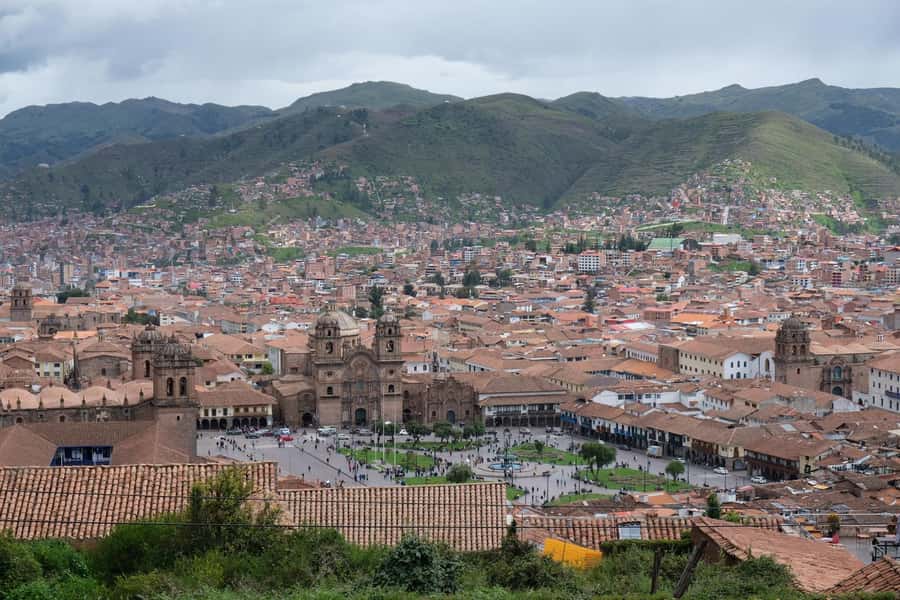
The meeting point is in front of McDonald’s on Cusco’s main square, at coordinates -13.5158882, -71.9787216. It is an easy central location, but do not expect the fast-food sign to be the memorable part. The real opening scene is the Plaza de Armas, the former center of the Inca Empire and now Cusco’s grandest public space.
You begin with the square’s change under Spanish rule. The Cathedral and the Church of the Society of Jesus frame the plaza with a show of religious and political power. Your guide explains what you are looking at rather than simply pointing out facades, which matters here because Cusco’s buildings often combine several periods in one view.
This first stop is listed at about 15 minutes. That is enough for an introduction and photographs, but not enough for a full cathedral visit or a detailed study of every building. Think of it as a useful orientation, not a complete church tour.
Calle Loreto and the logic of Inca stone
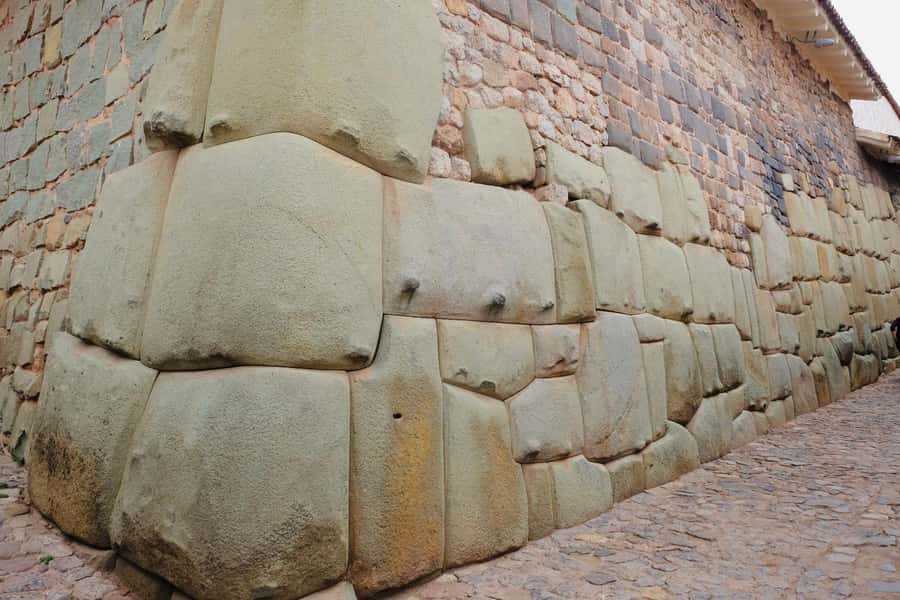
From the square, the walk turns toward Calle Loreto, also known as Intikijllu or Sun Street. This is one of the best places to see Inca masonry in the city center. Huge stones fit together with remarkable precision, and the walls give you a clear sense that Cusco was not simply a collection of scattered temples.
The value of a guide is greatest here. I can look at a tightly fitted wall and admire it, but a good explanation helps me understand why the construction matters. The tour connects the stonework to Inca engineering, city planning, and the later Spanish reuse of existing structures.
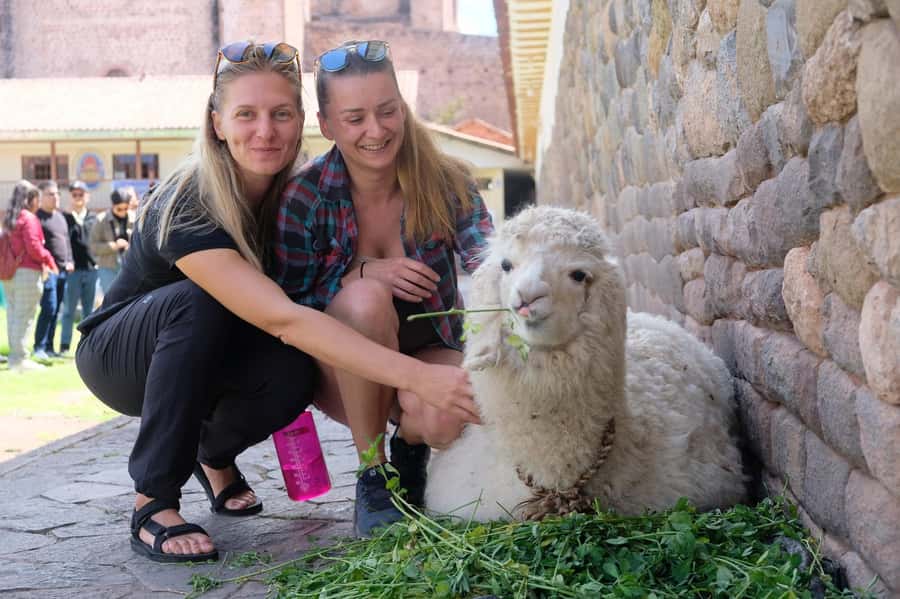
The route also includes Kusicancha, another important Inca area, with roughly 10 minutes for explanation. The walk then continues toward the historic girls’ convent and the Amaru Cancha area, where you may meet llamas and alpacas.
That animal stop is a small touch, but it helps break up the history lesson. You get a photo opportunity and a reminder that Andean animals are part of daily cultural imagery, not just decorative props in a souvenir shop. Keep in mind that the exact order can change during local festivals or other city events.
Coricancha, the Temple of the Sun
Coricancha is one of the tour’s most important stops, but you need to understand the admission detail. The walking tour explains the site and allows you to see it from outside. Entry is not included, so you should not book this activity expecting a full interior visit.
Even from the street, Coricancha helps explain the meeting of Inca and Spanish Cusco. The Temple of the Sun was a central religious site, and the later church built on or beside the Inca foundations shows how Spanish rule used existing sacred and political spaces.
The scheduled stop is about 10 minutes. That is enough for context and photographs, but if Coricancha is high on your list, plan a separate visit. The walk is valuable because it places the site within the larger city story, while an interior visit gives you more time with the archaeology and exhibits.
This is one area where the tour’s low price should be viewed fairly. You are paying for a guided introduction, not a package that includes every entrance ticket. The guide can point out what deserves a return visit, helping you decide where to spend the rest of your trip budget.
More Walking Tours in Cusco
- Cusco: Walking Tour with an Experienced Local Guides
★ 4.8 · 636 reviews - Curious Monkey Cusco- Eat the Streets, Walking Food Tour
★ 5.0 · 160 reviews - Cusco Food Walking Tour & Central Market
★ 5.0 · 48 reviews - Cusco: Historic Walking Tour & Scenic Views with local drink
★ 5.0 · 45 reviews
Nazarenas, Inka Roca, and the 12-Angle Stone
At Plazoleta Nazarenas, the mood changes. Elegant colonial buildings surround the small square, and the guide turns to stories of Cusco’s upper class and noble past. This is a good place to notice the contrast between quiet, carefully restored facades and the rougher stone foundations below.
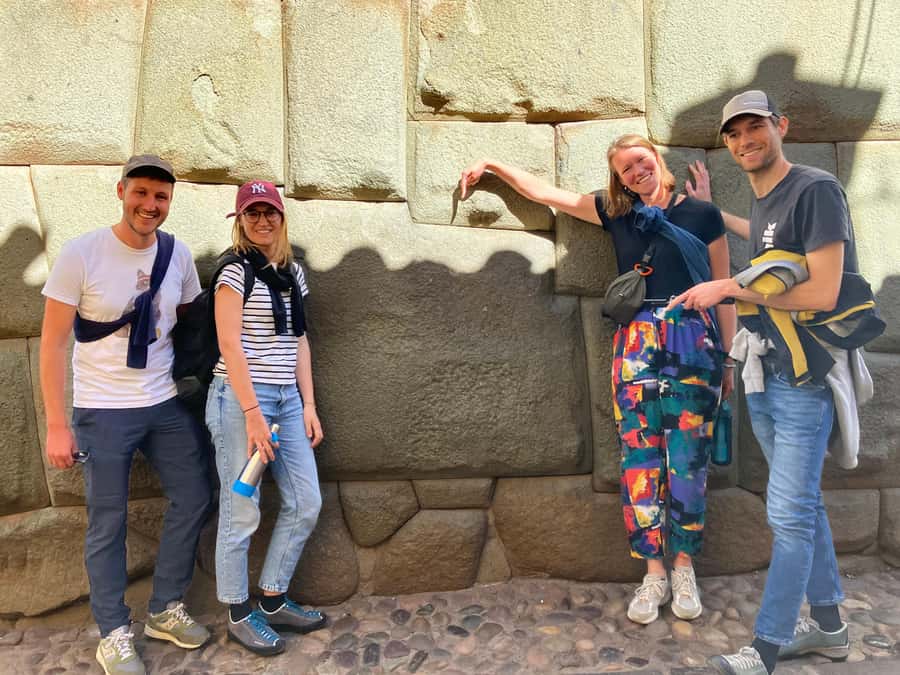
The walk then reaches the Palace of Inka Roca and Hatun Rumiyoc Street. The famous 12-Angle Stone is a compact but memorable lesson in Inca construction. Its many-sided shape fits into the surrounding wall, and it has become one of Cusco’s most photographed pieces of masonry.
You should expect some crowding around the stone, especially when other people stop for pictures. A guide can help you find the correct wall and explain what to look for, which saves time and prevents the stop from becoming just another rushed photograph.
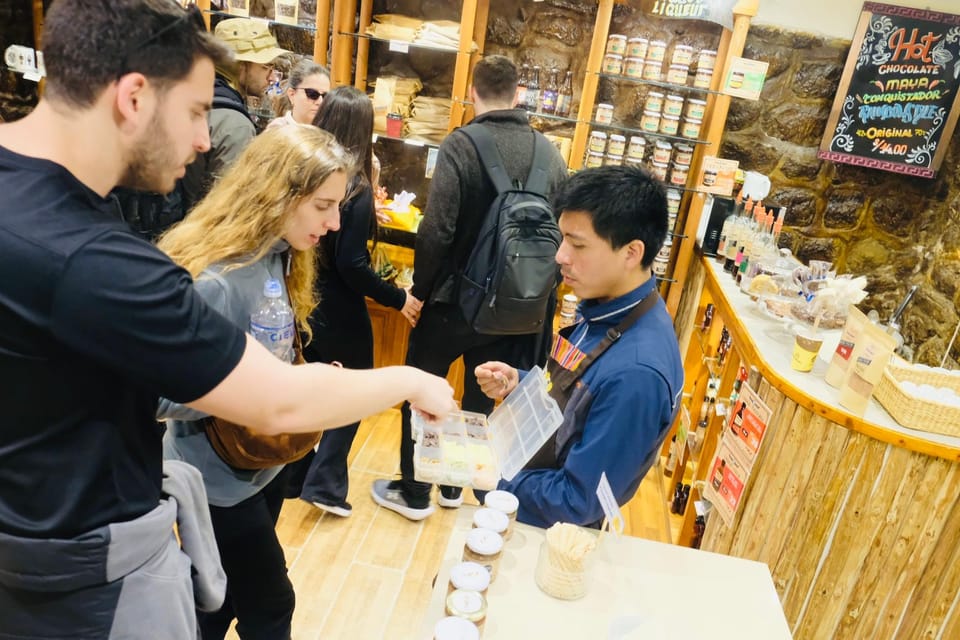
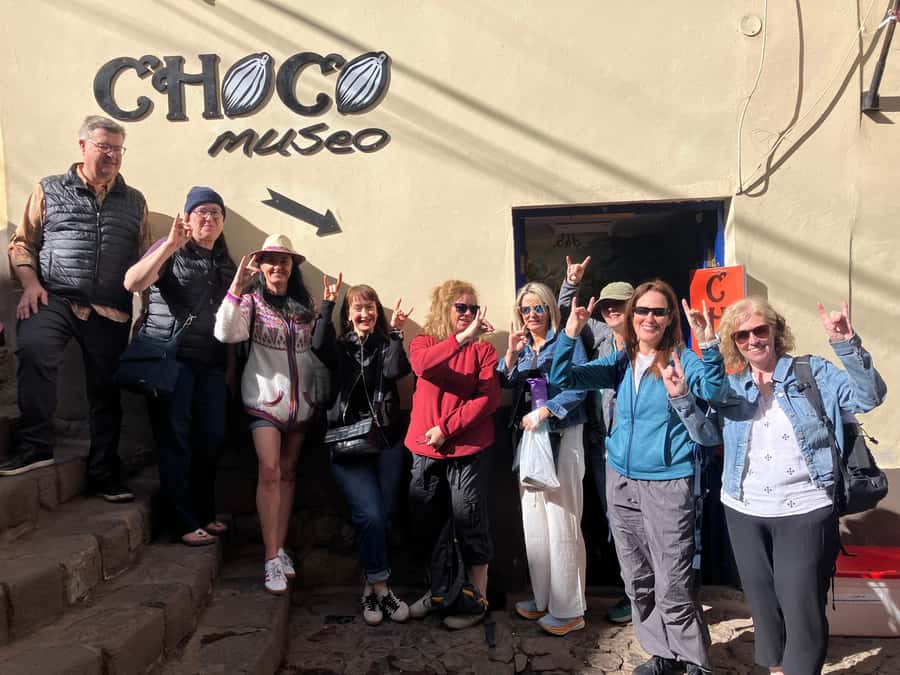
Nearby, the ChocoMuseo provides a tasting of locally made Peruvian chocolate, if that part is included in your booking. Chocolate adds a welcome change of pace after several stone walls and plazas. The tour information says food and drinks are not generally included except for chocolate, so check the exact booking details if tasting matters to you.
San Blas, where the walk feels more personal
San Blas is the most atmospheric part of the route. Its cobbled lanes, artisan workshops, and quieter corners give you a better sense of Cusco beyond the main square. The neighborhood is also where the walk becomes less about grand monuments and more about how the city feels at street level.
The guide points out places suited to photography and may offer suggestions for shops, food, and later visits. Several people found this practical advice especially useful because the tour helped them plan the rest of their time in Cusco.
The Sapantiana colonial aqueduct is a particularly nice stop. It is less obvious than the major plaza sights, and its presence shows how colonial infrastructure was woven into the older city. The walk continues along 7 Borreguitos Street, a colorful and highly photogenic corner of San Blas.
The route includes a San Blas stop of about 15 minutes, followed by roughly 10 minutes at the Mirador de San Cristobal. The viewpoint may be visited around sunrise or sunset depending on the departure time, but the tour does not promise a particular light show. You should treat it as a city overlook and photo stop, not a dedicated sunset excursion.
Chicha and chocolate: small tastes with real context
The tastings are one of the nicest parts of this walk because they connect the past to present-day Cusco. Peruvian chocolate gives you a simple local flavor, while chicha introduces a traditional fermented corn drink with long roots in Andean life.
Chicha availability depends on whether the local chicha vendor is present in San Blas. It is not a guaranteed part of every departure. If the vendor is there, your guide may help you try it and explain how locals have enjoyed the drink across generations.
Some bookings may also include a street-food option. That is separate from the basic inclusions, so you should confirm before assuming a full food tour. The base activity does not include meals or drinks beyond the stated chocolate tasting.
I like this distinction because it keeps expectations clear. The standard walk gives you small samples and cultural context. The added food option may suit you if tasting local specialties is a main reason for booking, but the core route remains a history and neighborhood walk.
What the guides add to the experience
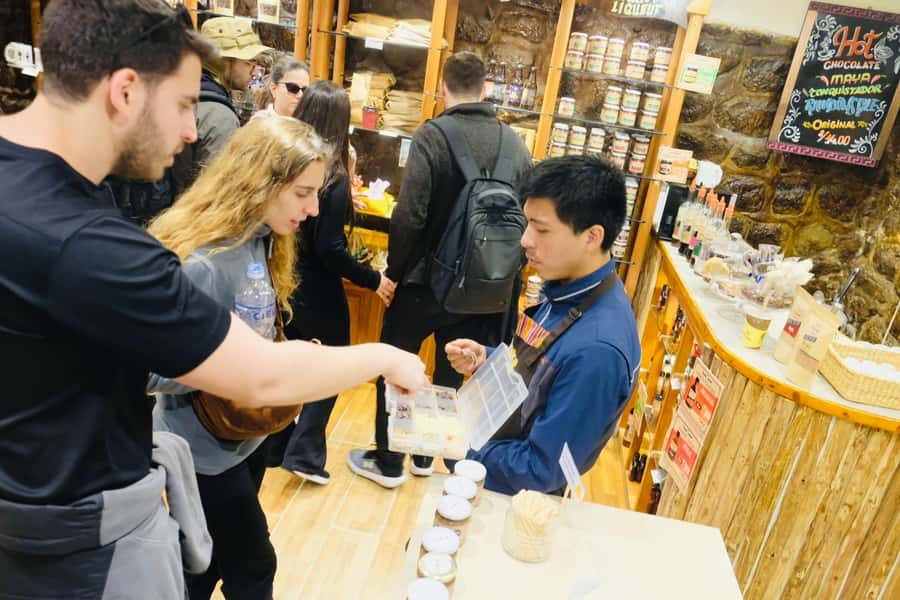
The route is good on paper, but the guide determines how useful it becomes. Waldo is repeatedly praised for fluent English, patient answers, enthusiasm, and a personal connection to Cusco. He is also singled out for taking photographs, speaking with vendors so people could try samples, and suggesting places to visit afterward.
That kind of help is worth more than another list of dates. Cusco can feel confusing at first, especially when one street contains Inca stones, a colonial building, souvenir stalls, and a modern cafe. A guide who explains the layers and then gives practical next steps can save you time during the rest of your stay.
Nilo also receives praise for a strong city tour. The guide name may vary by departure, so you should not assume Waldo will lead every outing. The consistent strengths described are clear English, friendly service, and solid explanations of Cusco and Inca culture.
The small group helps here. You can ask about architecture, food, photography, or where to go next. One person described being the only participant, while others appreciated that the guide could handle many questions without rushing.
Walking conditions, timing, and what to bring
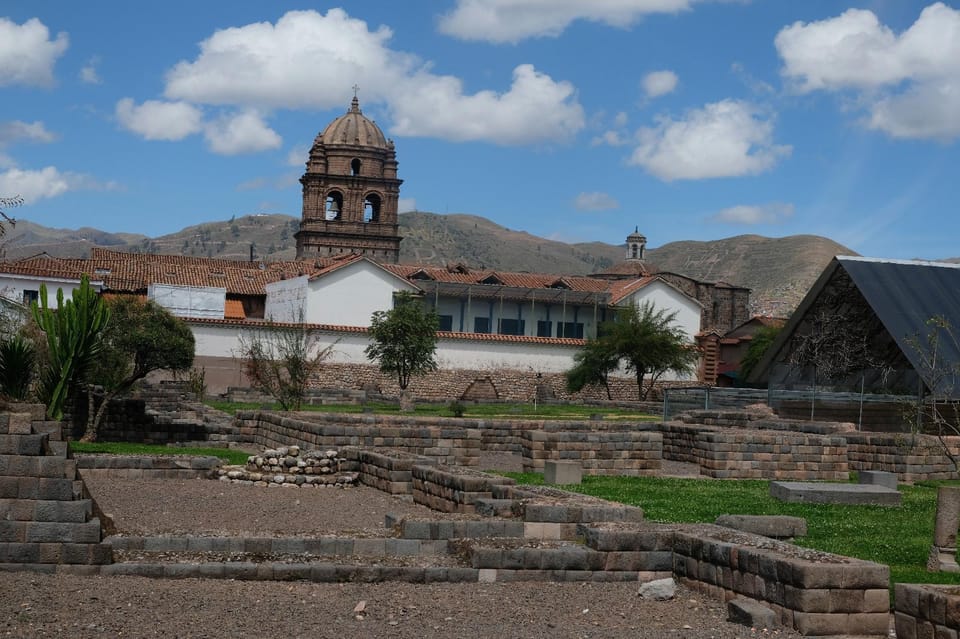
This is a two-hour walking tour, not a seated sightseeing ride. You should be in moderate physical condition and ready for cobbled streets, city walking, and some uphill movement around San Blas and the viewpoint.
Wear comfortable shoes with a secure sole. Bring water and sunscreen. Cusco’s high-altitude setting makes sun protection and hydration sensible, even during a short outing.
The activity is listed as wheelchair accessible, but the route’s cobbled alleys and uphill sections deserve a direct check if you have mobility concerns. Ask about the exact departure route, especially if local festivities have changed the planned path.
The itinerary ends back at the McDonald’s meeting point. That makes it easy to continue into the center, return to your hotel, or visit one of the sites the guide has recommended.
Who should book this Cusco walk?
I would choose this tour if you want a compact first-day introduction rather than a full museum or archaeological visit. It suits solo visitors, couples, and small groups who enjoy asking questions and walking at a moderate pace.
It is also a good match if you want practical help. The guides can point out photography spots, local shops, food places, and sights worth returning to. Several people used the walk to plan the following day more efficiently.
Families may like the llamas, alpacas, chocolate, and short format, though parents should consider the cobbles and uphill sections. History fans will appreciate the Inca walls and Coricancha explanations, but anyone wanting detailed interior access to the Cathedral or Coricancha will need separate tickets and more time.
I would skip it only if you dislike walking, want a slow visit to each monument, or already know central Cusco well. Two hours goes quickly, and several stops are introductions rather than extended visits.
Should you book Cusco Highlights Walking Tour?
For $15, I think this is a strong-value orientation walk. You get the main square, Calle Loreto, Kusicancha, Coricancha, Nazarenas, Inka Roca, the 12-Angle Stone, San Blas, Sapantiana, 7 Borreguitos, and a viewpoint, plus possible tastings and animal encounters.
Book it early in your Cusco stay if you want help choosing what to see next. Pick it for the guide-led stories, small group, and local touches, not for included admission to major interiors. Wear proper shoes, confirm the chocolate or food option, and keep your schedule flexible if a festival changes the route.
The 4.9 rating from 72 bookings fits the strongest pattern here: clear English, warm guides, good city orientation, and plenty of useful advice. At this price, it is an easy recommendation for first-time Cusco visitors who want the city to make sense before exploring it on their own.
FAQ
How much does the Cusco Highlights Walking Tour cost?
The price is $15 per person.
How long does the walking tour last?
The tour lasts two hours.
Where does the tour meet?
You meet in front of the McDonald’s restaurant in Cusco’s main square, the Plaza de Armas. The coordinates are -13.5158882, -71.9787216.
What language is the tour offered in?
The live tour guide speaks English.
How large is the tour group?
The tour is offered as a small-group activity with a maximum of 10 participants.
Is entrance to Coricancha included?
No. The tour explains Coricancha and views it from outside, but entrance is not included.
Is chocolate tasting included?
Chocolate tasting at the ChocoMuseo may be included, depending on the booking. Food and drinks are otherwise not included except for chocolate.
Can I try chicha on the tour?
You may try chicha if the local chicha vendor is available in the San Blas streets during your visit.
Is the tour wheelchair accessible?
The activity is listed as wheelchair accessible. Since it is a walking route through areas that may include cobbled streets and uphill sections, you should confirm the exact route if needed.
What should I bring?
Bring comfortable shoes, sunscreen, and water. Moderate physical condition is recommended for the walking route.
More Walking Routes through Cusco
- Walking Culinary Experience
★ 5.0 · 41 reviews - Curious Monkey Cusco- Market and Streets, Walking Food Tour
★ 5.0 · 31 reviews - Cusco Walking Tour: Downtown, Sun Temple & San Blas Views
★ 4.5 · 26 reviews - Walking with Alpacas in Palcoyo: The Alternative Rainbow Mountain
★ 4.5 · 14 reviews
More History to Walk Through in Cusco
- Pisco Sour Secrets: Hands-On Mixology in Historic Cusco
★ 4.5 · 50 reviews - Cusco: Full-Day Sacred Valley History Tour
★ 4.6 · 14 reviews - Historic/music Cusco FreeWalkingTour “free drink” Group Tour
★ 4.9 · 11 reviews - Cusco: Half-Day Historic City Tour
★ 4.6 · 11 reviews
Added recently around Cusco
- Guided tour of the mountain of colors in Cusco★ 5.0 · 11 reviews
- 2-Day Private Short Inca Trail to Machu Picchu★ 5.0 · 15 reviews
- City Tour Cusco – Group★ 5.0 · 4 reviews
- Tour Sacred Valley with Maras and Moray★ 5.0 · 15 reviews
- San Pedro Market Tour with Peruvian Cooking Class★ 5.0 · 31 reviews
- Walking Culinary Experience★ 5.0 · 41 reviews
- City Tour in Cusco★ 4.5 · 10 reviews
- One Day Tour to Humantay Lagoon★ 5.0 · 8 reviews
Historical Tours, compared.
Discover Lima: Love Park, Historic Center, and its Catacombs.
Read our review →
Street Food, Market & Old Eateries Tour in Lima’s Historic Center
Read our review →
Lima’s Vibrant Heritage: Exploring the City’s Landmarks Half-day
Read our review →
A Journey Through Time: Lima’s Historic Center & Catacombs Tour
Read our review →
Historic Center Street Food, Market, and Eateries Tour
Read our review →
Historic Walking Tour with Pisco Sour and Local Music
Read our review →
Walking tour in the Historic Center of Arequipa
Read our review →
Top Attractions in Lima: Historic Center, Love Park & Catacombs
Read our review →Browse the lists this tour appears in