
Reviewed · SACRED VALLEY TOURS
Cusco: Zipline in the Sacred Valley
Four cables turn valley views into a flying lesson. This three-hour Sacred Valley zipline trip combines four different cables with wide views of the canyon, snowy peaks, and valley below. I like that the ride begins gently, giving you time to learn the ropes before the faster and more playful runs.
I also like the simple $45 price, which includes pickup near Cusco’s historic center, return transport, safety gear, instruction, and the full zipline circuit. The main consideration is physical suitability: this activity is not for pregnant women, wheelchair users, or people with pre-existing medical conditions.
In This Review
- Key points at a glance
- From Cusco to the Mirador de Racchi
- Getting fitted with a harness and helmet
- Cable one: a gentle start above the valley
- Cable two: the fastest ride of the four
- Cable three: the Superman or Superwoman position
- Cable four: the best views of the Sacred Valley
- What the $45 price really covers
- The guides are part of the experience
- Who should book this zipline
- Practical tips for a smoother half-day
- Should you book the Sacred Valley zipline?
- FAQ
- How long does the Sacred Valley zipline activity last?
- How much does the zipline cost?
- Is transportation included?
- Where does the zipline activity take place?
- How many zipline cables are included?
- What equipment is provided?
- Can I cancel the booking?
Key points at a glance
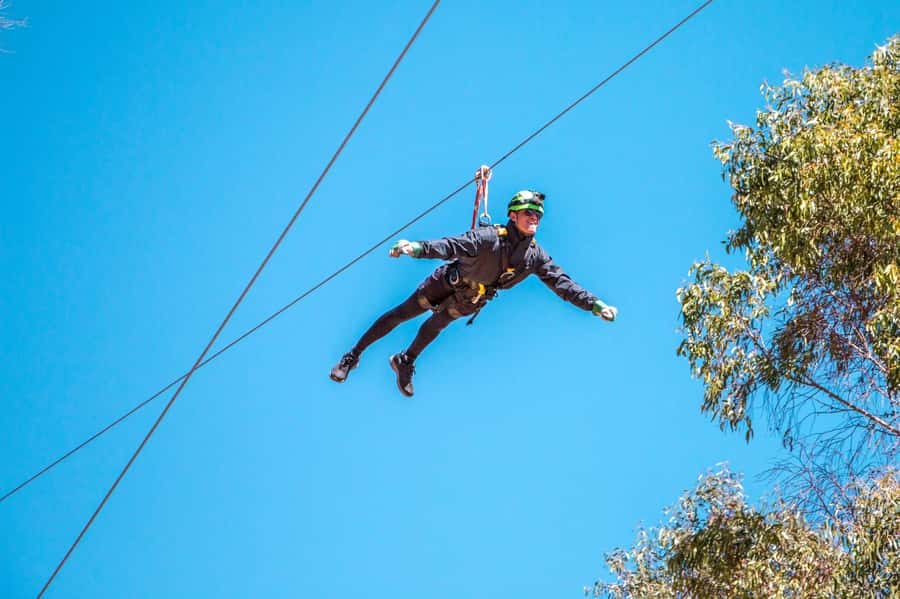
- Four cables, four different moods: Start gently, reach top speed on the second line, try a Superman or Superwoman position on the third, and save the best views for the fourth.
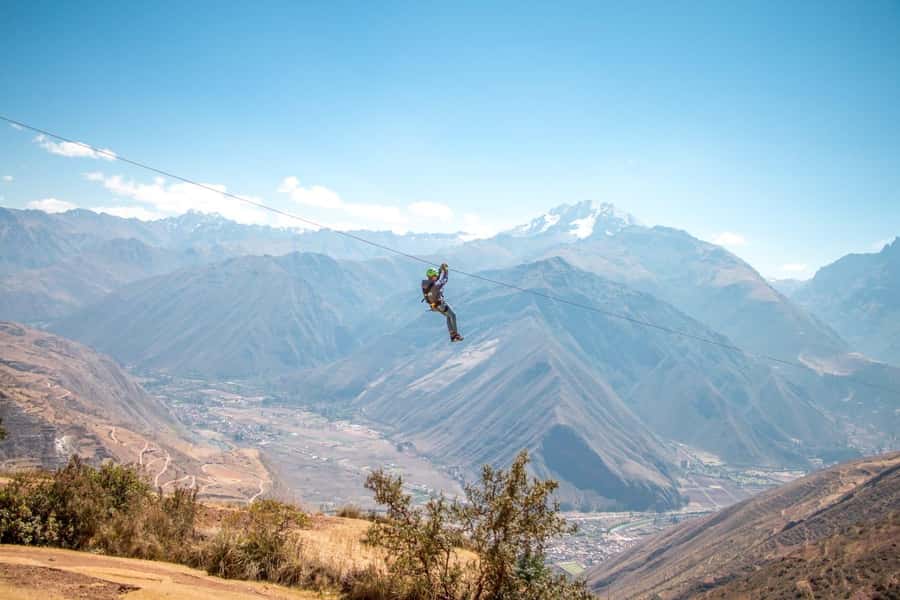
- Mirador de Racchi setting: The activity base sits about 40 minutes from Cusco, with views across the Sacred Valley, canyon, and mountain peaks.
- Good value at $45: Transport, helmet, harness, gloves, safety instructions, and the zipline are included.
- Friendly, capable guides: The guides are described as nice, informative, helpful, and experienced, which matters when you are about to leave solid ground.
- Bring a camera and cash: Food and extra expenses are not included, so pack accordingly.
- Flexible booking: You can cancel up to 24 hours before the activity for a full refund and reserve without paying immediately.
From Cusco to the Mirador de Racchi
The day begins with pickup from your hotel if it is near or within Cusco’s historic center. From there, you travel for about 40 minutes to the base at the Mirador de Racchi.
That transfer is a useful part of the outing. You do not have to arrange a separate taxi to a remote starting point, and the return ride is included as well. Since the activity lasts about three hours, the trip fits neatly into a half-day plan, leaving room for other Cusco or Sacred Valley activities.
The exact starting time depends on availability, so check the schedule before booking. This is especially important if you are arranging a full day around it. A morning or afternoon slot may work well, but the activity should not be treated as a quick stop that takes only an hour.
The 40-minute journey also creates a clear break from the city. You leave Cusco’s streets and head toward the valley setting where the main appeal is the combination of motion and open mountain views. The precise route details are not provided, so you should not expect a narrated sightseeing drive, but the transfer gets you to the activity without extra transport planning.
More Sacred Valley days out:
- Cusco: Sacred Valley VIP, Pisac, Ollantaytambo
★ 5.0 · 7 reviews - From Cusco: Sacred Valley & Maras Salt Mines Tour with Lunch
★ 4.8 · 2,227 reviews - From Cusco: Moray, Maras Salt Mines & Chinchero Weavers Tour
★ 4.8 · 1,925 reviews
Getting fitted with a harness and helmet
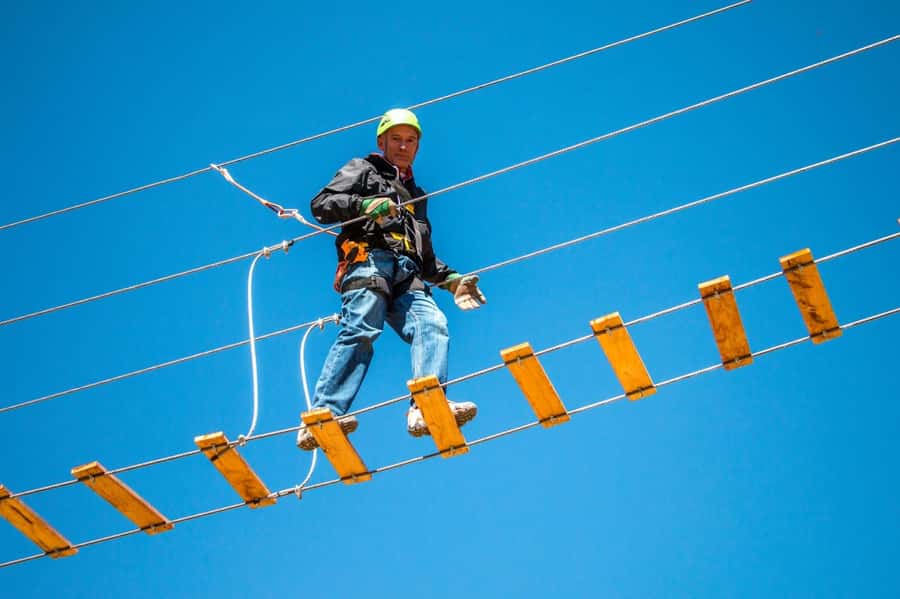
At the base, you receive the equipment needed for the ride: a harness, helmet, and gloves. The guides then give safety instructions before anyone goes onto the cables.
This is where the quality of the staff matters most. The guides are described as friendly, helpful, informative, and experienced. That combination can make a big difference if you feel tense at first. Ziplining is simple once you are set up, but the first few minutes can feel serious when you are clipped into a cable above a valley.
Listen closely during this briefing. Pay attention to how the guides explain your body position, how to hold yourself, and what you need to do at the end of each line. The available information does not specify the exact safety procedures, so follow the instructions given on site rather than relying on assumptions from another zipline course.
The equipment is included in the price, so you do not need to bring your own harness or protective gear. Wear clothing that allows you to move comfortably, though the activity information does not specify a required dress code. A camera is recommended, but secure it properly and use it only when the guides say it is safe.
Cable one: a gentle start above the valley
The first cable is the soft introduction. Its purpose is to help you gain confidence and become familiar with the activity before the faster sections begin.
That gradual opening is a smart design choice. You get a chance to understand the sensation of leaving the platform, feel how the harness supports you, and adjust to the height and speed. If you are nervous, this first run should help you settle down without using up the most dramatic part of the outing.
The first cable is not described as the longest or most scenic. Think of it as a practice run with a view, not the main event. Its value comes from preparation. By the time you reach the next cable, you should have a clearer sense of what the guides expect and how your body behaves in the harness.
Cable two: the fastest ride of the four
The second cable provides the greatest feeling of speed. It is the point where the activity changes from a gentle introduction to a proper adrenaline ride.
If your main reason for booking is the rush, this will probably be your favorite section. The description identifies it as the fastest line, so it offers the strongest sensation of flying. You do not need to wait until the final cable for the biggest burst of excitement.
The faster line can also be the moment when nervousness returns. The first cable may feel manageable, but speed adds another layer of intensity. Listen to the staff and keep your attention on their instructions. The guides are there to help you enjoy the ride, not simply to send you across as quickly as possible.
A few more Peru trips worth lining up side by side
- 4-Day Inca Jungle Tour: Machu Picchu Biking, Rafting, and Zipline
★ 5.0 · 241 reviews - Cusco Rafting and Zipline Adventure
★ 4.5 · 47 reviews - From Cusco: Via Ferrata and Sky Lodge Zipline
★ 5.0 · 16 reviews - Canopy Tower, Zipline, Kayak, and Monkey Island …
★ 3.6 · 11 reviews
Cable three: the Superman or Superwoman position
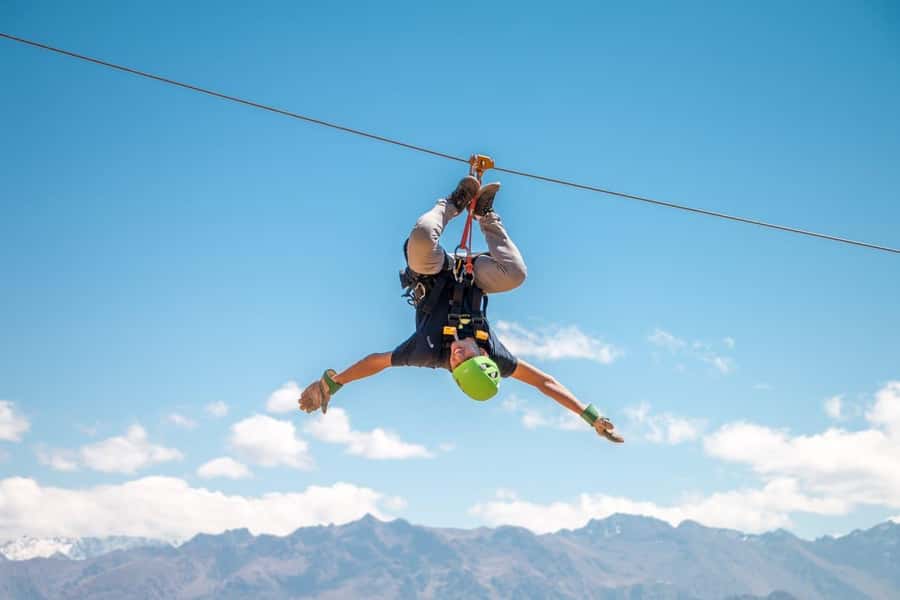
The third cable is designed for more extreme movement. This is where you may be able to try a Superman or Superwoman position, sometimes described as a monkey-style or upside-down option.
The exact movement depends on the instructions and conditions on the day. Do not assume you can perform it without guidance. Ask the staff what is allowed and wait for their direction before changing position.
This cable adds variety to the experience. You are not simply repeating the same ride four times. The first line helps you learn, the second brings speed, and the third invites a more playful approach. One of the strongest details from the available feedback is the mention of an upside-down option for people who want an extra challenge.
That option is not essential. You can still enjoy the trip without trying the most extreme movement. If you prefer a straightforward ride, stay with the position the guides recommend. If you want a more memorable photo or a bigger thrill, ask whether the Superman or Superwoman position is suitable for you.
Cable four: the best views of the Sacred Valley
The final cable is presented as the scenic highlight. It offers the best views of the canyon, the Sacred Valley, and the surrounding mountains.
This order makes sense. By the fourth run, you should be more comfortable with the gear and the basic motion. Instead of spending the best viewpoint worrying about your first launch, you can focus on the scenery and enjoy the ride.
The views include snowy peaks and broad valley panoramas. That is what gives this activity more value than a zipline in an enclosed amusement park. The scenery is part of the ride, not just something you glimpse while waiting on a platform.
Bring a camera if you want a record of the setting, but do not let the camera distract you from the experience. The activity information specifically recommends bringing one, along with cash for extra expenses. Food is not included, so carry money if you expect to buy anything separately.
What the $45 price really covers
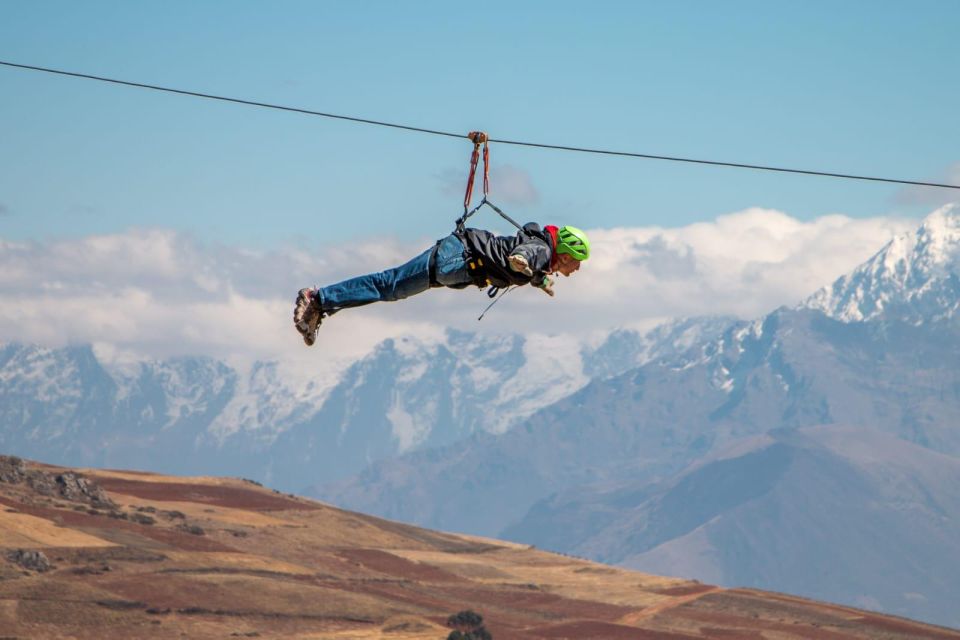
At $45 per person, the price is reasonable if you want a half-day activity with transport included. You receive pickup and return transport, safety equipment, instructions, and the four-cable ride. You are not paying only for a few minutes in the air. The transfer to and from the Mirador de Racchi is part of the package.
The value is strongest for anyone staying near Cusco’s historic center. Since pickup is included from that area, you avoid arranging separate transport to the base. The price is less useful if you only want a very short thrill and do not care about the valley views, since the full outing takes about three hours.
Food is not included, and extra expenses are your responsibility. That is not a serious drawback for a half-day activity, but it is worth remembering when planning your cash and schedule. The information does not state that snacks or meals are available at the base, so do not count on food being part of the outing.
The reserve-now, pay-later option gives you some flexibility while you arrange your Cusco plans. You can also cancel up to 24 hours in advance for a full refund. Those terms are useful when weather, illness, or a changing itinerary may affect your plans, though you should still check the current conditions at booking.
The guides are part of the experience
The clearest praise for this outing concerns the guides. They are described as nice, informative, helpful, and experienced. Those are practical qualities, not just pleasant extras.
A guide who explains the equipment clearly can make the first cable feel much easier. A guide who gives direct instructions also helps you decide whether to attempt the Superman or Superwoman position. And a friendly attitude matters when some people in the group are excited while others are quietly wondering why they agreed to fly over a valley.
No individual guide names are provided, so you should not expect to request a particular person. Instruction is available in English and Spanish, making the activity accessible to speakers of either language.
The high rating is based on only a small number of comments, so I would treat it as encouraging rather than a guarantee. Still, the praise is consistent on the points that matter most here: the guides are friendly, prepared, and able to explain the activity.
Who should book this zipline
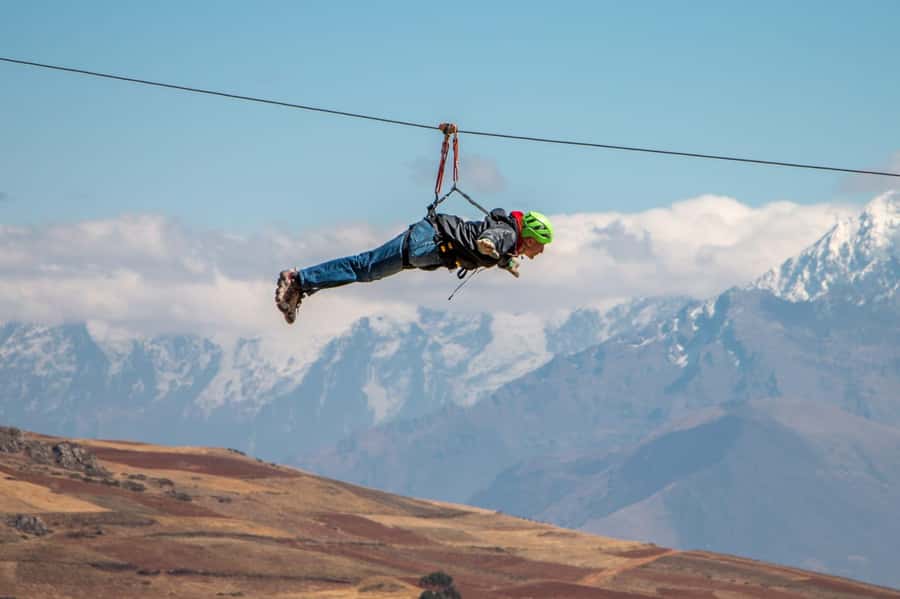
This outing suits you if you want an active break from museums, ruins, and walking tours. It is especially good for someone who wants strong valley views without committing to a full-day trek or a highly technical outdoor activity.
It also works well for people who like a progression of thrills. You get an easy first cable, a faster second line, an optional extreme position on the third, and a scenic finish on the fourth. That variety keeps the experience from feeling repetitive.
You should think twice if you dislike heights, do not want an adrenaline activity, or have a pre-existing medical condition. The activity is specifically not suitable for pregnant women, wheelchair users, or people with pre-existing medical conditions. Those restrictions should be taken seriously.
The information does not give an age limit, weight limit, or exact accessibility details. If any of those points affect your decision, ask the provider before reserving. The provider is Amaru Explorer SAC, and the activity is offered with English or Spanish instruction.
Practical tips for a smoother half-day
Plan around the full three-hour duration, not just the time spent on the cables. The 40-minute ride to the Mirador de Racchi is one part of the schedule, followed by equipment fitting, safety instruction, and the four runs.
Check the available starting times before you commit to other plans. A late start could affect lunch or another Sacred Valley activity, while an early start may leave you with more time afterward.
Bring a camera and cash. Food is not included, and the activity information lists extra expenses separately. Keep your belongings secure and follow the guides’ directions about when you can use a camera.
Allow yourself to start cautiously. The first cable exists to help you build confidence, so there is no prize for trying the most extreme position immediately. Once you understand the equipment and feel comfortable, you can decide if the faster or Superman-style options are right for you.
Should you book the Sacred Valley zipline?
Book it if you want a compact, well-organized burst of outdoor fun with memorable mountain views. The four cables offer genuine variety, and the included transport and equipment make the $45 price fair for a three-hour outing.
I would choose it for the panoramic scenery, the friendly guide support, and the way the activity builds from gentle to fast to playful. I would skip it if you have a medical restriction, need wheelchair access, or want a quiet sightseeing trip rather than an adrenaline ride.
For the best fit, check the starting time, bring a camera and cash, and be honest about your comfort with heights and physical activity. If those details work for you, the final cable across the Sacred Valley should provide the strongest memory of the day.
FAQ
How long does the Sacred Valley zipline activity last?
The activity lasts about three hours. Check availability for the specific starting times.
How much does the zipline cost?
The price is $45 per person.
Is transportation included?
Yes. Outward and return transport are included, with pickup from hotels near or within Cusco’s historic center.
Where does the zipline activity take place?
The activity base is at the Mirador de Racchi, about 40 minutes from Cusco by transport.
How many zipline cables are included?
The activity includes four cables, each with a different purpose and length.
What equipment is provided?
Safety equipment includes a harness, helmet, and gloves. Safety instructions are also provided before the activity.
Can I cancel the booking?
Yes. You can cancel up to 24 hours in advance for a full refund. You can also reserve now and pay later.
Added recently around Peru
- Ausangate 7 Lagoons Tour 1 day + Buffet Breakfast and Lunch★ 4.2 · 4 reviews
- Offer Price Tour Salinas Lagoon and National Reserve 8 hours★ 5.0 · 4 reviews
- 1-day excursion to Palcoyo Mountain + Breakfast and Lunch★ 4.0 · 5 reviews
- Cusco: Half-Day City Tour★ 5.0 · 5 reviews
- Arequipa: Full-Day Tour to Salinas Salt Lake★ 5.0 · 4 reviews
- Swimming with Sea Lions in Islas Palomino Lima★ 4.5 · 14 reviews
- Sandboarding in Salaverry Trujillo★ 5.0 · 13 reviews
- Shore Excursion From Salaverry Port★ 3.5 · 11 reviews
Sacred Valley Tours, compared.

Sacred Valley & Maras Salt Mines Tour with Lunch
Read our review →
Moray, Maras Salt Mines & Chinchero Weavers Tour
Read our review →
2-Day Tour: Sacred Valley and Machu Picchu by Train
Read our review →
Sacred Valley, Pisac, Ollantaytambo, Salt Mines Moray
Read our review →
Chinchero,Moray & Salt Mines drop-off in Ollantaytambo
Read our review →
Sacred Valley and Maras Moray Tour with Full Day Buffet Lunch
Read our review →

Browse the lists this tour appears in