
Reviewed · INCA RUINS & ARCHAEOLOGICAL SITES
4-Hours Horse riding, Inca pyramids in world’s largest dry forest
Ride into Peru’s past on horseback. This four-hour outing links the smooth gait of Peruvian Paso horses with the Pómac dry forest and the Sicán pyramids, a fine choice if you want archaeology without spending the day in a bus. I like the small maximum of four people, and I like that Manuel can explain both the forest and the pre-Inca sites as you ride.
The main consideration is the setting’s open, dry character. You will cross sugarcane, corn, and rice fields before reaching the archaeological area, but this is not a polished theme-park attraction or a full museum tour. Pickup details should be confirmed clearly, and the ride begins at 9 a.m. from Rancho Santana Horseback Riding near Chiclayo.
In This Review
- Key points to know before booking
- Why this horse ride is different from a standard ruins visit
- Starting at Rancho Santana near Chiclayo
- Crossing the sugarcane, corn, and ricefields
- Entering the Pómac Forest Sanctuary
- Reaching the Sicán pyramids and the Goldpyramid
- What makes the Peruvian Paso horse a good choice
- The value of $85 for four hours
- Who will enjoy this experience most
- Practical timing and cancellation advice
- Should you book the Rancho Santana ride?
- FAQ
- How long does the horseback riding experience last?
- What time does the activity start?
- Where does the tour start?
- Where does the activity end?
- Is pickup available?
- How much does the experience cost?
- How many people can join the tour?
- Is the tour offered in English?
- Can I cancel for a full refund?
Key points to know before booking
- Peruvian Paso horses provide the ride: Their famously smooth gait can make the outing comfortable even if you are not an experienced rider.
- The route reaches 36 Sicán pyramids: The archaeological complex includes the site connected with the Lord of Sicán and the famous Tumi ceremonial knives.
- Pómac is a dry-forest sanctuary: The 5,887.38-hectare protected area combines archaeology, old carob trees, and bird habitat.
- The group is limited to four people: That is a useful size for questions, pacing, and a quieter ride.
- Pickup is available: You can request pickup, but give the operator your location in advance.
- The ride returns to Rancho Santana: The activity starts and ends at the same meeting point, near the cathedral in Pacora.
Why this horse ride is different from a standard ruins visit
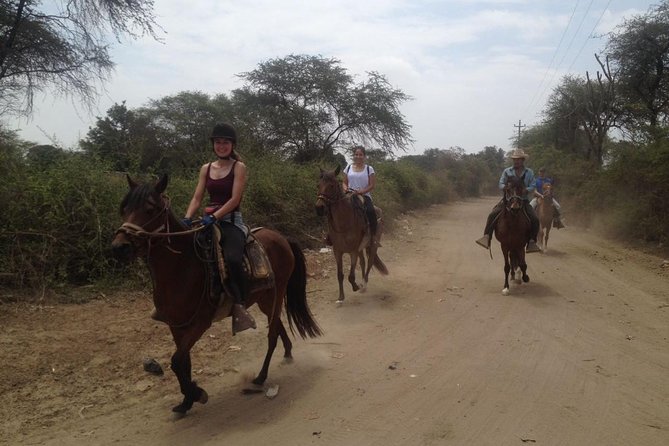
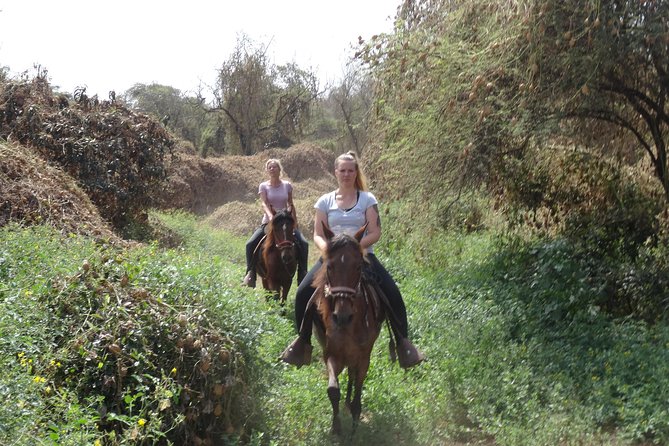
Many archaeological visits ask you to walk from one monument to the next under a hot sun. This one changes the pace. You approach the Sicán sites on horseback, first passing through working agricultural country and then entering the dry woodland of Pómac.
I like that the ride connects three parts of northern Peru that are often treated separately: rural farming, native horse culture, and pre-Inca archaeology. Sugarcane, corn, and ricefields are not just scenery here. They show how much of the region’s life depends on cultivated land beside one of Peru’s important dry-forest zones.
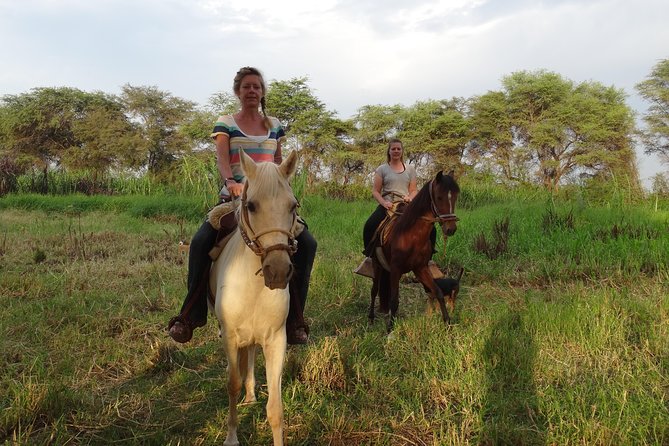
The horses add another layer. Rancho Santana uses typical Peruvian Paso horses, prized for a gentle, unusually even gait. That matters on a four-hour outing. A horse that moves smoothly is easier on your back and easier for a beginner to manage than a mount with a rough, jolting stride.
Still, you should not book this expecting a fast gallop or an adrenaline ride. The praise for the horses centers on their calm nature and comfortable walking. The appeal is a peaceful crossing of the countryside, not speed.
More ruins and archaeology near Peru:
- Cusco: Half-Day City Tour with Sacsayhuaman and Q’enco
★ 4.6 · 1,129 reviews - City Tour Cusco Qoricancha Sacsayhuaman y Tambomachay
★ 4.7 · 617 reviews - Cusco City Tour Four Ruins in Half-Day
★ 5.0 · 530 reviews
Starting at Rancho Santana near Chiclayo
The listed meeting point is Rancho Santana Horseback Riding, at 300 metros detrás de la Catedral in Pacora, Chiclayo 14141. The start time is 9 a.m., and the activity ends back at this same point.
Pickup is offered if you tell the operator where you want to be collected. I would settle this before the day of the ride, since the information gives no fixed hotel pickup list or exact pickup schedule. A clear message with your hotel name, address, and preferred contact details should prevent a needless morning chase.
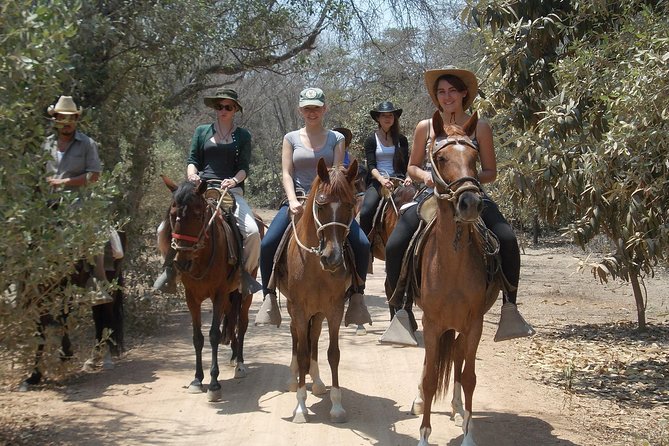
The small group limit is one of the strongest practical features. With no more than four participants, you are less likely to be stuck waiting for a large party to mount, and you should have a better chance to ask about the horses, plants, and archaeological remains.
The tour is offered in English. Manuel is specifically praised for explaining the natural setting and pre-Inca sites, while Andrea and Manuel are both described as welcoming hosts. The supplied details do not promise a particular guide on every departure, so it is sensible to confirm who will lead your ride.
Crossing the sugarcane, corn, and ricefields
The first part of the route leads through agricultural fields. You ride beside sugarcane, corn, and rice before reaching the Pómac Forest. This opening section gives the outing a local, lived-in feel rather than dropping you straight beside an isolated ruin.
For me, this is part of the value. You are not simply being transported to a monument and handed a short explanation. The horse carries you through the land that frames the sanctuary, allowing the change from cultivated fields to dry woodland to unfold gradually.
The information does not specify the exact trail surface, riding speed, or number of stops in the fields. You should therefore think of the first section as a scenic approach, not a tightly timed series of viewpoints. The ride is approximately four hours overall, so the pace may vary with the group and the horses.
You might find the dry conditions demanding if you are unused to northern Peru’s climate. The supplied information does not state whether water, snacks, helmets, or other equipment are included, so ask Rancho Santana before departure. That is especially useful for anyone booking during a warm period.
Entering the Pómac Forest Sanctuary
The Pómac Forest Sanctuary was created on June 1, 2001, to protect both the forest and the Sicán archaeological complex. It covers 5,887.38 hectares and sits between 80 and 300 meters above sea level.
The forest is dry rather than lush. That distinction is important. You should expect carob trees and dry-wood vegetation, not the dense green growth associated with rainforest tours. The setting has a spare beauty, with the archaeology appearing among trees and open ground instead of on a fully cleared urban site.
Pómac is also a significant place for birdwatching. The forest supports many dry-wood species, including some endemic birds. The tour is not presented as a dedicated birding expedition, and no bird list or specialist equipment is provided, but anyone who enjoys watching wildlife should keep time for the trees and listen along the route.
One remarkable natural feature is an enormous carob tree with a strange shape. It is more than four centuries old. The age of this tree gives the sanctuary a human scale: the pyramids belong to an older civilization, while the carob has witnessed centuries of change in the forest around them.
More horseback riding near Peru:
- Horseback Riding Mystic Tour Temple of the Moon & Chacan Mountain
★ 5.0 · 255 reviews - Horseback Riding Tour to the Devil’s Balcony from Cusco
★ 5.0 · 241 reviews - Horseback Riding & Ancestral Secrets: Moon Temple & Inka Sites
★ 5.0 · 175 reviews - Cusco: 3-Hour Horse Riding Tour to the Temple of the Moon
★ 5.0 · 105 reviews
Reaching the Sicán pyramids and the Goldpyramid
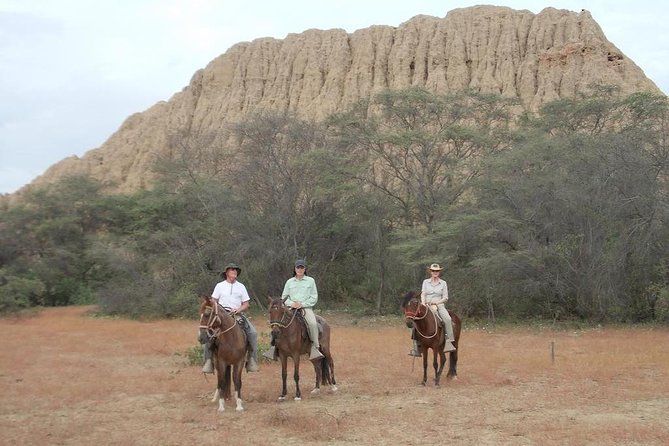
The principal cultural reward comes at the archaeological complex of the Lambayeque culture, also called the Goldpyramid in the tour description. The sanctuary contains 36 pyramids linked to the pre-Inca Sicán culture.
That number changes how you view the site. This is not one lone mound in an empty field. It is part of a broad ceremonial and funerary area, with remains spread across a large protected zone. From horseback, you get a sense of the relationship between the ruins and the surrounding woodland.
The Lord of Sicán is the complex’s best-known discovery. His tomb contained an elaborate burial with beautiful objects made from gold and other metals. The area is also connected with the famous Tumi, the ceremonial knife that has become one of the best-known symbols of ancient Peru.
The ride gives you access to this historical setting, but the supplied details do not say how much time is spent at each pyramid or whether an indoor museum visit is included. If you want a detailed archaeological lecture or a long examination of artifacts, confirm the plan before paying. The strength here is the combination of horseback travel and outdoor archaeology.
I would also keep expectations grounded. Pyramids in northern Peru can look more like weathered earthen structures than the sharp stone monuments many people picture from Machu Picchu. Their importance comes from the culture, burials, scale, and setting, not from pristine walls.
What makes the Peruvian Paso horse a good choice
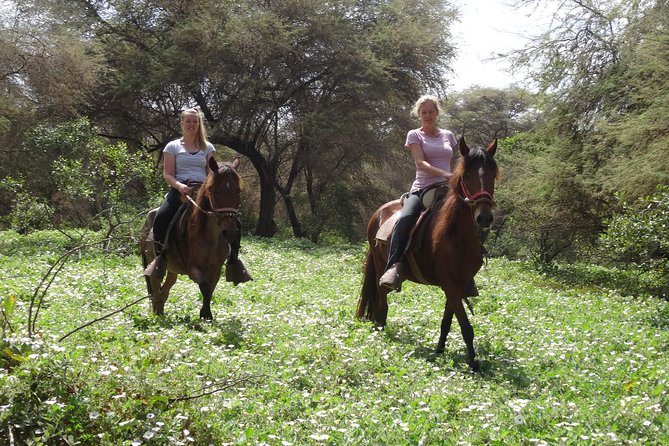
The horse is not a decorative extra. It shapes the whole outing. Peruvian Paso horses are known for a distinctive, smooth movement, and the comments about Rancho Santana repeatedly praise their comfort, care, and willingness to walk.
That is good news if you are an inexperienced rider. One person who had little riding experience found the horses easy to handle, while another described them as exceptionally soft and comfortable. I would still tell the operator honestly about your riding background, since the supplied information does not spell out weight limits, riding requirements, or tack details.
The horses are also described as well cared for and in excellent condition. That matters for an outing that lasts around four hours. You want an animal that is calm, fit, and accustomed to the route, not a nervous mount that makes the experience stressful.
The riding is likely best for someone who enjoys a relaxed walk and time to look around. If you are seeking a long canter, jumping, or technical trail riding, this is probably not the right product. The available descriptions focus on comfort, calm movement, and learning how to ride a typical Peruvian Paso.
The value of $85 for four hours
At $85 per person, this is not the cheapest way to see ruins in Peru. Its value depends on what you want included in a half-day.
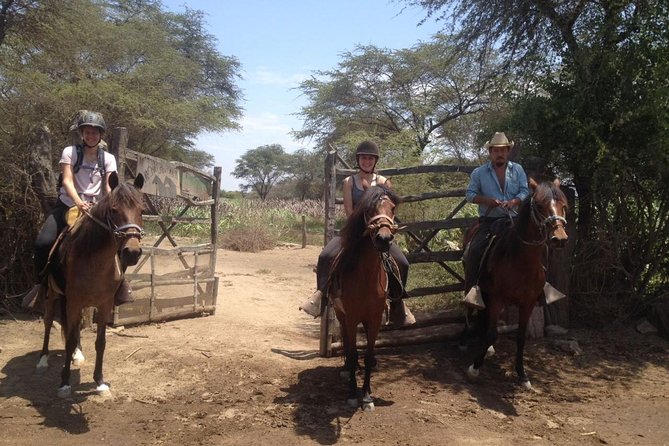
You are paying for about four hours of horseback riding, the use of a Peruvian Paso horse, access to a rare combination of dry forest and archaeology, a small group capped at four, and pickup availability. You also get the chance to learn about the region from a guide such as Manuel, who is described as well informed about the forest and pre-Inca sites.
That is a strong package for someone who would otherwise book a separate countryside ride and archaeological visit. The small group is especially helpful because the experience is more personal than a large coach excursion.
The price is harder to justify if you mainly want a formal archaeological tour, a guaranteed museum component, or a full-day visit with meals and several attractions. None of those are specified. Before booking, ask what is included beyond the ride, pickup, and guiding.
The return to Rancho Santana is convenient. You do not need to arrange a second transfer from the archaeological site, but you should leave enough room in your day for the four-hour activity and transport to or from Pacora.
Who will enjoy this experience most
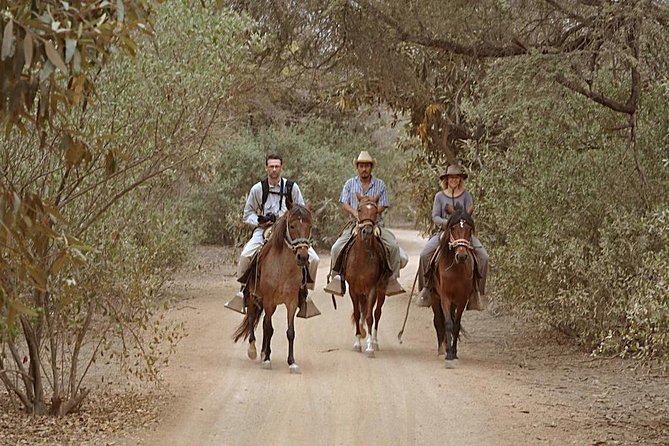
I would recommend this outing to confident beginners, casual riders, horse lovers, birdwatchers, and anyone who wants a quieter way to see northern Peru. The gentle horses and small party should make it less intimidating than a large riding group.
It also suits repeat visitors who have already seen Peru’s most famous stone sites. Pómac offers a different kind of archaeology, shaped by earthen pyramids, dry woodland, and the story of the Sicán culture.
Couples and small families may appreciate the private-feeling scale, although the supplied information does not give a minimum age. Ask before booking for children, older adults, or anyone with mobility concerns.
You should think twice if you dislike riding, need a highly structured schedule, or want guaranteed shade and indoor facilities. The route passes through open farmland and dry forest, and the details do not promise a museum, meal, or fixed rest schedule.
Service animals are allowed, and the activity is near public transportation. Most people can participate, according to the supplied booking details, but that broad statement does not replace asking about your own medical or riding needs.
Practical timing and cancellation advice
The scheduled start is 9 a.m., which gives you a morning departure and a return around the middle of the day if the four-hour estimate holds. Pickup timing may change that, so confirm the collection time rather than relying only on the stated start.
Book early enough to receive confirmation. Confirmation is sent within 48 hours, subject to availability. With a maximum of four people, a preferred date could be harder to secure than on a large bus tour.
Cancellation is free up to 24 hours before the local start time. Canceling less than 24 hours ahead brings no refund, and changes inside that window are not accepted. I would avoid booking this tightly against another fixed activity, since pickup and countryside riding can be less predictable than a short city visit.
Should you book the Rancho Santana ride?
Book it if you want comfortable horseback riding, a small group, and a genuine connection between rural Peru, Pómac’s dry forest, and Sicán archaeology. The calm Peruvian Paso horses are the main draw, while the pyramids and ancient carob tree give the ride substance beyond a simple farm outing.
Skip it if your priority is a long archaeological tour with guaranteed indoor exhibits, detailed artifact viewing, or fast riding. For everyone else, $85 is a reasonable price for a distinctive four-hour experience, especially if pickup is useful and you value a guide who can link the forest to the pre-Inca sites.
FAQ
How long does the horseback riding experience last?
The experience lasts approximately four hours.
What time does the activity start?
The scheduled start time is 9 a.m.
Where does the tour start?
It starts at Rancho Santana Horseback Riding, 300 metros detrás de la Catedral, Pacora, Chiclayo 14141, Peru.
Where does the activity end?
The activity ends back at the Rancho Santana meeting point.
Is pickup available?
Yes. Pickup is offered, but you need to tell the operator where you would like to be picked up.
How much does the experience cost?
The listed price is $85 per person.
How many people can join the tour?
The activity has a maximum of four participants.
Is the tour offered in English?
Yes. The experience is offered in English.
Can I cancel for a full refund?
Yes, if you cancel at least 24 hours before the experience start time. Cancellations made less than 24 hours before the start receive no refund, and changes within that period are not accepted.
Added recently around Peru
- 3-Day Iquitos Amazon Jungle Tour at Avatar Amazon Lodge★ 5.0 · 4 reviews
- Ausangate 7 Lagoons Tour 1 day + Buffet Breakfast and Lunch★ 4.2 · 4 reviews
- Offer Price Tour Salinas Lagoon and National Reserve 8 hours★ 5.0 · 4 reviews
- 1-day excursion to Palcoyo Mountain + Breakfast and Lunch★ 4.0 · 5 reviews
- Cusco: Zipline in the Sacred Valley★ 5.0 · 4 reviews
- Cusco: Half-Day City Tour★ 5.0 · 5 reviews
- Arequipa: Full-Day Tour to Salinas Salt Lake★ 5.0 · 4 reviews
- Swimming with Sea Lions in Islas Palomino Lima★ 4.5 · 14 reviews
Inca Ruins & Archaeological Sites, compared.
Half-Day City Tour with Sacsayhuaman and Q’enco
Read our review →
City Tour Cusco Qoricancha Sacsayhuaman y Tambomachay
Read our review →
Pachacamac Ruins & Barranco Half-Day Guided Tour
Read our review →
Pre Inca Temple of Pachacamac Half-Day Tour from Lima
Read our review →
Tour to the Archaeological Sanctuary of Pachacamac (small group)
Read our review →
From Pyramids & Bohemian Streets: Lima Miraflores & Barranco Tour
Read our review →
City Tour | Half-Day Tour to 4 Archaeological Sites
Read our review →Browse the lists this tour appears in