
Reviewed · AREQUIPA TOURS
Golden hour, legends of Arequipa and Peruvian Coffee
Arequipa reveals itself best on foot. This small-group outing links old neighborhoods, alpaca craft, riverfront architecture, colonial courtyards, and a central coffee stop into one afternoon in Peru’s white city. I like the mix of local streets and cultural stops, and I like that the group is capped at eight people, which should make questions and conversation easier. The main concern is reliability: the full 3-hour-30-minute schedule may not always be delivered, and a café closure once caused the coffee stop to fail.
The $29 price is fair when every part operates as planned, especially with two Peruvian coffees included. I would book it for a first afternoon in Arequipa, but I would confirm the route and café arrangements before paying because the experience has received mixed feedback, including one serious complaint about a tour lasting only one hour.
In This Review
- Key points to know before booking
- Why this route works for a first afternoon in Arequipa
- San Lázaro: Arequipa before the grand plazas
- Mundo Alpaca and the story behind Peruvian fiber
- Tambo el Matadero beside the Chili River
- Lautrec Cafe: two Peruvian coffees with an art break
- Plaza de Armas and the city’s grand center
- The Cloisters of The Company in pale volcanic stone
- What the $29 price really buys you
- Timing, group size, and practical fit
- Should you book Golden Hour, Legends of Arequipa and Peruvian Coffee?
- FAQ
- Where does the tour begin?
- Where does the tour end?
- What time does the experience start?
- How long does the tour last?
- Is coffee included?
- How large is the group?
Key points to know before booking
- San Lázaro begins the walk: You start in one of Arequipa’s oldest and most atmospheric neighborhoods, with narrow lanes, small squares, passages, and ashlar buildings.
- Alpacas are part of the experience: Mundo Alpaca combines live animals with fiber sorting, machinery, traditional methods, and pre-Inca textile displays.
- The coffee stop includes two Peruvian coffees: Lautrec Cafe is also an art exhibition space, giving you a place to rest while seeing work by local artists and university students.
- The route ends in the historic center: Plaza de Armas and the Cloisters of The Company provide a strong finish among Arequipa’s famous volcanic-stone buildings.
- The schedule needs checking: The advertised duration is about 3 hours 30 minutes, but one reported outing lasted just one hour.
- Expect a compact group: A maximum of eight people is useful in tight streets, courtyards, and indoor cultural spaces.
Why this route works for a first afternoon in Arequipa
Arequipa can feel easier to understand once you see how its neighborhoods connect. This tour moves from a traditional residential quarter toward the city center, then adds alpaca production, a riverfront tambo, coffee, and major colonial architecture.
That progression gives you more than a quick walk around the Plaza de Armas. You get a look at the city as a lived-in place, not only as a collection of grand churches and photogenic facades. I especially like the balance between ordinary streets and formal monuments.
The experience begins at 2:30 pm on Calle Zela, near the historic center. The listed end point is Plaza de Armas, though the final meeting details can vary. Since the route includes several walking stops, wear comfortable shoes and plan to carry only what you need.
The title suggests late-afternoon light, but the start time is not close to sunset in every season. Treat golden hour as a theme rather than a promise of sunset photography. If warm light matters to you, ask the operator what the current timing will be on your date.
A few more Arequipa trips worth lining up side by side
- 2 day 1 night trek / Colca Canyon
★ 5.0 · 1,069 reviews - From Arequipa: Colca Canyon Full-Day Guided Tour with Meals
★ 4.5 · 982 reviews - Tour to the Salinas Lagoon and National Reserve in Arequipa
★ 4.5 · 548 reviews
San Lázaro: Arequipa before the grand plazas
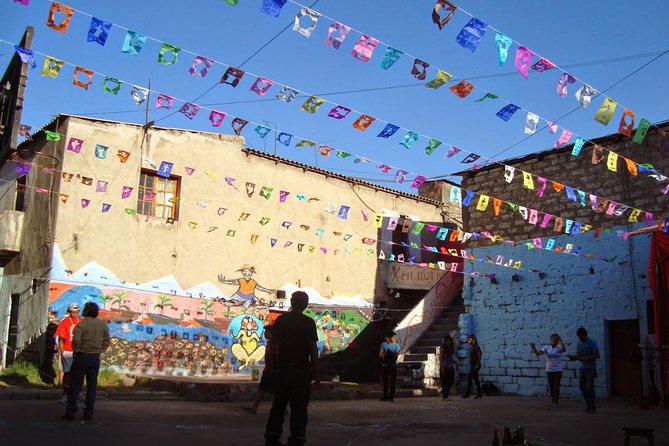
The first stop is Barrio de San Lázaro, a traditional district built on the site of an old Yarabaya settlement. Its appeal comes from scale. Instead of broad streets and monumental facades, you find smaller lanes, passages, little squares, and older mansions built from the pale volcanic stone associated with Arequipa.
The Church of San Lázaro, a small ashlar bridge, and Campo Redondo form the main points of interest. A 20-minute visit is short, but the neighborhood itself makes this a strong opening. You can begin to see how Arequipa’s stonework appears in both grand buildings and modest corners.
I like this stop because it should help you get your bearings without rushing straight into the main plaza. The streets offer a more intimate side of the city, and the Yarabaya connection gives the guide a chance to explain that Arequipa’s story did not begin with Spanish colonial construction.
The drawback is that much of the value depends on the guide’s explanation. The listed stops are compact, so you are not getting a long neighborhood walk. If the narration is hurried, San Lázaro could feel like a brief photo stop instead of a useful introduction.
Mundo Alpaca and the story behind Peruvian fiber
Mundo Alpaca shifts the focus from stone to textiles. In about 30 minutes, you learn about alpaca fiber from several angles: traditional techniques, fiber classification, local machinery, and textile work from pre-Inca cultures.
The setting also allows direct interaction with alpacas. That makes this more than a display of finished scarves and sweaters. You can connect the material in the shop or exhibit with the animals that produce it, then see how fiber becomes a textile through sorting and processing.
For me, the value here is practical. Alpaca goods are common in Peru, and it is useful to understand what you are looking at before buying anything later in your trip. A short explanation of fiber types and local production can help you ask better questions and judge prices more sensibly.
The pre-Inca textile material adds historical context without requiring a full museum visit. You see that Andean textile traditions reach well before the colonial period, and that modern alpaca production sits within a much older craft tradition.
Thirty minutes will not cover every stage in great detail. Think of this as an introduction rather than a specialist textile tour. If you have a strong interest in weaving, fiber quality, or Andean archaeology, you may want extra time elsewhere in Arequipa.
Tambo el Matadero beside the Chili River
The route then reaches Tambo el Matadero, also called Barrio del Solar, beside the Chili River. The site was built from ashlar and was used for animal sacrifice. Its main building had three levels, arranged to work with the difference in height between the street and riverbank.
That setting gives the stop a useful architectural angle. Arequipa’s buildings are not simply placed on a flat grid. The river, slopes, and volcanic stone all shaped how older structures were built and used.
The listed visit lasts 20 minutes. That is enough for a concise explanation and a look at the structure, but not enough for an extended architectural study. I would pay attention to the relationship between the building and the river rather than expecting a large museum-style visit.
Access can also be an issue. One part of the tambo route, referred to by the operator as Tambo la Cabezona, was reported closed because of COVID-related restrictions. The operator said that a 30 percent refund was made in that case. Conditions can change, so ask before departure if this site is open and exactly which section you will enter.
This is an important point because a closed site changes the value of the tour. The route still has other worthwhile stops, but the itinerary is built around variety. Losing one historic building makes the coffee and central-city portions more important.
Also leaving from Arequipa, and nothing like the above:
- From Arequipa: Sillar Route Trek
★ 4.2 · 461 reviews - Colca Full Day Tour
★ 4.5 · 429 reviews - Rafting Arequipa – Chili River Canoeing – Cusipata Rafting Arequipa
★ 5.0 · 332 reviews - Arequipa: Chili River White Water Rafting with Hotel Pickup
★ 4.8 · 329 reviews
Lautrec Cafe: two Peruvian coffees with an art break
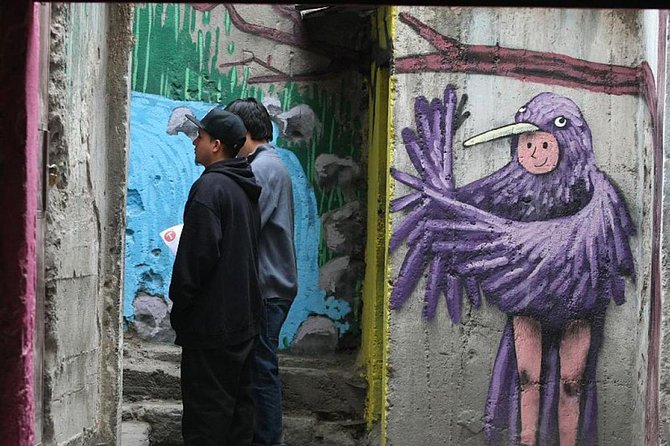
Lautrec Cafe is listed as a 30-minute stop and includes two Peruvian coffees. It is described as more than a basic café. Local artists and university students display work there, giving you something to look at while you take a break.
I like this pause in the middle of the route. Walking through old districts and stone buildings can make three and a half hours feel longer than expected, so a seated stop helps. Two coffees also let you treat this as a tasting rather than simply a caffeine stop.
The coffee is one of the most praised parts of the experience. One especially positive account singled out the coffee and the neighborhood, while also noting that the guide offered useful suggestions for finding genuine local food. That makes the stop valuable beyond the drinks themselves, provided the café is open and the guide has time to answer questions.
There is a clear operational risk here. On one occasion, the planned café was closed unexpectedly. The guide reportedly offered an alternative partner café, but that option was declined, and the coffee tasting did not happen. If coffee is the main reason you are booking, confirm the arrangement on the day.
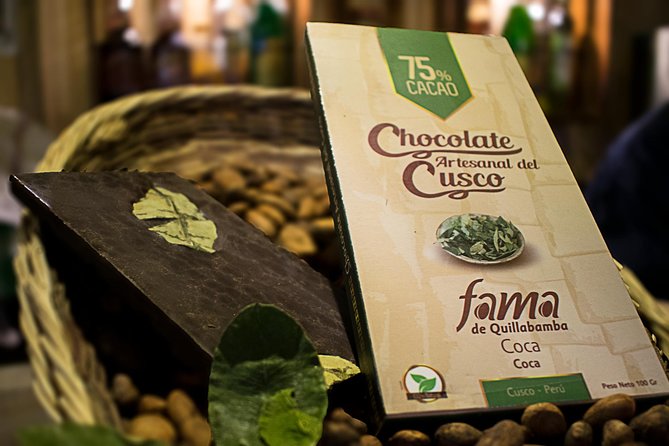
The supplied details mention two coffees, while one complaint also referred to an expected chocolate tasting. Chocolate is not specified as an included item in the formal stop description, so I would not assume it is guaranteed. Ask exactly what is included before departure.
Plaza de Armas and the city’s grand center

The tour reaches Plaza de Armas for a 15-minute historical explanation. This is a short stop, but it places the earlier neighborhoods and buildings in a larger civic setting.
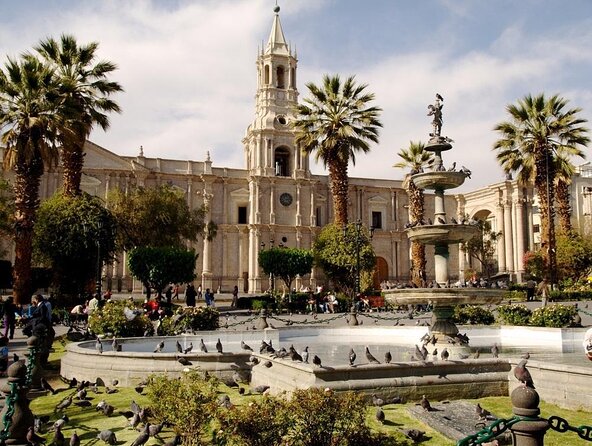
Arequipa’s main square is the sort of place where a guide can explain the city’s colonial plan, public life, and use of ashlar in just a few minutes. The square also gives you a practical reference point for later independent walks, dining, and visits to nearby churches.
Fifteen minutes is enough for orientation, not for a detailed survey. If you want photographs, take them efficiently and keep listening. The final stop is close by, so you will have a chance to remain in the historic center after the tour ends.
The route ending at Plaza de Armas is convenient. You are not left at an unfamiliar edge of town, and you can continue exploring on foot after the guide says goodbye. Since the meeting point is also near the center, the tour fits neatly into an afternoon without requiring a separate transfer.
The Cloisters of The Company in pale volcanic stone
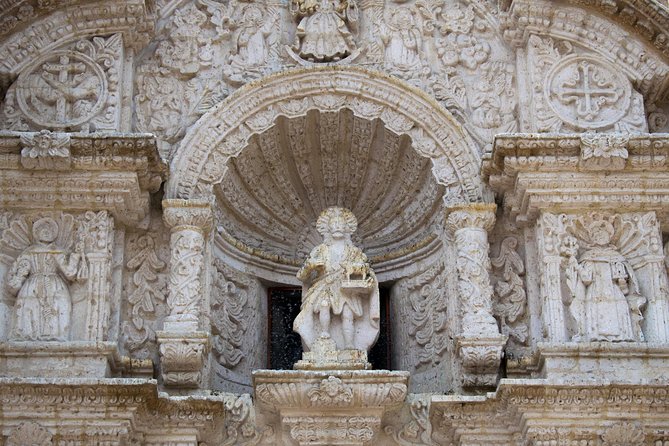
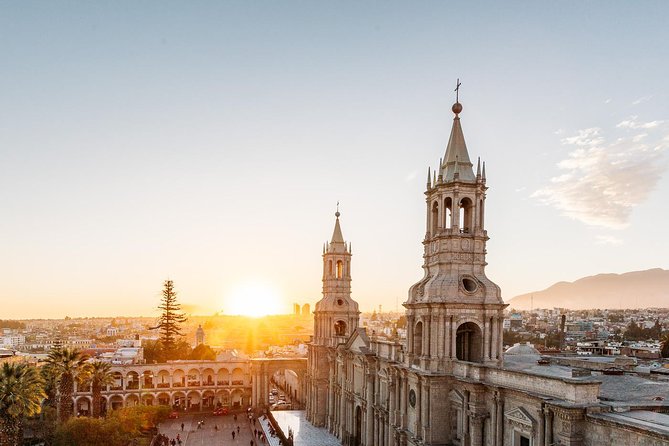
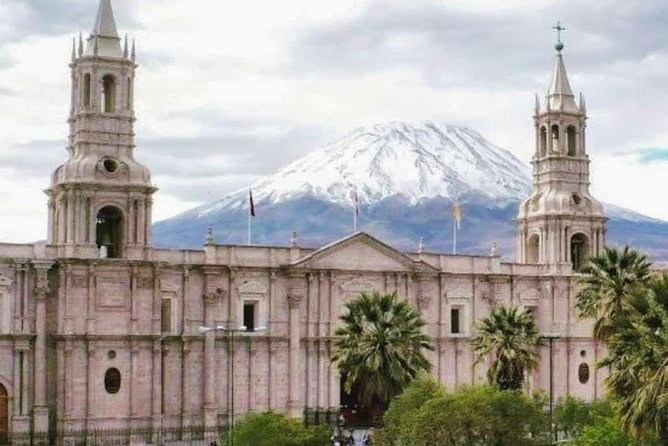
The Cloisters of The Company provide the architectural finish. Located about half a block from Plaza de Armas, these arcades and vaulted spaces are made from ashlar, the volcanic stone that gives Arequipa its nickname as the white city.
The appeal is visual, but the design also rewards a slower look. Arches, vaults, repeated columns, and carved stone create a sense of order. The 20-minute visit should give you time to walk through the passages and hear how the building fits into Arequipa’s colonial architecture.
I would save a little attention for the details above eye level. The symmetry is easy to appreciate at first glance, but the stonework becomes more interesting when you look at the joins, curves, and decorative elements.
This stop helps justify the tour’s central-city finish. You get a strong architectural image without committing half a day to a large museum. At the same time, the short duration means the guide’s explanation matters. If the tour is rushed, you may see the cloisters but miss why they are important.
What the $29 price really buys you
At $29 per person, the tour is priced below many full-day excursions and focuses on a compact urban route. The value is good if you receive the advertised duration, the cultural explanations, entry to the listed included sites, and two Peruvian coffees.
You are paying for range as much as for admission. San Lázaro, Mundo Alpaca, Tambo el Matadero, Lautrec Cafe, Plaza de Armas, and The Cloisters of The Company each offer a different subject. That variety is useful when you have limited time in Arequipa and want a guided introduction rather than a single museum visit.
The group limit of eight is another benefit. Small groups are better suited to narrow passages and courtyards, and you have a better chance of asking about food, architecture, or local customs. One positive account specifically praised the guide’s help with finding authentic places to eat, which is the kind of extra advice that can make a short city tour more useful.
The value drops sharply if the route is shortened. One reported experience lasted only an hour, with the coffee stop and most advertised locations omitted. The operator explained that the guide felt pressured to move quickly and said the café had been closed that day. Those explanations may clarify what happened, but they do not change the fact that a much shorter tour is poor value at the full price.
I would treat this as a good-value booking with a need for confirmation, not a guaranteed bargain. Ask about the current route, the café, and any closure at Tambo el Matadero before you set your expectations.
Timing, group size, and practical fit
The experience is offered in English and begins at 2:30 pm. Confirmation is received when you book, and the tour is normally scheduled for about 3 hours 30 minutes. It is booked an average of 19 days ahead, so reserving early is sensible if your Arequipa dates are fixed.
The activity allows service animals and is near public transportation. Most people can participate, according to the supplied details. No special fitness requirement is stated, but you should expect a walking route through streets, passages, and historic buildings.
The weather matters. The experience requires good conditions, and a cancellation for poor weather can lead to another date or a full refund. Outside that situation, the booking is non-refundable and cannot be changed for any reason, so choose your date carefully.
I would recommend this tour to:
- First-time visitors who want a quick cultural introduction to Arequipa.
- People who enjoy neighborhoods, architecture, and local craft more than a single formal museum.
- Coffee drinkers who like having a tasting built into a walking route.
- Visitors who prefer a small group and an English-language guide.
- Anyone with an open afternoon before exploring the Plaza de Armas independently.
I would be more cautious if you need a strict 3.5-hour program, are booking mainly for the coffee, or have no flexibility if a site closes. In those cases, confirm the details directly with SKY VIAJES Y TURISMO before committing.
Should you book Golden Hour, Legends of Arequipa and Peruvian Coffee?
I would book it if you want a broad first look at Arequipa and can accept a little schedule uncertainty. The strongest parts are the San Lázaro neighborhood, the alpaca presentation, the ashlar architecture, and the chance to finish in the central plaza. The coffee break adds a pleasant local touch when it operates.
I would not book it without checking the current conditions if your expectations are precise. Ask whether the tour will run the full 3 hours 30 minutes, whether Tambo el Matadero is open, and whether Lautrec Cafe will provide the two coffees. Those three answers tell you much of what you need to know.
At $29, it can be a smart introduction to the city, especially with only eight people. Just remember that the title promises atmosphere, while the real value comes from the route, the guide’s explanations, and the stops being open and delivered as planned.
FAQ
Where does the tour begin?
It begins at C. Zela 301 in Arequipa, near the historic center.
Where does the tour end?
The listed end point is Plaza de Armas in Arequipa. The exact location may vary depending on your arrangements.
What time does the experience start?
The scheduled start time is 2:30 pm.
How long does the tour last?
The planned duration is approximately 3 hours and 30 minutes.
Is coffee included?
Yes. The Lautrec Cafe stop includes two Peruvian coffees. The café may be unavailable on a particular day, so it is sensible to confirm this before starting.
How large is the group?
The experience accepts a maximum of eight participants.
Added recently around Arequipa
- gazebos cannon of the coca★ 5.0 · 28 reviews
- Sillar Route★ 5.0 · 4 reviews
- Salinas Lagoon + Mini Volcano DE Lojen★ 5.0 · 9 reviews
- Full Day Tour To The Salt Lake Salinas in Arequipa★ 4.5 · 34 reviews
- 3-Day Colca Canyon trek with Professional Guide★ 5.0 · 40 reviews
- Walking Tour Arequipa Including Santa Catalina Monastery★ 4.0 · 8 reviews
- Trekking, Waterfalls and Thermal Baths★ 4.5 · 47 reviews
- Walking City tour including the Monastery of Santa Catalina★ 5.0 · 6 reviews
Arequipa Tours, compared.

Tour to the Salinas Lagoon and National Reserve in Arequipa
Read our review →

Rafting Arequipa – Chili River Canoeing – Cusipata Rafting Arequipa
Read our review →
Chili River White Water Rafting with Hotel Pickup
Read our review →
Browse the lists this tour appears in