
Reviewed · HISTORICAL TOURS
Historic/music Cusco FreeWalkingTour “free drink” Group Tour
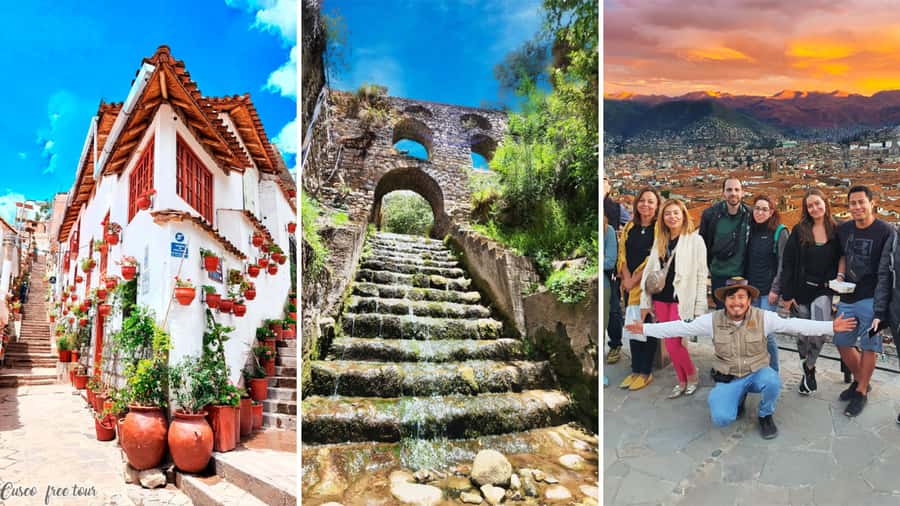
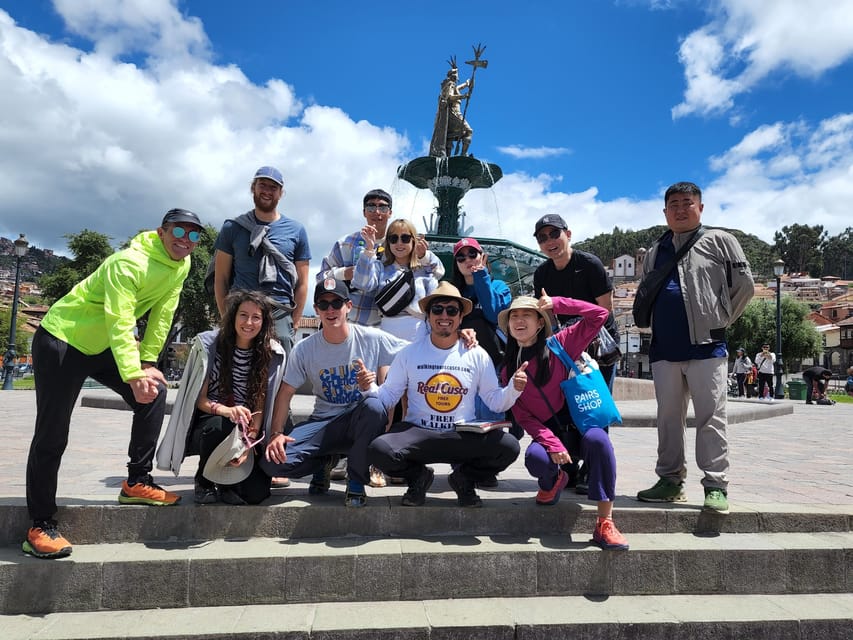
Cusco reveals itself one stone at a time. This two-hour walk links the Main Square, Qoricancha, San Blas, Inca masonry, local music, and a complimentary Pisco Sour or Chicha Morada in one compact route. I especially like the small group of about 10 people and the chance to hear Andean instruments from a local luthier rather than simply passing old buildings in silence.
The tour also gives you useful cultural context at places such as the Cathedral, Company of Jesus, and the Temple of the First Inca Ruler. Guides such as Erick have earned praise for clear explanations, humor, and strong local knowledge. The main consideration is the required gratuity of about 30 soles or $10, which makes the real cost much higher than the advertised $2.
In This Review
- Key points at a glance
- Starting at the Inca Fountain on Plaza de Armas
- Cathedral and Company of Jesus in the Main Square
- Qoricancha and the Sun Temple story
- Inca stonework and the Andean Trilogy
- San Blas, local craft, and Andean music
- Views from San Blas and 7 Borreguitos Street
- Ending at Manco Capac’s temple
- Pisco Sour or Chicha Morada at the finish
- What the two-hour format does well
- Who should book this Cusco walk?
- Should you book the Historic and Musical Cusco Free Walking Tour?
- FAQ
- Where does the tour meet?
- How long does the walking tour last?
- What languages are available?
- What drink is included?
- Is a gratuity required?
- Is the tour suitable for wheelchair users?
Key points at a glance
- The route begins at Cusco’s Inca Fountain: Meet at the fountain on Plaza de Armas, close to the Cathedral and Company of Jesus.
- Qoricancha anchors the Inca story: Learn why the former Sun Temple remains one of Cusco’s most important historic sites.
- San Blas adds music and craft: Visit a luthier, see finely made instruments, and hear an Andean performance with city views.
- The walk includes famous Inca stonework: Look for the 12 and 13 angled stones and the carved Andean Trilogy of Condor, Puma, and Snake.
- Your included drink comes at the end: Choose between a Pisco Sour and Chicha Morada.
- The $2 price is not the full expense: A tip of around 30 soles or $10 is required for the guide service.
Starting at the Inca Fountain on Plaza de Armas
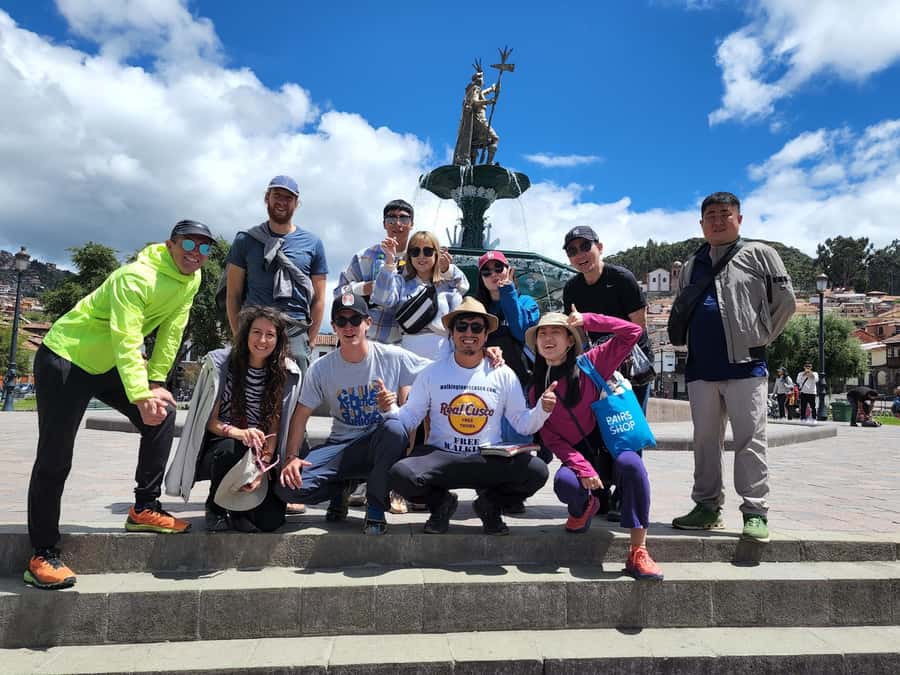
The meeting point is the Inca Fountain in Cusco’s Main Square, at approximately -13.5167681, -71.9787795. That puts you in the center of the city, surrounded by some of Cusco’s most recognizable colonial buildings.
This is a useful starting point because the square immediately shows you the layered character of Cusco. Spanish churches and grand arcades frame a city built on an older Inca foundation. You do not need a bus or taxi to reach the first stops, and the opening views give the guide plenty to explain before the group heads uphill.
The group size is listed at about 10 participants. That is small enough for questions and conversation, though the streets and plazas can still make it difficult to stay close to the guide. One practical issue deserves attention: a past participant had trouble hearing when the guide’s loudspeaker did not work well. Stay near the guide, especially in busy public areas, and ask for a repeat if you miss a key explanation.
More Historical Tours in Cusco
- Cusco: Historic Walking Tour with Pisco Sour and Local Music
★ 5.0 · 190 reviews - Cusco: Historical Guided City Tour with 4 Inca Ruins
★ 4.5 · 99 reviews - Cusco Highlights Walking Tour: History, Culture, Traditions
★ 4.9 · 72 reviews
Cathedral and Company of Jesus in the Main Square
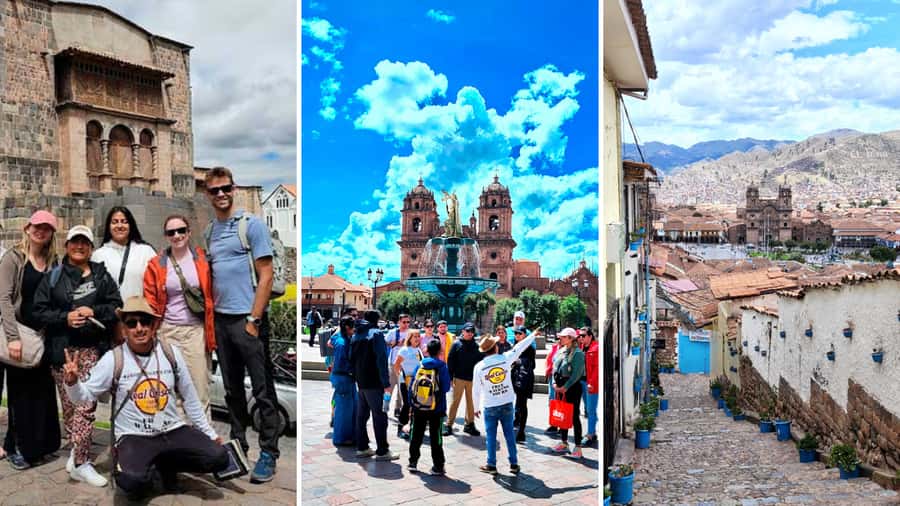
The first part of the walk focuses on two major buildings facing Plaza de Armas: Cusco Cathedral and the Church of the Company of Jesus.
You can expect the guide to explain the role these buildings play in Cusco’s colonial story and how Spanish religious architecture was placed within a city shaped by the Incas. Even if you have already taken photographs here, the commentary gives the square more meaning. The buildings are not isolated sights. They are part of a larger story about power, religion, art, and the reshaping of Cusco after the Spanish conquest.
The tour is strongest when it connects what you see above ground with what remains underneath. Look closely at the stonework and the way the city’s colonial center occupies an older Inca setting. A guide can point out details you might walk past on your own, including one of Cusco’s most beautiful balconies.
This stop is mainly about orientation and interpretation. You are not signing up for a long indoor visit to the churches, so anyone wanting extended time inside the Cathedral or Company of Jesus may need a separate visit.
Qoricancha and the Sun Temple story
Qoricancha is one of the most important stops on the route. The name is commonly translated as Golden Enclosure, and the site was once the Inca Sun Temple. Its importance comes not only from the remaining walls, but from the way it shows how sacred Inca construction and Spanish colonial building were placed together.
The guide explains the historical role of Qoricancha and helps you understand why it matters in Cusco’s wider story. This is especially useful early in your stay, when you are still learning the difference between Inca, colonial, and later Peruvian layers of the city.
The tour centers on cultural explanation rather than a long museum-style visit. That keeps the walk within two hours, but it also means you should not expect every room or display to receive detailed attention. If Qoricancha is high on your list, use this visit as an introduction and return later with more time.
Inca stonework and the Andean Trilogy
The walk then turns to some of the details that make Cusco’s streets so rewarding. You will see the famous 12 and 13 angled stones, examples of precise Inca masonry that fit tightly without modern mortar.
These stones are easy to miss if you are looking only at the larger buildings. The guide’s role here is important. You learn to look down and across the walls, noticing how carefully the blocks meet and how the stonework has survived through centuries of change.
Another key explanation concerns the Andean Trilogy: the Condor, Puma, and Snake carved into an ancient Inca wall. These animals represent major ideas in Andean thought and are presented as part of the route’s cultural story. The guide helps you connect the symbols with the city’s older beliefs instead of treating them as decorative carvings.
This portion of the tour rewards curiosity. You do not need specialist knowledge, but you should be ready to stop often, look closely, and listen. It is a good reminder that Cusco’s most memorable details are sometimes found in ordinary-looking walls.
More history to walk through in Cusco:
- Cusco: Historic Walking Tour with Pisco Sour and Music Show
★ 4.6 · 65 reviews - Pisco Sour Secrets: Hands-On Mixology in Historic Cusco
★ 4.5 · 50 reviews - Cusco: Historic Walking Tour & Scenic Views with local drink
★ 5.0 · 45 reviews - Cusco: Full-Day Sacred Valley History Tour
★ 4.6 · 14 reviews
San Blas, local craft, and Andean music
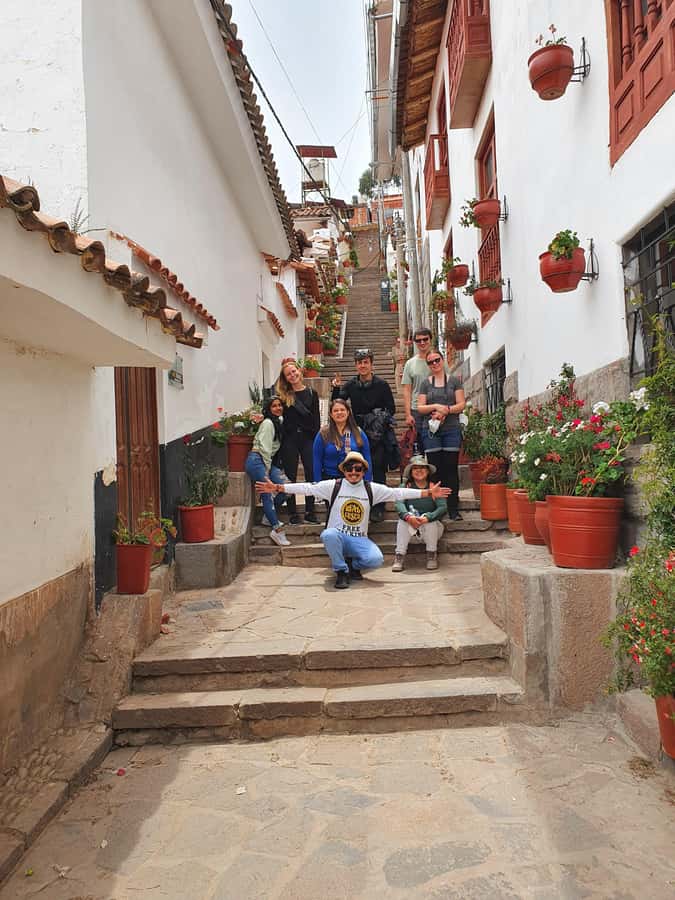
From the central streets, the route continues toward San Blas, a neighborhood known for its artistic character and steep, picturesque lanes. The change in mood is part of the appeal. Plaza de Armas gives you grand churches and formal buildings, while San Blas feels more intimate and craft-focused.
The walk includes a visit to a local luthier. This is one of the tour’s most distinctive features because it adds a working artisan context to the sightseeing. Instead of only looking at old objects behind glass, you see the connection between local handcraft and music.
You will also hear an Andean musical performance using traditionally made instruments. The instruments themselves are part of the lesson, and the performance gives the stop a sense of place that a standard architecture walk often lacks. One participant particularly enjoyed seeing the finely made instruments and hearing the music, while another described an Inca music presentation with beautiful instruments as a highlight.
The performance is not a full concert, so keep your expectations in proportion. It is a short cultural encounter within a walking route. Still, it gives the tour a welcome change of pace after the stonework and church explanations.
San Blas includes uphill streets, and the route is not suitable for wheelchair users. Wear practical shoes and take the pace seriously, especially if you are still adjusting to Cusco’s altitude. The provided information does not promise a slow pace or special assistance, so anyone concerned about mobility should choose another activity.
Views from San Blas and 7 Borreguitos Street
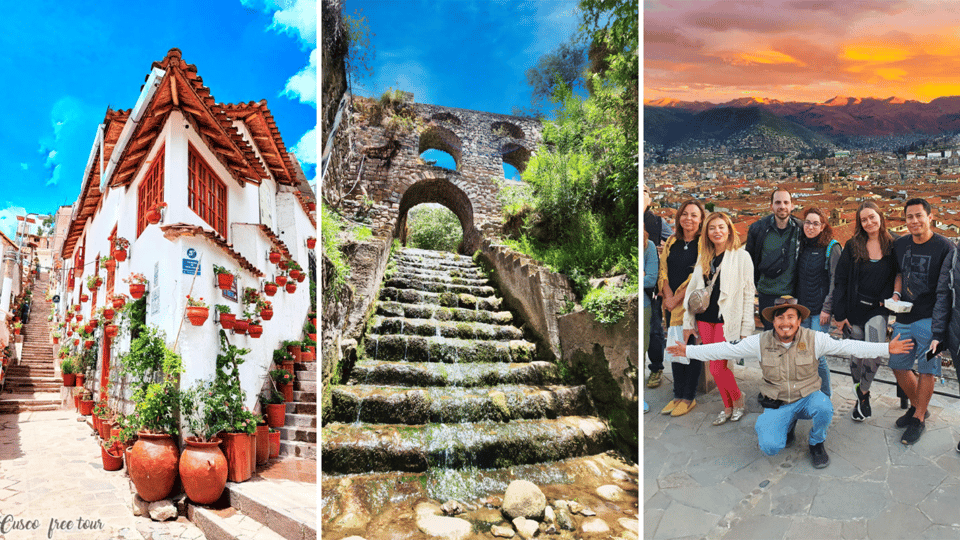
San Blas also provides panoramic views over Cusco. The exact quality of the view depends on conditions and where the group stops, but the neighborhood’s higher position gives the guide a useful point for discussing the city’s layout.
You will have time for photographs, but this is still a guided walk rather than a dedicated photo tour. Keep your camera ready as the route moves through the streets. The views, balconies, old walls, and changing angles appear as part of the walk rather than at one single lookout.
The route includes 7 Borreguitos Street, celebrated as Cusco’s most picturesque thoroughfare. This narrow street is a natural photo stop, with the kind of steep, carefully framed view that makes San Blas so popular.
That popularity can also mean people around you, especially in a compact street. Do not expect a completely empty photograph. The value is in seeing the street as part of San Blas’s character, not in guaranteeing a perfect postcard image.
Ending at Manco Capac’s temple
The final cultural stop is the Temple of the First Inca Ruler, Manco Capac. This gives the walk a clear ending by returning to the origins of the Inca story.
The stop works best as a final piece of the guide’s broader explanation. You have already seen colonial churches, Qoricancha, Inca walls, symbolic carvings, artisan instruments, and San Blas. At Manco Capac’s temple, those subjects come together around the beginnings of Inca rule.
The tour does not present itself as a series of disconnected photo stops. Its appeal is the progression from the Main Square through sacred sites and old masonry to craft, music, and views. You finish with a stronger sense of how Cusco’s past and present occupy the same streets.
Pisco Sour or Chicha Morada at the finish
At the end, you choose between a Pisco Sour and Chicha Morada. The Pisco Sour is Peru’s national drink, while Chicha Morada is a popular non-alcoholic beverage. This small tasting adds a pleasant social finish after two hours on foot.
I like having a non-alcoholic choice. It makes the ending suitable for people who do not drink, and it gives you a chance to try a familiar Peruvian flavor without ordering a full meal or committing to a bar visit.
The drink is complimentary, but the guide’s gratuity is required. That distinction matters. The booking price is listed as $2 per person, yet you should budget about 30 soles or $10 for the guide service. At that real price, the tour is still reasonably priced if you value a guided introduction, a local music stop, and a drink. It is not quite the almost-free outing suggested by the headline.
Personal expenses and water are not included. Bring your own water, since Cusco’s altitude and uphill streets can make a short walk feel more demanding than the clock suggests.
What the two-hour format does well
Two hours is enough to cover many central highlights without taking up an entire morning or afternoon. The route gives you a useful first look at the Main Square, Qoricancha, Inca masonry, San Blas, local craft, music, and city views.
I would use this tour as an orientation walk near the beginning of a Cusco visit. It can help you decide which places deserve a longer return visit, while the guide’s explanations give you a better framework for independent exploring.
The tradeoff is pace. You are moving between several stops, and each one receives a focused explanation rather than a long visit. If you prefer to linger over every church, museum, or viewpoint, this walk may feel brisk.
The guide service is offered in English or Spanish. The strongest praise has centered on clear historical and cultural explanations, friendly local guidance, and humor. Erick, in particular, has been singled out for making the history accessible while showing places a person might miss when walking alone.
Who should book this Cusco walk?
I would recommend it to first-time visitors who want a compact introduction to central Cusco. It suits you especially well if you enjoy history, old stonework, local music, artisan encounters, and a bit of neighborhood atmosphere in the same outing.
It is also a good choice if you want more than a standard plaza walk. The luthier visit and Andean performance give it a local cultural angle, while the 12 and 13 angled stones and Andean Trilogy add specific details you can continue looking for afterward.
You may want another activity if you need a wheelchair-accessible route, dislike uphill walking, or want a slow, highly detailed visit inside each historic building. The experience is also not suitable for people over 95, according to the stated restrictions.
Book it with realistic expectations about the price. Think of it as a low-cost guided walk with a required tip, not a completely free tour. You should also keep your ears open and remain near the guide in case the speaker has technical trouble.
Should you book the Historic and Musical Cusco Free Walking Tour?
Yes, if you want an efficient first look at Cusco’s central sights and enjoy cultural details beyond architecture. The combination of Qoricancha, Inca stonework, San Blas, a luthier, Andean music, and a Pisco Sour or Chicha Morada gives you more variety than a simple city stroll.
I would skip it only if you want extended indoor sightseeing, a fully accessible route, or a walk with no required gratuity beyond the booking price. For most able-bodied first-time visitors, the two-hour format, small group, bilingual guide, and strong focus on local history make this a useful start to a Cusco stay.
FAQ
Where does the tour meet?
The meeting point is the Inca Fountain on Cusco Main Square, also called Plaza de Armas. The coordinates are -13.5167681, -71.9787795.
How long does the walking tour last?
The tour lasts two hours.
What languages are available?
A live guide is available in English and Spanish.
What drink is included?
You can choose between a Pisco Sour and Chicha Morada at the end of the tour. Personal expenses and water are not included.
Is a gratuity required?
Yes. A gratuity of around 30 soles or $10 for the guide service is required.
Is the tour suitable for wheelchair users?
No. The tour is not suitable for wheelchair users. It is also listed as unsuitable for people over 95 years old.
Added recently around Cusco
- Guided tour of the mountain of colors in Cusco★ 5.0 · 11 reviews
- 2-Day Private Short Inca Trail to Machu Picchu★ 5.0 · 15 reviews
- City Tour Cusco – Group★ 5.0 · 4 reviews
- Tour Sacred Valley with Maras and Moray★ 5.0 · 15 reviews
- San Pedro Market Tour with Peruvian Cooking Class★ 5.0 · 31 reviews
- Walking Culinary Experience★ 5.0 · 41 reviews
- City Tour in Cusco★ 4.5 · 10 reviews
- One Day Tour to Humantay Lagoon★ 5.0 · 8 reviews
Historical Tours, compared.
Discover Lima: Love Park, Historic Center, and its Catacombs.
Read our review →
Street Food, Market & Old Eateries Tour in Lima’s Historic Center
Read our review →
Lima’s Vibrant Heritage: Exploring the City’s Landmarks Half-day
Read our review →
A Journey Through Time: Lima’s Historic Center & Catacombs Tour
Read our review →
Historic Center Street Food, Market, and Eateries Tour
Read our review →
Historic Walking Tour with Pisco Sour and Local Music
Read our review →
Walking tour in the Historic Center of Arequipa
Read our review →
Top Attractions in Lima: Historic Center, Love Park & Catacombs
Read our review →Browse the lists this tour appears in