
Reviewed · MACHU PICCHU TOURS
Lares Trek to Machu Picchu 4D/3N Including Hot Springs
The Andes reward steady walkers. This four-day route trades the crowded Classic Inca Trail for remote Quechua villages, high mountain passes, glacial lakes, and a final guided visit to Machu Picchu. I like the way the tour joins a serious trek with practical transport, comfortable lodging at Aguas Calientes, and trained horsemen who carry up to 7 kilos of your gear.
I also like the hot springs near Lares, a welcome reward after three days on foot, and the small group size of no more than eight people. The main concern is altitude: the hike reaches nearly 4,758 meters, so you need strong fitness and time to adjust in Cusco. The early starts, cold nights, and long walking days are not minor details.
In This Review
- Key points before you book
- Why choose the Lares route to Machu Picchu?
- Day one: From Huaran to Cancha Cancha
- Day two: Pachacutec Pass and the glacial lakes
- Day three: Walking down to Lares and soaking in hot springs
- Day four: Machu Picchu with time to explore
- What the support team carries, and what you carry
- Meals, camping, and comfort on a demanding route
- Is $702.57 good value?
- Who should book this Lares Trek?
- Should you book it?
- FAQ
- How long is the Lares Trek to Machu Picchu?
- What time does the tour start?
- What is the highest altitude on the trek?
- Do horses and mules carry personal luggage?
- What should I carry during the day?
- Are meals included?
- Can I climb Huayna Picchu?
- What happens if the tour is canceled because of weather?
Key points before you book
- The high point is Pachacutec Pass: The trail reaches about 4,758 meters, with views toward Pachacutec Lake and the snowy peaks of Pitusiray.
- You walk through living Andean communities: Cancha Cancha and Quisuarani offer a quieter look at mountain life than the busy routes near Cusco.
- Your heavy kit travels by mule: The support team carries camping gear, food, and up to 7 kilos of your personal belongings.
- Lares hot springs break up the trek: You can soak outdoors before lunch and the bus ride toward Ollantaytambo.
- Machu Picchu comes with a guide: You tour the ruins with your guide, then have time to explore on your own.
- The price covers much more than hiking: At $702.57 per person, transport, meals, camping, trains, one hotel night, guides, and the Machu Picchu visit are included.
Why choose the Lares route to Machu Picchu?
The Lares Trek gives you a different kind of Andean experience. Instead of following the famous Inca Trail all the way to the ruins, you walk through the high valleys north of Cusco, then connect with Machu Picchu by road and train.
That change matters. The trek feels more remote, with small villages, rivers, waterfalls, and broad mountain views. You also avoid carrying a full pack, since horsemen and mules handle the shared camping equipment and up to 7 kilos of your personal gear.
The route is still demanding. Day two includes around seven hours of walking and a very high pass. You need to be comfortable with uphill paths, rough ground, cold conditions, and altitude. A strong fitness level is required, and I would not treat this as a casual sightseeing tour with a little walking added.
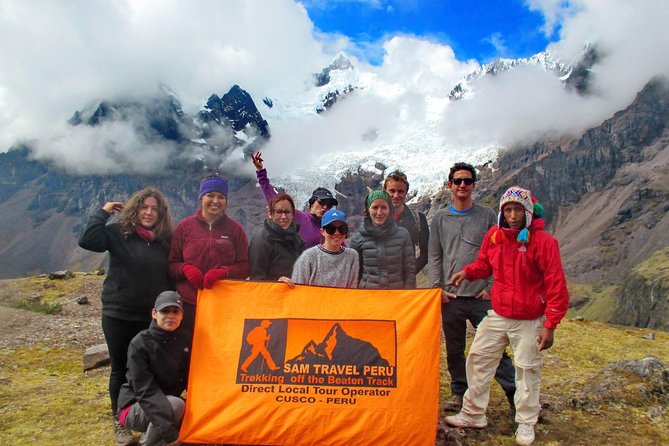
The small group limit helps. With no more than eight people, the guide can keep an eye on different walking speeds and abilities. One guide, Adner, received special praise for managing a mixed group while explaining Inca history and local culture. Wilber was also singled out for his strong knowledge and attentive approach.
More Hiking Tours in Cusco
- Classic Inca Trail Trek 4D/3N to Machu Picchu (Group Service)
★ 5.0 · 8,653 reviews - Machu Picchu: 4-Day Inca Trail Trek with Panoramic Train Ride
★ 5.0 · 4,568 reviews - Salkantay Classic Trek 5 Days from Cusco
★ 5.0 · 4,062 reviews
Day one: From Huaran to Cancha Cancha
Your day begins early, with pickup at 6:00 a.m. A private bus takes you from Cusco toward the Sacred Valley and the trailhead area near Huaran. The route passes between Pisac and Urubamba before you meet the horsemen and begin walking beside the small Cancha Cancha River.
The first day takes about six hours on foot. You spend roughly four hours climbing toward Cancha Cancha, which sits at about 3,800 meters. The steady uphill grade makes this a useful test of your legs and breathing before the harder pass on day two.
Cancha Cancha is a small village, not a polished resort stop. That is part of its appeal. You are walking into a high valley where the setting and local way of life take center stage. The quiet surroundings also make the first camp feel far removed from Cusco.
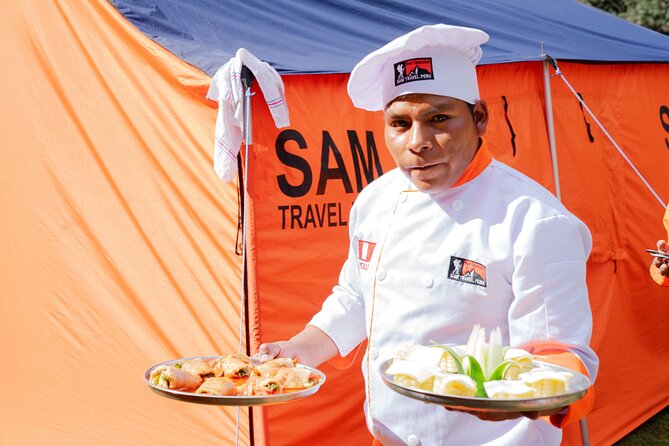
Your cooking team prepares the meals at camp. Breakfast may include omelettes or pancakes. During the morning, you receive fruit or chocolate as a snack. Lunch includes soup and a main course such as meat with pasta or rice. After reaching camp, you can expect afternoon tea with biscuits and popcorn, followed by a three-course dinner.
That food plan is useful on a hard trek. You do not need to depend entirely on energy bars, though you should bring your own chocolate, dried fruit, or other snacks. The tour does not include those extras.
Day two: Pachacutec Pass and the glacial lakes
Day two is the physical heart of the trip. You leave Cancha Cancha and continue east up the valley for about three hours. When the path flattens, you get a short break from the steepest climbing before the trail rises again for another two hours.
The reward is Pachacutec Pass, the route’s highest point at approximately 4,758 meters. From here, you can look toward Pachacutec Lake and the snow-covered peaks of Pitusiray. The air will be thin, and even a short pause may feel useful. Take this section slowly and follow your guide’s pace.
The itinerary gives a total walking time of about seven hours, with the day reaching an altitude listed at roughly 4,550 meters in one section. The pass itself is listed higher, at 4,758 meters. Either figure tells you the same thing: this is a very high-altitude day and should be taken seriously.
After the pass, the route follows a narrow ridge and then drops into a secluded corrie filled with glacial lakes. You stop here for lunch before continuing into the next valley. Waterfalls add variety to the descent toward Quisuarani, which sits at about 3,700 meters.
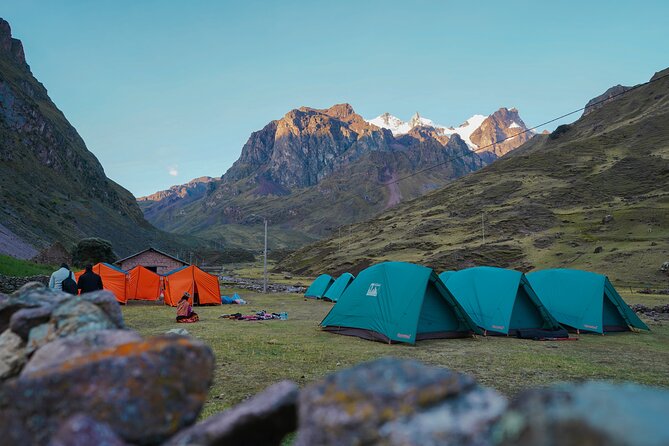
You camp beside a lake near Quisuarani. The scenery is a major reason to choose this trek, but the night may feel basic. You sleep in four-person igloo tents shared by two trekkers, with a foam mattress and camping pillow. A cook, kitchen tent, cooking equipment, and boiled water are provided, but this remains mountain camping, not hotel camping.
A first-aid kit and emergency oxygen are carried by the team. A horse with a helmet is also available in case illness makes it necessary to help someone complete the trek. That support does not remove the need for preparation, but it adds a sensible safety measure on a high route.
Day three: Walking down to Lares and soaking in hot springs
The third day begins with about an hour of uphill walking. After that, you follow the river valley downhill for roughly three and a half hours. The change in direction gives your lungs some relief, although downhill walking can be tough on knees after the previous day.
Before reaching Lares, you stop at the open-air thermal springs. Bring a swimsuit. This is one of the most appealing details in the itinerary because it gives you a real pause before the final transport day. After two nights in tents and a demanding mountain pass, a warm soak can feel well timed.
Lares sits at about 3,100 meters. You have lunch there at approximately 1:00 p.m., then take a bus toward Ollantaytambo. The town provides time to rest and look around before dinner and the evening train to Aguas Calientes.
This day involves a shift from remote walking to organized travel. You are no longer sleeping beside a high mountain lake, but you are also not wasting a full day on transport. The bus and train connection lets you reach Aguas Calientes without adding another long walking day.
You spend the night in a hotel with a private room and bathroom, hot shower, Wi-Fi, storage, and buffet breakfast. That comfort is well placed. You finish the trek with a proper bed, then wake early for Machu Picchu rather than trying to reach the ruins after another night in camp.
Longer treks from Cusco:
- 4-Day Salkantay Trek with Sky Camp Stay
★ 5.0 · 3,346 reviews - Salkantay Trek 5D/4N with Glass Cabins, Domes and Hobbit House
★ 5.0 · 2,488 reviews - 5-Day Premium Salkantay Trek
★ 5.0 · 788 reviews - Lares Valley Trek with Hot Spring 4-Day, 3-Night
★ 5.0 · 656 reviews
Day four: Machu Picchu with time to explore
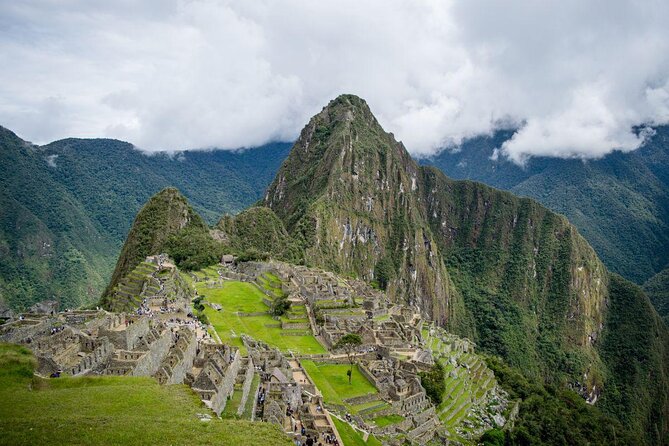
After an early breakfast, you take the bus from Aguas Calientes to Machu Picchu. Your guide leads a tour of the ruins, explaining the site and helping you understand what you are seeing instead of leaving you to wander among the stone walls without context.
After the guided portion, you have time to explore independently and take photographs. You may also climb Huayna Picchu or walk toward the Sun Gate, but Huayna Picchu requires advance booking and a separate reservation arranged when you book the trek.
The Huayna Picchu detail is important. Only 400 people may hike the mountain each day, and the climb takes place on your own after the guided visit, around 10:00 a.m. Do not assume you can decide at the entrance. Contact the operator when booking if this extra climb is a priority.
In the afternoon, you return to Aguas Calientes and take the Expedition train to Ollantaytambo. A private bus then brings you back to Cusco. The schedule makes for a long final day, but it also means you finish the trip in Cusco rather than arranging your own return.
What the support team carries, and what you carry
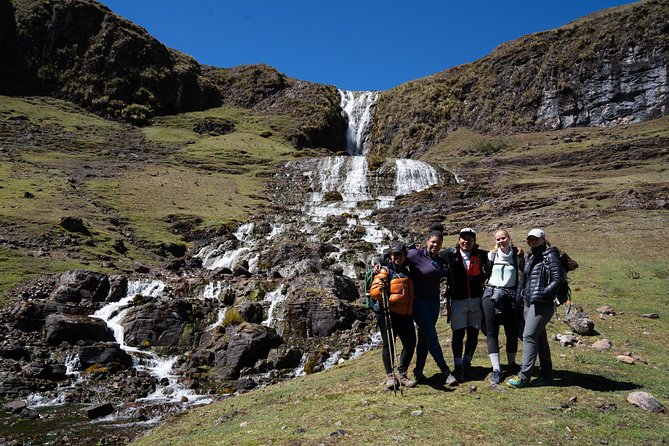
Your main luggage stays in Cusco or with the operator during the trek. At the pre-trek briefing, you receive a small duffel bag for three or four days of clothing and personal items.
Mules and horsemen carry this duffel with the food and camping equipment. The duffel cannot weigh more than 7 kilos under Peruvian law. You will not have access to it during the day, since the support team travels ahead, so your day pack should hold the items you need between camps.
Carry water, sunscreen, a camera, personal medicine, and extra snacks in that day pack. Boiled water is available for refilling bottles. A rain poncho is included, but you should still prepare for changing mountain conditions.
The baggage arrangement is one of the tour’s best practical features. You still work hard, but you are not carrying a full camping load up Pachacutec Pass. The tradeoff is that you must plan your small day pack carefully. Anything left in the duffel stays out of reach until the end of the day.
Meals, camping, and comfort on a demanding route
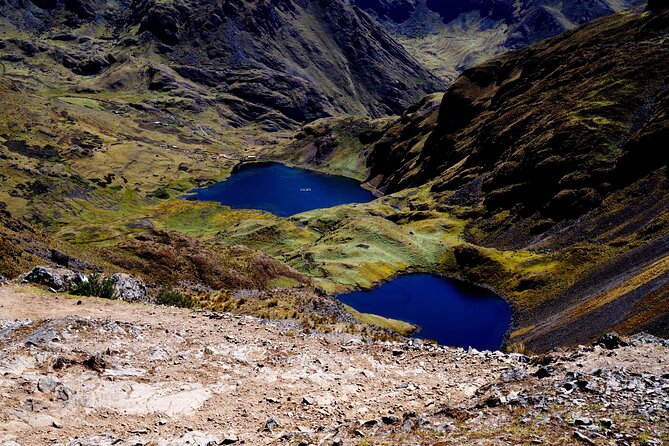
The cook travels with the group and prepares breakfast, lunch, dinner, snacks, and afternoon food. The menu includes hot meals and several courses, which is more useful than a simple packed lunch on days lasting six or seven hours.
The food was a major strength for the groups described in the supplied information. One account praised the meals even though they were prepared in a tent, while also noting that the portions kept the group well fed. You should still bring energy snacks because chocolate bars and dried fruit are not included.
Camping is comfortable by trekking standards. You receive a tent shared by two people, a foam mattress, and a camping pillow. The hotel in Aguas Calientes provides the biggest comfort reset, with a private bathroom, hot shower, Wi-Fi, and breakfast.
Dietary requirements should be provided when you book. The food arrangements are planned in advance, so do not wait until the first camp to explain an allergy or special diet.
Is $702.57 good value?
At $702.57 per person, this is not a bare-bones hiking package. The cost includes the pre-trek briefing, private transfers from your hotel to Huaran, an English, Spanish, and Quechua-speaking licensed guide, camping equipment, cook, kitchen tent, meals, boiled water, horsemen, mules, emergency horse support, and first-aid equipment with oxygen.
It also includes both Expedition train journeys, the Aguas Calientes hotel, the bus to Machu Picchu, the private guided tour of the ruins, and transport back to Cusco. When you add those moving parts together, the price is easier to justify than it first appears.
You still pay for your own snacks, final lunch and dinner on day four, and tips for the guide, chef, and horseman. You should also budget time at the end of your Peru trip in case transport is disrupted. A local strike once caused a later train, though the operator helped with the change. That kind of event is outside the company’s control, but it can affect connecting plans.
Who should book this Lares Trek?
I would choose this trip if you want a genuine mountain trek but prefer support with luggage and transport. It suits people who want remote villages and high passes, then want a guided Machu Picchu visit without arranging buses, trains, camps, and meals separately.
It is also a good fit if you prefer a small group. The eight-person maximum leaves more room for questions and makes it easier for a guide to manage different walking speeds.
I would not choose it if you want an easy path to Machu Picchu. Seven-hour walking days, cold camps, and nearly 4,758 meters of altitude demand preparation. You also need to accept early starts, limited access to your main belongings, and a final day that combines ruins, buses, trains, and a return drive to Cusco.
Book Huayna Picchu at the same time as the trek if you want that climb. For a full refund, cancel at least six full days before the start time. Poor weather or an insufficient group size can lead to a new date or a full refund.
Should you book it?
Yes, if you are fit, prepared for altitude, and want the route to Machu Picchu to be part of the adventure rather than just a transfer. The strongest reasons are the remote valley walking, the dramatic high pass, the hot springs, the capable support crew, and the amount of transport and equipment included in the price.
Choose another plan if your priority is comfort, low altitude, or a short walk. For the right kind of hiker, this Lares route offers a fine balance: real effort in the mountains, strong logistical support, and a well-organized finish at one of Peru’s great archaeological sites.
FAQ
How long is the Lares Trek to Machu Picchu?
The experience lasts four days and three nights. You spend two nights camping, one night in a hotel in Aguas Calientes, and visit Machu Picchu on the fourth day.
What time does the tour start?
Pickup begins at 6:00 a.m. on day one.
What is the highest altitude on the trek?
The highest pass is Pachacutec Pass, listed at approximately 4,758 meters. The itinerary also gives a high point of about 4,550 meters for the second day.
Do horses and mules carry personal luggage?
Yes. They carry camping supplies, food, and up to 7 kilos of your personal belongings. Your main luggage remains in Cusco or with the operator, and you receive a small duffel for the trek.
What should I carry during the day?
Bring a day pack with personal items such as water, sunscreen, and your camera. You will not have access to the duffel during the day because the support team travels ahead.
Are meals included?
Breakfast, lunch, and dinner are included as specified in the tour package. The cook prepares meals such as omelettes or pancakes, soup, meat with pasta or rice, snacks, afternoon tea, and a three-course dinner. Energy snacks are not included.
Can I climb Huayna Picchu?
Yes, but you must book it in advance at the same time as the trek or Machu Picchu tour. Only 400 people can climb Huayna Picchu each day, and the climb takes place independently after the guided tour, around 10:00 a.m.
What happens if the tour is canceled because of weather?
You will be offered a different date or a full refund if poor weather causes the cancellation. The same applies if the minimum group size is not reached.
More Hiking Days from Cusco
- Rainbow Mountain Full Day Trek
★ 5.0 · 1,469 reviews - Rainbow Mountain Day Trip from Cusco: Vinicunca Hiking Tour
★ 4.5 · 737 reviews - Inca Trail 4-Day 3-Night Trek to Machu Picchu with Expert Guides
★ 5.0 · 733 reviews - Humantay Lake Full Day Trek from Cusco with Lunch
★ 5.0 · 726 reviews
Other Ways to Reach Machu Picchu
- Short Inca Trail to Machu Picchu 2D/1N
★ 5.0 · 3,007 reviews - 2-Day Inca Trail to Machu Picchu with Panoramic Train
★ 5.0 · 1,876 reviews - From Cusco: Full-Day Group Tour of Machu Picchu
★ 4.7 · 1,767 reviews - Machu Picchu Day Trip from Cusco
★ 4.5 · 1,644 reviews
Added recently around Cusco
- Guided tour of the mountain of colors in Cusco★ 5.0 · 11 reviews
- 2-Day Private Short Inca Trail to Machu Picchu★ 5.0 · 15 reviews
- Tour Sacred Valley with Maras and Moray★ 5.0 · 15 reviews
- San Pedro Market Tour with Peruvian Cooking Class★ 5.0 · 31 reviews
- City Tour Cusco – Group★ 5.0 · 4 reviews
- Walking Culinary Experience★ 5.0 · 41 reviews
- City Tour in Cusco★ 4.5 · 10 reviews
- One Day Tour to Humantay Lagoon★ 5.0 · 8 reviews
Machu Picchu Tours, compared.
Classic Inca Trail Trek 4D/3N to Machu Picchu (Group Service)
Read our review →
Machu Picchu: 4-Day Inca Trail Trek with Panoramic Train Ride
Read our review →
2-Day Inca Trail to Machu Picchu with Panoramic Train
Read our review →
2-Day Tour: Sacred Valley and Machu Picchu by Train
Read our review →
Machu Picchu: Full-Day Tour from Cusco with Optional Lunch
Read our review →Browse the lists this tour appears in