
Reviewed · ANDEAN TREKKING TOURS
Salkantay Trek 5D/4N with Glass Cabins, Domes and Hobbit House
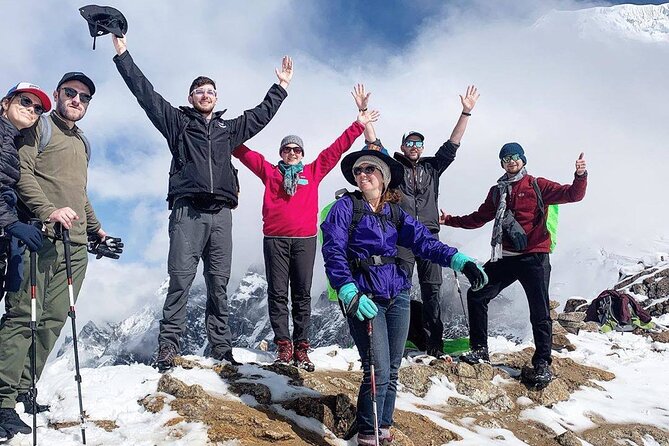
High-altitude adventure meets unusual lodging. This five-day Salkantay route gives you snow peaks, turquoise Humantay Lagoon, jungle trails, Inca ruins, and Machu Picchu, with glass cabins, domes, a Hobbit House, and a hotel along the way. I especially like the small groups of up to 14 people and the strong local focus, with indigenous guides, local jobs, training, education, healthcare, and reforestation projects built into the company’s work. The excellent safety setup, including first aid trained guides, oxygen, and a satellite phone, is another real plus.
The main drawback is the physical demand. Day two reaches 4,630 meters, or 15,190 feet, and several days involve seven to eight hours of walking. The schedule also begins very early, and the day five description needs clarification because it details the walk from Hidroelectrica back to Aguas Calientes, while the trip includes Machu Picchu entry and bus tickets.
In This Review
- Key points to know before booking
- What the $680 price really covers
- Day one: from Cusco to Humantay Lagoon
- Day two: the hard climb to Salkantay Pass
- Day three: trading glaciers for jungle
- Day four: coffee farms, Inca stonework, and Llactapata
- Day five: Hidroelectrica, Intiwatana, and the Machu Picchu question
- Comfort, food, and safety on the trail
- Who should book this Salkantay route?
- Should you book it?
- FAQ
- How long is the Salkantay Trek with glass cabins and the Hobbit House?
- How much does the trek cost?
- What is the highest point on the trek?
- How many people can join the group?
- What accommodation is included?
- Are meals included?
- Is drinking water provided?
- Are porters included?
- Are Machu Picchu entrance and transport included?
- Can I rent trekking equipment?
Key points to know before booking
- Sleep in glass cabins beneath the stars: The first night is at Soraypampa, with mountain views and a Peruvian cooking class.
- Reach the 4,630-meter Salkantay Pass: Day two is the hardest section, with steep climbing and a long descent.
- Watch the scenery change fast: Snowy high Andes give way to warm jungle, waterfalls, orchids, coffee, bananas, and avocados.
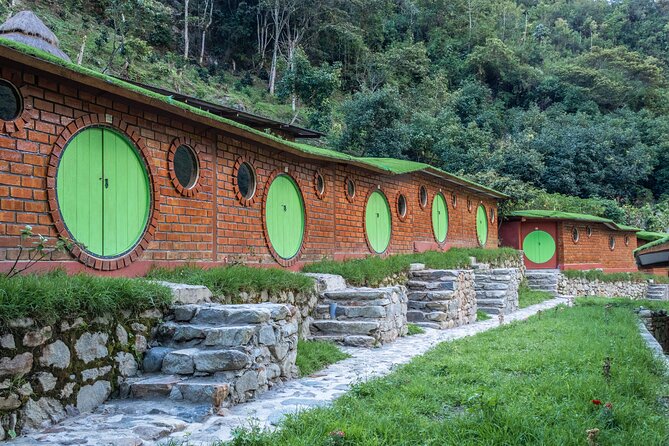
- Stay in a real Hobbit House: Loreta offers hot showers, soft bedding, and a forest setting after a long day.
- See Machu Picchu from Llactapata: The route includes a rare viewpoint over the famous Inca site before you reach Aguas Calientes.
- Expect a well-supported trek: Meals, water, transfers, entry fees, porters, train tickets, buses, safety equipment, and selected lodging are included.
What the $680 price really covers
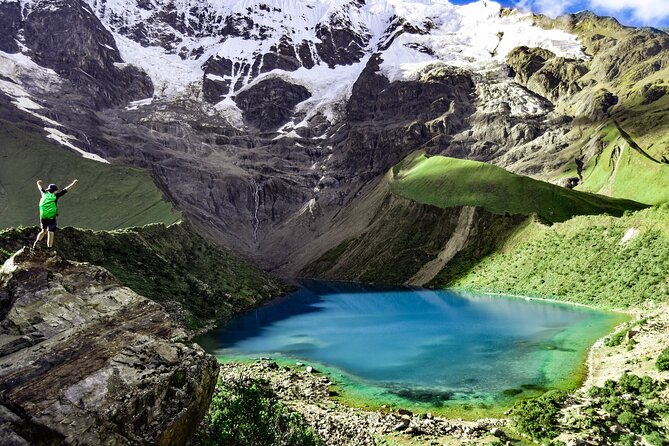
At $680 per person, this is not a bare-bones mountain walk. The price includes an English-speaking guide, all meals except the final lunch, professional chefs, porters, drinking water, private transportation, entrance fees, a personal porter allowance of up to seven kilograms, and the Expedition train for the return journey.
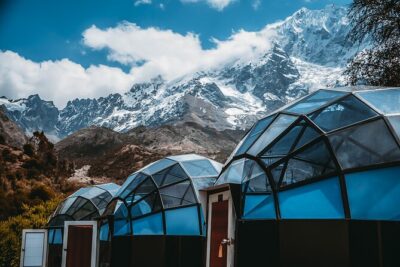
You also receive one night in glass cabins, two nights of camping in glass domes, one night in the Hobbit House, and one hotel night. A round-trip bus ticket to Machu Picchu is included, as are the Machu Picchu, Sacred Valley, and Salkantay entrance fees.
That package matters in Peru. Transport connections, park tickets, food, and mountain support can become expensive and confusing when arranged separately. Here, the practical pieces are grouped together, and the cooks prepare breakfast, lunch, and dinner during the trek. Dietary restrictions are accommodated, which is useful on a five-day route far from regular restaurants.
The value is also social, not only financial. The company describes itself as a 100 percent local indigenous operation that supports community employment, training, education, healthcare, and reforestation. If you want your spending to remain closer to the communities along the route, that gives this trip an advantage over a large international operator.
The price does not cover a sleeping bag, air mattress, or trekking poles, though all are available to rent. You must also budget for tips, travel insurance, extra drinks, meals not included in the plan, and your Cusco hotel before and after the trek. Huayna Picchu requires a separate advance booking.
More Hiking Tours in Cusco
- Classic Inca Trail Trek 4D/3N to Machu Picchu (Group Service)
★ 5.0 · 8,653 reviews - Machu Picchu: 4-Day Inca Trail Trek with Panoramic Train Ride
★ 5.0 · 4,568 reviews - Salkantay Classic Trek 5 Days from Cusco
★ 5.0 · 4,062 reviews
Day one: from Cusco to Humantay Lagoon
The first morning begins before sunrise, with hotel pickup in Cusco around 4:00 or 4:30 AM. The supplied meeting information also gives an 8:00 AM start time, so confirm your exact pickup time before departure. The early start allows the group to reach the trailhead and complete the first major hike without wasting the day.
The drive passes through Anta and Limatambo before a breakfast stop in Mollepata. After roughly three hours of total driving, you reach Challacancha, where you organize your gear and begin walking.
The opening hike takes about 1.5 hours uphill to Soraypampa. It is a sensible way to begin acclimatizing before the harder sections, though you should not mistake a gradual climb for an easy day. At Soraypampa, lunch is freshly prepared, and your first unusual accommodation is the Glass Cabañas.
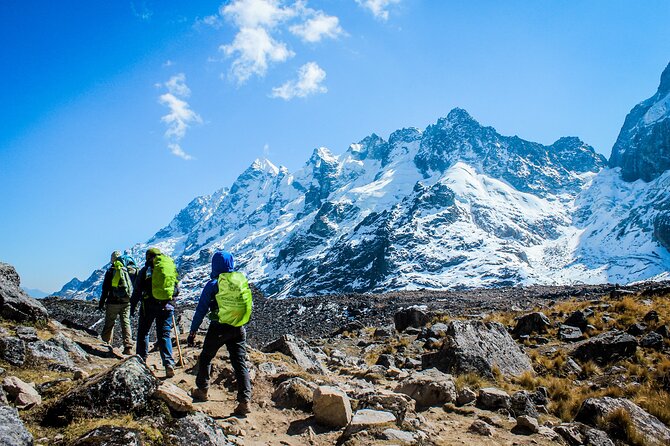
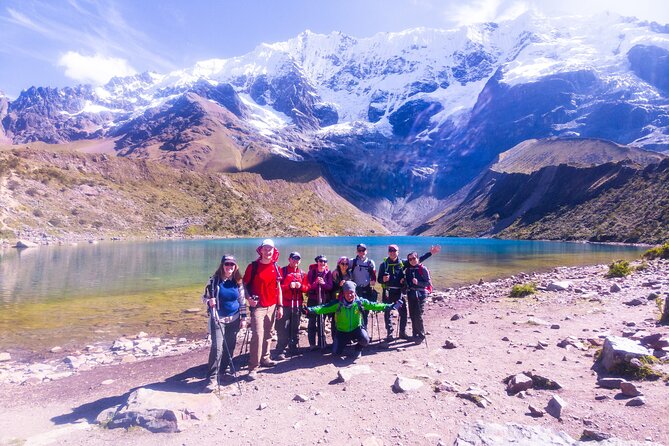
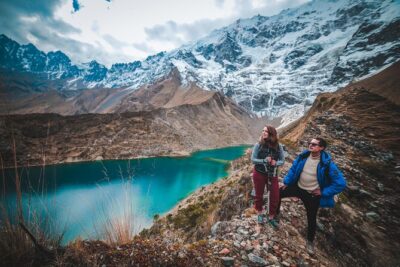
In the afternoon, you hike about 1.5 hours to Humantay Lagoon. The path starts gently, then becomes steeper near the water. The reward is a turquoise mountain lake below the Humantay glacier, whose peak reaches 5,960 meters.
The lagoon is one of the trip’s visual highlights, but it is also an early test of altitude. Take your time, drink water, and do not race uphill for photographs. The return to Soraypampa brings you back around 4:00 PM, leaving some time to rest or look around before dinner.
The evening Peruvian cooking class adds a welcome human touch. Instead of treating dinner as a simple refueling stop, the program gives you a chance to learn about local food and preparation. You then spend the night in a glass cabin, an appealing choice for anyone who likes mountain scenery but does not want a completely basic first night outdoors.
Day two: the hard climb to Salkantay Pass
Day two is the physical center of the trip. Breakfast comes at 5:30 AM, followed by water refills and the climb toward the Salkantay Pass.
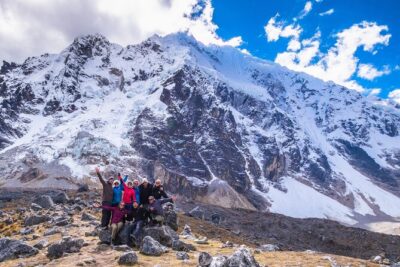
The first two hours follow a defined trail toward Salkantay Pampa at 4,100 meters. After a rest and time for glacier views, the path becomes steeper. A one-hour zigzag climb leads to Soyrococha, where lunch is prepared beneath Salkantay Peak.
After lunch, you continue for about an hour to the pass at 4,630 meters. This is the highest point of the trek and the place to appreciate the scale of the Andes. The group also honors Pachamama, or Mother Earth, giving the day a cultural moment rather than making it only a test of endurance.
The descent takes roughly 2.5 hours to Wayracmachay camp at 3,800 meters. The day totals about eight hours, and altitude makes every uphill section feel harder than its distance suggests. You should have a moderate level of physical fitness, but preparation matters more than speed. The long climbing, cold conditions, and high elevation require steady pacing.
That evening you sleep in a Glass Dome. The dome format offers a comfortable way to experience the night sky, but it does not remove the realities of mountain camping. Bring warm layers, and consider renting a sleeping bag if you do not already own one suited to cold high-altitude conditions.
Day three: trading glaciers for jungle
The scenery changes sharply on day three. You leave the high Andes and descend into warmer high jungle, where tropical plants, forest sounds, and humid air replace snow and exposed mountain slopes.
Tea is delivered to your room before breakfast, then you begin a mostly downhill walking day. After about two hours, you reach Rayanpata, where the jungle begins in earnest. A further two hours brings you to Colpapampa at 2,950 meters for lunch.
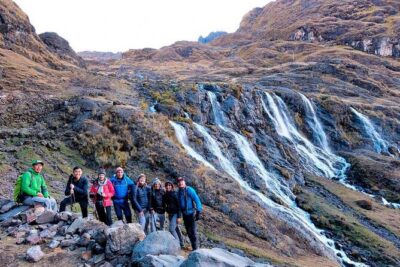
The afternoon continues for about four hours along narrower jungle paths. You might see waterfalls, orchids, and coffee fields along the way. This is one of the most satisfying parts of the route because the change in plant life happens within a single trek rather than across separate day trips.
The destination is Loreta and its Hobbit House. Hot showers and soft bedding are particularly welcome after roughly eight hours on the trail. The setting is designed to feel playful, but the appeal is practical too: you reach a comfortable forest lodge at the point where your body most needs a proper rest.
The main consideration is the length of the day. Downhill walking can be tough on knees and feet, especially after the previous day’s high pass. Trekking poles, available to rent, may be worth considering.
Longer treks from Cusco:
- 4-Day Salkantay Trek with Sky Camp Stay
★ 5.0 · 3,346 reviews - 5-Day Premium Salkantay Trek
★ 5.0 · 788 reviews - Lares Valley Trek with Hot Spring 4-Day, 3-Night
★ 5.0 · 656 reviews - Ultimate Salkantay Trek to Machu Picchu 5 Days
★ 5.0 · 588 reviews
Day four: coffee farms, Inca stonework, and Llactapata
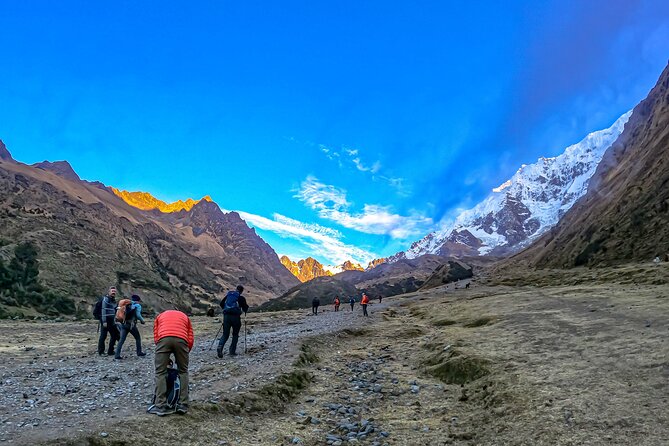
After breakfast under the forest canopy at the Hobbit House, a 30-minute drive takes you to Lucmabamba. From there, you begin a roughly four-hour uphill walk on an old Inca path.
The route passes through coffee, banana, and avocado plantings, with ancient stonework along the trail. This section gives you more than mountain scenery. It connects present-day farming with the remains of the Inca road system, and the guide’s explanations help put the stones and route into context.
The climb ends at Llactapata, an archaeological site at about 2,700 meters. From here, you get a less common view toward Machu Picchu. It is an excellent idea to see the famous site first from a distance, before visiting the main ruins.
A 1.5-hour descent leads to Hidroelectrica for lunch. This is the last meal prepared by the trekking crew, and it is the natural point to thank the chefs, porters, and guides. Tips are not included, so carry enough cash if you plan to show your appreciation.
The final three-hour walk follows the railway tracks through Machu Picchu canyon toward Aguas Calientes. The route may offer orchids, butterflies, and possible sightings of the Andean cock-of-the-rock, monkeys, or spectacled bears. These sightings are not guaranteed, so treat them as possibilities rather than promises.
The railway walk is scenic and distinctive, but it is not a quiet wilderness trail. You need to pay attention around the tracks and follow the guide’s instructions. In Aguas Calientes, you check into the hotel, shower, and rest before the Machu Picchu portion of the trip.
Day five: Hidroelectrica, Intiwatana, and the Machu Picchu question
The supplied day five plan begins with a hot drink, breakfast, and a two-hour downhill walk toward Hidroelectrica. It includes views of Machu Picchu and a 300-meter natural waterfall that provides electricity to the Cusco region.
You then visit Intiwatana, an Inca sun-dial rock. The stone was aligned with the sun-dial rock at Machu Picchu during the winter solstice, marking the beginning of a new agricultural season for the Incas. Afterward, the route follows a pleasant path beside the railway tracks back to Aguas Calientes.
Here is the point to clarify before you pay. The trip includes Machu Picchu entry and round-trip bus tickets, and the overall experience is presented as a visit to Machu Picchu. Yet the detailed day five schedule describes returning to Aguas Calientes and having a final dinner, without clearly spelling out when the main Machu Picchu visit takes place.
Ask the operator to confirm the exact Machu Picchu entry time, whether the visit occurs on day five or another scheduled morning, and how the bus tickets fit the walking plan. This is not a minor detail. Machu Picchu entry times are controlled, and you want the final ruins visit to be clearly arranged.
Comfort, food, and safety on the trail
The accommodation is the most unusual feature here. Glass cabins, Glass Domes, and the Hobbit House make the trek more memorable than standard tent camping. They also provide a mix of comfort and novelty without pretending that you are staying in a conventional hotel every night.
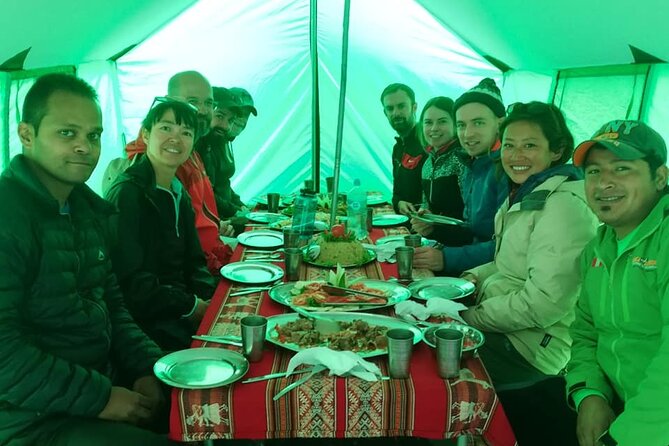
Meals are a major strength. Professional chefs prepare four lunches, five breakfasts, and four dinners, with dietary restrictions accommodated. The program includes drinking water during the trek, so you do not need to depend entirely on purchasing bottles along the route.
Personal porters can carry up to seven kilograms for each person, using a duffle bag provided at the briefing. Pack only what you need for the trail, and keep valuables and essentials with you. You will still carry a daypack with water, rain protection, warm layers, medication, and personal items.
Safety support is unusually clear for a remote route. Guides are trained in first aid, and the group carries an oxygen tank, first aid kit, and satellite phone. These tools do not make altitude harmless, but they show that the operator takes the high mountain sections seriously.
The group limit of 14 is another advantage. A smaller group can make breaks, meals, and pacing more personal. It also gives you a better chance to ask questions about Inca culture, local farming, and the mountain environment without being lost in a large crowd.
Who should book this Salkantay route?
I would choose this trek if you want variety more than a single type of scenery. In five days, you move from Cusco to high mountain passes, a glacier-fed lagoon, jungle farms, Inca paths, a railway canyon, and Machu Picchu.
It suits people who enjoy long walking days and do not mind early starts. You should be ready for six to eight hours of hiking on several days, steep uphill sections, high altitude, and a long descent after the pass. A moderate fitness level is required, and the highest sections deserve serious acclimatization in Cusco before the trip.
The route is less suitable if you want a relaxed holiday with short walks and generous free time. It is also not the best match if you dislike basic camping, though the glass cabins and domes add comfort.
The high rating, with 100 percent recommendation and 2,488 reviews at five stars, matches the tour’s strongest features: attentive staff, unusual lodging, strong meals, good organization, and the sense that you are supporting a local indigenous business. Still, those ratings do not cancel out the altitude or the need to confirm the Machu Picchu schedule.
Cancellation terms are strict. The booking is non-refundable and cannot be changed for personal reasons. Poor weather or failure to meet the minimum group size can lead to a new date, another experience, or a full refund. Travel insurance is advisable.
Should you book it?
Book this Salkantay Trek if you want a demanding but well-supported route with memorable places to sleep and a clear local-community focus. The $680 cost is fair for the included meals, porters, private transfers, entry fees, train, buses, safety gear, and specialty accommodation.
Before booking, confirm three things: your exact Cusco pickup time, the sleeping equipment you need to rent, and the precise schedule for Machu Picchu itself. If you are prepared for altitude, early mornings, and long walking days, this is a strong choice for seeing far more than the standard route between Cusco and Machu Picchu.
FAQ
How long is the Salkantay Trek with glass cabins and the Hobbit House?
The experience lasts approximately five days and four nights.
How much does the trek cost?
The listed price is $680 per person.
What is the highest point on the trek?
The highest point is Salkantay Pass at 4,630 meters, or 15,190 feet.
How many people can join the group?
The maximum group size is 14 people.
What accommodation is included?
The package includes one night in Glass Cabañas, two nights camping in Glass Domes, one night in the Hobbit House, and one night in a hotel.
Are meals included?
Yes. The package includes five breakfasts, four lunches, and four dinners. The last lunch is excluded, and extra drinks and additional meals are not included.
Is drinking water provided?
Yes. Drinkable water is included during the trek.
Are porters included?
Yes. A personal porter can carry up to seven kilograms per person, and the company provides a duffle bag at the briefing.
Are Machu Picchu entrance and transport included?
Yes. Machu Picchu entry, private transportation, a round-trip bus ticket to Machu Picchu, and the Expedition train ticket for the way back are included. Confirm the exact visit schedule before departure.
Can I rent trekking equipment?
Yes. Sleeping bags, air mattresses, and trekking poles are available to rent. Travel insurance is not included but is advisable.
More Hiking Days from Cusco
- Rainbow Mountain Full Day Trek
★ 5.0 · 1,469 reviews - Rainbow Mountain Day Trip from Cusco: Vinicunca Hiking Tour
★ 4.5 · 737 reviews - Inca Trail 4-Day 3-Night Trek to Machu Picchu with Expert Guides
★ 5.0 · 733 reviews - Humantay Lake Full Day Trek from Cusco with Lunch
★ 5.0 · 726 reviews
Added recently around Cusco
- Guided tour of the mountain of colors in Cusco★ 5.0 · 11 reviews
- 2-Day Private Short Inca Trail to Machu Picchu★ 5.0 · 15 reviews
- City Tour Cusco – Group★ 5.0 · 4 reviews
- Tour Sacred Valley with Maras and Moray★ 5.0 · 15 reviews
- San Pedro Market Tour with Peruvian Cooking Class★ 5.0 · 31 reviews
- Walking Culinary Experience★ 5.0 · 41 reviews
- City Tour in Cusco★ 4.5 · 10 reviews
- One Day Tour to Humantay Lagoon★ 5.0 · 8 reviews
Andean Trekking Tours, compared.
Lares Valley Trek with Hot Spring 4-Day, 3-Night
Read our review →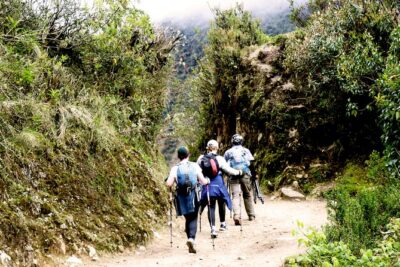
Ultimate Salkantay Trek to Machu Picchu 5 Days
Read our review →
Lares Trek to Machu Picchu 4D/3N Including Hot Springs
Read our review →
4-Day Inca Jungle Trail to Machu Picchu Hiking and Biking Tour
Read our review →
4-Day Adventure Tour: Inca Jungle Trail to Machu Picchu
Read our review →Browse the lists this tour appears in