
Reviewed · SACRED VALLEY TOURS
Sacred Valley Textile Workshop – Dyeing & Weaving in Cusco
Make something you can actually take home. This private textile workshop near Cusco turns Andean weaving from a museum display into a hands-on craft. I especially like the chance to gather plants for natural dyes and work with a backstrap loom, rather than simply watching an artisan demonstrate. I also like the warm, family-run setting, where lunch, conversation, Quechua culture, and even a little dancing are part of the day.
The main consideration is time on the road. The workshop lasts about eight hours, but the drive from Cusco to the Sacred Valley area can take roughly an hour and a half each way. At $420 per person, this is not a bargain activity, but private transport, food, interpretation, close instruction, and your handmade piece make it easier to judge as a full cultural day rather than a short craft class.
In This Review
- What makes this workshop special
- From Cusco to the Sacred Valley at 8:30 a.m.
- Meeting Ruth Pimentel and the weaving family
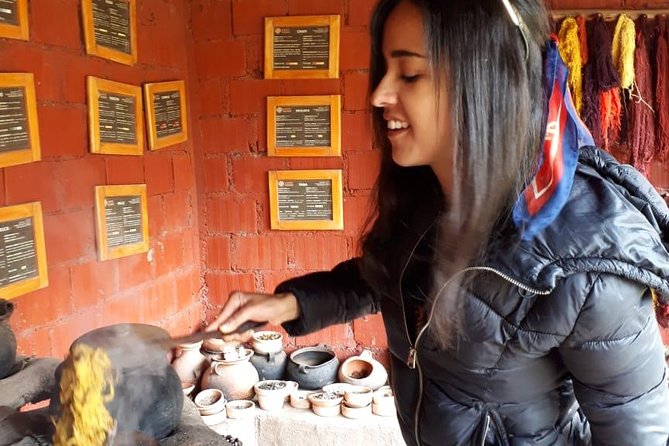
- Walking for leaves, herbs, and natural color
- Spinning alpaca wool and preparing the yarn
- Lunch, conversation, and a slower pace
- Learning the backstrap loom
- Traditional clothing, dancing, and the finished piece
- Why the private format matters at $420
- Practical advice before you book
- Who should book this textile day?
- Should you book the Sacred Valley textile workshop?
- FAQ
- Where does the textile workshop take place?
- What time does the experience start?
- How long does the experience last?
- Is transportation included?
- What will I make?
- Is lunch included?
- Can beginners take part?
- Can I cancel for a refund?
What makes this workshop special
- You gather dye plants yourself: Walk the hillside and collect leaves or herbs used to color yarn and, in some cases, for traditional medicinal purposes.
- You work through the full textile process: Depending on the day, you may spin alpaca wool, prepare yarn, create a dye bath, color the fibers, and weave a bracelet, bookmark, headband, or similar small piece.
- You learn beside master weavers: Ruth Pimentel and other skilled women from local Andean communities explain techniques passed through generations.
- You use a backstrap loom: This traditional method is beautiful to watch and surprisingly demanding to practice.
- You share a real meal: Lunch and a snack or coffee and tea are included, with home-style food served as part of the social experience.
- You travel privately: Hotel pickup in Cusco begins around 8:30 a.m., and only your group participates in the activity.
From Cusco to the Sacred Valley at 8:30 a.m.
Your morning begins with pickup by private transport at about 8:30 a.m. The road out of Cusco is part of the experience, not just a transfer. You pass through countryside toward the Sacred Valley area, and scenic stops may be possible for photographs.
Plan for a long day. The exact drive depends on the workshop location and road conditions, but roughly an hour and a half from Cusco has been reported. That means the full outing can occupy most of your day, especially once you include the return trip.
I recommend booking this on a day when you are not also trying to visit several major ruins. The workshop is best treated as its own full-day activity. It can also be a gentle way to spend a day acclimating to the altitude, since the pace is calm and there is time to sit, eat, talk, and work with your hands.
The private format matters here. You are not being moved through a large group on a strict schedule. The guide and driver can help with the day’s flow, and past guests have specifically praised drivers such as Pedro for being punctual, friendly, and helpful along the road.
More Sacred Valley days out:
- From Cusco: Moray, Maras Salt Mines & Chinchero Weavers Tour
★ 4.8 · 1,925 reviews - 2-Day Tour: Sacred Valley and Machu Picchu by Train
★ 5.0 · 1,127 reviews - Cusco: Sacred Valley, Pisac, Ollantaytambo, Salt Mines Moray
★ 4.6 · 1,058 reviews
Meeting Ruth Pimentel and the weaving family
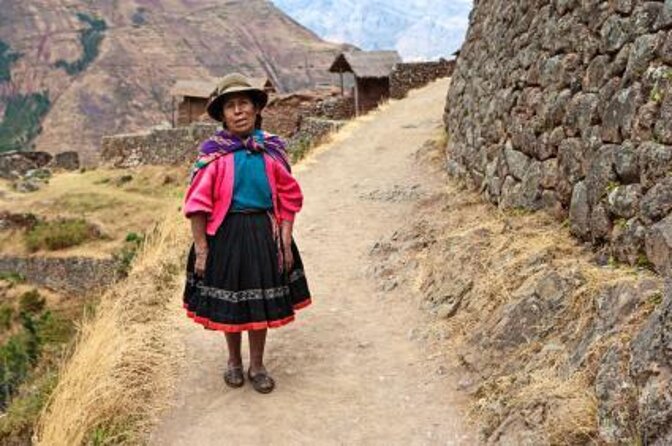
At the workshop, you are welcomed by Ruth Pimentel and other master weavers. Ruth is presented as Peru’s only UNESCO-awarded Indigenous master weaver, and the family’s work centers on preserving Andean textile methods while sharing them with visitors.
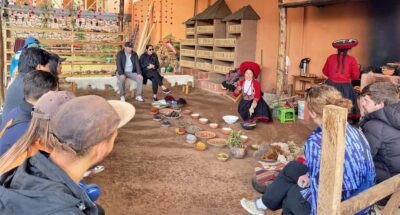
The tone is personal rather than staged. You sit with the women, ask questions through a translator when needed, and watch their hands work at close range. Guides including Nayda, Delia, Naydiss, and Edwin have helped bridge language and cultural gaps during the day.
That translation is important. Much of the value lies in understanding why a plant is selected, what a pattern means, or how a Quechua textile fits into community life. If you speak little or no Spanish, the experience remains accessible because interpretation is provided.
You should still approach the day with patience. The craft is not a quick souvenir-making trick. The women weave with remarkable speed and precision, but beginners need help. One small bracelet or bookmark can reveal how much practice lies behind a finished Andean textile.
Walking for leaves, herbs, and natural color
One of the most memorable parts of the day is the walk to collect materials for the dye bath. Instead of seeing natural dyeing as a finished demonstration, you take part in preparing it.
The plants vary with the season. You may gather leaves or herbs and learn how local materials create different shades. Some plants are also discussed for their traditional medicinal uses, giving the walk a wider connection to Andean knowledge.
This step gives the colors meaning. A ball of yarn colored with a plant you helped collect feels different from a skein purchased in a shop. It also shows why textile production takes time: the color begins long before the yarn reaches the loom.
After collecting the materials, the group prepares and dyes alpaca yarn. The experience description highlights premium baby-alpaca yarn, while individual sessions have also included learning how to make yarn from alpaca wool. The exact sequence may vary, but you should expect a practical lesson rather than a lecture.
You may take home some of the yarn you dyed. That is a useful extra because it lets you keep a piece of the process even if your woven item is small.
Spinning alpaca wool and preparing the yarn
Several versions of the workshop include spinning, winding, and preparing wool before weaving. These tasks look simple until you try them. Keeping the fiber even, handling the thread, and preparing it for the loom require steady hands and practice.
I like this part because it resets your expectations. Andean textiles are often admired for their bright colors and fine patterns, but the labor behind them can disappear when you see only the finished product. Spinning a little wool yourself makes the skill more visible.
The instruction is patient and hands-on. You are not expected to arrive with textile experience. A textile designer or someone who already weaves may ask more technical questions, but beginners and families can participate too.
The workshop is especially suitable for people who enjoy making things by hand. It is less suited to anyone seeking a passive sightseeing day with constant movement. You will spend real time seated and concentrating.
A few more Cusco trips worth lining up side by side
- Classic Inca Trail Trek 4D/3N to Machu Picchu (Group Service)
★ 5.0 · 8,653 reviews - Cusco: Rainbow Mountain and Red Valley Day Trip with Meals
★ 4.9 · 4,893 reviews - Machu Picchu: 4-Day Inca Trail Trek with Panoramic Train Ride
★ 5.0 · 4,568 reviews - Salkantay Classic Trek 5 Days from Cusco
★ 5.0 · 4,062 reviews
Lunch, conversation, and a slower pace
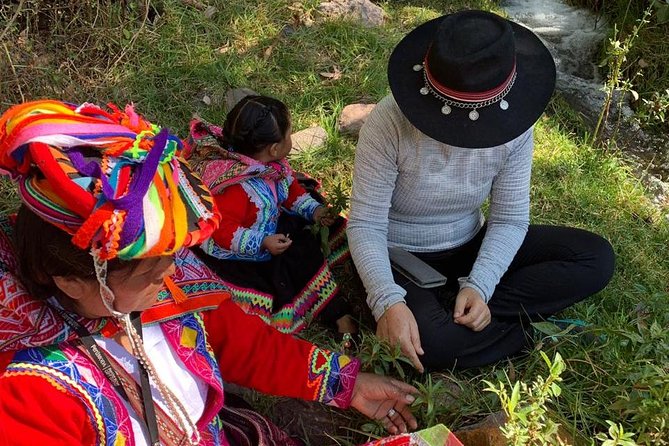
Lunch is included and is repeatedly described as a highlight. It is served in a social setting, with the group eating alongside the artisans and guides.
The food has included hearty local dishes, fresh fruit, vegetables, avocado, yucca, pineapple, passion fruit, and papaya. One session also included guinea pig as a local delicacy during the drive or day, but that should not be treated as a guaranteed menu item.
The meal does more than fill a gap between activities. It gives you time to talk with the weavers and learn about one another. Some sessions have included learning a little Quechua, discussing local customs, and sharing stories about home.
Coffee or tea is included as well. A snack may be offered before or during the workshop. Since this is a full-day outing in the countryside, the meal makes the $420 price easier to assess, particularly for a private booking.
Learning the backstrap loom
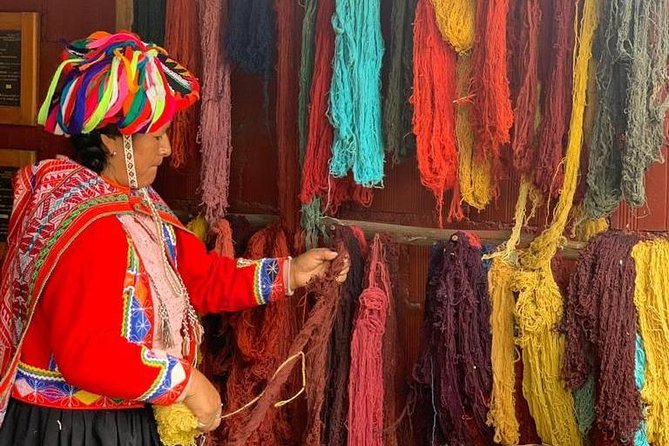
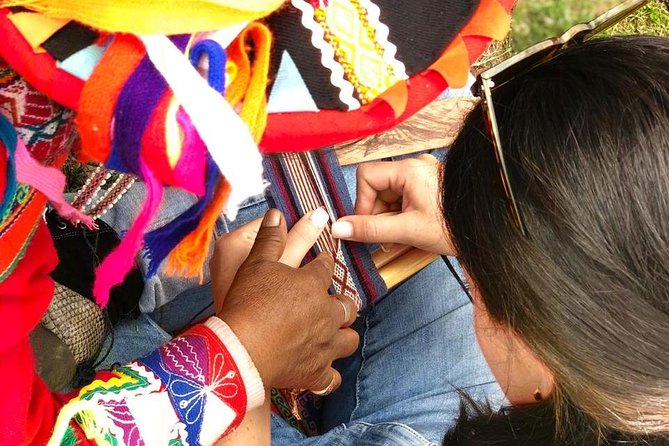
The loom lesson is the heart of the workshop. A backstrap loom is compact and traditional, but it is not effortless. The weaver controls tension with her body while guiding the threads into intricate patterns.
You may begin with a bracelet, bookmark, headband, or bincha, depending on the session and your group. Some people have made a bracelet from start to finish with guidance. Others have chosen four prepared yarn colors and worked on a bookmark or headband.
Expect the artisans to start the piece or show you the first steps. You then continue with their help. That arrangement is sensible because a beginner is unlikely to master the entire technique in one morning.
The challenge is part of the reward. You will quickly see why the work of Andean women weavers commands such respect. The patterns may look effortless in experienced hands, but your own first rows could be uneven. That is fine. The goal is to understand the process and leave with something you helped create.
The physical setup also deserves notice. Weaving may take place on the floor, and you may sit there for several hours. If sitting low is uncomfortable, ask the operator in advance about the setup. Most people can participate, but the workshop is not designed like a modern classroom with standard tables and chairs.
Traditional clothing, dancing, and the finished piece
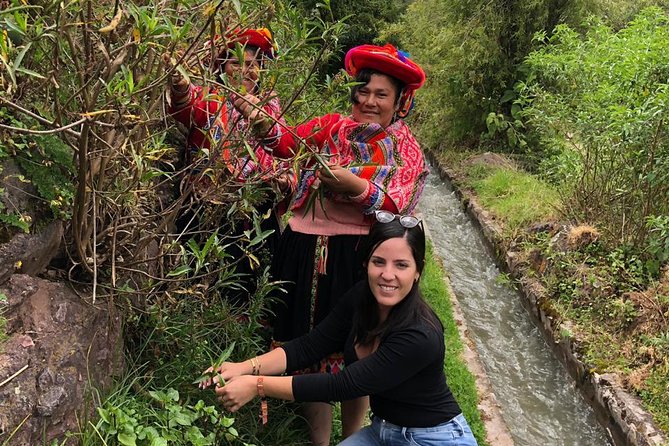
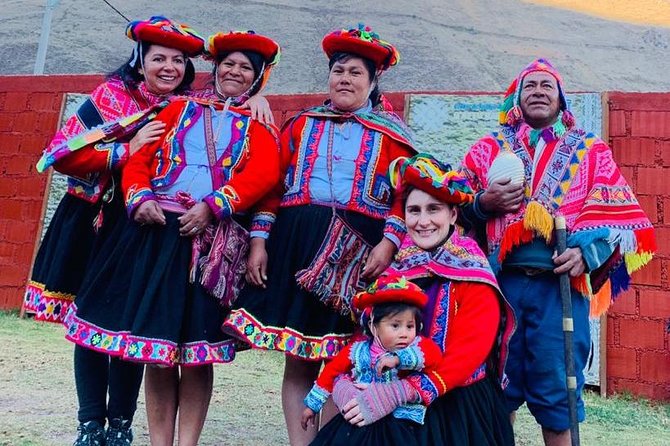
Near the end, the guide may explain traditional clothing and help dress the group in local garments. A short dance is sometimes part of the farewell.
This can sound like a tourist add-on, but the rest of the day gives it context. After spending hours learning about the work and community behind the clothing, seeing the garments up close feels more connected to what you have just learned.
You finish with a handmade textile item, such as a bracelet, bookmark, headband, or bincha. Depending on the specific session, you may also take home naturally dyed yarn.
The workshop description says a bespoke creation is finished on-site and presented in elegant packaging with a signed provenance card. That is a thoughtful touch if you want a polished souvenir. Just keep in mind that a beginner’s piece is a learning project, not a museum-quality textile.
There is also time to browse and buy work directly from the women. Prices have been described as more reasonable than expected, and purchasing directly gives you a chance to support the artisans whose methods you have spent the day learning.
Why the private format matters at $420
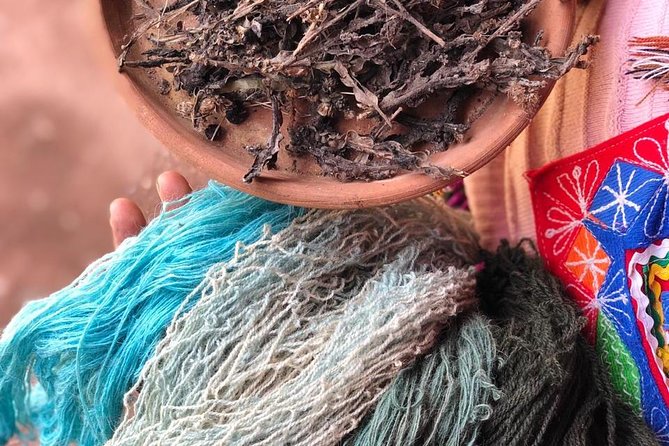
At $420 per person, this is one of the more expensive cultural activities you can book in Cusco. The value depends on what you want from the day.
You are paying for approximately eight hours of instruction, private transport, a guide or translator, lunch, drinks, direct time with master weavers, and a handmade item. You are also paying for a small-group setting rather than a quick stop at a busy textile market.
The private format is useful for families, couples, solo visitors, and serious textile enthusiasts. A solo participant can still feel included, and a family can work at its own pace. If your group has different interests, the quiet setting and flexible conversation help.
The price is harder to justify if you only want a short demonstration or a cheap souvenir. You could buy a woven item for far less. This workshop earns its cost through participation, instruction, transport, and the time spent with the artisans.
The experience is often booked about 30 days ahead, so I would not leave it until the last minute if this is important to your Cusco plans.
Practical advice before you book
Wear clothing that is comfortable for countryside travel and sitting on the floor. Bring a light layer for changing conditions near Cusco and the Sacred Valley, though the supplied details do not specify a dress code.
Allow the entire day. A start at 8:30 a.m., a drive of about an hour and a half each way, and an eight-hour workshop can make this a long outing. Do not schedule a late afternoon flight or a tightly timed evening activity afterward.
Bring a camera for the countryside and workshop setting, but give the craft your attention. The most valuable moments come when you watch the weavers’ hands, try to control the yarn, and ask about the plants and patterns.
If you have mobility concerns, remember that the weaving can take place on the floor. Service animals are allowed, public transportation is nearby, and most people can participate, but the provider should be told about any specific needs before booking.
Cancellation is free up to 24 hours before the start time for a full refund. Changes or cancellations inside that window are not accepted for a refund, and poor weather can lead to a new date or full refund.
Who should book this textile day?
I would choose this workshop if you enjoy crafts, local food, small communities, and patient cultural exchange. It is a particularly good fit for anyone interested in weaving, natural dyes, alpaca fiber, Quechua traditions, or handmade design.
Families can take part, though younger children may need help with the fine weaving work. Couples and friends get a shared project, while solo visitors can expect a welcoming setting rather than an awkward day alone.
I would think twice if your main goal is to see ruins, cover several Sacred Valley sights, or stay constantly active. The drive is long, the work is slow, and sitting on the floor may be uncomfortable.
Should you book the Sacred Valley textile workshop?
Yes, if you want a meaningful day built around Andean skill rather than a quick photo stop. The strongest parts are the plant gathering, natural dyeing, personal instruction, family hospitality, and the chance to leave with something your own hands helped make.
Book it with realistic expectations. You will not become a master weaver in one day, and the $420 price demands a full commitment of time and interest. But if you value direct contact with artisans and want to understand the work behind Peru’s famous textiles, this is a thoughtful and unusually hands-on choice near Cusco.
FAQ
Where does the textile workshop take place?
It begins at a private atelier in the hills near Cusco and takes place in the Sacred Valley area. Sessions have included time in or near Calca and local Andean communities.
What time does the experience start?
Hotel pickup and the workshop start are scheduled for about 8:30 a.m.
How long does the experience last?
The workshop itself lasts approximately eight hours. With the drive from Cusco and the return journey, you should plan for a full day.
Is transportation included?
Yes. Hotel pickup by private transport is offered, and the drive from Cusco is part of the experience.
What will I make?
Depending on the session, you may make a bracelet, bookmark, headband, or bincha. The description also says you receive a finished bespoke textile piece with elegant packaging and a signed provenance card.
Is lunch included?
Yes. Lunch and coffee or tea are included. A snack may also be served during the day.
Can beginners take part?
Yes. Most people can participate, and the master weavers provide hands-on guidance. The weaving can be challenging, so expect to need help as you learn.
Can I cancel for a refund?
You can cancel at least 24 hours before the start time for a full refund. Cancellations or changes made less than 24 hours before the experience are not accepted for a refund.
Added recently around Cusco
- Guided tour of the mountain of colors in Cusco★ 5.0 · 11 reviews
- 2-Day Private Short Inca Trail to Machu Picchu★ 5.0 · 15 reviews
- City Tour Cusco – Group★ 5.0 · 4 reviews
- Tour Sacred Valley with Maras and Moray★ 5.0 · 15 reviews
- San Pedro Market Tour with Peruvian Cooking Class★ 5.0 · 31 reviews
- Walking Culinary Experience★ 5.0 · 41 reviews
- City Tour in Cusco★ 4.5 · 10 reviews
- One Day Tour to Humantay Lagoon★ 5.0 · 8 reviews
Sacred Valley Tours, compared.
Sacred Valley & Maras Salt Mines Tour with Lunch
Read our review →
Moray, Maras Salt Mines & Chinchero Weavers Tour
Read our review →
2-Day Tour: Sacred Valley and Machu Picchu by Train
Read our review →
Sacred Valley, Pisac, Ollantaytambo, Salt Mines Moray
Read our review →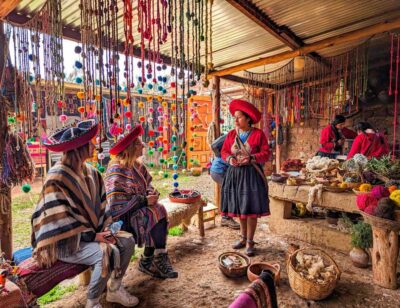
Chinchero,Moray & Salt Mines drop-off in Ollantaytambo
Read our review →
Sacred Valley and Maras Moray Tour with Full Day Buffet Lunch
Read our review →

Browse the lists this tour appears in