
Reviewed · MACHU PICCHU TOURS
Salkantay Trek to Machu Picchu 5D/4N or 4D/3N by glamping
Big mountains, small crowds, and a warm bed. This Salkantay Trek pairs dramatic high-altitude hiking with glamping camps, fresh meals, and a guided visit to Machu Picchu. I especially like the contrast between icy Humantay Lake and the warm Santa Teresa Valley, plus the chance to see Llactapata before reaching the citadel. The main catch is that the advertised $35 price does not include several major costs, including Machu Picchu entry and your return to Cusco.
The route also asks a lot from your legs. You reach 4,630 meters at Salkantay Pass, then spend several days descending through changing climates. I like that horses carry up to 6 kilos of your gear and that the cooking is handled by a dedicated mountain chef. Still, the fourth day includes a long walk beside the railway tracks, and the Aguas Calientes hotel may not provide the quiet or hot water you hope for after a hard trek.
In This Review
- Key points to know before booking
- Why choose Salkantay instead of the Inca Trail?
- Day 1: From Cusco to Humantay Lake at 4,200 meters
- Day 2: The Salkantay Pass and the long descent
- Day 3: Coffee, hot springs, and the Santa Teresa Valley
- Day 4: Llactapata, railway tracks, and Aguas Calientes
- Day 5: Your Machu Picchu morning
- Food, sleeping, and what glamping really means
- Is the $35 price good value?
- Who should book this trek?
- FAQ
- How long is the Salkantay Trek to Machu Picchu?
- Is Machu Picchu entry included?
- What luggage can the horses carry?
- Are meals included?
- Do I need to bring a sleeping bag?
- What does the return to Cusco cost?
- Should you book the Salkantay glamping trek?
Key points to know before booking
- Humantay Lake and Salkantay Pass provide the trip’s biggest mountain views, but the pass day is physically demanding.
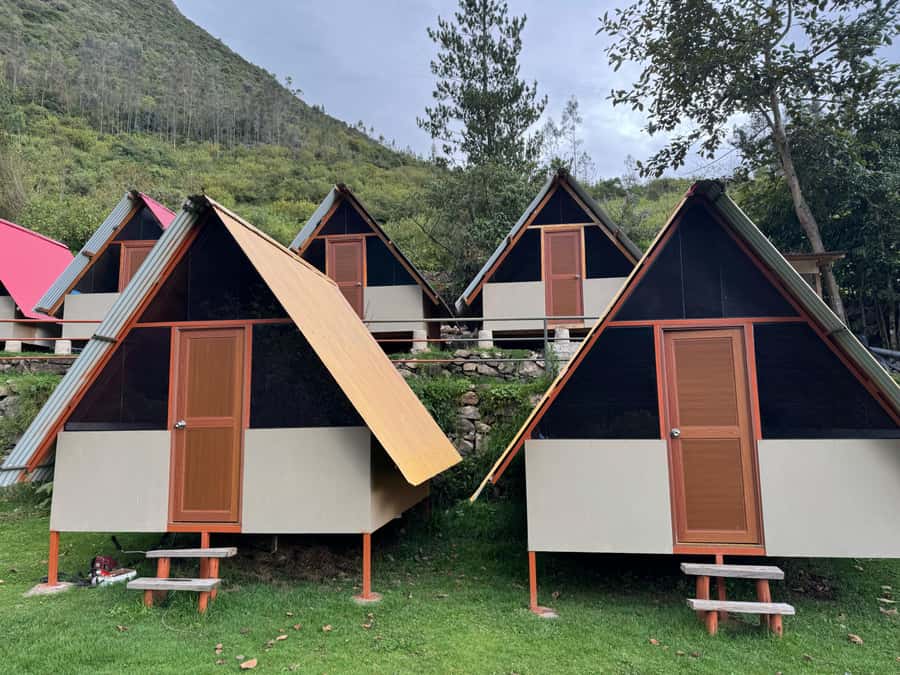
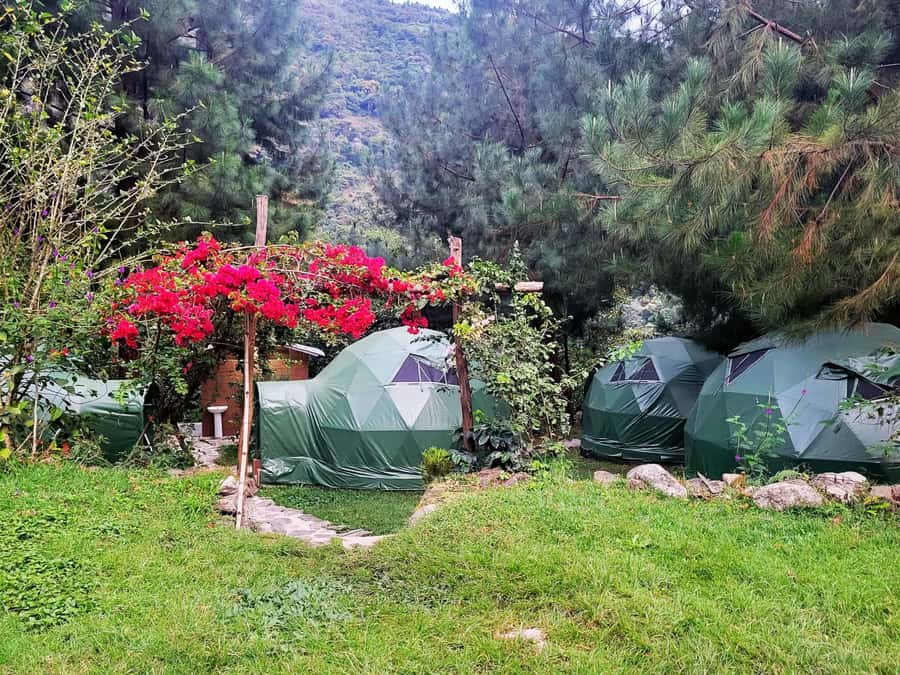
- Three different glamping styles make the nights more comfortable than a standard tent trek, with a glass-roof cabin, Sky Huts, and jungle Domes.
- Fresh meals are a major strength, with breakfast, lunch, and dinner prepared by a professional chef and vegetarian or vegan choices available.
- Llactapata adds a quieter archaeological stop, with views toward Machu Picchu before you reach the town by train.
- The low advertised price needs careful checking, since entrance fees, water, hot springs, zipline, sleeping bag rental, and transport back to Cusco cost extra.
Why choose Salkantay instead of the Inca Trail?
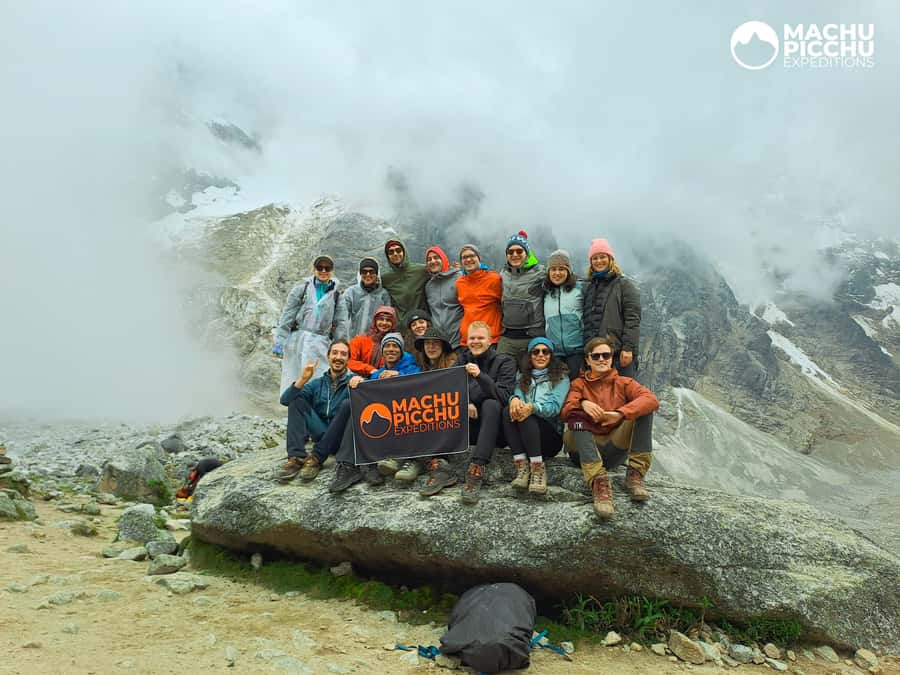
The Salkantay route is a strong choice if you want big scenery and fewer people than the classic Inca Trail. It is also less focused on a chain of Inca ruins. Instead, the route gives you high mountain passes, glacial lakes, farmland, cloud forest, hot springs, coffee, and a final approach to Machu Picchu through Llactapata.
That variety is the real appeal. On the first two days, you are in cold, open country surrounded by serious peaks. By the third day, the air gets warmer and the vegetation changes as you descend into the Santa Teresa Valley. You do not simply walk toward Machu Picchu. You move through several parts of southern Peru in one trip.
The trade-off is effort. Salkantay is remote and rugged, and the high point is higher than the altitude of Cusco. You should arrive in Peru with enough time to adjust to altitude, though the tour information does not specify an acclimatization program. This is not a casual sightseeing walk.
The small-group limit of 15 people is helpful. It gives the English or Spanish-speaking guide a better chance to keep the group together and answer questions. One important practical point: fitness levels can vary. If one half of your group walks much more slowly than the other, you may spend time waiting.
More Hiking Tours in Cusco
- Classic Inca Trail Trek 4D/3N to Machu Picchu (Group Service)
★ 5.0 · 8,653 reviews - Machu Picchu: 4-Day Inca Trail Trek with Panoramic Train Ride
★ 5.0 · 4,568 reviews - Salkantay Classic Trek 5 Days from Cusco
★ 5.0 · 4,062 reviews
Day 1: From Cusco to Humantay Lake at 4,200 meters
The morning begins very early, with hotel pickup at 4 a.m. from Cusco’s historic center. That early start helps you cover the long transfer to the trailhead, but it also means your first day begins before most people have had their coffee. You stop in Mollepata for breakfast, then continue to Challacancha.
From Challacancha, the hike climbs toward Soraypampa. After arriving at the private camp and eating lunch, you continue uphill to Humantay Lake at about 4,200 meters. The lake is the day’s showpiece, surrounded by steep mountain scenery and often framed by snow and ice.
The walk to Humantay Lake is short compared with later sections, but altitude makes every uphill step count. Take your time. A slow pace is not a weakness here, and coca tea is provided each morning at camp to help you get moving.
After returning to camp, you have dinner and time to settle into the first glamping accommodation. The glass-roof cabin is a memorable touch, especially if the night sky is clear. You get a personal pad and pillow, and electricity is available at camp for charging devices. A sleeping bag is not included, so bring one or rent it for $10 for the trek.
The first camp also gives you a preview of the food program. Meals are prepared by a professional chef, and the tour includes afternoon tea time with popcorn, cookies, chocolate, and coffee. That may sound simple, but a warm snack after a cold climb is exactly the sort of detail you appreciate on foot.
Day 2: The Salkantay Pass and the long descent
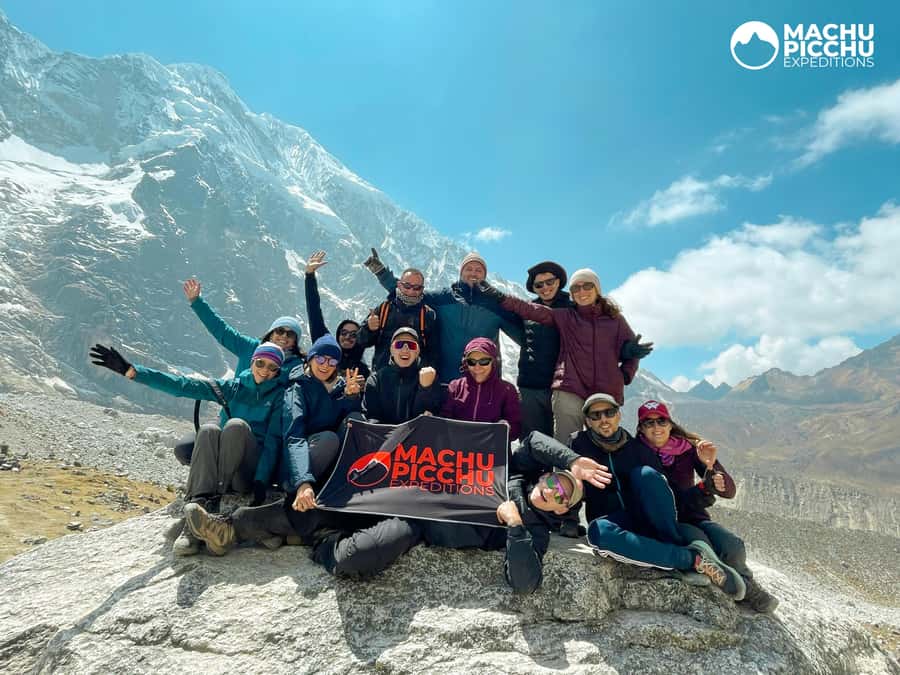
Day two is the hardest and most important hiking day. You wake with coca tea, eat breakfast, and begin the climb toward Salkantay Pass at 4,630 meters.
The route follows the Trail of the 7 Snakes, a name that gives you a fair warning about the switchbacks. The climb is strenuous, and the air is thin. You should expect this section to take patience rather than speed.
At the pass, you can see Salkantay Mountain, rising to about 6,271 meters. This is the high point of the trek, both physically and visually. The mountain scenery here feels open and immense, with very little to distract you from the peaks.
The next stage is a long descent to Collpapampa at roughly 2,950 meters. Descending is easier on your breathing, but it can be tiring on knees and thighs. Trekking poles are useful, especially on loose or uneven ground. They are not included, but you can rent a pair for $10 for the full trek.
You spend the night in Sky Huts. These are more sheltered than basic tents and give the evening a comfortable feel after a demanding day. The change in altitude is striking. You begin in cold high country and finish in a warmer zone, setting up the shift into the forest on day three.
Day 3: Coffee, hot springs, and the Santa Teresa Valley
The third morning starts at 6 a.m. with tea and breakfast. From Collpapampa, you walk toward La Playa through the Santa Teresa Valley. The scenery becomes warmer and greener as you lose altitude, and the trek begins to feel less like a high mountain crossing.
After lunch at camp, you have several choices. You can visit the Cocalmayo hot springs, relax at camp, or add the optional zipline. The hot springs cost PEN 10 for entry, with transportation costing another PEN 40. The zipline is an additional $28.
The hot springs are a sensible extra after two hard days. You should budget for them if soaking in warm water sounds appealing, but remember that the tour price does not cover either the entrance or the ride there. You will also want a swimsuit, towel, and sandals, all listed among the recommended items.
The coffee tour adds a local agricultural element to the trek. It is one of the more distinctive parts of the itinerary because it connects the scenery to the work and products of the valley. The supplied details do not specify the exact farm or tasting format, so ask your guide what is planned on your departure.
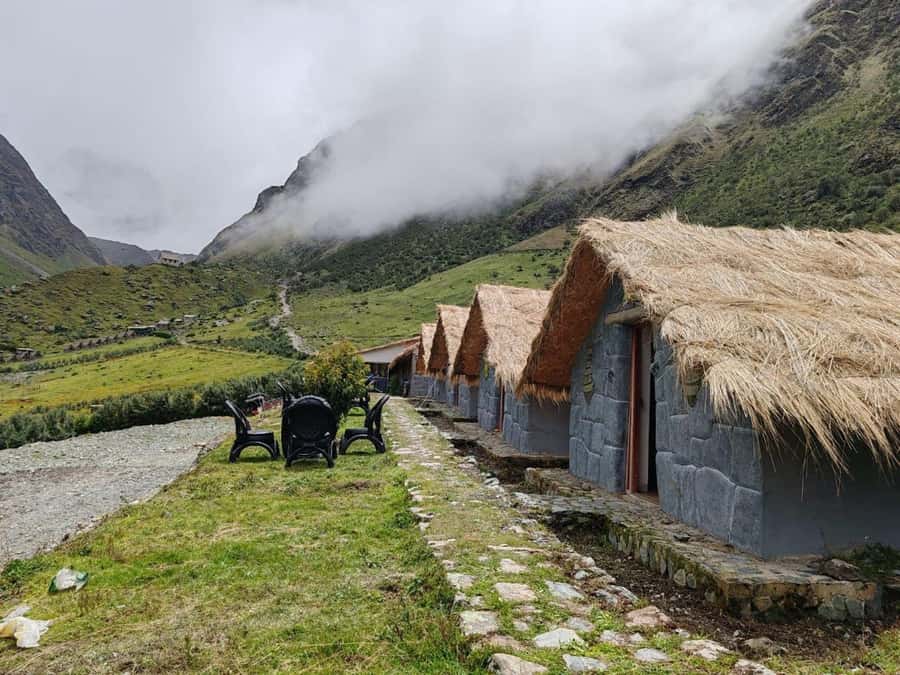
That night, you sleep in a Jungle Dome at Lucmabamba. The setting is designed to let you hear the surrounding nature, which makes this one of the more atmospheric nights. Wi-Fi is not free at the camps. It costs S/. 5 at the first camp and S/. 10 at the second and third camps, while hot showers cost PEN 10 at the second and third camps.
Longer treks from Cusco:
- 4-Day Salkantay Trek with Sky Camp Stay
★ 5.0 · 3,346 reviews - Salkantay Trek 5D/4N with Glass Cabins, Domes and Hobbit House
★ 5.0 · 2,488 reviews - 5-Day Premium Salkantay Trek
★ 5.0 · 788 reviews - Lares Valley Trek with Hot Spring 4-Day, 3-Night
★ 5.0 · 656 reviews
Day 4: Llactapata, railway tracks, and Aguas Calientes
After breakfast, you begin the final trekking day with an uphill section on an original Inca Trail route. The climb to Llactapata takes about two hours and reaches approximately 2,700 meters.
Llactapata matters because it gives you an early view toward Machu Picchu. You see the famous citadel from a different angle, before the next morning’s guided visit. This quieter viewpoint adds context to Machu Picchu rather than making the first sight of it your only archaeological moment.
You then descend for around two hours before reaching Hidroeléctrica for lunch. From there, the route continues toward Aguas Calientes. The walk beside the railway tracks is practical, not pretty. It is also the least enjoyable part of the trek for some people, and there is no included option to replace it with a train ride.
You arrive in Aguas Calientes and check into a three-star hotel. Dinner is scheduled for 7 p.m., giving you a chance to eat and prepare for the early visit to Machu Picchu. Bring realistic expectations for this hotel night. One reported problem was a loud room and no hot water, so this may not feel like a luxury reward after four days on foot.
There is also an important transport choice here. The listed return by bus from Hidroeléctrica to Cusco costs $12, but you first need to walk about two hours from Machu Picchu town back to Hidroeléctrica. A train option costs about $90 more and takes roughly 1 hour and 50 minutes to Ollantaytambo, followed by about two hours by bus to Cusco.
Day 5: Your Machu Picchu morning
The final morning brings the main event: Machu Picchu. The tour includes a 1.5-hour guided visit, followed by free time at the site.
The guided visit is limited to the stated Circuit 2B and a morning entry around 7 or 8 a.m., subject to ticket availability. Machu Picchu entry itself is not included. The listed price for Circuit 2B is $45, and tickets must be available through the official Peruvian government sales system.
You may also be able to add a mountain or trail, depending on the ticket you secure. Options listed include Huayna Picchu at 2,720 meters, Machu Picchu Mountain at 3,000 meters, the Sun Gate at 2,729 meters, or the Inca Bridge. These are not interchangeable extras, so check the ticket details before assuming you can visit all of them.
The guided portion is useful because it gives structure to the visit, while the free time lets you move at your own pace. After several days of walking, you may prefer a slower look around rather than another hard climb.
Food, sleeping, and what glamping really means
The food is one of the strongest parts of this trip. You receive five breakfasts, four lunches, four dinners, three snacks, and three afternoon tea services. Meals are cooked fresh by a professional chef, and vegetarian or vegan meals are available without an extra charge if requested ahead of time.
That matters on a route this demanding. Fresh food three times a day provides more than convenience. It helps you keep walking when the cold, altitude, and early starts begin to wear you down.
The accommodation is comfortable by trekking standards, but glamping does not mean a hotel in the mountains. You sleep in three different camp styles: a glass-roof cabin, Sky Huts, and Jungle Domes. Pads and pillows are included, electricity is available, and coca tea is served in the mornings.
Hot showers and Wi-Fi cost extra. Drinking water is also not included, so carry cash and a reusable bottle. You should bring a flashlight, power bank, warm layers, gloves, sunscreen, biodegradable insect repellent, and a sleeping bag or rental money.
Is the $35 price good value?
At $35 per person, the advertised price looks unusually low for five days of transport, guides, cooks, horses, camping, meals, and a Machu Picchu visit. The real cost is higher once you add the items not included.
At minimum, you should account for:
- Machu Picchu entry, listed at $45
- Humantay Lake entry, PEN 20
- Hot springs entry and transport, PEN 50 combined
- Sleeping bag and walking sticks, if rented, $20 total
- Drinking water
- Return transport to Cusco
- Zipline, if chosen, $28
- Final lunch
The bus return is the cheaper choice, but it requires the two-hour walk back to Hidroeléctrica. The train is more comfortable and much more expensive. Before paying, ask for a clear written breakdown of the 5-day and 4-day versions, since both durations are advertised but the detailed schedule describes five days and four nights.
The value is strongest if you want meals, a guide, horse support, and unusual accommodation bundled together. It is weaker if you expect all transport, entrance tickets, hot showers, and comfortable hotel service to be covered.
Who should book this trek?
I would recommend it to fit hikers who want a demanding route with a good range of scenery. It suits you if Humantay Lake, Salkantay Pass, coffee, hot springs, and Machu Picchu sound better than spending the whole trip on a more structured Inca Trail route.
It also works well if you value fresh food and a small group. Guides such as Ruben, Roger, Reynaldo, Tupac, and Nidia have been praised for being friendly, helpful, and attentive. Guide quality can vary by departure, but the staff support is clearly an important part of the experience.
I would not choose it if you have heart, respiratory, back, or mobility problems. It is not suitable for pregnant people, wheelchair users, people with epilepsy, children under 18, or people over 70 according to the tour’s restrictions.
The route is also a poor fit if you dislike basic camp facilities, early mornings, long descents, or extra charges. The railway walk on day four is not optional in the stated plan, and the hotel in Aguas Calientes may be noisy.
FAQ
How long is the Salkantay Trek to Machu Picchu?
The detailed route takes five days and four nights. A 4-day, 3-night version is also offered, so confirm which schedule and accommodation plan applies before booking.
Is Machu Picchu entry included?
No. The Machu Picchu ticket is separate. Circuit 2B is listed at $45, subject to availability through the official Peruvian government ticket system.
What luggage can the horses carry?
You receive a duffle bag for up to 6 kilos of personal belongings. Horses carry that bag and other required equipment during the trek.
Are meals included?
Yes. The five-day plan includes five breakfasts, four lunches, four dinners, three snacks, and three afternoon tea services. Vegetarian and vegan meals are available without an extra charge if requested.
Do I need to bring a sleeping bag?
A sleeping bag is not included. You can bring your own or rent one for $10 for the full trek. Walking sticks are also available to rent for $10.
What does the return to Cusco cost?
A bus from Hidroeléctrica to Cusco costs $12, but you first walk about two hours from Machu Picchu town to Hidroeléctrica. A return by train and bus costs about $90 more.
Should you book the Salkantay glamping trek?
Book it if you want dramatic mountain scenery, strong meals, and varied camps in one route to Machu Picchu. The combination of Humantay Lake, Salkantay Pass, Cocalmayo hot springs, coffee country, Llactapata, and the citadel gives you a fuller trip than a simple point-to-point hike.
Skip it if you want an easy holiday or a fully all-inclusive price. Check the exact itinerary, ask what the $35 rate covers, budget for the Machu Picchu ticket and return transport, and be ready for a hard pass day plus an awkward railway walk. With those details clear, this is a rewarding and adventurous way to reach Machu Picchu.
More Hiking Days from Cusco
- Rainbow Mountain Full Day Trek
★ 5.0 · 1,469 reviews - Rainbow Mountain Day Trip from Cusco: Vinicunca Hiking Tour
★ 4.5 · 737 reviews - Inca Trail 4-Day 3-Night Trek to Machu Picchu with Expert Guides
★ 5.0 · 733 reviews - Humantay Lake Full Day Trek from Cusco with Lunch
★ 5.0 · 726 reviews
Other Ways to Reach Machu Picchu
- Short Inca Trail to Machu Picchu 2D/1N
★ 5.0 · 3,007 reviews - 2-Day Inca Trail to Machu Picchu with Panoramic Train
★ 5.0 · 1,876 reviews - From Cusco: Full-Day Group Tour of Machu Picchu
★ 4.7 · 1,767 reviews - Machu Picchu Day Trip from Cusco
★ 4.5 · 1,644 reviews
Added recently around Cusco
- Guided tour of the mountain of colors in Cusco★ 5.0 · 11 reviews
- 2-Day Private Short Inca Trail to Machu Picchu★ 5.0 · 15 reviews
- City Tour Cusco – Group★ 5.0 · 4 reviews
- Tour Sacred Valley with Maras and Moray★ 5.0 · 15 reviews
- San Pedro Market Tour with Peruvian Cooking Class★ 5.0 · 31 reviews
- Walking Culinary Experience★ 5.0 · 41 reviews
- City Tour in Cusco★ 4.5 · 10 reviews
- One Day Tour to Humantay Lagoon★ 5.0 · 8 reviews
Machu Picchu Tours, compared.
Classic Inca Trail Trek 4D/3N to Machu Picchu (Group Service)
Read our review →
Machu Picchu: 4-Day Inca Trail Trek with Panoramic Train Ride
Read our review →
2-Day Inca Trail to Machu Picchu with Panoramic Train
Read our review →
2-Day Tour: Sacred Valley and Machu Picchu by Train
Read our review →
Machu Picchu: Full-Day Tour from Cusco with Optional Lunch
Read our review →Browse the lists this tour appears in