
Reviewed · AREQUIPA TOURS
Sillar Half Day Route in Arequipa
White stone tells Arequipa’s story. This affordable half-day outing takes you from the city center to the volcanic quarries that supplied the famous White City, then into the narrow Culebrillas canyon. I like the dramatic volcano viewpoint and the chance to see ashlar carving traditions still practiced by hand. I also like the mix of geology, local craft, carvings, and ancient symbols for only $17.
The main caution is time. Pickup delays can eat into the quarry visit, and the canyon walk is short. You may spend more time getting people aboard than expected, then feel hurried among the sculptures and faint petroglyphs.
In This Review
- Key points to know before you book
- Why Arequipa’s white stone matters
- The volcano viewpoint at the start
- Entering the Canteras de Sillar
- What you may and may not see being made
- Walking through Culebrillas Canyon
- The pace, group size, and vehicle
- Is $17 a good price?
- Who will enjoy this route most?
- Practical ways to get more from the visit
- Should you book the Sillar Half Day Route?
- FAQ
- How long does the Sillar Half Day Route last?
- Where does the tour begin and end?
- What sites are included?
- Is admission included?
- What is included in the $17 price?
- How many people can join the tour?
- Can I cancel for a full refund?
Key points to know before you book
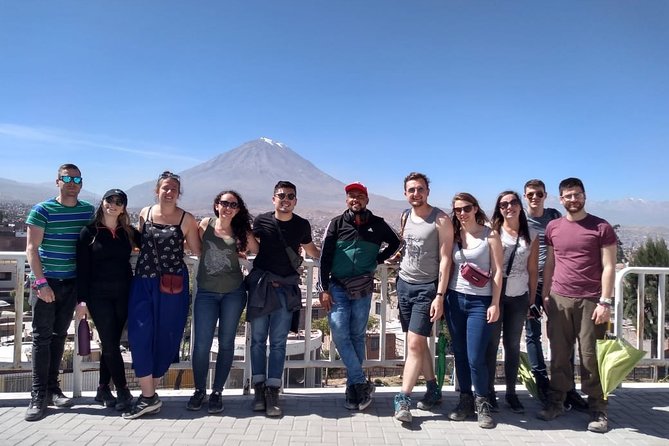
- Three volcanoes from one viewpoint: The first stop gives you wide views toward Misti, Chachani, and Pichu Pichu, with about 20 minutes for photographs.
- Sillar is the stone of Arequipa: At the quarry, you see huge white volcanic cliffs and carved figures, while the guide explains how the material shaped the city.
- Hands-on quarry traditions: The tour includes an experiential look at the old method of extracting and working ashlar, though the exact cutting process may not receive much time.
- Culebrillas adds ancient symbols: A 20-minute walk through the canyon leads to petroglyphs, pink walls, and apachetas, small stone piles with cultural meaning.
- Expect a compact outing: The advertised duration is about four to five hours, but transport time and multiple pickups can reduce time at the main sites.
- Closed shoes matter: The canyon exit is steep and uneven, and the quarry ground is not suited to delicate footwear.
Why Arequipa’s white stone matters
Arequipa is often called the White City because so many of its historic buildings use sillar, a pale volcanic stone formed from ash and other material released by eruptions. The stone gives the center a bright, almost glowing appearance, especially around the Plaza de Armas and its churches.
This tour takes you beyond the polished facades. You see where the stone came from, how people shaped it, and how the quarry became part of Arequipa’s identity. That makes the outing more useful than a simple photo stop. Afterward, the carved doorways and walls in the city center make more sense.
The tour begins near Templo de San Agustín on Calle Sucre, close to the main square. It returns to the same area, ending about one block from the Plaza de Armas. That central location is handy if you want to continue sightseeing or find lunch immediately afterward.
The morning departure is scheduled for 9:00 AM, with the full outing taking roughly four to five hours. There are also listed afternoon operating hours from 2:00 PM to 6:00 PM. Since transport and pickup timing can affect the length of each stop, I would choose the morning if you want the rest of the day free.
A few more Arequipa trips worth lining up side by side
- 2 day 1 night trek / Colca Canyon
★ 5.0 · 1,069 reviews - From Arequipa: Colca Canyon Full-Day Guided Tour with Meals
★ 4.5 · 982 reviews - Tour to the Salinas Lagoon and National Reserve in Arequipa
★ 4.5 · 548 reviews
The volcano viewpoint at the start
The first stop is a viewpoint where you can see three volcanoes surrounding Arequipa: Misti, Chachani, and Pichu Pichu. The stop lasts about 20 minutes, and there is no admission charge.
This is a good opening because it gives you a sense of the city’s setting before you focus on one small part of it. Misti is the most familiar name, but the three peaks together explain why volcanic stone is central to Arequipa. You are not simply looking at mountains. You are seeing the forces that helped shape the building material beneath the city’s old churches and homes.
You will want to have your camera ready before the vehicle stops. Twenty minutes is enough for a few panoramic photographs, but not for a long pause. The viewpoint is best treated as a brief orientation stop rather than a major sightseeing site.
Visibility will naturally affect the view, and the supplied information does not promise clear conditions. Still, the stop earns its place because it connects the city’s architecture with its volcanic surroundings in a quick, easy way.
Entering the Canteras de Sillar
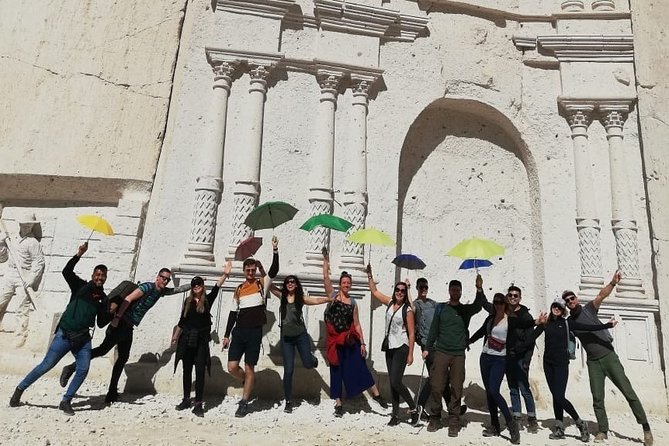
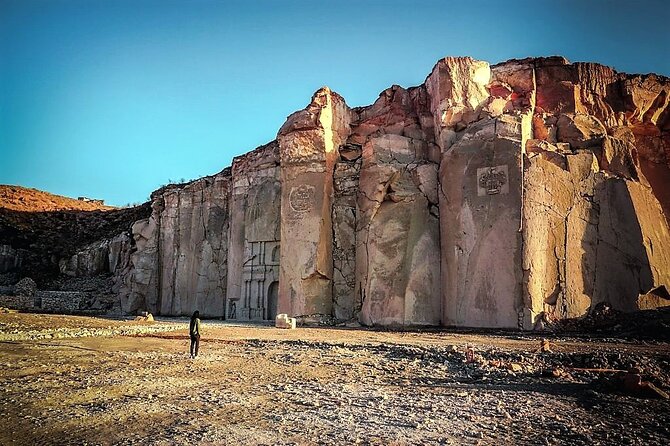
The quarry is the heart of the experience. This is where you see the immense white cliffs cut and shaped by human hands. The stone faces are not smooth, untouched rock. They show the marks of extraction, labor, and continued use.
You receive an explanation of sillar construction and then have time for photographs and an experiential look at ashlar extraction. The old technique has continued from the colonial period to the present, which gives the stop real substance. You are seeing a living craft rather than only a historical display.
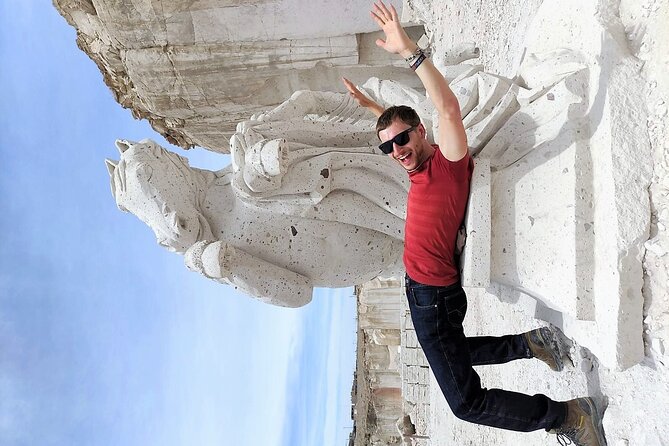
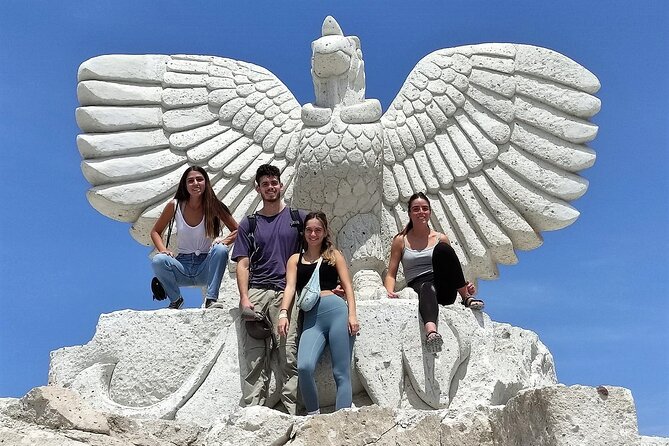
The quarry also contains many sillar sculptures. These provide fun photo opportunities, but they can pull your attention away from the larger lesson. I would first listen to the guide’s explanation, then use the remaining time for pictures. If you start with photos, the visit may feel like a quick sculpture garden instead of a working stone site.
The planned quarry visit is listed as one hour, but the actual time can feel closer to 45 minutes if the group spends a long period collecting passengers around the main square. That is the most important timing issue on this outing. Pickup points may be only a block or two apart, yet several small delays can add up.
One section with additional sculptures may require a small extra payment. The base price does not appear to include every possible area, so keep a little flexibility if you want to see more than the standard route. Toilets are mainly near the beginning of the quarry visit, another reason to use them before walking farther into the site.
What you may and may not see being made
The quarry presentation is strong on setting, stone, and finished carvings. It may be less satisfying if your main goal is to watch workers cut a fresh block directly from the cliff and shape it from start to finish.
That distinction matters. The outing explains the tradition and lets you interact with the quarry environment, but the schedule may not provide a full working demonstration. If you are especially interested in masonry technique, ask the guide early in the visit what part of the extraction process you will see.
The white cliffs and carved pieces still make this the most rewarding stop for many people. You get a clear idea of the scale of the quarry, and you can connect the rough stone to the refined arches and walls found back in Arequipa.
I would also pay attention to the stone color. The route later describes Culebrillas as having pink walls, while the main quarry is associated with the pale ashlar used in the city. That change gives the two stops different moods and helps keep the half-day route from feeling repetitive.
Also leaving from Arequipa, and nothing like the above:
- From Arequipa: Sillar Route Trek
★ 4.2 · 461 reviews - Colca Full Day Tour
★ 4.5 · 429 reviews - Rafting Arequipa – Chili River Canoeing – Cusipata Rafting Arequipa
★ 5.0 · 332 reviews - Arequipa: Chili River White Water Rafting with Hotel Pickup
★ 4.8 · 329 reviews
Walking through Culebrillas Canyon
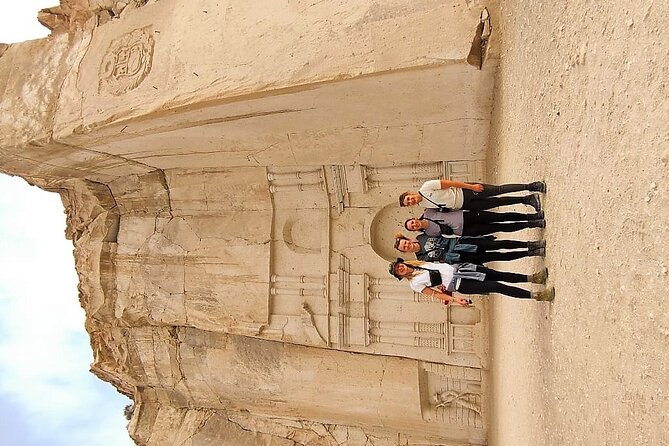
After the main quarry, you board the vehicle again for Culebrillas. Here, the focus shifts from building stone to ancient marks and sacred symbolism.
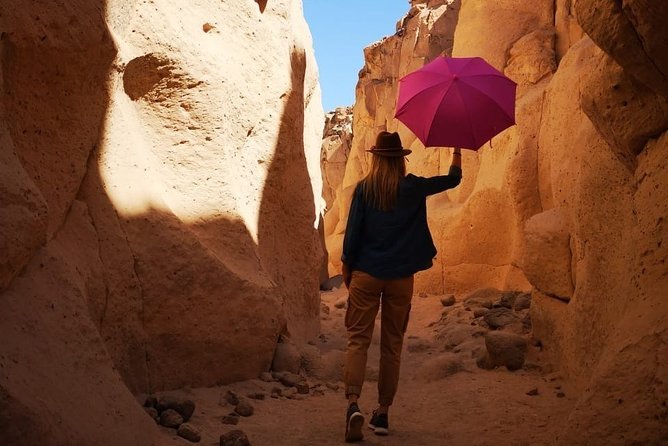
The walk inside the canyon lasts about 20 minutes. Pink walls close around the path, creating a narrow setting that feels very different from the open quarry. You will see petroglyphs linked to the life and beliefs of ancient people, though the markings are faint and can be difficult to approach when the area is crowded.
This is the least predictable part of the experience. The canyon itself is unusual and atmospheric, but the petroglyphs may not be easy to make out. The route can also slow down when many groups reach the same final viewing area. I would not book this tour expecting a long archaeological walk. Think of Culebrillas as a short cultural stop with a distinctive setting.
The walk out is the harder section. The slope is steep and uneven, so closed-toe shoes are a sensible choice. If you have trouble climbing steep paths, this portion may be uncomfortable. The tour information says most people can participate, but that broad statement does not remove the need to judge your own footing and stamina.
You also learn about apachetas, stone piles with symbolic meaning. The tour includes the chance to build one yourself. It is a small activity, but it gives the stop a physical connection to local custom. You are not only looking at a symbol behind a barrier. You are taking part in a simple act the guide can explain in context.
The pace, group size, and vehicle
The outing uses an air-conditioned vehicle and allows up to 18 people. That is a manageable group size for a short regional tour, although 18 people can still create delays at narrow paths and popular photo points.
The vehicle is especially useful after walking in the quarry and canyon. The route is not designed as one long hike, so you get breaks between sites. At the same time, the comfort of the ride does not guarantee a tight schedule. The biggest risk is not the drive between major sites. It is the time spent gathering people near the city center.
For that reason, I would arrive at Templo de San Agustín a little early. The listed meeting point is specific: JF26+VP3, Calle Sucre, Arequipa 04001. The same place is used for the return, which makes planning simple.
The tour is offered Monday through Sunday in the stated operating period. Confirmation is received when you book, and free cancellation is available if you cancel at least 24 hours before the start time. Changes or cancellations made inside that 24-hour window are not accepted for a refund.
Is $17 a good price?
At $17 per person, this is a low-cost way to reach sites outside Arequipa without arranging separate transport. The price includes the air-conditioned vehicle, a professional guide, and admission to the quarry and Culebrillas. The volcano viewpoint is free.
The value is best if you want a broad introduction rather than a long, specialized visit. In one morning, you see the volcanic setting, the source of Arequipa’s building stone, carved sillar pieces, a canyon, petroglyphs, and apachetas. Replicating that route independently could involve finding transport to two separate sites and working out entrance arrangements.
The tradeoff is limited time. A cheaper tour is not automatically a better deal if you want to study every carving or walk farther into the canyon. Here, your money buys access and convenience, but the schedule may leave you wishing for another 30 minutes at the quarry.
Soda and snacks are not included. Bring water and a small snack if you need one between stops. The supplied details do not list a restaurant or meal break, so do not plan on lunch being part of the outing.
Who will enjoy this route most?
I would recommend it to you if you are staying in central Arequipa and want to understand the city’s volcanic architecture from its source. It also suits anyone who likes short walks, unusual geology, craft traditions, and simple cultural activities.
It works well for visitors with a half-day free who do not want to commit to a full-day trip from the city. The return near the Plaza de Armas lets you continue with museums, churches, or a meal.
You may want a different experience if your priority is an in-depth quarry demonstration. The schedule can move quickly, and the stone-cutting process may not be shown in the detail you hope for. The same applies if you want a serious canyon hike. Culebrillas offers only about 20 minutes of walking, followed by a steep exit.
I would also think carefully about footwear and mobility. The tour is not presented as restricted, and most people can participate, but the uneven quarry ground and steep canyon slope require steady walking.
Practical ways to get more from the visit
Listen closely during the first explanation about Arequipa’s volcanic construction. That context will help you notice the difference between raw quarry walls, decorative sculptures, and the finished sillar buildings in the city.
At the quarry, photograph the cliff faces as well as the sculptures. The figures are entertaining, but the cut walls reveal the scale of the work more clearly. If there is an optional sculpture section, ask about its price before entering.
Use the facilities near the start of the quarry. Keep your shoes closed at the toes, and avoid footwear that slips on uneven surfaces. I would also carry water because drinks are not included.
At Culebrillas, let the guide point out the petroglyphs before you search for them yourself. The markings are faint, and a quick glance can make you miss them. The narrow canyon can also become crowded, so patience helps.
Finally, protect your time. If you have a fixed afternoon reservation, allow a cushion after the planned return. The official schedule suggests four to five hours, but pickup delays can make the outing feel longer or reduce time at the stops.
Should you book the Sillar Half Day Route?
Book it if you want an inexpensive, compact introduction to the stone behind Arequipa’s identity. The volcano views and main quarry visit are the strongest reasons to go, and Culebrillas adds a different setting with petroglyphs and apachetas.
Skip it if you need a slow quarry visit, a detailed live demonstration, or a substantial canyon hike. For $17, the route offers good access and plenty of variety, but you must accept a brisk pace and the possibility of losing time during pickups.
For most people with one free morning in Arequipa, I think it is a sensible choice. Set your expectations correctly, wear sturdy closed shoes, and treat the quarry as the main event. That is where the route best explains why this city looks the way it does.
FAQ
How long does the Sillar Half Day Route last?
The experience lasts approximately four to five hours. The listed morning schedule runs from 9:00 AM to 1:00 PM, and afternoon hours are also listed from 2:00 PM to 6:00 PM.
Where does the tour begin and end?
It begins at Templo de San Agustín, JF26+VP3, Calle Sucre, Arequipa 04001, Peru. It returns to the same location, about one block from the Plaza de Armas.
What sites are included?
The route includes a volcano viewpoint, the Canteras de Sillar, and Culebrillas Canyon. At the viewpoint, you can see Misti, Chachani, and Pichu Pichu.
Is admission included?
Admission to the Sillar quarries and Culebrillas is included. The volcano viewpoint has no admission charge.
What is included in the $17 price?
The price includes an air-conditioned vehicle and a professional guide. Soda and snacks are not included.
How many people can join the tour?
The maximum group size is 18 people.
Can I cancel for a full refund?
Yes. You can cancel at least 24 hours before the experience start time for a full refund. Cancellations or changes made less than 24 hours before the start time are not accepted for a refund.
Added recently around Arequipa
- gazebos cannon of the coca★ 5.0 · 28 reviews
- Sillar Route★ 5.0 · 4 reviews
- Salinas Lagoon + Mini Volcano DE Lojen★ 5.0 · 9 reviews
- Full Day Tour To The Salt Lake Salinas in Arequipa★ 4.5 · 34 reviews
- 3-Day Colca Canyon trek with Professional Guide★ 5.0 · 40 reviews
- Trekking, Waterfalls and Thermal Baths★ 4.5 · 47 reviews
- Walking Tour Arequipa Including Santa Catalina Monastery★ 4.0 · 8 reviews
- Walking City tour including the Monastery of Santa Catalina★ 5.0 · 6 reviews
Arequipa Tours, compared.

Tour to the Salinas Lagoon and National Reserve in Arequipa
Read our review →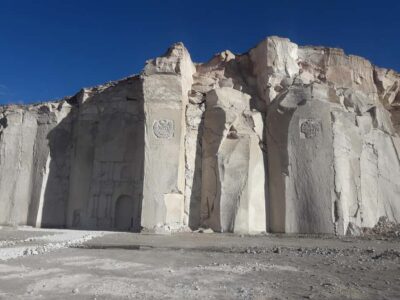
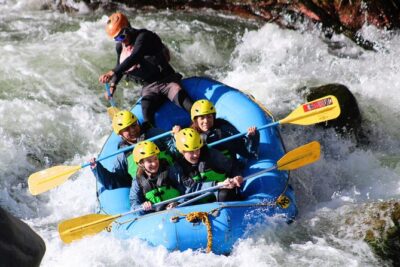
Rafting Arequipa – Chili River Canoeing – Cusipata Rafting Arequipa
Read our review →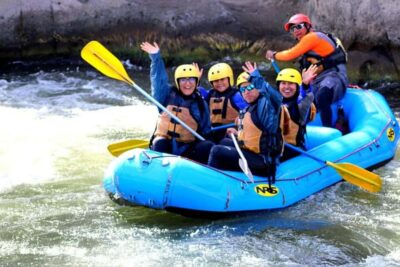
Chili River White Water Rafting with Hotel Pickup
Read our review →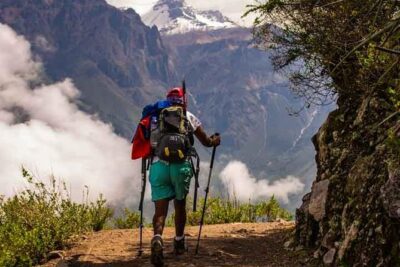
Browse the lists this tour appears in