
Reviewed · AREQUIPA TOURS
Sillar Route in Arequipa and viewpoint of the Volcanoes
Arequipa is built from white volcanic stone. This short outing shows you where it comes from, with a small group of up to 15 and round-trip transport from the city. I especially like the carved canyon and the chance to see local stoneworkers at work. The main caution is that pickup and language arrangements can be uneven.
For $11 per person, this is an easy way to fill three or four hours in Arequipa. You get a guide, transport, dramatic stone formations, and views toward the surrounding volcanoes. Bring cash, sunscreen, sturdy shoes, and insect repellent, since the entrance fee may be higher than expected and flies can be a nuisance near the canyon.
In This Review
- Key points to know before you go
- Why Arequipa’s white stone matters
- Starting from central Arequipa
- Añashuayco quarry: stone, workers, and murals
- The second quarry and the first look at the volcanic stone
- Culebrillas Canyon: the best walk on the route
- Volcano views and the return to the city
- Guides, language, and the quality of explanations
- Is $11 a good value?
- Practical preparation for a better outing
- Should you book the Sillar Route?
- FAQ
- Where does the tour start?
- Where does the tour end?
- How long does the Sillar Route tour last?
- Is transportation included?
- How much does the tour cost?
- Is the entrance fee included?
- Can I choose a morning or afternoon departure?
- How large is the tour group?
- Can most people participate?
- What is the cancellation policy?
Key points to know before you go
- The white stone has a story: Sillar is the volcanic stone used in many buildings around Arequipa’s historic center.
- Culebrillas Canyon is the highlight: The narrow stone route, petroglyphs, and pink ashlar formations provide the best walk and photo opportunities.
- It is a short half-day outing: The tour lasts about three to four hours, with morning and afternoon departures.
- The price is hard to beat: At $11, it offers useful sightseeing for very little money, though admission is extra.
- Pack for dust, sun, and insects: Comfortable walking shoes, a mask, sunscreen, and bug spray can make a big difference.
- Check the language carefully: Some departures are multilingual, so English explanations may be shorter than the Spanish commentary.
Why Arequipa’s white stone matters
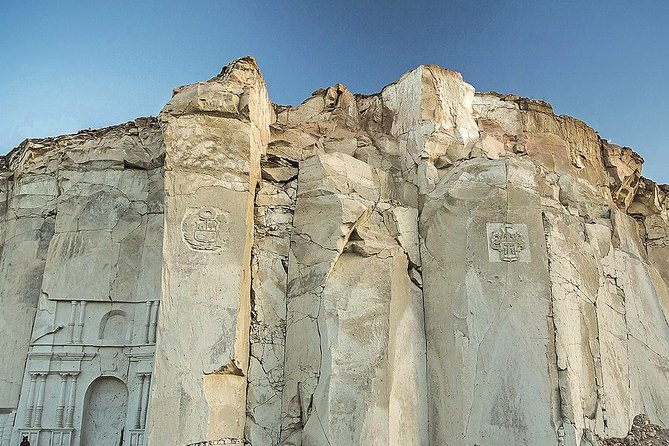
Arequipa’s historic center is famous for its pale buildings, and the Sillar Route explains the material behind that look. Sillar is a light volcanic stone formed from ash and other volcanic material. Local builders have used it for generations in churches, mansions, walls, and other important structures.
The tour gives you a useful change of perspective. Instead of only admiring the white façades around the Plaza de Armas, you see the rough quarries where the stone is cut and shaped. At the end, you return toward the city center, where the great ashlar buildings help connect the raw material to Arequipa’s architecture.
I like this kind of outing because it is not only a scenic drive. It answers a simple question that many visitors have while walking around Arequipa: Why is this city so white?
The route also provides views toward the nearby volcanoes. The exact quality of the view depends on clouds, light, and the departure time, but the open setting gives you a broader sense of Arequipa’s volcanic surroundings.
A few more Arequipa trips worth lining up side by side
- 2 day 1 night trek / Colca Canyon
★ 5.0 · 1,069 reviews - From Arequipa: Colca Canyon Full-Day Guided Tour with Meals
★ 4.5 · 982 reviews - Tour to the Salinas Lagoon and National Reserve in Arequipa
★ 4.5 · 548 reviews
Starting from central Arequipa
The meeting point is on C. San Agustín 102, close to the center. The tour ends near Templo de San Agustín on C. Sucre, two or three blocks from the Plaza de Armas. Vehicles do not enter the main plaza, so plan on a brief walk at the end.
Round-trip tourist transport is included. The vans have been described as spacious and in good condition, with air conditioning on at least some departures. That said, comfort can vary. One departure felt hot when the windows were closed, while another had too many flies after doors and windows were left open during a walk.
Pickup is the part I would watch most closely. Some departures have been smooth, while others involved long waits, late confirmation, or confusion about where to stand. Arrive early at the stated meeting point and keep your phone available. If hotel pickup is offered for your departure, confirm the time and location clearly rather than relying on a vague soon.
The group limit of 15 is a good feature. It is not a private tour, but it is small enough for a guide to explain the stone-cutting process and help people along the route without handling a huge crowd.
Añashuayco quarry: stone, workers, and murals
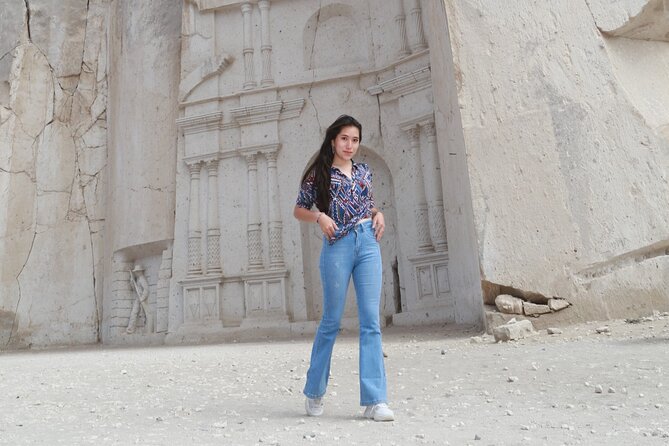
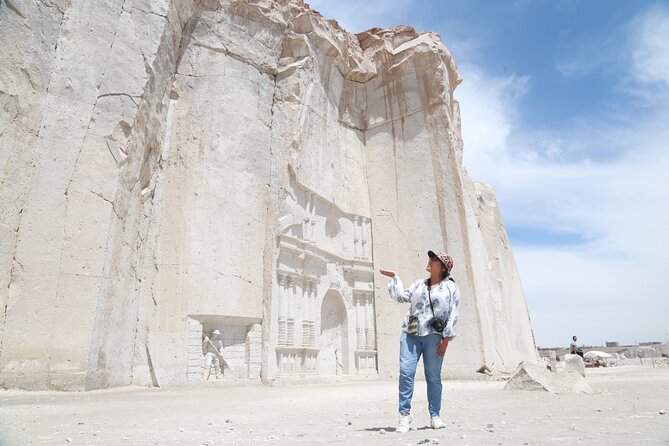
The first visit is to the Añashuayco sillar quarries. You can see workers carving ashlar by hand and learn about the routine involved in cutting the volcanic blocks from the quarry face.
This is where the tour gains its human side. The stone is not simply a natural curiosity. It represents skilled, physical work that has shaped the appearance of Arequipa for centuries. Watching the artisans gives the white city a more practical meaning.
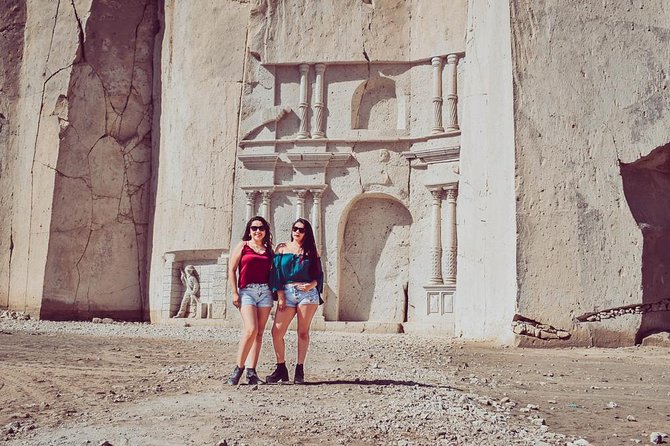
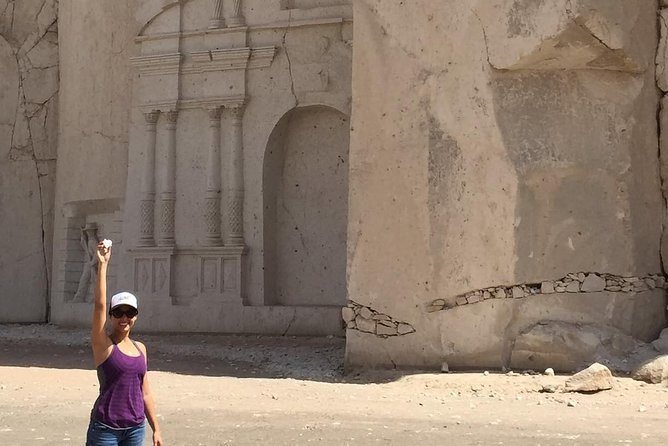
Murals are also carved into the stone walls. These provide colorful contrast against the pale quarry and make good photographs. The site includes a small pink ashlar cannon formed naturally in the rock, an unusual detail that guides point out during the visit.
Allow about 50 minutes here. The admission ticket is not included, and the advertised entrance cost is $3. Carry small cash. At least one departure involved a higher-than-expected entrance charge, and another description indicates that money may be requested at more than one stop. The exact fee can vary, so it is wise to bring a little extra rather than arrive with only the advertised amount.
The quarry is an active work area, not a polished museum. Dust, uneven ground, and direct sun are part of the setting. I would wear shoes with a firm sole and avoid clothing that you do not want covered in fine pale dust.
The second quarry and the first look at the volcanic stone
The next stop lasts about 40 minutes and takes you farther into the protected quarry area. Here, the focus is the origin of sillar itself, along with the unusual shapes and sculptures cut into the stone.
This stop may feel less exciting if you expect a large archaeological site or a long guided walk. Some of the scenery is essentially a working mine, and parts of the area can look stark. The strongest appeal is the contrast between the pale quarry walls, the dry surroundings, and the carved figures.
Several people have especially enjoyed the statues and the chance to take photographs inside the sillar formations. The stone can create striking frames for portraits, but remember that the best photo spots may involve rough ground and dust.
You may also see fewer workers in some sections. Quarry work carries serious dust exposure, and only a limited number of people continue the traditional labor in certain areas. That adds a sobering note to the visit. The route is attractive, but it also shows that this is a working extraction site, not simply a natural monument prepared for sightseeing.
Also leaving from Arequipa, and nothing like the above:
- From Arequipa: Sillar Route Trek
★ 4.2 · 461 reviews - Colca Full Day Tour
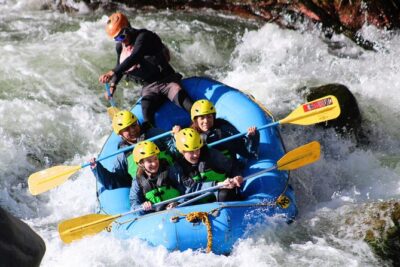
★ 4.5 · 429 reviews - Rafting Arequipa – Chili River Canoeing – Cusipata Rafting Arequipa
★ 5.0 · 332 reviews - Arequipa: Chili River White Water Rafting with Hotel Pickup
★ 4.8 · 329 reviews
Culebrillas Canyon: the best walk on the route
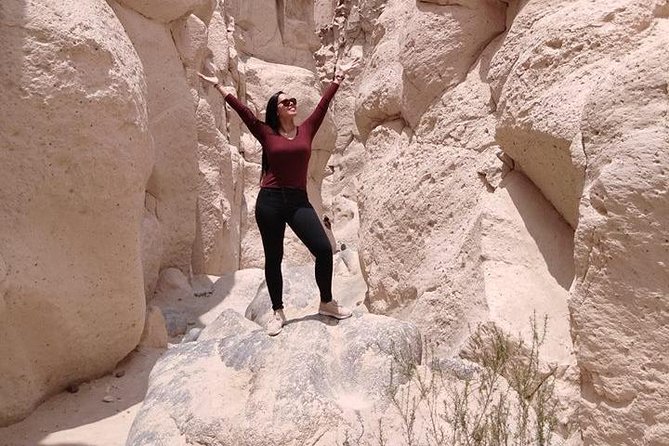
The most rewarding section is the sillar route through the Culebrillas area, often described as a small pink ashlar canyon. The route leads through narrow volcanic-stone formations and includes petroglyphs at the end of an easy walk of roughly 600 meters.
This is the place I would most want to see. The walk is short enough for a broad range of participants, but it gives you time to leave the van and experience the stone at ground level. The canyon’s walls, carved figures, and dry surroundings create the most memorable photographs of the outing.
The stone carvings are another strong point. Some are natural formations, while others show human work and local interpretation. Guides can add stories about the figures and the role of sillar in Arequipa’s buildings.
The route is not perfectly smooth. Wear sports shoes or hiking shoes, and consider a dust mask. Dust can be heavy, especially if several people are walking close together. Sunscreen is also important, since shade may be limited.
Insect repellent deserves a special mention. Flies have been a problem during some visits, particularly when the van doors or windows stay open. Bring your own spray or lotion because the operator may not have any available. This is a small item, but it can save your mood.
Volcano views and the return to the city
The open route provides views toward Arequipa’s volcanoes while you travel between sites. The scenery helps explain the city’s setting, with volcanic material underfoot and volcanoes visible in the distance when conditions are clear.
The tour description presents the outing as a route with a viewpoint of the volcanoes, but the main stops are the quarries and canyon. I would book it primarily for the sillar formations and petroglyphs, treating the volcano views as an added benefit rather than the sole reason to go.
On the return to Arequipa, the guide can help you connect the quarry to the city’s historic architecture. Seeing the white stone in its natural and worked forms makes the churches and colonial buildings around the center more interesting afterward.
The tour ends near Templo de San Agustín, not directly on the Plaza de Armas. That is convenient for continuing a walking day in the center. You can easily combine it with more sightseeing afterward, provided you remember that the exact end point is a short walk from the plaza.
Guides, language, and the quality of explanations
The guide can make a real difference on this trip. Strong departures have included guides such as Betsey, Alonso, Christina, and José José, with warm explanations, useful stories, and good help during the walks. Alonso has been praised for explaining Arequipa and the nearby volcanoes in both Spanish and English.
The weak point is language consistency. Some departures combine Spanish and English, and if most of the group speaks Spanish, the English explanation may be much shorter. One English-language booking became a mostly Spanish outing, with limited information in English. Another guide’s English was described as difficult to follow.
If you need detailed English commentary, confirm the language before booking. The operator has acknowledged that some services are multilingual. This does not make the tour unusable, but it changes its value. If you understand Spanish, you may receive fuller explanations. If you do not, the scenery and stonework still make the trip worthwhile, but you should not assume every departure will feel like a dedicated English tour.
Guide enthusiasm also varies. The best guides turn a short outing into a good history and culture lesson. Less engaged guides may simply move the group from one stop to the next. That is one reason I would keep expectations realistic at this price.
Is $11 a good value?
Yes, for most people, $11 is excellent value. You receive transportation, a professional guide, several quarry stops, the Culebrillas walk, and a look at the volcanic setting outside Arequipa. The short duration also makes it easy to fit around other plans.
The low price comes with tradeoffs. Admission is extra, and the fee may not always match the advertised $3. Pickup can be disorganized, and multilingual guiding may limit the amount of English information. You are paying for a budget group outing, not a private vehicle and specialized historian.
I would compare it with the cost of arranging transport to the quarries alone. At this price, the tour removes much of the planning and gives you a guide to explain what you are seeing. Even if one stop feels modest, the canyon and transport make the package sensible.
The overall score of 4.2 from 71 ratings reflects that balance. The most praised features are the scenery, photo opportunities, friendly guides, simple organization on good days, and very low price. The main complaints concern missed pickups, delayed contact, hot or fly-filled vehicles, entrance fees, and uneven English commentary.
Practical preparation for a better outing
Pack light, but bring the things that matter:
- Sturdy walking shoes: The canyon path and quarry surfaces can be uneven.
- Dust protection: A mask or bandana helps during the walk and near stone-cutting areas.
- Sunscreen and layers: Arequipa’s weather can shift from warm and bright to cloudy, windy, and cool.
- Insect repellent: Flies have caused problems near the canyon.
- Extra cash: Admission is not included, and the actual charge may differ from the advertised amount.
- Phone access: Pickup communication has not always been prompt or clear.
Most people can participate, but this is not a fully polished indoor attraction. You will walk on rough ground, spend time in an exposed quarry, and deal with dust. Families can enjoy it, especially because the route is short, but young children should be watched carefully around uneven stone.
The morning or afternoon choice is useful. Pick the time that fits your wider Arequipa plans, then consider light and weather. Clear conditions will help with volcano views, while a cooler departure may make walking more pleasant.
Should you book the Sillar Route?
I would book this tour if you have a few spare hours in Arequipa and want a low-cost outing with a genuine connection to the city. The Culebrillas Canyon, petroglyphs, carved stone, and views toward the volcanoes provide enough interest to justify the short trip.
I would not book it as your only major activity outside the city. Some quarry sections are basic, and the route can feel underwhelming if you expect a grand natural park. I would also hesitate if you need guaranteed one-language guiding, perfectly timed pickup, or a quiet, polished vehicle.
For the best chance of enjoying it, confirm the meeting details, ask about the language of your departure, bring extra cash, and pack for dust and insects. If you approach it as a practical introduction to Arequipa’s volcanic stone rather than a full-day adventure, the $11 price is easy to defend.
FAQ
Where does the tour start?
The meeting point is C. San Agustín 102, Arequipa 04000, Peru.
Where does the tour end?
The tour ends at Templo de San Agustín on C. Sucre, two or three blocks from the Plaza de Armas. Vehicles do not enter the main plaza.
How long does the Sillar Route tour last?
The tour lasts approximately three to four hours.
Is transportation included?
Yes. Tourist transportation for the round trip and a professional guide are included.
How much does the tour cost?
The listed price is $11 per person.
Is the entrance fee included?
No. The entrance ticket is not included. The stated entrance cost is $3, but you should bring extra cash because the amount may vary.
Can I choose a morning or afternoon departure?
Yes. The tour offers a choice between a morning and an afternoon start time.
How large is the tour group?
The group has a maximum of 15 people.
Can most people participate?
Yes. Most people can participate, though you should expect walking on uneven ground and dusty quarry surfaces. Comfortable walking shoes are recommended.
What is the cancellation policy?
You can cancel at least 24 hours before the local start time for a full refund. Cancellations or changes made less than 24 hours before departure are not refunded or accepted. If poor weather causes the operator to cancel, you will be offered another date or a full refund.
Added recently around Arequipa
- gazebos cannon of the coca★ 5.0 · 28 reviews
- Sillar Route★ 5.0 · 4 reviews
- Salinas Lagoon + Mini Volcano DE Lojen★ 5.0 · 9 reviews
- Full Day Tour To The Salt Lake Salinas in Arequipa★ 4.5 · 34 reviews
- 3-Day Colca Canyon trek with Professional Guide★ 5.0 · 40 reviews
- Trekking, Waterfalls and Thermal Baths★ 4.5 · 47 reviews
- Walking Tour Arequipa Including Santa Catalina Monastery★ 4.0 · 8 reviews
- Walking City tour including the Monastery of Santa Catalina★ 5.0 · 6 reviews
Arequipa Tours, compared.

Tour to the Salinas Lagoon and National Reserve in Arequipa
Read our review →
Rafting Arequipa – Chili River Canoeing – Cusipata Rafting Arequipa
Read our review →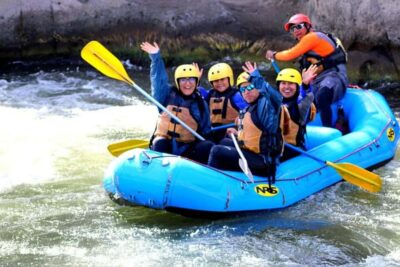
Chili River White Water Rafting with Hotel Pickup
Read our review →
Browse the lists this tour appears in