
Reviewed · AREQUIPA TOURS
Sillar Route In Arequipa + Viewpoint of the Volcanoes
Sillar tells Arequipa’s story. I like this tour because it connects the city’s white historic buildings with the quarries where their volcanic stone is worked, and because the $11 price makes a short outing easy to add to your schedule. I also like the chance to see artisans shaping sillar into carvings and souvenirs. The main concern is practical: the van, road, and guide quality may vary, and entrance fees are extra.
The tour lasts about four hours and begins and ends at Arequipa’s Plaza de Armas. You ride by van to the Añashuayco quarries, where the famous pale stone is cut and shaped. Sun protection is essential, and you should bring small amounts of local currency for admissions, photo areas, and possible artisan purchases.
In This Review
- Key points to know before booking
- Why sillar matters in Arequipa
- From Plaza de Armas to Añashuayco
- Walking through the sillar quarries
- The volcano viewpoint and what is unclear
- What the $11 price really covers
- Guide quality can shape the whole morning
- Heat, rain, and the right clothing
- Who will enjoy this tour most
- Booking, cancellation, and small-print advice
- Should you book the Sillar Route?
- FAQ
- Where does the tour start and end?
- How long does the experience last?
- What is included in the price?
- Are entrance fees included?
- Is the tour offered in English?
- What is the main attraction?
- Does the tour include a volcano viewpoint?
- Can I cancel for a full refund?
Key points to know before booking
- Sillar links directly to Arequipa’s white city: You see the source of the stone used in much of the historic center.
- Añashuayco is the main stop: The tour centers on quarry work, stone carvings, and the people who make them.
- The advertised tour is very small: The maximum is listed as two people, so confirm the group size before paying.
- Extra fees are not included: The stated charges are 5 soles for Añashuayco and 8 soles, or about $4, for another listed entry.
- Expect a basic outing, not a polished luxury tour: Reports include both good English guiding and complaints about a hot, dirty van with no seat belts.
- Weather can affect the visit: Rain has stopped some tours before the full route was completed.
Why sillar matters in Arequipa
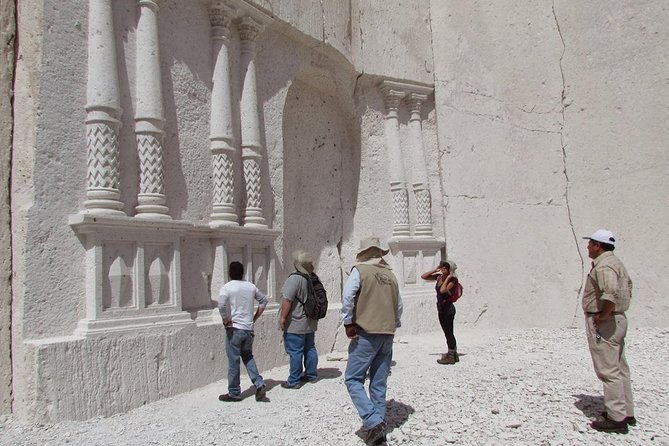
Arequipa is often called the White City because pale volcanic stone gives much of its historic center a distinctive look. That stone is sillar, a light volcanic material shaped by hand and used in construction, decoration, and religious buildings.
This tour gives you the useful missing piece: instead of only admiring the white façades around the Plaza de Armas, you see where the material comes from. I find that connection valuable. A church doorway or carved wall has more meaning when you understand that the stone was quarried, cut, transported, and worked by people using traditional methods.
The visit is not mainly about grand architecture. It is about material, labor, and local craft. You see areas where sillar is extracted and shaped, then look at artistic pieces made from the same stone. That makes the stop worthwhile for anyone interested in Arequipa’s buildings, local work, or practical history.
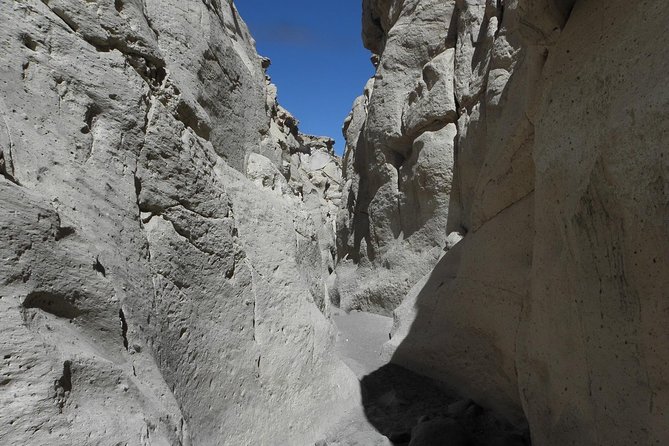
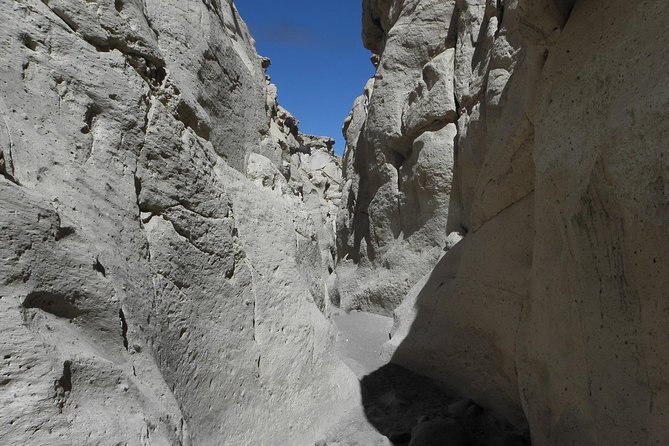
Do not expect a museum with a carefully arranged indoor display. This is an active quarry area and an outdoor visit. The road can be rough, the sun can be strong, and the amount of explanation may depend heavily on your guide.
A few more Arequipa trips worth lining up side by side
- 2 day 1 night trek / Colca Canyon
★ 5.0 · 1,069 reviews - From Arequipa: Colca Canyon Full-Day Guided Tour with Meals
★ 4.5 · 982 reviews - Tour to the Salinas Lagoon and National Reserve in Arequipa
★ 4.5 · 548 reviews
From Plaza de Armas to Añashuayco
Your meeting point is Plaza de Armas Arequipa, in the city center. The activity returns to this same point after roughly four hours, which is convenient if you are staying near the historic center or want to continue sightseeing afterward.
Transport is provided in a van. On paper, that keeps the cost low and makes the quarry easier to reach than arranging separate transport. The advertised maximum is two people, a major advantage if that small group size is honored. A tiny group gives you a better chance to ask questions and avoids the slow loading process common on larger excursions.
Still, I would confirm the group size and vehicle condition before the day of departure. One account describes a dirty van without seat belts and a long wait of almost an hour. Another describes a hot, bumpy ride with no air conditioning. These are serious comfort and safety concerns, especially in Arequipa’s strong high-altitude sun.
The road is not described as rough for the entire journey. The complaint refers to particularly bumpy sections. That means you should treat the transport as functional rather than comfortable. If you get motion sick, sit where the ride feels smoothest, and bring water.
The published information lists an English professional guide and Spanish. The wording is not entirely clear, so ask for an English-language guide when booking. A good English explanation can make the difference between a meaningful quarry visit and a quick photo stop.
Walking through the sillar quarries
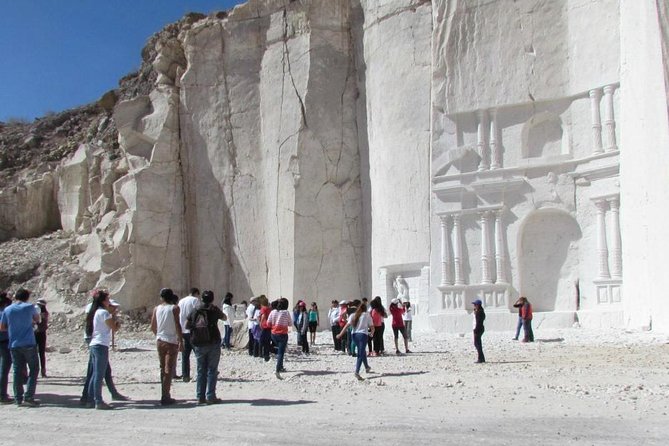
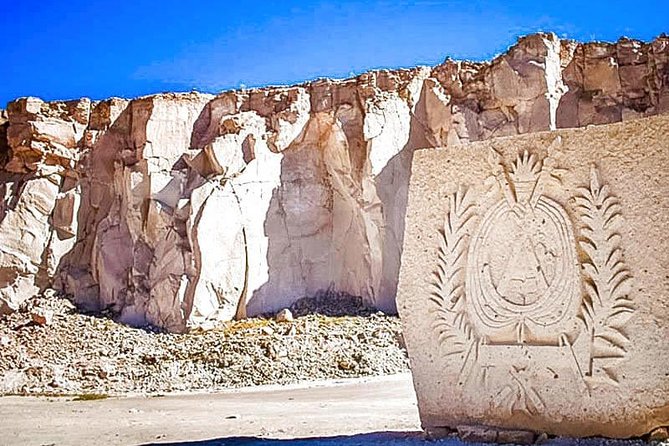
The main stop is the Canteras de Sillar, or sillar quarries. Here, you learn about the source of the stone used in Arequipa’s historic center and see how it is worked.
The most praised part of the experience is its historical connection. One account describes an English-speaking guide who gave useful information about the history behind Arequipa’s buildings. That is exactly the kind of guiding you want here: not just a statement that the stone is white, but an explanation of how it shaped the city’s appearance and identity.
The quarry itself is also a working place. The route brings you closer to areas where local people cut and shape the stone, including people described as having limited resources. That gives the visit a human side. You are not simply looking at an old rock formation. You are seeing a material still handled by artisans and workers.
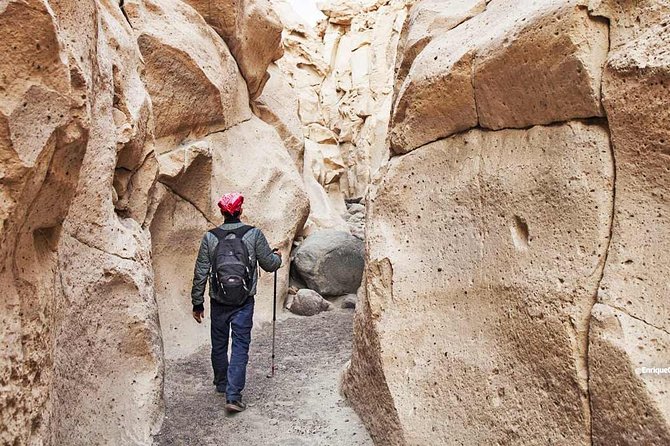
The walk is described as relatively short and entertaining. At the end, one path reportedly divides into three, with a short route through old beliefs and preserved figures. The exact presentation may vary, but the overall visit appears manageable for most people. The activity notes say most participants can take part.
The stone carvings are a highlight for families. Carved bulls, a donkey, and other figures create natural photo points. Children may find these more engaging than a long talk about masonry. You can also browse souvenirs made from sillar, giving you the option to support the artisans directly.
There is a catch. Some photo areas may request an extra three soles per person or per zone. The charges may be marked by small signs, but one account found the information unclear and only noticed a sign low to the ground. If you want photographs with the carved figures, ask the guide or the artisan about the cost before stepping into each area.
That small conversation can prevent the classic vacation surprise: a cheap excursion becoming much less cheap through a series of tiny payments.
The volcano viewpoint and what is unclear
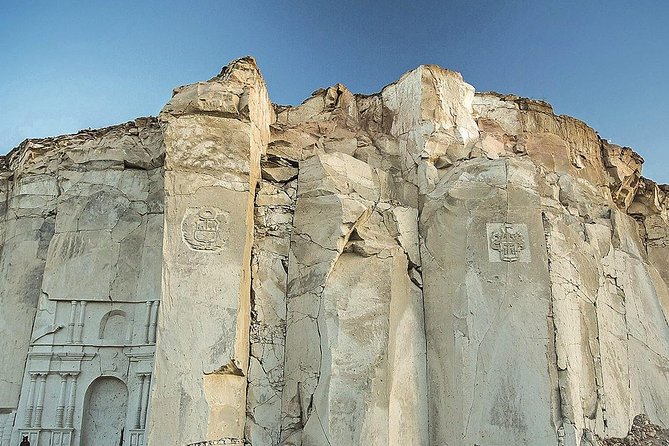
The experience title includes a viewpoint of the volcanoes, but the supplied itinerary names only one stop: the sillar quarries. There is no clear description of the viewpoint, which volcanoes you see, how long you stay there, or whether it is a separate stop on every departure.
This matters because some people may book mainly for volcano views. I would not assume a long scenic viewing session. Ask the operator before booking:
- Is the volcano viewpoint included on every departure?
- Which volcanoes are visible?
- Is the stop separate from the quarry visit?
- Does weather sometimes remove this part of the route?
- Is there any additional entry fee?
The weather policy says the activity requires good weather. Rain has previously prevented a complete visit, even when the tour began. That is especially important if you are visiting during a changeable period or have only one free afternoon in Arequipa.
If your main goal is the quarry and its stonework, a weather-related change may still leave you with a useful visit. If the volcano viewpoint is your main reason for booking, get the details in writing first.
Also leaving from Arequipa, and nothing like the above:
- From Arequipa: Sillar Route Trek
★ 4.2 · 461 reviews - Colca Full Day Tour
★ 4.5 · 429 reviews - Rafting Arequipa – Chili River Canoeing – Cusipata Rafting Arequipa
★ 5.0 · 332 reviews - Arequipa: Chili River White Water Rafting with Hotel Pickup
★ 4.8 · 329 reviews
What the $11 price really covers
At $11 per person, this is a budget excursion. The price covers tourist transportation in a van and a guide in English and Spanish. For a four-hour outing that begins and ends at the central plaza, that is attractive value.
The headline price does not cover all costs. The stated admission charges are 5 soles for the Añashuayco quarries and 8 soles, or about $4, for another listed entry. The wording refers to shingles, which may be a translation issue, so you should confirm exactly what the second fee covers.
The quarry entry itself is inexpensive. The larger issue is the collection of small optional or local charges. Photo areas may ask for three soles each, and souvenirs can add another 15 soles or more. None of that makes the tour poor value, but you should budget for the full outing rather than stopping at the advertised price.
I would carry small coins or low-value notes. One complaint specifically refers to being asked for coins in several places. Clearer communication would help, but you can protect yourself by asking what is included before paying.
The best value comes if you care about the connection between Arequipa’s architecture and the people who work the stone. If you only want a quick scenic drive, the extra fees and rough transport may make the deal less appealing.
Guide quality can shape the whole morning
The guide is central to this experience. A strong guide can explain the quarry, the construction of Arequipa, the carving process, and the meaning of the figures. A weak guide may leave you wondering why the stop matters.
The strongest praise goes to an English-speaking guide who provided historical information about the buildings. A guide named Joseph was also described as friendly and entertaining. Those are encouraging signs, but the guide assigned to your departure may be different.
There is also a direct warning that one guide did not explain much, even though he was pleasant. The operator’s response indicated that the guiding matched what was offered, which suggests the experience may be fairly basic rather than a detailed specialist tour.
I would prepare two or three questions before leaving the plaza:
- How is sillar formed?
- How was it used in Arequipa’s historic center?
- How is the stone cut and finished today?
- Are the carved figures made by local artisans?
- Which parts of the route are included in the admission fee?
Specific questions often lead to a better conversation than waiting for a long lecture. If English guiding is important to you, confirm it at pickup.
Heat, rain, and the right clothing
The quarry is outdoors, and the advice to use sunblock and a hat should be taken seriously. Bring water, sunglasses, and shoes suitable for an uneven or bumpy route. The area is not presented as a polished urban attraction.
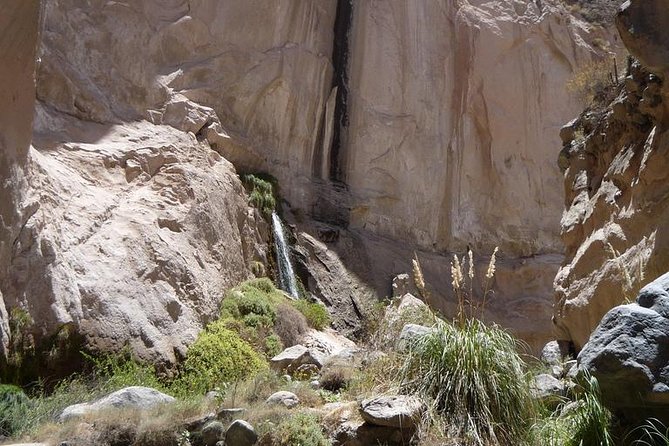
The heat can be uncomfortable inside the van, especially if the vehicle has no air conditioning. A light shirt, a hat, and a refillable water bottle will help. If you are sensitive to sun or altitude, keep your pace easy during the walk.
Rain is the other concern. One outing was interrupted by unexpected rain, and the entire route could not be completed. The operator’s policy allows a different date or a full refund when poor weather cancels the activity.
Because the tour lasts about four hours, rain or transport delays can affect the rest of your day. Avoid placing a timed lunch, bus, or flight immediately afterward. The activity returns to the Plaza de Armas, but the start can be delayed, and one account describes a wait of nearly an hour.
Who will enjoy this tour most
I would recommend the tour to you if you want a low-cost introduction to Arequipa’s building stone and local craft. It suits families, photographers, and people who enjoy seeing how souvenirs and decorative objects are made.
It is also a good choice if you have already explored the Plaza de Armas and want context for the white stone around you. The quarry visit adds a practical, human layer to the city’s architecture.
You may want a different outing if you require polished transport, guaranteed air conditioning, dependable seat belts, or a highly structured historical lecture. The mixed accounts about waiting, vehicle cleanliness, comfort, and guide detail are too specific to ignore.
I would also be cautious if you have only a few hours before another fixed commitment. The scheduled duration is approximate, and weather or pickup delays may reduce your flexibility.
Booking, cancellation, and small-print advice
Confirmation is provided at booking, and the activity is listed as suitable for most people. The advertised maximum is two participants, though I would confirm that directly because the operating setup may change.
Free cancellation is available if you cancel at least 24 hours before the local start time. Inside that window, the payment is not refunded, and changes are not accepted. If poor weather causes the operator to cancel, you are offered another date or a full refund.
Before booking, confirm four things: the English guide, the exact entry fees, the volcano viewpoint, and the vehicle arrangements. Those answers will tell you more about the likely quality of your day than the low headline price.
Should you book the Sillar Route?
Book it if you want an inexpensive, authentic look at Arequipa’s stonework, and you can accept basic transport and a simple quarry visit. The link between the Añashuayco quarries and the city’s white historic center is the strongest reason to go.
I would not book without clarifying the volcano viewpoint and extra costs. Bring sun protection, small change, and patience. If you receive a good English-speaking guide, the outing can be a fascinating lesson in how Arequipa was built. If the vehicle is uncomfortable or the explanation is thin, it may feel like little more than a bumpy ride to a photo stop.
FAQ
Where does the tour start and end?
It starts at Plaza de Armas Arequipa, Arequipa 04001, Peru, and ends back at the same meeting point.
How long does the experience last?
The tour lasts approximately four hours.
What is included in the price?
The price includes tourist transportation in a van and a professional guide in English and Spanish.
Are entrance fees included?
No. The stated additional charges are 5 soles for the Añashuayco quarries and 8 soles, listed as about $4, for another entry.
Is the tour offered in English?
Yes. English is listed as an available language, along with Spanish. It is sensible to confirm that an English-speaking guide is assigned to your departure.
What is the main attraction?
The main stop is the Canteras de Sillar, where you learn about the volcanic stone used in much of Arequipa’s historic center and see sillar work and carvings.
Does the tour include a volcano viewpoint?
The experience title refers to a viewpoint of the volcanoes, but the supplied itinerary lists only the sillar quarries. Confirm the viewpoint details with the provider before booking.
Can I cancel for a full refund?
Yes, if you cancel at least 24 hours before the local start time. Cancellations or changes made within 24 hours are not refunded. If poor weather causes the operator to cancel, you can choose another date or receive a full refund.
Added recently around Arequipa
- gazebos cannon of the coca★ 5.0 · 28 reviews
- Sillar Route★ 5.0 · 4 reviews
- Salinas Lagoon + Mini Volcano DE Lojen★ 5.0 · 9 reviews
- Full Day Tour To The Salt Lake Salinas in Arequipa★ 4.5 · 34 reviews
- 3-Day Colca Canyon trek with Professional Guide★ 5.0 · 40 reviews
- Trekking, Waterfalls and Thermal Baths★ 4.5 · 47 reviews
- Walking Tour Arequipa Including Santa Catalina Monastery★ 4.0 · 8 reviews
- Walking City tour including the Monastery of Santa Catalina★ 5.0 · 6 reviews
Arequipa Tours, compared.

Tour to the Salinas Lagoon and National Reserve in Arequipa
Read our review →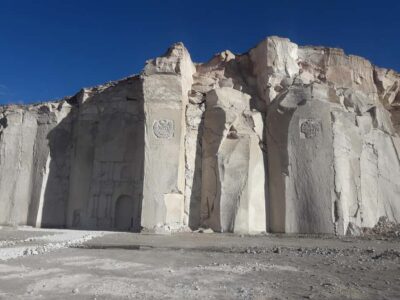
Rafting Arequipa – Chili River Canoeing – Cusipata Rafting Arequipa
Read our review →
Chili River White Water Rafting with Hotel Pickup
Read our review →
Browse the lists this tour appears in