
Reviewed · MACHU PICCHU TOURS
2-Day Tour from Cusco: Sacred Valley and Machu Picchu by Train
Machu Picchu is only half the story. This two-day trip links Cusco with Chinchero, Moray, Maras, Ollantaytambo, and Machu Picchu, turning the long journey to the Inca citadel into a well-planned tour of the Sacred Valley. I especially like the small groups of up to 10 people and the way the company handles trains, buses, entrance tickets, hotels, and transfers. The early morning visit to Machu Picchu is another strong point, since it can help you see the site before the larger crowds arrive. The main drawback is the pace: Day 1 is long, and some stops may feel rushed.
This is a good fit if you want to see a lot in a short time without arranging every ticket yourself. Guides such as Efrain, Martin, Judyth, Elfi, and Jose have earned praise for their warmth, clear explanations, and help with photographs. Still, hotel quality can vary, and you need to pack carefully for one night in Aguas Calientes.
In This Review
- Key points before you book
- Why this two-day route works
- Chinchero and the living art of weaving
- Moray’s circular terraces and Inca farming ideas
- Maras salt ponds, a working Andean site
- Buffet lunch at Tunupa
- Ollantaytambo, the best archaeological stop of Day 1
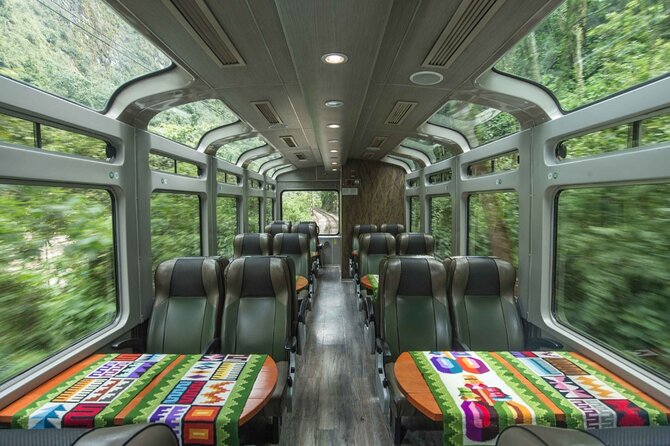
- The train to Aguas Calientes
- Aguas Calientes: useful overnight, not a major attraction
- Entering Machu Picchu on Circuit 2
- The long ride back to Cusco
- What the $429 price really covers
- Who should choose this tour
- Should you book the Cusco to Machu Picchu tour?
- FAQ
- How long does the tour last?
- What is included in the $429 price?
- Is the Sacred Valley admission fee included?
- Which Machu Picchu circuit is included?
- Can I visit Huayna Picchu?
- What train services can I select?
- Is lunch on the second day included?
- What luggage should I bring?
- What information is needed for the Machu Picchu ticket?
Key points before you book
- The Sacred Valley replaces a plain transfer with a full sightseeing day, including weaving, Moray, Maras, lunch, and Ollantaytambo.
- Machu Picchu is scheduled early, usually between the 6:00 a.m. and 10:00 a.m. entry periods, subject to ticket availability.
- Circuit 2 is the first choice, but Circuit 1 or Circuit 3 may be assigned if Circuit 2 has sold out.
- The train class matters, with regular, panoramic, and observatory services available depending on your booking.
- The $429 price covers most major costs, including a hotel, trains, buses, guides, and Machu Picchu admission, but not the Sacred Valley admission fee or your second-day lunch.
- You should travel with a small overnight bag, leaving larger luggage in Cusco hotel storage or at the company office.
Why this two-day route works
Getting from Cusco to Machu Picchu involves more than simply boarding a train. You need transport to the rail station, a train to Aguas Calientes, a bus up to the citadel, an entrance time, a guide, and a return trip. This tour bundles those moving parts with a Sacred Valley visit along the way.
I like that the first day does not waste several hours on a direct road transfer. Instead, you spend the morning and early afternoon seeing major Andean sites before reaching Ollantaytambo. That makes the trip feel like a small tour of the region rather than a long commute.
The schedule is full. Pickup begins at about 7:45 a.m. in Cusco, and you may not reach Aguas Calientes until around 6:00 p.m. The next morning starts at about 7:00 a.m., followed by Machu Picchu, the train, and a private transfer back to Cusco. You get a lot, but you do not get much idle time.
More Machu Picchu Tours in Sacred Valley
- 2-Day Tour: Sacred Valley and Machu Picchu by Train
★ 5.0 · 1,127 reviews - Sacred Valley & Machu Picchu 2D1N
★ 5.0 · 617 reviews - 6 Days Exploring Cusco, Sacred Valley & Machu Picchu
★ 5.0 · 470 reviews
Chinchero and the living art of weaving
After leaving Cusco, the first major stop is Chinchero, about an hour away. Here, you visit a local weaving family and see how Andean textile traditions continue today.
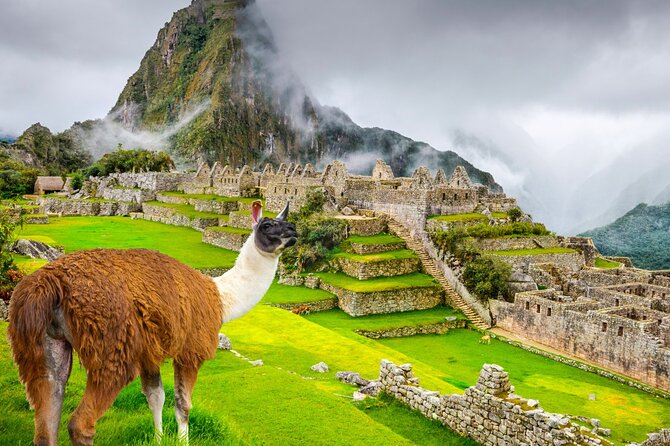
This stop gives the day a human focus. You can meet alpacas and llamas, feed them, take photographs, and watch demonstrations of natural dyeing. The presentation helps explain how local artisans create the strong colors used in handmade textiles.
I find this more useful than seeing textiles only in a shop. You can ask about the materials and methods, then decide for yourself if a woven item is worth buying. Keep in mind that this is also a commercial stop, so you may want to set a budget before you go.
Chinchero is not a long visit, with about an hour scheduled. If your main interests are archaeology and scenery, you may prefer more time at the ruins. If you want contact with present-day Andean culture, this is one of the most worthwhile parts of the morning.
Moray’s circular terraces and Inca farming ideas
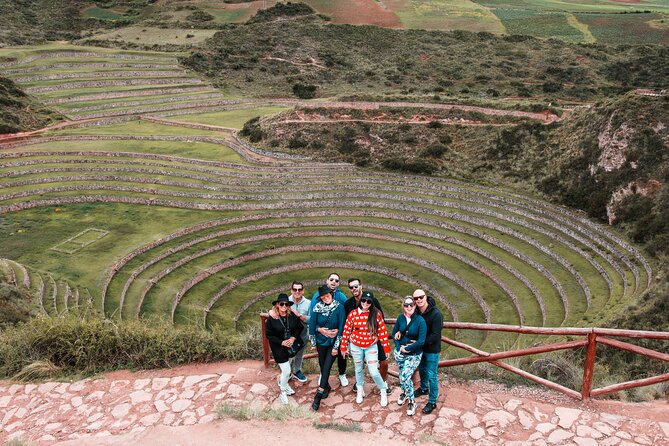
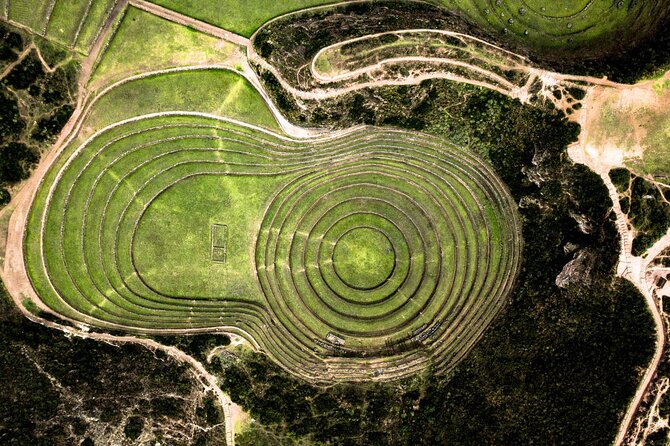
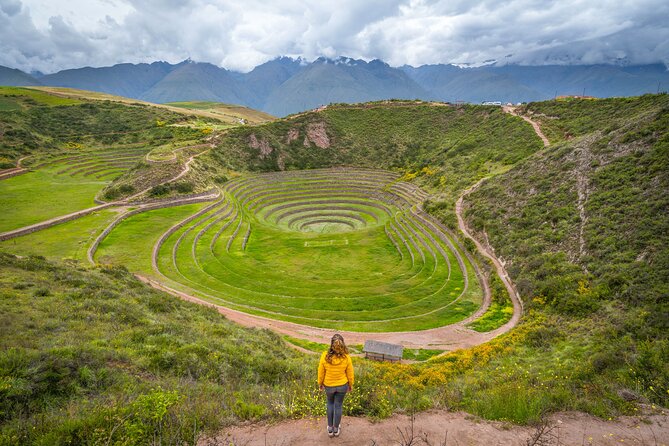
Moray is one of the most unusual archaeological sites in the Sacred Valley. Its broad, circular terraces sink into the earth like a giant natural amphitheater.
Your guide explains the idea that the Incas used the terraces to study different growing conditions. Each level receives slightly different amounts of sun, wind, and temperature, making the site an impressive example of agricultural planning.
The scheduled visit lasts about an hour. That is enough to walk around the main viewing areas and hear the basic explanation, though visitors who enjoy photography may want more time. One practical point: the admission ticket is not included in the tour price. The separate Sacred Valley admission fee is listed as PEN 90 per person.
Moray works especially well as part of a guided visit. Without context, you see striking circles. With a good guide, you begin to understand why the site mattered.
Maras salt ponds, a working Andean site
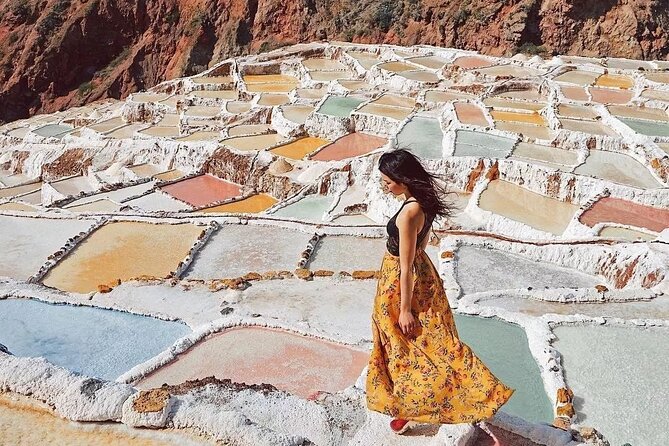
The Maras salt ponds offer a completely different view of Inca-era ingenuity. Thousands of small pools cover the mountainside, fed by a salty spring. Families still use the ponds to produce salt.
The view is highly photogenic, with white and brown pools spread across the slope. Your guide can also take photographs for you, which is useful when you are traveling without a second person to handle the camera.
Again, admission is extra. The walk may include uneven ground, so comfortable shoes are important. Bring water, sunscreen, and a hat. The sun can feel strong at high altitude even when the air is cool.
Maras is also one of the places where the pace can feel tight. The official schedule allows about an hour, but road conditions, group movement, and the need to reach Ollantaytambo can affect your time. A stop at a salt shop may also reduce time at the archaeological sites, so ask your guide how long you have before wandering too far.
Other ways to reach Machu Picchu:
- Classic Inca Trail Trek 4D/3N to Machu Picchu (Group Service)
★ 5.0 · 8,653 reviews - Machu Picchu: 4-Day Inca Trail Trek with Panoramic Train Ride
★ 5.0 · 4,568 reviews - Short Inca Trail to Machu Picchu 2D/1N
★ 5.0 · 3,007 reviews - 2-Day Inca Trail to Machu Picchu with Panoramic Train
★ 5.0 · 1,876 reviews
Buffet lunch at Tunupa

Around noon, the group stops at Restaurante Tunupa for a buffet lunch. The meal includes more than 50 Peruvian dishes, with salads, soups, main courses, traditional desserts, and vegetarian choices.
This is a useful break after a busy morning. You can sample several kinds of food instead of choosing one unfamiliar dish from a menu. Several people have singled out the buffet as fresh and enjoyable, and it gives you a chance to eat properly before the afternoon ruins and train ride.
Lunch is included here, but do not assume every meal is covered. Breakfast is included at the hotel, while lunch on Day 2 in Aguas Calientes is not included. Dinner is also listed among the meals you must pay for yourself, although one booking experience reported dinner included at the hotel. Confirm your specific hotel arrangement before you rely on that.
Ollantaytambo, the best archaeological stop of Day 1
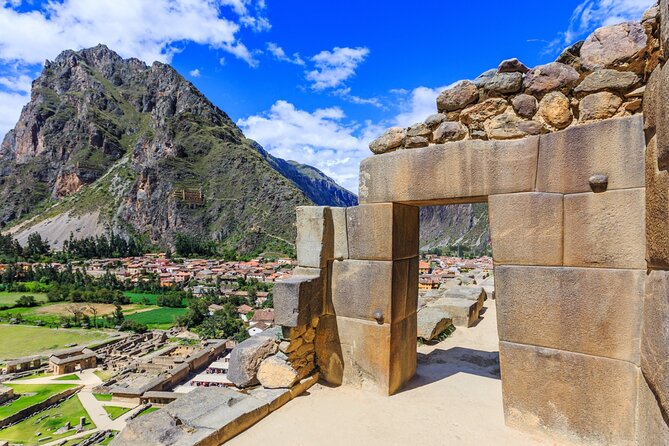
Ollantaytambo is both a living town and a major Inca site. Its terraces climb the hillside above the town, while massive stonework marks its military and religious importance.
The site once guarded the route toward Machu Picchu and played a role during the Spanish invasion. Your guide can connect the terraces, temples, storage areas, and defensive position to the wider story of the Inca state.
This is often the highlight of the Sacred Valley day. The stonework is powerful, and the setting gives you a clear sense of how the Incas used steep terrain for protection and farming.
The weakness is timing. The scheduled visit is about an hour, and some bookings have allowed only roughly 30 minutes at Ollantaytambo after time spent at other stops. If you want to study the ruins closely, this tour may move too quickly. Ask your guide at the start of the day how much time is truly available.
From Ollantaytambo, you go to the train station for the ride to Aguas Calientes. The journey takes about 1 hour and 45 minutes, following the Urubamba River through dramatic mountain scenery. The panoramic or observatory service can make the ride feel like part of the attraction, not just transport.
The train to Aguas Calientes
You can select a regular, panoramic, or observatory train service when booking, depending on availability and price. The panoramic option is a popular choice because broad windows give you better views of the river and mountains.
The company provides train tickets and meets you at key points, which removes much of the worry from the transfer. You receive the tickets and a detailed map during the briefing, usually arranged one day before departure.
On arrival in Aguas Calientes, staff meet you at the station exit and escort you to the hotel. This matters because the town has steep streets, and there are no taxis within the town for the final walk to many hotels. One guide walked with a group for about 10 minutes uphill, so carrying a large suitcase would be unpleasant.
Pack a small backpack with clothing for one night. Leave the rest of your luggage at your Cusco hotel, where storage is usually available, or at the company office on Calle Ayacucho. This small-bag rule is important and should be treated as part of the preparation, not an afterthought.
Aguas Calientes: useful overnight, not a major attraction
Aguas Calientes is primarily a base for Machu Picchu. You can use the evening to eat, rest, or look around the town, but the main reason to stay is the early access to the citadel.
Hotel quality depends on the category selected at booking. Options range from two to four stars, but the actual experience may vary. One booking included a pleasant hotel with a good breakfast, while another reported an unpleasant room and poor food. I would ask for the exact hotel name before confirming and choose the best level your budget allows.
The overnight stop still offers a major advantage. You avoid starting from Cusco in the middle of the night, and you can reach the Machu Picchu bus in time for an early entry. That is much easier than making the entire journey from Cusco on the same morning.
Entering Machu Picchu on Circuit 2
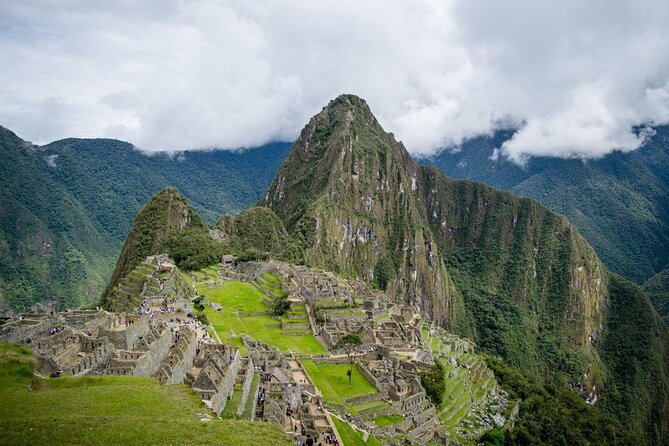
After hotel breakfast, you meet your Machu Picchu guide and take the included bus to the entrance. The tour includes a guided visit of the citadel, with plazas, temples, stone stairs, and major viewpoints.
Circuit 2 is the preferred route and is generally the first option requested. It is subject to availability, so booking two or three months ahead is wise. If it has sold out, the company may assign Circuit 1 or Circuit 3 instead.
The entry time is assigned within the limited morning periods, usually between 6:00 a.m. and 10:00 a.m. The exact shift is not guaranteed until tickets are issued. Because the site controls capacity and entry is limited, you should provide your full name, passport number, birth date, and nationality exactly as shown on your passport.
A guide adds real value here. Machu Picchu can look like a collection of beautiful stones if you do not understand the purpose of each space. The best guides, including Martin, Judyth, Elfi, and Jose, have been praised for explaining both the Inca world and the way modern visitors interpret it.
The quality of guiding can vary in style. Some guides pause often, explain what you are seeing, and help with photographs. Others may feel more businesslike and speak less while you walk. If you value storytelling and conversation, say so early. If you prefer quiet time, the guided structure still leaves time for independent viewing after the main visit.
Clouds are common in the mountains and may cover the famous peak during part of your visit. Do not panic if the first view is gray. One group waited and eventually saw the ruins clearly when the weather shifted, but weather is never guaranteed.
The bus tickets for the return to Aguas Calientes are included. After the visit, you have time for lunch at your own expense before boarding the return train, scheduled around 2:00 p.m.
The long ride back to Cusco
The train returns to Ollantaytambo, where private transport meets you. The estimated arrival back at your Cusco hotel is around 6:00 p.m.
This final transfer can feel rough after an early start and several hours at Machu Picchu. Drivers are generally praised for safe handling of the roads, but the ride may be bumpy. If exhaust fumes bother you, ask the driver to close the windows and use the air conditioning. Carrying a disposable mask may also help.
Bring toilet paper and small change for public toilets. This is a simple tip, but it can save you an awkward search during a long day. Pack snacks too, since the gap between meals can feel long, especially on the first day.
What the $429 price really covers
At $429 per person, the tour is not the cheapest way to reach Machu Picchu. It is, however, a reasonable package if you value saved planning time.
The price includes:
- One night in a two, three, or four-star hotel selected at booking
- Hotel breakfast
- The Sacred Valley guided visit
- Buffet lunch at Tunupa
- Machu Picchu entrance ticket
- A guided Machu Picchu visit in English, Spanish, or Portuguese
- Round-trip train tickets between Ollantaytambo and Aguas Calientes
- Round-trip buses between Aguas Calientes and Machu Picchu
- Hotel pickup and drop-off
- Transfers between the train station and Cusco
- Small-group service, with a maximum usually between 10 and 15 people
- A bottle of water
You still pay PEN 90 for the Sacred Valley admission ticket. Huayna Picchu is an optional extra at $65 and must be requested several months ahead. You also pay for the second-day lunch, dinner, personal purchases, and tips.
The package is strongest for first-time visitors who do not want to coordinate several companies. You could plan the same basic trip independently, but train times, circuit assignments, hotel transfers, and bus tickets require close attention. Here, staff meet you at the train station and organize the handoffs. That service is the main part of the value.
Solo travelers receive a private room, while the standard price is based on two people sharing. Airport pickup and drop-off are available only upon request, so arrange that before arrival.
Who should choose this tour
I would choose this tour if you have only two days and want both the Sacred Valley and Machu Picchu. It suits couples, families, friends, and solo visitors who prefer a guided plan and do not want to handle every reservation separately.
It is also a good choice if your priority is seeing major sites rather than spending several quiet days in one place. The small group format can feel almost private during low season, when groups may be as small as four people.
I would hesitate if you dislike early mornings, long road journeys, or a tightly managed schedule. You may also prefer a longer option if you want more time in Ollantaytambo, a slower Sacred Valley visit, or a second night in Aguas Calientes. The tour is packed, and one person reasonably described it as closer to a day and a quarter of sightseeing than a relaxed two-day holiday.
Bring comfortable shoes, sunscreen, sunglasses, a hat, a jacket, mosquito repellent, and waterproof clothing from December through March. Keep your overnight bag light. The train, hotel walks, buses, and uneven archaeological paths are much easier with one small backpack.
Should you book the Cusco to Machu Picchu tour?
Book it if you want an efficient, well-supported route that covers the Sacred Valley and Machu Picchu in two days. The guides and drivers are the strongest part of the experience, and the company handles the complicated ticket system well.
Before paying, confirm your hotel, train class, Machu Picchu circuit, entry time, and the amount of time planned at Ollantaytambo. I would also ask how luggage storage and dinner are handled. With those details clear, the $429 cost can be good value for a short Peru visit.
Skip it in favor of a longer trip if your ideal vacation includes slow meals, long archaeological visits, and plenty of free time. This is a practical route for seeing the essentials, not a leisurely exploration.
FAQ
How long does the tour last?
The experience lasts approximately two days. Pickup begins in Cusco at about 7:45 a.m. on Day 1, and the estimated return to your Cusco hotel is around 6:00 p.m. on Day 2.
What is included in the $429 price?
The price includes one hotel night, breakfast, a Sacred Valley tour, buffet lunch at Tunupa, Machu Picchu admission, a guided visit, train tickets, round-trip buses to Machu Picchu, hotel transfers, and a bottle of water.
Is the Sacred Valley admission fee included?
No. The Sacred Valley admission ticket costs PEN 90 per person and is not included.
Which Machu Picchu circuit is included?
Circuit 2 is the first option requested and is subject to availability. If it has sold out, Circuit 1 or Circuit 3 may be assigned instead.
Can I visit Huayna Picchu?
Yes, Huayna Picchu is an optional addition. The ticket costs $65 per person and must be requested several months in advance.
What train services can I select?
Depending on your reservation, you can select a regular, panoramic, or observatory train service between Ollantaytambo and Aguas Calientes.
Is lunch on the second day included?
No. Lunch in Aguas Calientes after the Machu Picchu visit is not included.
What luggage should I bring?
Bring a small backpack or carry-on with enough clothing for one night in Aguas Calientes. You can leave larger items at your Cusco hotel or at the company office.
What information is needed for the Machu Picchu ticket?
You must provide your full name, passport number, date of birth, and nationality exactly as they appear on your passport.
More Train Experiences in Cusco
- Machu Picchu Full Day from Cusco by Panoramic Train
★ 5.0 · 857 reviews - Machu Picchu Full Day Tour from Cusco with Train & Entrance
★ 5.0 · 508 reviews - The Voyager Machu Picchu Train by Inca Rail
★ 4.0 · 374 reviews - Lares Trek to Machu Picchu 4 days with Panoramic Train
★ 5.0 · 298 reviews
More Sacred Valley Days Out
- From Cusco: Moray, Maras Salt Mines & Chinchero Weavers Tour
★ 4.8 · 1,925 reviews - Cusco: Sacred Valley, Pisac, Ollantaytambo, Salt Mines Moray
★ 4.6 · 1,058 reviews - Cusco:Chinchero,Moray & Salt Mines drop-off in Ollantaytambo
★ 4.8 · 793 reviews - Sacred Valley and Maras Moray Tour with Full Day Buffet Lunch
★ 5.0 · 670 reviews
Added recently around Cusco
- 2-Day Private Short Inca Trail to Machu Picchu★ 5.0 · 15 reviews
- Guided tour of the mountain of colors in Cusco★ 5.0 · 11 reviews
- City Tour Cusco – Group★ 5.0 · 4 reviews
- Tour Sacred Valley with Maras and Moray★ 5.0 · 15 reviews
- San Pedro Market Tour with Peruvian Cooking Class★ 5.0 · 31 reviews
- Walking Culinary Experience★ 5.0 · 41 reviews
- City Tour in Cusco★ 4.5 · 10 reviews
- One Day Tour to Humantay Lagoon★ 5.0 · 8 reviews
Machu Picchu Tours, compared.
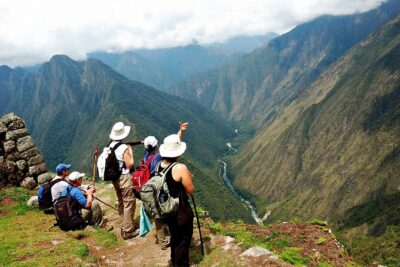
Classic Inca Trail Trek 4D/3N to Machu Picchu (Group Service)
Read our review →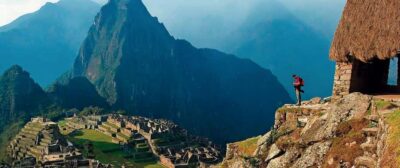
Machu Picchu: 4-Day Inca Trail Trek with Panoramic Train Ride
Read our review →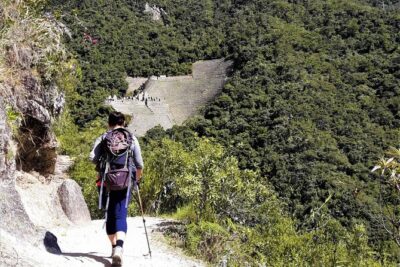
2-Day Inca Trail to Machu Picchu with Panoramic Train
Read our review →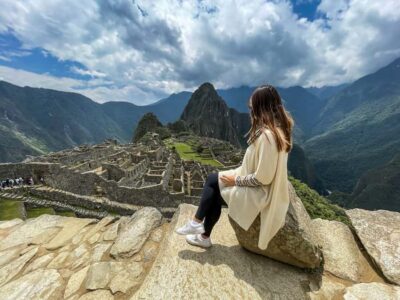

2-Day Tour: Sacred Valley and Machu Picchu by Train
Read our review →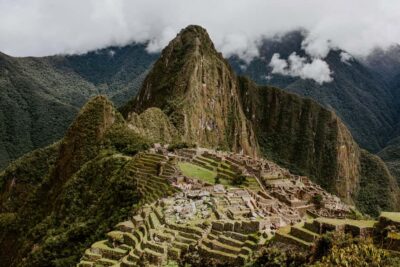
Machu Picchu: Full-Day Tour from Cusco with Optional Lunch
Read our review →Browse the lists this tour appears in