
Reviewed · MACHU PICCHU TOURS
4 days/3 nights: Inka Jungle Trek to Machu Picchu
Four days, three nights, and plenty of motion. This Inka Jungle Trek combines mountain biking, river rafting, jungle hiking, hot springs, and Machu Picchu for $420 per person. I like the mix of activities, and I especially like that you reach Machu Picchu by moving through villages and old Inca routes instead of simply riding a train in.
I also like the small group limit of 15 people and the personal attention praised for guide Gustavo Candia. The main caution is physical: Day 2 lasts 7 to 8 hours, and Day 3 includes about 11 kilometers of walking, including a long stretch beside the railway.
This is an active route, not a gentle sightseeing trip. Rafting can be canceled during high water from January 1 through March 31 without a refund, and one recent account also raises concerns about carrying large backpacks, uneven guide support, and basic accommodation. Pack carefully and ask clear questions before departure.
In This Review
- Key points to know before you book
- Why this route feels different from a standard Machu Picchu trip
- Day 1: Málaga Pass biking and the road to Santa María
- Day 2: Ancient road walking, river crossings, and Cocalmayo
- Day 3: Zip line, Hidroeléctrica, and the railway walk
- Day 4: Entering Machu Picchu before the crowds
- How hard is the trek?
- Food, accommodation, and what to pack
- Guide quality and safety questions
- Is $420 a good value?
- Who should book this Inka Jungle Trek?
- Should you book it?
- FAQ
- How long is the Inka Jungle Trek to Machu Picchu?
- Where does the tour take place?
- What languages does the guide speak?
- How large is the group?
- Is Machu Picchu admission included?
- Is the train back to Cusco included?
- Are meals included?
- Is rafting guaranteed?
- Are the Santa Teresa hot springs included?
- Is the bus to Machu Picchu included?
Key points to know before you book
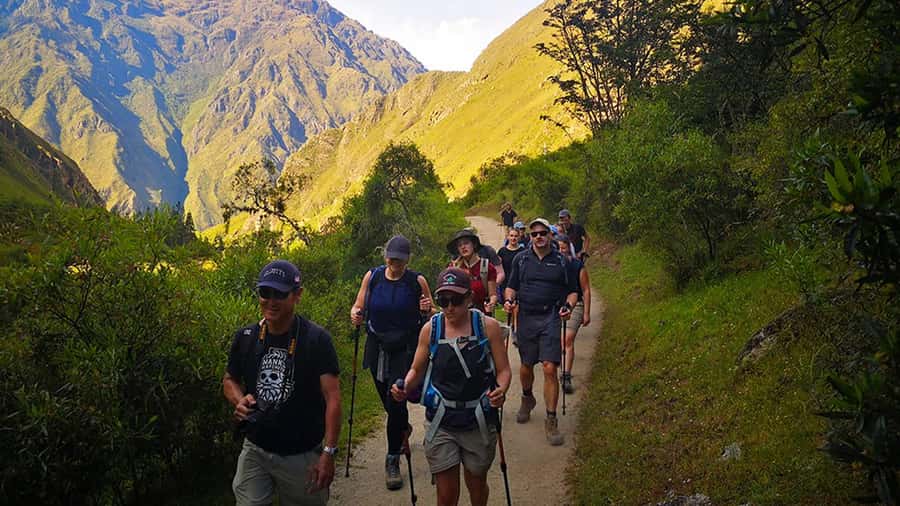
- A moving start: You bicycle downhill for 3 to 4 hours from the Málaga Pass through changing mountain and jungle scenery.
- The longest day is Day 2: Expect 7 to 8 hours of walking with climbs, descents, old Inca road, plants, birds, and a crossing of the Urubamba River.
- Three kinds of adventure: Rafting, zip lining, and biking give the trip more variety than a standard trek.
- A slower arrival at Machu Picchu: Day 3 ends with a three-hour walk beside the train tracks to Aguas Calientes.
- Machu Picchu entry is included: The final day includes admission and a guided visit to major sites, though ticket group assignments should be confirmed.
- Good value, with extras to budget: Meals, hostels, equipment, trains, and the return transfer are included, but hot springs, shuttle buses, Wayna Picchu, and some meals cost extra.
Why this route feels different from a standard Machu Picchu trip
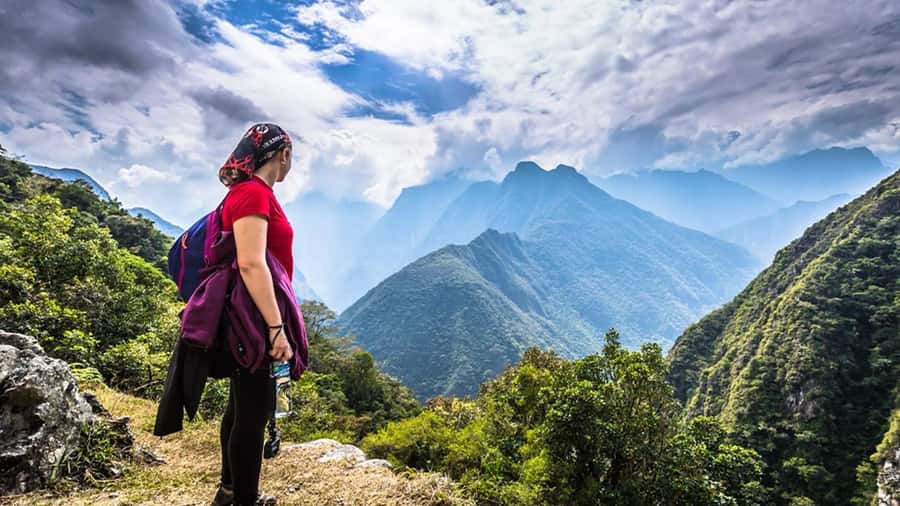
The Inka Jungle route is built around movement. You begin high in the mountains, descend by bicycle, walk through warmer country, cross the Urubamba River, soak in hot springs, and finally approach Machu Picchu on foot. Each day changes pace and scenery.
I like this format because the famous ruins are only one part of the experience. You also pass through Santa María, Santa Teresa, and Aguas Calientes, with nights in local hostels rather than staying in Cusco every evening. The route gives you a closer look at the countryside and the practical rhythm of communities along the Urubamba corridor.
The $420 price is strong for what it includes. You receive three breakfasts, three lunches, and three dinners, three nights of accommodation, a guide, entrance to Machu Picchu, biking equipment, the train from Aguas Calientes to Ollantaytambo, and a tourist bus onward to Cusco. The price also includes rafting and zip lining, although both activities have conditions worth understanding.
This is not the right choice if you want a quiet, polished four-day holiday. It suits you best if you like a full schedule, changing activities, basic accommodation, and a little uncertainty in exchange for a more active route to the ruins.
More Hiking Tours in Sacred Valley
- 2-Day Short Inca Trail Hike to Machu Picchu
★ 5.0 · 27 reviews - Salkantay Trek Llactapata 5 days 4 nights
★ 5.0 · 24 reviews - Half Day Andean Llama Trek in the Sacred Valley
★ 5.0 · 20 reviews
Day 1: Málaga Pass biking and the road to Santa María
Pickup is scheduled for 6:30 in the morning from your hotel. A private vehicle carries you for about four hours through the Málaga Pass to San Luis, where the cycling portion begins.
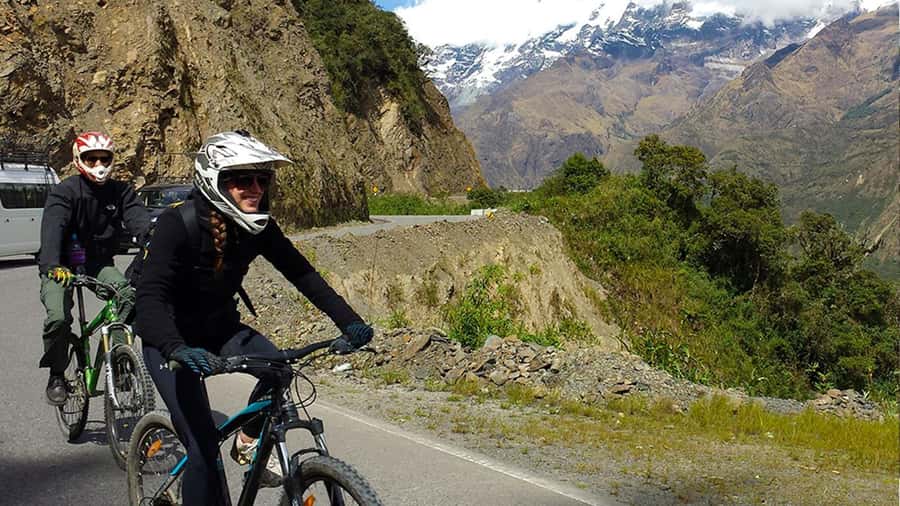
The route descends for three to four hours. That is the key feature of the first day. You are not climbing on a bicycle for hours. You are heading downhill through dramatic changes in altitude and vegetation, moving from mountain country toward warmer jungle surroundings.
You will see mountain and jungle scenery along the way, as well as the Huamanmarca archaeological center. That stop gives the day some historical weight, rather than making it only an outdoor sports outing.
The cycling is repeatedly praised as one of the best parts of the trip. I can see why. It gives you a sense of distance and place that a van cannot provide. You feel the air and watch the scenery change rather than simply passing it through a window.
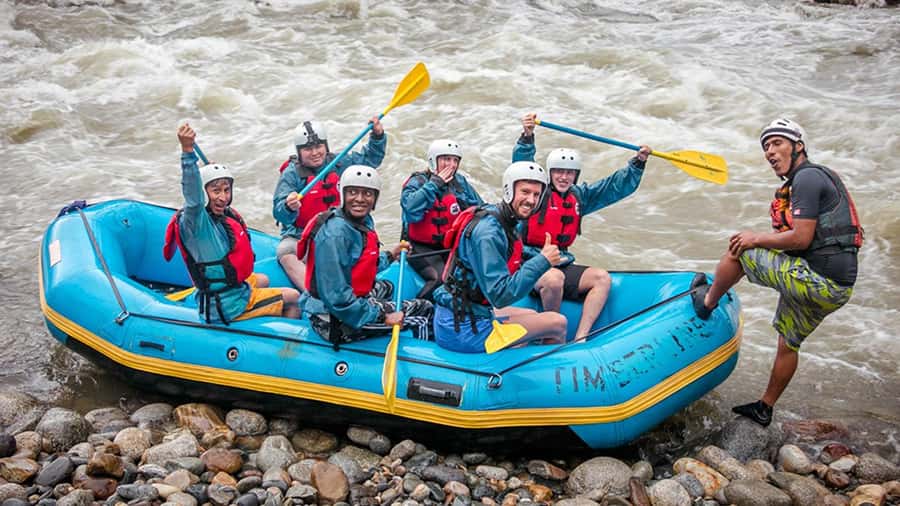
After arriving in Santa María, rafting on the Vilcanota, also called the Urubamba, is scheduled for 3:00 in the afternoon. The rapids are described as Class III and IV, so this is not a lazy float. It is an optional activity in the day description, yet it is also included in the package price, so confirm the exact arrangement with the operator.
From January through March, high water may cancel rafting. The stated policy is that no refund is provided if the river is too high. This is important because the activity is one of the trip’s headline attractions, not a minor extra.
Your first night is in a hostel in Santa María. Keep expectations modest. This is an adventure route, and the accommodation is described as hostel lodging rather than a full-service hotel.
Day 2: Ancient road walking, river crossings, and Cocalmayo
Day 2 is the demanding one. After breakfast, you walk for about seven to eight hours along the Urubamba River, with repeated ascents and descents.
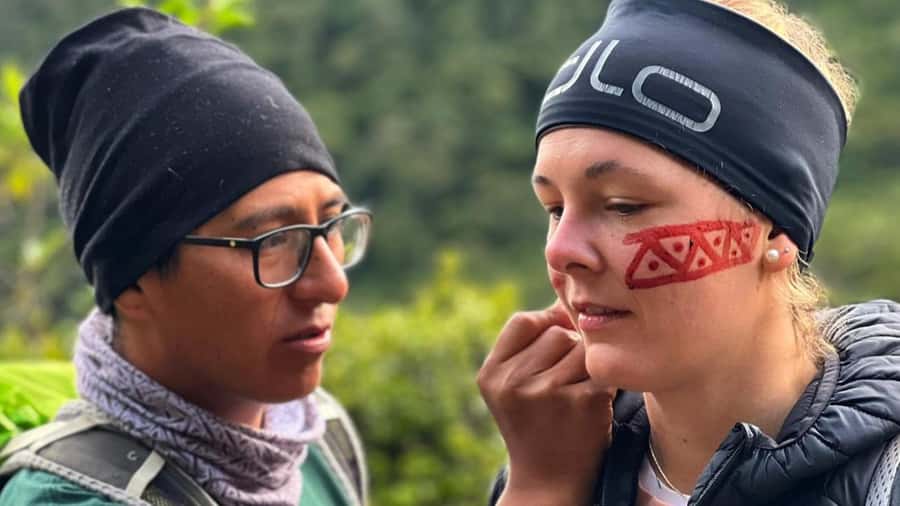
The route includes a section of an old Inca road that is described as well preserved. You will also see fruit plants and medicinal plants used by local people, along with birds such as parrots. That combination gives the walk more interest than a simple forest path. You are seeing how the area supports daily life, not just walking toward a destination.
The route can be rewarding, but you need honest expectations about effort. Seven to eight hours of walking, especially with climbs and drops, requires comfortable footwear and a reasonable level of fitness. The supplied advice to bring hiking shoes, hiking pants, sunscreen, insect repellent, water-ready clothing, and personal medication is sensible.
At some point, you cross the Urubamba by an oroya, a river crossing system. This is one of the route’s distinctive moments, but it also shows why conditions and guide instructions matter. Stay close to the group and follow directions carefully at every river crossing.
The day ends at the Cocalmayo hot springs near Santa Teresa. Admission is not included, so carry cash for the entrance fee. The springs are a welcome change after a long walk, but remember to bring swimwear and a towel. The tour includes a night in Santa Teresa, with the supplied details referring to hostel accommodation.
Food is included on this day, as are all three breakfasts, lunches, and dinners listed for the trek. Meals can make a big difference on an active trip, since you do not need to spend time searching for restaurants after a long day.
Day 3: Zip line, Hidroeléctrica, and the railway walk
The third morning offers an optional zip line at Cola de Mono. The package information lists the zip line as included, so ask whether your booking includes it automatically or treats it as a choice. This is a practical point to settle before you leave Santa Teresa.
After breakfast, you walk toward Hidroeléctrica through a narrow canyon. The route is described as having pleasant weather, and you eventually get your first view of Machu Picchu Mountain. That first sight can be powerful because you have spent two days approaching the area under your own power.
Lunch is at Hidroeléctrica. From there, the walk beside the train tracks to Aguas Calientes takes about three hours. This section is less remote and less dramatic than the earlier hiking, but it has a useful purpose: you reach the town without paying for another train.
The day is called more relaxed in the supplied comments, but do not confuse that with effortless. One recent account describes carrying a heavy backpack for roughly 11 kilometers because the need for a smaller daypack had not been explained clearly. I would ask before departure what luggage arrangement is provided and what you must carry from Santa Teresa to Aguas Calientes.
That small question could make Day 3 much easier. If you carry only the items needed for one night and the next morning, the walk should feel more manageable than hauling all your belongings.
You sleep in a hotel in Aguas Calientes. Accommodation quality may vary, and one account described the final hotel room as poor. Ask for the hotel name and room arrangements in advance if basic lodging concerns you.
More Machu Picchu Tours in Sacred Valley
- Machu Picchu: Group Guided Tour
★ 4.7 · 102 reviews - Machu Picchu: Tour Guide Service & Entrance Ticket Circuit-2
★ 4.6 · 90 reviews - Cusco: One Day Tour to Machu Picchu with Train Transfers
★ 4.8 · 28 reviews - Machu Picchu: historical and photographic guided tour
★ 4.9 · 27 reviews
Day 4: Entering Machu Picchu before the crowds
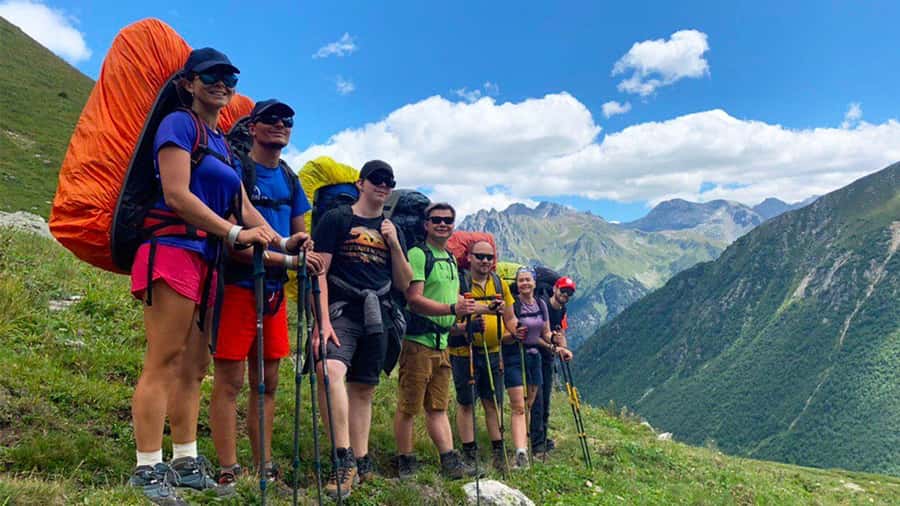
After breakfast, you can walk from Aguas Calientes to Machu Picchu. The plan is to arrive among the first groups, with the hope of seeing the ruins in early morning light.
This walk adds another climb after several active days. You can also purchase the optional bus tickets up and down to Machu Picchu, listed at $24. The bus is not included, so budget for it if you do not want to walk uphill from town. The supplied details do not specify whether the $24 covers one direction or both, so confirm that before buying.
Admission to Machu Picchu is included. A guided visit is planned at major sites such as the Inti Watana, Temple of the Condor, and Sacred Rock. A guide can make a major difference here because the ruins are easier to understand when you know how the spaces were used and why they were built.
You should confirm your Machu Picchu ticket category before the trip. One account described receiving a Group 2 ticket while other participants received Group 3 tickets, followed by uneven guide support. Ticket groups and circuit rules can affect where you go and how long you spend inside. Ask the agency to explain your exact entry time, circuit, and guide arrangement.
Wayna Picchu is not included. The optional entrance costs $65, and it should not be treated as part of the standard day.
After Machu Picchu, you return to Aguas Calientes to board the tourist train to Ollantaytambo. A tourist bus then takes you to Cusco. The train and bus are included, which is a substantial part of the trip’s value and saves you from arranging the return journey yourself.
How hard is the trek?
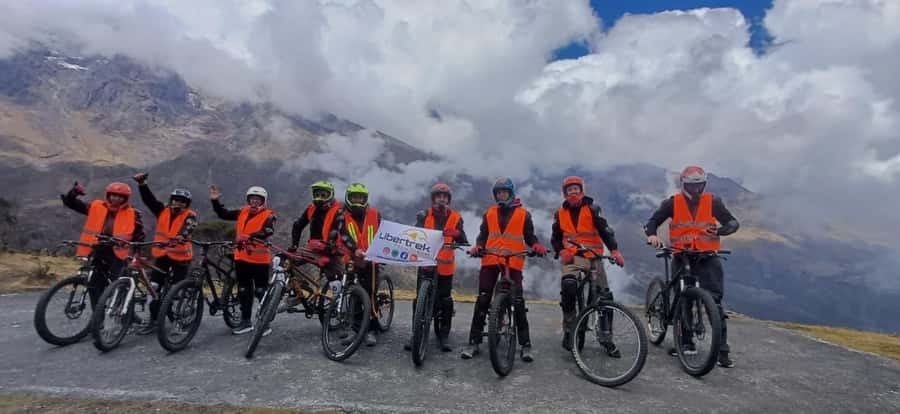
The physical demand changes from day to day.
Day 1 involves several hours of downhill cycling. You need to be comfortable on a bicycle and prepared for a long ride. The tour supplies biking equipment, but you should still ask what equipment is provided and what personal items you need to bring.
Day 2 is the hardest walking day, with seven to eight hours of climbs and descents. If you regularly hike, this may be manageable. If you rarely walk for several hours, the day could feel punishing.
Day 3 includes the walk to Hidroeléctrica and three hours by the tracks. The distance is not the only issue. After two active days, your legs may be tired, and carrying too much luggage can change the experience quickly.
Day 4 includes the walk to Machu Picchu unless you choose the bus, followed by many hours at the site and the return trip to Cusco. You should think of this as an active four-day trip, not a simple sightseeing package.
The tour is limited to 15 people, which helps keep the group manageable. It also means you should expect a shared pace rather than a private guide setting the schedule around your exact preferences.
Food, accommodation, and what to pack
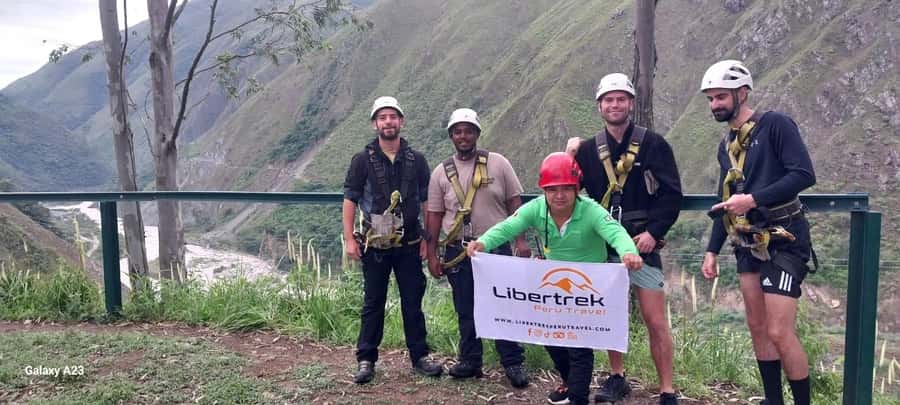
Three breakfasts, three lunches, and three dinners are included. Breakfast on the first day and lunch in Aguas Calientes are not included, so plan to buy those yourself.
Each night’s accommodation is included. The route uses hostels in Santa María and Santa Teresa, followed by a hotel in Aguas Calientes. The lodging is useful for rest, but I would not book this trip expecting luxury or identical room standards each night.
Pack light. The most useful question to ask before departure is how your main luggage will be handled. The information provided does not clearly promise a separate luggage transfer, and carrying a large pack on Day 3 can make the route much harder.
Bring:
- Passport
- Hiking shoes and comfortable clothes
- Hiking pants
- Hat and sunglasses
- Sunscreen and insect repellent
- Swimwear and towel
- Camera
- Cash
- Personal medication
Your passport is especially important for the train and Machu Picchu entry. Cash is useful for the Santa Teresa hot springs, food not covered by the package, and optional bus tickets.
Guide quality and safety questions
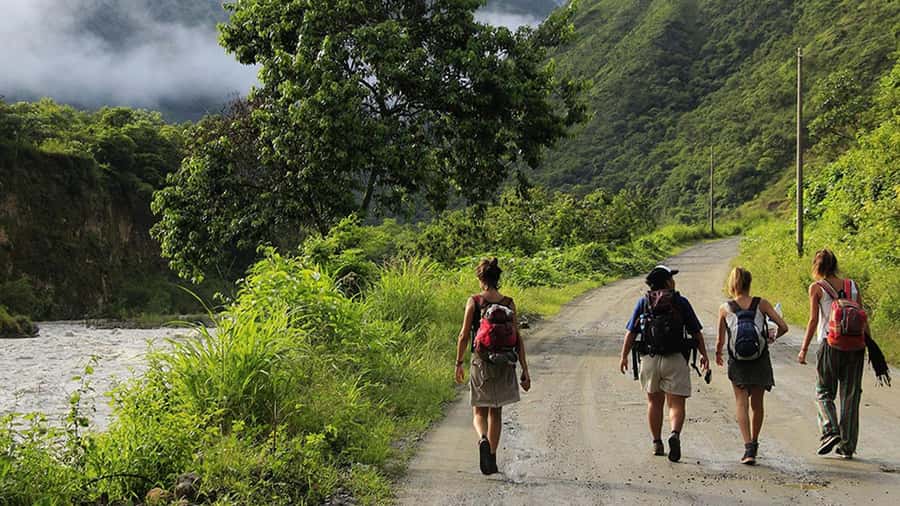
Guide Gustavo Candia receives especially warm praise for his care, English, and knowledge of the route. Good guiding matters here because the tour includes bicycles, river activities, long walks, an oroya crossing, and a major archaeological site.
At the same time, one serious account describes a knee injury on Day 3, no phone signal, the guide moving ahead with other participants, and limited help on arrival in Aguas Calientes. The same account describes receiving less Machu Picchu guiding than expected.
I would not ignore that warning simply because other parts of the trip sound excellent. Before booking, ask:
- Does the guide stay with the slowest person?
- What happens if someone is injured?
- Is there an emergency contact?
- Where is the main luggage stored?
- Which Machu Picchu circuit and ticket group will I receive?
- Is a guide guaranteed inside the ruins?
- What happens if rafting is canceled?
These questions are not fussing over small details. They are part of choosing the right adventure tour.
Is $420 a good value?
For four days and three nights, $420 is a competitive price. You receive transport from Cusco to the Málaga Pass, a guide, activities, meals, accommodation, Machu Picchu entry, the train to Ollantaytambo, the onward bus to Cusco, and airport transport from the hotel.
The package also includes biking equipment, rafting, a first aid kit, and zip lining. If all scheduled activities operate and the lodging meets basic expectations, the price gives you a lot for your money.
You still need to budget for breakfast on Day 1, lunch in Aguas Calientes, the Santa Teresa hot springs, the optional Wayna Picchu ticket, and the optional Machu Picchu bus. Rafting may be lost during high-water conditions with no refund, so do not value it as guaranteed.
The price is best for you if you want many activities bundled together. If you care more about comfort, private transport, premium rooms, or a slower schedule, a higher-priced tour may be a better match.
Who should book this Inka Jungle Trek?
I would recommend it to active people who want more than a train ride and guided ruins. You should enjoy cycling, long walks, simple lodging, and a schedule that begins early and stays busy.
It is also a good fit if you want to see more than Machu Picchu itself. The old road, local plants, river crossing, hot springs, and railway walk create a fuller sense of the route into the Sacred Valley.
I would be cautious if you have a knee problem, dislike carrying luggage, need strong medical support, or expect polished hotels. You should also think carefully about visiting during January through March if rafting is important to you, since high water can cancel it without compensation.
The cancellation policy allows a full refund when you cancel at least 24 hours in advance, and you can reserve now and pay later. That flexibility is useful, but it does not replace checking the practical details before your deadline.
Should you book it?
Book this trek if you want an energetic, good-value route with biking, rafting, zip lining, hot springs, hiking, and Machu Picchu in one package. The cycling, varied scenery, included meals, and guide Gustavo Candia’s strong reputation are persuasive reasons to choose it.
Before paying, confirm the luggage plan, hotel names, Machu Picchu circuit and guide service, emergency procedures, and rafting policy. If the operator answers those questions clearly, this can be a memorable way to reach the ruins. If you want comfort and certainty at every step, choose a more structured and less strenuous Machu Picchu trip.
FAQ
How long is the Inka Jungle Trek to Machu Picchu?
The experience lasts four days and three nights.
Where does the tour take place?
It takes place in Peru’s Cusco Region, traveling through the Málaga Pass, Santa María, Santa Teresa, Hidroeléctrica, Aguas Calientes, and Machu Picchu.
What languages does the guide speak?
Guiding is available in English and Spanish.
How large is the group?
The tour is a small-group experience limited to 15 participants.
Is Machu Picchu admission included?
Yes, entrance to Machu Picchu is included.
Is the train back to Cusco included?
The tourist train from Aguas Calientes to Ollantaytambo is included. Tourist transportation from Ollantaytambo to Cusco is also included.
Are meals included?
Three breakfasts, three lunches, and three dinners are included. Breakfast on the first day and lunch in Aguas Calientes are not included.
Is rafting guaranteed?
No. Rafting depends on weather and river conditions from January 1 through March 31. If high water causes cancellation, there is no refund.
Are the Santa Teresa hot springs included?
No. Entrance to the hot springs must be paid separately.
Is the bus to Machu Picchu included?
No. Bus tickets up and down to Machu Picchu are optional and listed at $24.
Other Ways to Reach Machu Picchu
- Private Guide in Machu Picchu for 3 Hours
★ 4.2 · 17 reviews - Machu Picchu: 1-day tour by Vistadome Panoramic train
★ 4.7 · 15 reviews - Cusco in 3 days: city tour, Rainbow Mountain and Machupicchu
★ 4.9 · 7 reviews - Machupicchu 2025: The best ticket Circuit 2
★ 3.5 · 6 reviews
More Jungle Trips from Urubamba
- Tambopata Peruvian Amazon Jungle for Three Days/Two Nights
★ 4.5 · 329 reviews - Manu National Park 4-Day Eco Tour from Cusco
★ 5.0 · 216 reviews - Puerto Maldonado: 4-Day Tambopata Rainforest Tour
★ 4.6 · 213 reviews - Best of Tambopata 3 nights by JunglePro
★ 5.0 · 148 reviews
Added recently around Urubamba
- Super Sacred Valley★ 3.8 · 6 reviews
- Machupicchu 2025: The best ticket Circuit 2★ 3.5 · 6 reviews
- Machu Picchu: 1-day tour by Vistadome Panoramic train★ 4.7 · 15 reviews
- Machu Picchu: historical and photographic guided tour★ 4.9 · 27 reviews
- Private Guide in Machu Picchu for 3 Hours★ 4.2 · 17 reviews
- from Urubamba & Ollantaytambo:Sacred Valley Full-Day Private★ 4.9 · 31 reviews
- Cusco: Sacred Valley and Salt Mines Ending in Ollantaytambo★ 4.6 · 5 reviews
- From Cusco: City Tour in Cusco – Sacsayhuamán and Koricancha★ 3.0 · 4 reviews
Machu Picchu Tours, compared.
Classic Inca Trail Trek 4D/3N to Machu Picchu (Group Service)
Read our review →
Machu Picchu: 4-Day Inca Trail Trek with Panoramic Train Ride
Read our review →
2-Day Inca Trail to Machu Picchu with Panoramic Train
Read our review →
2-Day Tour: Sacred Valley and Machu Picchu by Train
Read our review →
Machu Picchu: Full-Day Tour from Cusco with Optional Lunch
Read our review →Browse the lists this tour appears in