
Reviewed · WALKING TOURS
Cusco Walking Tour: Downtown, Sun Temple & San Blas Views
Cusco tells its story in stone. This 135-minute walk gives you a useful first look at the city, from the Plaza de Armas and original Inca walls to the artistic streets of San Blas. I like the focus on Qorikancha and Inca engineering, and I also like the final view from San Cristóbal, where Cusco’s rooftops and mountains come together. The main point to understand is the tip-based price: the $1.20 booking fee secures your place, but it is not the full cost of the tour.
You meet Jose Martinez, a local guide and former licensed trekking guide to Machu Picchu, in front of the Inca statue in the Plaza de Armas. He has made more than 400 journeys to Machu Picchu, and the tour promises a clear link between Inca history, Spanish rule, and present-day Andean life. One posted experience praises a guide named Henrry for both the walk and practical advice about local products for adjusting to Cusco’s altitude, so it is worth confirming who will lead your departure when you book.
In This Review
- Five useful reasons to consider this Cusco walk
- Starting in the Plaza de Armas, Cusco’s ceremonial heart
- Following Sun Street and the Inca walls
- Qorikancha: the Sun Temple from the street
- Cusicancha and the Twelve-Angled Stone
- San Blas, artisan streets, and Seven Lambs Street
- San Cristóbal viewpoint and the best final view
- How Jose’s guiding style affects the experience
- The tip-based price and what the value really means
- Choosing the right departure time
- What to bring and who should book
- Should you book this Cusco walking tour?
- FAQ
- How long does the Cusco walking tour last?
- What is the meeting point?
- How will I recognize the guide?
- Is the tour free?
- Which languages are available?
- Are entrance tickets included?
- What departure times are offered?
- What should I bring?
- Is the tour suitable for people with altitude sickness or people over 70?
Five useful reasons to consider this Cusco walk
- Original Inca stonework: Follow Sun Street and see walls built with carefully fitted stones and strong earthquake-resistant design.
- Qorikancha from the outside: Learn why the former Temple of the Sun was central to Inca worship, astronomy, and imperial power.
- San Blas in a short visit: Walk narrow cobblestone streets, see artisan workshops, and pass colorful corners such as Seven Lambs Street.
- A useful city viewpoint: Finish near San Cristóbal with wide views over Cusco’s rooftops, surrounding mountains, and sacred geography.
- Flexible payment: The tour has no fixed price, although your guide depends on gratuities rather than the small booking fee.
- Five departure choices: You can choose an early morning, midday, afternoon, or evening start, with the regular walk lasting about 2 hours and 15 minutes.
Starting in the Plaza de Armas, Cusco’s ceremonial heart
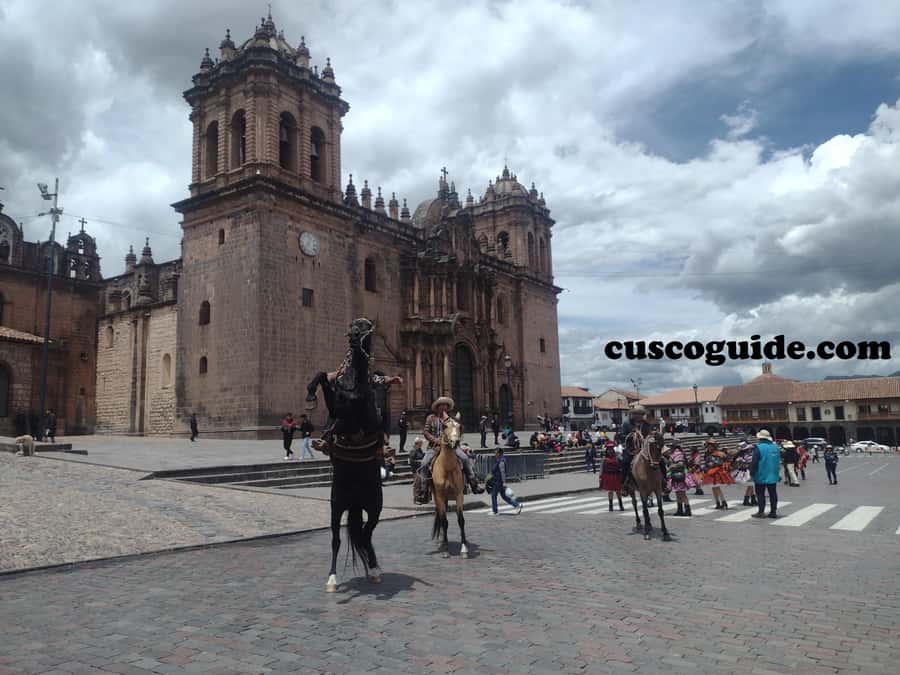
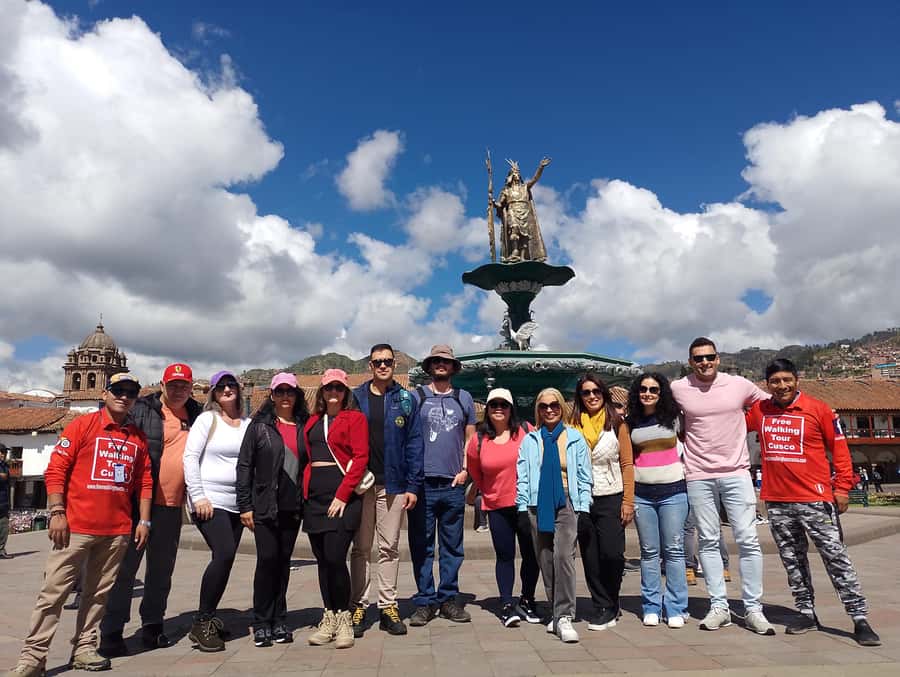
The meeting point is easy to find. Go to the Inca statue in the Plaza de Armas and look for a guide wearing a red T-shirt with the Cusco Guide or Free Walking Tour Cusco logo. The tour begins five minutes after the scheduled time, giving you a small cushion if you are crossing the square from a nearby hotel.
The Plaza de Armas was once the ceremonial center of Tawantinsuyo, the Inca Empire. It was also linked to the four major Inca roads, which ran from Cusco toward different parts of the empire. That makes the opening stop more than a pretty square. You are beginning in the place where political power, religious ceremony, and travel routes met.
I like this kind of start because it gives you a map in your head before the streets get tighter. You can listen for the difference between Cusco as an Inca capital and Cusco as a Spanish colonial city. The tour is not simply a march between monuments. Its main value is learning how those two periods occupy the same streets.
The starting area is also practical for first-time visitors. You can get your bearings, hear the broad story of the city, and then decide which sites deserve a longer visit later. Since the tour views the sites from the outside, you will not enter museums or churches during this walk.
More Walking Tours in Cusco
- Cusco: Walking Tour with an Experienced Local Guides
★ 4.8 · 636 reviews - Cusco: Historic Walking Tour with Pisco Sour and Local Music
★ 5.0 · 190 reviews - Curious Monkey Cusco- Eat the Streets, Walking Food Tour
★ 5.0 · 160 reviews
Following Sun Street and the Inca walls
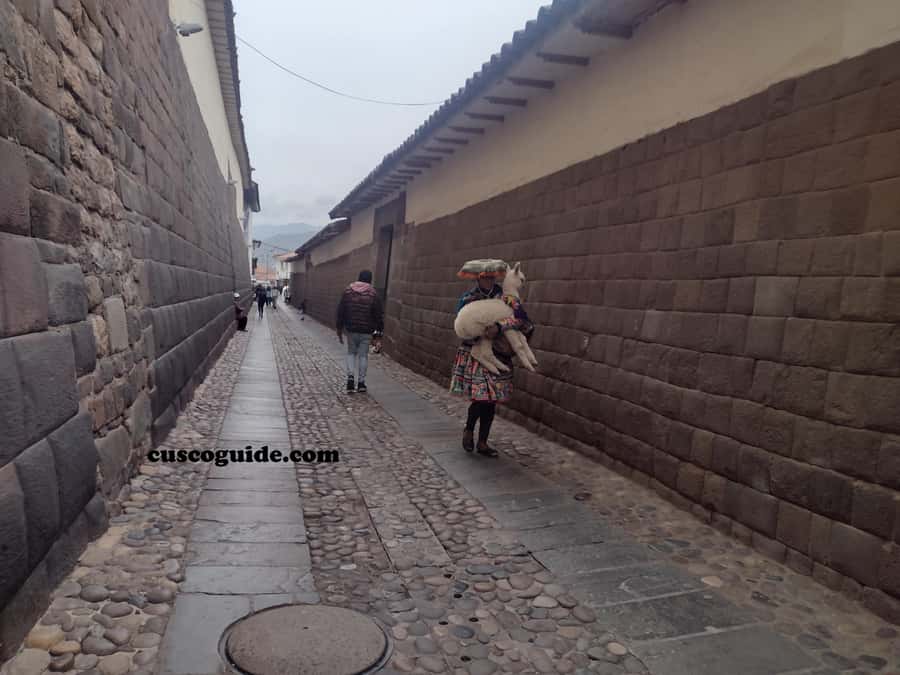
From the square, the route follows Sun Street, also called Intikijllu. This is where the walk begins to show Cusco’s most impressive building skill at close range. Instead of seeing Inca walls as a distant backdrop, you can study the way the stones were shaped and fitted.
The guide explains how Inca builders carved blocks so tightly that they could join without ordinary mortar. The lesson is not just about neat masonry. The walls also reveal planning, strength, and symbolic choices. Cusco sits in an earthquake-prone region, so the construction methods matter as much as the appearance.
Look closely at the joints and the changing size of the stones. The famous precision is easy to admire, but a good explanation helps you understand why it was useful. A wall that looks almost impossible to build was also designed to handle movement. That practical detail is one of the strongest parts of this route.
You should expect to walk on historic streets rather than smooth modern paths. Comfortable shoes are important, and water and sunscreen are sensible choices. Cusco’s weather can change quickly, so bring a light jacket even if the morning begins bright and mild.
Qorikancha: the Sun Temple from the street
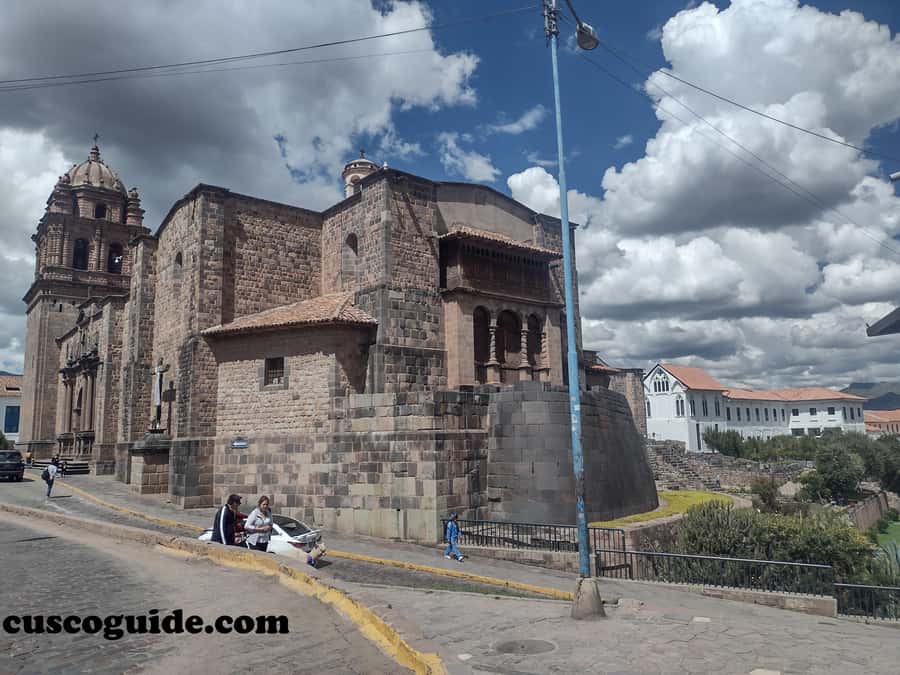
The next major stop is Qorikancha, once the center of Inca worship. The tour views it from outside, so you should not book this walk expecting an interior visit or an included admission ticket. Instead, you get the setting, the history, and an explanation of what made the temple important.
Qorikancha brought together religion, astronomy, ceremony, and imperial authority. Its name is closely linked with gold, and the site represented the Sun’s importance within Inca belief. The guide places the temple within the wider system of power that made Cusco the center of the empire.
The Spanish conquest changed the site and its meaning. Colonial construction transformed the former Inca religious center, leaving you with a visible meeting of two building traditions. This is one of the best places in Cusco to understand that the city is not divided into neat Inca and Spanish sections. The layers share the same walls and streets.
I appreciate the outside-only format here for one reason: it keeps the walking tour moving. You can return later if you want to pay for entry and spend more time inside. The tradeoff is that you will need a separate visit for the full interior experience.
Cusicancha and the Twelve-Angled Stone
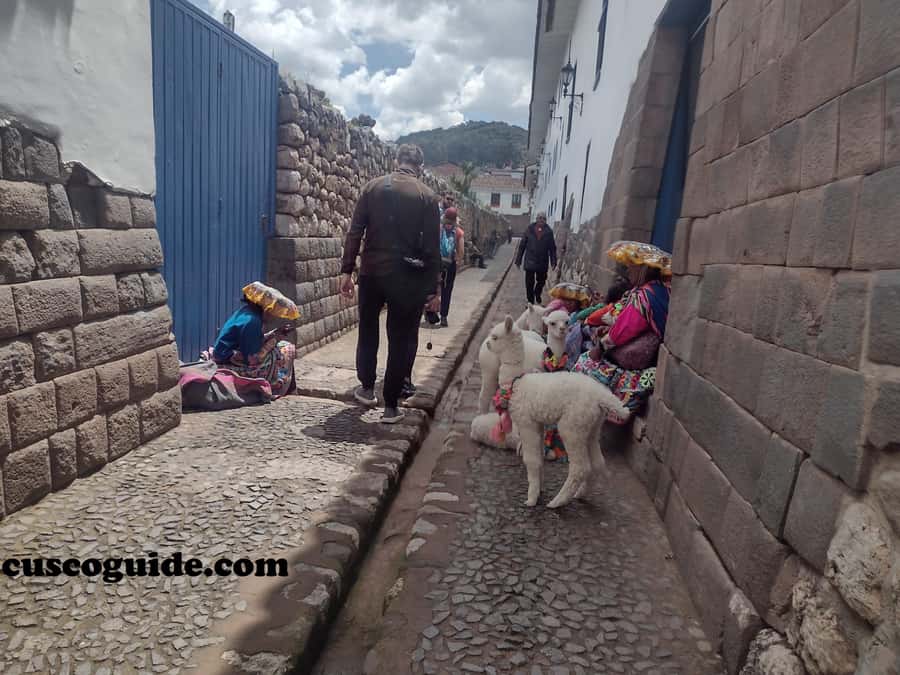
The route continues through Cusicancha, described as an ancient Inca neighborhood and palace area. This stop shifts the story from one famous temple to the way elite Inca spaces were organized. Large blocks and planned urban details help show that Cusco was built as an imperial capital, not as a random collection of houses.
The Twelve-Angled Stone is another familiar sight, but the guide’s explanation gives it more meaning than a quick photograph can. Its carefully cut edges fit into surrounding masonry with remarkable accuracy. It is a compact lesson in the patience and skill behind Inca construction.
You may have seen pictures of this stone before arriving. In person, the useful question is not only how many angles it has, but how it fits into the larger wall. The tour encourages you to look at the surrounding blocks and notice the full system of construction.
This section is especially good for visitors who want a simple introduction to Inca engineering without committing to a long archaeological tour. It is also a helpful preview if you plan to visit Machu Picchu later. Jose’s background as a former licensed trekking guide to Machu Picchu adds useful context, although the walk itself remains focused on central Cusco.
More walking routes through Cusco:
- Cusco Highlights Walking Tour: History, Culture, Traditions
★ 4.9 · 72 reviews - Cusco: Historic Walking Tour with Pisco Sour and Music Show
★ 4.6 · 65 reviews - Cusco Food Walking Tour & Central Market
★ 5.0 · 48 reviews - Cusco: Historic Walking Tour & Scenic Views with local drink
★ 5.0 · 45 reviews
San Blas, artisan streets, and Seven Lambs Street
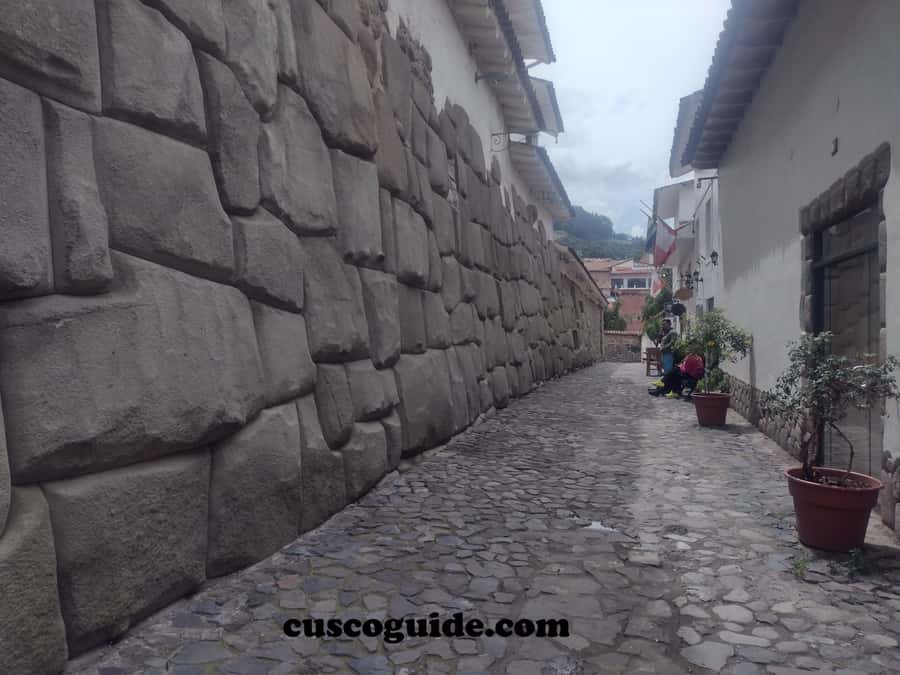
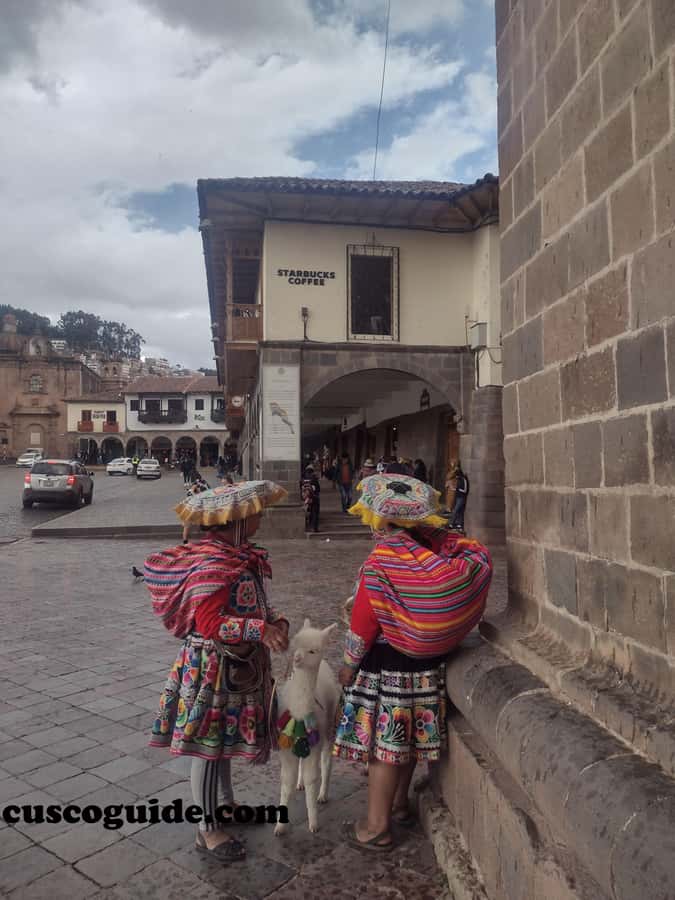
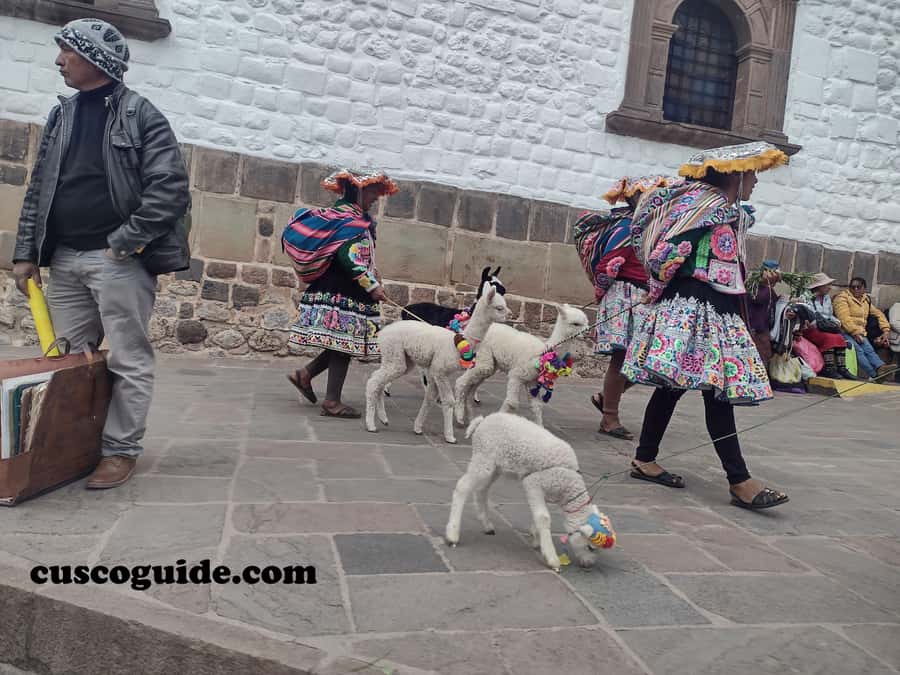
After the major Inca sites, the route heads toward San Blas. This neighborhood has a different mood from the formal Plaza de Armas and the heavy stone walls around the historic center. San Blas is known as Cusco’s artistic quarter, with narrow cobblestone streets, workshops, and colorful corners.
Seven Lambs Street is one of the named highlights. Details like this make the route feel more local and specific. Instead of hearing only the broad story of kings, temples, and conquest, you get a sense of how Cusco’s streets are experienced at walking speed.
San Blas is also where the tour’s pace may matter most. The streets are narrow and cobbled, and the route finishes near San Cristóbal, so you should be prepared for a walk that is not suited to everyone. The operator specifically says the activity is not suitable for people with altitude sickness or people over 70 years old. That is an important limitation, not a footnote.
If you are adjusting to Cusco’s altitude, take the warning seriously. A review of the experience praised practical acclimatization advice from Henrry, including suggestions involving local products. Still, advice from a guide is not a substitute for resting, drinking water, or seeking medical help if you feel unwell.
San Cristóbal viewpoint and the best final view
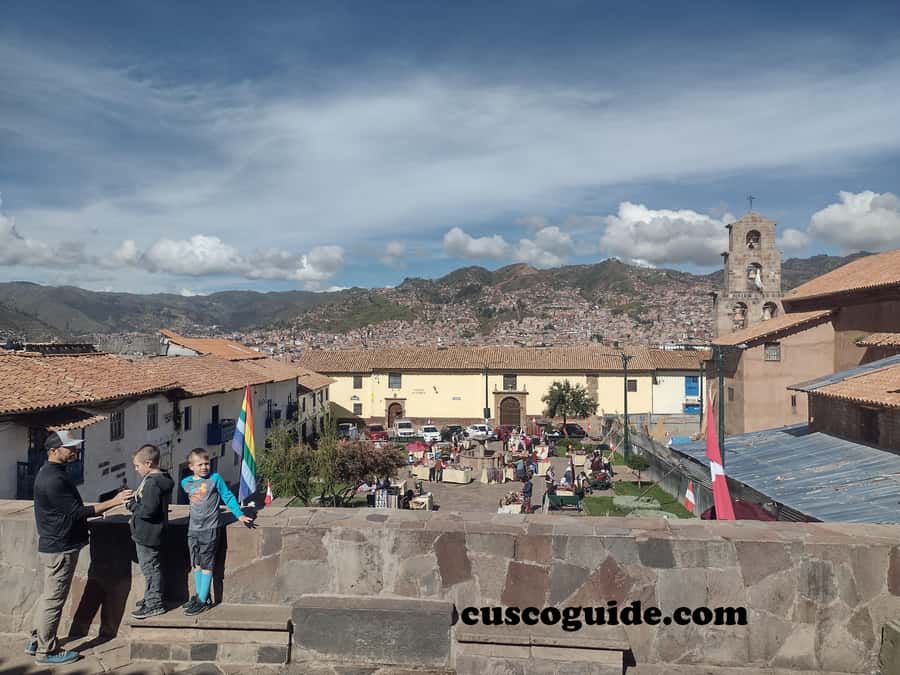
The tour ends near San Cristóbal, with views across Cusco’s rooftops and toward the surrounding mountains. This is a strong way to finish because the city’s layout becomes easier to understand from above. You can connect the plaza, the central streets, the older Inca areas, and the hills around the city.
The view also gives the tour a change of scale. For much of the walk, you are looking at individual stones, streets, and building details. At San Cristóbal, you see how Cusco occupies its bowl-like setting and how the surrounding mountains shape the city.
I would not treat this as a dedicated viewpoint excursion. The point is not to spend a long time waiting for perfect light or taking a series of panoramic photographs. It is the closing scene of a compact history walk. You get enough time to understand the setting, then you can continue exploring on your own.
Bring sunscreen for this section, especially on a clear day. You will also appreciate water by the end of the 135-minute route.
How Jose’s guiding style affects the experience
The tour is presented around Jose Martinez, who personally leads the walks and speaks English and Spanish. His background includes more than 400 journeys to Machu Picchu, which should be useful if you want connections between Cusco and the Inca citadel.
The stated aim is to explain history in a clear way, linking monuments with daily life and Andean traditions. That matters in Cusco, where a long list of dates can quickly become tiring. You need a guide who can explain why a wall, street, or temple still matters instead of simply naming it.
One published rating gives the experience 4.5 out of 5 from 26 reviews, and the most specific praise centers on clear basic information about Cusco and the Incas, along with practical altitude advice. Another short rating simply calls the tour excellent. These comments suggest that the experience works best as an introduction, not as a specialist archaeology seminar.
There is one small point to clarify. The tour information names Jose as the local expert, while one review praises Henrry. That does not tell you exactly how guide assignments work, so if meeting a specific guide matters to you, ask before setting out.
The tip-based price and what the value really means
The advertised price of $1.20 per person is a booking fee, not the full payment. This is a pay-what-you-want walk, and the guide is paid through gratuities. You should budget for a tip that reflects the time, explanation, and personal help you receive.
This model can be good value if you want a low-cost introduction before paying for several major attractions. You see Qorikancha, Cusicancha, the Twelve-Angled Stone, San Blas, and San Cristóbal without entrance fees. You can then choose which sites deserve your separate admission money.
The model also requires honesty on your part. Do not treat the small booking fee as the complete price of a guided tour. If you find the guide helpful, leave an appropriate gratuity. The no-fixed-price structure gives you flexibility, but it does not mean the guide’s work has no value.
Optional entrance fees are not included. Since the main stops are viewed from outside, you will not face surprise ticket costs during the walk, but you may want to budget separately for places you decide to enter later.
Choosing the right departure time
There are five listed departures:
- 7:30 am
- 9:45 am
- 12:30 pm
- 3:00 pm
- 6:00 pm for Cusco by Night
The early tour suits you if you want to begin before the day fills up. The 9:45 am and 3:00 pm departures are the regular core options. The noon start is useful if you prefer a slower morning, while the 6:00 pm departure offers a different look at the city under evening conditions.
The exact feel of the walk will depend on the time you choose, but the route remains about 2 hours and 15 minutes. Give yourself enough time to reach the Plaza de Armas and locate the Inca statue. The guide starts five minutes after the scheduled departure.
What to bring and who should book
Wear comfortable shoes. This is a walking route through historic central streets, including cobblestones in San Blas. Bring water, sunscreen, and a light jacket because Cusco’s weather can shift quickly.
I would recommend this tour if you are visiting Cusco for the first time, want a short orientation, or prefer seeing the city with context rather than simply following a map. It also suits you if you want English or Spanish guiding and a flexible starting time.
I would look elsewhere if you need a fully accessible outing, a slow-paced walk, or an interior visit to Qorikancha and other sites. The stated restrictions for people with altitude sickness and people over 70 should guide your decision. You may also prefer a private or specialist archaeology tour if you want long explanations at each monument.
Should you book this Cusco walking tour?
Book it if you want a compact introduction to Cusco’s Inca foundations, Spanish layers, and San Blas character. The Twelve-Angled Stone, Qorikancha setting, and San Cristóbal view make a good three-part story, and the guide’s Machu Picchu experience adds useful background.
Just remember the payment arrangement. The $1.20 secures your reservation, but you should plan to tip the guide. Choose your footwear carefully, take altitude warnings seriously, and confirm the guide’s name if you specifically want Jose. For a low-cost first walk through central Cusco, this is a sensible choice.
FAQ
How long does the Cusco walking tour last?
The tour lasts about 135 minutes, or 2 hours and 15 minutes.
What is the meeting point?
Meet in front of the Inca statue in Cusco’s Plaza de Armas. The coordinates are -13.5167632, -71.9787848.
How will I recognize the guide?
The guide wears a red T-shirt with the Cusco Guide or Free Walking Tour Cusco logo.
Is the tour free?
It is tip-based rather than fixed-price. The $1.20 booking fee secures your place, while the guide is paid through gratuities.
Which languages are available?
The tour is offered in English and Spanish.
Are entrance tickets included?
No. The main sites are viewed from outside, and no tickets are needed for those stops. Optional entrance fees are separate.
What departure times are offered?
Departures are listed at 7:30 am, 9:45 am, 12:30 pm, 3:00 pm, and 6:00 pm for Cusco by Night.
What should I bring?
Bring comfortable shoes, water, sunscreen, and a light jacket because the weather can change quickly.
Is the tour suitable for people with altitude sickness or people over 70?
No. The activity is listed as unsuitable for people with altitude sickness and people over 70 years old.
Added recently around Cusco
- Guided tour of the mountain of colors in Cusco★ 5.0 · 11 reviews
- 2-Day Private Short Inca Trail to Machu Picchu★ 5.0 · 15 reviews
- City Tour Cusco – Group★ 5.0 · 4 reviews
- Tour Sacred Valley with Maras and Moray★ 5.0 · 15 reviews
- San Pedro Market Tour with Peruvian Cooking Class★ 5.0 · 31 reviews
- Walking Culinary Experience★ 5.0 · 41 reviews
- City Tour in Cusco★ 4.5 · 10 reviews
- One Day Tour to Humantay Lagoon★ 5.0 · 8 reviews
Walking Tours, compared.
Lima Half-Day City Walking Tour (Small Groups)
Read our review →
Food & Art: Lima Colors and Flavors Walking Tour
Read our review →
Historic Walking Tour with Pisco Sour and Local Music
Read our review →
Walking tour in the Historic Center of Arequipa
Read our review →
Curious Monkey Cusco- Eat the Streets, Walking Food Tour
Read our review →

Miraflores Trending Flavors Half-Day Walking Tour
Read our review →Browse the lists this tour appears in