
Reviewed · WALKING TOURS
Cusco: Walking Tour with a Local Guide
Cusco reveals itself one street at a time. This $15 private walking tour links the Plaza de Armas, Qoricancha, and San Blas with a local guide, giving you a useful first look at the city’s Inca, colonial, and modern sides. I like the focus on walking and local life, and I like that the route reaches places you might miss while wandering alone. The main drawback is the moderate uphill walking, along with one reported no-show that makes confirming your guide a smart move.
I also like the 150-minute length. It is long enough to provide real context without swallowing your whole day, and the Spanish or English guide can explain the city’s legends, buildings, and customs as you go. Guide Enrique earned especially warm praise for keeping a comfortable pace and showing sights that would have been hard to find alone.
In This Review
- Key points to know before you go
- Starting at Calle del Medio and the Plaza de Armas
- Loreto Street and the city’s layered walls
- Qoricancha and the Inca meaning of the sun
- Cusicancha, an Inca palace with a later religious life
- Inka Roca Street and the everyday city
- San Blas, workshops, churches, and the final viewpoint
- What the $15 price really gives you
- Walking conditions, weather, and what to carry
- Who will get the most from this Cusco walk
- Final decision: a good-value introduction with one service warning
- FAQ
- How long does the Cusco walking tour last?
- What is the price?
- Where does the tour begin?
- How do I identify the guide?
- Where does the tour finish?
- Which languages are available?
- Is hotel pickup or drop-off included?
- Are food and drinks included?
- Is the tour wheelchair accessible?
Key points to know before you go
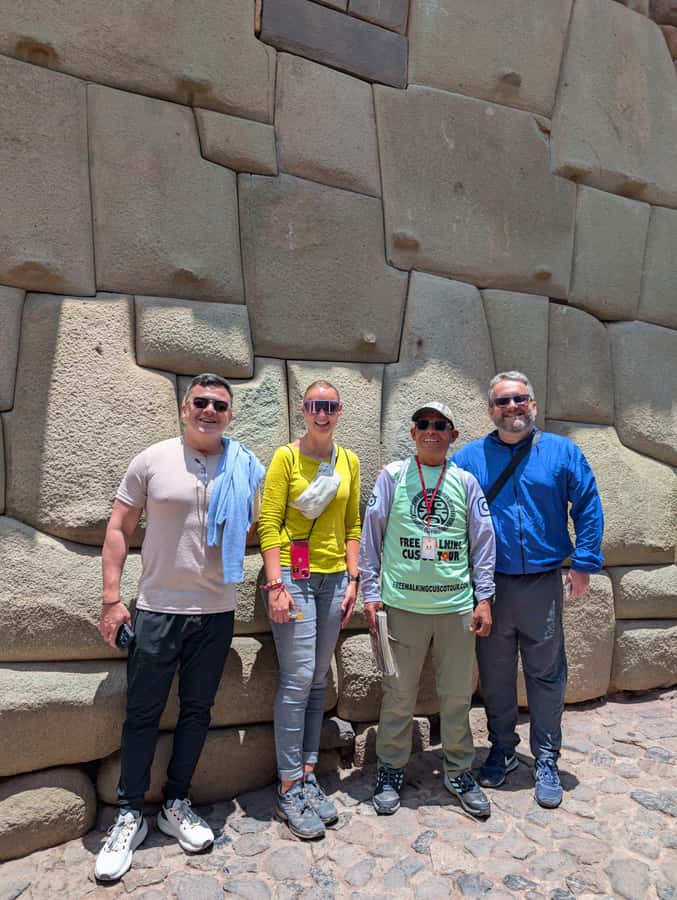
- The route begins beside Cusco’s main square: Meet between Calle del Medio and the Plaza de Armas, near the guide wearing a green T-shirt.
- Qoricancha explains Inca sun worship: The Temple of the Sun is the tour’s strongest history stop, with Inca stonework and an introduction to the central role of the sun.
- San Blas gives the walk a local finish: You pass artisan workshops, colonial churches, narrow lanes, and everyday Cusqueño life before ending at the San Blas viewpoint.
- The pace matters in Cusco: You will walk cobblestones and some uphill streets for two and a half hours, so comfortable shoes, water, a hat, and sunscreen are practical necessities.
- The price is unusually low: At $15, the tour offers strong value for orientation and local explanation, though food, drinks, transport, and any attraction tickets are not included.
- Confirm the meeting details: One booking record reports that no guide arrived and messages received no answer, so I would verify the start before setting off.
Starting at Calle del Medio and the Plaza de Armas
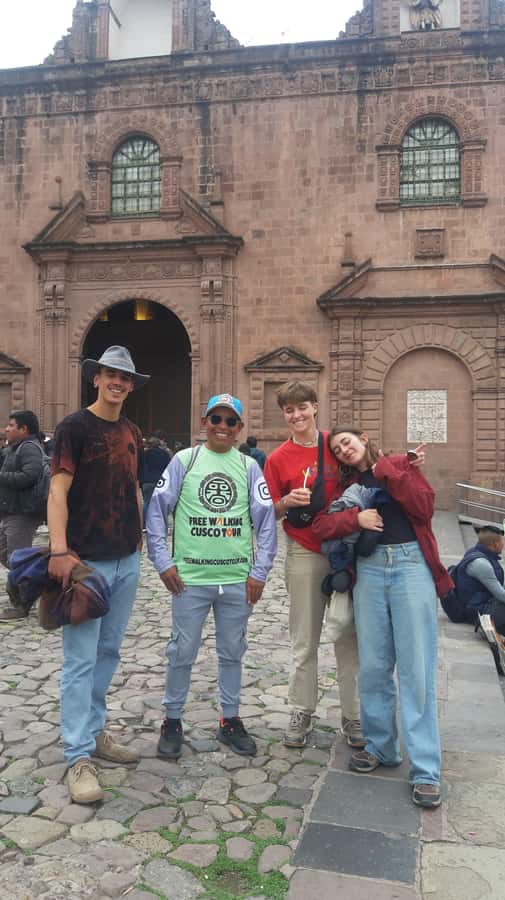
The meeting point is between Calle del Medio and the Plaza de Armas, at coordinates -13.5170627, -71.9795113. Look for the green T-shirt. This sounds simple, but Cusco’s center can feel busy and confusing when you first arrive, so I recommend reaching the square a little early and keeping the meeting instructions open on your phone.
The Plaza de Armas is a sensible place to begin. It gives you a quick visual lesson in Cusco: grand colonial buildings frame a space that was also important in the Inca city. Your guide explains the plaza’s past, the colonial architecture around it, and the Inca legends tied to the area.
I value this opening because it helps you read the rest of Cusco. Without some background, the city can look like a collection of handsome churches, stone walls, and souvenir shops. With a guide, you begin to notice where older Inca construction survives beneath or beside Spanish colonial buildings.
The tour is described as private, which should make it easier to ask questions and adjust your attention to the subjects that interest you most. The supplied details do not specify the exact maximum group size, so I would not assume a one-person experience. Still, the private format suggests a more personal exchange than a large public walk.
More Walking Tours in Cusco
- Cusco: Walking Tour with an Experienced Local Guides
★ 4.8 · 636 reviews - Cusco: Historic Walking Tour with Pisco Sour and Local Music
★ 5.0 · 190 reviews - Curious Monkey Cusco- Eat the Streets, Walking Food Tour
★ 5.0 · 160 reviews
Loreto Street and the city’s layered walls
From the square, the route continues along Loreto Street. This is one of the most useful sections for understanding how Cusco’s architecture developed. You see colonial buildings, local shops, and artisan workshops while walking through a narrow urban passage rather than simply stopping at a monument.
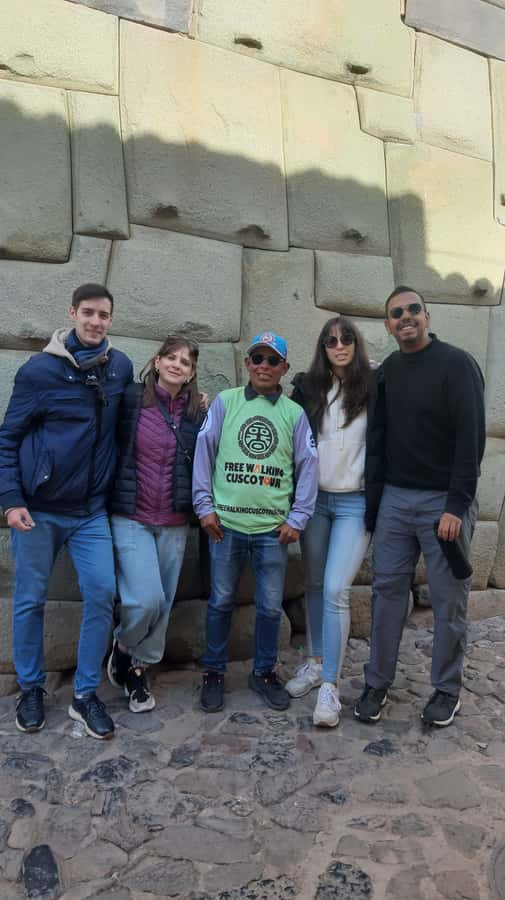
Look closely at the walls here. The appeal is not only the finished buildings. It is the contrast between Inca stonework and later colonial construction, along with the way shops and daily commerce now occupy the same old streets.
I like this part because it brings history down to eye level. You are not only hearing dates or names. You are seeing how the city’s past remains part of its present streetscape. The guide can point out details that are easy to pass without understanding, especially if this is your first hour in Cusco.
The walk does not promise a long shopping stop, and food or drinks are not included. That is useful to know if you expect a tasting tour or time to browse every workshop. Think of Loreto Street as a guided orientation through the center, with local craft activity as part of the scene rather than the main product.
Qoricancha and the Inca meaning of the sun
The next major stop is Qoricancha, also called the Temple of the Sun. This is the tour’s clearest opportunity to learn how important the sun was in Inca culture. Your guide explains the religious meaning of the site and draws your attention to its Inca architecture.
Qoricancha matters because it connects physical stonework with belief. The site is not presented simply as an old building. It helps explain how the Incas understood power, worship, and the natural world. That context gives greater meaning to later sights around Cusco.
I would pay close attention to the construction here. The Inca walls are a key reason this stop earns its place on a short walking route. The tour details say you can skip the ticket line, but they do not clearly state that admission is included in the $15 price. I would check the booking conditions before assuming your entrance ticket is covered.
Flash photography is not allowed, and you should respect that rule. It is also a good reminder to spend less time chasing pictures and more time looking at the masonry and listening to the explanation.
Cusicancha, an Inca palace with a later religious life
After Qoricancha, the route goes to the Inka Palace Cusicancha. This site is described as an Inca palace and temple that is now a church. That change gives you another clear example of Cusco’s layered past.
I find this kind of stop especially useful because it resists a simple old-versus-new story. The building has had more than one purpose, and the tour helps you see how Inca and colonial histories occupy the same city. You can ask your guide how the site’s earlier function relates to its later religious use, though the supplied details do not promise a specific presentation or interior access.
This stop also keeps the walk varied. You move from a major ceremonial site to a place with a different scale and use, then continue into streets where the city feels less formal. The route is not just a parade of famous façades. It shows how history appears in buildings that changed purpose over time.
More walking routes through Cusco:
- Cusco Highlights Walking Tour: History, Culture, Traditions
★ 4.9 · 72 reviews - Cusco: Historic Walking Tour with Pisco Sour and Music Show
★ 4.6 · 65 reviews - Cusco Food Walking Tour & Central Market
★ 5.0 · 48 reviews - Cusco: Historic Walking Tour & Scenic Views with local drink
★ 5.0 · 45 reviews
Inka Roca Street and the everyday city
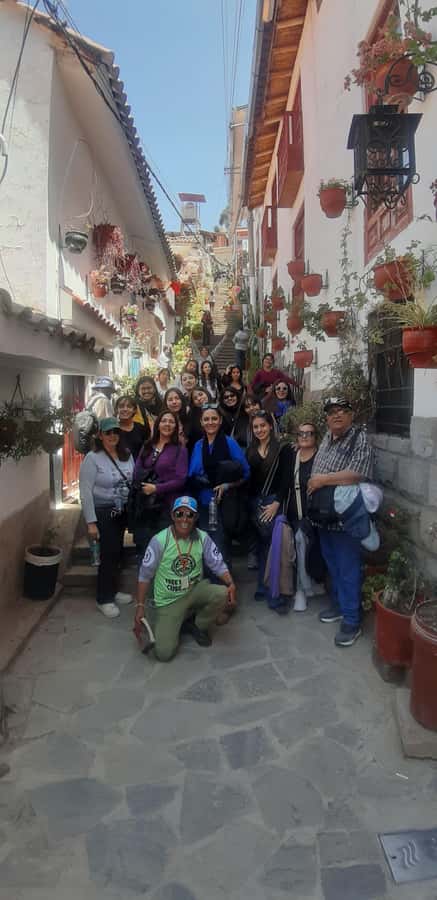
The walk then follows Inka Roca Street, a narrow cobblestone lane lined with colonial houses. This is where the tour shifts from formal landmarks to ordinary street life. You see local activity as you move through the neighborhood, rather than remaining in the central square.
Cobblestones are part of the charm and part of the work. Wear shoes with a firm sole and good comfort. The tour calls for a moderate level of fitness, and that is worth taking seriously. Two and a half hours on uneven streets can feel longer than the same time on a smooth sidewalk.
I like the route’s gradual change in mood. The Plaza de Armas introduces the city’s public face. Loreto Street shows its architectural layers. Qoricancha explains Inca religion. Inka Roca Street then lets you watch the city function at street level.
The tour does not include hotel pickup or drop-off. You need to reach the meeting point yourself and arrange your own way onward after the finish. Since the tour ends at the San Blas viewpoint, you may want to keep the rest of your afternoon flexible for the neighborhood.
San Blas, workshops, churches, and the final viewpoint
San Blas is the last neighborhood on the route. Here you see artisan workshops, colonial churches, and the daily life of Cusqueños before finishing at the Mirador de San Blas.
This ending makes sense. San Blas is known in the supplied tour details for its craft activity and colonial character, so it provides a different feel from the central plaza. You may find workshops operating during your walk, but the experience does not promise a formal craft demonstration or a guaranteed purchase stop.
The San Blas viewpoint is a practical finish because it gives you a place to pause after the uphill streets. The details do not promise a particular view or a set amount of time at the lookout, so treat it as the endpoint rather than a separate scenic excursion.
I would plan to explore San Blas again if you enjoy the neighborhood. The two-and-a-half-hour walk gives you an introduction, not an exhaustive visit. Once you know the streets and the location of the viewpoint, it is easier to return at your own pace.
What the $15 price really gives you
At $15 per person, this tour offers strong value if your main goal is orientation and explanation. You are paying for a professional local guide, a structured route, and access to useful historical context across several important areas of Cusco.
The value is not in included meals, transport, or a long museum visit. None of those are part of the package. The value is in having someone connect the Plaza de Armas, Inca architecture, colonial buildings, and San Blas instead of leaving you to piece them together alone.
A walking tour can also save you time. You do not need to plan the order of the sights, work out how the streets connect, or decide which details deserve attention. A strong guide can make a short visit feel more coherent.
The record for this experience is not perfect. One booking from Australia reported that the guide did not appear and that messages went unanswered. That is a serious service concern, even though other feedback praised the guide quality, including Enrique’s well-paced and informative approach. I would confirm the appointment and guide instructions shortly before the start.
The activity allows free cancellation up to 24 hours before the tour for a full refund. It also offers reserve-now, pay-later booking, which helps if your Cusco schedule may change. Those policies reduce the financial risk, but they do not remove the need to check that the meeting is confirmed.
Walking conditions, weather, and what to carry
Bring comfortable shoes, water, a hat, and sunscreen. Cusco’s streets can be uneven, and the route includes a moderate amount of walking with some uphill movement toward San Blas.
The tour is not wheelchair accessible and is not suitable for people with mobility impairments. That is not a minor footnote here. Cobblestones, narrow streets, and the climb toward the viewpoint shape the experience.
Smoking and flash photography are not allowed. You should also expect to walk outdoors for much of the 150 minutes, so sun protection matters even if the day begins cool.
The guide speaks Spanish or English. If you want detailed explanations of Inca beliefs, architecture, and local customs, choose the language in which you can ask follow-up questions comfortably. The value of the walk rises when you engage with the guide rather than simply follow the route.
Who will get the most from this Cusco walk
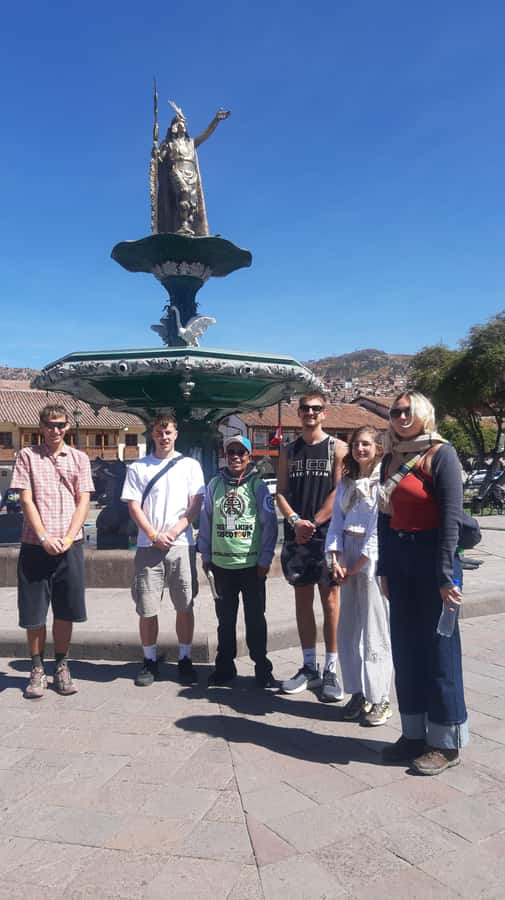
I would recommend this tour to a first-time visitor who wants a quick, low-cost introduction to Cusco. It is also useful for anyone who prefers to understand the city before returning independently to Qoricancha, San Blas, or the central streets.
It suits you particularly well if you enjoy:
- Walking through historic streets instead of viewing sights only from a vehicle
- Asking a local guide about Inca legends and colonial architecture
- Seeing artisan workshops and ordinary neighborhood life
- Having a planned route during your first day in Cusco
- Keeping most of the day free after a two-and-a-half-hour activity
I would think twice if you have difficulty with uneven surfaces, cannot manage moderate walking, or want a fully accessible route. I would also choose another activity if you want food tastings, hotel transportation, extended shopping time, or a detailed museum tour.
Final decision: a good-value introduction with one service warning
I like this Cusco walk for its route and price. The combination of the Plaza de Armas, Loreto Street, Qoricancha, Cusicancha, Inka Roca Street, and San Blas gives you a solid first map of the city’s past and present.
Book it if you want a local explanation of places you could technically visit alone. The praise for Enrique’s pace and the ease of finding less obvious sights suggest what a good guide can add. Just confirm the meeting before you go, carry sun protection, and allow for cobblestones and uphill walking.
At $15, the experience is worth considering for most mobile first-time visitors. It is not a complete tour of Cusco, but it is an efficient way to get your bearings and learn why the city looks the way it does.
FAQ
How long does the Cusco walking tour last?
The tour lasts 150 minutes, or two and a half hours.
What is the price?
The price is $15 per person.
Where does the tour begin?
The meeting point is between Calle del Medio and the Plaza de Armas in Cusco.
How do I identify the guide?
Look for a guide wearing a green T-shirt.
Where does the tour finish?
The tour finishes at the Mirador de San Blas.
Which languages are available?
The live guide is available in Spanish or English.
Is hotel pickup or drop-off included?
No. Pickup and drop-off are not included.
Are food and drinks included?
No. You need to arrange your own food and drinks.
Is the tour wheelchair accessible?
No. The activity is not wheelchair accessible and is not suitable for people with mobility impairments.
Added recently around Cusco
- Guided tour of the mountain of colors in Cusco★ 5.0 · 11 reviews
- 2-Day Private Short Inca Trail to Machu Picchu★ 5.0 · 15 reviews
- Tour Sacred Valley with Maras and Moray★ 5.0 · 15 reviews
- San Pedro Market Tour with Peruvian Cooking Class★ 5.0 · 31 reviews
- City Tour Cusco – Group★ 5.0 · 4 reviews
- Walking Culinary Experience★ 5.0 · 41 reviews
- City Tour in Cusco★ 4.5 · 10 reviews
- One Day Tour to Humantay Lagoon★ 5.0 · 8 reviews
Walking Tours, compared.
Lima Half-Day City Walking Tour (Small Groups)
Read our review →
Food & Art: Lima Colors and Flavors Walking Tour
Read our review →
Historic Walking Tour with Pisco Sour and Local Music
Read our review →
Walking tour in the Historic Center of Arequipa
Read our review →
Curious Monkey Cusco- Eat the Streets, Walking Food Tour
Read our review →
Miraflores Trending Flavors Half-Day Walking Tour
Read our review →Browse the lists this tour appears in