
Reviewed · INCA TRAIL TOURS
Ultimate Lares Trek & Inca Trail 5 days
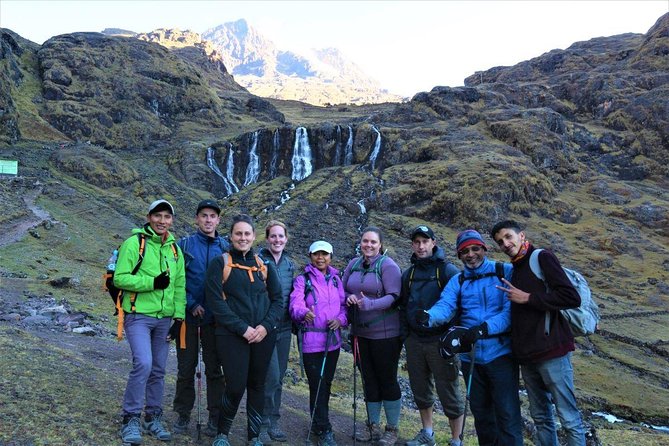
Quiet mountains, then Machu Picchu. This five-day route pairs the peaceful Lares Trek with the Short Inca Trail, giving you remote Andean villages, high mountain passes, hot springs, and a dramatic arrival at Machu Picchu through the Sun Gate. I especially like the small maximum group of 12 and the chance to spend time in places such as Cancha Cancha, where Quechua remains the main language and modern technology has not yet arrived.
I also like the strong support built into the trip. Your duffle can weigh up to seven kilos, horses carry camping supplies, and chefs prepare full meals in the mountains. The main concern is the altitude: the route reaches 4,700 meters, or 15,354 feet, on a demanding second day. Add the very early starts, steep stone steps, and nonrefundable booking terms, and this is a serious trek rather than a relaxed sightseeing holiday.
In This Review
- Key points to know before booking
- Why the Lares route makes a smart alternative
- Day one: Lares hot springs and a blue mountain lake
- Day two: Condor Pass at 4,700 meters
- Day three: Down to Huaran and the old streets of Ollantaytambo
- Day four: Chachabamba, Wiñay Huayna, and the Sun Gate
- Day five: Machu Picchu before the crowds
- The support team and what the price covers
- Group size, fitness, and practical concerns
- Should you book this Lares and Inca Trail combination?
- FAQ
- How long is the Ultimate Lares Trek and Inca Trail?
- How high does the trek go?
- Is camping equipment included?
- How much luggage can be carried by horse?
- Are Huayna Picchu and Machu Picchu Mountain included?
- Are meals included?
- What documents are needed for booking and travel?
Key points to know before booking
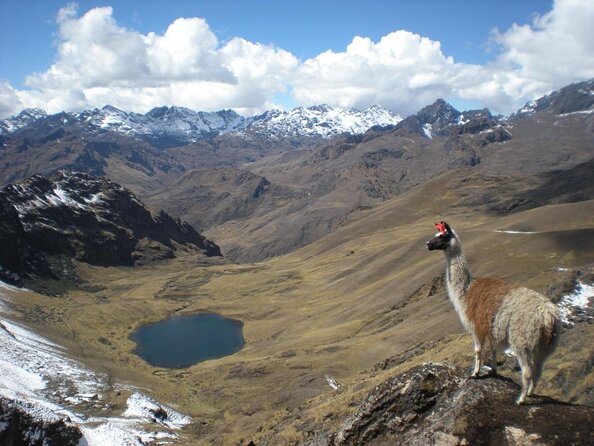
- Two very different treks in one trip: The Lares route is quiet and culturally focused, while the Short Inca Trail brings you to Machu Picchu through Chachabamba, Wiñay Huayna, and the Sun Gate.
- The highest point is 4,700 meters: Day two is the hardest section, with four hours uphill to Condor Pass followed by a three-hour descent.
- Remote camping feels genuinely remote: Cancha Cancha has no electricity, internet, drainage system, or cellphone service, and Quechua is spoken locally.
- Food is a major strength: The cooking team serves hearty, varied meals, and the support crew can even prepare cake while camping in the mountains.
- A small-group experience: The maximum group size is 12, although your actual group may be smaller.
- Peak tickets cost extra: Huayna Picchu and Machu Picchu Mountain require separate tickets booked well ahead of time.
Why the Lares route makes a smart alternative
Most people first hear about Machu Picchu through the classic Inca Trail. The Lares route offers something different. Instead of spending the whole trek among famous archaeological sites, you walk through high valleys, beside mountain lakes, and past villages where farming traditions remain part of daily life.
That matters if you want Peru to feel like more than a visit to one famous ruin. The first three days place the emphasis on people, animals, mountains, and village life. Llamas and alpacas appear around the camps, and the remote setting gives you long stretches of quiet.
The Short Inca Trail then supplies the famous stonework and Machu Picchu entrance. It is a good combination: the Lares section provides solitude and cultural contact, while the Inca Trail section gives you the classic archaeological approach.
I would not choose this trip simply to avoid crowds. Day four includes a busier section near Machu Picchu, and the citadel itself is a major attraction. Still, the contrast is useful. You get genuine stillness in Lares before reaching Peru’s most famous site.
More Hiking Tours in Cusco
- Classic Inca Trail Trek 4D/3N to Machu Picchu (Group Service)
★ 5.0 · 8,653 reviews - Machu Picchu: 4-Day Inca Trail Trek with Panoramic Train Ride
★ 5.0 · 4,568 reviews - Salkantay Classic Trek 5 Days from Cusco
★ 5.0 · 4,062 reviews
Day one: Lares hot springs and a blue mountain lake
Pickup is scheduled very early, with the itinerary listing a start around 5:30 am and the meeting information giving 4:30 am. Confirm the exact pickup time with TreXperience before bed, since a one-hour difference matters after an early departure.
The drive heads toward the Sacred Valley, with a stop at a local market before continuing to the Lares thermal baths. Arrival is expected around 8:00 am. The pools have different temperatures, and the water is intended to soothe muscles, bones, stress, and headaches.
I like this opening because it eases you into the trek. You are not thrown straight onto a mountain path after leaving Cusco. You can soak, eat breakfast, and prepare for the first uphill walk. The baths are not merely a photo stop. At high altitude, a calm start has real value.
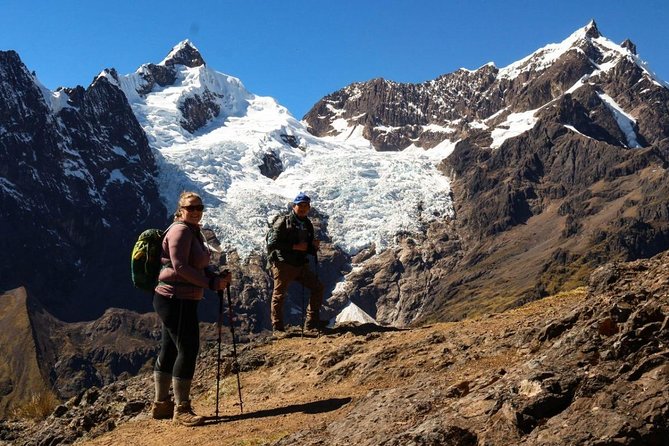
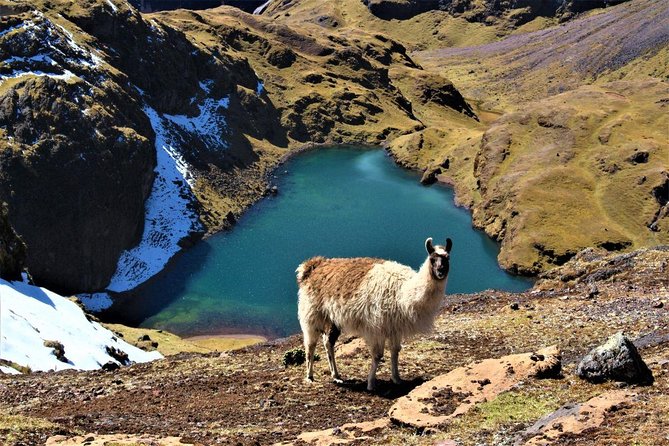
After breakfast, you hike uphill for about two hours toward Kiswarani village. Lunch follows, then another two hours takes you to camp beside a blue lake at 3,750 meters. The total distance is about nine kilometers, or 5.5 miles, with roughly four hours of walking.
The day is rated easy, but altitude can make an easy trail feel less easy. Take the pace slowly and keep drinking water. At camp, tents and hot tea are prepared for you. The evening is suited to resting, stargazing, and learning about Inca astronomy, provided the weather cooperates.
Day two: Condor Pass at 4,700 meters
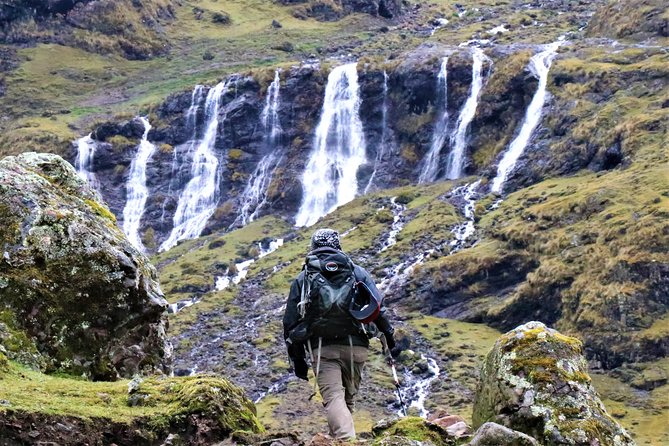
This is the day to respect. You receive coffee or cocoa tea in your tent, eat breakfast, and begin the longest and hardest climb of the trip. The ascent to Condor Pass takes about four hours and reaches 4,700 meters.
That height is the key fact in the whole itinerary. Even people who exercise regularly can feel the thin air. The tour asks for moderate physical fitness, but you should be comfortable with sustained uphill walking and a long day outdoors. Your guide can help with pace, yet no guide can remove the effects of altitude.
At the pass, take time to look around before beginning the three-hour descent. The route covers about 16 kilometers, or 9.9 miles, and lasts roughly seven hours. The scenery includes high Andean valleys and broad mountain views, but the physical work is the main story.
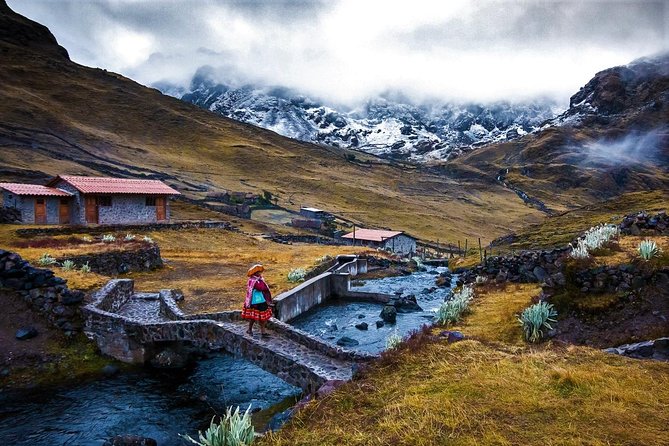
The night is spent at Cancha Cancha, at about 3,750 meters. This village is isolated from modern technology, with no electricity, internet, computers, drainage system, or cellphone service. Quechua is the local language.
For some people, that will be the most meaningful part of the trip. You are not passing through a recreated cultural display. You are spending time near a community that remains separated from urban services. For others, the lack of communication will feel uncomfortable. Tell family or friends before departure that you may be unreachable.
The crew prepares dinner at camp, and the support staff provides hot drinks in the morning. The food deserves special attention here. Previous groups have praised chefs including Tiburcio, Augusto, Vidal, Oscar, and their assistants for serving varied, filling meals in difficult conditions. One team even produced a birthday cake beside the trail. That is a small detail, but it shows the level of effort involved.
Day three: Down to Huaran and the old streets of Ollantaytambo
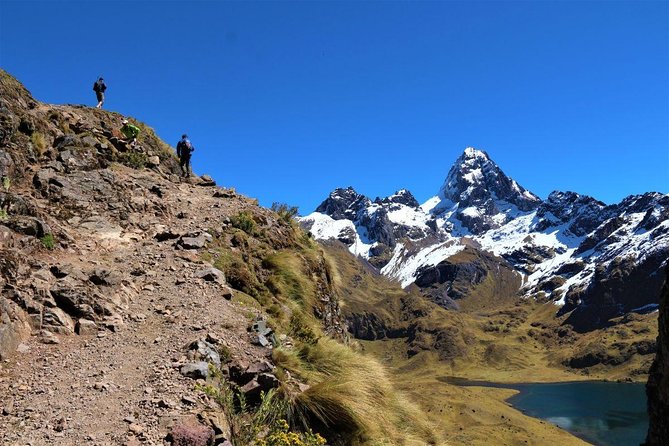
After the demanding pass, day three feels much gentler. You walk downhill for about four hours, covering 12 kilometers, or 7.4 miles, to Huaran at 2,700 meters.
The lower altitude and shorter walking time give your legs a chance to recover. It is still worth using trekking poles, especially if your knees are sensitive. Optional poles, along with a mattress and sleeping bag, are not included but can be arranged with guidance from the operator.
From Huaran, private transport takes you toward Salineras and Ollantaytambo. The plan includes time in Ollantaytambo, often called the last living Inca city. Its old streets and water channels remain in use, giving the town a sense of continuity rather than a purely archaeological feel.
You spend the night in a three-star hotel in Ollantaytambo and eat dinner at a local restaurant. This overnight stop is well chosen. It replaces a third night of camping with a bed, shower, and a lower altitude before the Inca Trail section.
The exact amount of time available at Salineras and Ollantaytambo is not specified, so do not expect a long independent visit to both. The main value is the change of setting: after two nights under canvas, you get a town, a hotel, and a chance to prepare for the next early start.
Other Inca Trail departures:
- Short Inca Trail to Machu Picchu 2D/1N
★ 5.0 · 3,007 reviews - 2-Day Inca Trail to Machu Picchu with Panoramic Train
★ 5.0 · 1,876 reviews - Inca Trail 4-Day 3-Night Trek to Machu Picchu with Expert Guides
★ 5.0 · 733 reviews - Cusco: 4-Day Inca Trail to Machu Picchu with Accommodation
★ 4.8 · 432 reviews
Day four: Chachabamba, Wiñay Huayna, and the Sun Gate
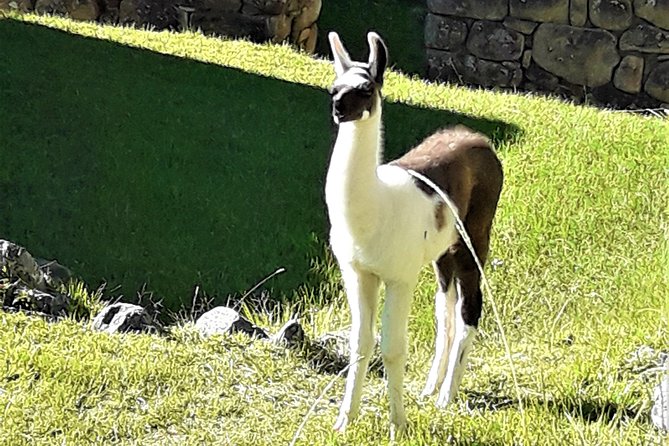
Day four begins around 6:00 am. You walk to the station, take a train for about 90 minutes along the Urubamba River, and leave the train at kilometer 104 near Chachabamba in the cloud forest.
This is the Short Inca Trail section. The first archaeological stop is Chachabamba, followed by about four hours of hiking toward Wiñay Huayna. A packed lunch and refreshments are supplied.
The path includes many stone steps. One direct piece of advice from the route is to be cautious if you have ankle or knee trouble. The altitude is lower than on the Lares section, but the stairs can still make this a long day.
Wiñay Huayna is one of the most memorable sites on this approach. After exploring it, you continue toward the Sun Gate, the classic viewpoint for a first sight of Machu Picchu. The final walk down to the citadel takes about an hour.
The schedule brings you to Machu Picchu in the afternoon. That can be an advantage. The main crowds are often thinner later in the day, and you may get a quieter first look at the ruins before heading down to Aguas Calientes.
The drawback is that you reach the site after a full hiking day. You may be tired when the great view appears. I consider that a fair trade. The arrival feels earned, and you still have the following morning for a longer visit.
Dinner and the night are in a three-star hotel in Aguas Calientes. The hotel category is modest rather than luxurious, but a bed after the trail is welcome.
Day five: Machu Picchu before the crowds
The final morning starts early. After breakfast, you take a bus up to Machu Picchu. On a clear day, you may see sunrise over the citadel, although mountain weather controls the view.
A guide leads a two to three-hour tour of Machu Picchu. That time is important. The site can look like a collection of walls if you do not understand how its plazas, terraces, temples, and viewpoints fit together. The tour gives you a base before you continue on your own.
You may also climb Huayna Picchu or Machu Picchu Mountain, but those tickets are optional and must be booked as far ahead as possible. They are not a last-minute add-on. If you already have one, tell TreXperience at booking.
After the guided visit, your guide explains how to take the bus back to Aguas Calientes. Lunch is not included, so allow money and time for it. The return uses a panoramic train and bus connection back to Cusco, where the team meets you and takes you to your hotel.
This is a long travel day, but the transport is arranged from start to finish. You are not left to work out the train, bus, and Cusco transfer alone.
The support team and what the price covers
At $980 per person, this is not a bargain basement hike. It is also more than a simple guided walk. The price covers hotel pickup, transportation throughout the route, two nights of camping, two hotel nights, meals, a seven-kilogram duffle carried by horse, guides, porters, chefs, camping equipment, and a Pachamanca cooking demonstration.
Four lunches, four dinners, and five breakfasts are included. Snacks are also listed during the trekking days. The strong food service is one of the best reasons to consider this package. Full meals help you keep going, and cooking high-quality food at mountain camps requires a sizeable support operation.
The team names that appear in connection with this route include guides Manolo, Anthony, Gilbert, Elias, Rosmel, Eddy, Sara, Jose Abad Cortez, Jason, Miguel, and William Elvis. The praise is especially strong for Manolo, who is described as encouraging, clear in English, and deeply interested in Quechua culture and local history. Sara is also praised for explaining each day clearly and keeping a comfortable pace.
The included duffle is useful, but seven kilos is not a huge allowance. Pack your essential hiking clothes, toiletries, and nightwear carefully. You will still carry your daypack, so keep it light.
The price offers solid value if you want a single booking that handles mountain logistics, food, porters, hotels, trains, and Machu Picchu access. It is less attractive if you already have camping equipment, prefer to arrange transport yourself, or want a luxury hotel standard.
Group size, fitness, and practical concerns
The maximum group size is 12. That is small enough for a more personal pace, though the actual number can vary. A private departure is possible in practice if few people book, but do not assume it unless TreXperience confirms it.
You need moderate physical fitness, with special attention to altitude preparation. The first day is rated easy, the second moderate to challenging, and the third easy. Day four is not rated in the supplied details, but the four-hour hike and many steps make it another serious walking day.
Bring a valid passport. Passport name, number, expiry date, and country are required for every participant at booking. Children must be accompanied by an adult. Vegetarian meals are available, and you should report dietary needs when booking.
The experience is nonrefundable and cannot be changed for personal reasons. Poor weather or failure to meet the minimum group size can result in another date, another experience, or a full refund. Since the trip is commonly booked about 13 days ahead, I would not wait that long if your dates are fixed, especially if you want Huayna Picchu or Machu Picchu Mountain.
Should you book this Lares and Inca Trail combination?
Book it if you want a cultural mountain trek first and a Machu Picchu visit second. The remote villages, Quechua-speaking community, high pass, hot springs, and excellent camp cooking give the trip a character that a direct Machu Picchu visit cannot match.
I would recommend it to fit hikers, adventurous families with older teenagers, solo hikers who want organized support, and couples who value quiet scenery and local contact. The small group limit and strong guide support are reassuring, particularly for solo participants.
Think twice if you dislike camping, struggle with altitude, need reliable phone service, or want plenty of free time at each stop. The route is demanding, the starts are early, and day two is no joke.
For me, the strongest case is the balance. You get the silence of Lares, the comfort of organized logistics, the stone paths of the Short Inca Trail, and two visits to Machu Picchu. At $980, that is a substantial purchase, but the included transport, meals, staff, hotels, horses, and permits make it a fair package for the right kind of hiker.
FAQ
How long is the Ultimate Lares Trek and Inca Trail?
The experience lasts approximately five days, including the Lares Trek, the Short Inca Trail, two camping nights, two hotel nights, and the return to Cusco.
How high does the trek go?
The highest point is Condor Pass at 4,700 meters, or 15,354 feet. The camping altitude on the second night is about 3,750 meters.
Is camping equipment included?
Two nights of camping with comfortable equipment are included. An optional mattress, sleeping bag, and trekking poles are not included.
How much luggage can be carried by horse?
The tour includes a duffle bag of up to seven kilos for personal belongings carried by horse.
Are Huayna Picchu and Machu Picchu Mountain included?
No. Tickets for Huayna Picchu and Machu Picchu Mountain are optional and must be booked well in advance.
Are meals included?
Five breakfasts, four lunches, and four dinners are included. Snacks are also provided during the trekking days. Lunch on the final day in Aguas Calientes is not included.
What documents are needed for booking and travel?
Your passport name, number, expiry date, and country are required for all participants at booking. You must carry a current valid passport on the day of travel.
More Hiking Days from Cusco
- Rainbow Mountain Full Day Trek
★ 5.0 · 1,469 reviews - Rainbow Mountain Day Trip from Cusco: Vinicunca Hiking Tour
★ 4.5 · 737 reviews - Humantay Lake Full Day Trek from Cusco with Lunch
★ 5.0 · 726 reviews - Ultimate Salkantay Trek to Machu Picchu 5 Days
★ 5.0 · 588 reviews
Longer Treks from Cusco
- 4-Day Salkantay Trek with Sky Camp Stay
★ 5.0 · 3,346 reviews - Salkantay Trek 5D/4N with Glass Cabins, Domes and Hobbit House
★ 5.0 · 2,488 reviews - 5-Day Premium Salkantay Trek
★ 5.0 · 788 reviews - Lares Valley Trek with Hot Spring 4-Day, 3-Night
★ 5.0 · 656 reviews
Added recently around Cusco
- Super valley or vip valley★ 5.0 · 13 reviews
- the Incas’ Sacred Valley★ 5.0 · 27 reviews
- Sacred Valley of the Incas Day Trip from Cusco★ 5.0 · 6 reviews
- Small-Group Tour: Rainbow Mountains Hiking from Cusco★ 4.0 · 5 reviews
- Excursion to the Sacred Valley of the Incas from Cusco★ 5.0 · 8 reviews
- Maras + Moray & Textile Experience★ 5.0 · 14 reviews
- Tour EN Cuatrimoto POR la Montaña 7 Colors Hike 5 Minutes★ 4.5 · 32 reviews
- rainbow mountain★ 4.0 · 4 reviews
Inca Trail Tours, compared.
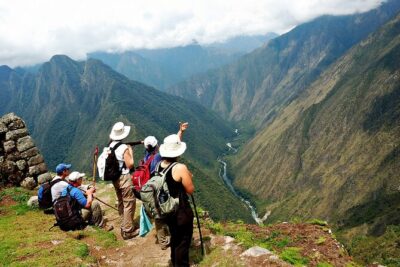
Classic Inca Trail Trek 4D/3N to Machu Picchu (Group Service)
Read our review →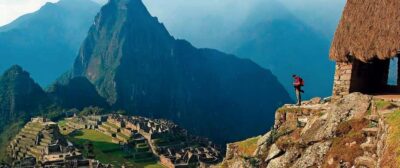
Machu Picchu: 4-Day Inca Trail Trek with Panoramic Train Ride
Read our review →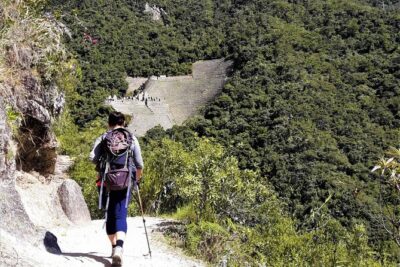
2-Day Inca Trail to Machu Picchu with Panoramic Train
Read our review →Inca Trail 4-Day 3-Night Trek to Machu Picchu with Expert Guides
Read our review →4-Day Inca Trail to Machu Picchu with Accommodation
Read our review →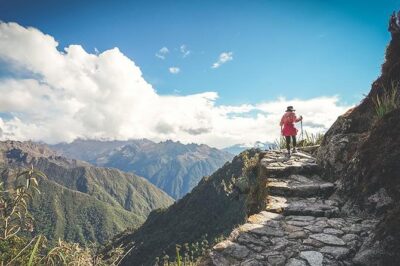
4-Day Trek to Machu Picchu Through the Inca Trail
Read our review →
4 Day – Inca Trail to Machu Picchu – Group Service
Read our review →Browse the lists this tour appears in