
Reviewed · ANDEAN TREKKING TOURS
Ausangate Trek 5 Days
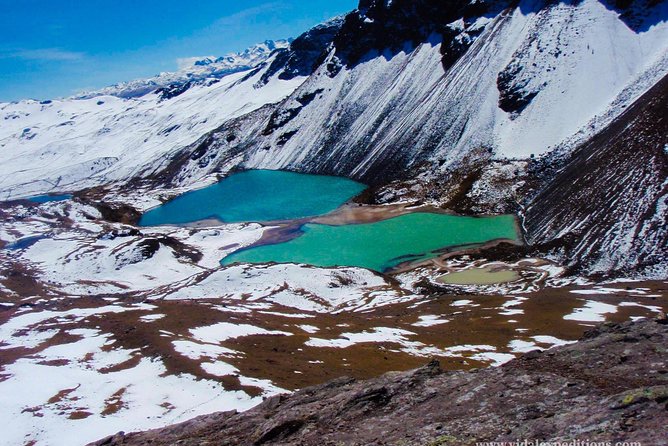
High passes, warm springs, and very few crowds. The five-day Ausangate Trek takes you around one of Peru’s great sacred mountains, with turquoise lakes, glacier views, local traditions, and camps far from the usual Cusco circuit. I like the small groups, capped at 10 people, and the care shown by the cooking and horse team. I also like that the route includes hot springs and a local family visit, not just miles of walking.
The catch is the altitude. You sleep as high as 4,630 meters and cross the 5,200-meter Palomani Pass, so this is not a casual mountain holiday. The cold can be severe at night, and the route requires a moderate level of fitness even though the walking days are not especially long by trekking standards.
In This Review
- Key things to know before booking
- What makes the Ausangate Trek different
- Day 1: From Cusco to Upis hot springs
- Day 2: Two high passes and Jatun Puqa Q’ocha
- Day 3: Palomani Pass and the highest point
- Day 4: Blue lagoons and Pacchanta hot springs
- Day 5: Local food, weaving, and the ride back to Cusco
- Food, horses, and camp support
- Is $660 a fair price?
- Fitness, altitude, and what to pack
- Who will enjoy this trek most?
- Should you book the Ausangate Trek?
- FAQ
- How long is the Ausangate Trek?
- What is the highest point on the trek?
- What meals are included?
- Is a sleeping bag included?
- Is the entrance fee included?
- What time does the tour start?
- How many people can join the tour?
Key things to know before booking
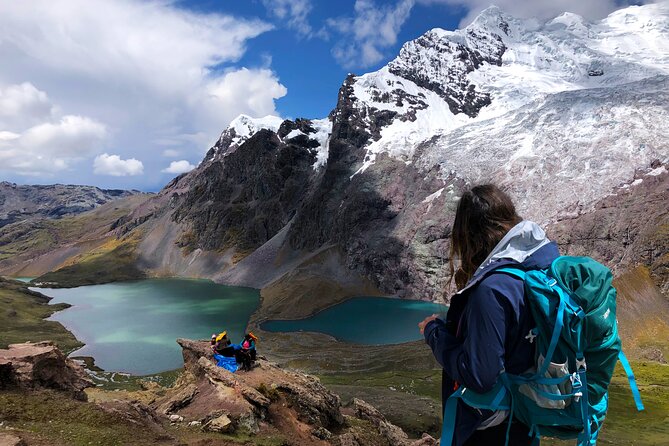
- The highest point is Palomani Pass at 5,200 meters, where the guide performs a ceremony for Apu Ausangate.
- You camp at very high elevations, including a night at about 4,630 meters, so acclimatization and warm clothing matter.
- Hot springs appear at both ends of the trek, first at Upis and later at Pacchanta.
- The route is quiet and remote, with long stretches where you may see few other groups.
- Meals are a major strength, with five lunches, four dinners, and four breakfasts included.
- The $660 price covers the main trek support, but you still pay the 20-sol entrance fee and bring or rent a sleeping bag.
What makes the Ausangate Trek different
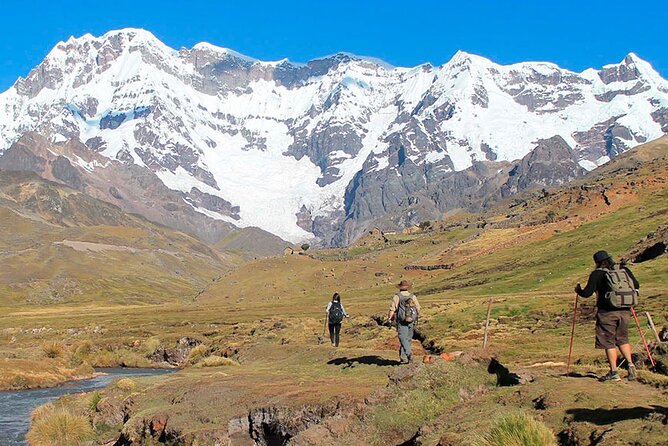
Ausangate is not a trek to a single famous viewpoint. It is a four-night circuit through the high Andes, circling Ausangate Mountain and passing glacier-fed lakes, broad valleys, alpacas, and high passes.
The route feels more remote than the Inca Trail or the better-known approaches to Machu Picchu. You are not walking from ruin to ruin. Instead, the reward comes from the mountain itself, the changing colors of the lakes, the high-altitude silence, and time spent with people who know this region well.
The tour leaves Cusco at 5:00 in the morning. A private vehicle takes you to Tinke, where you can buy last-minute supplies and have breakfast before continuing to Rondoca, the trailhead. From there, a cook and horse driver join the group, carrying equipment and helping set up camp.
The group limit of 10 is useful here. At this altitude, a small group lets the guide adjust the pace and keep a closer eye on everyone. Some departures may be much smaller. One couple had the full support of the guide, cook, assistant cook, and horse driver, which gave the trip a personal feel.
More Hiking Tours in Cusco
- Classic Inca Trail Trek 4D/3N to Machu Picchu (Group Service)
★ 5.0 · 8,653 reviews - Machu Picchu: 4-Day Inca Trail Trek with Panoramic Train Ride
★ 5.0 · 4,568 reviews - Salkantay Classic Trek 5 Days from Cusco
★ 5.0 · 4,062 reviews
Day 1: From Cusco to Upis hot springs
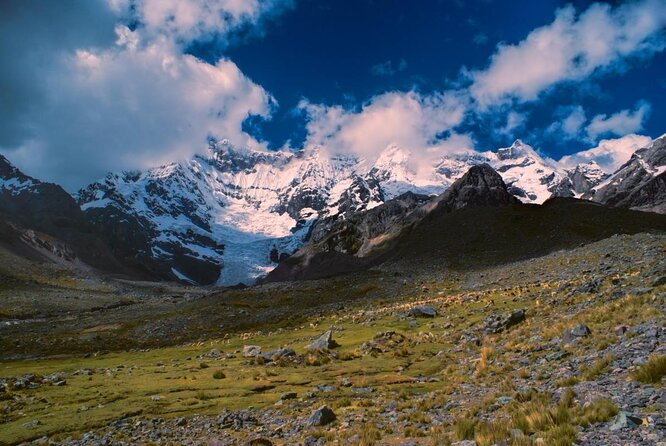
The first day is a gentle introduction by Ausangate standards. After the early drive and the supply stop in Tinke, you begin hiking from Rondoca. The first walking section takes about two hours before lunch, with views toward Apu Ausangate.
The stated distance is 8 kilometers, though the itinerary also lists it as 3 miles, which is not the same measurement. I would treat the day as roughly 3 to 4 hours of hiking rather than relying too heavily on the mileage figure.
You finish at Upis, a village at about 4,200 meters. The hot springs are the star of the afternoon. Soaking your legs after the first high-altitude walk is a practical pleasure, and coca tea gives the evening a distinctly Andean feel.
The drawback is that you sleep high on the very first night. Cusco itself is already at altitude, but 4,200 meters is a much harder setting. If you have not spent time acclimatizing in Peru, this opening night may feel rough.
Your camp sits at about 4,200 meters, and dinner is included. The horses carry the camping equipment, so you do not need to carry the full load yourself. You will still need a daypack with water, warm layers, rain protection, snacks, and anything you need during the day.
Day 2: Two high passes and Jatun Puqa Q’ocha
The second day is one of the hardest. The team wakes you with hot coca tea before breakfast, then you begin the climb to Arapa Pass at 4,850 meters.
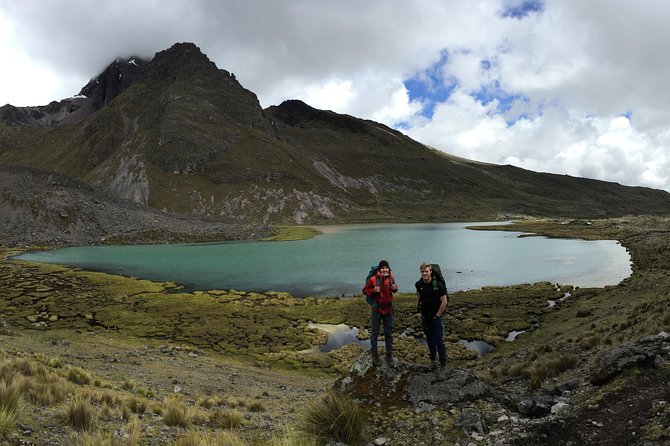
The effort is rewarded with views down the valley and toward Puqa Q’ocha, a green lake. You then descend for roughly two and a half hours to Jatun Puqa Q’ocha, a turquoise lake where lunch is served beside the water.
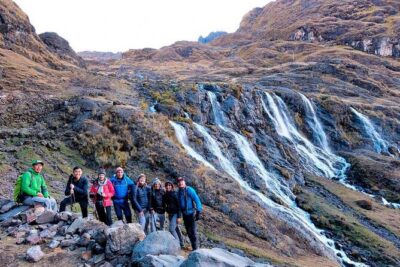
This is the kind of day that explains why the Ausangate route is special. The scenery changes as you walk, from high pass to open valley to colored lake, with Ausangate Mountain providing a constant reference point. The lakes are fed by snow and ice from the mountain, and their color is especially striking against the bare high-Andean terrain.
After lunch, you climb again to Apacheta Pass at about 4,980 meters. A turquoise lagoon sits below, fed by melting snow from Ausangate. Then you descend for about an hour to the second camp near Ausangate Qocha.
The day covers about 12 kilometers and takes roughly seven hours of walking. The camp elevation is listed at around 4,630 meters, another very high night. You may find the cold more difficult than the walking, especially after sunset. One important tip from past experience on this route is to bring the warmest mountain clothing you own, including a serious sleeping system.
Day 3: Palomani Pass and the highest point
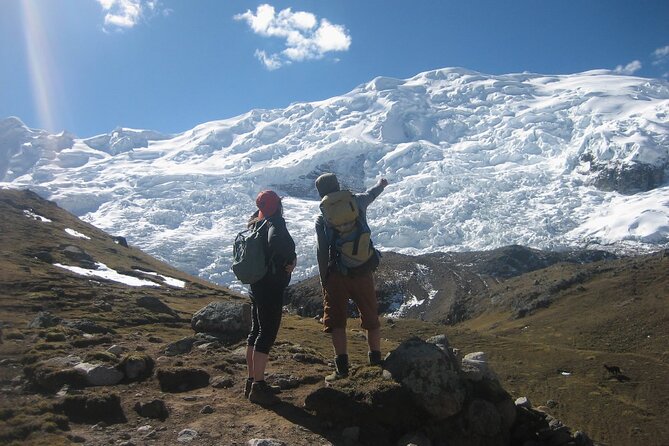
Day three reaches the trek’s summit, Palomani Pass at 5,200 meters, or about 17,060 feet. The climb takes around two hours from camp, though your pace may be slower because thin air affects even strong hikers.
At the pass, the guide performs a ceremony for Apu Ausangate. In Andean tradition, an Apu is a sacred mountain spirit. This moment gives the trek a cultural meaning that a simple photo stop cannot provide. The mountain is not treated only as scenery. It is part of a living spiritual world.
The guide assigned to your departure may be Chino, Guillermo, or Urbano. Chino is praised for combining humor, local stories, and care on the trail. Guillermo is noted for explaining local culture, wildlife, and long-standing traditions. Urbano has also been praised for encouragement, cultural knowledge, and taking strong photographs along the way. The actual guide is not guaranteed in advance, so confirm that detail if it matters to you.
After Palomani Pass, you descend for about an hour to Uchuy Phinaya for lunch. The afternoon continues for a couple of hours to the next campsite, with the route dropping toward about 4,300 meters.
The day is listed at 13 kilometers and six to seven hours of hiking. You may find it physically demanding, but it is also the clearest high point of the entire circuit. Reaching the pass is a serious achievement, and the ceremony gives the effort a memorable setting.
Longer treks from Cusco:
- 4-Day Salkantay Trek with Sky Camp Stay
★ 5.0 · 3,346 reviews - Salkantay Trek 5D/4N with Glass Cabins, Domes and Hobbit House
★ 5.0 · 2,488 reviews - 5-Day Premium Salkantay Trek
★ 5.0 · 788 reviews - Lares Valley Trek with Hot Spring 4-Day, 3-Night
★ 5.0 · 656 reviews
Day 4: Blue lagoons and Pacchanta hot springs
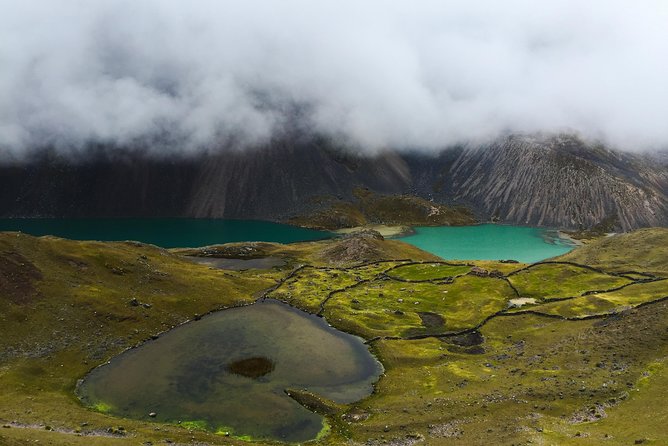
Day four is shorter, at about six hours, and the route continues downward. There is one pass to cross, but the main attraction is the series of deep-blue lagoons and glacial lakes along the trail.
The itinerary even suggests swimming in one of the lakes if you are brave enough. I would treat that as an optional moment, not a promised part of the trip. At this altitude, cold water and wind can make a quick dip less appealing than it sounds.
Ausangate remains visible from a new angle, and the route opens toward Pacchanta Valley. The final goal is Pacchanta’s hot springs, where you can soak while looking back toward the mountain.
This is a smart way to finish the walking portion. After three demanding days above 4,000 meters, a warm pool is far more welcome than another scenic overlook. The camp elevation is listed at 4,300 meters, with the route descending overall, so the night should feel easier than the high camp near Ausangate Qocha.
The fourth night is your last in camp. Dinner is included, as are the other evening meals during the trek. The cooking receives unusually strong praise, with Benigno and assistant cook Euden singled out for producing generous meals in camp. That matters more than it might sound. At altitude, a hot dinner can restore both energy and morale.
Day 5: Local food, weaving, and the ride back to Cusco
The last morning begins with breakfast and a ceremony with a local family. You learn about local food, cultural traditions, and weaving techniques before taking a bus back to Cusco.
This cultural visit is a valuable counterweight to the physical challenge. You see more than remote valleys and dramatic peaks. You get a brief look at how local families preserve food, clothing, craft, and identity in a difficult high-altitude setting.
The final activity is listed at about three hours, mainly including the visit and transport. The schedule does not describe a final hike, so you should expect the walking circuit to finish on day four.
Food, horses, and camp support
The price includes five lunches, four dinners, and four breakfasts. It also includes camping equipment and horses to carry the gear. The sleeping bag is not included, and the 20-sol entrance fee is extra.
The food is one of the strongest parts of this trip. Benigno is praised for preparing varied, hot meals three times a day, while the wider crew is described as upbeat and attentive. You should still tell the operator about dietary needs before departure, since no specific dietary arrangements are listed.
The horse driver is not just a pack animal handler. Angel is praised for carrying equipment, helping put up and take down tents, and assisting in the camp kitchen. That behind-the-scenes work is what keeps a remote trek running.
The included camping equipment improves the value of the package, but the information does not list every item. Ask what tents, sleeping mats, and other gear are supplied. You will need to know this before packing, especially because the nights can be extremely cold.
Is $660 a fair price?
At $660 per person, this is not a bargain day tour, but it is a reasonable price for a five-day supported trek in a remote area. You receive private transportation at the start, bus transport back to Cusco, cooks, a horse driver, camping equipment, pack animals, and most meals.
The cost also buys logistical support in an environment where carrying food and camping gear yourself would make the route much harder. A self-supported trip might look cheaper at first, but the practical value of the crew becomes clear when you are camping above 4,500 meters.
The price does not include the sleeping bag or the 20-sol entry fee. Those are small additions compared with the total cost, but you should include them in your budget. The tour is also generally booked about 17 days ahead, so leaving arrangements until the last moment may limit your options.
Fitness, altitude, and what to pack
You need a moderate level of physical fitness. The daily distances range from about 8 to 15 kilometers, but distance alone does not tell the full story. The altitude is the real test.
You cross three passes near or above 4,850 meters, with Palomani reaching 5,200 meters. You also sleep at roughly 4,200, 4,630, 4,500, and 4,300 meters. That is a demanding altitude profile even if you are comfortable hiking at sea level.
I would choose this trek only after allowing time in Cusco or another high-altitude area to adjust. The supplied information does not set a required acclimatization period, so you should discuss your plans with the operator before committing.
Pack for cold nights, strong sun, wind, rain, and sudden weather changes. Bring warm mountain clothing, gloves, a hat, sturdy hiking shoes, sun protection, water, snacks, and a sleeping bag unless you arrange one separately.
The tour requires good weather. If conditions force cancellation, you can receive a different date or a full refund. You can also cancel for a full refund up to 24 hours before the 5:00 a.m. start, but changes or cancellations made later are not accepted.
Who will enjoy this trek most?
I would recommend the Ausangate Trek to you if you want remote mountain scenery, high passes, small groups, and a stronger connection to Andean culture than you get on a standard sightseeing tour.
It suits hikers who can manage several hours of walking at altitude and who do not need a hotel bed every night. It also suits people who value good food and a capable support team. The trip can feel almost private when the group is small, and some departures have had only two people.
I would not choose it if you are looking for a relaxed vacation, low-altitude walking, or a route packed with archaeological sites. The beauty here is natural and cultural, but the conditions are austere. Even experienced hikers from the Himalayas have found the cold comparable to high mountain nights elsewhere.
Should you book the Ausangate Trek?
Book it if your priority is a quiet, demanding circuit around a sacred Peruvian mountain, with turquoise lakes, hot springs, local traditions, and strong camp support. The combination of remote scenery, excellent food, and guides such as Chino, Guillermo, and Urbano gives this trek unusual warmth for such a tough route.
Before paying, confirm the guide, sleeping bag arrangements, camping equipment, dietary needs, and exact mileage. Most of all, be honest about altitude. If you prepare properly and pack for real cold, the $660 cost buys a well-supported route that reaches places many people visiting Cusco never see.
FAQ
How long is the Ausangate Trek?
The trek lasts approximately five days, with four nights of camping. The walking days take about four, eight, seven, and six hours, followed by a cultural visit and transport on day five.
What is the highest point on the trek?
The highest point is Palomani Pass at 5,200 meters, or about 17,060 feet.
What meals are included?
The tour includes five lunches, four dinners, and four breakfasts.
Is a sleeping bag included?
No. A sleeping bag is not included, so you must bring one or arrange one separately.
Is the entrance fee included?
No. The entrance fee costs 20 soles and is paid separately.
What time does the tour start?
The tour starts at 5:00 a.m. in Cusco.
How many people can join the tour?
The maximum group size is 10 people.
More Hiking Days from Cusco
- Rainbow Mountain Full Day Trek
★ 5.0 · 1,469 reviews - Rainbow Mountain Day Trip from Cusco: Vinicunca Hiking Tour
★ 4.5 · 737 reviews - Inca Trail 4-Day 3-Night Trek to Machu Picchu with Expert Guides
★ 5.0 · 733 reviews - Humantay Lake Full Day Trek from Cusco with Lunch
★ 5.0 · 726 reviews
Added recently around Cusco
- Guided tour of the mountain of colors in Cusco★ 5.0 · 11 reviews
- 2-Day Private Short Inca Trail to Machu Picchu★ 5.0 · 15 reviews
- City Tour Cusco – Group★ 5.0 · 4 reviews
- Tour Sacred Valley with Maras and Moray★ 5.0 · 15 reviews
- San Pedro Market Tour with Peruvian Cooking Class★ 5.0 · 31 reviews
- Walking Culinary Experience★ 5.0 · 41 reviews
- City Tour in Cusco★ 4.5 · 10 reviews
- One Day Tour to Humantay Lagoon★ 5.0 · 8 reviews
Andean Trekking Tours, compared.
Salkantay Trek 5D/4N with Glass Cabins, Domes and Hobbit House
Read our review →
Lares Valley Trek with Hot Spring 4-Day, 3-Night
Read our review →
Ultimate Salkantay Trek to Machu Picchu 5 Days
Read our review →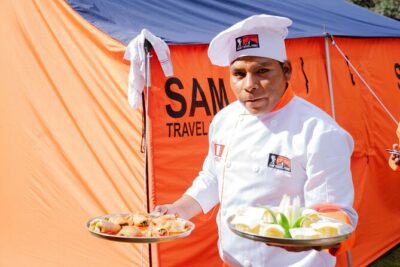
Lares Trek to Machu Picchu 4D/3N Including Hot Springs
Read our review →
4-Day Inca Jungle Trail to Machu Picchu Hiking and Biking Tour
Read our review →Browse the lists this tour appears in