
Reviewed · WORKSHOPS
Bean-to-Bar Chocolate Workshop in ChocoMuseo Lima Miraflores
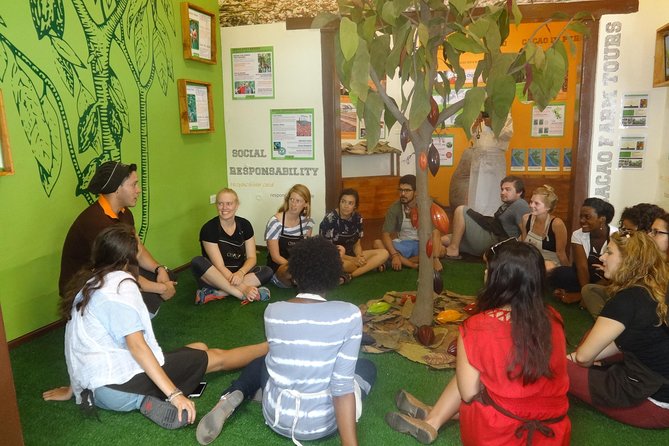
Chocolate tastes better when you make it. This two-hour ChocoMuseo workshop gives you hands-on work with cacao, from roasting and grinding nibs to shaping your own chocolates. I especially like the chance to taste cacao at several stages and the generous 130-gram chocolate souvenir, though the class takes place in an open market space rather than a traditional museum.
The small maximum of 10 people keeps the class personal, and guides such as Diana, Dani, Manuel, Natalia, and Robert have been praised for their warmth and clear explanations. You will need to allow extra time after the class, since the chocolates may not be ready to collect until about 45 minutes later.
In This Review
- What makes this Lima chocolate class worth your time
- Finding ChocoMuseo inside Inka Plaza
- Starting with the cacao fruit and bean
- Roasting beans and making cacao shell tea
- Grinding cacao nibs with a melangeur
- Tasting chocolate drinks and different cocoa strengths
- Creating your own chocolate souvenir
- How much value do you get for $33.79?
- Who will enjoy this workshop most?
- Practical timing, group size, and planning tips
- Is the ChocoMuseo Lima workshop worth booking?
- FAQ
- Where does the chocolate workshop take place?
- How long does the workshop last?
- What is included in the price?
- Do I need to arrange transportation?
- How many people can join the class?
- Can I cancel for a refund?
What makes this Lima chocolate class worth your time
- You handle cacao at several stages: Roast beans, crack away their shells, grind nibs, and taste the ingredients before they become chocolate.
- You make two cocoa drinks: The class includes drinks made from cacao in different forms, including hot chocolate and a spiced preparation.
- You choose your own chocolate additions: Your handmade pieces can include ingredients selected by you.
- You take home 130 grams: The finished chocolate makes a useful and edible souvenir of Lima.
- The group is capped at 10 people: A small class gives you a better chance to ask questions and get help.
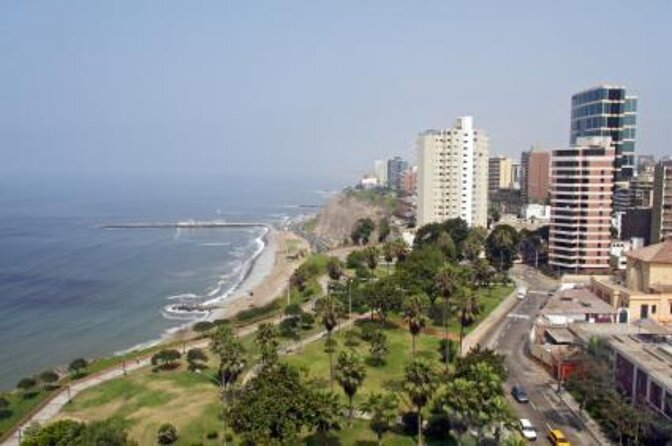
- You are in Inka Plaza: The workshop sits inside a market area on Avenida Petit Thouars, so you can browse Peruvian crafts before or after class.
Finding ChocoMuseo inside Inka Plaza
The workshop is at ChocoMuseo, inside Inka Plaza at Av. Petit Thouars 5330 in Miraflores. This detail matters because the name can suggest a large, formal chocolate museum. Instead, you should expect a workshop area located within a shopping and market complex.
Several parts of the class take place outside under a roof, with open sides or no windows. It is not an indoor, climate-controlled room in the usual sense. Dress for Lima’s conditions on the day, and keep in mind that nearby market activity can make it harder to hear a soft-spoken instructor.
The meeting point is also the ending point. Transportation is not included, so you make your own way to Inka Plaza and return to your hotel or continue sightseeing afterward. Since the workshop is near public transportation, it works well as part of a Miraflores afternoon.
Give yourself a few extra minutes to locate the exact setup inside the plaza. The entrance can be a little confusing at first, especially if you expect a separate storefront or museum building. Once you find the ChocoMuseo area, the staff can direct you to the class.
A few more Lima trips worth lining up side by side
- Discover Miraflores nightlife with Bar Crawl Lima
★ 5.0 · 399 reviews - Lima: Miraflores Nightlife Tour with Bar Crawl & Free Shots
★ 4.8 · 293 reviews - Lima Pub Crawl – Party tour: Friday Barranco/Saturday miraflores
★ 5.0 · 140 reviews
Starting with the cacao fruit and bean
The best part of this experience is that it does not begin with a finished chocolate bar. You start by learning where cacao comes from and what the raw material looks and tastes like before processing.
You may get to taste the pulp surrounding the cacao beans. It has a soft, slippery texture, with a flavor some people compare to banana. This is a small but memorable moment because it shows how different the fresh fruit is from the dark chocolate most of us know.
The guide then explains the path from cacao tree to finished chocolate. You learn about harvesting, the bean itself, and the changes that take place during processing. The lessons also touch on the history of chocolate making and the role of cacao in the region.
This introductory section is especially useful for children and anyone who has only seen cacao as a packaged product. You are not simply told that chocolate comes from a bean. You get to see and taste the material at an early stage, then follow it through the workshop.
Guides have been praised for making this section lively and accessible. Diana has been singled out for clear English and patience with children, while Manuel has been praised for his humor and passion when explaining cacao’s place in Peru. The instructor can make a real difference here, since the class depends as much on explanation as on the food itself.
Roasting beans and making cacao shell tea
Next comes the practical work. You roast cacao beans, then crack them to remove the outer shell. This gives you a direct sense of how much preparation is needed before the bean can become chocolate.
The roasted shells do not simply go into the bin. They can be used to prepare a tea, which you taste during the class. This is one of the more unusual parts of the session and helps show that cacao has more uses than chocolate bars and hot cocoa.
The roasting and shelling steps are hands-on, but they are not the same as producing a finished bar from a raw bean by yourself. The class demonstrates the process and lets you take part in key stages. That distinction is worth knowing if you expect to operate every piece of chocolate-making equipment from start to finish.
The pace is generally quick enough to keep the two hours moving. You will handle ingredients, listen to explanations, and sample the results rather than sit through a long lecture. For families, this mix of short demonstrations and small tasks works better than a purely visual tour.
Grinding cacao nibs with a melangeur
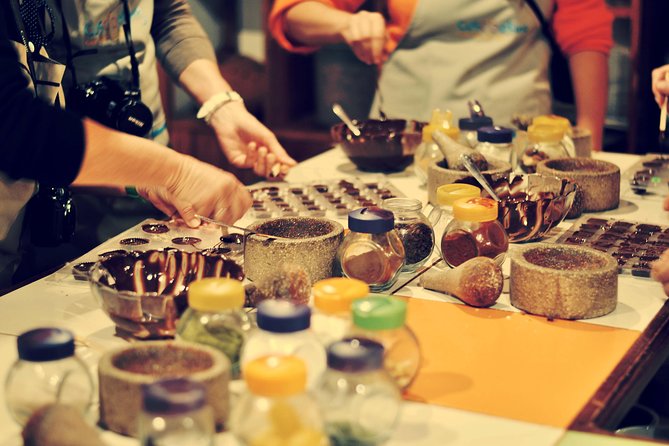
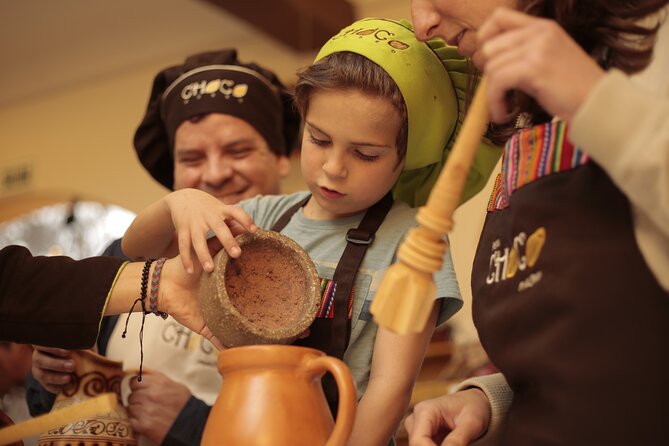
After roasting and removing the shells, you work with the cacao nibs. These are the broken pieces of the bean, and grinding them begins the transformation into a smoother chocolate mixture.
The workshop introduces the melangeur, a machine used to grind and mix cacao. Seeing this equipment helps explain why chocolate has a smoother texture than ground cacao alone. You can connect the rough nibs in your hand with the liquid and creamy forms used later in the class.
This section is valuable because it fills in the part most basic chocolate tastings skip. You are not only sampling finished products. You are learning how roasting, grinding, and mixing affect flavor and texture.
Still, keep your expectations precise. You do not make one complete chocolate bar entirely from raw bean to finished bar during the class. Instead, you learn the bean-to-bar process through demonstrations and tasting, then use prepared melted chocolate for the personalized candy-making portion.
That setup keeps the class manageable within roughly two hours. It also means the hands-on work stays fun rather than becoming a long industrial process. If your main goal is to make something edible and take it home, this arrangement works well.
Also leaving from Lima, and nothing like the above:
- Premium Paracas & Huacachina Day Trip from Lima with Sunset Toast
★ 5.0 · 7,380 reviews - Full Day Tour From Lima: Paracas and Huacachina Oasis
★ 5.0 · 3,694 reviews - Lima Ultimate Peruvian Food Tour
★ 5.0 · 1,845 reviews - Lima Half-Day City Walking Tour (Small Groups)
★ 5.0 · 1,508 reviews
Tasting chocolate drinks and different cocoa strengths
The tasting portion adds plenty of flavor to the lesson. You try chocolate drinks made from cacao in different forms, including hot chocolate and a spicy preparation. Cacao teas made from the shells are also part of the experience.
Some sessions include tasting chocolate from very dark, nearly pure cacao through milk chocolate around 52 percent. This gives you a useful comparison. Instead of thinking of chocolate as one fixed flavor, you can notice how bitterness, sweetness, milk, and added ingredients change the result.
The drinks are one of the most praised elements of the class. The hot chocolate is a favorite with children, while the spiced version gives the tasting a Peruvian and Latin American feel without requiring you to commit to a whole cup of an unfamiliar flavor.
I like this part because it connects the technical lesson to everyday eating. You learn what roasting and cacao percentage mean, then taste the difference immediately. It is also a good break between the more tactile stages of roasting, shelling, and grinding.
The open setting has one small drawback. If the surrounding market is noisy, it can be difficult to hear every word, particularly when the instructor speaks softly. Stay close to the guide during explanations, and do not hesitate to ask for a point to be repeated.
Creating your own chocolate souvenir
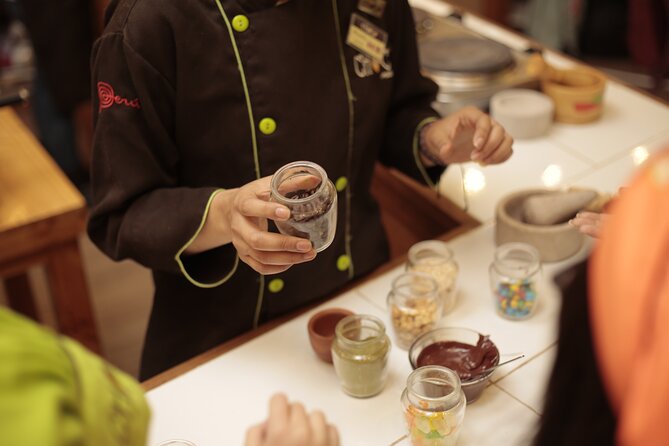
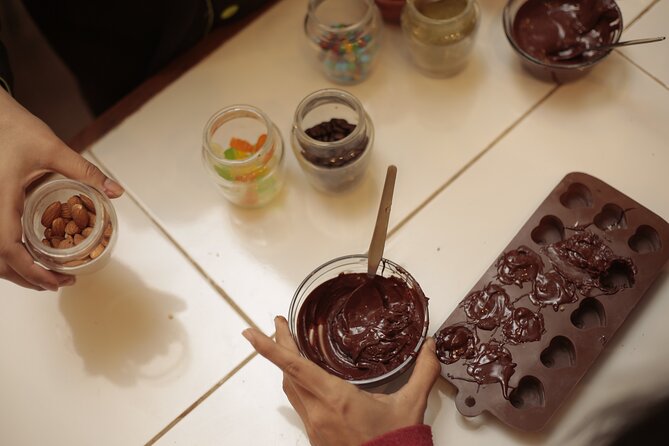
The final hands-on section is the part most people will remember. You work with melted milk or dark chocolate, pour it into molds, and add ingredients of your choice.
The chocolate may be shaped into several small pieces rather than one large bar. That is useful if you want to share your creation, compare different combinations, or sample your own choices one at a time. It also gives children a simple creative task with a clear result.
The class supplies all the materials, so you do not need to bring equipment or ingredients. You leave with about 130 grams of handmade chocolate, which is a substantial amount for a short workshop.
This is not a precision pastry class. Your chocolates will reflect your choices and your technique, not factory-perfect production. That is part of the charm. You can select additions, make several pieces, and leave with something personal rather than a generic packaged souvenir.
There is one timing point to plan around. Your chocolates may not be available to take away until approximately 45 minutes after the workshop ends. If you have a restaurant booking, airport transfer, or another timed activity, do not schedule it immediately after class.
The delay may be inconvenient, but it protects the finished chocolate and gives it time to set. Ask the staff about the collection timing when you arrive so you can organize the rest of your day.
How much value do you get for $33.79?
At $33.79 per person, this is not the cheapest way to eat chocolate in Lima. You can buy excellent sweets for less. The price makes more sense when you count the instruction, tastings, materials, and 130 grams of handmade chocolate.
You are paying for an activity, not just a food sample. The class lasts about two hours, and the small group limit of 10 people gives it a more personal feel than a large demonstration. If your guide is as engaging as Diana, Dani, Manuel, Natalia, or Robert, the teaching becomes a major part of the value.
The workshop also suits different budgets within a group. A couple can treat it as a relaxed afternoon activity, while a family can combine it with time in Inka Plaza. Solo visitors can join a class without needing a companion, and the shared tables make it easy to meet other people.
I would consider the price fair if you enjoy food activities, want a hands-on souvenir, or have a free afternoon in Miraflores. I would think twice if you are only looking for a formal museum visit or a professional chocolate-making course.
The chocolate itself is another reason the cost can feel worthwhile. You do not leave with one tiny sample. You take away a sizeable batch that you made and flavored yourself. Just remember that the value is in the combination of education, tasting, and participation.
Who will enjoy this workshop most?
This is an easy choice for families. Children can taste the cacao pulp, handle beans, help with molds, and choose additions for the chocolate pieces. Guides have been praised for being patient with kids, which matters when attention spans begin to fade.
Couples and friends also get a relaxed activity that fills a couple of hours without demanding great physical effort. You can compare your chocolate choices, share the drinks, and browse the surrounding market afterward.
Solo visitors should not overlook the class. The small setting gives you a natural way to talk with people from other countries, and you still leave with a personal souvenir even if you arrive alone.
The experience is suitable for most ages and skill levels. Service animals are allowed, and the meeting place is near public transportation. Because some of the activity takes place outside under a roof, consider the weather and your comfort when choosing what to wear.
Chocolate enthusiasts will enjoy the range of flavors and the bean-to-bar lesson. At the same time, beginners are not left behind. The instructor explains the process in practical terms, and the work does not require prior cooking or chocolate-making experience.
Practical timing, group size, and planning tips
Plan on about two hours for the workshop itself, then add up to 45 minutes before collecting the finished chocolates. The advertised average booking lead time is 18 days, so reserving ahead is sensible if your Lima schedule is fixed.
The group maximum is 10 people. A smaller class can make a major difference during the roasting, grinding, and molding work because you have a better chance to see what is happening and ask for help.
The activity begins and ends at ChocoMuseo inside Inka Plaza. Since there is no included transportation, build in time to reach Av. Petit Thouars 5330 in Miraflores. The market location is useful for souvenir shopping, but it can also make the meeting point less obvious.
Free cancellation is available if you cancel at least 24 hours before the start time. Cancellations made within 24 hours are not refunded, and changes during that period are not accepted.
Is the ChocoMuseo Lima workshop worth booking?
I would book this class if you want more than a chocolate tasting. The strongest features are the hands-on work with cacao, the variety of drinks and chocolate strengths, the friendly instruction, and the 130 grams of chocolate you make and take home.
I would skip it if your picture of a chocolate museum involves quiet galleries, historical displays, or a full professional process from raw bean to finished bar. This is a practical workshop in a market setting, and some explanations may be harder to hear when the plaza is active.
For families, solo visitors, couples, and friends with a free Miraflores afternoon, it offers good value and a pleasant change from sightseeing. Keep the open-air setting and delayed chocolate pickup in mind, then book with enough time around it. The result is a tasty souvenir, a better understanding of cacao, and a fun two hours spent making something yourself.
FAQ
Where does the chocolate workshop take place?
It takes place at ChocoMuseo inside Inka Plaza, at Av. Petit Thouars 5330, Miraflores 15074, Lima, Peru.
How long does the workshop last?
The workshop lasts approximately two hours. You should also allow about 45 additional minutes after the class before collecting your handmade chocolates.
What is included in the price?
The experience includes chocolate drinks tastings, all materials needed to make your chocolates, and approximately 130 grams of your own handmade chocolate.
Do I need to arrange transportation?
Yes. Transportation is not included. You make your own way to ChocoMuseo, and the activity ends back at the meeting point.
How many people can join the class?
The maximum group size is 10 people.
Can I cancel for a refund?
You can cancel at least 24 hours before the experience start time for a full refund. Cancellations or changes made less than 24 hours before the start time are not refunded or accepted.
Added recently around Lima
- Tour to the sanctuary of Pachacamac★ 4.8 · 8 reviews
- Tour to the magical water circuit with dinner and dance show★ 5.0 · 4 reviews
- Tour of Lima with a visit to the catacombs of San Francisco.★ 4.2 · 24 reviews
- Tour Huaca Pucllana: Pyramids and Pre-Columbian Antiquity★ 4.3 · 12 reviews
- Lima: Palomino Islands Speedboat Tour & Swim with Sea Lions★ 4.8 · 33 reviews
- Surfing experience in Lima★ 5.0 · 6 reviews
- Sandbording in Lima★ 5.0 · 12 reviews
- Pro Sanboarding or skiing in Huacachina from Lima – Day trip★ 4.6 · 8 reviews
Workshops, compared.
Peruvian Cooking Class Cocktails and Market Tour in Cusco
Read our review →

Peruvian Cooking Class, Local Market Tour & Exotic Fruit Tasting
Read our review →
Cusco Cooking Classes and San Pedro Market Tour
Read our review →
Peruvian Cooking Class, Cocktails & Local Market Tour
Read our review →
Hands-on Peruvian Cooking Class & San Pedro Market Visit in Cusco
Read our review →
Bean to Bar Chocolate Workshop in ChocoMuseo Cusco
Read our review →
Local Market and Peruvian Cooking Class with Pisco Sour in Cusco
Read our review →Browse the lists this tour appears in