
Reviewed · COOKING CLASSES
Hands-on Peruvian Cooking Class & San Pedro Market Visit in Cusco
Come hungry and curious. This four-hour Cusco experience pairs a one-hour walk through San Pedro Market with a three-hour, hands-on cooking class at the Taste Peruvian Cooking Studio. I especially like the market-to-table format and the chance to prepare several dishes yourself, rather than simply watching a chef work.
The small maximum of eight people is another strong point. Guides such as Luigi, Chris, and Alvaro have been praised for clear English, humor, patience, and useful explanations of Peruvian ingredients. The main consideration is that the studio is a cooking facility, not a Peruvian family home, and the class requires walking through the market and to the nearby kitchen.
In This Review
- Key points to know before booking
- Why this Cusco cooking class works so well
- Starting beneath the arches of San Pedro Market
- From market stalls to the colonial-style cooking studio
- Making the Passion Fruit Pisco Sour
- Preparing ceviche with your own hands
- The main course: alpaca, potatoes, and Andean flavors
- Finishing with fruit dessert and a shared meal
- What the $57 price really covers
- The one caution about guide quality
- Who should book this Cusco food experience?
- My verdict: a strong food lesson for $57
- FAQ
- Where does the cooking class begin?
- How long does the activity last?
- What food will I prepare?
- Is a vegetarian option available?
- Are drinks included?
- How many people can join the class?
Key points to know before booking
- San Pedro Market comes first: You spend about an hour learning about local fruits, vegetables, chilis, spices, meats, cheeses, and Andean ingredients before cooking with some of them.
- You do the cooking: The class is designed for active participation, including preparing ceviche, a main course, dessert, and the class cocktail.
- The usual menu is a full meal: Past menus have included ceviche, alpaca with potatoes, fresh fruit dessert, and a Passion Fruit Pisco Sour.
- Small groups help: The maximum is eight people, which gives the chef more time to answer questions and assist with techniques.
- Vegetarian cooking is possible: You must note this when booking so the savory dishes can be adapted.
- The price covers the essentials: At $57 per person, ingredients, equipment, soft drinks, and one alcoholic cocktail are included. Extra alcohol costs more.
Why this Cusco cooking class works so well
Many cooking classes begin in a polished kitchen with ingredients already measured and waiting. This one begins at San Pedro Market, where food is still part of daily life rather than just a display for visitors.
That first hour gives you useful context. You see the produce before it reaches your cutting board, and your chef can explain how local ingredients are used. Several past participants singled out the market walk as one of the best parts, especially the introduction to unusual fruits, colorful chilis, herbs, spices, and Andean foods.
I like this order. If you cook first and hear about the ingredients later, the information can feel abstract. At San Pedro, you see and smell the food in its normal setting, then recognize it again in the kitchen. It gives the meal a clearer connection to Cusco.
The class also has a social advantage. You prepare the food with a small group, then sit down together to eat each course. The pace allows time to talk between dishes, and some people have continued their evening with classmates afterward. That makes this a good choice if you are traveling alone or want a break from sightseeing with your own group.
More Cooking Classes in Cusco
- Peruvian Cooking Class Cocktails and Market Tour in Cusco
★ 5.0 · 1,712 reviews - Cusco Cooking Classes and San Pedro Market Tour
★ 5.0 · 691 reviews - Cusco: Peruvian Cooking Class, Cocktails & Local Market Tour
★ 4.9 · 512 reviews
Starting beneath the arches of San Pedro Market
Meet at Plazoleta San Pedro, at C. Sta. Clara 497. The activity begins at the market and ends back at the same meeting point after the cooking session.
San Pedro is a practical place to start because it brings together many parts of Cusco’s food culture in one setting. Your chef and guide lead you through the aisles and explain the ingredients selected for the class. The exact stops may vary, but the experience can include local fruit, vegetables, chilis, spices, meats, cheeses, and other products used in Peruvian cooking.
This is not just a shopping errand. The value lies in learning how ingredients fit into local dishes and culture. Luigi, Chris, and Alvaro have each been praised for making the market understandable to both adults and children. Their English has also been described as fluent or excellent, which matters when the class depends on precise instructions and food vocabulary.
You should allow enough energy for walking. The market portion takes about an hour, and you then walk roughly five minutes to the cooking studio. The route is short, but the market can feel crowded and active, so comfortable shoes are sensible.
San Pedro is also a working market. Do not expect the quiet, spotless setting of a specialty food shop. You may find busy aisles, strong smells, and a lot happening around you. For me, that is part of the point, but anyone seeking a calm private tour should set expectations accordingly.
From market stalls to the colonial-style cooking studio
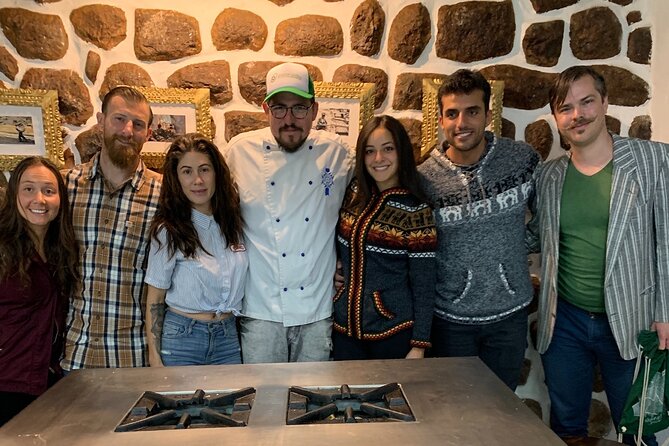
After the market visit, the group walks to a private, colonial-style cooking studio operated by Taste Peruvian Cooking Studio. The space has been described as professional and well equipped, with a separate dining area where the group eats the meal.
That setup offers a useful middle ground. You get the character of an older Cusco building, but you also have a proper place to cook, work at the counter, and sit down for each course. It is not a home kitchen where a local family is carrying on its normal evening. If a family visit is what you want, this class may not match your expectations.
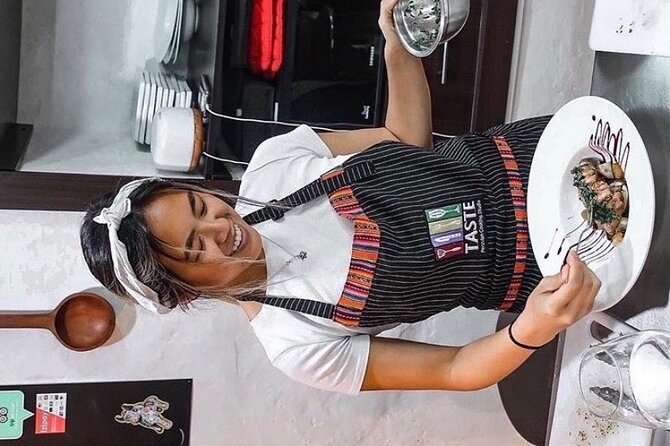
The three-hour class is the main event. You work alongside the chef instead of sitting at the back and watching demonstrations. Past participants have specifically valued being allowed to do most of the preparation themselves, including cutting fish, mixing drinks, and helping with each course.
Your chef leads the process and sets the pace. Guides have been praised for patience with children, teenagers, couples, families, and solo participants. With a maximum of eight people, the group is small enough for the chef to notice when you need help.
Making the Passion Fruit Pisco Sour
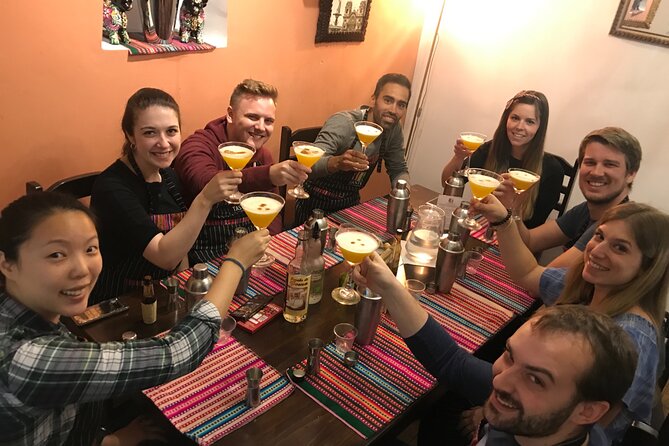
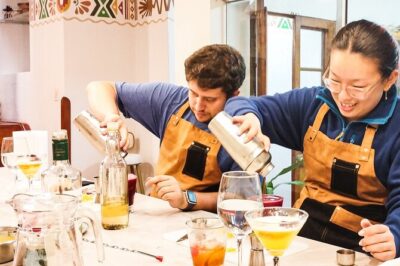
The class cocktail is a Passion Fruit Pisco Sour, and the ingredients and one alcoholic cocktail are included in the price. The cocktail portion gives the class a relaxed beginning and introduces one of Peru’s best-known drinks through a practical task: you shake and prepare it yourself.
Past participants have described the drink as delicious, and families should note that children can have a non-alcoholic version. The minimum drinking age for the alcoholic cocktail is 18.
Extra alcoholic drinks are not included, though they are available to purchase. If you do not drink alcohol, or you are still adjusting to Cusco’s altitude, you can skip the alcoholic version. The soft beverages included in the class provide an alternative.
This is also one reason I would consider booking the class early in a Cusco visit, as one couple did. They chose it for their first full day because it offered an engaging activity while they were cautious about altitude adjustment. You still need to judge your own condition, but a seated cooking session can be easier than a long walking tour or high-altitude day trip.
More Market Tours in Cusco
- Pisac Indian Market and Ollantaytambo Fortress with Lunch
★ 4.5 · 395 reviews - Local Market and Peruvian Cooking Class with Pisco Sour in Cusco
★ 5.0 · 384 reviews - Traditional Peruvian Cooking Class and Market Tour in Cusco
★ 5.0 · 375 reviews - Cooking class and market tour with a local chef
★ 5.0 · 186 reviews
Preparing ceviche with your own hands
Ceviche is one of the class’s signature dishes. The chef explains the preparation, then you help make it rather than simply receiving a finished plate.
This part is especially useful because ceviche depends on timing, cutting, seasoning, and balance. A chef can show you how the elements come together, while you get a chance to handle the process yourself. Several participants described the ceviche as a highlight, including one person who found it especially good even after a disappointing guide experience.
The class format also means you can ask questions as you work. If you are interested in Peruvian flavors, this is more useful than a restaurant meal alone. A restaurant lets you taste the finished result. Here, you gain a technique you may be able to repeat at home.
Food preferences should be stated when you book. A vegetarian version of the two savory courses has been prepared for participants in the past, but you should not assume an adaptation will be ready unless you request it in advance.
The main course: alpaca, potatoes, and Andean flavors
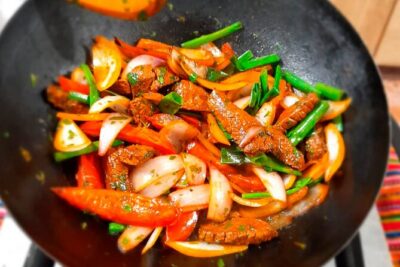
The main course commonly includes alpaca tenderloin with potatoes. This gives you a chance to try a Peruvian ingredient that may not appear on a standard international menu.
The alpaca dish has received strong praise for its flavor, and the meal is presented as part of a complete three-course menu. One participant suggested adding more Andean meat dishes, which is useful context: the existing menu offers a taste of local cooking, but it is not meant to be a full survey of Peru’s regional food traditions.
You should also understand that menus can change. The experience description names classic Peruvian dishes, while the detailed examples from past classes point to ceviche, alpaca with potatoes, and fruit dessert. Think of these as representative dishes rather than a guaranteed fixed menu unless the operator confirms it before your visit.
For me, the main course is where the market tour earns its keep. You have already seen some of the ingredients and heard how they are used. By the time you sit down to eat, the dish has a story as well as a flavor.
Finishing with fruit dessert and a shared meal
The dessert has included fresh fruit with whipped cream or a similar fruit-based preparation. It is lighter than the savory courses and gives the class a pleasant finish after the cooking and cocktail.
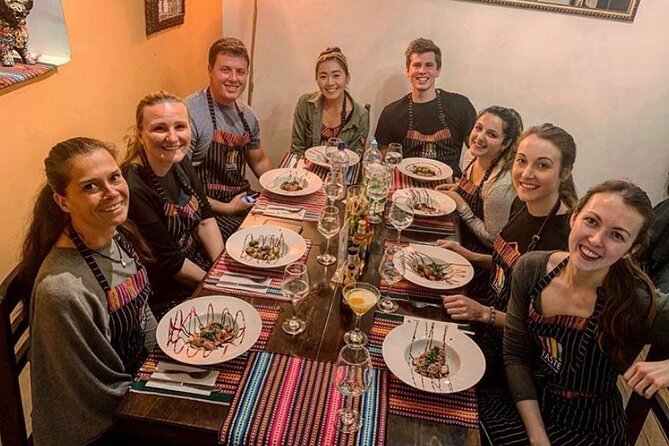
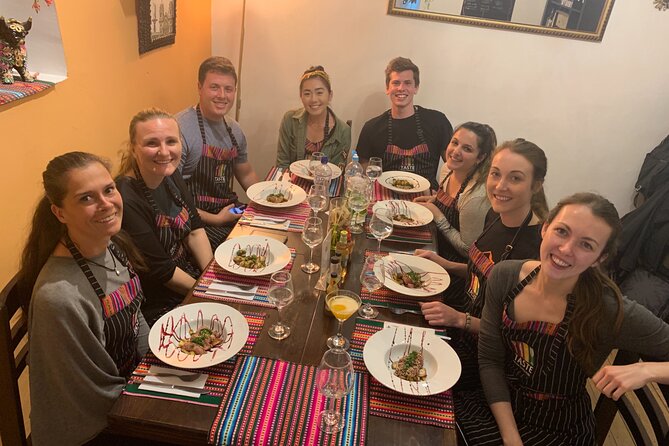
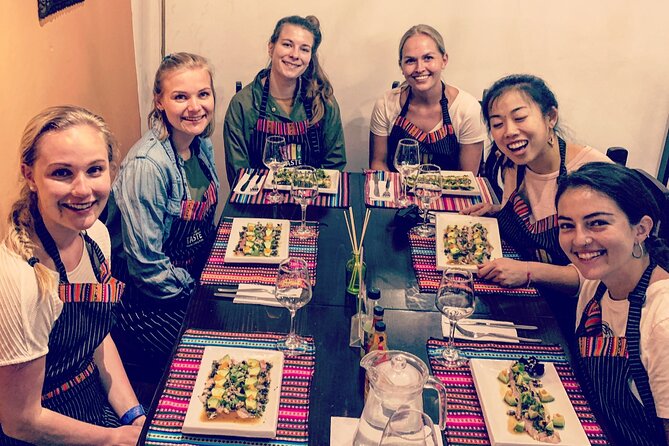
The meal is served in stages. You prepare a course, gather around the table, eat it, and then continue. That rhythm keeps the four-hour activity from becoming one long block of standing and chopping.
I like the shared dining arrangement because it turns the class into more than a lesson. You get to compare results, talk with people from different countries, and enjoy the food while it is fresh. The reviews describe classes made up of couples, families, solo participants, and friends, so the mood can change from group to group.
Children are allowed but must be accompanied by an adult. The hands-on format can work well for older children and teenagers, especially since non-alcoholic cocktails are possible. Parents should remember that the outing includes a market walk, kitchen work, knives, hot equipment, and a full meal, so active supervision remains important.
What the $57 price really covers
At $57 per person, the cost is reasonable for a four-hour activity that includes a market tour, a professional English-speaking chef, a private studio, all ingredients, all equipment, soft drinks, one cocktail, and a three-course meal.
The price is strongest if you value participation. You are not paying only for lunch or dinner. You are paying for the market explanation, instruction, food preparation, and social meal. A regular restaurant meal may cost less, but it will not teach you how the dishes are made or introduce you to the ingredients before you taste them.
The small group improves the value. A maximum of eight people gives the chef a better chance to guide each person than a large demonstration class would. Several accounts describe groups of four, six, or eight, with enough room for personal help.
Extra alcoholic drinks are not included, so budget separately if you want more than the class cocktail. Hotel pickup and drop-off are also not provided. You meet at San Pedro Market and return there at the end, which is simple if you are already in central Cusco but less convenient if you are staying far away.
The one caution about guide quality
The overall record is excellent, with a 5 rating and 99 percent of participants recommending the activity. Most descriptions praise the chefs’ English, humor, patience, organization, food, and ability to explain Peruvian culture.
There was one notably poor experience involving a guide who seemed tired, used a phone during the market walk, and gave little explanation unless asked. The person also expected a lived-in Peruvian home rather than a rented studio. The company apologized and stated that the guide was no longer working with them.
That detail is worth noting for two reasons. First, guide energy matters a lot in a market tour and cooking class. Second, you should book this expecting a professional cooking studio, not a home visit. The named chefs most often associated with the positive experiences are Luigi, Chris, and Alvaro, though guide assignment can vary.
Who should book this Cusco food experience?
I would recommend it to you if you want to understand Peruvian food by handling ingredients, asking questions, and eating what you make. It is especially well suited to:
- Couples who want an evening activity beyond restaurant dining
- Families with children or teenagers
- Solo visitors looking for a social meal
- Home cooks who want techniques to use after returning home
- First-time Cusco visitors seeking a gentler cultural activity
- Vegetarians who request menu changes in advance
You may want to skip it if you strongly dislike group activities, do not want to walk through a working market, or expect a private family kitchen. It is also not the best choice if you want a broad regional food tour, since the cooking menu focuses on a few dishes rather than every part of Peruvian cuisine.
Book ahead if your schedule is fixed. The activity is booked an average of 31 days in advance, and confirmation arrives within 48 hours, subject to availability. Free cancellation is available up to 24 hours before the start time. Cancellations or changes made later are not accepted for a refund, and the minimum group requirement can affect whether a date runs.
My verdict: a strong food lesson for $57
I would book this class if I had four hours in Cusco and wanted a useful, social way to meet Peruvian food. The market visit gives the cooking a real setting, the small group keeps it personal, and the meal includes enough variety to feel like a proper introduction rather than a single recipe demonstration.
The best reason to go is simple: you do the work. You shake the cocktail, prepare the ceviche, help with the main course, and finish the dessert. If you want a polished chef demonstration or a family-home visit, choose something else. If you want to understand what is on your plate and learn how to make it yourself, this is a very good value.
FAQ
Where does the cooking class begin?
The class begins at Plazoleta San Pedro, C. Sta. Clara 497, Cusco 08002, Peru, at San Pedro Market.
How long does the activity last?
The experience lasts approximately four hours. About one hour is spent touring San Pedro Market, followed by about three hours at the private cooking studio.
What food will I prepare?
The class prepares a three-course Peruvian meal. Past menus have included ceviche, alpaca tenderloin with potatoes, and a fresh fruit dessert. The menu may vary.
Is a vegetarian option available?
Yes. A vegetarian option is available, but you must request it when booking so the savory courses can be adapted.
Are drinks included?
The class includes one alcoholic cocktail, usually a Passion Fruit Pisco Sour, plus soft beverages. Extra alcoholic drinks are available to purchase. The minimum drinking age is 18.
How many people can join the class?
The activity has a maximum of eight travelers. Children must be accompanied by an adult, and service animals are allowed.
More Cooking Sessions in Cusco
- Group Cooking Class in Cusco with Pisco Tasting
★ 5.0 · 335 reviews - Bilingual Cooking Class with Pisco Cocktail in Cusco
★ 5.0 · 92 reviews - Cusco: Peruvian Cooking Class & Market Tour
★ 4.9 · 19 reviews - Cusco Billingual Cooking Class at 6pm
★ 5.0 · 16 reviews
More Shopping Tours in Cusco
- Cusco City Sightseeing, San Pedro Market, Cathedral and Qorikancha Temple
★ 4.5 · 139 reviews - Cusco Food Walking Tour & Central Market
★ 5.0 · 48 reviews - San Pedro Market Tour with Peruvian Cooking Class
★ 5.0 · 31 reviews - Curious Monkey Cusco- Market and Streets, Walking Food Tour
★ 5.0 · 31 reviews
Added recently around Cusco
- Guided tour of the mountain of colors in Cusco★ 5.0 · 11 reviews
- 2-Day Private Short Inca Trail to Machu Picchu★ 5.0 · 15 reviews
- City Tour Cusco – Group★ 5.0 · 4 reviews
- Tour Sacred Valley with Maras and Moray★ 5.0 · 15 reviews
- San Pedro Market Tour with Peruvian Cooking Class★ 5.0 · 31 reviews
- Walking Culinary Experience★ 5.0 · 41 reviews
- City Tour in Cusco★ 4.5 · 10 reviews
- Sightseeing Bus Tour from Cusco to Puno with Buffet Lunch★ 4.5 · 22 reviews
Cooking Classes, compared.
Peruvian Cooking Class Cocktails and Market Tour in Cusco
Read our review →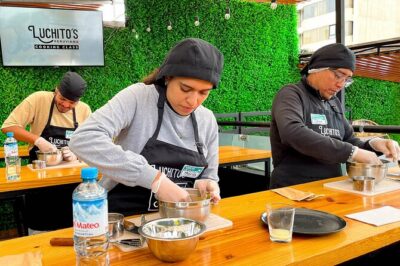
Peruvian Cooking Class, Local Market Tour & Exotic Fruit Tasting
Read our review →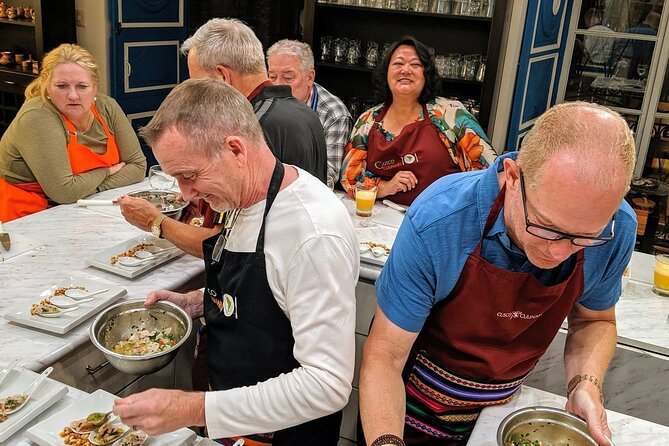
Cusco Cooking Classes and San Pedro Market Tour
Read our review →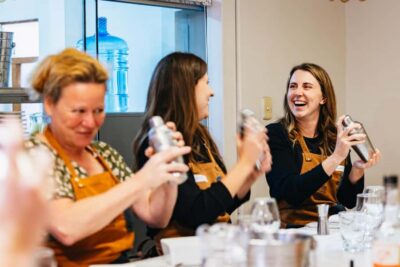
Peruvian Cooking Class, Cocktails & Local Market Tour
Read our review →
Local Market and Peruvian Cooking Class with Pisco Sour in Cusco
Read our review →
Traditional Peruvian Cooking Class and Market Tour in Cusco
Read our review →
Group Cooking Class in Cusco with Pisco Tasting
Read our review →Browse the lists this tour appears in