
Reviewed · COOKING CLASSES
Peruvian Cooking Class Cocktails and Market Tour in Cusco
Come hungry, leave with recipes. This four-hour Cusco experience combines a guided visit to San Pedro Market with a hands-on Peruvian cooking class, three dishes, two cocktails, and dessert. I like the way the market visit gives context to the food, while the small maximum of 12 people keeps the class personal. The chance to taste ingredients, meet local vendors, and learn from chefs such as Jorge, Eric, Jesus, or Isaac adds real character.
I also like the value. At $57 per person, you receive a market tour, all cooking equipment, bottled water, three savory courses, two alcoholic drinks, and picarones. The main caution is time: the class takes about four hours, and the market visit plus cooking can feel long if you prefer a quick activity or have a packed Cusco schedule.
In This Review
- Key points to know before booking
- Starting at San Pedro Market in Cusco
- What the market adds to the cooking class
- Moving from the market to the cooking studio
- Preparing ceviche, causa limeña, and quinoa tamal
- Ceviche
- Causa limeña
- Quinoa tamal
- Mixing two cocktails with pisco and local fruit
- Ending with traditional picarones
- How much value you get for $57
- Who should book this four-hour experience
- Practical details for a smooth visit
- Should you book Peruvian Cusco Flavors?
- FAQ
- How long does the Peruvian cooking class last?
- Where does the experience begin?
- Where does the activity end?
- What dishes do you prepare?
- How many cocktails are included?
- Are the cocktails included in the price?
- Can the class accommodate dietary restrictions?
- What happens if you need to cancel?
Key points to know before booking
- San Pedro Market comes first: You meet at Plazoleta San Pedro and shop for the ingredients used later in class.
- Three classic dishes are included: You prepare ceviche, causa limeña, and a quinoa tamal.
- Two pisco-based cocktails add to the fun: Local fruits and Peru’s best-known spirit play a central role.
- Picarones finish the meal: This traditional Peruvian dessert means you should arrive with a good appetite.
- The group is capped at 12 people: That is small enough for questions and chef demonstrations.
- Food restrictions can be accommodated: Vegetarian options, allergies, and other dietary needs should be raised when booking.
Starting at San Pedro Market in Cusco
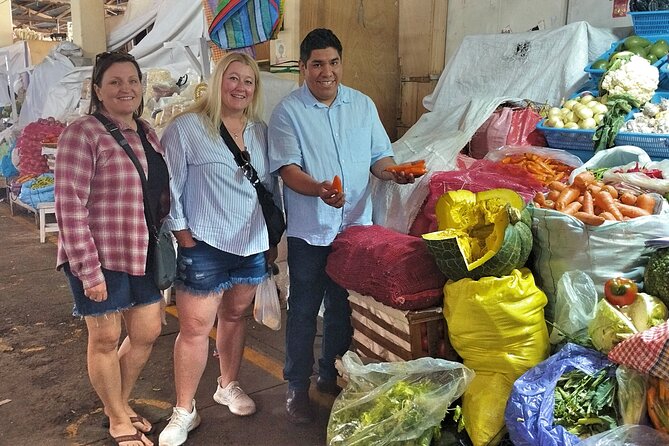
The experience begins at Plazoleta San Pedro, at C. Sta. Clara 497, just outside the central market. This meeting point matters because the market is not a side stop reached by vehicle later. It is the opening chapter of the class.
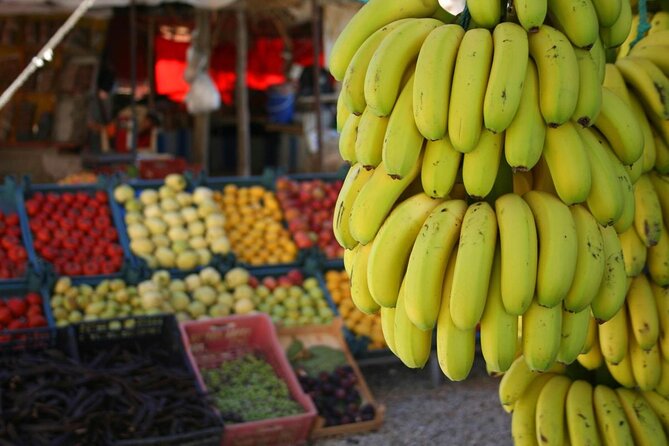
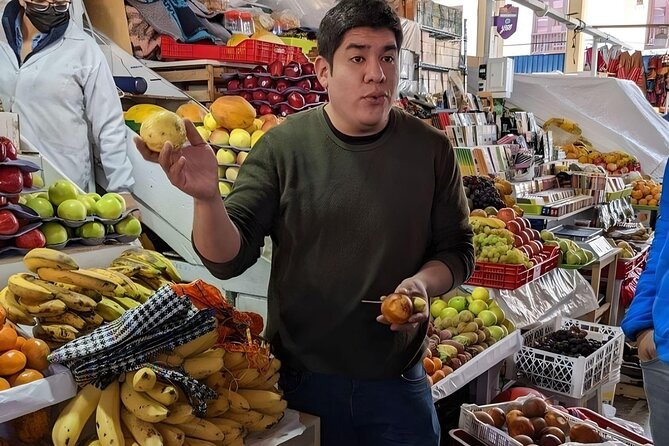
Inside, you are introduced to the ingredients that shape Peruvian cooking. Potatoes receive special attention, and you will see how much variety Peru brings to one humble crop. The tour also covers local fruits and other traditional foods, with tastings included along the way.
I like this part because it turns a list of unfamiliar ingredients into something you can recognize. Instead of arriving at a kitchen and finding bowls of food already prepared, you first see what the ingredients look like in their everyday setting. The chefs select items for the class from market vendors and explain why those ingredients fit the recipes.
The market visit lasts about an hour, based on the usual schedule described for the experience. That gives you enough time to take in the food stalls without making the entire outing feel like a formal market lecture. It also gives you a useful chance to note vendors and products you may want to buy later.
San Pedro Market can be a busy, sensory place. You should expect a working food market rather than a polished culinary showroom. That is part of its appeal, though anyone who dislikes crowded public markets may find this first section tiring.
A useful tip is to confirm the meeting point carefully before setting out. The activity starts at the market, not at the cooking studio, and one person had trouble finding the location because of unreliable navigation. Give yourself extra time to reach Plazoleta San Pedro.
More Cooking Classes in Cusco
- Cusco Cooking Classes and San Pedro Market Tour
★ 5.0 · 691 reviews - Cusco: Peruvian Cooking Class, Cocktails & Local Market Tour
★ 4.9 · 512 reviews - Hands-on Peruvian Cooking Class & San Pedro Market Visit in Cusco
★ 5.0 · 421 reviews
What the market adds to the cooking class
A cooking class can easily become a pleasant meal with a recipe sheet. This one has more value because the market visit explains where the food begins.
You may taste fruits and ingredients you would not have selected on your own. The guides also explain what they are buying and how each item suits the dishes. That makes the class useful beyond the four-hour outing. Afterward, you can return to San Pedro Market with a better idea of what to look for.
The market also provides a window into daily food culture in Cusco. The focus is not only on restaurant dishes, but on the products people buy, cook, and recognize locally. That connection is especially helpful if you are spending several days in Cusco and want to understand more than the city’s famous sights.
The guide quality appears to be one of the strongest parts of the experience. Jorge is praised for his friendly instruction and careful attention to the group. Eric is described as energetic and well informed about food and Peruvian culture. Jesus brings his own chef’s touch to the dishes, while Isaac has been praised for explaining market ingredients clearly.
Because the chef may vary, your experience could have a different host. The common thread is an emphasis on explanation, humor, and making people comfortable in the kitchen.
Moving from the market to the cooking studio
After the market visit, the group goes to a cooking studio in central Cusco. The studio is described as clean and inviting, with assistants helping the chef keep the meal organized.
That support matters. Three dishes, two cocktails, and dessert can create a lot of moving parts. The staff prepares ingredients, assists at the stations, and keeps the courses on schedule. Several comments praise the assistants for anticipating needs and staying on top of the work.
The class is hands-on, but it is not necessarily a private cooking lesson where you prepare every element from start to finish. One person found that ingredients were passed around in bowls and added at group stations, with limited use of individual burners. If you want intensive practice with every knife cut and cooking technique, this format may feel somewhat structured.
For most people, that setup is probably a fair compromise. It lets the chef explain the dishes while the group keeps moving. You get to participate without spending four hours waiting for one course to finish. Still, it is worth knowing that the class may feel more like a guided group workshop than a fully independent kitchen session.
The room has stools, and one comment specifically noted that they could use an upgrade. That is a small comfort issue, but it matters during a class lasting roughly three hours after the market visit.
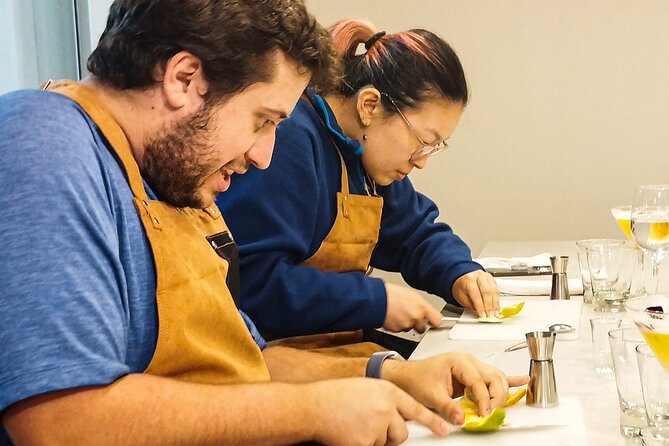
Preparing ceviche, causa limeña, and quinoa tamal
The menu gives you a useful tour of Peruvian cooking rather than repeating one technique three times.
More Market Tours in Cusco
- Pisac Indian Market and Ollantaytambo Fortress with Lunch
★ 4.5 · 395 reviews - Local Market and Peruvian Cooking Class with Pisco Sour in Cusco
★ 5.0 · 384 reviews - Traditional Peruvian Cooking Class and Market Tour in Cusco
★ 5.0 · 375 reviews - Cooking class and market tour with a local chef
★ 5.0 · 186 reviews
Ceviche
Ceviche brings fresh, bright flavors to the class and gives the chef a chance to explain how Peruvian cooks balance acidity, seasoning, and local ingredients. It is also the dish most likely to concern people who do not eat fish.
The staff has offered substitutions for people who dislike fish, and food restrictions can be discussed in advance. If you are vegetarian, allergic to an ingredient, or simply have strong dislikes, tell the provider when booking rather than waiting until the class begins.
Causa limeña
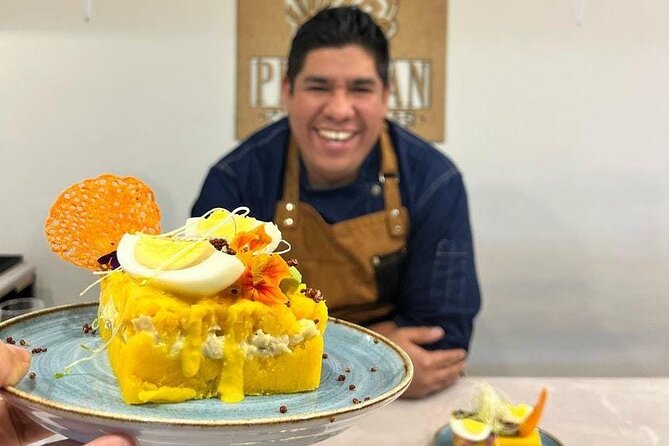
Causa limeña introduces a different side of Peruvian cooking, with potatoes at the center. The dish connects directly to the market visit and to Peru’s remarkable range of potato varieties.
This is one of the better reasons to take the class instead of only ordering Peruvian food at a restaurant. You see how a familiar ingredient can become a carefully seasoned, layered dish. The chef also has room to explain regional food traditions as the group works.
Quinoa tamal
The quinoa tamal adds a grain-based preparation to the menu. It gives you another way to use one of the Andes’ best-known foods, and it broadens the class beyond the country’s most internationally familiar dishes.
Together, the three courses create a substantial meal. You are not simply sampling small bites. The food is served as part of the class, and the portions are generous enough that many people leave full. Plan accordingly if you have dinner reservations afterward.
The recipes are provided so you can repeat the dishes at home. That is an important part of the value, particularly if you enjoy cooking or want a practical reminder of your time in Peru. You may need to adapt ingredients depending on what is available at home, but the recipes give you a clear starting point.
Mixing two cocktails with pisco and local fruit
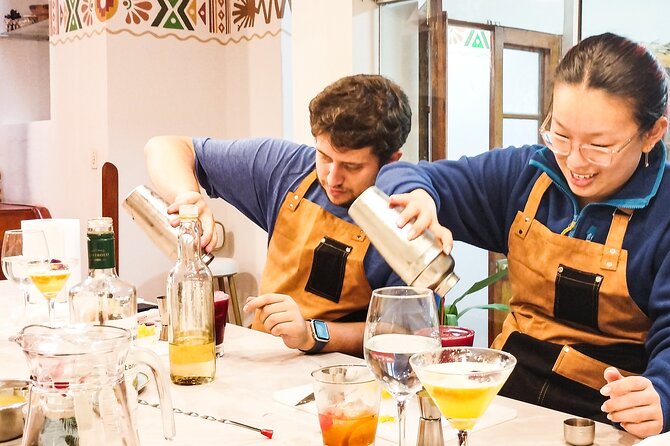
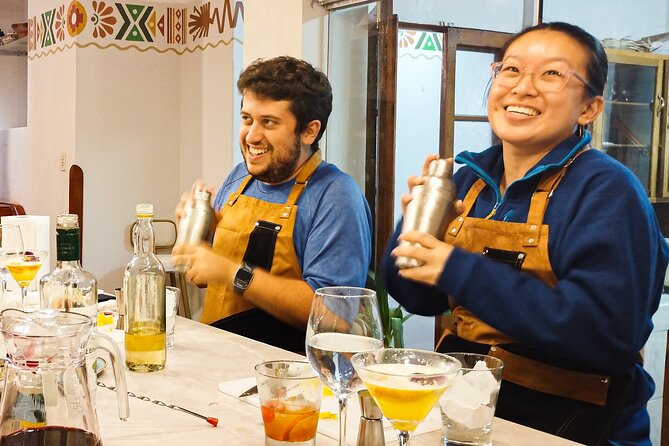
The drinks are not an afterthought. You prepare two cocktails using pisco and native fruits, with instruction on the steps and ingredients.
Pisco is Peru’s signature spirit, so this section adds a clear national element to the class. You learn how local flavors work in a drink rather than simply receiving a cocktail at the table. People who enjoy making drinks at home will likely appreciate this part as much as the food.
The class includes the cocktails, and the recipes go home with you. You should remember that this is an alcoholic activity, so pacing matters. The evening can feel food-heavy and drink-heavy, especially because the dessert follows the three savory courses.
The cocktail portion also helps set the social tone. Groups cook, taste, and mix together, which makes it easy to talk with people from different countries. If you are traveling alone, this is a friendly way to share a meal without committing to a full group tour for the rest of your trip.
Ending with traditional picarones
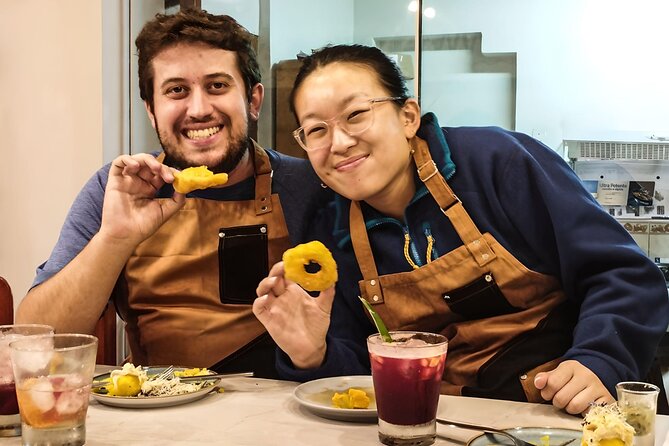
The meal finishes with picarones, one of Peru’s best-known traditional desserts. They provide a sweet ending after the ceviche, causa, tamal, and cocktails.
The inclusion of dessert is easy to overlook when comparing prices, but it makes the class feel like a complete meal rather than a demonstration. Along with bottled water, the food and drinks are included in the stated price.
The total amount of food is one reason you should avoid scheduling a large dinner immediately afterward. If you are looking for a light afternoon snack, this is the wrong activity. If you want to understand Peruvian food by tasting several preparations in one sitting, it works well.
How much value you get for $57
At $57 per person, this is not the cheapest way to eat in Cusco. You could buy a meal for less, and a market visit on your own costs nothing beyond what you choose to purchase.
The comparison changes when you count what is included. You receive roughly four hours of activity, a guided market visit, ingredient tastings, chef instruction, all equipment, three dishes, two cocktails, picarones, bottled water, and recipes. The group limit of 12 also keeps the experience from becoming a large demonstration.
I see the strongest value in the combination. A market tour alone might give you information but no practical skill. A cooking class alone might teach recipes without showing where the ingredients come from. Here, the two parts reinforce each other.
The class is also a good choice if you want an experience that fills much of an afternoon or evening. It is not designed for people who want to rush from one sight to another. You are paying for time, food, instruction, and the chance to meet other people around a shared table.
The main value limit is the level of individual cooking practice. If you expect your own burner and a separate dish from start to finish, the group format may not meet that expectation. If you are happy learning by demonstration, shared preparation, and guided tasting, the price is reasonable.
Who should book this four-hour experience
I would recommend it most strongly to:
- Couples looking for an evening activity beyond restaurants and bars
- Families who enjoy food and can manage a four-hour schedule
- Solo visitors who want a social activity with a small group
- Cooks who want recipes they can make after returning home
- First-time visitors who want an introduction to Cusco’s ingredients
- Anyone curious about pisco and local fruit drinks
It can also be a smart activity near the start of your Cusco stay. One person found it a good first-day choice while adjusting to the altitude because it provides food, seating, and a slower cultural introduction rather than a demanding hike.
Still, you should judge your own energy carefully. Cusco’s altitude can make a long session feel longer, and the class continues after the market visit. If you arrive tired, the amount of food and instruction may be more than you want.
People with strict dietary needs should contact the provider in advance. Vegetarian options, allergies, and other food restrictions are supported, and substitutions have been offered for people who do not eat fish. Clear communication is the best way to make sure the menu works for you.
Practical details for a smooth visit
The meeting point is Plazoleta San Pedro, C. Sta. Clara 497, Cusco 08002. The activity ends back at the meeting point, and the starting location is near public transportation.
The group maximum is 12 people. That is small enough to ask questions, though your exact amount of hands-on time can depend on the chef, assistants, and group size.
The experience is booked an average of 32 days in advance, so I would not leave it until the last minute if your Cusco dates are fixed. Confirmation is provided when you book.
Free cancellation is available if you cancel at least 24 hours before the start time. Changes or cancellations made within 24 hours are not accepted for a refund, and the cut-off follows local time.
Most importantly, arrive ready to eat and ready to sit for a while. Wear something comfortable, keep your schedule open, and tell the provider about allergies or food restrictions ahead of time.
Should you book Peruvian Cusco Flavors?
Yes, if you want a substantial, social introduction to Peruvian food rather than a quick cooking demonstration. The strongest reasons are the San Pedro Market visit, the three-course menu, the pisco cocktails, the friendly chefs, and the recipes you can take home.
I would hesitate only if you dislike group classes, need highly individualized cooking practice, or have no interest in spending four hours around food. The stools may not be ideal, and the length can feel heavy after the market.
For most people, though, $57 buys a well-filled cultural experience. Book it early, meet at the market rather than the studio, arrive hungry, and ask about substitutions before the day begins.
FAQ
How long does the Peruvian cooking class last?
The experience lasts approximately four hours. About one hour is spent at San Pedro Market, followed by roughly three hours in the cooking studio.
Where does the experience begin?
It begins at Plazoleta San Pedro, C. Sta. Clara 497, Cusco 08002, Peru.
Where does the activity end?
The experience ends back at the meeting point.
What dishes do you prepare?
You prepare ceviche, causa limeña, and a quinoa tamal. Picarones are also served as dessert.
How many cocktails are included?
The class includes two cocktails made with pisco and local fruits.
Are the cocktails included in the price?
Yes. The cocktails prepared during the class are included, along with bottled water.
Can the class accommodate dietary restrictions?
Yes. Vegetarian options, allergies, and other food restrictions are available. Contact the provider when booking so suitable changes can be arranged.
What happens if you need to cancel?
You can receive a full refund if you cancel at least 24 hours before the experience starts. Cancellations or changes made less than 24 hours before the start time are not accepted for a refund.
More Cooking Sessions in Cusco
- Group Cooking Class in Cusco with Pisco Tasting
★ 5.0 · 335 reviews - Bilingual Cooking Class with Pisco Cocktail in Cusco
★ 5.0 · 92 reviews - Cusco: Peruvian Cooking Class & Market Tour
★ 4.9 · 19 reviews - Cusco Billingual Cooking Class at 6pm
★ 5.0 · 16 reviews
More Shopping Tours in Cusco
- Cusco City Sightseeing, San Pedro Market, Cathedral and Qorikancha Temple
★ 4.5 · 139 reviews - Cusco Food Walking Tour & Central Market
★ 5.0 · 48 reviews - San Pedro Market Tour with Peruvian Cooking Class
★ 5.0 · 31 reviews - Curious Monkey Cusco- Market and Streets, Walking Food Tour
★ 5.0 · 31 reviews
Added recently around Cusco
- Guided tour of the mountain of colors in Cusco★ 5.0 · 11 reviews
- 2-Day Private Short Inca Trail to Machu Picchu★ 5.0 · 15 reviews
- City Tour Cusco – Group★ 5.0 · 4 reviews
- Tour Sacred Valley with Maras and Moray★ 5.0 · 15 reviews
- San Pedro Market Tour with Peruvian Cooking Class★ 5.0 · 31 reviews
- Walking Culinary Experience★ 5.0 · 41 reviews
- City Tour in Cusco★ 4.5 · 10 reviews
- One Day Tour to Humantay Lagoon★ 5.0 · 8 reviews
Cooking Classes, compared.
Peruvian Cooking Class, Local Market Tour & Exotic Fruit Tasting
Read our review →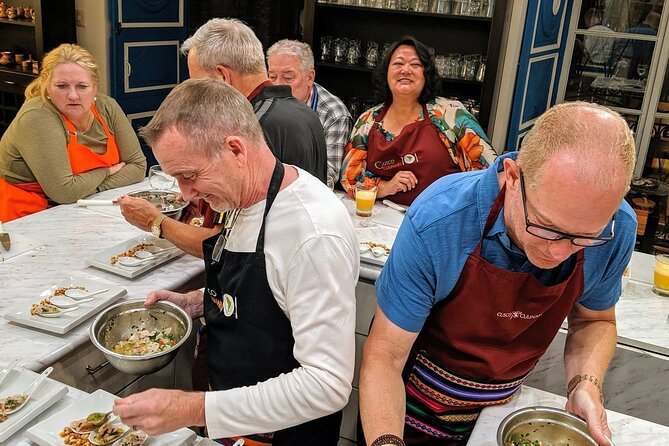
Cusco Cooking Classes and San Pedro Market Tour
Read our review →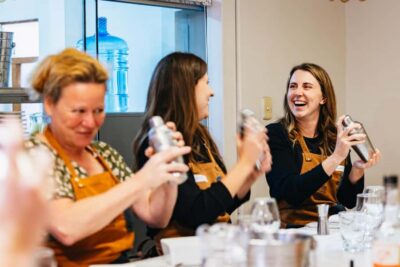
Peruvian Cooking Class, Cocktails & Local Market Tour
Read our review →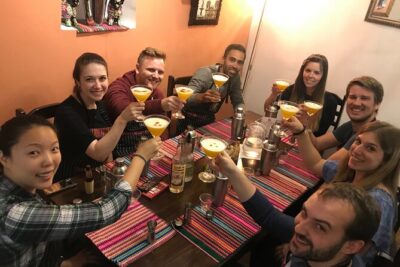
Hands-on Peruvian Cooking Class & San Pedro Market Visit in Cusco
Read our review →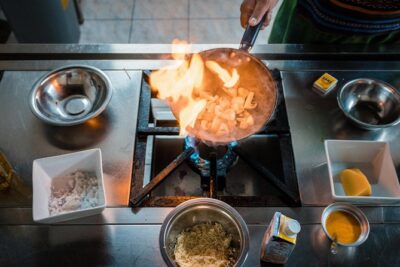
Local Market and Peruvian Cooking Class with Pisco Sour in Cusco
Read our review →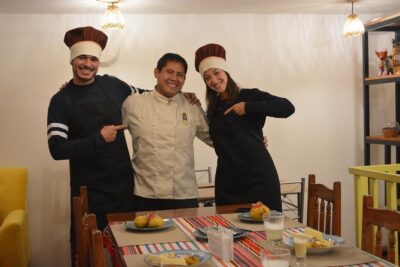
Traditional Peruvian Cooking Class and Market Tour in Cusco
Read our review →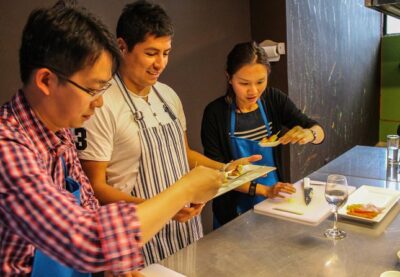
Group Cooking Class in Cusco with Pisco Tasting
Read our review →Browse the lists this tour appears in