
Reviewed · PISCO TOURS & TASTINGS
City Tour Cusco with Pisco Sour classes (Half day)
Ancient stones, one sharp cocktail. This six-hour Cusco outing combines the city’s main sights with a Pisco Sour class, giving you a quick introduction to Inca power, Spanish colonial religion, and Peru’s national drink. I like the efficient route from the Plaza de Armas to the hilltop ruins, and I like that transportation and a professional guide are included. The main catch is the extra entrance fee, which adds $28 per person to the advertised $45 price.
This is a useful first look at Cusco if your schedule is tight. I also like the choice of two departure windows, morning or afternoon, and the small maximum group size of 17 people. Still, you should be clear about ticket costs before setting out, since the guide may need to make quick decisions at the attractions.
In This Review
- Key points to know before booking
- What the $45 Cusco tour really costs
- Starting in the Plaza de Armas and entering the Cathedral
- Qorikancha, the Inca Temple of the Sun
- Sacsayhuamán and the scale of Inca engineering
- Qenqo’s carved stones and underground passages
- Puka Pukara and the old road into Cusco
- Tambomachay and the importance of water
- A 45-minute Pisco Sour class at Republica del Pisco
- Guides, group size, and the pace of the day
- Which departure time should you choose?
- Who will get the most from this Cusco outing?
- Should you book the Cusco city tour and Pisco class?
- FAQ
- How long does the Cusco city tour and Pisco Sour class last?
- How much does the experience cost?
- Are attraction entrance tickets included?
- What time does the tour depart?
- Where does the Pisco Sour class take place?
- Is transportation included?
- How large can the group be?
- What happens if the weather is poor?
Key points to know before booking
- Six hours covers six major Cusco sights plus a Pisco Sour class, making this a busy but useful introduction.
- The $45 price does not include attraction tickets, which cost an additional $28 per person.
- Morning departures run from 8:30 to 9:00 a.m., while afternoon departures run from 1:30 to 1:40 p.m.
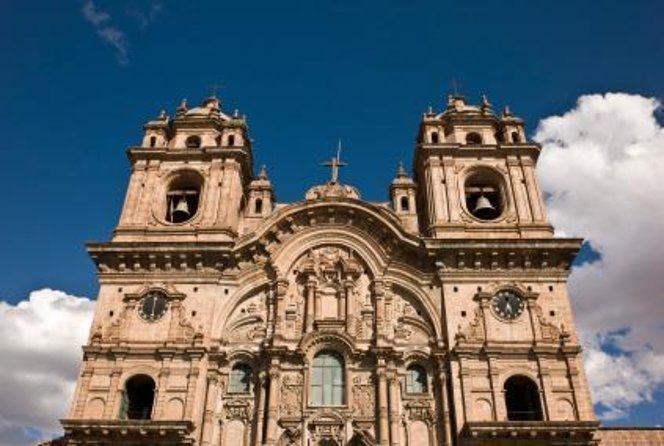
- The tour visits both central Cusco and the nearby Inca sites, including Qorikancha, Sacsayhuamán, Qenqo, Puka Pukara, and Tambomachay.
- Pisco Sour instruction takes place at Republica del Pisco, after the sightseeing portion.
- The group can include up to 17 people, and guides such as Herman and Juana have earned strong praise for their organization and clear explanations.
What the $45 Cusco tour really costs
The advertised price is $45 per person. That covers transportation to the listed sites and a professional guide, but not entry tickets. The additional entrance cost is listed as $28 per person, putting the practical total at $73 before any personal spending.
That price deserves a closer look. You are getting roughly six hours of sightseeing, a guide, transport between the central square and the hilltop ruins, and a 45-minute Pisco Sour class. For someone who wants one organized outing instead of arranging several separate visits, that can be fair value.
The catch is not the ticket charge itself. It is the need to know about it before you arrive. Admission is not included for the Cusco Cathedral, Qorikancha, Sacsayhuamán, or Qenqo. Puka Pukara and Tambomachay are listed as free. I would budget the extra $28 from the start and treat the true tour price as $73.
One traveler described being pressed to decide about buying tickets because the group had been paired with people who had purchased an all-inclusive option. That makes a simple tip especially important: ask your guide at the beginning which sites require payment, how much the total will be, and how long you will have at each stop. Clear answers will help you avoid making a rushed decision later.
More City Tours in Cusco
- Cusco: Half-Day City Tour with Sacsayhuaman and Q’enco
★ 4.6 · 1,129 reviews - City Tour Cusco Qoricancha Sacsayhuaman y Tambomachay
★ 4.7 · 617 reviews - Cusco City Tour Four Ruins in Half-Day
★ 5.0 · 530 reviews
Starting in the Plaza de Armas and entering the Cathedral
The outing begins with pickup details that need a little attention. The tour information describes hotel pickup, but the stated meeting point is Plaza Regocijo, at F2M9+5X2, Cusco 08002. The end point is also given as the meeting point. Confirm the exact pickup arrangement when you book so you know if you should wait at your hotel or walk to Plaza Regocijo.
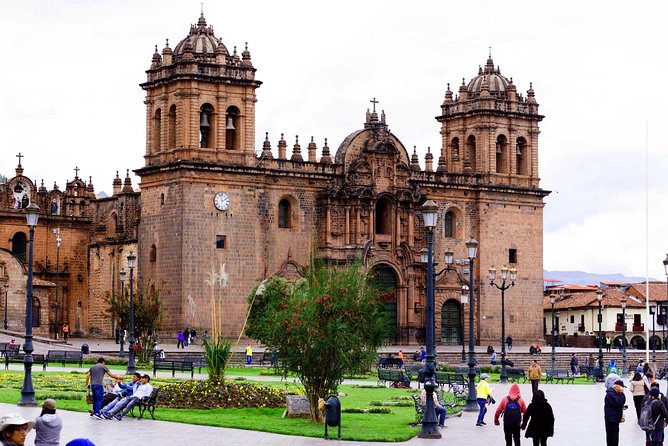
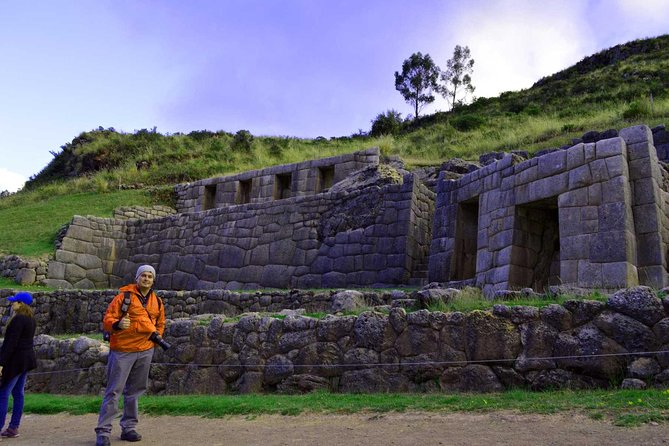
The first sightseeing stop is the Plaza de Armas, Cusco’s central square. From here, you visit the Cusco Cathedral, built in the 16th century and described as the city’s most important church. You have about 45 minutes at this first stop.
The Cathedral gives you an early look at the Spanish colonial layer of Cusco. It also sets up the larger story of the day: the city was reshaped after the Spanish conquest, but Inca foundations and beliefs remain close beneath the surface.
After the Cathedral, you walk about eight minutes to Qorikancha. That short walk matters. It keeps the opening section on foot and lets you move through the center of Cusco rather than spending the whole morning inside a vehicle.
Qorikancha, the Inca Temple of the Sun
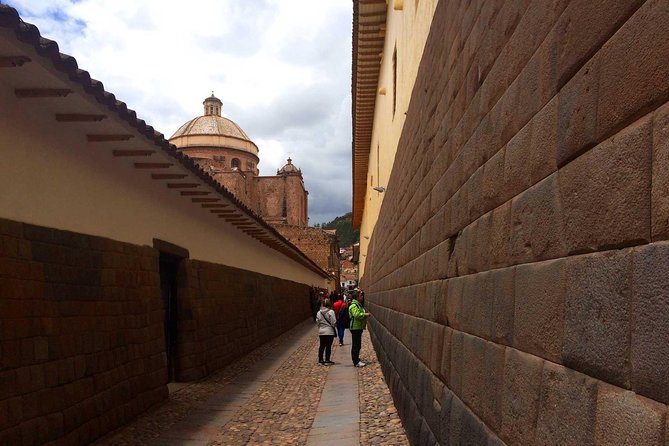
Qorikancha, also spelled Coricancha, was the ancient Inca Temple of the Sun. The site still preserves impressive remains, and it is one of the most important places on this route for understanding how the Inca viewed Cusco.
You receive about 45 minutes here. That is enough for a guided overview, but not a leisurely museum visit. Pay attention to the contrast between the Inca stonework and the later religious structures. This is one of the places where the layers of Cusco’s past are easiest to see in one compact setting.
Qorikancha is also a good reason to choose a guided tour rather than simply ticking off sites with a map. The stones are striking on their own, but the meaning of the temple, its connection to the sun cult, and its place in the old Inca capital are easier to grasp with a clear explanation.
Your admission is not included, so keep the $28 ticket cost in mind. The visit finishes in central Cusco, where you board a vehicle for Sacsayhuamán.
Sacsayhuamán and the scale of Inca engineering
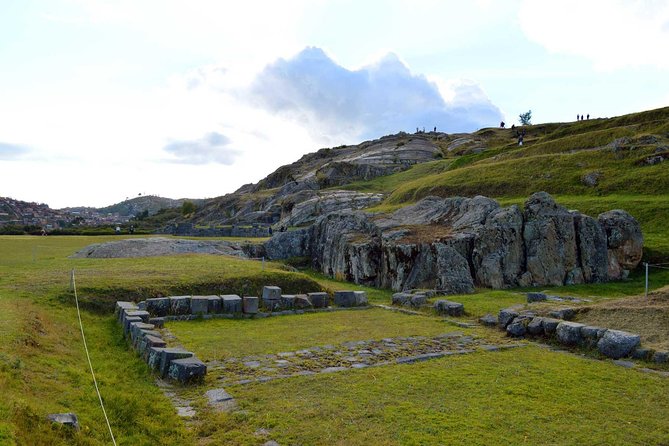
Sacsayhuamán is the largest and most imposing ruin on the route. The former fortress reflects the military power and engineering skill of the Inca state. Its huge stone walls make a strong contrast with the more enclosed spaces at Qorikancha and Qenqo.
You have about 45 minutes here. That is a reasonable amount of time for a first visit, especially when the tour still has three more sites to cover. I would use this stop to listen closely to the guide’s explanation of the fortress, then leave room for a few minutes to take in the broad views around the site.
This is also where the tour’s transport becomes useful. Sacsayhuamán is outside the central square, and the route continues to more outlying ruins. You avoid having to arrange taxis or work out the order yourself.
The site requires paid admission. Since the tour moves as a group, this is another place where advance clarity about tickets helps. If you want long, unhurried photography stops, a private visit may suit you better. If you prefer a planned route with historical context, the 45-minute format is practical.
More Pisco Tastings in Cusco
- Local Market and Peruvian Cooking Class with Pisco Sour in Cusco
★ 5.0 · 384 reviews - Group Cooking Class in Cusco with Pisco Tasting
★ 5.0 · 335 reviews - Cusco: Historic Walking Tour with Pisco Sour and Local Music
★ 5.0 · 190 reviews - Bilingual Cooking Class with Pisco Cocktail in Cusco
★ 5.0 · 92 reviews
Qenqo’s carved stones and underground passages
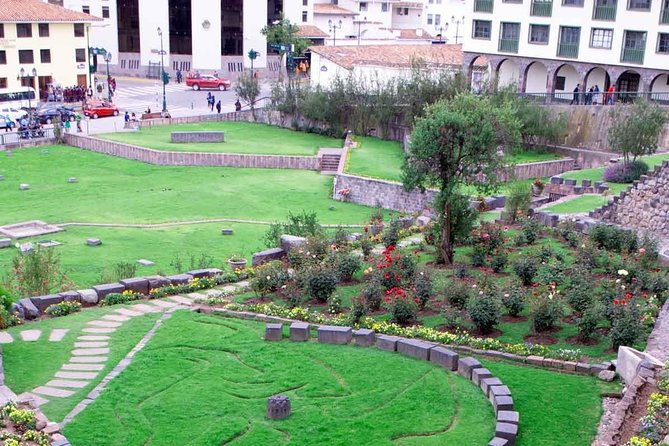
Qenqo was an Inca ceremonial center linked to the worship of the gods. The site includes carved stone altars and underground passages, giving it a different feel from the fortress at Sacsayhuamán.
The scheduled visit lasts about 45 minutes. Qenqo rewards a guide who can explain what is known about the site without pretending that every detail is certain. The carved stone features and enclosed passages can be difficult to interpret on your own.
This stop also breaks up the larger open spaces of the route. After the walls of Sacsayhuamán, Qenqo offers a more concentrated look at ritual architecture. Admission is not included, so this is part of the paid portion of the day.
The pace may feel brisk here. Six sites plus a drink lesson in about six hours leaves little space for wandering. I would keep your expectations realistic: this is an orientation tour, not a slow archaeological study.
Puka Pukara and the old road into Cusco
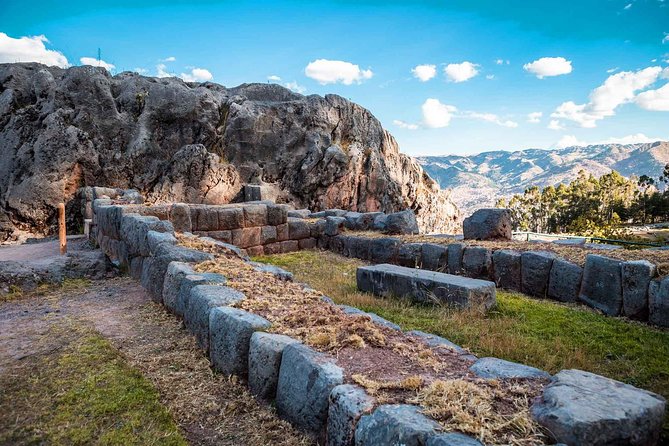
Puka Pukara was an Inca military post used to monitor access to Cusco. Its walls, terraces, and stairs point to both defensive and administrative work.
You spend about 45 minutes at the site, and admission is free. That makes it a pleasant stop from a budgeting point of view, especially after the ticketed attractions. The ruins are less monumental than Sacsayhuamán, but their position on the route helps you understand how the Inca controlled movement into the capital.
I like the way this stop adds practical context. The Inca road system was not only about temples and palaces. Posts such as Puka Pukara helped manage people, supplies, and access. Your guide can connect the stones in front of you to the wider operation of the empire.
Because this is a group outing, you will likely have a set amount of time rather than the freedom to explore every stair and terrace. Stay near the guide and listen for the explanation of the site’s military and administrative purpose.
Tambomachay and the importance of water
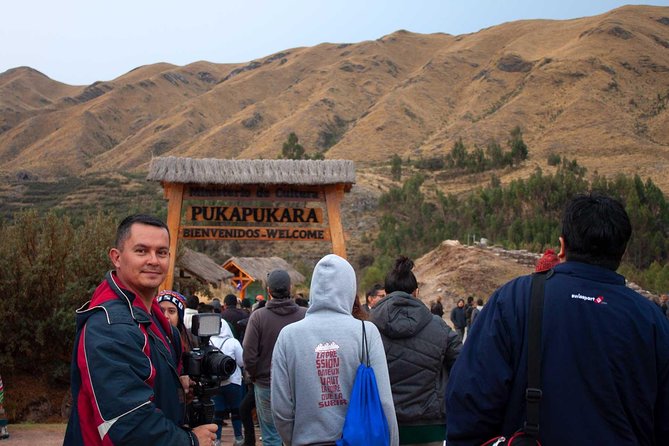
The final archaeological stop is Tambomachay, known for its ceremonial fountains and connection to the Inca water cult. The site is also free to enter and takes about 45 minutes.
After fortresses and ritual spaces, Tambomachay offers a quieter ending to the archaeological route. Its fountains show that water had religious meaning as well as practical value. This is a useful reminder that Inca sites were not built only for defense or display.
The tour ends the main sightseeing section at the Plaza de Armas. The information also gives Plaza Regocijo as the ending meeting point, so confirm the exact return location with the operator. Those two plazas are close, but you do not want to be guessing after six hours on your feet.
A 45-minute Pisco Sour class at Republica del Pisco
After the city sightseeing, you continue to Republica del Pisco for the Pisco Sour lesson. The class lasts about 45 minutes and begins with a short talk about the drink’s history in Peru. You then prepare your own Pisco Sour.
This is a smart addition to the tour. The ruins give you a visual introduction to Cusco, while the drink class adds a social and culinary note. It also keeps the experience from feeling like six straight history stops, which some people may appreciate after a busy afternoon.
The class is included, according to the tour details. You should still remember that the sightseeing admission fees are separate. The Pisco segment is described as a small class rather than a full meal or extended tasting, so do not book it expecting a large food experience.
The timing also matters. If you choose the afternoon departure, the Pisco class follows the sightseeing route later in the day. If you prefer to have more energy for the ruins, the morning departure may be the better choice. If you want a relaxed start, the afternoon option may fit your schedule more easily.
Guides, group size, and the pace of the day
The tour allows a maximum of 17 people. That is not a private experience, but it is small enough for a guide to manage without the feel of a huge coach group. Your experience will depend heavily on how well the guide handles the fixed schedule.
Herman receives specific praise for being excellent, keeping the outing well planned, and offering a reasonable experience for the price. Juana is also praised for her organization, passion for history, and willingness to answer questions. Those details matter because the stops themselves are much more useful when the guide connects them into one clear story.
The physical demand is listed as moderate. You will walk through archaeological sites, handle uneven ground, and spend much of the day moving between stops. I would wear practical shoes and avoid treating this as a sit-down city excursion.
The schedule gives about 45 minutes at every stop. That creates a clean rhythm, but it can also feel tight if you want extra photographs or time to read every sign. You will get the best value by listening to the guide, asking focused questions, and accepting that this is a broad introduction rather than an in-depth visit.
Which departure time should you choose?
Morning departures are between 8:30 and 9:00 a.m. Afternoon departures are between 1:30 and 1:40 p.m. The exact pickup time is given as a range, so be ready during the full window.
Choose the morning if you want your main sightseeing finished earlier and prefer to have the rest of the day open. This also gives you a better chance to enjoy the ruins before you are worn out.
Choose the afternoon if your morning is already occupied or you prefer a slower start. The downside is simple: the tour still takes about six hours, so the Pisco class and final return come later in the day.
The tour requires good weather. If poor weather forces cancellation, you are offered another date or a full refund. For a full refund from your own cancellation, cancel at least 24 hours before the start time. Changes or cancellations inside that window are not accepted.
Who will get the most from this Cusco outing?
I would recommend this tour to you if you have limited time in Cusco and want the main archaeological sights handled in one organized route. It is also a good fit if you want a guide to explain the difference between a temple, fortress, ceremonial center, military post, and water shrine.
The outing suits first-time visitors, couples, and small groups who like a mix of culture and a light food-and-drink activity. The Pisco Sour lesson gives the day a more relaxed finish.
I would be more cautious if you dislike fixed schedules, want long visits at each ruin, or prefer to choose your own entry tickets without any group coordination. The ticket issue is manageable, but you should budget for it and ask about it before leaving the center.
The overall score is 4.6 out of 5, and 90 percent of customers recommend the experience. The strongest praise centers on organization, reasonable value, and guides who explain the past with energy. The main criticism is communication about extra charges, not the route itself.
Should you book the Cusco city tour and Pisco class?
Book it if you want a well-packed first day in Cusco, can handle moderate walking, and are comfortable paying the additional $28 entrance fee. The mix of Cathedral, Qorikancha, four Inca sites, and a Pisco Sour class gives you plenty for the price.
Before booking, confirm the pickup point, ask how the $28 admission payment will be handled, and choose your departure time with the six-hour length in mind. If you do that, this is a practical introduction to Cusco with enough variety to keep the day moving.
FAQ
How long does the Cusco city tour and Pisco Sour class last?
The complete experience lasts approximately six hours. The Pisco Sour class itself lasts about 45 minutes.
How much does the experience cost?
The listed price is $45 per person. Entrance tickets cost an additional $28 per person.
Are attraction entrance tickets included?
No. Admission is not included for the Cusco Cathedral, Qorikancha, Sacsayhuamán, or Qenqo. Puka Pukara and Tambomachay are listed as free.
What time does the tour depart?
Morning departures are between 8:30 and 9:00 a.m. Afternoon departures are between 1:30 and 1:40 p.m.
Where does the Pisco Sour class take place?
The class takes place at the local restaurant Republica del Pisco after the sightseeing portion of the tour.
Is transportation included?
Yes. Transportation to the indicated places is included, along with a professional guide.
How large can the group be?
The maximum group size is 17 people.
What happens if the weather is poor?
The experience requires good weather. If it is canceled because of poor weather, you can choose another date or receive a full refund.
More Pisco Tasting in Cusco
- Cusco by Night: Planetarium Cusco, Dinner, and Pisco Sour
★ 5.0 · 75 reviews - Cusco: Historic Walking Tour with Pisco Sour and Music Show
★ 4.6 · 65 reviews - Pisco Sour Secrets: Hands-On Mixology in Historic Cusco
★ 4.5 · 50 reviews - Pisco Sour Workshop in Cusco | Learn, Create, and Toast |
★ 3.9 · 29 reviews
Added recently around Cusco
- Guided tour of the mountain of colors in Cusco★ 5.0 · 11 reviews
- 2-Day Private Short Inca Trail to Machu Picchu★ 5.0 · 15 reviews
- City Tour Cusco – Group★ 5.0 · 4 reviews
- Tour Sacred Valley with Maras and Moray★ 5.0 · 15 reviews
- San Pedro Market Tour with Peruvian Cooking Class★ 5.0 · 31 reviews
- Walking Culinary Experience★ 5.0 · 41 reviews
- City Tour in Cusco★ 4.5 · 10 reviews
- One Day Tour to Humantay Lagoon★ 5.0 · 8 reviews
Pisco Tours & Tastings, compared.
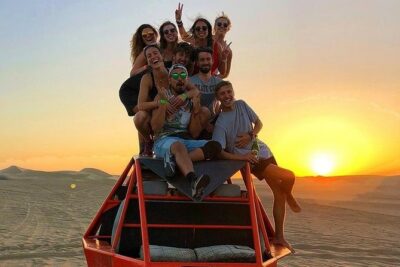
3 Day Tour From Lima: Paracas, Huacachina Oasis & Pisco Vineyard
Read our review →
2 Day Tour from Lima: Paracas, Huacachina, and Pisco Vineyard
Read our review →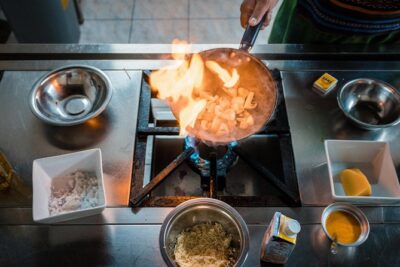
Local Market and Peruvian Cooking Class with Pisco Sour in Cusco
Read our review →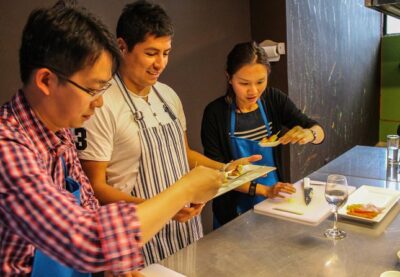
Group Cooking Class in Cusco with Pisco Tasting
Read our review →
Historic Walking Tour with Pisco Sour and Local Music
Read our review →
Authentic 4-dish Peruvian Food Cooking Class in Lima + Pisco Sour
Read our review →
Cook an Authentic Ceviche And Peruvian Pisco Sour!
Read our review →Browse the lists this tour appears in