
Reviewed · INCA RUINS & ARCHAEOLOGICAL SITES
Cusco : Half-Day Explore Inca Ruins qoricancha sacsayhuaman
Five ancient sites, one morning, plenty to process. I like the low $15 price and the simple pickup at Cusco’s Plaza de Armas. I also like the chance to see Qoricancha, Sacsaywaman, Qenqo, Puca Pucara, and Tambomachay in one guided outing.
The tradeoff is time. Each ruin gets a short visit, and the bilingual guide may speak more Spanish than English if the group is mixed. You will also need 90 soles in cash for entry tickets, so the real cost is higher than the headline price.
In This Review
- Key points at a glance
- Is this $15 Cusco tour good value?
- Meeting at the Plaza de Armas at 8:45 am
- Qoricancha, the Temple of the Sun
- Sacsaywaman and the great stone walls
- Qenqo’s carved stone and ceremonial setting
- Puca Pucara, a compact stop with open views
- Tambomachay and the meaning of water
- A bilingual tour with a practical language question
- Pace, altitude, food, and shopping interruptions
- Who will get the most from this outing?
- Should you book the Cusco ruins tour?
- FAQ
- Where does the tour begin?
- Where does the tour finish?
- How long does the tour last?
- Which archaeological sites are included?
- Is transportation included?
- Is a guide included?
- Are entrance tickets included in the $15 price?
- Can I cancel the booking?
Key points at a glance
- Five major Inca and pre-Inca sites: Qoricancha, Sacsaywaman, Qenqo, Puca Pucara, and Tambomachay fit into a single morning.
- Easy central meeting point: Pickup is at 8:45 am by the fountain in the center of Cusco’s main square.
- Transport is included: You ride between the sites rather than arranging taxis or figuring out the route yourself.
- Bring 90 soles: Archaeological center entry is not included in the $15 tour price.
- English and Spanish guiding: The guide explains the sites in both languages, though English may receive less speaking time in a mixed group.
- Best after altitude adjustment: One Spanish-language review specifically advises waiting until you have adapted to Cusco’s high elevation.
Is this $15 Cusco tour good value?
At first glance, this is an unusually inexpensive way to see Cusco’s major ruins. For $15 per person, you receive tourist transport and a professional bilingual guide for about five hours. That is useful if you want an organized introduction without paying for a private tour.
The entry charge changes the calculation. You must bring 90 soles in cash for the archaeological centers, and that fee is separate. Add transport, guiding, and entrance costs together, and the tour remains a reasonable value, but it is not really a $15 sightseeing day.
I see the tour as a practical orientation. It gives you the basic story of the Inca capital and lets you compare several kinds of sacred, ceremonial, military, and water-related sites. You will not have time for long photography stops or careful study at every location, but you will cover a lot of ground.
The tour also makes sense if you have only one free morning in Cusco. You get out of the city center, see the surrounding hills, and return close to the Plaza de Armas by early afternoon. That leaves the rest of the day open.
More Ruins & Archaeology Tours in Cusco
- Cusco: Half-Day City Tour with Sacsayhuaman and Q’enco
★ 4.6 · 1,129 reviews - City Tour Cusco Qoricancha Sacsayhuaman y Tambomachay
★ 4.7 · 617 reviews - Cusco City Tour Four Ruins in Half-Day
★ 5.0 · 530 reviews
Meeting at the Plaza de Armas at 8:45 am
The morning begins at the fountain in the center of Cusco’s main square. The stated pickup time is 8:45 am, and the guide calls your name. The meeting coordinates are -13.516772, -71.9787231, which can help if you want to confirm the exact point on a map.
This is a convenient starting place. If you are staying near the historic center, you can walk to the meeting point rather than arrange an early taxi. I would arrive a little before 8:45, especially because the square has several possible landmarks and the group may be waiting near the fountain.
The tour begins with the Plaza de Armas itself before moving to Qoricancha. That gives the guide a chance to set the scene: Cusco was the center of the Inca world, and the buildings around the square reflect layers of Inca, colonial, and modern city life.
The transport is included, which matters in Cusco. The sites are spread out, and visiting them independently requires planning taxis, buses, or a private car. Here, you can focus on the views and explanations instead of watching the clock for the next connection.
Qoricancha, the Temple of the Sun
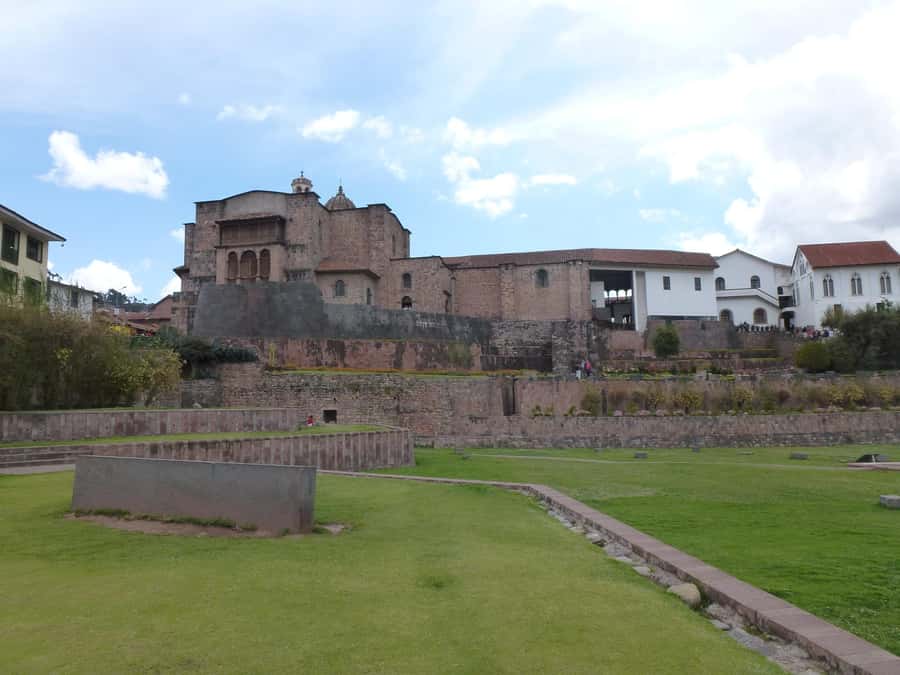
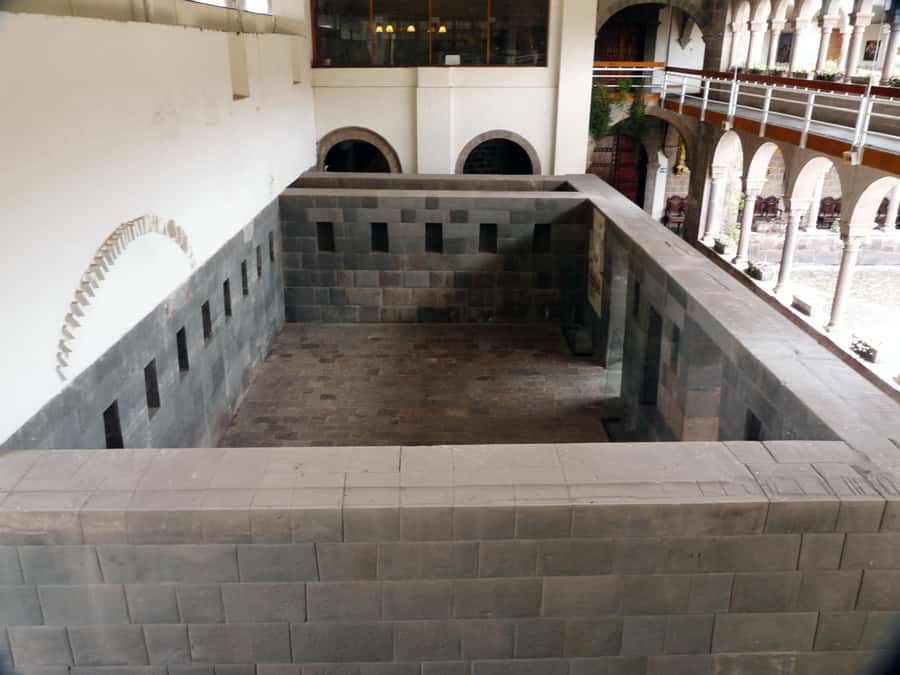
The first main stop is Qoricancha, also called the Temple of the Sun. The planned visit lasts about 40 minutes, making it one of the longer stops on the route.
Qoricancha is important because it shows how central religion was to the Inca state. The temple was dedicated to the sun, and the guide uses the site to explain Inca beliefs, construction, and Cusco’s role as the center of imperial power.
This stop is especially valuable early in the tour because it provides context for the ruins outside the city. After hearing about the temple’s purpose, you can better understand why Sacsaywaman, Qenqo, and Tambomachay were placed where they were and how they may have supported ceremonies and state power.
You may find the visit feels quick. Forty minutes is enough for a guided explanation and a look around, but not enough for a slow examination of every wall or architectural detail. If Qoricancha interests you most, consider returning independently later if your schedule allows.
The tour then takes about 20 minutes by coach to Sacsaywaman. This ride is not wasted time. It moves you from the urban center toward the higher archaeological sites and opens up broader views over Cusco.
Sacsaywaman and the great stone walls
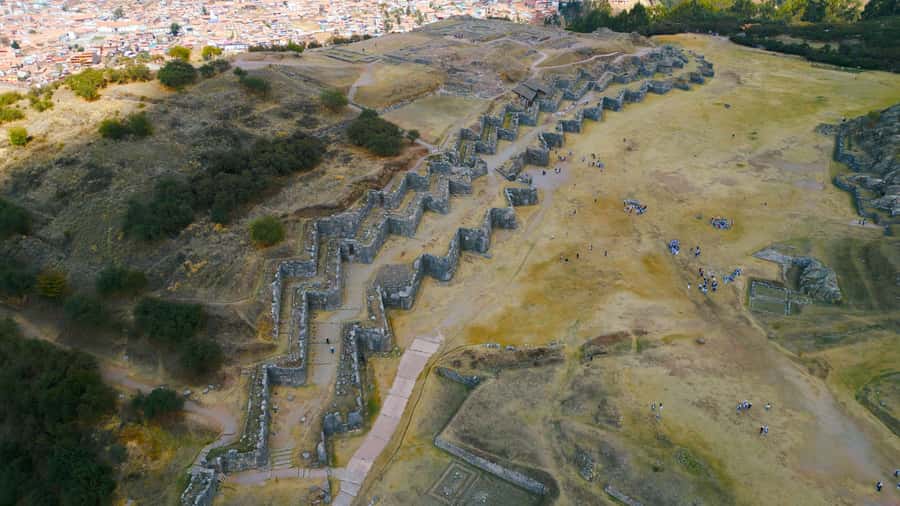
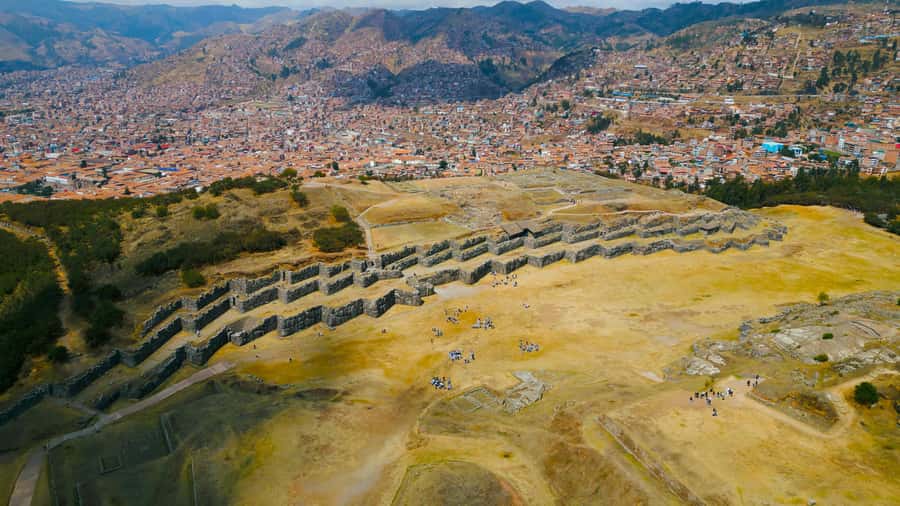
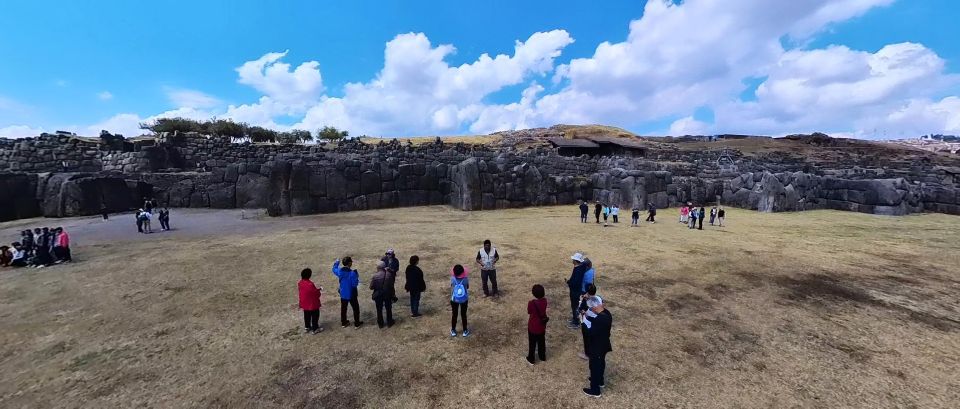
Sacsaywaman receives about 40 minutes, tied with Qoricancha for the longest visit. The site is famous for enormous fitted stones and its high position above Cusco.
The scale is the point. Even a short visit gives you a sense of the engineering skill involved in shaping and placing the stones. The walls are far more impressive in person than in a small photograph because you can see how large the blocks are beside people and paths.
I like this part of the tour for the views as much as the masonry. From the site, you can look across Cusco and understand the city’s bowl-like setting among the surrounding mountains. Bring a camera, but also give yourself a moment to look away from the ruins. The view explains why this location mattered.
The short schedule creates the same limitation as at Qoricancha. You will receive a useful overview, but you may need to stay close to the guide to hear the explanation and keep the group moving. If you prefer quiet exploration, a private visit on another day would give you more freedom.
The transfer to Qenqo takes about five minutes. That brief ride keeps the morning moving and limits time spent in the vehicle.
More ruins and archaeology near Cusco:
- Cusco: City Tour | Half-Day Tour to 4 Archaeological Sites
★ 4.6 · 206 reviews - Cusco City Sightseeing and Sacsayhuaman Archeological Park Tour
★ 4.5 · 101 reviews - Cusco: Historical Guided City Tour with 4 Inca Ruins
★ 4.5 · 99 reviews - Cusco 4-Hour Private Tour Including Sacsayhuaman and Qenqo
★ 5.0 · 77 reviews
Qenqo’s carved stone and ceremonial setting
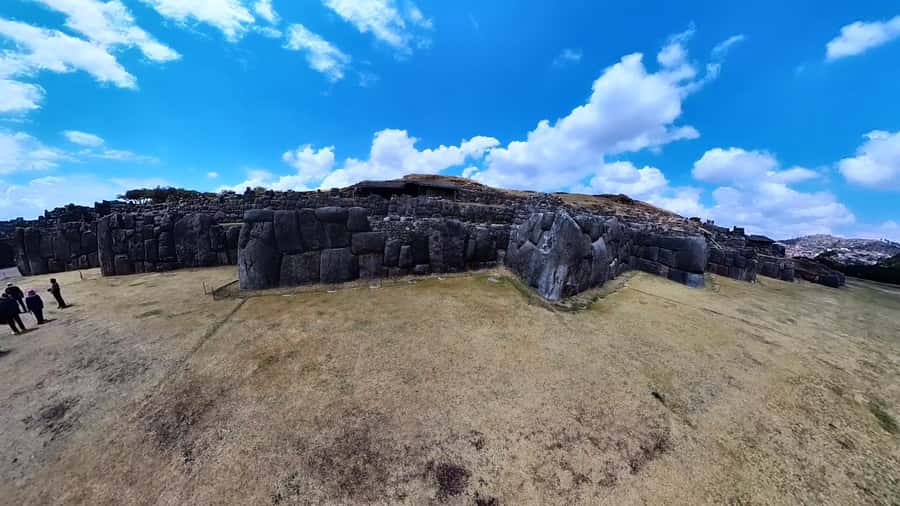
Qenqo Archaeological Complex comes next, with about 30 minutes at the site. It is a smaller and more enclosed stop than Sacsaywaman, so the experience shifts from giant walls and open views to carved rock and ceremonial spaces.
The guide explains the site as part of the wider Inca religious world. Qenqo helps show that Inca sacred places were not limited to large temples. Natural stone formations, carved surfaces, and carefully chosen locations could all have ceremonial meaning.
Thirty minutes is a fair amount of time for a first look. You can follow the guide, see the principal features, and take photographs without the stop dragging on. Still, the explanation matters here. Without context, some of Qenqo’s features may not be immediately clear.
The coach ride to the next location takes about 10 minutes. As the route continues, the focus shifts toward smaller outlying sites. This is where the benefit of a guide and organized transport becomes clear. You do not have to work out how to connect the ruins yourself.
Puca Pucara, a compact stop with open views
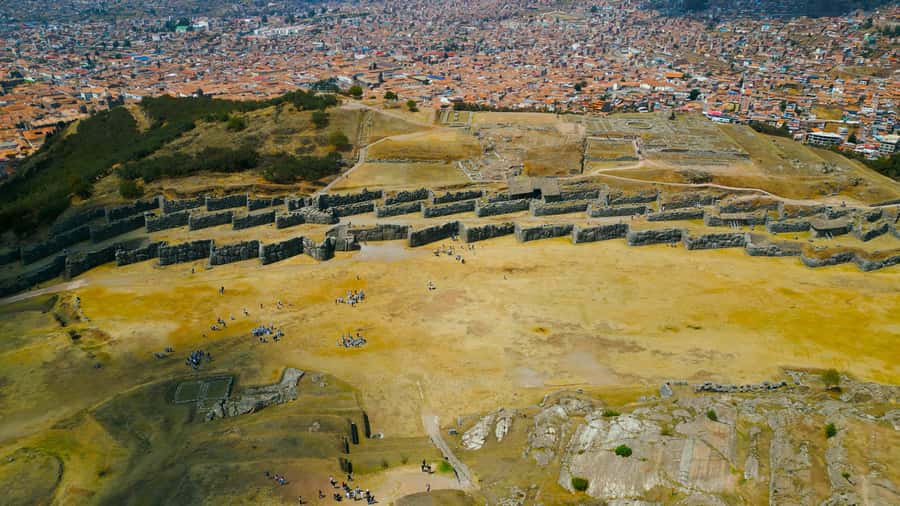
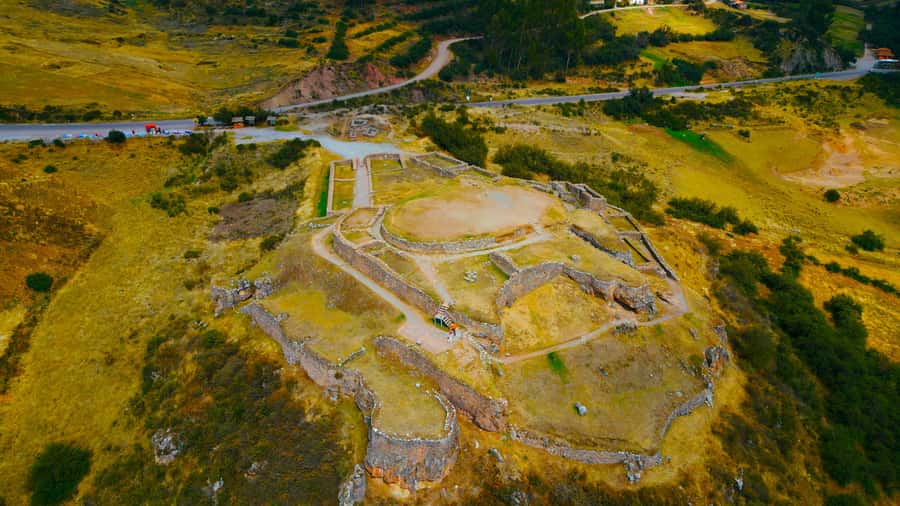
The itinerary identifies the next stop as G28Q+J5R, which corresponds to Puca Pucara, and allows about 20 minutes there. Puca Pucara is generally associated with a fortified or checkpoint site along the route near Cusco.
This is the shortest visit of the morning. You will have enough time for a quick explanation, a look at the remains, and photographs, but not a long walk around the area.
The value of this stop comes from its position within the larger route. It helps you see that the Inca sites around Cusco were connected. The area was not simply a collection of unrelated ruins. Roads, ceremonial places, water sites, and strategic points formed part of a wider system.
I would keep expectations realistic. Puca Pucara does not receive the same time or attention as Qoricancha or Sacsaywaman. If you want a detailed archaeological study, this half-day outing will feel rushed. If you want to understand the broad pattern of sites around Cusco, the quick stop earns its place.
The next transfer is only about one minute, so Tambomachay is very close.
Tambomachay and the meaning of water
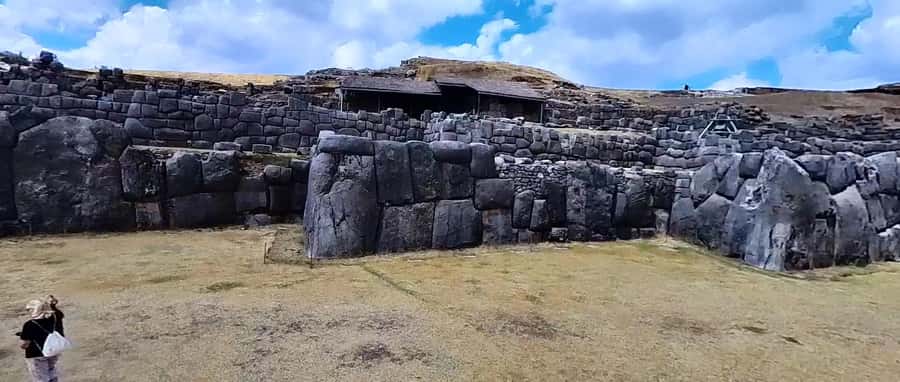
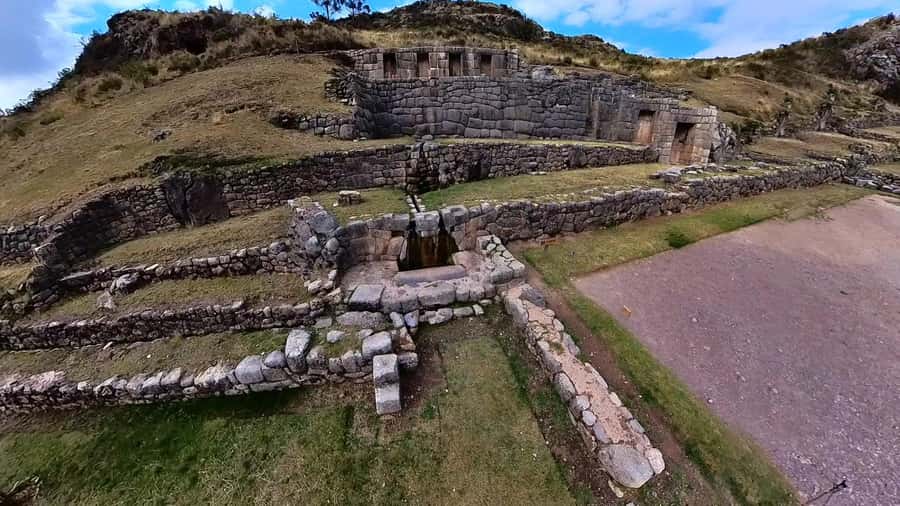
Tambomachay is the final archaeological stop, with about 30 minutes to explore. It is known for its water channels and fountains, and the site offers a different look at Inca design from the stone walls at Sacsaywaman.
Water had practical and ceremonial importance in Inca society. At Tambomachay, the guide can connect the flowing water to the wider role of springs, fountains, purification, and sacred space.
The visit is a good closing point because it adds another piece to the morning’s story. You have seen a major temple, a powerful stone complex, a carved ceremonial site, a strategic-looking outpost, and a place shaped around water. The stops feel more useful when you view them as parts of one regional center.
The 30-minute visit should be enough for a guided introduction. It may not satisfy you if you want to sit quietly by the water or study every channel. Organized tours work on a shared clock, and that is the price of covering five sites in one morning.
After Tambomachay, the coach takes about 20 minutes to return to Cusco. The tour ends at Plaza Kusipata, one block from the Plaza de Armas, rather than at the exact starting fountain. That is convenient for lunch, an afternoon museum visit, or a walk through the historic center.
A bilingual tour with a practical language question
The guide speaks English and Spanish, and the service is designed for mixed-language groups. That makes the tour accessible to English-speaking visitors who do not speak Spanish, but you should understand how bilingual guiding affects the pace.
One English-speaking booking described a group with only two English speakers. The guide tried to balance both languages but spoke more Spanish. That does not mean the English explanation will be absent, but it may be shorter or less frequent.
I would ask at the start how the guide plans to handle both languages. Stay close during explanations, especially at Qenqo and Tambomachay, where the stones do not always explain themselves. If you need a long English lecture at every stop, a private or English-only option may suit you better.
The positive side is that the guide is not just dropping you at the ruins. The tour includes a professional guide, and the main benefit is the connection between the sites. A quick stop becomes more useful when someone explains what you are looking at and why it matters.
Pace, altitude, food, and shopping interruptions
The tour lasts five hours and covers a lot in that time. You will spend roughly 160 minutes at the five listed sites, with the remaining time used for coach rides, transfers, and movement through the schedule.
That pace is efficient, but it is not relaxed. One Spanish-language booking praised the friendly, attentive guide while noting that the group could not spend more time at every place. That is the central compromise: you see more sites, but you give up lingering.
Altitude deserves serious attention. Another Spanish-language booking advised against taking this tour before you have adapted to Cusco’s elevation, which is higher than Machu Picchu. The tour includes walking and time outdoors at several archaeological sites, so you should not treat the half-day label as proof that it will feel effortless.
Take the altitude warning seriously and plan this outing after you have had time to adjust. The supplied information does not specify how many days you need, so I would not invent a fixed rule. Listen to your body and ask local medical professionals for advice if you feel unwell.
The description highlights authentic local cuisine, but no meal or restaurant stop appears in the stated route, and food is not listed among the inclusions. I would not book this tour expecting lunch. Bring water and plan your meal for after the return to Cusco unless the operator gives you different instructions.
You should also be ready for sales stops or repeated offers to buy goods. One booking specifically noted that items were being sold in the transport and at places where the group was taken. This may not ruin the outing, but it can take time and feel intrusive if you prefer a strictly sightseeing-focused tour.
Who will get the most from this outing?
I would recommend this tour to you if you want a broad first look at Cusco’s ruins and value simple transport. It is a good fit for a short stay, a first morning in the city after acclimatizing, or anyone who does not want to organize five separate visits.
It also suits budget-conscious visitors. The $15 starting price is attractive, especially with a guide and transport included. Just budget for the separate 90-sol entry ticket and any food or purchases.
You may want another option if you dislike fixed schedules, bilingual explanations, shopping interruptions, or short visits. The route is designed for coverage, not solitude.
The wheelchair-accessible designation is useful, but the supplied details do not explain the exact access conditions at each archaeological site. If you use a wheelchair, confirm the practical route with the operator before booking.
Cancellation is flexible: you can cancel up to 24 hours ahead for a full refund, and you can reserve now and pay later. Those terms help if your Cusco plans may change.
Should you book the Cusco ruins tour?
Book it if you want to cover the main sites around Cusco in one affordable morning, have adjusted to the altitude, and are comfortable with a brisk bilingual group tour. The combination of Qoricancha, Sacsaywaman, Qenqo, Puca Pucara, and Tambomachay gives you a useful framework for understanding the Inca capital.
Skip it if your priority is long, quiet exploration or a full English-only experience. In that case, pay more for a private guide or visit fewer sites at your own pace.
For most budget-minded visitors, I see this as a solid introduction rather than a definitive archaeological day. Bring 90 soles in cash, arrive at the fountain before 8:45 am, expect some sales activity, and plan your food afterward. Do that, and the tour offers a lot of Cusco in five focused hours.
FAQ
Where does the tour begin?
Pickup is at the fountain in the center of Cusco’s main square, the Plaza de Armas. The pickup time is 8:45 am, and the guide will call your name.
Where does the tour finish?
The tour ends at Plaza Kusipata, one block from the Plaza de Armas of Cusco.
How long does the tour last?
The tour lasts five hours.
Which archaeological sites are included?
The route includes Qoricancha, Sacsaywaman, Qenqo, Puca Pucara, and Tambomachay.
Is transportation included?
Yes. Tourist transport between the city and archaeological sites is included.
Is a guide included?
Yes. A professional bilingual guide is included, with Spanish and English available.
Are entrance tickets included in the $15 price?
No. You need to bring 90 soles in cash for entry to the archaeological centers.
Can I cancel the booking?
Yes. You can cancel up to 24 hours in advance for a full refund. You can also reserve now and pay later.
Added recently around Cusco
- Guided tour of the mountain of colors in Cusco★ 5.0 · 11 reviews
- 2-Day Private Short Inca Trail to Machu Picchu★ 5.0 · 15 reviews
- City Tour Cusco – Group★ 5.0 · 4 reviews
- Tour Sacred Valley with Maras and Moray★ 5.0 · 15 reviews
- San Pedro Market Tour with Peruvian Cooking Class★ 5.0 · 31 reviews
- Walking Culinary Experience★ 5.0 · 41 reviews
- City Tour in Cusco★ 4.5 · 10 reviews
- One Day Tour to Humantay Lagoon★ 5.0 · 8 reviews
Inca Ruins & Archaeological Sites, compared.
Half-Day City Tour with Sacsayhuaman and Q’enco
Read our review →
City Tour Cusco Qoricancha Sacsayhuaman y Tambomachay
Read our review →
Pachacamac Ruins & Barranco Half-Day Guided Tour
Read our review →
Pre Inca Temple of Pachacamac Half-Day Tour from Lima
Read our review →
Tour to the Archaeological Sanctuary of Pachacamac (small group)
Read our review →
From Pyramids & Bohemian Streets: Lima Miraflores & Barranco Tour
Read our review →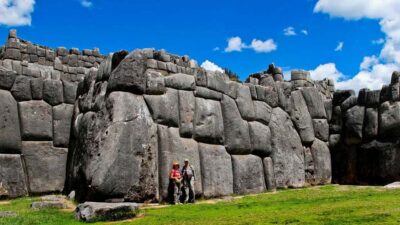
City Tour | Half-Day Tour to 4 Archaeological Sites
Read our review →Browse the lists this tour appears in