
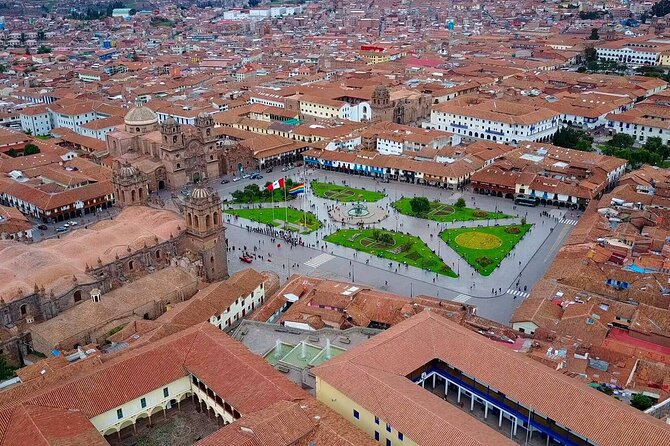
Reviewed · INCA RUINS & ARCHAEOLOGICAL SITES
Cusco: Half-Day City Tour with Sacsayhuaman and Qenqo
Cusco’s Inca sites demand a good pair of shoes. This low-cost half-day outing takes you from Qorikancha in the city center to five important sites above Cusco, then adds an alpaca visit. I like the excellent value and the chance to see the main ruins without arranging several taxis. I also like the guides, especially Luis and Victor, who are praised for clear explanations, friendly humor, and careful timing.
The catch is the schedule. You cover a lot in roughly five to six hours, and the tour can feel rushed at Sacsayhuaman and the other ruins. A bilingual guide may explain everything in English and Spanish, which can cut into your free time. The alpaca stop can also feel more like a shopping visit than a cultural one.
In This Review
- Key points before you book
- What this Cusco tour is really trying to do
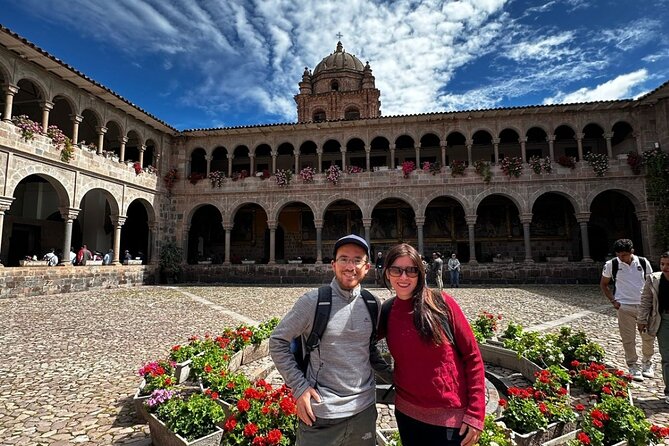
- Qorikancha: the Inca temple beneath the Spanish church
- Sacsayhuaman: huge stones and the best city views
- Qenqo: a ceremonial site carved from living rock
- Puka Pukara and Tambomachay: two smaller sites with different jobs
- The alpaca sanctuary: useful wool facts, with a shopping caveat
- Guides, language, and the quality of the explanations
- Transport, meeting point, and the practical rhythm
- Is $15 good value once admissions are added?
- Who should book this half-day route?
- FAQ
- How long does the Cusco city tour last?
- What sites are included?
- Is entrance to Qorikancha included?
- Is the archaeological park ticket included?
- Where does the tour begin?
- Where does the tour finish?
- Is transportation included?
- Is the guide available in English?
- How many people can join the tour?
- Can I cancel for a full refund?
- Should you book it?
Key points before you book
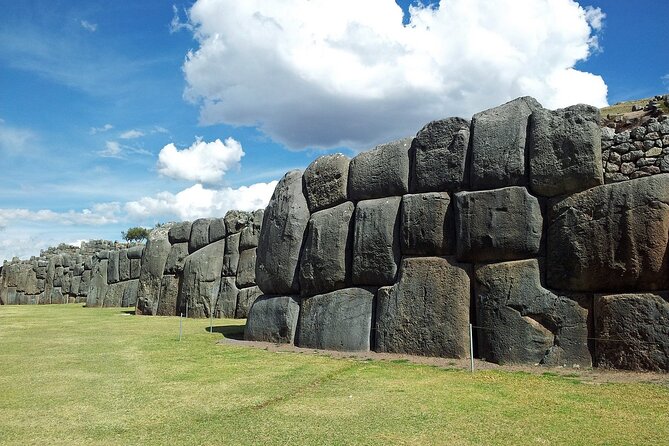
- Five major Inca-era sites in one outing: Qorikancha, Sacsayhuaman, Qenqo, Puka Pukara, and Tambomachay are packed into one route.
- Sacsayhuaman gets the most time: Plan on about two hours here, though some of that may be used for the guide’s talk.
- The $15 price is only the beginning: You must pay separately for Qorikancha and the partial ticket covering four archaeological parks.
- Luis and Victor earn strong praise: Their engaging explanations help bring the stones and ceremonies to life.
- Expect a bilingual tour: Repeated English and Spanish commentary may reduce time for wandering.
- The final alpaca stop is not purely sightseeing: It includes a wool demonstration and may lead into shopping.
What this Cusco tour is really trying to do
This is an orientation tour, not a slow archaeological study. In one circuit, you see a major temple in central Cusco, the great fortress complex above town, three smaller Inca sites, and a community alpaca visit.
That makes the tour useful on a first visit. You get a map in your head. You see how the sites relate to Cusco and to one another. You also avoid the hassle of finding transport to each place.
At the same time, the route asks a lot from the clock. The listed visits total about five hours and 25 minutes before you count driving, gathering the group, and any shopping stop. That explains the mixed reactions to the pace. If you want a guide’s overview and plenty of stops, this works well. If you want to sit quietly beside the stones and study every wall, go independently or choose fewer sites.
The group can reach 18 people. That is not enormous, but it is large enough for meeting-point confusion and slower movement at each stop. The tour begins at Plaza de Armas and finishes on Calle Plateros, so you end in a handy central part of Cusco.
More City Tours in Cusco
- Cusco: Half-Day City Tour with Sacsayhuaman and Q’enco
★ 4.6 · 1,129 reviews - City Tour Cusco Qoricancha Sacsayhuaman y Tambomachay
★ 4.7 · 617 reviews - Cusco City Tour Four Ruins in Half-Day
★ 5.0 · 530 reviews
Qorikancha: the Inca temple beneath the Spanish church
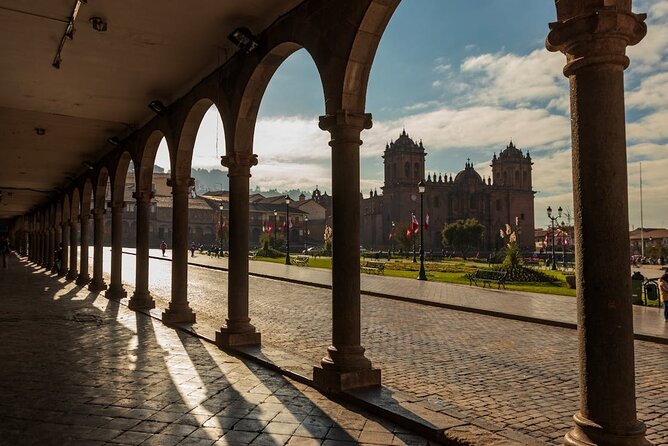
The tour begins at Qorikancha, often written as Coricancha or Qorikancha. You spend about an hour here, with admission paid separately.
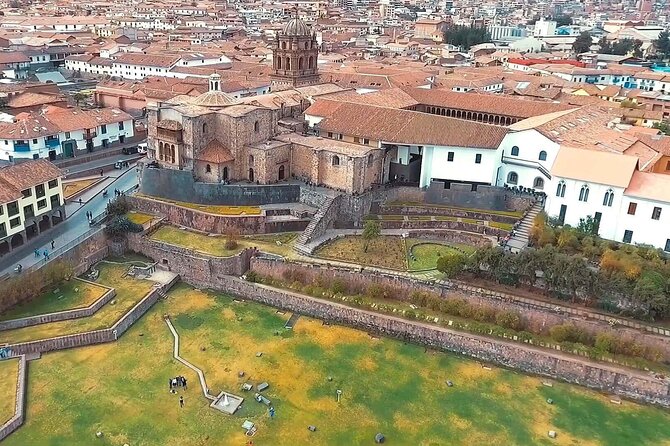
Inside, you see small temples dedicated to the sun, moon, and stars. The original Inca stone foundations remain beneath the later colonial structure, giving you a clear look at how Spanish and Inca layers occupy the same site. Outside, gardens and fountains fill the grounds of the former Sun Temple.
This is an important first stop because it sets up the rest of the day. Your guide can explain the Inca religious world before you head to the ceremonial and military sites outside town. I find the surviving foundations more useful than trying to imagine the entire original temple from a few remaining walls.
The drawback is that this is the only substantial stop in central Cusco. Despite the tour’s city-tour name, you do not get a broad walking tour of Cusco’s streets, churches, or colonial squares. Qorikancha is the city portion, then the minibus heads uphill and out toward the ruins.
The entrance fee is listed as S/20, separate from the tour price. Keep that cost in mind before deciding that this is a $15 outing.
Sacsayhuaman: huge stones and the best city views
Sacsayhuaman receives about two hours, the longest stop of the day. It is also the place where a rushed schedule is most noticeable.
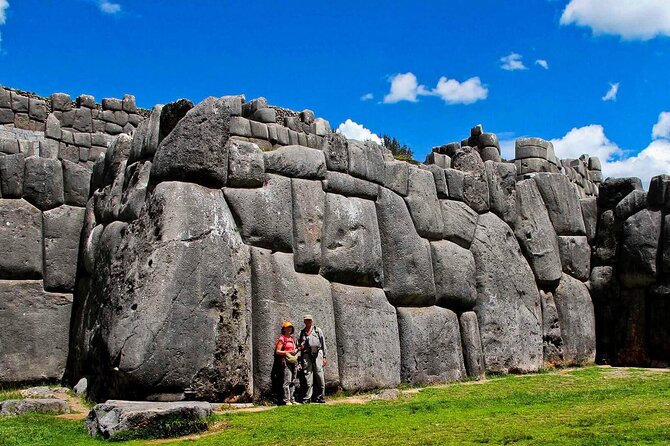
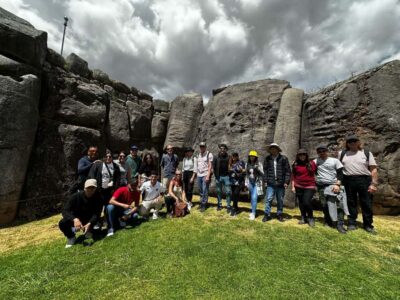
The site is famous for its enormous carved stones. The blocks were cut and fitted with remarkable precision, with no need for modern mortar to create the tight joins. The scale is the main lesson here. Photographs can show the shape of the walls, but they do not convey how much stone was moved and shaped.
The complex is made of three overlapping platforms above Cusco. From here, you get broad views over the city and the surrounding mountains. The setting helps explain why Sacsayhuaman was more than a collection of walls. It was a major ceremonial and defensive place with a commanding position.
During Inti Raymi, the Festival of the Sun, local ceremonies here include offerings to Mother Earth using sacred coca leaves. That detail gives the stones a living connection to Andean traditions. Your guide may also explain how the site fits into the annual festival and Inca religious practice.
Allow yourself time to look up at the walls, not just at the next photo stop. The schedule may not give you much of it. Some tour participants have found they had only a short period to explore after the main explanation, particularly on a bilingual departure. If Sacsayhuaman is your main reason for booking, this is the point where an independent visit or a tour focused on fewer places may suit you better.
Admission is not included. Sacsayhuaman is covered by the partial ticket for the four archaeological parks, listed at S/70. That same ticket also covers Qenqo, Puka Pukara, and Tambomachay.
Qenqo: a ceremonial site carved from living rock
Qenqo gets about one hour. It is smaller and stranger than Sacsayhuaman, with a different mood.
The complex was used for ceremonial worship and is carved directly into rock. At the top, you can see zigzag channels. Inside are small trapezoidal niches. These details invite questions about ritual use, offerings, and the way the Incas shaped natural stone rather than building everything from separate blocks.
This is a good stop for a guide because the surviving remains are not always self-explanatory. Without context, you might see a rock, a channel, and a few recesses. With a clear explanation, the site becomes easier to read.
The limitation is familiar: one hour sounds generous, but the guide’s talk may take much of it. If the group is split between English and Spanish, you may hear the same material twice. That can be helpful if you need translation, but frustrating if you would rather spend the extra minutes inspecting the rock.
More Ruins & Archaeology Tours in Cusco
- Cusco: City Tour | Half-Day Tour to 4 Archaeological Sites
★ 4.6 · 206 reviews - Cusco City Sightseeing and Sacsayhuaman Archeological Park Tour
★ 4.5 · 101 reviews - Cusco: Historical Guided City Tour with 4 Inca Ruins
★ 4.5 · 99 reviews - Cusco 4-Hour Private Tour Including Sacsayhuaman and Qenqo
★ 5.0 · 77 reviews
Puka Pukara and Tambomachay: two smaller sites with different jobs
Puka Pukara follows with about 50 minutes. The name refers to a red fortress, a color linked to the high iron content in its rocks. You get a panoramic view of the site, which served as a military control center for the Incas.
Compared with Sacsayhuaman, Puka Pukara can feel modest. Its value comes from its position and purpose. It helps you see the wider Inca network, where routes and approaches to Cusco needed to be watched and managed. The red stone also gives the site an easy visual identity.
Tambomachay is the shortest archaeological stop, at about 35 minutes. Here, aqueducts and water sources flow from nearby springs. It was a place connected with water worship.
I like the contrast between these two stops. Puka Pukara is about control and movement. Tambomachay is about water, springs, and ceremony. Together, they show that the route was not simply a chain of fortresses.
Still, 35 minutes at Tambomachay leaves little room for lingering. If you are fascinated by Inca water engineering, the visit may feel too brief. The site is covered by the same S/70 partial ticket as Sacsayhuaman and Qenqo, so you pay for access even though the time on site is short.
The alpaca sanctuary: useful wool facts, with a shopping caveat
The final visit lasts about an hour at Manos de la Comunidad Alpaca Sanctuary in Wallarcocha. You see an alpaca and llama farm, then attend a presentation about wool.
The useful part is learning how to recognize baby alpaca fiber and vicuña wool. Vicuña is widely valued as one of the finest wools in the world, so this stop can help you understand why different Andean fibers carry different prices and textures.
The less appealing part is the sales atmosphere. The visit may feel like a required shopping stop, particularly if you do not plan to buy textiles. You could spend close to an hour waiting while other members of the group look at merchandise. Some people enjoy the chance to see local fiber products and shop. Others find that the stop takes time away from the archaeological sites.
I would treat this as a commercial add-on, not a major reason to book the tour. If you want a focused history outing, this is the part most likely to disappoint. If you are interested in alpacas, Andean wool, or buying a textile, it may be worthwhile.
Guides, language, and the quality of the explanations
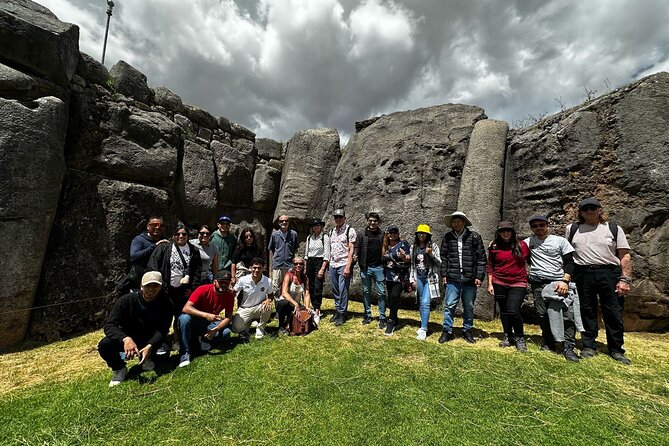
The strongest part of this tour is often the guide. Luis receives repeated praise for his command of both English and Spanish, his ability to answer questions, and his skill at keeping the group moving. Victor is also praised for making the information engaging, attentive, and fun.
That matters in Cusco. The ruins are impressive, but many features need explanation. A guide can point out the difference between a ceremonial site and a military post, explain why water mattered at Tambomachay, and connect Sacsayhuaman with Inti Raymi.
Ask at booking if an English-only or Spanish-only group is available. The supplied details do not promise a single-language departure, and the experience may be bilingual. A bilingual tour can work well when the guide is clear in both languages. It can also double the speaking time and leave you with less time to explore.
One Spanish-speaking participant specifically wanted more explanation in Spanish, which suggests that the balance between languages may not always feel even. If your Spanish or English is limited, confirm the language arrangement before paying.
Transport, meeting point, and the practical rhythm
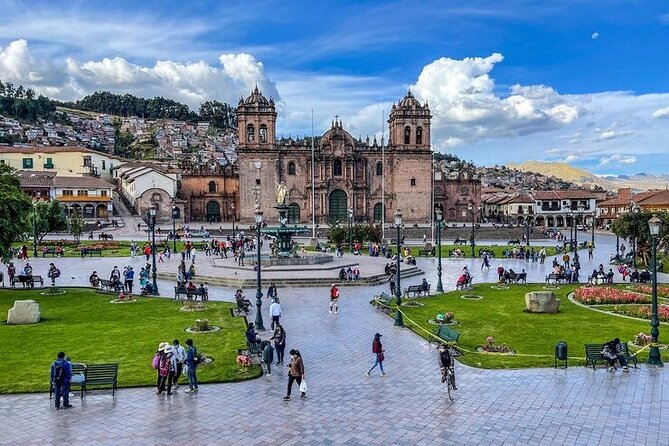
Round-trip transportation is included, along with pickup and drop-off in the central Cusco area around Plaza de Armas. The vehicle has been praised as clean, comfortable, and fitted with seatbelts. That is a real benefit because the route links several sites outside the center.
The meeting point at Plaza de Armas can be chaotic. Several operators gather groups there, and clearer signs would help. Arrive with enough time to find the correct guide rather than assuming the first minibus is yours.
The advertised length is five to six hours. The stop times suggest a full half-day, but local conditions can affect the schedule. A previous departure shifted from morning to afternoon because of local strikes, and at least one pickup ran late. Build some flexibility into your day, especially if you have a train, flight, or restaurant reservation afterward.
Most people can participate, and the tour is near public transportation. The information does not give a specific accessibility assessment for every ruin, so you should ask the operator directly if uneven archaeological ground is a concern.
Is $15 good value once admissions are added?
At $15 per person, the tour price is unusually low for transport, a guide, and a route covering six stops. The price is attractive if you want to see many places without negotiating taxis or hiring a private vehicle.
But the real cost is higher. Qorikancha requires S/20, and the partial ticket for Sacsayhuaman, Qenqo, Puka Pukara, and Tambomachay is listed at S/70. Entrance fees are not included, so add those before comparing this tour with a private guide or a slower small-group option.
Even with the added tickets, the tour can be good value for a first look. You pay for convenience and coverage. You do not pay for long stretches of quiet exploration at each site.
I would choose it if my time in Cusco were limited, I wanted transport included, and I preferred a guide’s overview. I would skip it if I had several days in Cusco and wanted to give Sacsayhuaman or Qenqo the attention they deserve.
Who should book this half-day route?
This tour fits you best if you:
- Want a broad introduction to Cusco’s Inca sites.
- Prefer a low-cost organized outing.
- Need transport to the ruins above the city.
- Enjoy learning from a guide rather than reading every site independently.
- Have only one free half-day.
- Are happy to accept a bilingual format and a shopping stop.
It is less suitable if you:
- Want an English-only or Spanish-only experience.
- Prefer slow visits with plenty of time for photographs and quiet inspection.
- Dislike commercial stops.
- Have already visited the main ruins and want detailed archaeology.
- Need a tightly controlled schedule after the tour.
The overall rating of 4.6 from 77 reviews fits the experience. The praise centers on the guides, organization, clean transport, and strong value. The criticism centers on crowd logistics, repeated bilingual explanations, the rushed schedule, and the alpaca shopping visit.
FAQ
How long does the Cusco city tour last?
The experience lasts approximately five to six hours.
What sites are included?
The route includes Qorikancha, Sacsayhuaman, Qenqo, Puka Pukara, Tambomachay, and Manos de la Comunidad Alpaca Sanctuary.
Is entrance to Qorikancha included?
No. Entrance to the Temple of Qorikancha costs S/20 and is paid separately.
Is the archaeological park ticket included?
No. The partial ticket for Sacsayhuaman, Qenqo, Puka Pukara, and Tambomachay is listed at S/70.
Where does the tour begin?
The meeting point is Plaza de Armas in Cusco, Peru.
Where does the tour finish?
The tour ends on Calle Plateros in central Cusco.
Is transportation included?
Yes. Round-trip transportation is included, along with pickup and drop-off in the center of Cusco around Plaza de Armas.
Is the guide available in English?
Yes. A guide is available in English or Spanish, though the tour may operate bilingually.
How many people can join the tour?
The maximum group size is 18 people.
Can I cancel for a full refund?
Yes. You can cancel at least 24 hours before the start time for a full refund. Cancellations or changes made less than 24 hours before the start time are not accepted for a refund.
Should you book it?
Book this tour if you want the most sites for the least planning. It gives you a useful first look at Cusco’s Inca remains, dependable transport, and guides such as Luis and Victor who can make the history lively.
Do not book it expecting a leisurely day. The route is tightly packed, the commentary may be repeated in two languages, and the alpaca stop can feel sales-focused. For a first visit with limited time, the price is hard to ignore. For a deeper experience, choose fewer sites and give Sacsayhuaman the extra hours it deserves.
More Ruins and Archaeology near Cusco
- Sacsayhuaman Temple, Tambomachay and Puca Pucara Half-Day Tour
★ 4.5 · 59 reviews - Private Cusco City Tour with Sacsayhuaman & Inca Sites
★ 5.0 · 52 reviews - Private Ollantaytambo, Pisac Ruins Tour with Farm Visit, Gourmet Picnic Lunch
★ 5.0 · 52 reviews - Cusco City Tour with Sacsayhuaman & Inca Sites – Small Group
★ 5.0 · 48 reviews
Added recently around Cusco
- Guided tour of the mountain of colors in Cusco★ 5.0 · 11 reviews
- 2-Day Private Short Inca Trail to Machu Picchu★ 5.0 · 15 reviews
- San Pedro Market Tour with Peruvian Cooking Class★ 5.0 · 31 reviews
- City Tour Cusco – Group★ 5.0 · 4 reviews
- Tour Sacred Valley with Maras and Moray★ 5.0 · 15 reviews
- Walking Culinary Experience★ 5.0 · 41 reviews
- City Tour in Cusco★ 4.5 · 10 reviews
- One Day Tour to Humantay Lagoon★ 5.0 · 8 reviews
Inca Ruins & Archaeological Sites, compared.
Half-Day City Tour with Sacsayhuaman and Q’enco
Read our review →
City Tour Cusco Qoricancha Sacsayhuaman y Tambomachay
Read our review →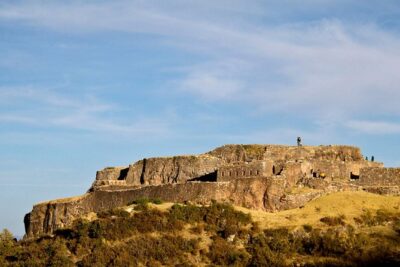
Pachacamac Ruins & Barranco Half-Day Guided Tour
Read our review →
Pre Inca Temple of Pachacamac Half-Day Tour from Lima
Read our review →
Tour to the Archaeological Sanctuary of Pachacamac (small group)
Read our review →
From Pyramids & Bohemian Streets: Lima Miraflores & Barranco Tour
Read our review →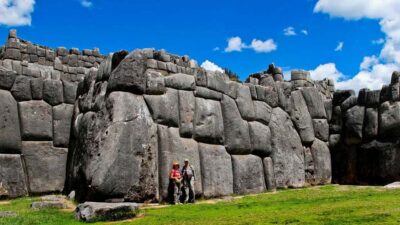
City Tour | Half-Day Tour to 4 Archaeological Sites
Read our review →Browse the lists this tour appears in