
Reviewed · INCA RUINS & ARCHAEOLOGICAL SITES
Cusco City Sightseeing and Sacsayhuaman Archeological Park Tour
Cusco reveals its secrets one stone at a time. This half-day outing gives you a useful first look at the city and its Inca foundations, linking Sacsayhuaman, Qenqo, Puca Pucara, Tambomachay, Qorikancha, Plaza de Armas, and Cusco Cathedral. I like the small group of up to 15 people and the comfortable, air-conditioned vehicle, especially when Cusco’s strong sun begins working on you.
I also like the way the tour joins grand ruins with living city sights. You get sweeping views from Sacsayhuaman, close looks at finely fitted Inca stonework, and a guided visit inside the cathedral. The main caution is ticket and pickup clarity: the price can change depending on whether you choose admission included, and some pickup or return arrangements have caused confusion.
In This Review
- Key points before you book
- Why this makes a useful first day in Cusco
- Sacsayhuaman: Cusco’s great stone introduction
- Qenqo, Puca Pucara, and Tambomachay
- Qenqo and its ceremonial spaces
- Puca Pucara, the red fortress
- Tambomachay and the ritual of water
- Qorikancha: the Temple of the Sun beneath Santo Domingo
- Plaza de Armas and Cusco Cathedral
- A guide can make or break the afternoon
- Transport, group size, and the real time commitment
- Is $79 a fair price?
- What to bring and how to prepare
- Who should choose this Cusco tour?
- Should you book it?
- FAQ
- How long does the Cusco City Sightseeing and Sacsayhuaman Tour last?
- What sites does the tour visit?
- Are entrance tickets included?
- Is hotel pickup and drop-off provided?
- Is the tour conducted in English?
- How large is the group?
- Can I wear shorts to the cathedral or other religious sites?
- Can I take photographs inside Cusco Cathedral?
Key points before you book
- Sacsayhuaman is the clear centerpiece: Massive stones, city views, and Inca symbols make this the most memorable stop.
- Four archaeological sites come in one route: Qenqo, Puca Pucara, and Tambomachay add useful context beyond the famous fortress.
- The tour combines Inca and Spanish Cusco: Qorikancha and Cusco Cathedral show how the city’s religious history changed after the conquest.
- The group is capped at 15 people: That is small enough for questions, though bilingual guiding can slow the pace.
- The advertised duration is about 3.5 hours: Some outings have run closer to four or five hours, so avoid scheduling a tight dinner or appointment afterward.
- Check the ticket option carefully: Admission may be included or excluded, and the difference can be substantial.
Why this makes a useful first day in Cusco
Cusco can feel like several cities layered on top of one another. Inca foundations support Spanish churches. Narrow streets lead to polished plazas. A short drive takes you from busy city blocks to quiet ceremonial ruins above town.
That combination makes this tour especially useful early in your stay. You get the basic story of Cusco before visiting Machu Picchu or other sites in the Sacred Valley. Guides have explained Inca engineering, religion, Spanish colonization, and local traditions in a way that helped visitors make sense of later stops around Peru.
The route also saves you from arranging separate taxis and entrance tickets for the four sites above Cusco. You can cover a lot in one outing, then return to the center for the cathedral and Qorikancha.
The tradeoff is pace and structure. This is not a slow archaeological study. You move between several places, with roughly two hours assigned to the outer ruins, one hour for the cathedral and plaza, and another hour for Qorikancha in the stated schedule. In practice, timing may stretch, particularly when hotel pickups, traffic, ticket checks, and bilingual explanations enter the picture.
More City Tours in Cusco
- Cusco: Half-Day City Tour with Sacsayhuaman and Q’enco
★ 4.6 · 1,129 reviews - City Tour Cusco Qoricancha Sacsayhuaman y Tambomachay
★ 4.7 · 617 reviews - Cusco City Tour Four Ruins in Half-Day
★ 5.0 · 530 reviews
Sacsayhuaman: Cusco’s great stone introduction
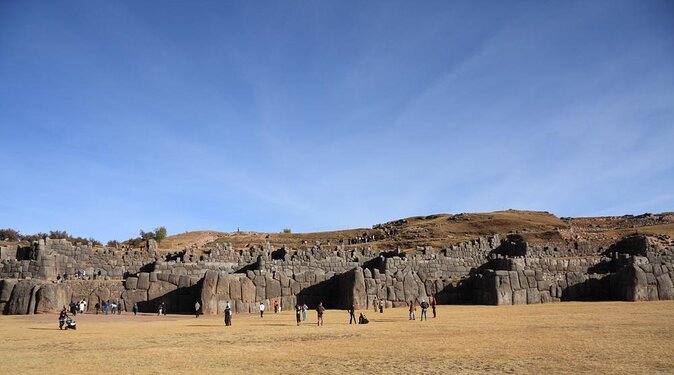
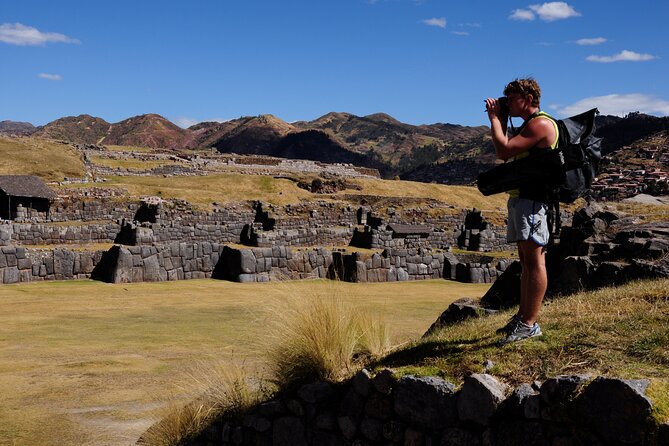
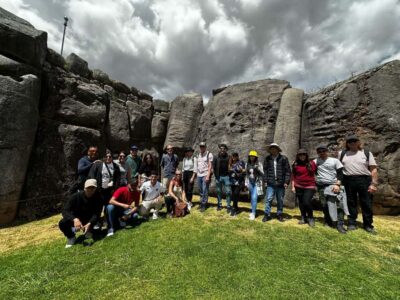
Sacsayhuaman sits on a hill above the northern edge of Cusco. The first reward is visual: from here, you can look across the city and see how the modern streets occupy the old Inca capital.
Then the stones take over your attention. Some blocks reach about 13 feet, or 4 meters, in height. They are fitted tightly, with irregular edges joined so closely that the walls look almost knitted together. You do not need to be an engineer to understand why this place stops people in their tracks.
A good guide helps you look beyond the size of the blocks. The site reflects Inca power, labor, ceremonial purpose, and careful construction. Carved or symbolic forms associated with the condor, puma, and snake represent the three Inca worlds. Your guide may also connect the walls to Inca ideas about sacred space and the natural world.
This is the part of the outing where a strong guide matters most. Guides such as Abraham, Adrial, Alvaro Jimenez, Clara, Niko, Rommel, and Yuber have been praised for lively explanations, humor, and clear historical context. Your assigned guide will vary, but the best ones make the masonry feel like a story rather than a pile of old rocks.
Allow for sun, wind, and changing weather here. One useful piece of advice is to dress in layers and carry rain protection. Conditions can shift quickly, and you may be standing in open areas with little shelter.
Qenqo, Puca Pucara, and Tambomachay
After Sacsayhuaman, the vehicle continues to three smaller sites. They do not have the visual punch of the main fortress, but they make the visit more complete.
Qenqo and its ceremonial spaces
Qenqo is associated with a ceremonial altar and a sacred temple. The site gives you a closer look at the ritual side of Inca culture, including a carved or enclosed ceremonial area often linked with offerings and sacrifice.
This stop can feel atmospheric rather than grand. The value lies in the setting and the explanation. Without a guide, you might walk through quickly and miss why the stone channels, carved surfaces, and underground spaces mattered.
More Ruins & Archaeology Tours in Cusco
- Cusco: City Tour | Half-Day Tour to 4 Archaeological Sites
★ 4.6 · 206 reviews - Cusco: Historical Guided City Tour with 4 Inca Ruins
★ 4.5 · 99 reviews - Cusco 4-Hour Private Tour Including Sacsayhuaman and Qenqo
★ 5.0 · 77 reviews - Cusco: Half-Day City Tour with Sacsayhuaman and Qenqo
★ 4.5 · 77 reviews
Puca Pucara, the red fortress
Puca Pucara was used as a military or defensive outpost. Its remains are more modest, but the location helps explain how the Inca monitored movement around Cusco.
You should not expect a large fortress with intact rooms. Think of it as a compact stop with open views and a practical purpose. It breaks up the ceremonial focus of Qenqo and Tambomachay, showing that the area around Cusco also needed roads, guards, and control.
Tambomachay and the ritual of water
Tambomachay centers on channels, aqueducts, waterfalls, and carefully placed stonework. It may have served as a ceremonial water site and perhaps a retreat connected with elite use.
Water is the key here. A good explanation helps you see the engineering choices in the flow, the channels, and the relationship between ritual and daily life. The stop is smaller than Sacsayhuaman, yet it adds a different kind of wonder: the Inca were not only moving enormous stones, they were directing water with precision.
The three sites together create a better picture than Sacsayhuaman alone. You see military planning, sacred ritual, and water worship in one compact route. The drawback is that short stops can feel rushed if the group is delayed earlier in the day.
Qorikancha: the Temple of the Sun beneath Santo Domingo
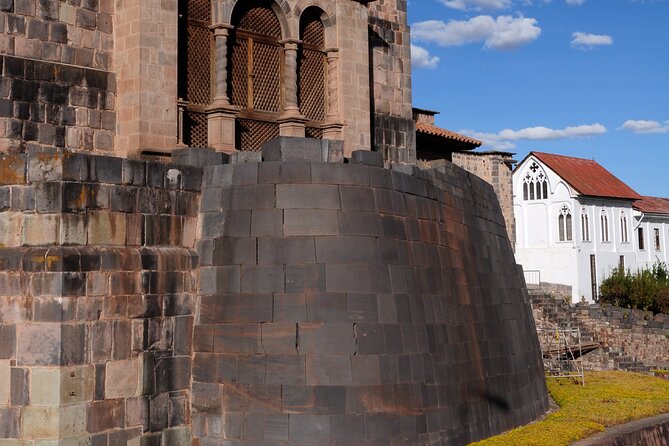
Back in Cusco, the tour visits Qorikancha, the Temple of the Sun. The Santo Domingo Convent was built over the Inca temple, making this one of the clearest places to see the city’s layered past.
According to the traditional account, Qorikancha was once covered in gold. That story helps explain why the temple astonished the Spanish conquerors, although the surviving site is now a mix of Inca stonework and colonial construction rather than a golden palace.
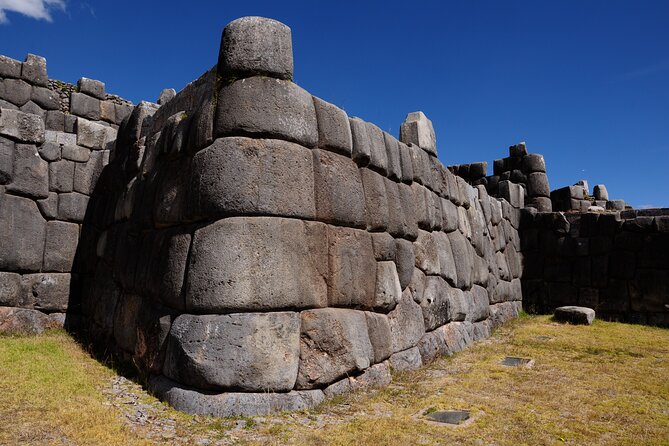
Look closely at the base walls. The Inca masonry is tight, precise, and built with a different visual rhythm from the later church complex above it. This contrast is the point. You are not just visiting a temple or a convent. You are seeing how Spanish power was placed directly over an important Inca religious center.
The visit is valuable if you want context for Cusco’s architecture. It also gives you a quieter chance to ask questions after the larger outdoor sites. Depending on the group and timing, this stop may receive less attention than Sacsayhuaman, so ask your guide to point out the Inca and colonial sections clearly.
Plaza de Armas and Cusco Cathedral
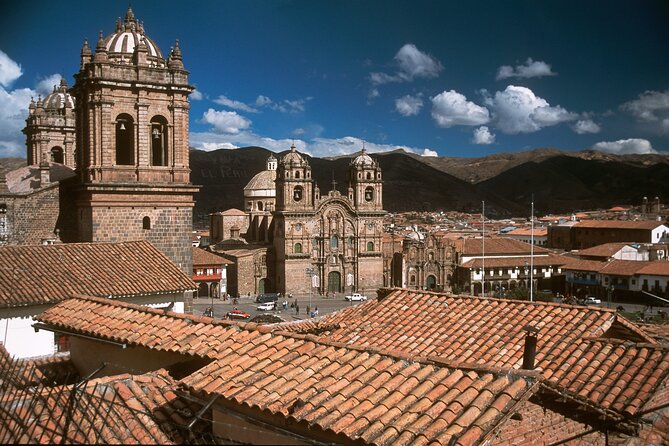
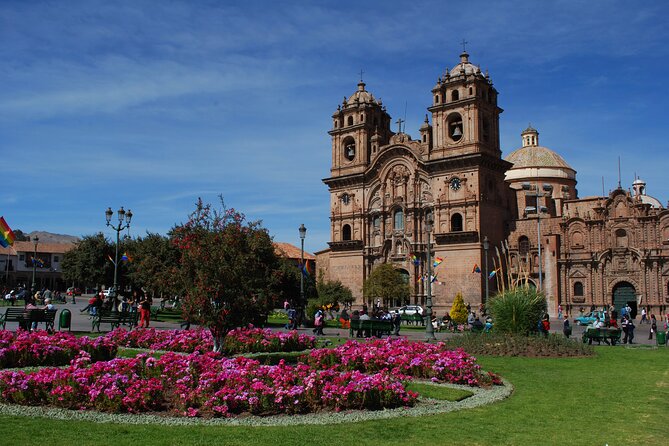
The city portion begins around the Plaza de Armas, Cusco’s grand central square. From here, you can see the cathedral and the Church of the Society of Jesus, two imposing reminders of the Spanish colonial city.
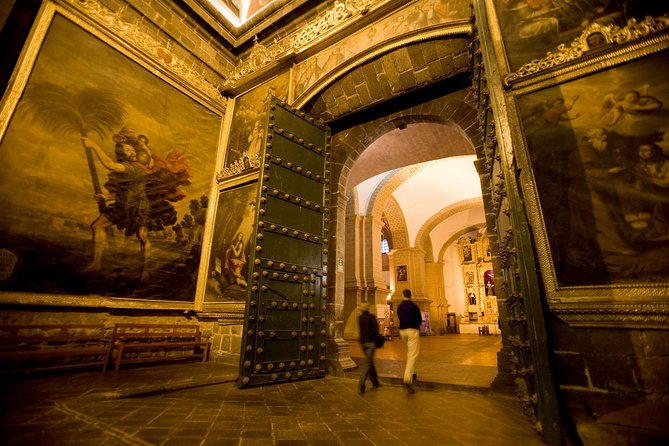
Inside Cusco Cathedral, expect late-Gothic and Baroque features, colorful stained glass, colonial-era paintings, and large religious furnishings. The building is a major contrast with the open ruins above town. Outside, you study stone walls under a wide sky. Inside, you move through a darker, more decorated space filled with paintings and religious objects.
One important work is the Señor de los Temblores, described as the oldest surviving painting in Cusco. It is a revered image connected with the city’s religious life. Your guide can explain its place in local devotion and how Catholic traditions developed in a city shaped by Inca beliefs.
Photography is forbidden inside the cathedral, so put your phone away and pay attention to the details. Shorts are not allowed in religious sites, which is an important clothing note for this tour. Long trousers or a suitable skirt are the safer choice.
The cathedral visit also changes the rhythm of the day. After several outdoor ruins, you get a more focused indoor stop. Some people may find one hour here too long, while others will appreciate the art and architecture. If you are mainly interested in Inca engineering, this is the part most likely to feel less relevant.
A guide can make or break the afternoon
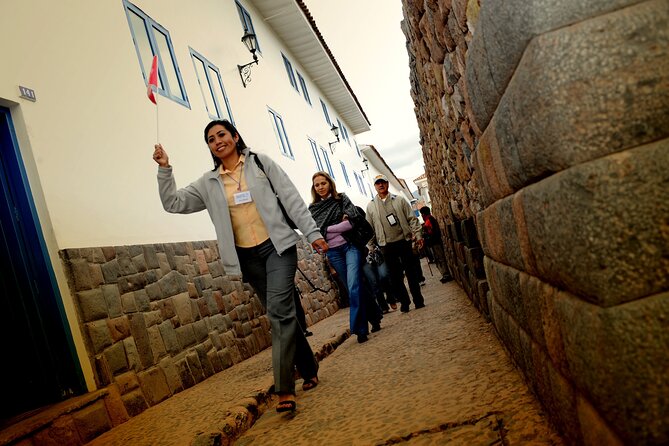
The strongest part of this experience is the guiding. Several guides have been praised for clear storytelling, humor, enthusiasm, and the ability to adjust explanations to a family, solo visitor, or someone with a specific interest.
Niko, described as a former history professor, was especially effective at connecting the Inca period with the centuries before and after it. Yuber was praised for energy and easy conversation. Other highly regarded guides included Rommel, Abraham, Adrial, Alain, Julio, Clara, Aracely, and Alvaro Jimenez.
That list does not guarantee who you will receive. It does show how much the experience depends on the individual leading it. A lively guide can turn a familiar sequence of ruins into a coherent story. A weaker presentation may leave you wanting more detail about the stonework, religion, or Spanish conquest.
The service is bilingual in Spanish and English. This is practical for mixed groups, but it can affect the rhythm. English explanations may be shorter when most of the group speaks Spanish, and one language may have to wait while the guide addresses the other.
If detailed English interpretation is your priority, confirm the language arrangement before departure. A bilingual service is not always the same as a tour conducted only in English.
Transport, group size, and the real time commitment
The air-conditioned vehicle is a real convenience. You cover the steep route above Cusco without arranging separate rides, and you can rest between sites. Round-trip transport also helps you see places that would be awkward to combine on foot.
Hotel pickup and drop-off are offered, but some hotels sit in areas where vehicles cannot enter. You may be asked to walk to an accessible meeting point. Pickup problems have occurred, including missed collections and unclear return arrangements, so check the meeting instructions carefully and keep the operator’s contact details available.
The maximum group size is 15. That is much better than a large coach for asking questions and staying near the guide. It is not a private tour, however. Pickup from several hotels can delay the start, and the group may include people with different walking speeds and interests.
The official duration is approximately 3 hours and 30 minutes. The individual stop schedule adds up to about four hours, and some outings have lasted four to five hours. I would treat this as a flexible half-day activity and leave extra time afterward.
That matters if you have a restaurant reservation, train connection, massage, or separate excursion. The extra time may be worthwhile if the guide adds a site or gives longer explanations, but it can become frustrating when you are trying to stay on schedule.
Is $79 a fair price?
At $79 per person, the tour can be good value if your selected option includes admission tickets. You receive transport, a bilingual guide, hotel pickup and drop-off where accessible, and visits to several major sites.
The ticket choice needs careful attention. There are options with and without entrance fees. If you choose the lower-priced version, you may need to pay additional admission costs on the day. One reported issue involved an extra charge of 290 soles, which turned an apparently affordable booking into a much more expensive outing.
Some visitors already buy a wider archaeological or church passport that covers several attractions. In that case, the ticket-excluded option might make sense. If you do not already have those admissions, compare the total price, not just the headline fare.
At its best, the value comes from the route. A private taxi could take you to the ruins, but you would still need to organize a guide and decide how to connect the sites. This tour handles the transport and gives you a single historical thread.
It is less attractive if you want a slow, specialist look at Inca construction, a private guide, or precise control over your schedule. You are paying for convenience and breadth.
What to bring and how to prepare
Wear layers. The weather can change, and the open ruins may feel very different from the city streets. Bring protection from rain and sun.
Wear comfortable shoes suited to uneven archaeological areas. The tour includes outdoor ruins, walking around Sacsayhuaman, and city visits. The supplied information does not specify a total walking distance, so you should be ready for regular walking between viewpoints, walls, and buildings.
Dress respectfully for the cathedral and other religious sites. Shorts are not permitted, and photography is forbidden inside the cathedral.
Before the vehicle arrives, confirm three things:
- Which ticket option you purchased
- Where pickup will occur if your hotel is on a restricted street
- Whether return transport will come directly to your hotel or to a central point
Those checks take little time and can prevent the most common sources of stress.
Who should choose this Cusco tour?
I would recommend it to a first-time visitor who wants an efficient introduction to Cusco. It suits couples, solo visitors, and families, and the small group format gives it a more personal feel than a large sightseeing bus.
It also works well as an acclimatization-day activity before a longer trip into the Inca Valley. You can learn the basic layout and history without committing to a full-day excursion.
Families may appreciate the vehicle and the variety of stops, though children may find the cathedral and some explanations less engaging than the giant stones at Sacsayhuaman. The route is also a good fit if you want both Inca sites and colonial architecture in one outing.
I would hesitate if you have only a narrow window of free time. The timing can run long, and pickup arrangements are not always simple. I would also look elsewhere if you need a private, English-only experience or want a highly technical discussion of earthquake-resistant masonry.
Should you book it?
Book this tour if you want a broad, convenient introduction to Cusco and its nearby ruins. Sacsayhuaman is the major payoff, while Qenqo, Puca Pucara, Tambomachay, Qorikancha, and the cathedral give the city’s story more shape.
Before paying, select the admission-included option if you do not already have the required tickets. Confirm the pickup point, allow at least an extra hour beyond the advertised time, and dress for changing weather and religious-site rules.
If those details suit your plans, the $79 price is reasonable for the transport, guide, and number of sights covered. If you prefer slow visits and complete control, hire a private guide instead. For most first visits, this is a practical way to get your bearings and begin understanding why Cusco feels both Inca and Spanish at once.
FAQ
How long does the Cusco City Sightseeing and Sacsayhuaman Tour last?
The advertised duration is approximately 3 hours and 30 minutes. The stated stop times total about four hours, and some outings have taken four to five hours, so you should leave extra time afterward.
What sites does the tour visit?
The route includes Sacsayhuaman, Qenqo, Puca Pucara, Tambomachay, Qorikancha, Plaza de Armas, and Cusco Cathedral.
Are entrance tickets included?
There are two purchase options, one with tickets included and one without them. Check your selected option carefully because admission fees are not included in the ticket-excluded choice.
Is hotel pickup and drop-off provided?
Hotel pickup and drop-off are included where vehicle access is possible. Some hotels are in areas where vehicles are not permitted, so you may need to reach an accessible meeting point.
Is the tour conducted in English?
The guide service is bilingual in Spanish and English. The tour is not described as English-only, so the balance of each language may depend on the group.
How large is the group?
The maximum group size is 15 people.
Can I wear shorts to the cathedral or other religious sites?
No. Shorts are not allowed in the religious sites visited on this tour.
Can I take photographs inside Cusco Cathedral?
No. Photography is forbidden inside the cathedral.
More Ruins and Archaeology near Cusco
- Sacsayhuaman Temple, Tambomachay and Puca Pucara Half-Day Tour
★ 4.5 · 59 reviews - Private Cusco City Tour with Sacsayhuaman & Inca Sites
★ 5.0 · 52 reviews - Private Ollantaytambo, Pisac Ruins Tour with Farm Visit, Gourmet Picnic Lunch
★ 5.0 · 52 reviews - Cusco City Tour with Sacsayhuaman & Inca Sites – Small Group
★ 5.0 · 48 reviews
Added recently around Cusco
- Guided tour of the mountain of colors in Cusco★ 5.0 · 11 reviews
- 2-Day Private Short Inca Trail to Machu Picchu★ 5.0 · 15 reviews
- City Tour Cusco – Group★ 5.0 · 4 reviews
- Tour Sacred Valley with Maras and Moray★ 5.0 · 15 reviews
- San Pedro Market Tour with Peruvian Cooking Class★ 5.0 · 31 reviews
- Walking Culinary Experience★ 5.0 · 41 reviews
- City Tour in Cusco★ 4.5 · 10 reviews
- One Day Tour to Humantay Lagoon★ 5.0 · 8 reviews
Inca Ruins & Archaeological Sites, compared.
Half-Day City Tour with Sacsayhuaman and Q’enco
Read our review →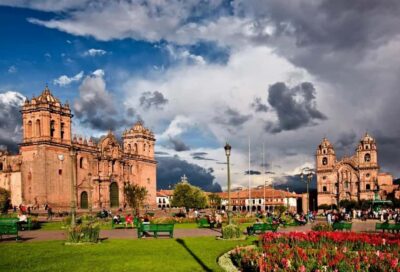
City Tour Cusco Qoricancha Sacsayhuaman y Tambomachay
Read our review →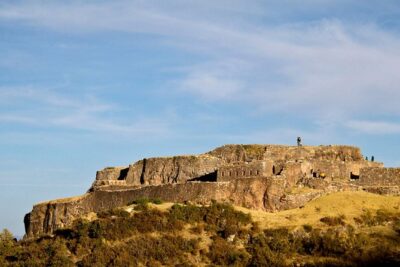
Pachacamac Ruins & Barranco Half-Day Guided Tour
Read our review →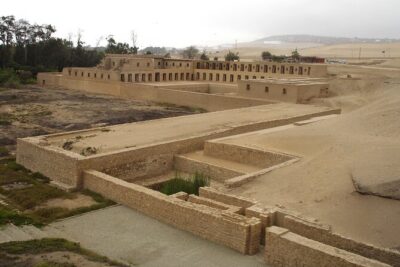
Pre Inca Temple of Pachacamac Half-Day Tour from Lima
Read our review →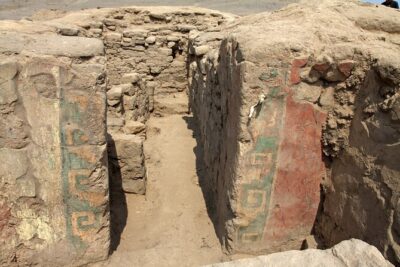
Tour to the Archaeological Sanctuary of Pachacamac (small group)
Read our review →
From Pyramids & Bohemian Streets: Lima Miraflores & Barranco Tour
Read our review →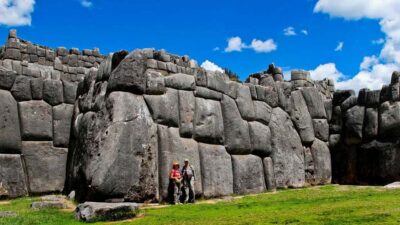
City Tour | Half-Day Tour to 4 Archaeological Sites
Read our review →Browse the lists this tour appears in