
Reviewed · INCA RUINS & ARCHAEOLOGICAL SITES
Cusco Half Day Tour: Cathedral, Qorikancha & 4 Inca Ruins
Ancient stones tell Cusco’s story. This five-hour afternoon tour links the Cathedral and Qorikancha with four Inca sites above the city, giving you a useful first look at both colonial Cusco and the empire that came before it. I like the efficient route and the small maximum group of 15.
I also like that transport is included for the hilltop ruins, while the first two stops are visited on foot. The main caution is cost: the $27 tour price does not include the required site tickets, and one reported outing ran longer than planned and was conducted in Spanish despite the English option.
In This Review
- Key things to know before booking
- Why this half-day route works in Cusco
- Cusco Cathedral and the Plaza de Armas
- Qorikancha, where the Sun Temple meets Santo Domingo
- Sacsayhuaman and the scale of Inca stonework
- Q’enqo and its carved ceremonial chambers
- Tambomachay and the Inca focus on water
- Puka Pukara, the red fortress by the road
- Timing, transport, and the English-language question
- What the $27 price really buys you
- Who should book this Cusco afternoon tour
- Should you book it?
- FAQ
- How long does the Cusco half-day tour last?
- Which places are included in the route?
- Is hotel pickup available?
- Are admission tickets included in the $27 price?
- Is the tour offered in English?
- How many people can join the tour?
Key things to know before booking
- Six major sights in one afternoon: You visit Cusco Cathedral, Qorikancha, Sacsayhuaman, Q’enqo, Tambomachay, and Puka Pukara.
- The tour begins at 1:00 pm: Pickup is available only from hotels in Cusco’s historic center, not private residences or hotels outside that area.
- The listed price is not the final cost: Add 20 soles for Qorikancha and either 70 soles for a two-day tourist ticket or 130 soles for a ten-day ticket.
- The route mixes walking and transport: Cathedral and Qorikancha are covered on foot, then a vehicle takes you to the four Inca sites.
- English is offered, but check the group language: The guide is bilingual in English and Spanish, yet one tour operated entirely in Spanish because of the group.
- Guide Beto earned special praise: His passion for Cusco’s history and culture was a major strength of one outing.
Why this half-day route works in Cusco
Cusco can feel like a puzzle at first. Inca walls support Spanish churches, narrow streets rise toward high ruins, and each site needs some context before its importance becomes clear. This tour gives you that framework in one afternoon.
The route begins in the center, where Spanish power was placed directly over Inca sacred ground. It then moves uphill to the great stone complexes outside town. That order matters. You first see the collision of cultures in the Cathedral and Qorikancha, then encounter the scale of Inca engineering at Sacsayhuaman and the surrounding sites.
At $27 per person, the guiding and transport are reasonably priced. You should not mistake that figure for the complete admission cost, though. The Qorikancha entry fee is 20 soles, and the four archaeological sites require the tourist ticket, priced at 70 soles for two days or 130 soles for ten days. Since the Cathedral is also listed with admission not included, check exactly which tickets your guide expects you to buy before the tour begins.
The route is especially useful on your first full day in Cusco. The afternoon schedule leaves your morning open, and the mix of walking, sightseeing, and vehicle transfers helps you get your bearings without committing to a full-day excursion. At Cusco’s high altitude, that shorter format can be welcome.
More Ruins & Archaeology Tours in Cusco
- Cusco: Half-Day City Tour with Sacsayhuaman and Q’enco
★ 4.6 · 1,129 reviews - City Tour Cusco Qoricancha Sacsayhuaman y Tambomachay
★ 4.7 · 617 reviews - Cusco City Tour Four Ruins in Half-Day
★ 5.0 · 530 reviews
Cusco Cathedral and the Plaza de Armas
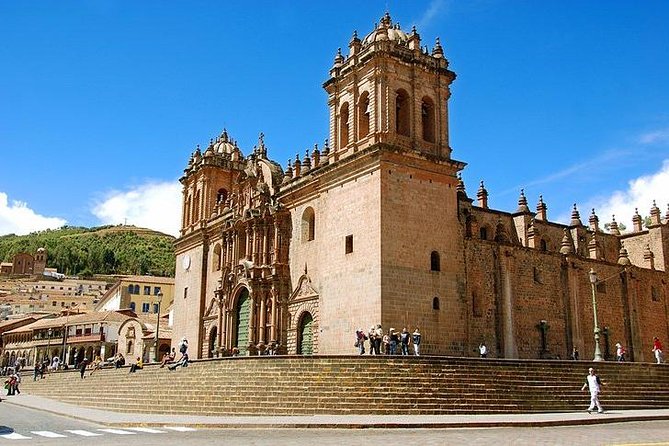
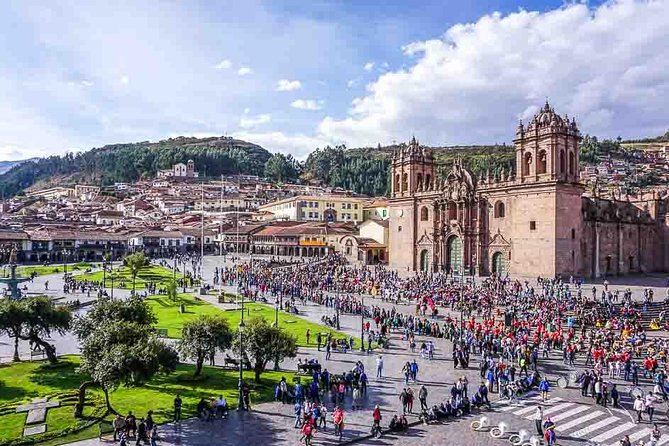
The first stop is Cusco Cathedral, set on the Plaza de Armas. This square was once the Inca Huacaypata, often described as the square of the warrior, and it remains the city’s main stage. The Cathedral shares the plaza with the Church of Triumph and the Church of the Society of Jesus, so even a short walk here gives you a useful lesson in Cusco’s layered past.
Construction of the Cathedral began in 1559 and finished in 1654. It was built over the foundations of Kiswarkancha, the former palace of Inca ruler Viracocha. The location was not random. Building a major Christian church over a sacred Inca site helped Spanish authorities replace the old religious order with Catholic worship.
That fact gives the visit more weight than a quick look at a grand church facade. You are seeing architecture used as a statement of political power. Quechua laborers built the Cathedral, adding another difficult layer to its story.
Allow about an hour here. Your guide should help connect the building to the surrounding plaza and explain the three churches rather than treating the Cathedral as an isolated monument. Admission is not included, so keep money ready for entry costs and ask which ticket applies.
The drawback is pace. The plaza contains a great deal to take in, and one hour can feel brief if you want a long interior visit, photographs, and a detailed explanation of every church. Still, it is a strong opening because it places Cusco’s Spanish colonial center in direct relation to the Inca city beneath it.
Qorikancha, where the Sun Temple meets Santo Domingo
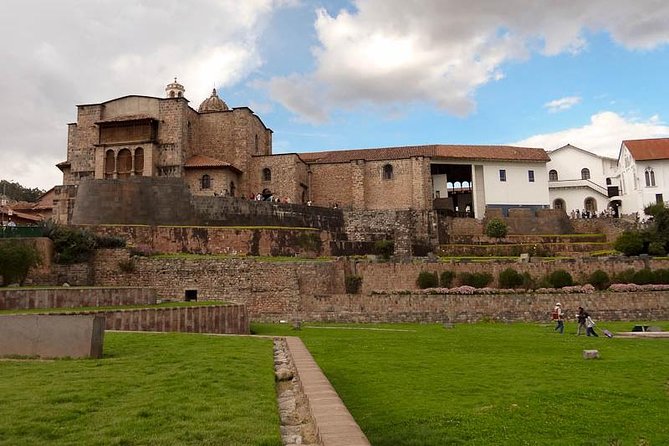
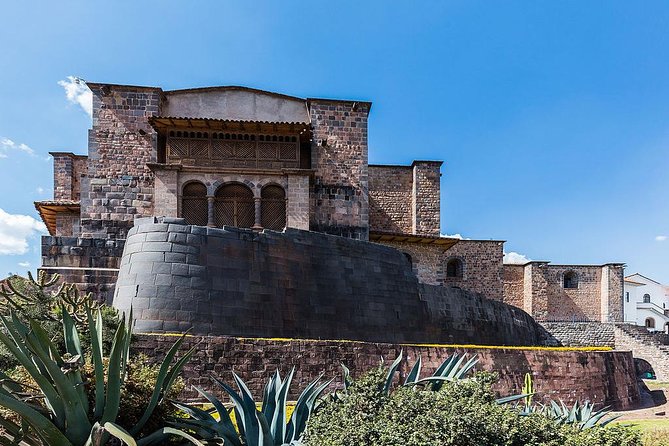
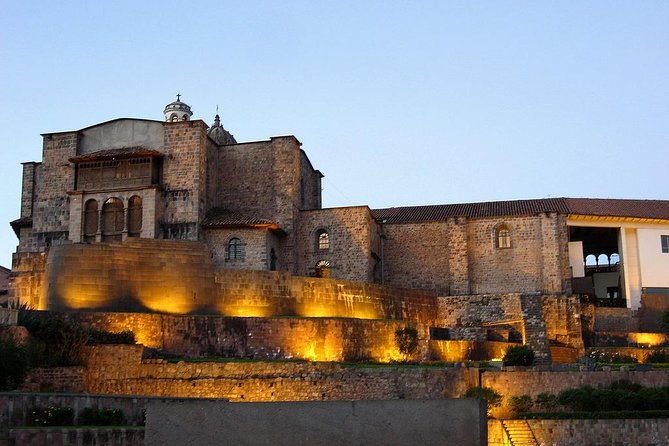
From the plaza, the tour continues on foot to Qorikancha, one of Cusco’s clearest examples of two civilizations occupying the same site. The Inca Sun Temple once held enormous religious importance. After the conquest, the Santo Domingo church and convent were built on its foundations.
Qorikancha means a place associated with gold, and the original temple was said to have had walls covered in gold and silver leaf. Much of that decoration disappeared after the conquest, but the stonework remains the real draw. Inca blocks fit tightly without mortar, and several have an extraordinary number of angles.
Look closely at the joints. The precision is easier to appreciate when you compare the ancient stone base with the later Spanish structure above it. This is not simply a ruin beside a church. It is a physical record of replacement, adaptation, and survival.
The site also contains fountains and gardens tied to the Inca reverence for water. Ceremonial niches and a large turret relate to worship and the winter solstice. Your guide can help you understand why Qorikancha was more than a temple building. It drew people from across the Inca realm to honor the gods of Tahuantinsuyo.
Plan on about an hour. Entry costs 20 soles, separate from the archaeological sites ticket. I would buy or confirm your tickets early in the outing, since the supplied tour information has caused some confusion for at least one participant about buying individual admission rather than the more economical two-day ticket.
The walk between the Cathedral and Qorikancha is one of the tour’s best features. You move through the historic center instead of spending the whole afternoon inside a vehicle. That short urban connection makes the shift from colonial Cusco to the Inca world easier to understand.
Sacsayhuaman and the scale of Inca stonework
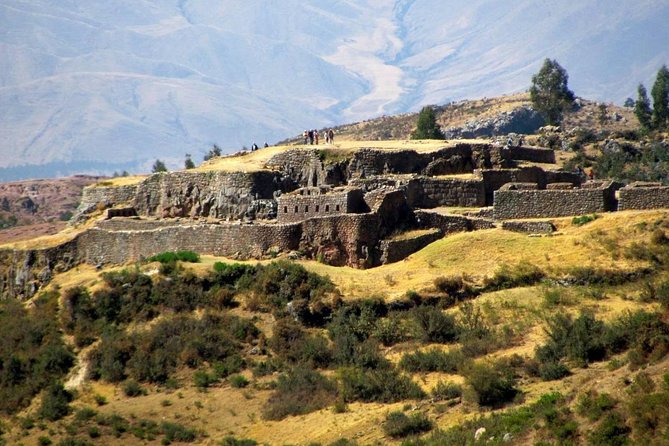
After the central sights, transport takes you uphill to Sacsayhuaman. The site sits about 1.25 miles from the Plaza de Armas at roughly 12,140 feet above sea level. That elevation matters. Take the walking portions slowly, especially if you have only recently arrived in Cusco.
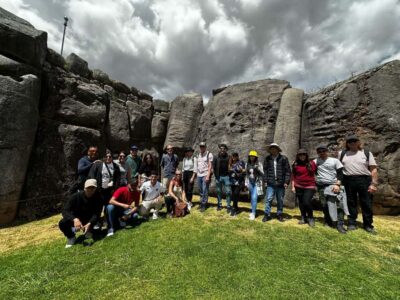
Sacsayhuaman is famous for its huge zigzag walls. The stones came from quarries at Huaqoto and Rumiqolqa, and some are estimated to weigh between 99 and 138 tons. The blocks were fitted without mortar, with many shaped into unusual angles so they lock together.
The scale can be hard to grasp from photographs. In person, the walls show how much planning, labor, and transport were needed to build the complex. Around 20,000 workers are believed to have taken part in cutting and moving the stones, though the exact details of construction remain uncertain.
The name is linked to Quechua words often translated as satiate hawk. Hawks were sacred protectors associated with the Inca and military forces. Your guide may also explain that the site was more than a fortress. It included ceremonial and architectural areas spread across a broad complex.
The scheduled visit lasts about an hour. That is enough for a strong overview, but the site is large, and you will not explore every corner on this half-day route. The tradeoff is clear: you see one of Cusco’s biggest monuments without giving up an entire day.
More ruins and archaeology near Cusco:
- Cusco: City Tour | Half-Day Tour to 4 Archaeological Sites
★ 4.6 · 206 reviews - Cusco City Sightseeing and Sacsayhuaman Archeological Park Tour
★ 4.5 · 101 reviews - Cusco: Historical Guided City Tour with 4 Inca Ruins
★ 4.5 · 99 reviews - Cusco 4-Hour Private Tour Including Sacsayhuaman and Qenqo
★ 5.0 · 77 reviews
Q’enqo and its carved ceremonial chambers
Q’enqo is a shorter stop, but it may be the most mysterious. Its name means labyrinth or zigzag in Quechua, referring to a crooked channel carved into the rock. The channel carried some kind of liquid, but its purpose is not known for certain.
Possibilities include holy water, chicha, or blood. Those ideas have led to theories that Q’enqo was used for death ceremonies, embalming, or religious tests. The important point is to separate what is visible from what is guessed. You can see the carved channel and chambers, but no one can explain every ritual with certainty.
The temple was cut from a huge natural monolith. Tunnels and chambers run through the rock, and one chamber contains 19 small niches arranged around an amphitheater-like space. The site may have been linked to ceremonies for the sun, moon, and stars.
You have about an hour here. The stop is compact compared with Sacsayhuaman, yet the confined passages and unanswered questions give it a different mood. If you prefer clear explanations and large monuments, Q’enqo may feel less satisfying. If you enjoy archaeology where evidence and interpretation meet, it is a worthwhile pause.
Tambomachay and the Inca focus on water
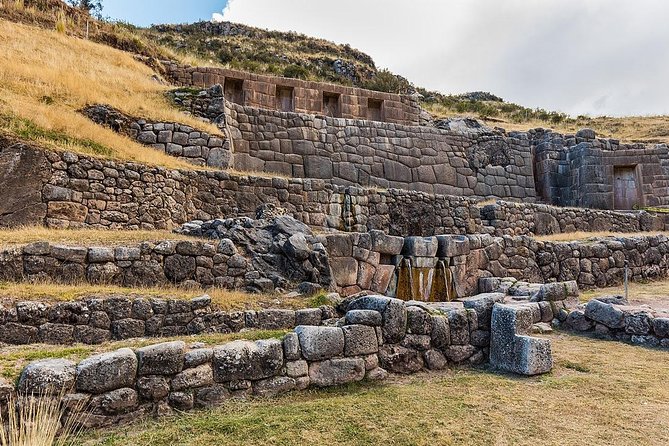
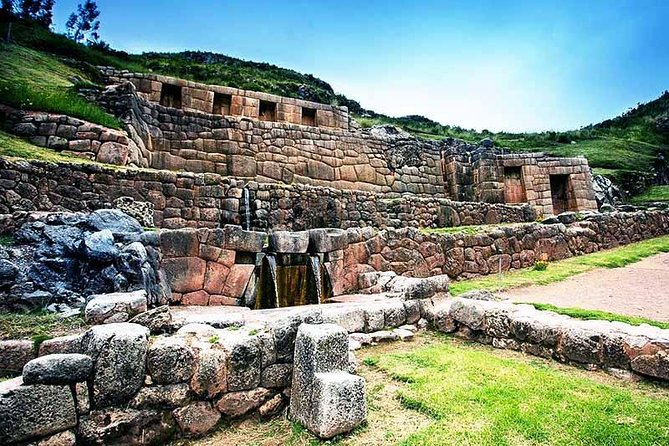
Tambomachay lies about 4.5 miles northeast of Cusco at roughly 12,350 feet. The complex is made of carefully cut stone structures supplied by nearby streams through aqueducts and small cascades.
Water was central to the Andean world view, and Tambomachay reflects that respect. Two aqueducts carry a steady flow of clean water through channels with carved stone details. The name is often translated as place of rest, leading researchers to connect the site with relaxation and royal visits.
The scheduled stop is about 30 minutes. That is short, but the site itself is smaller and easier to grasp than Sacsayhuaman. You get a clear look at the water channels and the relationship between stonework and the natural setting.
This is also where the altitude may make itself felt. The site sits higher than central Cusco, and you may want to walk carefully rather than rush from one viewpoint to the next. The tour provides transport, which is helpful because reaching the four outer ruins independently would take more planning.
Puka Pukara, the red fortress by the road
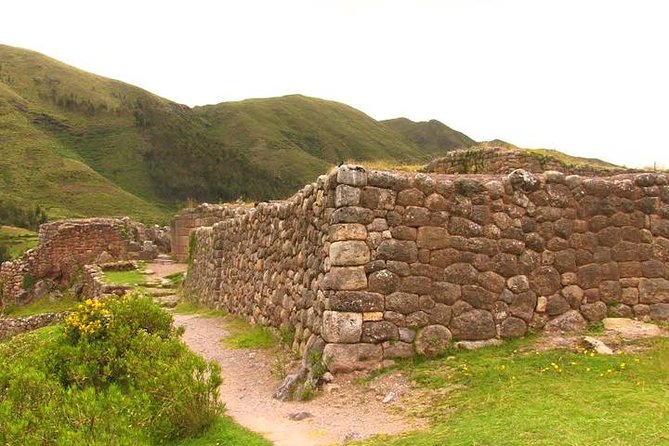
Puka Pukara is the final stop. Its name is associated with a red fortress, and the complex includes halls, interior plazas, aqueducts, watchtowers, and paths.
Its exact role is described as a tambo, a place where people could rest and stay. A traditional account says that when the Inca visited Tambomachay, his large group stayed at Puka Pukara. The fortified design explains the name, but the site also served a practical purpose as part of the route through the hills.
You have about 30 minutes here, with admission listed as free. The short visit gives you time to see how the Inca road system supported movement, rest, and administration rather than focusing only on temples and royal buildings.
Puka Pukara is a fitting end because it broadens the story. The tour has already shown you worship, ceremony, engineering, and power. This last stop points to the everyday organization needed to keep an empire moving.
Timing, transport, and the English-language question
The official duration is about five hours, beginning at 1:00 pm. The Cathedral and Qorikancha are visited by walking from the central area, while a bus or other included transport carries you to the outer ruins.
Pickup is offered from hotels within Cusco’s historic center. It does not include private residences such as Airbnb properties or hotels outside the historic center. If your accommodation falls outside the pickup zone, confirm where you must meet the group. One outing used the central plaza for pickup and drop-off rather than the participant’s hotel.
The maximum group size is 15, a useful middle ground. You are not paying for a private tour, but the group should be small enough for a guide to give directions and answer questions without shouting across a crowd.
English is offered, and the guide is described as bilingual in English and Spanish. Still, ask at booking or at the meeting point which language will be used for the whole group. One outing became entirely Spanish because most of the group spoke Spanish, leaving an English-speaking participant unable to follow much of the detail.
That is the clearest practical weakness in an otherwise solid plan. A guide such as Beto can add a lot when the explanations are easy for you to follow. His enthusiasm for Cusco’s history and culture received especially warm praise, so the guide can make a real difference to the experience.
What the $27 price really buys you
The $27 base price covers transport and a bilingual guide. It does not cover food, drinks, Qorikancha admission, or the tourist ticket for the archaeological sites.
Using the listed figures, your known admission costs add 90 soles for Qorikancha plus the two-day tourist ticket, or 150 soles for Qorikancha plus the ten-day ticket. At the stated approximate prices, that is about $25.60 in admissions, bringing the rough total to $52.60 per person before food and drinks.
The two-day ticket is the sensible choice if you are visiting Cusco for a short stay and do not need the ten-day validity. The ten-day option costs more but may suit a longer Peru itinerary or anyone planning more archaeological visits. Buy the correct ticket through the official tourist office if possible, and do not rely on casual advice at the entrance. The earlier confusion over individual entry purchases shows why this matters.
For the final total, the tour offers fair value if you want a guide and vehicle connections. Paying separately for transport to four high-altitude sites can be awkward, and the history makes more sense when someone explains the relationship between them. The deal is less attractive if you already have transport, know the sites well, or prefer to spend long stretches at each ruin.
Who should book this Cusco afternoon tour
I would choose this tour if you want a broad first survey of Cusco in one afternoon. It suits people with limited time, first-time visitors, and anyone who wants the central churches and outer ruins tied into one story.
It also works well for visitors who want transport to Sacsayhuaman, Q’enqo, Tambomachay, and Puka Pukara without arranging separate taxis or a private vehicle. The 15-person limit keeps the experience more manageable than a large coach outing.
I would hesitate if you need guaranteed English commentary, dislike fixed schedules, or want detailed time at every site. The reported Spanish-only experience is not a minor issue for someone who cannot follow Spanish comfortably. You should also avoid squeezing this tour into a day when you expect to be tired from long-distance travel, since several stops sit above 12,000 feet.
The tour has a 4.7 rating from 10 reviews and is recommended by 90 percent of customers. That is encouraging, but the small review count means I would treat it as a useful signal rather than a promise. The guide, language match, ticket advice, and actual pickup point will shape your day.
Should you book it?
Book it if you want an affordable, guided introduction to Cusco’s main colonial and Inca sights, and you are comfortable budgeting extra for admission. The route is well chosen, the transport saves effort, and the contrast between the Cathedral, Qorikancha, and the four outer ruins gives you a strong sense of the city’s past.
Before paying, confirm three things: that your hotel is inside the pickup zone, that the guide will conduct the tour in English, and which tourist ticket you should buy. If those details are clear, this is a practical first-day tour with plenty of substance.
FAQ
How long does the Cusco half-day tour last?
The tour lasts approximately five hours and starts at 1:00 pm.
Which places are included in the route?
The route includes Cusco Cathedral, Qorikancha, Sacsayhuaman, Q’enqo, Tambomachay, and Puka Pukara.
Is hotel pickup available?
Pickup is available from hotels within Cusco’s historic center. Private residences, including Airbnb properties, and hotels outside the historic center are not included.
Are admission tickets included in the $27 price?
No. Qorikancha admission costs 20 soles, and the archaeological sites require a tourist ticket costing 70 soles for two days or 130 soles for ten days. Food and drinks are also excluded.
Is the tour offered in English?
English and Spanish guiding is offered. Confirm the language for your group, since one outing was conducted entirely in Spanish when most of the participants spoke Spanish.
How many people can join the tour?
The tour has a maximum group size of 15 people.
Added recently around Cusco
- Guided tour of the mountain of colors in Cusco★ 5.0 · 11 reviews
- 2-Day Private Short Inca Trail to Machu Picchu★ 5.0 · 15 reviews
- City Tour Cusco – Group★ 5.0 · 4 reviews
- Tour Sacred Valley with Maras and Moray★ 5.0 · 15 reviews
- San Pedro Market Tour with Peruvian Cooking Class★ 5.0 · 31 reviews
- Walking Culinary Experience★ 5.0 · 41 reviews
- City Tour in Cusco★ 4.5 · 10 reviews
- One Day Tour to Humantay Lagoon★ 5.0 · 8 reviews
Inca Ruins & Archaeological Sites, compared.
Half-Day City Tour with Sacsayhuaman and Q’enco
Read our review →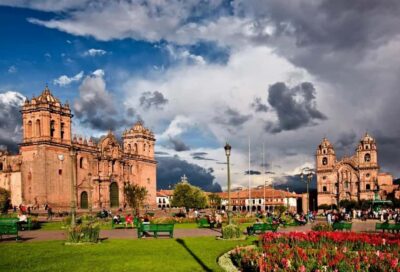
City Tour Cusco Qoricancha Sacsayhuaman y Tambomachay
Read our review →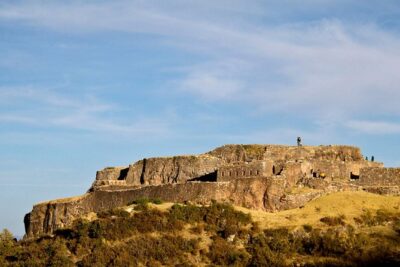
Pachacamac Ruins & Barranco Half-Day Guided Tour
Read our review →
Pre Inca Temple of Pachacamac Half-Day Tour from Lima
Read our review →
Tour to the Archaeological Sanctuary of Pachacamac (small group)
Read our review →
From Pyramids & Bohemian Streets: Lima Miraflores & Barranco Tour
Read our review →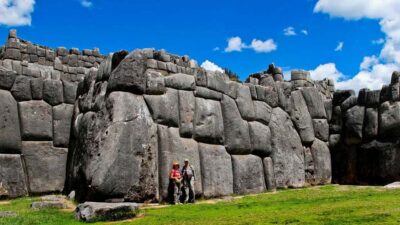
City Tour | Half-Day Tour to 4 Archaeological Sites
Read our review →Browse the lists this tour appears in