
Reviewed · INCA RUINS & ARCHAEOLOGICAL SITES
Horseback Riding: 4 Archaeological Sites
Four ruins, one saddle, half a day. This Cusco outing pairs a gentle ride through open Andean country with visits to Puka Pukara, Tambomachay, Q’enqo, and Sacsayhuaman. I like the efficient route and the quiet change of pace from city sightseeing, especially with hotel pickup, horses, equipment, snacks, and a bilingual guide included.
I also like the family-friendly feel: the horses are described as calm and well trained, and Gabriel’s team adjusts help as riders gain confidence. The main catch is the extra archaeological ticket, which is not included and needs to be arranged before you go. One rider missed Sacsayhuaman because this was not made clear in advance.
In This Review
- Key points to know before booking
- A short ride with a lot packed in
- Hotel pickup makes the morning easier
- What the horse ride is really like
- Puka Pukara gives the route an early historical stop
- Tambomachay brings water into the story
- Q’enqo rewards a closer look
- Sacsayhuaman is the major finale
- Weather can change the character of the day
- The guides add value beyond the transport
- Is $80 a fair price?
- Who should book this Cusco ride?
- Final booking advice
- FAQ
- How long does the horseback riding tour last?
- What time does the tour start?
- Is hotel transportation included?
- Which archaeological sites does the tour visit?
- Is the archaeological entrance ticket included?
- Are horses and riding equipment provided?
- Is a guide included?
- Are snacks and drinks included?
- Can children join the tour?
- What happens if it rains?
- What is the maximum group size?
- Can I cancel for a full refund?
Key points to know before booking
- Four historic sites in about 3.5 hours: A useful way to see Cusco’s northern ruins without giving up an entire day.
- Peruvian Paso horses: These horses are supplied with protective equipment and are described as gentle and steady.
- Two departures: Choose a morning start at 9:00 am or an afternoon start at 1:00 pm.
- Tickets cost extra: The archaeological entrance ticket is not part of the $80 price, so confirm what you need before pickup.
- Small enough to manage, but not private: The maximum group size is 20 people.
- Rain does not automatically cancel the ride: Bring proper wet-weather clothing, since the tour operates in all conditions.
A short ride with a lot packed in
At $80 per person, this is not the cheapest way to reach Cusco’s archaeological sites. It can still be good value if you want three things in one booking: round-trip transport, horseback riding, and guided visits to four important places.
The tour lasts about three and a half hours, leaving most of your day open. That matters in Cusco, where you may already be balancing city walks, museums, food stops, and longer trips into the Sacred Valley. The horseback portion adds something a standard van tour cannot: you move across ranches and open countryside instead of spending the whole outing in a vehicle.
You should think of this as a half-day introduction, not a long backcountry riding expedition. The archaeological stops are the main cultural focus, while the horse ride connects them in a more active and scenic way.
The maximum group size is 20. That keeps the price lower, but it also means the pace may be set by the whole group. If you want a private ride, long stretches of cantering, or extended time at each ruin, this may feel too structured.
More Ruins & Archaeology Tours in Cusco
- Cusco: Half-Day City Tour with Sacsayhuaman and Q’enco
★ 4.6 · 1,129 reviews - City Tour Cusco Qoricancha Sacsayhuaman y Tambomachay
★ 4.7 · 617 reviews - Cusco City Tour Four Ruins in Half-Day
★ 5.0 · 530 reviews
Hotel pickup makes the morning easier
Round-trip transport from your Cusco hotel is included. The stated start times are 9:00 am and 1:00 pm, so you can choose between a morning ride and an afternoon outing.
That hotel transfer is more useful than it first sounds. You do not need to find the ranch on your own, arrange a taxi, or work out how to connect four sites outside the city. The drive to the riding area is described as short, and the experience begins with a pickup rather than a complicated meeting point.
The exact pickup time can depend on your hotel and the chosen departure. Keep your phone available and allow a little flexibility around the stated start time. Confirmation is provided when you book.
Public transportation is nearby, and most people can participate. Children must be accompanied by an adult. Service animals are allowed, although you should still confirm practical arrangements when booking if this applies to you.
What the horse ride is really like
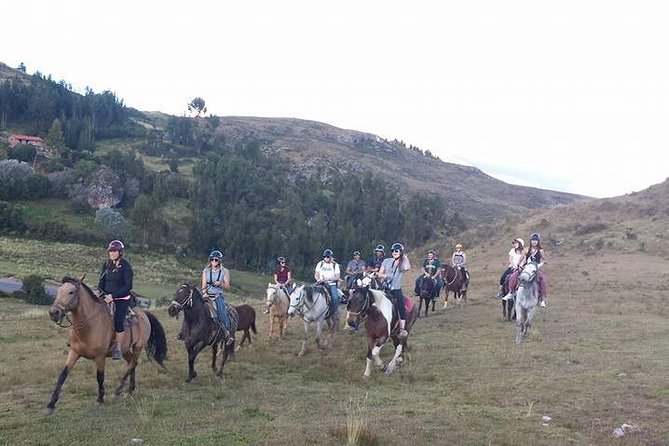
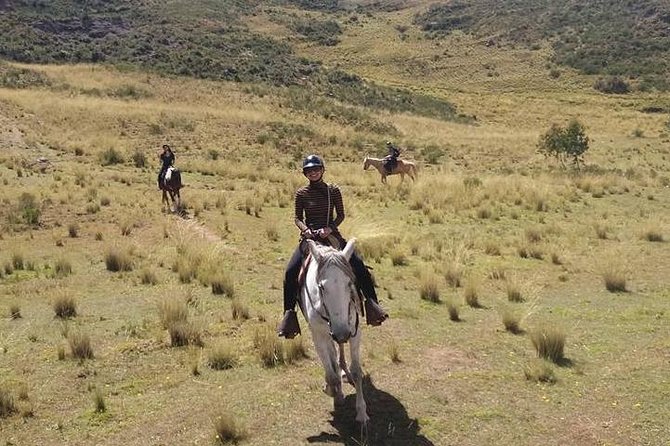
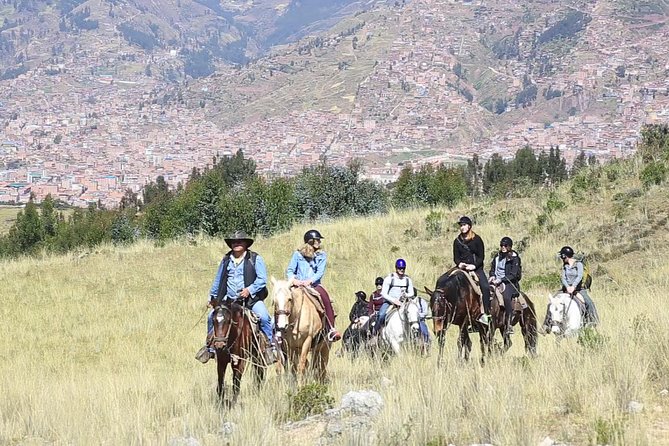
The riding takes place between the archaeological stops, across ranches and open Andean ground. The appeal is the view and the change of rhythm. You are not simply being driven from one ruin to the next, and the ride gives you time to notice the countryside around Cusco.
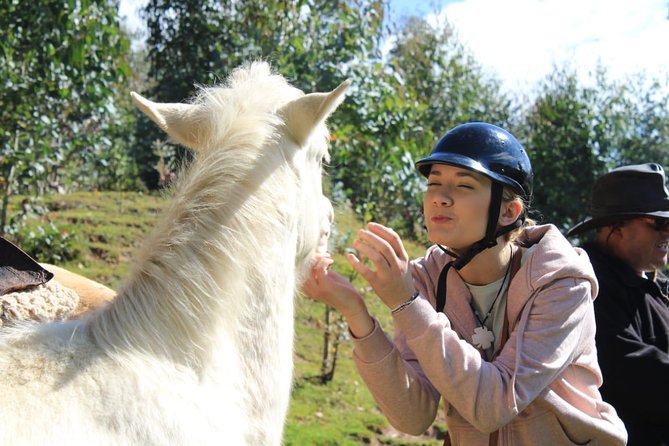
The supplied horses are Peruvian Paso horses. This breed is known for a distinctive, smooth way of moving, which can make a difference for a first-time rider or anyone who does not want a rough, jolting outing. Protective equipment is included.
The horses are described as calm and well trained. On one family outing, children aged 10 and 12 were first escorted by staff, then allowed to ride on their own after they became more confident. That suggests the guides pay attention to ability rather than sending everyone off at the same pace.
You should still be honest about your riding experience. The standard outing may be mostly at a walking pace, particularly when the group includes beginners. More experienced riders have been able to trot and canter, but that is not guaranteed for every departure. The guide decides what is safe for the group, the horses, and the trail conditions.
One horse was unsettled at the beginning of a ride, but the horse guide calmed it quickly and the rest of the outing went smoothly. That is a useful reminder that live animals are part of the experience. Good handling matters, and this team appears to take that responsibility seriously.
Puka Pukara gives the route an early historical stop
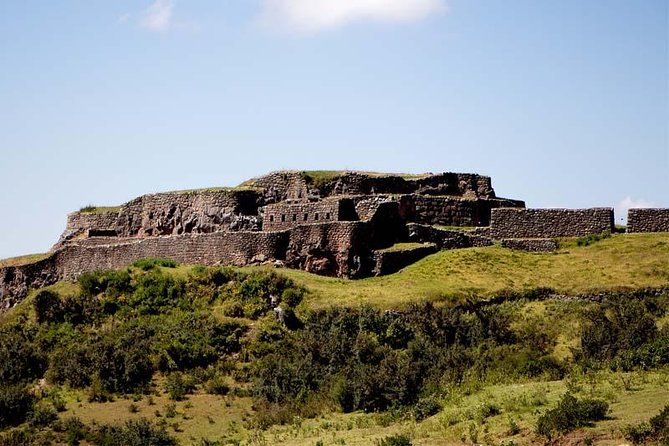
Puka Pukara is the first listed stop. Its name is often translated as Red Fortress, and its position near the road north of Cusco made it an important lookout and control point in the Inca world.
You will begin the historical part of the outing here, after the transfer and preparation at the ranch. The site gives you an early sense of how the Inca used high ground, stone construction, and road networks together.
Because the tour continues to three more sites, your time here may be focused rather than leisurely. That is helpful if you want a broad overview, but less ideal if you prefer to linger over every wall and viewpoint. Listen closely to the guide’s introduction, since the explanation helps connect Puka Pukara with Tambomachay and the old route toward the city.
More ruins and archaeology near Cusco:
- Cusco: City Tour | Half-Day Tour to 4 Archaeological Sites
★ 4.6 · 206 reviews - Cusco City Sightseeing and Sacsayhuaman Archeological Park Tour
★ 4.5 · 101 reviews - Cusco: Historical Guided City Tour with 4 Inca Ruins
★ 4.5 · 99 reviews - Cusco: Half-Day City Tour with Sacsayhuaman and Qenqo
★ 4.5 · 77 reviews
Tambomachay brings water into the story
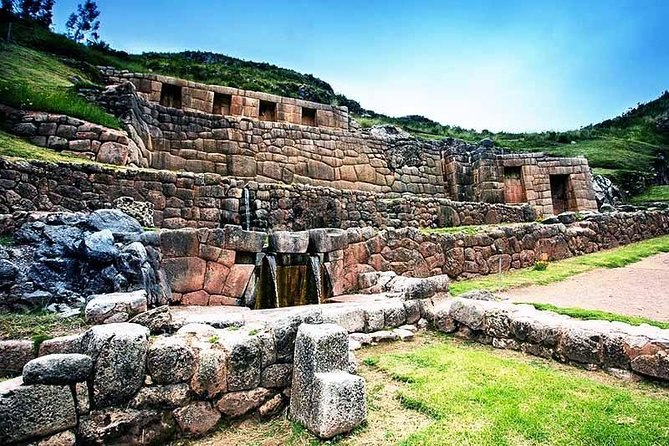
Tambomachay follows Puka Pukara. This smaller complex is associated with flowing water, ceremonial use, and carefully fitted Inca stonework.
The contrast with the more fortress-like sites makes this stop worthwhile. Here, the details are the point: channels, stone surfaces, and the way water was managed and presented. A good guide can help you see why a compact site deserves attention even when it lacks the scale of Sacsayhuaman.
The route visits Tambomachay early, when you are still fresh. If you take the afternoon departure, remember that changing weather can affect the feel of the stop. The tour operates in all weather, so a raincoat is not optional decoration. Wet stone and muddy ground can make walking less comfortable.
Q’enqo rewards a closer look
Q’enqo is the third stop. This ceremonial site is known for carved rock, passages, and spaces that invite a closer look at the relationship between stone and ritual.
It is a different experience from an open fortress or a site built around water. You may find the scale more intimate, with the guide’s explanation helping you understand details that are easy to miss on your own.
This is also where a group tour can be both useful and limiting. A bilingual guide can give you the context you need, but the group may not stop for every question or photograph. If you enjoy history, stay near the guide and ask questions while the group is gathered.
Sacsayhuaman is the major finale
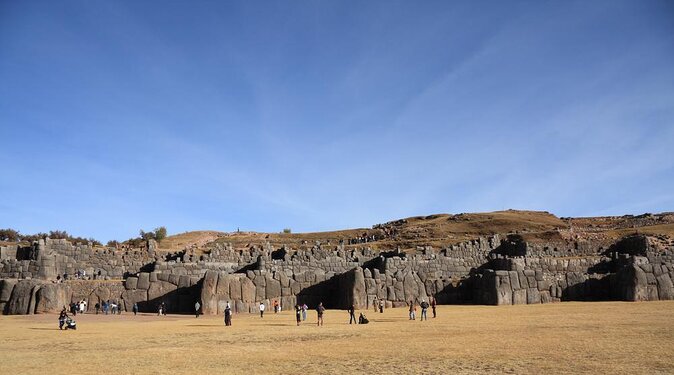
Sacsayhuaman is the final listed stop and the site most likely to shape your impression of the tour. Its huge stonework and broad setting make it one of the most striking archaeological places around Cusco.
The practical issue is important: the entrance ticket is not included. You may not be able to enter all the archaeological centers simply because the tour price has been paid. One rider was not told early enough to purchase the additional ticket and missed Sacsayhuaman as a result. The guide later took that person to the site on the return to town, but you should not rely on a last-minute rescue.
Before the ride, ask exactly which ticket is required, where to buy it, and whether one ticket covers the sites on your chosen route. This small bit of planning can determine whether you see the grand finale from inside or only pass nearby.
Sacsayhuaman also helps explain why the horse ride is a good addition rather than the whole point. The riding is pleasant, but the ruins give the outing its lasting value. You get movement, fresh air, and a guided look at four major sites in one compact route.
Weather can change the character of the day
The tour runs in all weather conditions. In Cusco, that means you should prepare for sun, cold, wind, and rain rather than trusting the morning sky.
Rain made one outing muddy, but it did not prevent the family from enjoying the ride. Another group received loaned jackets when the weather turned wet and cold. That is generous support, but it is wiser to bring your own layers and rain gear.
Wear clothes that can get dirty. Choose closed shoes with a secure sole, and avoid anything you would be unhappy to splash with mud. A raincoat is more useful than a small umbrella on horseback. You may also want sun protection, since the route passes through open areas and the weather can shift quickly.
Snacks are included, but drinks are not. Bring water or plan to buy your own beverage. Tips are not included either, and they are recommended if the guides handle the horses well, explain the sites clearly, and keep you comfortable in poor weather.
The guides add value beyond the transport
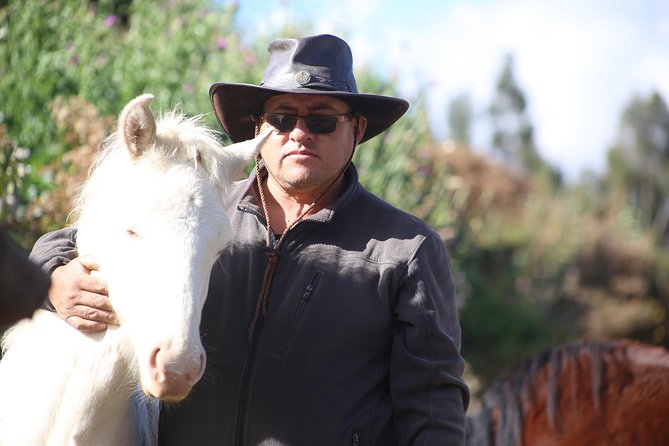
The experience includes a professional bilingual guide in English and Spanish. The guiding setup can involve more than one person, with one guide helping riders and another handling transportation and explanations at the archaeological sites.
That division of work is useful. The person managing your horse can focus on safety and riding technique, while the site guide can give a fuller explanation away from the saddle. One rider received detailed introductions in good English at every stop, which is exactly what you want from a tour that covers several places quickly.
Gabriel and his staff also show pride in the horses and the local history. That matters because the quality of a horseback outing depends heavily on how the animals are treated and how carefully the guides match riders with horses.
The strongest praise is directed toward the staff’s kindness, patience, and care. Guides lent jackets in cold rain, settled a nervous horse, and adjusted supervision for children. Those actions tell you more than a polished itinerary does.
Is $80 a fair price?
At $80, the price makes sense for someone who values convenience and variety. Hotel transport, a horse, protective equipment, a bilingual guide, snacks, and access to four sites through one organized route are all included.
The cost looks less attractive if you already have transportation and only want a basic riding lesson. It also rises once you add the archaeological entrance ticket, drinks, and a possible tip. Make sure you calculate the full outing cost rather than treating $80 as the final amount.
For a family, the value may be strong because the ride and the ruins appeal to different ages. For a solo visitor, the group format keeps the price below a private excursion. For an experienced rider seeking long canters, the value is harder to judge because the pace depends on the group and conditions.
I would consider this a good middle-ground choice: more active than a standard sightseeing drive, but easier and shorter than a full-day riding trip.
Who should book this Cusco ride?
I would recommend it to you if you want a gentle outdoor activity, enjoy history, and have only half a day available. It suits families with children, first-time riders, and visitors who like having transport and explanations handled in one booking.
It is also a smart option after a few days in Cusco, when you may appreciate open space and a quieter route. The 9:00 am departure leaves the afternoon free, while the 1:00 pm start works well if you want a relaxed morning.
You may want another tour if you dislike group schedules, need guaranteed private attention, or want a serious riding experience with sustained faster movement. You should also skip it if muddy trails and changeable weather would spoil your day.
Final booking advice
I would book this tour if the combination of horses, countryside, and four archaeological sites sounds better than another ride in a van. The calm horses, attentive staff, and manageable half-day length are its best features.
Before paying, confirm the archaeological ticket requirements in writing. Bring rain protection, water, warm layers, and clothes that can handle mud. With those details sorted, this is a pleasant and practical way to see Cusco’s northern ruins without surrendering your entire day.
FAQ
How long does the horseback riding tour last?
The tour lasts approximately 3 hours and 30 minutes, although the stated range is about 3 to 4 hours.
What time does the tour start?
There are two listed departure times, 9:00 am and 1:00 pm.
Is hotel transportation included?
Yes. Round-trip transportation between your Cusco hotel and the ranch is included.
Which archaeological sites does the tour visit?
The route includes Puka Pukara, Tambomachay, Q’enqo, and Sacsayhuaman.
Is the archaeological entrance ticket included?
No. The tourist ticket for the archaeological centers is not included in the tour price.
Are horses and riding equipment provided?
Yes. Peruvian Paso horses and protective equipment are included.
Is a guide included?
Yes. A professional bilingual guide speaking English and Spanish is included.
Are snacks and drinks included?
Snacks are included. Drinks are not included.
Can children join the tour?
Yes, but children must be accompanied by an adult.
What happens if it rains?
The tour operates in all weather conditions, so you should dress appropriately and bring rain protection.
What is the maximum group size?
The tour can have a maximum of 20 travelers.
Can I cancel for a full refund?
Yes. You can cancel at least 24 hours before the experience start time for a full refund. Cancellations or changes made less than 24 hours before the start time are not accepted for a refund.
More Horseback Riding near Cusco
- Horseback Riding Mystic Tour Temple of the Moon & Chacan Mountain
★ 5.0 · 255 reviews - Horseback Riding Tour to the Devil’s Balcony from Cusco
★ 5.0 · 241 reviews - Horseback Riding & Ancestral Secrets: Moon Temple & Inka Sites
★ 5.0 · 175 reviews - Cusco: 3-Hour Horse Riding Tour to the Temple of the Moon
★ 5.0 · 105 reviews
Added recently around Cusco
- Super valley or vip valley★ 5.0 · 13 reviews
- the Incas’ Sacred Valley★ 5.0 · 27 reviews
- Sacred Valley of the Incas Day Trip from Cusco★ 5.0 · 6 reviews
- Small-Group Tour: Rainbow Mountains Hiking from Cusco★ 4.0 · 5 reviews
- Excursion to the Sacred Valley of the Incas from Cusco★ 5.0 · 8 reviews
- Maras + Moray & Textile Experience★ 5.0 · 14 reviews
- rainbow mountain★ 4.0 · 4 reviews
- Tour EN Cuatrimoto POR la Montaña 7 Colors Hike 5 Minutes★ 4.5 · 32 reviews
Inca Ruins & Archaeological Sites, compared.
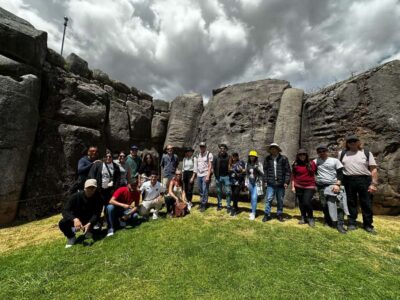
Half-Day City Tour with Sacsayhuaman and Q’enco
Read our review →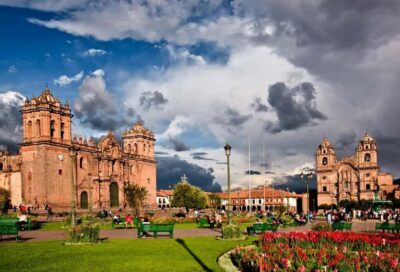
City Tour Cusco Qoricancha Sacsayhuaman y Tambomachay
Read our review →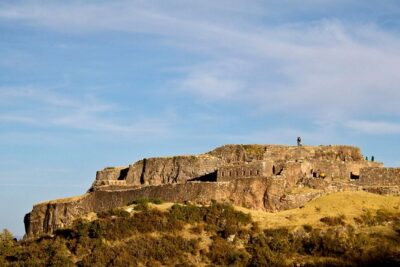
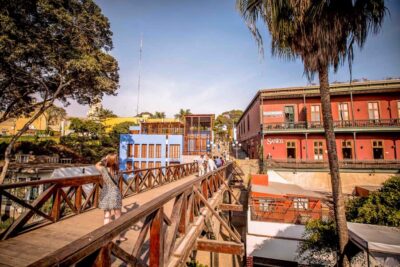
Pachacamac Ruins & Barranco Half-Day Guided Tour
Read our review →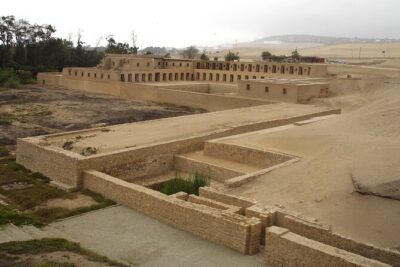
Pre Inca Temple of Pachacamac Half-Day Tour from Lima
Read our review →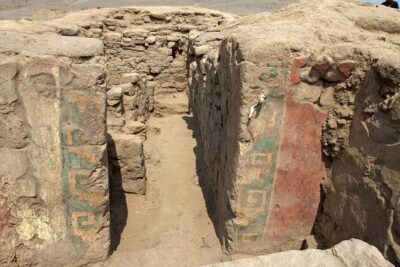
Tour to the Archaeological Sanctuary of Pachacamac (small group)
Read our review →
From Pyramids & Bohemian Streets: Lima Miraflores & Barranco Tour
Read our review →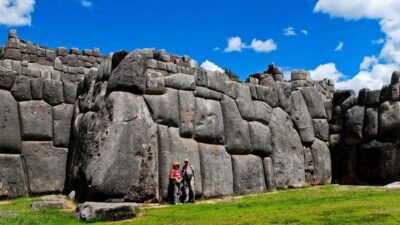
City Tour | Half-Day Tour to 4 Archaeological Sites
Read our review →Browse the lists this tour appears in