
Reviewed · ANDEAN TREKKING TOURS
Cordillera Huayhuash Classic Trek – 8 Days & 7 Nights
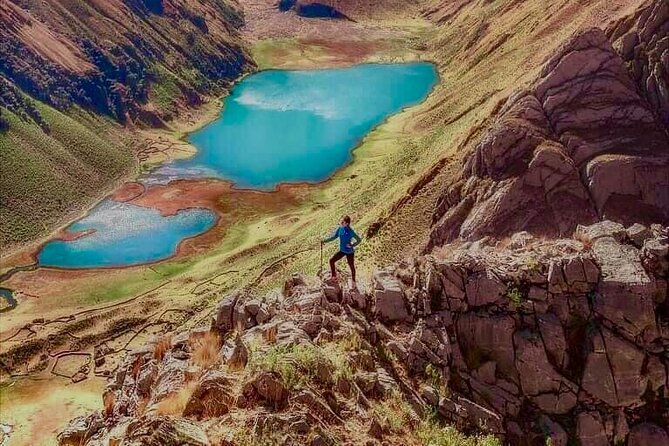
The Andes save their best views for hard days. This eight-day Huayhuash trek links high passes, glacier viewpoints, turquoise lakes, and remote campsites around some of Peru’s most striking peaks. I like the carefully supported setup, with cooks, helpers, donkeys, tents, and transport included, and I like the mix of big mountain days and quieter evenings at camp. The main catch is altitude: several passes rise above 4,800 meters, so this is a serious trek, not a casual walking holiday.
I also like the human side of the trip. Guide Yanina, cook Jaime, and logistics support from Angel are praised for creating a well-run, friendly experience, while the pre-trek acclimatization with Pablo adds useful preparation. The $800 price offers good value for a supported eight-day route, but you still need to pay for personal gear, park and community fees, insurance, and acclimatization tours.
In This Review
- Key points at a glance
- Why the Huayhuash route is worth the effort
- Day 1: Huaraz to the Rondoy valley
- Day 2: Two high passes and the first serious test
- Day 3: Siula Grande and the 3 Lagunas viewpoint
- Day 4: Trapasio Pass, a glacier option, and five lakes
- Day 5: Santa Rosa Pass and the long walk to Huayllapa
- Day 6: Tapush Pass and another high camp
- Day 7: Yaucha Pass and the Carhuacocha area
- Day 8: Jahua Punta, Pocpa, and the return to Huaraz
- What the $800 price really covers
- Camping, meals, guides, and group size
- Who should book this trek
- Practical details before you book
- Should you book the Huayhuash Classic Trek?
- FAQ
- How long is the Cordillera Huayhuash Classic Trek?
- Where does the trek start and end?
- What is the highest pass on the route?
- Are meals included?
- Is camping equipment provided?
- How many people can join the group?
- Is acclimatization included?
Key points at a glance
- High passes almost every day: The route reaches 5,041 meters at Trapasio Pass and offers an optional climb to 5,100-meter San Antonio Pass.
- Three-lagoon and glacier views: Day 3 brings the famous 3 Lagunas viewpoint, while Day 4 adds a short optional walk toward a glacier.
- Siula Grande appears repeatedly: The mountain linked with Touching the Void is visible from several important viewpoints.
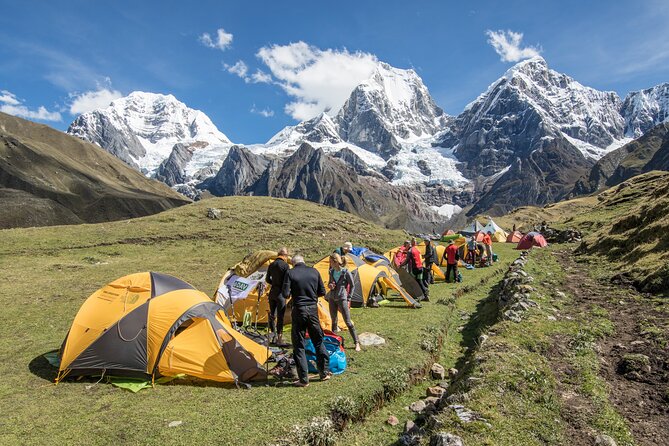
- Real camping support: Donkeys carry equipment, cooks prepare meals, and two-person tents, kitchen gear, and transport are provided.
- A demanding but varied route: You walk for six to nine hours on most days, with a village night at Huayllapa offering a lower-altitude break.
- Small-group format: The maximum group size is 16, with English and Spanish guiding available.
Why the Huayhuash route is worth the effort
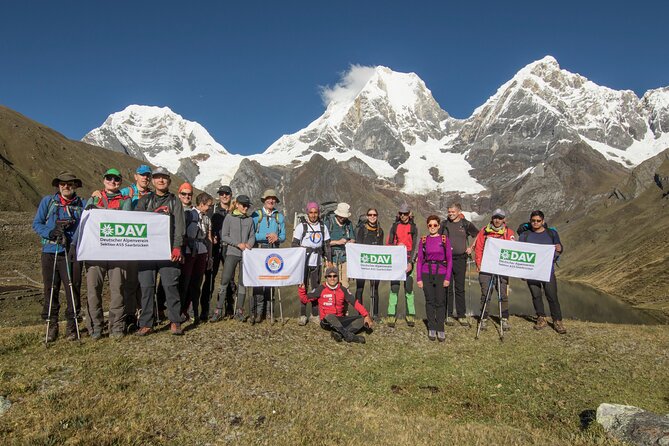
The Cordillera Huayhuash is a place for people who want big mountain scenery without a string of busy resort stops. The route passes beneath snow-covered peaks, beside cold blue lakes, and over high saddles where the views open in several directions at once.
You should not confuse this with a gentle sightseeing program. The route includes repeated climbs above 4,600 meters, long descents, and one 19-kilometer day. The reward is a steady series of changing views rather than one famous photo stop.
I especially like the way the trek mixes demanding climbs with lower camps and optional side walks. You can push toward the glacier on Day 4 or add San Antonio Pass, but those extras are not compulsory. That gives the guide some room to match the day to the group’s energy and weather.
The scenery also has a strong cultural and human element. Camps are set near valleys and villages, and Day 5 ends at Huayllapa, a community at 3,487 meters. It is a welcome change from sleeping at roughly 4,000 to 4,400 meters and gives you a different view of life in the high Andes.
More Hiking Tours in Huaraz
- From Huaraz: Hike to the Lagoon 69
★ 4.4 · 121 reviews - Santa Cruz 4 Days Trek
★ 4.5 · 14 reviews - Trekking to Laguna 69
★ 4.0 · 12 reviews
Day 1: Huaraz to the Rondoy valley
The trip leaves Huaraz for Chiquian, where you stop for lunch before continuing toward the first camp. The drive takes about four hours, and arrival is expected around 3 pm. There is no walking day on the first day, so you can settle in, inspect the camp, and let your body adjust to the setting.
The first camp has views of Rondoy mountain and the valley. Sunset is often the highlight, with the mountains taking on changing colors as the light fades. This is a simple beginning, but a useful one. You are already sleeping at altitude before the hardest climbs begin.
The supplied schedule also gives a 1 am meeting time, while the Day 1 program says the drive leaves at 9 am. Those times do not match, so I would confirm the exact pickup hour before setting an alarm. The stated meeting point is Grupo Alpamayo Tours & Hotel, at Av. Mariscal Toribio Luzuriaga 475 in Huaraz.
Day 2: Two high passes and the first serious test
Day 2 gets serious quickly. An early start leads uphill for about two and a half hours to a pass at 4,700 meters. After descending around 400 meters, you climb again toward a second pass at 4,650 meters.
This up-and-down pattern is harder than a single steady climb. You gain altitude, lose some of it, then work back up again. The day includes about four hours of driving in the schedule, though the key physical effort is the hiking between the high points.
You camp after the second pass. The plan lists camping and hiking support, but meal details are not clearly assigned to every individual day. Since all meals are included overall, your guide or operator should explain the daily meal pattern before departure.
For you, this is the day to keep a slow pace. At these heights, racing ahead usually costs more than it gains. Follow the guide’s rhythm, drink regularly, and treat the first pass as a warm-up rather than the finish line.
Day 3: Siula Grande and the 3 Lagunas viewpoint
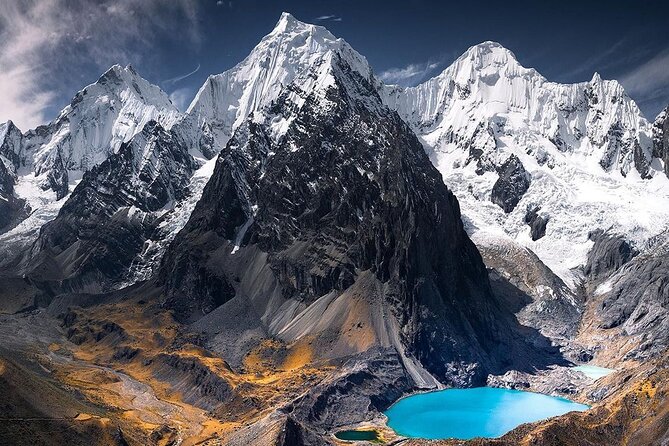
Day 3 brings one of the trek’s signature views. You climb to a pass at 4,810 meters, then continue toward the famous 3 Lagunas viewpoint. The total hiking time is about eight hours, making this one of the longest and most scenic days.
The name Siula Grande matters here. The peak became widely known through Touching the Void, the account of a climbing accident involving the mountain. Seeing it in person gives the route a strong connection to mountaineering history, but the main pleasure is simply the scale of the peaks and water around you.
The Huayhuash campsite sits at about 4,350 meters. That is high, and the combination of a long walking day with a high overnight stop can feel demanding. The route is best suited to people who already know how their body responds to altitude, or who plan proper acclimatization in and around Huaraz.
This day is also where good guiding matters. The trip’s strongest praise is directed toward the attentive support team, including Yanina and the logistics staff. On a long high-altitude day, clear pacing and regular attention can make a real difference.
Longer treks from Huaraz:
- The Best of Huayhuash Mini Trek – Siula Grande Mountain (5D /4 N)
★ 5.0 · 6 reviews - 20Day-Santa Cruz Trek Peak Alpamayo 5957 m and Chopicalqui 6354 m
★ 5.0 · 4 reviews - Salkantay Classic Trek 5 Days from Cusco
★ 5.0 · 4,062 reviews - 4-Day Salkantay Trek with Sky Camp Stay
★ 5.0 · 3,346 reviews
Day 4: Trapasio Pass, a glacier option, and five lakes
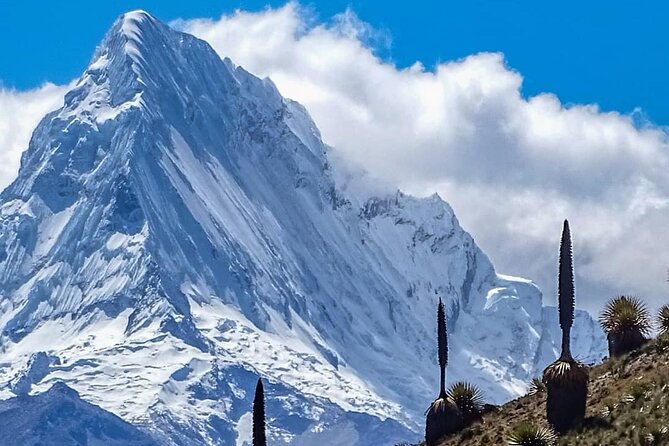
Day 4 begins with the trek’s highest scheduled pass, Trapasio at 5,041 meters. From there, you have an optional 40-minute walk toward the glacier. This is a smart arrangement because the extra view is appealing, but not everyone will want more climbing after reaching the pass.
The descent passes five beautiful lakes before reaching the Cuyoc campsite at about 4,400 meters. This is a full six to seven hours of walking, with the scenery changing from high pass terrain to a chain of lakes below the route.
There is another optional extension from camp: about two hours to San Antonio Pass at 5,100 meters. It is an impressive possibility, but it should be treated as a serious add-on, not a casual stroll after dinner. You need to ask the guide about conditions, timing, and how it affects the next day.
I like this day because it gives you choices. Strong hikers can add the glacier and San Antonio viewpoints, while others can enjoy the main route without feeling they have failed to complete the trek. Flexibility is valuable on a route where weather and altitude can change the plan.
Day 5: Santa Rosa Pass and the long walk to Huayllapa
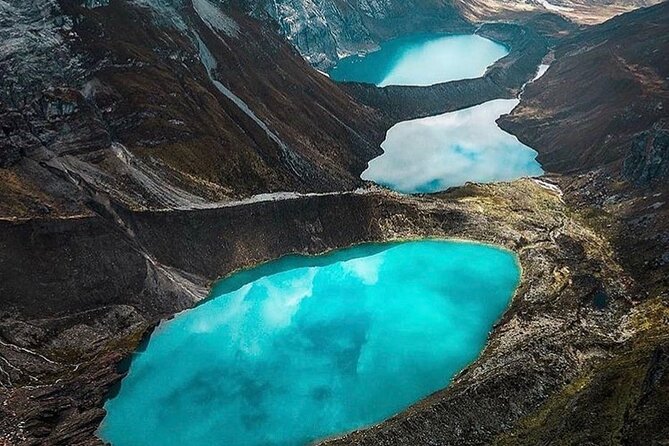
The Santa Rosa Pass viewpoint is one of the trek’s big moments. Siula Grande comes back into view, linking this day with the story and scenery introduced earlier.
The distance is about 19 kilometers, with roughly nine hours of walking including breaks and lunch. That is a long day even at a lower altitude, so you should save energy from the morning and avoid spending too long at the first viewpoints.
The reward is the descent to Huayllapa, at 3,487 meters. After several nights at camps around 4,000 meters or higher, this lower village setting can feel like a physical reset. It also breaks the rhythm of high camps and gives you a chance to experience a settled Andean community rather than only mountain campsites.
The tour includes all meals during the trek, with six breakfasts, seven lunches, and six dinners listed. At a place like Huayllapa, the meal is not just a convenience. You avoid having to search for food after a long day, and the cook can prepare meals around the group’s schedule.
Day 6: Tapush Pass and another high camp
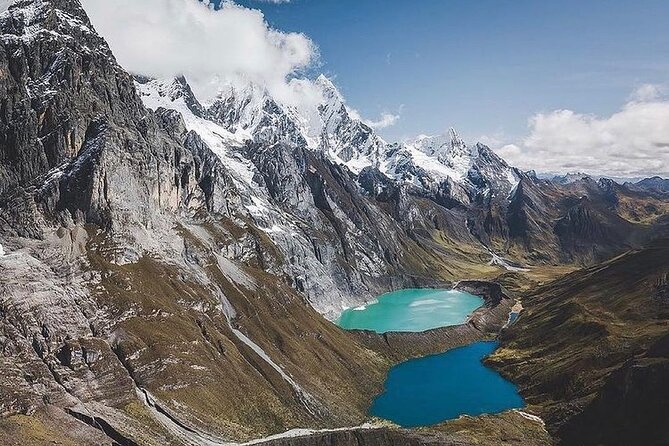
After the lower night in Huayllapa, the route climbs again. You walk uphill for four to five hours toward Tapush Pass at 4,800 meters, with lunch on or before the pass.
The day covers about 13 kilometers and seven hours of walking. Compared with Day 5, it is shorter, but the climb is direct and the altitude returns quickly. You then continue to camp at about 4,400 meters.
This is a good example of the trek’s repeating pattern: a lower valley offers some relief, then the route climbs back toward the high passes. You need to accept that rhythm rather than expect the route to get steadily easier.
The meal timing is useful here. Having lunch near the pass means you do not need to carry a full day’s food supply, though you still need personal water and snacks according to the operator’s instructions. Ask what food is supplied and what you should bring yourself before leaving Huaraz.
Day 7: Yaucha Pass and the Carhuacocha area
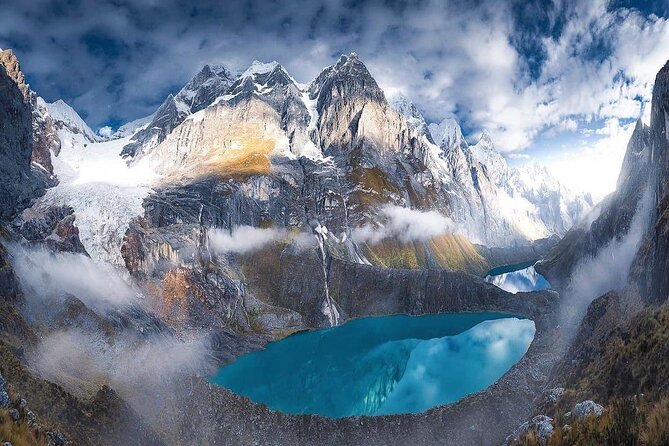
Day 7 starts with a climb to Yaucha Pass at 4,800 meters, reached about an hour and a half after leaving camp. A one-hour side trip leads to a viewpoint over two lakes before you descend to camp at about 4,000 meters.
This is a shorter day of around six hours, which helps after the repeated long climbs. The side trip is worthwhile if the group has the energy and the weather is clear. Two lakes from a high viewpoint offer the kind of broad mountain view that makes the earlier effort feel worthwhile.
The camp is associated with Carhuacocha, one of the route’s memorable mountain areas. The schedule gives this stop an admission ticket free designation, while other days include admission. Since community and National Park fees are not included in the tour price, confirm the exact amount and payment method before departure.
Day 8: Jahua Punta, Pocpa, and the return to Huaraz
The final walking day begins with one last pass, Jahua Punta. You then make a long descent to Pocpa, where the mountain team and donkeys finish their part of the journey.
The walk takes about six hours, followed by around four hours of driving back to Huaraz. Private transport is listed for groups of four or more, while groups of two may use public transport. That distinction matters after eight days of high-altitude walking, so ask how your group size affects the return ride.
The trek ends back at the original Huaraz meeting point, with a hotel night listed for the final evening. That is a practical touch. You do not have to arrange a separate transfer from Pocpa or figure out where to sleep immediately after reaching town.
What the $800 price really covers
At $800 per person, the price is strongest for hikers who want logistical support rather than a self-guided route. It includes a Peruvian trekking guide, cooks and helpers for groups of eight or more, donkeys and a mule driver, two-person camping tents, kitchen equipment, meals, and scheduled transport.
Those inclusions remove several large costs and headaches. You do not need to carry all camp equipment yourself, organize food for eight days, or arrange a separate vehicle at every stage. The support team is especially valuable on a route with high passes and remote camps.
The price does not cover everything. You pay separately for personal equipment such as boots, a sleeping bag, sleeping mat, Gore-Tex clothing, insurance, personal expenses, tips, and meals in Lima or Huaraz. Entrance fees for the Huayhuash National Park community are also excluded, as is an acclimatization tour.
That last point deserves attention. The program includes a demanding route but not acclimatization before it begins. One excellent preparation option described by the operator involved Pablo and others, and the preparation was considered helpful and informative. If you are new to high altitude, budget for an acclimatization program rather than treating it as an optional luxury.
Camping, meals, guides, and group size
The camping arrangement is basic but practical. Two-person tents and kitchen equipment are provided, and donkeys carry the group’s shared supplies. You will still need personal clothing and sleeping gear unless the operator confirms rental options separately.
The human support receives the clearest praise. Yanina is named as a guide, Jaime as cook, and Angel as logistics support. Koseth and Eric are also noted for careful on-site assistance. The repeated theme is attentiveness: the team checks that people are comfortable and have what they need.
For groups of eight or more, cooks and helpers are included. The maximum group size is 16, which is large enough to create a social atmosphere but small enough for a guide to keep track of the group on a mountain route.
English and Spanish guiding are available. When booking, confirm which language your specific guide will use and how many guides will accompany the group, especially if members have different walking speeds.
Who should book this trek
I would recommend this route to fit hikers who want a supported high-altitude challenge and care more about scenery than comfort. It suits people who enjoy long walking days, cold camps, early starts, and the reward of reaching remote viewpoints.
It can also work well for families with strong hiking experience. The route received warm praise for a family trip, especially for the turquoise lakes, mountain views, friendly guides, and shared sense of achievement. Still, the high passes and seven nights of camping mean family members should be prepared for genuine physical strain.
I would not choose it for a first-ever mountain trip without acclimatization. A moderate fitness level is required, but that phrase understates the altitude. Walking for nine hours at sea level is not the same as climbing repeatedly above 4,700 meters.
Practical details before you book
The tour offers mobile tickets, English service, confirmation at booking, and free cancellation up to 24 hours before the local start time. Poor weather or failure to meet the minimum group size can lead to a new date or a full refund.
Pack around the exclusions. Personal boots, sleeping bag, mat, waterproof clothing, insurance, and money for fees and tips are your responsibility. Meals in Huaraz and Lima are also separate.
Most important, confirm the departure time. The meeting information lists 1 am, while the first day describes a 9 am departure. This may reflect different pickup or transfer arrangements, but you should get a clear answer from Peru Expeditions Tours before the trek.
Should you book the Huayhuash Classic Trek?
Book it if you want Peru’s high Andes in a properly supported format and you are ready for repeated climbs above 4,800 meters. The combination of Siula Grande, the 3 Lagunas viewpoint, Trapasio Pass, five lakes, Santa Rosa Pass, and the lower village stop at Huayllapa gives the route real variety.
Skip it if you want easy walks, hotels each night, or a flexible schedule. The price is fair for the guides, cooks, donkeys, camping equipment, meals, and transport, but the trip remains physically demanding and several important costs sit outside the package.
My best advice is simple: arrange acclimatization, confirm the first-day timing, ask about entrance fees, and make sure your personal gear is ready. If those pieces are in place, this is a strong choice for a close, challenging look at the Cordillera Huayhuash.
FAQ
How long is the Cordillera Huayhuash Classic Trek?
The trek lasts approximately eight days and seven nights, with seven walking days after the first day of transport and camp setup.
Where does the trek start and end?
It starts at Grupo Alpamayo Tours & Hotel, Av. Mariscal Toribio Luzuriaga 475 in Huaraz. The activity ends back at the same meeting point.
What is the highest pass on the route?
The highest scheduled pass is Trapasio Pass at 5,041 meters. An optional side trip from Cuyoc campsite reaches San Antonio Pass at 5,100 meters.
Are meals included?
Yes. The package lists six breakfasts, seven lunches, and six dinners, along with all meals during the trek.
Is camping equipment provided?
Yes. Two-person camping tents and kitchen equipment are included. Personal items such as boots, sleeping bags, sleeping mats, and waterproof clothing are not included.
How many people can join the group?
The maximum group size is 16 people. Cooks and helpers are included from groups of eight people.
Is acclimatization included?
No. An acclimatization tour is not included in the $800 price. The program also states that participants should have a moderate level of physical fitness.
More Hiking Days from Huaraz
- Laguna 69 Day Trek
★ 4.0 · 9 reviews - Huaraz: Laguna 69 | Cordillera Blanca | Hike to Lake 69
★ 4.5 · 9 reviews - Ancash: Trekking to Paron Lagoon with Entrance | Full day|
★ 4.1 · 9 reviews - From Huaraz: Lake 69 Trek Day Tour – White Mountain Range
★ 4.7 · 7 reviews
Added recently around Huaraz
- Snowy Mateo – Cordillera Blanca Expedition★ 5.0 · 26 reviews
- The Best of Huayhuash Mini Trek – Siula Grande Mountain (5D /4 N)★ 5.0 · 6 reviews
- Pastoruri Glacier Day Trip★ 4.0 · 4 reviews
- Parón Lake – Cordillera Blanca – Private Service★ 5.0 · 8 reviews
- 20Day-Santa Cruz Trek Peak Alpamayo 5957 m and Chopicalqui 6354 m★ 5.0 · 4 reviews
- Full day hike in Lagoon 69 with Transportation★ 4.0 · 4 reviews
- Climbing Mateo – Your first 5 thousand★ 5.0 · 52 reviews
- Tour Climbing Nevado Mateo | Your First 5,150 m Summit | 12 Hours★ 5.0 · 40 reviews
Andean Trekking Tours, compared.
Salkantay Trek 5D/4N with Glass Cabins, Domes and Hobbit House
Read our review →
Lares Valley Trek with Hot Spring 4-Day, 3-Night
Read our review →
Ultimate Salkantay Trek to Machu Picchu 5 Days
Read our review →
Lares Trek to Machu Picchu 4D/3N Including Hot Springs
Read our review →
4-Day Inca Jungle Trail to Machu Picchu Hiking and Biking Tour
Read our review →Browse the lists this tour appears in