
Reviewed · INCA RUINS & ARCHAEOLOGICAL SITES
El Brujo – Archeological site & Museum
Ancient power still speaks here. El Brujo takes you from Trujillo to one of Peru’s most important Moche sites, with decorated temples, a museum, and the remarkable mummy known as the Lady of Cao. I like the direct focus on Moche culture, and I like that pickup near Trujillo’s Historical Center is included.
You also get a small-group experience, limited to 10 people, with an English option and a total outing of about five hours. The main consideration is cost at $30 per person, since admission to Huaca Cao Viejo and the Lady of Cao complex is extra. Also, one recent visit found the Lady of Cao display closed for maintenance, so the museum’s condition can affect the day.
In This Review
- Key points to know before you book
- Why El Brujo deserves time from Trujillo
- Starting in central Trujillo at 10:00 a.m.
- Huaca Cao Viejo and its Moche temples
- Meeting the Lady of Cao
- Friezes, museum displays, and a pre-Inca cemetery
- Is $30 a fair price?
- Who will enjoy this half-day outing
- Practical details that affect your day
- Should you book El Brujo?
- FAQ
- Where does the tour start?
- What time does the tour begin?
- Is pickup included?
- How long does the experience last?
- Are the entrance fees included?
- Is the tour offered in English?
- How many people can join?
- Can I cancel for a full refund?
Key points to know before you book
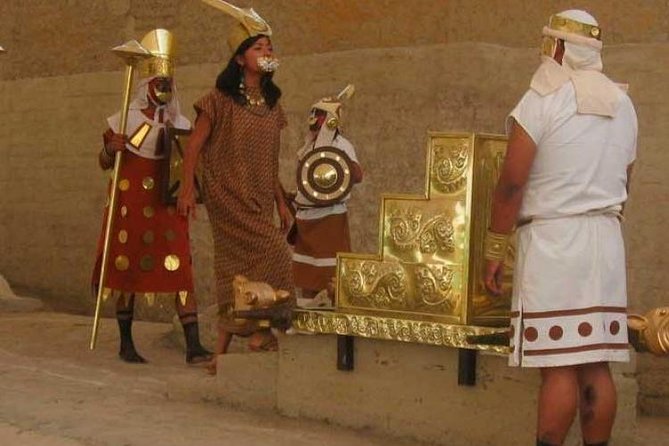
- The Lady of Cao is the main draw: See the exceptionally preserved mummy associated with a possible Moche female ruler.
- El Brujo is more than one ruin: The visit includes Huaca Cao Viejo, decorated temples, museum displays, and a pre-Inca cemetery.
- Pickup is easiest near central Trujillo: Free pickup is offered close to the Historical Center, while pickup farther away may cost extra.
- Admission is not included: Budget separately for entry to Huaca Cao Viejo and the Lady of Cao complex.
- The group stays small: No more than 10 people are accepted, which should make questions and explanations easier.
- Allow about five hours: The two main visits take about two and a half hours, with the rest of the time used for transport and the overall excursion.
Why El Brujo deserves time from Trujillo
Trujillo is surrounded by major archaeological sites, but El Brujo offers a different angle from the better-known monuments closer to town. Here, you are not simply looking at huge adobe walls. You are connecting architecture, painted decoration, burial practice, and the political role of the Moche people.
The complex dates from the first to the eighth centuries, when Moche civilization flourished along Peru’s northern coast. That long span matters. You are looking at a place used and changed over many centuries, not a single building from one short period.
I especially like that the tour combines outdoor ruins with a museum visit. The ruins give you scale and setting. The museum helps explain what archaeologists found inside and around the structures. Without both parts, it would be easy to see only weathered adobe and miss the people behind it.
The tour is offered in English, which makes a difference at a site where the visual details can be easy to miss. The painted friezes, the burial discoveries, and the story of the Lady of Cao all need context. A good explanation turns the visit from a quick photo stop into a clearer picture of Moche society.
More Ruins & Archaeology Tours in Northern Peru
- Full Day Trujillo Piramides Sol y Luna , Chan chan y Huanchaco
★ 5.0 · 93 reviews - Full Day Tour Huacas, Chan Chan & Huanchaco – Trujillo
★ 4.5 · 64 reviews - Full Archaeological Chan Chan Tour
★ 5.0 · 30 reviews
Starting in central Trujillo at 10:00 a.m.
The listed meeting point is Jirón Independencia 587 in Trujillo, with a 10:00 a.m. start. If you are staying near the Historical Center, you can request free pickup. That is useful because it removes one small piece of morning planning, especially if you do not want to find a taxi before an archaeological outing.
Pickup outside the Historical Center may bring an additional fee. Confirm your exact pickup location when booking, since the free area is limited. The tour returns to the original meeting point at the end.
The experience accepts mobile tickets and receives confirmation at booking. It is also near public transportation, although the included central pickup is likely the simpler choice for most people. The activity is capped at 10 people, so you are not signing up for a large coach group.
The 10:00 a.m. start gives you a full morning to reach the complex and still leaves part of the afternoon afterward. The total duration is about five hours. Since the planned visits themselves add up to roughly two and a half hours, expect the remaining time to cover the ride, transitions, and time at the wider complex.
Huaca Cao Viejo and its Moche temples
The first major stop is Huaca Cao Viejo, with about 90 minutes scheduled. This is the archaeological heart of the outing, where you can see remains dating from the first through eighth centuries.
The site includes three decorated temples. Their adobe construction reflects the materials available in this dry coastal part of Peru, while the decoration gives the structures their visual force. The painted and sculpted friezes are not just surface ornament. They are clues to the beliefs, ceremonies, and public image of the Moche.
I like the way this stop puts architecture first. At a museum, ancient objects can feel detached from their original setting. At Huaca Cao Viejo, you can see where ceremonial and political life took place, then examine related discoveries later in the museum.
The tour description highlights the polychrome friezes on the walls. That detail is worth watching for closely. Color and pattern can fade in archaeological settings, so the surviving decoration helps you understand how different these temples once looked from the plain adobe ruins you may expect.
The site visit is listed with admission not included. That is the most important budget detail. The $30 tour price pays for the organized experience, but you still need to purchase the entry ticket for Huaca Cao Viejo. The supplied information does not state the ticket price, so check the current amount before setting your budget.
You should also be ready for an outdoor archaeological visit. The information provided does not specify shade, walking surfaces, or facilities, so practical conditions may vary. Comfortable shoes and protection from the sun are sensible choices, but I would confirm current site instructions if those details matter to you.
Meeting the Lady of Cao
The Lady of Cao is the emotional center of the visit. She was found relatively recently and is presented as a remarkably well-preserved mummy connected with a possible position of power in Moche culture.
Her discovery changed the way many people think about Moche leadership. The presence of an important female burial gives the site a strong human story and raises questions about who could hold authority. The evidence does not simply offer a name and a date. It opens a discussion about gender, status, ritual, and political life in the ancient north coast.
The visit to the Lady of Cao complex is scheduled for about an hour. You will see the museum area and learn about the mummy, along with the archaeological work connected to the site. The complex is named for its colorful wall friezes, so the museum experience is tied closely to the decorated architecture outside.
One caution deserves clear attention. A recent visitor found the room displaying the Lady of Cao closed for maintenance. That means you should not book solely on the promise of seeing the mummy in person. The site remains worthwhile for its Moche material and archaeological setting, but the central display may occasionally be unavailable.
The entry fee for the Lady of Cao complex is also not included. You will need to pay that separately, in addition to the Huaca Cao Viejo admission. Since no current fee is provided, ask for the latest prices before departure.
More ruins and archaeology near Trujillo:
- Private tour full day chan chan & huacas sun and moon in SUV
★ 5.0 · 24 reviews - Trujillo in a Day: Chan Chan, Huanchaco, Sun and Moon Temples
★ 4.5 · 16 reviews - Pyramids of the Sun and the Moon, Huanchaco and Chan Chan
★ 4.1 · 9 reviews - El Brujo Archaeological Site & Lady of Cao Complex from Trujillo
★ 4.0 · 5 reviews
Friezes, museum displays, and a pre-Inca cemetery
The museum adds depth to the outdoor visit. Its displays help connect the temples with the objects, burials, and artistic traditions found in the area. The polychrome friezes are a particular focus, and they give the complex its name.
I find this combination valuable because the Moche are often reduced to a few famous images. The museum offers a chance to see a wider story: how the culture built ceremonial places, used visual symbols, buried important people, and organized power.
The surrounding area also includes a pre-Inca cemetery. That is an important detail because it broadens the visit beyond the Moche temples alone. You are looking at a place with layers of use, burial, and memory from before the Inca period.
The cemetery may interest you most if you want archaeology rather than only monumental buildings. It gives the visit a more grounded scale. Temples show public power, while graves point toward individual lives and local burial customs.
Your guide’s explanation will matter here. The experience is sold in English, and the high overall rating of 4.7 from 11 ratings suggests that the interpretive side has generally worked well. One especially positive assessment praised the guide for making the site informative and easy to understand. The available information does not name the guide, so you should not expect a particular person.
Is $30 a fair price?
At $30 per person, this is a reasonable organized outing if you value transport, a guide, and a small group. You are paying for a five-hour experience from Trujillo rather than simply buying entry to a ruin.
The value depends on how much you want help with the archaeology. If you already know Moche culture well and can arrange your own transport, you may prefer an independent visit. If you want the site explained in English and would rather not sort out the route yourself, the price is easier to justify.
The extra admission charges make the total cost higher than the advertised tour price. This is not a flaw if the fees are clearly explained before you go, but it is a point to include in your planning. Ask for the current prices for both Huaca Cao Viejo and the Lady of Cao complex.
The group limit of 10 is another positive. It is not a private one-on-one tour, despite the use of private-tour language in the description, but it is still much smaller than a large bus outing. A small group gives you a better chance to hear the guide and ask about the unusual details.
The score of 4.7 from 11 ratings is encouraging, while the 91 percent recommendation rate is also strong. The sample is small, so I would treat those numbers as helpful signals rather than proof that every departure will be perfect. The comments point most clearly to two strengths: the guide’s explanations and the chance to see the Lady of Cao site.
Who will enjoy this half-day outing
I would choose this experience if you are staying in Trujillo and want a focused introduction to Moche culture without planning a complicated day on your own. It suits anyone who likes ruins but wants a museum and human story alongside the architecture.
It is also a good match for you if the Lady of Cao interests you. Her burial gives the visit a distinctive focus that separates El Brujo from a standard temple tour. The possibility that she was a Moche ruler makes the visit especially meaningful for anyone interested in women’s roles in ancient societies.
You may want to reconsider if your main goal is a guaranteed look at the mummy. The maintenance closure mentioned above shows that the display can be temporarily unavailable. If the room is closed, you will still have Huaca Cao Viejo, the friezes, the cemetery, and the wider museum material, but the day will not match the strongest version of the experience.
This tour can also work well for visitors with limited time in northern Peru. Five hours is long enough to reach an important site and return to Trujillo without committing a full day. The exact balance between driving and site time is not stated, so you should expect a substantial portion of the outing to involve transport.
Practical details that affect your day
Book at least a few days ahead if possible. The experience is often reserved around 11 days before the date, which suggests that planning early is sensible, particularly if you need an English departure or a central pickup.
Free cancellation is available until 24 hours before the start time for a full refund. Cancellations or changes made inside that 24-hour window are not accepted for a refund, and the cutoff follows local time in Peru.
Most people can participate, and the experience is near public transportation. The supplied information does not give specific accessibility details, so ask the provider if you need information about the ruins, museum access, walking surfaces, or seating.
The operator is Mochilea Peru. Confirmation arrives when you book, and the activity ends back at the meeting point on Jirón Independencia. Keep your mobile ticket available and verify the pickup instructions before the morning begins.
Should you book El Brujo?
I would book this tour if you want an efficient, English-language introduction to Moche culture from Trujillo, especially if you are interested in the Lady of Cao. The mix of temples, friezes, museum displays, and a pre-Inca cemetery gives the outing more substance than a quick ruin visit.
I would first confirm two things: the current admission fees and whether the Lady of Cao display is open. Once those are clear, the $30 price offers solid value for a five-hour small-group experience with central pickup.
If the mummy room is closed, the day loses its most famous feature, but not all its worth. You will still see Huaca Cao Viejo and learn how the Moche used architecture and art to express power. For most visitors with an interest in ancient Peru, that makes El Brujo a worthwhile addition to a Trujillo stay.
FAQ
Where does the tour start?
The listed meeting point is Jirón Independencia 587 in Trujillo, Peru. The activity ends back at this meeting point.
What time does the tour begin?
The scheduled start time is 10:00 a.m.
Is pickup included?
Free pickup is offered near Trujillo’s Historical Center. Pickup outside that area may involve an additional fee.
How long does the experience last?
The tour lasts approximately five hours.
Are the entrance fees included?
No. Admission to Huaca Cao Viejo and the Lady of Cao complex is not included in the tour price.
Is the tour offered in English?
Yes. The experience is offered in English.
How many people can join?
The activity has a maximum of 10 people.
Can I cancel for a full refund?
Yes, if you cancel at least 24 hours before the experience start time. Cancellations or changes made less than 24 hours in advance are not eligible for a refund.
More Museums Worth an Hour in Trujillo
- From Trujillo: Complete full day tour with museums
★ 5.0 · 5 reviews - Skip the Line: Larco Museum Admission Ticket
★ 5.0 · 659 reviews - City Tour in Cusco & visit Museum South American Camelid Private.
★ 5.0 · 147 reviews - Experience Lima: Gastronomic Evening at Larco Museum
★ 4.5 · 95 reviews
Added recently around Trujillo
- Trujillo Shore Excursion from Salaverry Port★ 5.0 · 9 reviews
- Shore Excursion from Salaverry port★ 4.5 · 17 reviews
- Full Day in Trujillo from Puerto Salaverry★ 5.0 · 22 reviews
- El Brujo Archaeological Site & Lady of Cao Complex from Trujillo★ 4.0 · 5 reviews
- Trujillo Private★ 4.0 · 4 reviews
- Trujillo in a Day: Chan Chan, Huanchaco, Sun and Moon Temples★ 4.5 · 16 reviews
- Full Day Group shore excursions Tours from salaverry port★ 5.0 · 13 reviews
- Shore Excursion from Salaverry port★ 4.5 · 8 reviews
Inca Ruins & Archaeological Sites, compared.
Half-Day City Tour with Sacsayhuaman and Q’enco
Read our review →
City Tour Cusco Qoricancha Sacsayhuaman y Tambomachay
Read our review →
Pachacamac Ruins & Barranco Half-Day Guided Tour
Read our review →
Pre Inca Temple of Pachacamac Half-Day Tour from Lima
Read our review →
Tour to the Archaeological Sanctuary of Pachacamac (small group)
Read our review →
From Pyramids & Bohemian Streets: Lima Miraflores & Barranco Tour
Read our review →
City Tour | Half-Day Tour to 4 Archaeological Sites
Read our review →Browse the lists this tour appears in