
Reviewed · INCA RUINS & ARCHAEOLOGICAL SITES
Private Cusco City Tour with Sacsayhuaman & Inca Sites
Cusco reveals its layers quickly. This private half-day tour links the city center with six major Inca sites, so you can see a lot without sorting out taxis, routes, or entrance details yourself. I especially like the flexible morning or afternoon start and the chance to ask a private guide for advice about the rest of your Peru trip.
I also like the mix of places: Qorikancha gives you a close look at Inca stonework, while Sacsayhuaman and the four outer ruins show the scale of the empire. The main consideration is pace. With seven stops in four to five hours, you will get a useful first look rather than long, quiet visits at every site.
In This Review
- Key points to know before you book
- Why this private Cusco tour works well as a first day
- Plaza de Armas, where Spanish and Inca Cusco meet
- Qorikancha and the Inca idea of sacred space
- Sacsayhuaman, where the stones do the talking
- Qenqo, a compact site with mysterious details
- Puca Pucara and the road beyond Cusco
- Tambomachay, water, stone, and a quieter pause
- Cristo Blanco, the best city view of the route
- Guides can make or break the experience
- Is $180 per person a fair price?
- Timing, altitude, and physical effort
- Who should choose this tour?
- FAQ
- How long does the private Cusco city tour last?
- What time does the tour start?
- What places are included?
- Is transportation included?
- Are meals included?
- Can children join the tour?
- Should you book the private Cusco city tour?
Key points to know before you book
- Seven major stops in about four to five hours: You cover the Plaza de Armas, Qorikancha, Sacsayhuaman, Qenqo, Puca Pucara, Tambomachay, and Cristo Blanco.
- A private vehicle handles the hilltop ruins: This saves you from arranging separate taxis around Cusco’s archaeological circuit.
- Morning and afternoon departures are available: The suggested start times are 9:00 am and 1:00 pm, with some flexibility for comfort.
- Guide quality is a major part of the experience: Guides named in the feedback include Freddy, Frank, Franklin, Miguel, Jennifer, Katia, Katie, and Filio.
- Altitude and walking require preparation: You need a moderate fitness level, and the tour operator advises bringing water and snacks.
- The $180 price buys privacy and convenience: It makes the most sense for couples, families, or small groups who value a dedicated guide and transport.
Why this private Cusco tour works well as a first day
Cusco can feel confusing at first. The streets twist around colonial buildings, the archaeological sites sit on hills above town, and the altitude can make even a short walk feel like a serious outing. A private tour gives you a clear introduction without forcing you to manage the city’s transport system right away.
The route begins in the historic center, then moves uphill to the main Inca sites. That order works well because you first learn how Cusco developed around the Inca capital, then see the engineering and ceremonial places outside the center.
The private format matters. You can ask questions, slow down for photographs, or let your guide adjust the pace if someone in your group is feeling the altitude. One family specifically appreciated that the guide adjusted the timing for a ten-year-old child, while another group received practical advice when one person felt altitude sickness on the second day in Peru.
This is not a tour for sitting back and seeing everything through a vehicle window. You will walk at each stop, move over uneven archaeological ground, and spend time outdoors. Still, the vehicle removes much of the tiring work between sites.
More City Tours in Cusco
- Cusco: Half-Day City Tour with Sacsayhuaman and Q’enco
★ 4.6 · 1,129 reviews - City Tour Cusco Qoricancha Sacsayhuaman y Tambomachay
★ 4.7 · 617 reviews - Cusco City Tour Four Ruins in Half-Day
★ 5.0 · 530 reviews
Plaza de Armas, where Spanish and Inca Cusco meet
The tour starts at the Plaza de Armas, either around 9:00 am or 1:00 pm. Hotel pickup is included, though the stated meeting point is also Plaza de Armas, so confirm the exact pickup arrangement when you book.
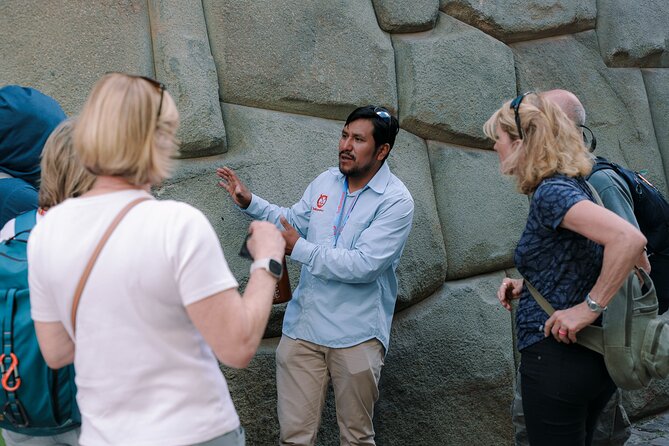
Your guide uses the square to explain Cusco as the former capital of the Inca Empire and Peru’s Historical Capital. From here, you move through several central landmarks, including the 12 Angled Stone and Loreto Street.
The 12 Angled Stone is a small feature with a large lesson. Its carefully fitted edges show how Inca builders worked stone so precisely that the walls could hold together without ordinary mortar. Loreto Street gives you another close look at the meeting of Inca foundations and later colonial construction.
You have about 30 minutes in this area. That is enough for orientation and photographs, but not enough for an exhaustive walk through every central church, museum, or side street. I see this as a useful beginning rather than a complete downtown tour.
Qorikancha and the Inca idea of sacred space
From the plaza, you walk with your guide to Qorikancha, also written Koricancha. This was the most important temple of the Inca Empire, and its Quechua name means Golden Courtyard.
The gold is gone, but the building still makes its point through stonework. Your guide explains how the site connected ceremonies, astronomy, and worship of the Sun. The visit helps you understand that Inca architecture was not simply practical construction. Placement, shape, light, water, and ritual all mattered.
You spend about 30 minutes here, with admission included. That short visit is one reason the private guide is useful. A good explanation helps you see the meaning behind the walls instead of simply admiring their smooth surfaces.
Qorikancha is also a good place to ask questions about Inca religion and Spanish colonial change. The tour does not promise an extended museum visit, so keep your expectations focused on the temple, its stonework, and its role in Cusco’s past.
Sacsayhuaman, where the stones do the talking
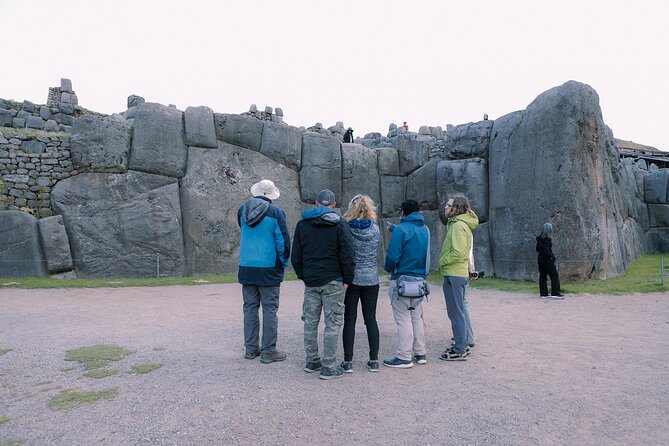
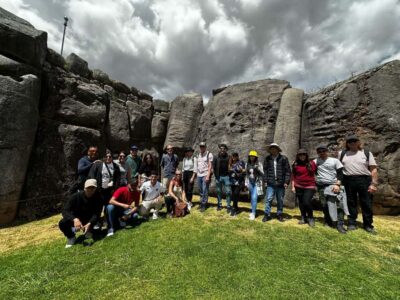
After Qorikancha, your private vehicle takes you uphill to Sacsayhuaman. This is the largest and most visually impressive site on the route, famous for huge zigzag walls made from stones that fit together with remarkable accuracy.
Some blocks weigh more than 100 tons. You do not need an elaborate lecture to appreciate the difficulty of moving and placing them, but the guide adds the useful context: how the Incas built the walls and why the site is considered one of their greatest achievements in engineering and architecture.
The allotted time is about 30 minutes. You will have time to walk through part of the site, take photographs, and hear the main explanation. The drawback is that Sacsayhuaman can easily absorb much more time than that. If you like archaeology, you may wish the schedule allowed a longer stay.
The vehicle is especially valuable here because the site sits above Cusco. Instead of spending energy arranging transport, you arrive with your guide ready to explain the place. That convenience is one of the strongest reasons to choose this private option.
More Ruins & Archaeology Tours in Cusco
- Cusco: City Tour | Half-Day Tour to 4 Archaeological Sites
★ 4.6 · 206 reviews - Cusco City Sightseeing and Sacsayhuaman Archeological Park Tour
★ 4.5 · 101 reviews - Cusco: Historical Guided City Tour with 4 Inca Ruins
★ 4.5 · 99 reviews - Cusco 4-Hour Private Tour Including Sacsayhuaman and Qenqo
★ 5.0 · 77 reviews
Qenqo, a compact site with mysterious details
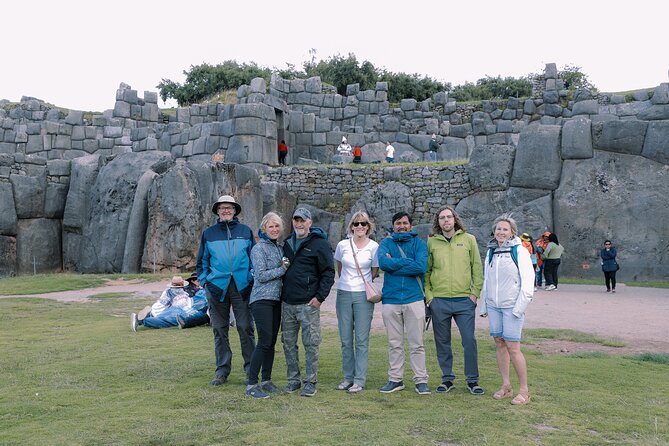
Qenqo, also spelled Q’enko or Kenko, is only a few kilometers from Cusco, but it feels different from the massive walls at Sacsayhuaman. The Quechua name refers to a zigzag shape, reflected in the carved channels and winding forms in the rock.
Your guide points out altars, tunnels, and carved stones connected with Inca rituals. Qenqo was considered a sacred place, or huaca, and the visit centers on the legends and ceremonies linked to the site.
You have about 30 minutes here. That is a sensible amount of time for a compact ceremonial complex, although uneven ground and narrow areas may make the walking feel slower than the distance suggests. Wear shoes that give you a firm footing.
Qenqo is also a good test of the guide’s teaching style. The site can seem puzzling if you only look at the rock. A clear explanation turns the carved channels and chambers into clues about how the Incas used sacred places.
Puca Pucara and the road beyond Cusco
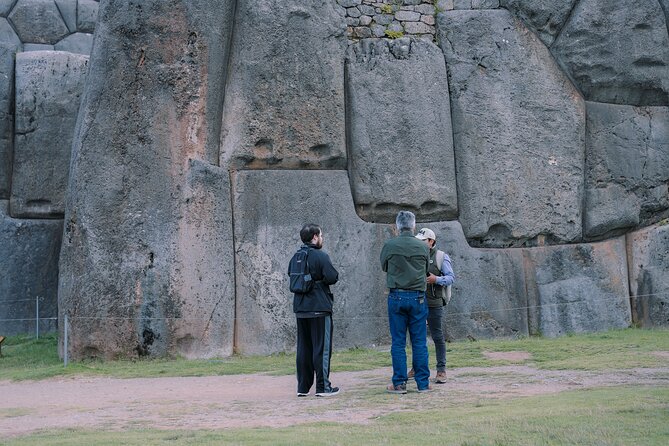
The next stop is Puca Pucara, meaning Red Fortress in Quechua. This smaller site was likely used as a military post and checkpoint on the route toward the Sacred Valley and Machu Picchu.
The ruins are less imposing than Sacsayhuaman, but they offer a different lesson. Here, you think about movement, control, and the roads that connected the Inca world. The views toward the surrounding hills and valleys add to the appeal.
The stop lasts about 30 minutes. Puca Pucara is often visited with Qenqo and Tambomachay, so including all three makes the circuit feel logical rather than scattered. You see ceremonial, military, and water-related sites in one continuous outing.
Do not expect a large fortress complex. Puca Pucara is a smaller stop, and its value comes from its setting and possible function. Your guide’s explanation makes the visit more worthwhile than a quick photograph from the vehicle.
Tambomachay, water, stone, and a quieter pause
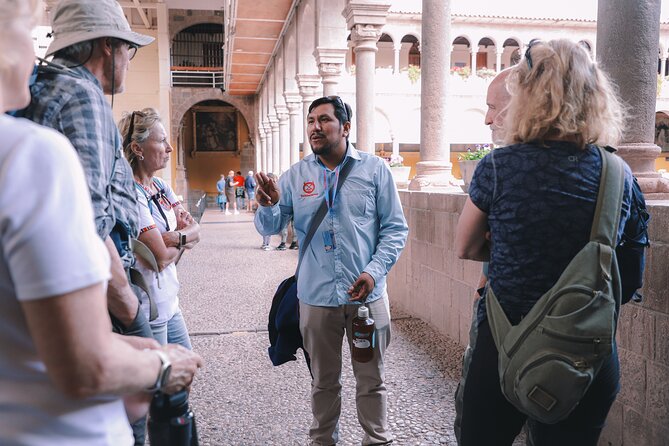
Tambomachay is the calmest stop on the circuit. The site is known for clear water fountains and finely cut stonework, and it is often called the Inca Baths.
The exact role of the site is described as likely connected with water ceremonies and rest for Inca nobility. That uncertainty is worth remembering. Much of what you hear at ancient sites combines archaeology, accepted interpretation, and local stories, so a careful guide should explain what is known and what remains uncertain.
You spend about 30 minutes here. The sound and sight of the fountains provide a welcome change after the larger ruins. You can take photographs, enjoy the mountain air, and continue adjusting to Cusco’s altitude before later activities such as a Machu Picchu visit.
Bring water. Meals are not included, and the operator suggests carrying snacks of your choice. The schedule does not include a dedicated meal break, so a small snack can prevent the last part of the tour from feeling harder than it should.
Cristo Blanco, the best city view of the route
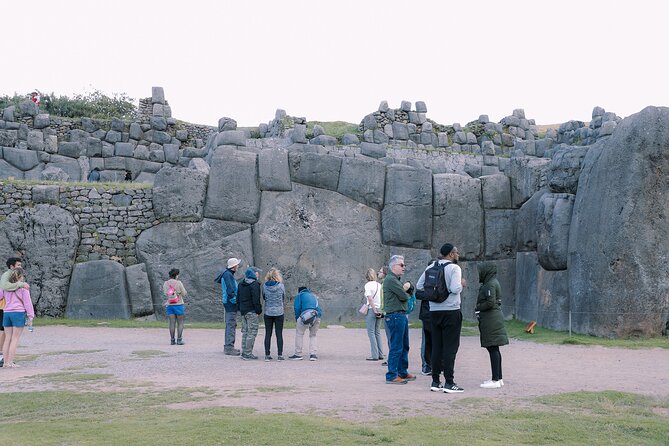
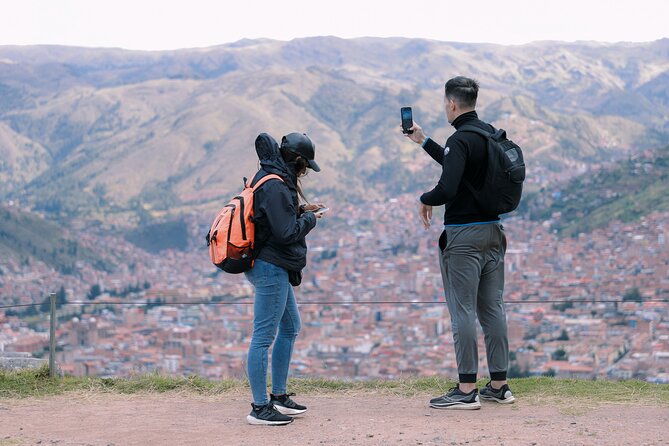
The final stop is Cristo Blanco, the white Christ statue on a hill above Cusco. From here, you look across the city’s red roofs, plazas, and surrounding mountains.
The stop lasts about 20 minutes. That is enough for photographs and a clear sense of how Cusco fills the valley, though the exact quality of the light depends on the time of day and weather. The afternoon departure may be especially appealing if you want the city lights beginning to appear, but the tour does not guarantee a sunset.
This viewpoint gives the tour a useful ending. You have seen the city center, the temple at Qorikancha, and the outer Inca sites. From above, the route becomes easier to understand as one connected place.
Guides can make or break the experience
The most praised part of this tour is the guiding. Freddy is described as friendly and easy to work with, with a crisp way of explaining history and a strong sense of how to use limited time. Frank is praised for his English, local knowledge, and helpful manner.
Franklin receives especially strong praise for patience, emotional awareness, and knowing when to step back so people can absorb a view. That balance matters at archaeological sites. You want enough explanation to understand what you are seeing, but not a nonstop speech while you are trying to take in the place.
Jennifer is noted for clear explanations and care with altitude concerns. Katie is praised for bringing the sites to life and offering a useful lunch recommendation. Katia is credited with keeping the schedule well timed without making it feel rushed, while Filio is praised for answering questions and making each stop feel personal.
Guides can change, so you should not assume a particular person will lead your tour. If you have a strong preference, you can ask whether a named guide is available, but it is not guaranteed.
Is $180 per person a fair price?
At $180 per person, this is not the cheapest way to see Cusco’s ruins. The price includes hotel pickup and drop-off, a private vehicle, a professional native guide, admission to Qorikancha and the four archaeological sites, and taxes and handling charges.
The real value is privacy and time. You are not sharing the schedule with a large group, and you can ask questions directly. A private vehicle also saves you from finding separate rides between the center and the hilltop circuit.
For one person or a couple, the price may feel high compared with a group tour. For a family or small group, the cost becomes easier to justify because the experience is shared by only your party. The tour also suits anyone with limited time who wants a broad introduction before moving on to the Sacred Valley or Machu Picchu.
Meals are not included. Plan for water and snacks, and ask your guide for meal suggestions if you are finishing near lunchtime.
Timing, altitude, and physical effort
The total duration is about four to five hours. The schedule includes roughly 30 minutes at most stops, 20 minutes at Cristo Blanco, and driving between locations.
You should expect moderate walking, outdoor exposure, uneven surfaces, and uphill areas. The tour requires a moderate fitness level. It is not presented as an intense hike, but altitude can make ordinary walking feel more demanding, especially early in your stay.
The flexible start time helps. A 9:00 am departure leaves the rest of the day open, while a 1:00 pm departure may suit you if you want a slower morning or are still adjusting after arrival. The afternoon option may also give Cristo Blanco a pleasing late-day view.
Families can do this tour, but children must be accompanied by an adult. The guide can adjust the pace within reason, as shown by the family that toured with a ten-year-old. Still, you should be ready for several stops rather than a relaxed day at one site.
Who should choose this tour?
I would choose this tour if you have only a short time in Cusco, want a strong first orientation, or dislike working out local transport. It is also a good fit if you want to ask questions about the rest of your Peru plans.
Families benefit from the private format because the pace can respond to children and the vehicle keeps the day manageable. Couples and small groups may also find the privacy worth the higher price.
You might choose something else if you want long visits at each ruin, a slower photography schedule, or a low-cost group outing. Seven stops in half a day means you will see the highlights, but you will not study every wall, chamber, or viewpoint in detail.
Free cancellation is available when you cancel at least 24 hours before the start time. Cancellations or changes made less than 24 hours ahead are not accepted for a refund.
FAQ
How long does the private Cusco city tour last?
The tour lasts approximately four to five hours.
What time does the tour start?
The suggested start times are 9:00 am in the morning or 1:00 pm in the afternoon. The start time is flexible for comfort.
What places are included?
The route includes the Plaza de Armas, Qorikancha, Sacsayhuaman, Qenqo, Puca Pucara, Tambomachay, and the Cristo Blanco viewpoint.
Is transportation included?
Yes. The tour includes comfortable transportation, hotel pickup and drop-off, and a private vehicle for the sites above Cusco.
Are meals included?
No. Meals are not included. You should bring water and snacks.
Can children join the tour?
Yes. Children can join, but they must be accompanied by an adult. The tour requires a moderate level of physical fitness.
Should you book the private Cusco city tour?
Book it if you want to understand Cusco quickly and comfortably. The combination of a private guide, transport, flexible timing, and seven important stops gives you a strong foundation for the rest of your visit.
The best reason to book is not simply the number of ruins. It is the chance to have a guide adjust the pace, explain the difference between a temple, fortress, ceremonial site, checkpoint, and water complex, and help you handle the altitude sensibly.
At $180 per person, compare the price with a group tour if you are traveling alone or as a couple. But for a family or small group, the private setting can be a fair buy. If this is your first day in Cusco and you want the city to make sense before going farther into Peru, this is a practical and worthwhile choice.
More Ruins and Archaeology near Cusco
- Cusco: Half-Day City Tour with Sacsayhuaman and Qenqo
★ 4.5 · 77 reviews - Sacsayhuaman Temple, Tambomachay and Puca Pucara Half-Day Tour
★ 4.5 · 59 reviews - Private Ollantaytambo, Pisac Ruins Tour with Farm Visit, Gourmet Picnic Lunch
★ 5.0 · 52 reviews - Cusco City Tour with Sacsayhuaman & Inca Sites – Small Group
★ 5.0 · 48 reviews
Added recently around Cusco
- Guided tour of the mountain of colors in Cusco★ 5.0 · 11 reviews
- 2-Day Private Short Inca Trail to Machu Picchu★ 5.0 · 15 reviews
- City Tour Cusco – Group★ 5.0 · 4 reviews
- Tour Sacred Valley with Maras and Moray★ 5.0 · 15 reviews
- San Pedro Market Tour with Peruvian Cooking Class★ 5.0 · 31 reviews
- Walking Culinary Experience★ 5.0 · 41 reviews
- City Tour in Cusco★ 4.5 · 10 reviews
- One Day Tour to Humantay Lagoon★ 5.0 · 8 reviews
Inca Ruins & Archaeological Sites, compared.
Half-Day City Tour with Sacsayhuaman and Q’enco
Read our review →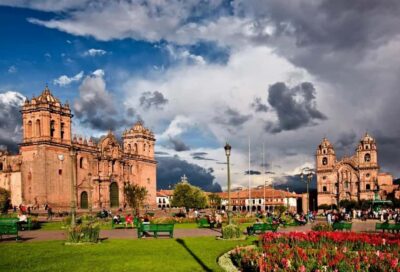
City Tour Cusco Qoricancha Sacsayhuaman y Tambomachay
Read our review →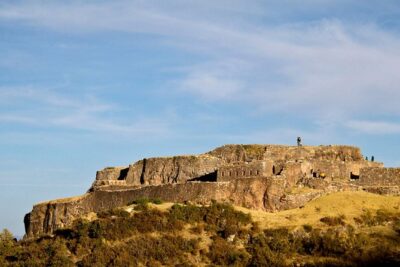
Pachacamac Ruins & Barranco Half-Day Guided Tour
Read our review →
Pre Inca Temple of Pachacamac Half-Day Tour from Lima
Read our review →
Tour to the Archaeological Sanctuary of Pachacamac (small group)
Read our review →
From Pyramids & Bohemian Streets: Lima Miraflores & Barranco Tour
Read our review →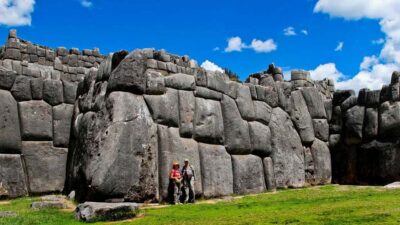
City Tour | Half-Day Tour to 4 Archaeological Sites
Read our review →Browse the lists this tour appears in