
Reviewed · HISTORICAL TOURS
Cusco: Cultural & Historic Walking Tour with Local Drinks
Cusco rewards walking. This 2.5-hour tour connects the city’s main square, Incan stonework, San Blas workshops, local music, and high viewpoints in one compact route. I like the mix of famous sights and everyday culture, especially the chicha tasting and the visit to a local luthier.
I also like the small group size, capped at 10 people, and the care shown by guide Nilo, who studied anthropology and adjusted the pace for altitude sickness. The main consideration is the walk itself: Cusco sits high, and the route includes narrow streets, uphill sections, and a final viewpoint, so this is not a flat, effortless stroll.
In This Review
- Five Things To Know Before You Go
- Why This $10 Walking Tour Works
- Starting In The Plaza De Armas
- Chicha And The Women Of Loreto
- Hatun Rumiyoq And The Famous Stone
- San Blas, Cusco’s Creative Quarter
- Siete Borreguitos And Andean Instruments
- The Sapantiana Aqueduct And Its Two Eras
- San Cristobal And The Final Pisco Sour
- How The Guide Shapes The Experience
- Pace, Altitude, And What To Bring
- Who Gets The Most From This Tour
- Booking, Cancellations, And Final Advice
- Should You Book The Cusco Cultural Walking Tour?
- FAQ
- How long does the Cusco walking tour last?
- Where does the tour begin?
- Where does the activity end?
- What languages are available?
- Are drinks included?
- Can anyone have the Pisco Sour?
- How large is the group?
- Do I need to print my ticket?
Five Things To Know Before You Go
- The 12-angled stone is only one part of the Incan masonry: Hatun Rumiyoq Street gives you a close look at how precisely the old stone walls fit together.
- Local drinks make the tour more personal: You taste traditional chicha during the walk and finish with a Pisco Sour, with non-alcoholic choices available.
- The tour reaches San Blas and San Cristobal: You get both an arts district and one of Cusco’s best city views.
- Nilo adds useful local context: His anthropology background and practical advice about restaurants and other things to do can help shape the rest of your stay.
- The price is unusually low: At $10 per person, the tour offers a strong introduction to Cusco without paid monument admissions.
- You receive a small souvenir: The included llama keychain is a simple but cheerful reminder of the walk.
Why This $10 Walking Tour Works
At $10, this experience is priced more like an orientation walk than a full sightseeing excursion. That matters because you are not paying for transport, museum entry, or a long formal lecture. You are paying for local guidance, a carefully arranged route, cultural tastings, and help making sense of Cusco’s layered streets.
I see the value in that combination. Cusco can feel confusing at first. Inca walls sit below Spanish churches, artisan streets lead to hillside viewpoints, and familiar-looking squares can carry several centuries of meaning. A local guide helps you notice the connections instead of simply taking photographs and moving on.
The group limit of 10 is another plus. You should be able to hear explanations and ask questions without competing with a large crowd. The guide also carries a photo book for explanations, which is useful when a site is difficult to understand from the street alone.
The tour is offered in English or Spanish. It uses a mobile ticket, so there is no need to print anything. The meeting point is in Cusco’s Plaza de Armas, and the activity information says it ends back at the meeting point, while the route itself finishes at San Cristobal Plaza. Confirm the exact return arrangement when you meet the guide.
More Historical Tours in Cusco
- Cusco: Historic Walking Tour with Pisco Sour and Local Music
★ 5.0 · 190 reviews - Cusco: Historical Guided City Tour with 4 Inca Ruins
★ 4.5 · 99 reviews - Cusco Highlights Walking Tour: History, Culture, Traditions
★ 4.9 · 72 reviews
Starting In The Plaza De Armas
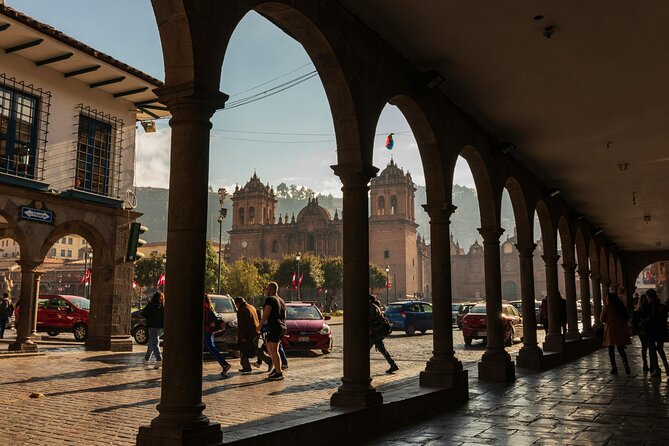
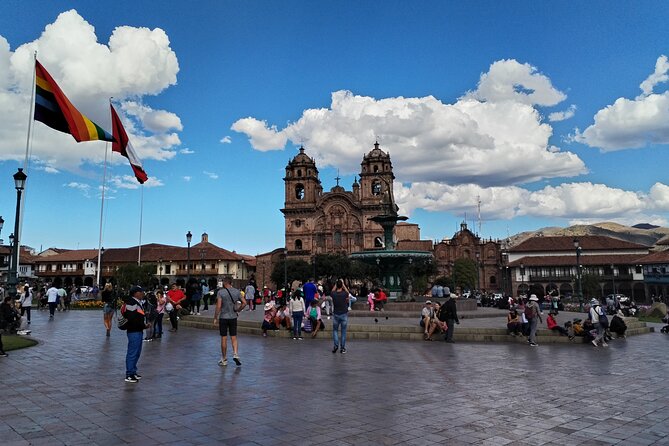
The tour begins in the Plaza de Armas, Cusco’s central gathering place. This is a good starting point because the square has been important since Incan times and remains the city’s main reference point.
You spend about 15 minutes here, looking at the Cusco Cathedral and the Church of the Society of Jesus. The buildings give you an immediate lesson in the city’s colonial period, while the square itself points back to Cusco’s earlier role as the center of the Inca Empire.
This first stop is short, so do not expect a full interior visit or a long architectural lecture. Its purpose is orientation. You learn where the old city begins and how Spanish religious buildings occupy a place that was already central before the conquest.
If you are new to Cusco, pay attention to the layout. The Plaza de Armas is an easy place to find your way back later, making it a practical first stop rather than just a scenic one.
Chicha And The Women Of Loreto
From the square, the walk continues to Loreto, an area connected with the Palace of the Inca Chosen Women. These women held an important place in the Inca world, and the stop offers a chance to hear about a part of imperial society that is often passed over in quick city tours.
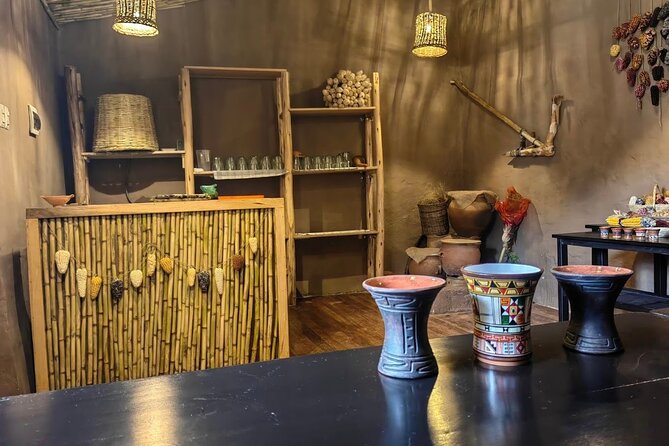
You spend about 20 minutes here, including a taste of traditional chicha at a local chichería. Chicha is a fermented corn drink with a long place in Andean culture. The point is not simply to sample something unusual. You learn about how it is prepared and why it matters socially and culturally.
The tasting gives the tour a welcome change of pace. Instead of only looking at stone walls, you get a small connection to living local tradition. The amount served is a tasting, not a meal or a drinking session, so you should not expect a full food experience.
Non-alcoholic options are available. That makes the stop easier for people who do not drink, though the final Pisco Sour is served as an alcoholic cocktail only to people aged 18 and over.
Hatun Rumiyoq And The Famous Stone
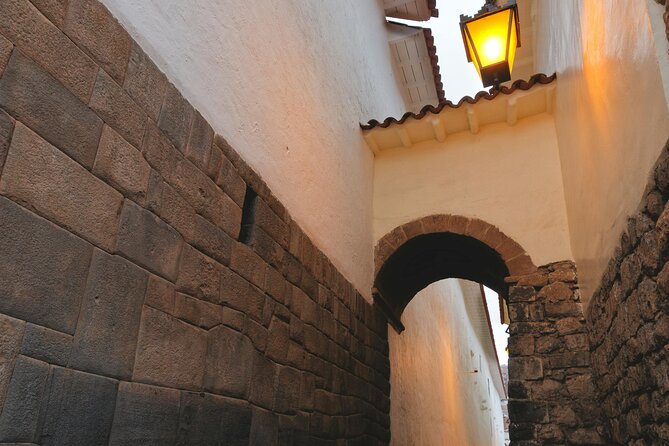
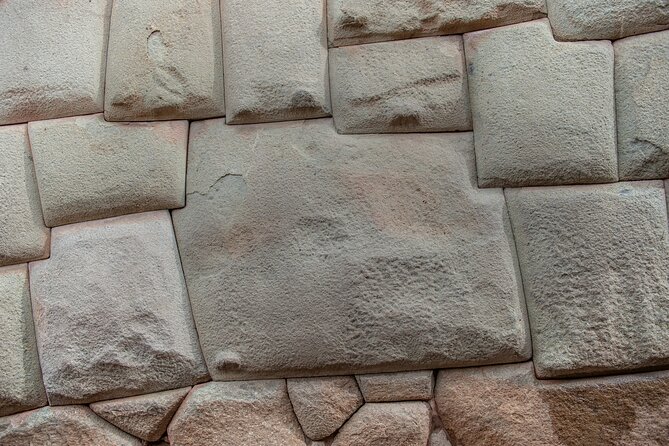
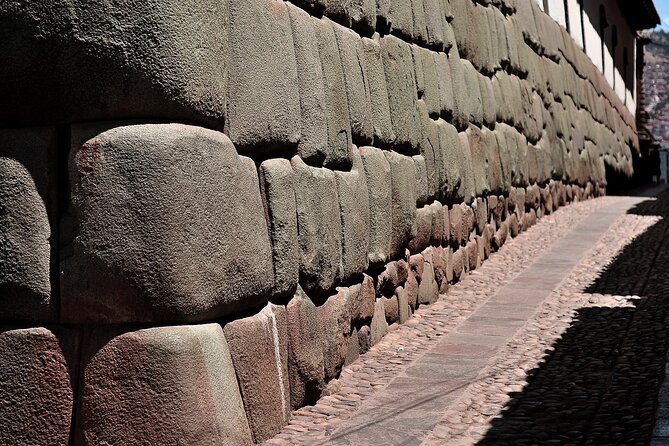
Calle Hatunrumiyoc is one of the most memorable stops for anyone interested in Incan construction. The street includes the Palace of Inka Emperor Inka Roca and the well-known 12-angled stone.
You spend about 20 minutes here. The stonework deserves close attention. Large blocks fit together with remarkable precision, and the famous stone helps explain why Incan walls remain one of Cusco’s defining sights.
A guide adds value here because the wall can otherwise become a quick photo stop. Nilo uses explanations and images in his photo book to give the masonry a wider setting. You can look at the stone, then consider the planning and skill required to shape each block and place it among its neighbors.
This is also a busy part of central Cusco, so your time is focused rather than leisurely. Keep your phone or camera ready, but give yourself a moment to look beyond the one famous stone. The surrounding wall is the real lesson.
More Walking Tours in Cusco
- Cusco: Walking Tour with an Experienced Local Guides
★ 4.8 · 636 reviews - Curious Monkey Cusco- Eat the Streets, Walking Food Tour
★ 5.0 · 160 reviews - Cusco: Historic Walking Tour with Pisco Sour and Music Show
★ 4.6 · 65 reviews - Cusco Food Walking Tour & Central Market
★ 5.0 · 48 reviews
San Blas, Cusco’s Creative Quarter
The route then climbs toward San Blas, where you spend about 30 minutes. This is the longest single stop and gives you time to experience a different side of Cusco.
San Blas is known as the city’s artist district. Its narrow streets, colonial buildings, and artisan shops make it feel more intimate than the Plaza de Armas. You can browse local works and see how the neighborhood’s craft tradition shapes its identity.
The word browse is important here. This is not described as a dedicated shopping visit, and the tour does not include purchases. You get an introduction to the area and its makers, with time to look around and take photographs.
San Blas also brings the physical challenge into sharper focus. The neighborhood is reached by walking, and Cusco’s altitude can make even moderate slopes feel harder than expected. Nilo has been praised for making several stops and adjusting the pace for people dealing with altitude sickness. Still, you should arrive rested, drink water, and tell the guide early if you need to slow down.
Siete Borreguitos And Andean Instruments
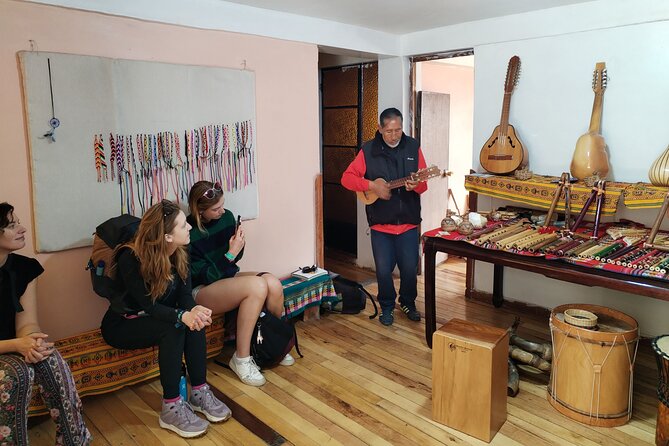
Calle Siete Borreguitos adds one of the tour’s most distinctive experiences. At a local luthier shop, you learn about traditional instruments such as the charango and quena and hear a demonstration by an artisan.
You spend around 20 minutes at this stop. The charango and quena are not just decorative objects. They connect to Andean music and give you another way to understand local culture through sound rather than stone or architecture.
The demonstration makes this stop more engaging than a quick look at an instrument display. You see the work of a craftsperson and hear how the instruments function within Andean culture. Since the visit is brief, it is best viewed as an introduction, not a full music workshop.
The street itself is also worth photographing. Siete Borreguitos is known for its distinctive character, and the stop combines the charm of the lane with the practical work of a local artisan. I like this pairing because it keeps the tour from becoming a simple march between monuments.
The Sapantiana Aqueduct And Its Two Eras
The next stop is the Acueducto Colonial de Sapantiana, reached after the older streets and neighborhood workshops. You spend about 20 minutes exploring the colonial aqueduct and the nearby Inca ceremonial site.
This is where Cusco’s overlapping eras become especially clear. Colonial engineering appears beside a place tied to earlier Inca ritual life. You are not looking at separate chapters in a museum. You are seeing how different periods occupy the same city.
The site gives the guide a chance to explain both practical construction and ceremonial purpose. The contrast is useful: one place moved water through an engineered structure, while the adjacent site carried religious meaning. Together, they show why Cusco is best understood as a city built in layers.
The stop is also a good reason to wear shoes with a firm grip. The tour description does not list specific accessibility limits, but this is a walking route through historic streets and changing terrain. Most people can participate, though anyone with limited mobility should consider the route’s length and slopes before booking.
San Cristobal And The Final Pisco Sour
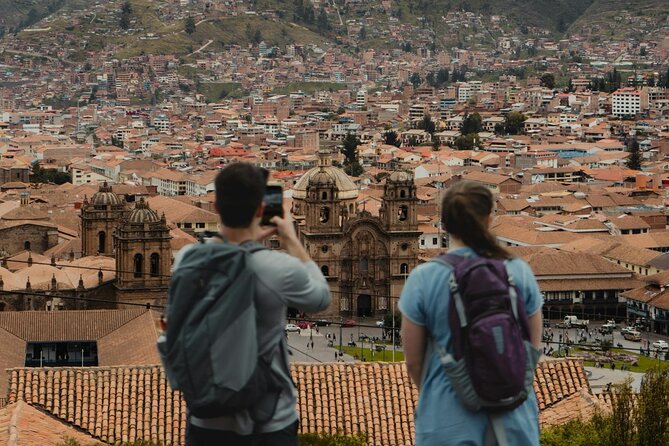
The route concludes at San Cristobal Plaza, where you get a broad view across Cusco. This is the payoff for the uphill walking. From here, you can see the city’s layout and better understand how the historic center spreads below the surrounding hills.
You have about 25 minutes at this final stop. It is enough time for photographs, a pause, and a look back at the places you have just visited. The viewpoint gives the tour a useful ending because the city becomes easier to read from above.
The final drink is a complimentary Pisco Sour, Peru’s best-known cocktail. It is a fitting finish after a route that has introduced you to chicha, Andean instruments, Inca walls, colonial buildings, and local neighborhoods.
The Pisco Sour is available to people aged 18 and over. If you do not drink alcohol, you can request a non-alcoholic alternative. The experience does not force the drink on you, so this part works for a mixed group.
The activity information says the tour ends back at the meeting point, although San Cristobal is described as the final sightseeing stop. Ask the guide where the group will finish before setting a tight appointment afterward.
How The Guide Shapes The Experience
Nilo is the guide name associated with the strongest praise for this experience. His background in anthropology comes through in the way the route links architecture, local customs, music, and daily life.
That matters in Cusco. You can easily find the 12-angled stone by yourself, but a good guide helps you understand why the street matters. You can also visit San Blas alone, but local explanations give the artisan district more meaning than a quick walk through souvenir shops.
Nilo also provides practical help beyond the formal route. He can recommend restaurants and other things to do in Cusco, which is useful if this is your first day in the city. He has also shared Agua de Florida during the walk, along with the chicha tasting. These small touches make the experience feel more personal, though they should be treated as extras rather than the main reason to book.
The available rating is 5 out of 5 from 9 reviews, a very small sample. I would read that as encouraging evidence about the guide and format, not as proof that every departure will be identical.
Pace, Altitude, And What To Bring
The tour lasts about 2 hours and 30 minutes. That is long enough to cover a good section of central Cusco without taking up an entire day.
Altitude is the key practical issue. The route reaches San Blas and San Cristobal, and the walking pace may feel harder than the time suggests. Tell the guide if you are feeling unwell. Nilo has been praised for making stops and being considerate about altitude sickness, but no guide can remove the physical effects of Cusco’s elevation.
I would bring:
- Comfortable walking shoes
- Water
- Sun protection
- A light layer for changing conditions
- A phone or camera for the streets and viewpoints
You do not need to print a ticket. A mobile ticket is accepted, and service animals are allowed. Most people can participate, but the route is still a city walk rather than a fully flat or step-free experience.
Who Gets The Most From This Tour
I would choose this tour if you want a first look at Cusco that mixes major landmarks with local culture. It suits people who prefer a guide-led walk to a formal museum visit and want several neighborhoods connected in one route.
It is especially useful early in a stay. The walk helps you get your bearings, identify San Blas, see the Plaza de Armas from the start, and note restaurants or other places to revisit later.
It also suits budget-minded visitors. The $10 price includes the guide, tastings, photo book, and llama keychain. Since all listed stops have free admission, you are not saving money on entry tickets, but you are getting a guided introduction for very little money.
I would be more cautious if you have serious trouble with hills, need frequent seating, or want long visits inside churches and monuments. This tour focuses on outdoor interpretation and movement through the city. It is a sampler, not a deep architectural study.
Booking, Cancellations, And Final Advice
The tour is usually booked about 18 days ahead, so reserving early is sensible if your Cusco dates are fixed. The group maximum is 10, and that small size is part of the appeal.
Free cancellation is available up to 24 hours before the start time for a full refund. Cancellations or changes made within 24 hours are not refunded, and the departure requires a minimum number of people. If that minimum is not reached, the provider offers another date or experience, or a full refund.
Should You Book The Cusco Cultural Walking Tour?
Yes, if you want an affordable, friendly introduction to Cusco with more personality than a basic city orientation. The best parts are the combination of Incan stonework, the chicha tasting, San Blas, the luthier demonstration, and the final view from San Cristobal.
I would book it near the beginning of your stay, when local advice and a clear sense of the city will help most. Just allow for altitude, wear proper shoes, and confirm the final meeting arrangement. At $10, the main risk is not poor value. It is expecting a flat walk or a full interior tour when the real strength is the guide’s local explanation of Cusco’s streets, drinks, music, and layered past.
FAQ
How long does the Cusco walking tour last?
The tour lasts approximately 2 hours and 30 minutes.
Where does the tour begin?
It begins at Plaza de Armas in Cusco, Peru.
Where does the activity end?
The activity information says it ends back at the meeting point. San Cristobal Plaza is described as the final sightseeing stop, so confirm the exact return arrangement with the guide.
What languages are available?
The tour is offered in English or Spanish only.
Are drinks included?
Yes. The tour includes tastings of traditional chicha or a Pisco Sour, with non-alcoholic options available.
Can anyone have the Pisco Sour?
The alcoholic Pisco Sour is served only to people aged 18 and over. Non-alcoholic options are available for anyone who prefers not to drink alcohol.
How large is the group?
The tour has a maximum of 10 people.
Do I need to print my ticket?
No. The tour accepts a mobile ticket, so printing is not required.
More Walking Routes through Cusco
- Walking Culinary Experience
★ 5.0 · 41 reviews - Curious Monkey Cusco- Market and Streets, Walking Food Tour
★ 5.0 · 31 reviews - Cusco Walking Tour: Downtown, Sun Temple & San Blas Views
★ 4.5 · 26 reviews - Walking with Alpacas in Palcoyo: The Alternative Rainbow Mountain
★ 4.5 · 14 reviews
More History to Walk Through in Cusco
- Pisco Sour Secrets: Hands-On Mixology in Historic Cusco
★ 4.5 · 50 reviews - Cusco: Historic Walking Tour & Scenic Views with local drink
★ 5.0 · 45 reviews - Cusco: Full-Day Sacred Valley History Tour
★ 4.6 · 14 reviews - Historic/music Cusco FreeWalkingTour “free drink” Group Tour
★ 4.9 · 11 reviews
Added recently around Cusco
- Guided tour of the mountain of colors in Cusco★ 5.0 · 11 reviews
- 2-Day Private Short Inca Trail to Machu Picchu★ 5.0 · 15 reviews
- City Tour Cusco – Group★ 5.0 · 4 reviews
- Tour Sacred Valley with Maras and Moray★ 5.0 · 15 reviews
- San Pedro Market Tour with Peruvian Cooking Class★ 5.0 · 31 reviews
- Walking Culinary Experience★ 5.0 · 41 reviews
- City Tour in Cusco★ 4.5 · 10 reviews
- Rainbow Mountain Small-Group Full-Day Hike from Cusco with Meals★ 4.5 · 15 reviews
Historical Tours, compared.
Discover Lima: Love Park, Historic Center, and its Catacombs.
Read our review →
Street Food, Market & Old Eateries Tour in Lima’s Historic Center
Read our review →
Lima’s Vibrant Heritage: Exploring the City’s Landmarks Half-day
Read our review →
A Journey Through Time: Lima’s Historic Center & Catacombs Tour
Read our review →
Historic Center Street Food, Market, and Eateries Tour
Read our review →
Historic Walking Tour with Pisco Sour and Local Music
Read our review →
Walking tour in the Historic Center of Arequipa
Read our review →
Top Attractions in Lima: Historic Center, Love Park & Catacombs
Read our review →Browse the lists this tour appears in