
Reviewed · HISTORICAL TOURS
Cusco : Historical walking tour and tourist lookout point and Andean music show
Cusco reveals itself one stone at a time. This $10 walking tour is a friendly first look at the city, combining Inca walls, colonial streets, San Blas workshops, a luthier visit, and a fine view from San Cristobal. I especially like the way it mixes famous sights with small cultural stops, and I like that the guide provides practical advice for exploring Cusco afterward.
The main consideration is the group arrangement. The booking information says private or small groups are available, but one guest arrived expecting a private walk and found a group instead. Confirm the format before you book if that matters to you. The route also includes steep streets, so Cusco’s altitude and uneven pavement are part of the deal.
In This Review
- Key points at a glance
- Why this is a smart first walk in Cusco
- From the Plaza de Armas to Calle Loreto
- The 12 Angles, 14 Angles, and sacred animal forms
- Qorikancha and the colonial center
- San Blas, where the route slows down
- Meeting luthier Sabino Huamán
- Sapantiana Aqueduct and Siete Borreguitos Street
- The best views from San Cristobal
- Resbalosa and the return to the plaza
- What the $10 price really buys you
- Who should book this walk?
- Should you book the Cusco walking tour?
- FAQ
- Where does the Cusco walking tour begin?
- How long does the walking tour last?
- What languages are available?
- Is the tour private or in a group?
- What is included in the price?
- Are food and entrance tickets included?
- What should I bring?
Key points at a glance
- The Stone of the 12 Angles: See the precision of Inca masonry up close, where fitted stones meet without visible mortar.
- A walk through San Blas: Explore Cusco’s artistic quarter, with time for photographs and local craft shops.
- Andean instruments in a working workshop: Meet luthier Sabino Huamán and see how traditional instruments are made.
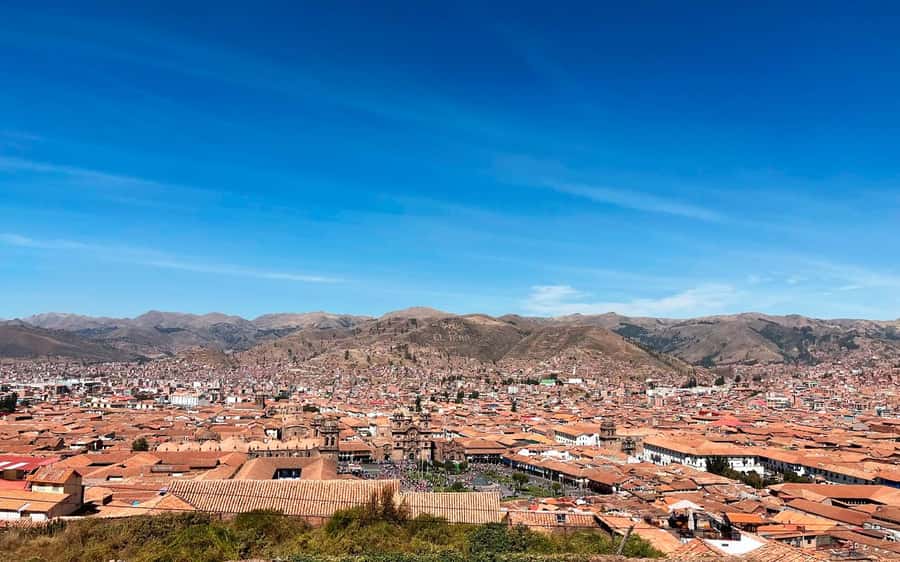
- San Cristobal lookout: Finish with broad views over Cusco’s tiled roofs and church towers.
- A useful first-day orientation: The route connects the Plaza de Armas, Qorikancha, San Blas, and several photo streets.
- Low cost, but check the group size: At $10, it offers strong value, though the private-tour wording needs clarification.
Why this is a smart first walk in Cusco
Cusco can feel confusing when you first arrive. The streets climb quickly, the historic center has several layers of Inca and Spanish architecture, and the altitude can make a short hill feel like a serious hike. This walk gives you a basic map in your head before you begin longer outings to the Sacred Valley or Machu Picchu.
You start in the Plaza de Armas, the city’s main square and the easiest place to find your bearings. From there, the route moves through central streets, old Inca foundations, the San Blas neighborhood, and two lookouts. That progression makes sense: first the central monuments, then the residential and artistic side of Cusco, then the views.
The tour is conducted in English or Spanish. The guide is expected to explain the historical meaning of each stop rather than simply point out places for photographs. You also receive suggestions for continuing on your own and advice about possible discounts at selected attractions.
That practical advice adds value. The tour itself does not include entry to paid sites, so you are mainly paying for orientation, interpretation, and company on a carefully chosen walk. For $10, that is a reasonable deal, especially if this is your first morning or afternoon in the city.
More Historical Tours in Cusco
- Cusco: Historic Walking Tour with Pisco Sour and Local Music
★ 5.0 · 190 reviews - Cusco: Historical Guided City Tour with 4 Inca Ruins
★ 4.5 · 99 reviews - Cusco Highlights Walking Tour: History, Culture, Traditions
★ 4.9 · 72 reviews
From the Plaza de Armas to Calle Loreto
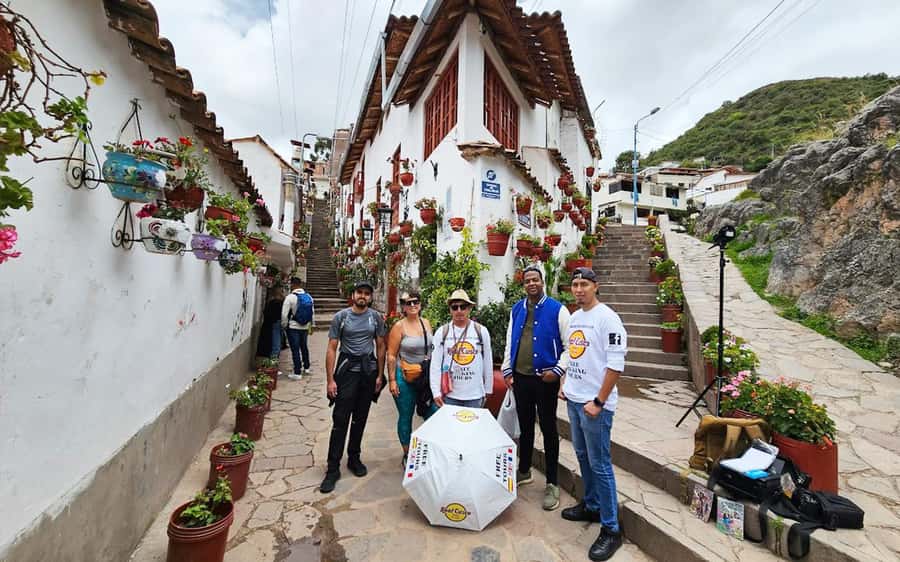
The walk begins in the center of the Plaza de Armas, beside the fountain. Look for the team in white polo shirts with the Real Cusco Free Tour logo. Arrive about 10 minutes early, since the group leaves at the scheduled time.
The square gives you an immediate introduction to Cusco’s layered past. The cathedral and La Compañía de Jesús face the plaza, and both are admired from the outside during the walk. You do not enter either building as part of this activity, so plan a separate visit if you want to see their interiors.
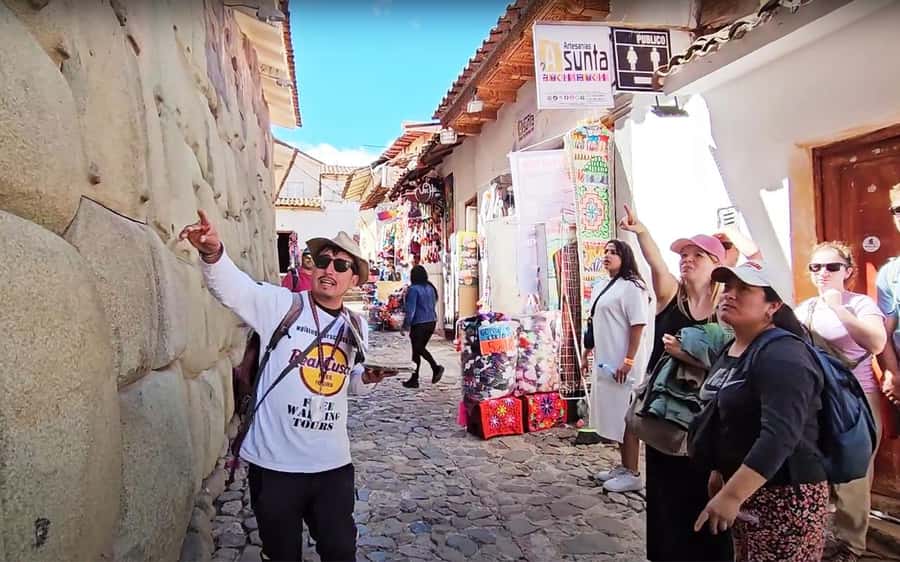
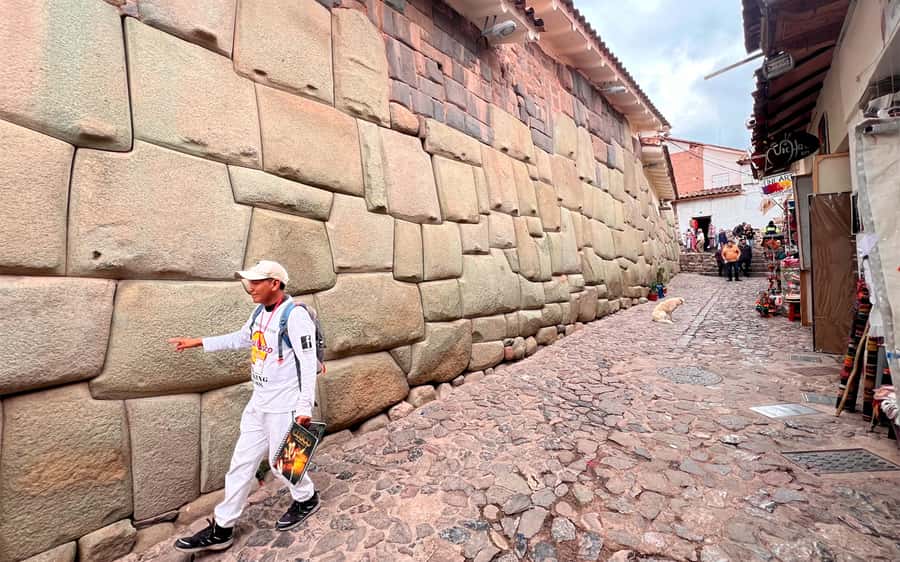
From the plaza, the group reaches Calle Loreto. This narrow street is important because it preserves a long stretch of Inca stonework beneath and beside later colonial construction. It is one of the clearest places to see how Spanish Cusco was built over the earlier Inca city.
The guide’s explanation matters here. Without context, the stones can look like a wall. With a good explanation, you begin to notice the careful angles, the scale of the blocks, and the way later buildings were placed on top of Inca foundations.
The 12 Angles, 14 Angles, and sacred animal forms
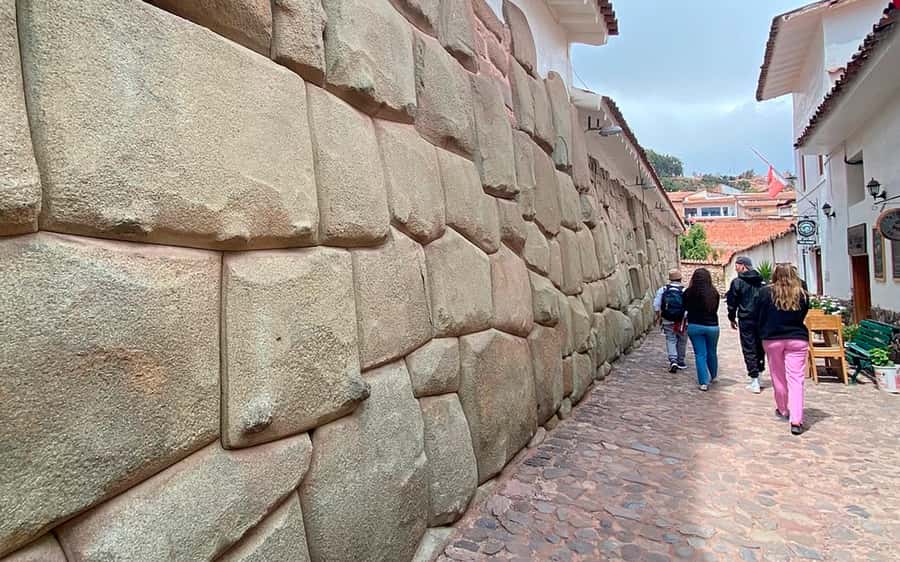
The Stone of the 12 Angles is one of Cusco’s best-known examples of Inca masonry. The point is not simply that the stone has twelve corners. It is the way the block fits tightly into the surrounding wall, with each angle helping lock the structure together.
You get about 15 minutes here for explanation and photographs. That is enough time for a close look, though the area can be busy and the guide may need to keep the group moving. Be patient with photography and avoid touching the stones.
The route also includes the Stone of the 14 Angles. Having both stops in one walk helps you compare different examples of the same building skill. The stop called Puma y Serpiente de piedra introduces the Andean animal symbols connected with Cusco’s traditional worldview.
The condor, puma, and serpent are presented as part of the Andean trilogy. Their meanings vary by interpretation, but they are commonly connected with the upper world, the human world, and the underworld or inner world. The guide can explain how these symbols relate to the city’s cultural traditions.
The tour description also refers to the Inca walls of the condor and puma. These are not just decorative figures. They show how stonework, geography, and belief were tied together in the old city.
Qorikancha and the colonial center
Qorikancha, the Temple of the Sun, is another important part of the central Cusco story. The tour discusses the site but does not include an interior visit. That distinction is worth noting, since Qorikancha contains more to see than an outside glance can provide.
The temple is important because it represents the Inca religious center that later became part of the colonial city. A guide can help you understand the contrast between Inca construction and Spanish religious architecture, especially when you visit the site on your own afterward.
The route also points out Cusco’s cathedral and La Compañía de Jesús from outside. Their placement around the Plaza de Armas shows how the Spanish reshaped the political and religious center of the city.
I like this part of the walk because it gives you a useful framework. Instead of treating each church and wall as a separate attraction, you see how the major sites fit together. The drawback is that the number of stops is high for a tour lasting about two to two and a half hours. Some explanations may be brief.
More Walking Tours in Cusco
- Cusco: Walking Tour with an Experienced Local Guides
★ 4.8 · 636 reviews - Curious Monkey Cusco- Eat the Streets, Walking Food Tour
★ 5.0 · 160 reviews - Cusco: Historic Walking Tour with Pisco Sour and Music Show
★ 4.6 · 65 reviews - Cusco Food Walking Tour & Central Market
★ 5.0 · 48 reviews
San Blas, where the route slows down
The walk climbs toward San Blas, Cusco’s well-known colonial and artistic neighborhood. This is where the route feels less like a checklist of monuments and more like a look at everyday craft and local character.
You have about 20 minutes for sightseeing in the neighborhood. San Blas is also a good place to browse shops, though purchases are not included and the guide does not promise a formal shopping stop. The tour does provide suggestions about good places to shop and how to seek discounts.
The streets here are steep. Cusco’s altitude makes the climb more demanding than the distance suggests, and the pavement can be uneven. Wear shoes with a firm sole, keep water close, and do not rush uphill to keep up with the group.
The tour is not recommended for people with back problems, recent surgery, epilepsy, or limited mobility. It is also listed as unsuitable for pregnant women, wheelchair users, and people over 70. Those restrictions are broad, but the route’s steep sections explain why you should take them seriously.
Meeting luthier Sabino Huamán
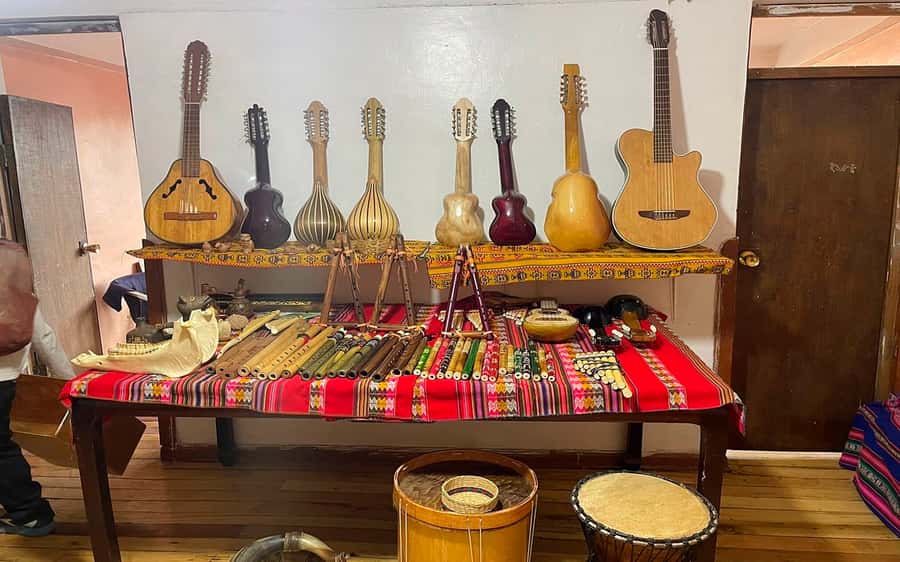
One of the most distinctive stops is the visit to luthier Sabino Huamán. A luthier makes and repairs stringed instruments, and this stop focuses on the handmade process behind Andean music.
You have around 20 minutes here. The visit is more meaningful than a simple souvenir-shop stop because it connects music with practical craft. You can learn how traditional instruments are made and see the skill involved in producing them.
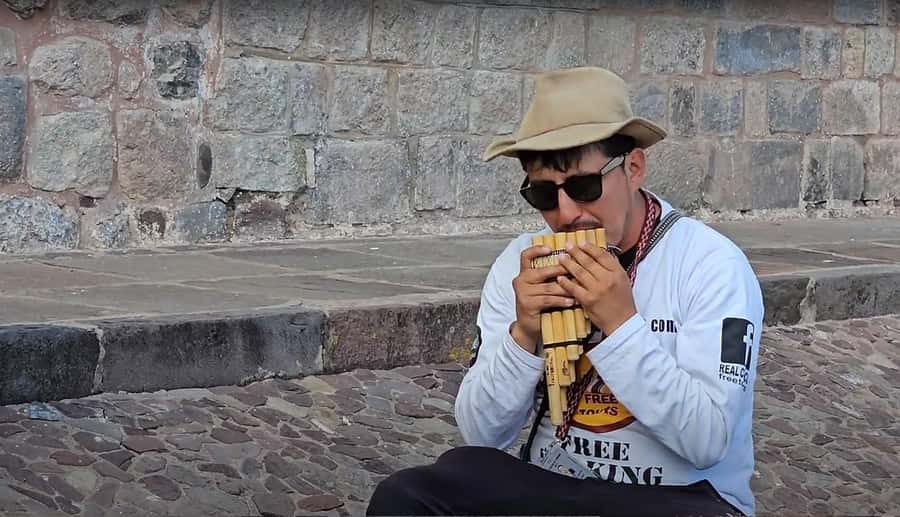
The stop also includes an Andean music presentation with traditional instruments. Do not expect a long concert. It is a short cultural interlude within the walk, but it gives the tour a human touch that the stone walls alone cannot provide.
This is one of the places where the quality of the guide matters most. A patient explanation and a clear introduction to the instruments can make the visit memorable. The available feedback includes strong praise for the guide’s friendly manner, humor, and respect for each person’s pace. One Portuguese-language comment names Eduardo and specifically appreciates his attention to people’s limits.
Sapantiana Aqueduct and Siete Borreguitos Street
After San Blas and the music stop, the route reaches the Sapantiana Aqueduct. This is a short photo stop, listed at about 15 minutes. It offers a different kind of view from the Inca walls and colonial churches, showing how water infrastructure became part of Cusco’s historic streetscape.
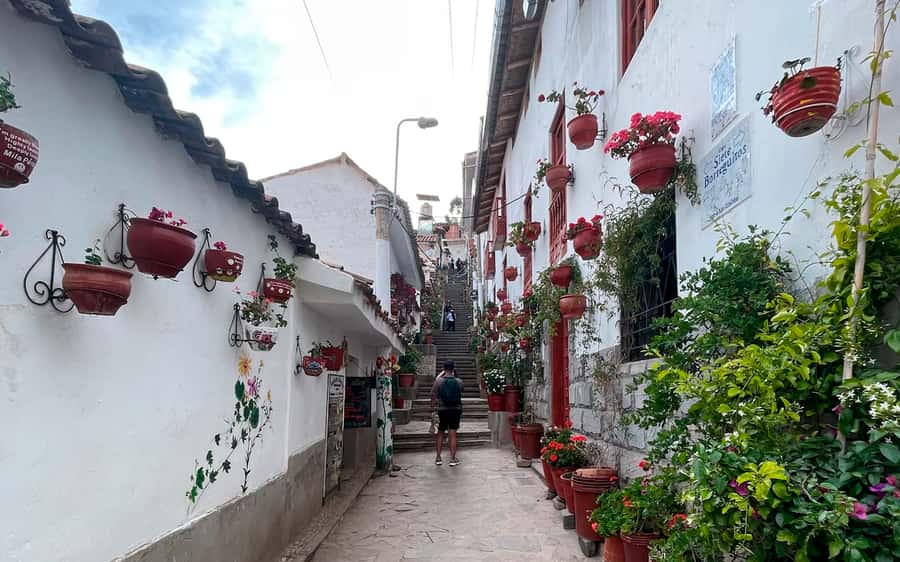
The walk then continues to Calle Siete Borreguitos, another popular spot for photographs. Its narrow, picturesque character makes it a good place to take a few distinctive pictures, but you should remember that it is still a public street. Be aware of other pedestrians and do not block the passage for a long photo session.
These two stops are best understood as visual pauses. They are not major museum visits, and the tour does not provide extended time at either one. If you enjoy street photography, they add variety. If you prefer lengthy historical explanations, you may find the pace quick.
The best views from San Cristobal
The San Cristobal lookout is the visual payoff of the route. From here, you can photograph Cusco’s rooftops, church towers, and surrounding hills. The city appears more clearly as a basin of red tile and pale walls than it does from the crowded center.
The stop is scheduled for about 20 minutes, which gives you time to take photographs and listen to the guide. Bring sunglasses and a hat, since the high-altitude sun can be strong even when the air feels cool.
The route also refers to the San Blas viewpoint and the San Cristobal viewpoint. The exact timing may depend on the group and street conditions, but both help you understand Cusco from above. The views are a good reason to bring a phone or camera with a charged battery.
You should not expect a private lookout. The tour’s value is getting there with a guide and learning how the different parts of the city connect. If you want long, quiet photography time, you may prefer to return independently later.
Resbalosa and the return to the plaza
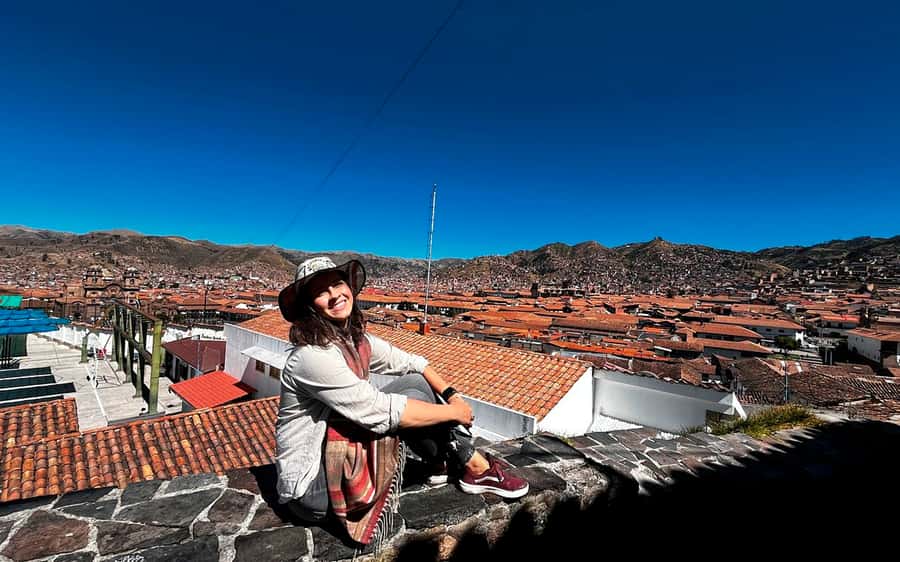
The route descends through Resbalosa before returning to the Plaza de Armas. The name itself suggests a slippery or difficult passage, so take care on the downhill section, especially if the stones are wet.
The final walk back takes about 10 minutes. Since the route starts and finishes at the main square, you can easily continue to a restaurant, museum, church, or another attraction afterward.
The overall duration is listed as approximately two hours, while the booking details allow for as much as 150 minutes. That difference is not unusual for a walking tour with several photo stops, but you should leave some flexibility in your schedule.
What the $10 price really buys you
At $10 per person, this is inexpensive for a guided introduction to central Cusco. You are not paying for transport, meals, or entry tickets. You are paying for a bilingual guide, a planned route, personal assistance, travel tips, and access to a short Andean music and craft stop.
The price looks strongest if you use the walk as an orientation session. A good guide can save you time by showing where the major sights are, explaining what deserves a separate paid visit, and pointing out places you might otherwise miss.
The value is less clear if you expect a private tour. One verified booking described the actual departure as a group rather than a private experience, despite private or small-group availability being presented. If privacy is important, ask the provider to confirm the group format before paying.
The experience has an overall rating of 4.6 from four recorded ratings. The strongest praise focuses on the guide’s friendliness, humor, and care with the walking pace. A lower rating did not criticize the actual guiding, but instead objected to the unexpected group format. That is a useful distinction.
Who should book this walk?
I would recommend it to someone who has just arrived in Cusco and wants a quick introduction before making independent plans. It suits people who enjoy history, street photography, local craft, and a modest amount of shopping advice.
It is also a good fit if you want a short cultural activity rather than a full-day tour. The route gives you several recognizable landmarks without taking an entire morning or afternoon.
You should think twice if steep streets are difficult for you, if you need wheelchair access, or if you want long visits inside churches and museums. Those are not included. The walk is also not designed for anyone who needs a slow, highly flexible route.
Pack water, sunscreen, breathable clothing, and an extra layer. Cusco’s weather can change quickly, and the sun, shade, and altitude can make the same walk feel different from one block to the next. A packed lunch is listed among the suggested items, though food is not included and the tour is short enough that most people may prefer to eat before or afterward.
Should you book the Cusco walking tour?
Book it if you want an affordable first look at Cusco, especially for the Inca walls, San Blas, the luthier visit, and the San Cristobal photographs. The guide’s friendly style and practical tips appear to be the strongest part of the experience.
Before booking, confirm whether you will join a group or receive a private walk. That one detail affects the value more than the low price. If the group arrangement suits you and you are comfortable with steep streets, this is a useful, compact introduction to Cusco’s stones, music, neighborhoods, and views.
FAQ
Where does the Cusco walking tour begin?
It begins in the center of the Plaza de Armas, next to the water fountain. Look for staff wearing white polo shirts with the Real Cusco Free Tour logo.
How long does the walking tour last?
The tour lasts approximately two hours, with the booking details giving a possible duration of up to 150 minutes.
What languages are available?
The tour is offered in English and Spanish with a live guide.
Is the tour private or in a group?
Private or small-group options are available, but the group format should be confirmed before booking. One booking was handled as a group despite the expectation of a private tour.
What is included in the price?
The price includes a professional guide in English or Spanish, personalized assistance, and travel tips for Cusco.
Are food and entrance tickets included?
No. Food, entrance fees, and other personal expenses are not included.
What should I bring?
Bring comfortable shoes, water, sunglasses, a sun hat, layered or breathable clothing, sunscreen, and suitable outdoor clothing. Arrive about 10 minutes early.
More Walking Routes through Cusco
- Walking Culinary Experience
★ 5.0 · 41 reviews - Curious Monkey Cusco- Market and Streets, Walking Food Tour
★ 5.0 · 31 reviews - Cusco Walking Tour: Downtown, Sun Temple & San Blas Views
★ 4.5 · 26 reviews - Walking with Alpacas in Palcoyo: The Alternative Rainbow Mountain
★ 4.5 · 14 reviews
More History to Walk Through in Cusco
- Pisco Sour Secrets: Hands-On Mixology in Historic Cusco
★ 4.5 · 50 reviews - Cusco: Historic Walking Tour & Scenic Views with local drink
★ 5.0 · 45 reviews - Cusco: Full-Day Sacred Valley History Tour
★ 4.6 · 14 reviews - Historic/music Cusco FreeWalkingTour “free drink” Group Tour
★ 4.9 · 11 reviews
Added recently around Cusco
- Guided tour of the mountain of colors in Cusco★ 5.0 · 11 reviews
- 2-Day Private Short Inca Trail to Machu Picchu★ 5.0 · 15 reviews
- City Tour Cusco – Group★ 5.0 · 4 reviews
- Tour Sacred Valley with Maras and Moray★ 5.0 · 15 reviews
- San Pedro Market Tour with Peruvian Cooking Class★ 5.0 · 31 reviews
- Walking Culinary Experience★ 5.0 · 41 reviews
- City Tour in Cusco★ 4.5 · 10 reviews
- Rainbow Mountain Small-Group Full-Day Hike from Cusco with Meals★ 4.5 · 15 reviews
Historical Tours, compared.
Discover Lima: Love Park, Historic Center, and its Catacombs.
Read our review →
Street Food, Market & Old Eateries Tour in Lima’s Historic Center
Read our review →
Lima’s Vibrant Heritage: Exploring the City’s Landmarks Half-day
Read our review →
A Journey Through Time: Lima’s Historic Center & Catacombs Tour
Read our review →
Historic Center Street Food, Market, and Eateries Tour
Read our review →
Historic Walking Tour with Pisco Sour and Local Music
Read our review →
Walking tour in the Historic Center of Arequipa
Read our review →
Top Attractions in Lima: Historic Center, Love Park & Catacombs
Read our review →Browse the lists this tour appears in