
Reviewed · SACRED VALLEY TOURS
Cusco: Pisac, Sacsayhuaman, Q’enqo, and Tambomachay Tour
The Incas left their best clues in stone. I like this six-hour trip because it combines Pisac’s market and terraces with four major sites near Cusco, giving you both daily life and grand archaeology in one outing. I also like the Taray viewpoint, where the Sacred Valley opens below you in a wide sweep of fields and terraces. The main drawback is the pace: six hours is efficient, but you will not have unlimited time at every stop.
Your guide can make or break this experience. Juan Carlos, a trained archaeologist, earned especially strong praise for clear, evidence-based explanations, while Jessica was praised for her kindness and ability to handle a transport problem. The tour is private, includes hotel pickup and drop-off, and uses a car or minibus, but confirm the vehicle size if four adults are booking together.
In This Review
- Key details before you go
- Why this six-hour Cusco tour works
- Starting with Pisac’s market and old streets
- The Taray viewpoint and the Sacred Valley
- Sacsayhuaman and the scale of Inca stonework
- Q’enqo and the ritual side of Inca belief
- Tambomachay and the Inca water system
- Puka-Pukara from the road
- Guides, vehicles, and the private format
- What the US$77 price really covers
- Who should book this route
- FAQ
- How long does the tour last?
- What sites are included?
- Are entrance tickets included?
- Is hotel pickup included?
- What languages are available?
- Is this a private tour?
- What should I bring?
- Is the tour suitable for wheelchair users?
- Should you book this Pisac and Cusco ruins tour?
Key details before you go
- Pisac combines a market, artisan stalls, town streets, and an archaeological park, so the first stop offers more than ruins alone.
- Taray Viewpoint gives you the broadest Sacred Valley view, with Inca terraces spread across the slopes below.
- Sacsayhuaman, Q’enqo, Tambomachay, and Puka-Pukara sit near Cusco, making this a useful cluster of sites for a short stay.
- The guide matters here, especially if you want explanations about Inca engineering, ritual use, and the Spanish conquest rather than a quick photo stop.
- The archaeological entrance fees cost extra, at S/ 70, about US$18.70, for foreign visitors and S/ 40, about US$10.70, for Peruvians.
- The route is not suited to wheelchair users or people with back problems, and comfortable walking shoes are essential.
Why this six-hour Cusco tour works
Cusco offers so many nearby ruins that planning the order can become a chore. This tour handles the transport and links Pisac in the Sacred Valley with the four principal sites on Cusco’s northern edge. You get a useful introduction to Inca ceremonial, military, water, and road systems without spending a full day on the road.
I would choose this trip early in a Cusco visit. The guide’s explanations can help you understand later sites, and the open-air stops give you a feel for the scale of the Inca world. You also get a change of scene from Cusco’s stone streets, moving first into the valley and then back toward the city’s high ridges.
The timing deserves honest attention. Six hours is enough for a solid overview, but it is not a slow archaeological study. If you like lingering over every carved stone, asking many questions, and browsing a market at length, the schedule may feel tight. If you want several important places in one private outing, the compact route makes sense.
More Ruins & Archaeology Tours in Cusco
- Cusco: Half-Day City Tour with Sacsayhuaman and Q’enco
★ 4.6 · 1,129 reviews - City Tour Cusco Qoricancha Sacsayhuaman y Tambomachay
★ 4.7 · 617 reviews - Cusco City Tour Four Ruins in Half-Day
★ 5.0 · 530 reviews
Starting with Pisac’s market and old streets
The day begins with pickup at your hotel in Cusco’s historic center. If your hotel lies outside that area, the operator will arrange a meeting point in advance. From there, you travel toward Pisac, a town known for its market, artisan stalls, picturesque streets, and nearby archaeological park.
The market gives the tour a human side. Instead of seeing only walls and terraces, you can look at local crafts and watch the town’s daily rhythm. I would treat shopping as a secondary part of the stop, since the archaeological park is one of the major reasons this route is worthwhile. Still, the market adds color and gives you a chance to browse before returning to the vehicle.
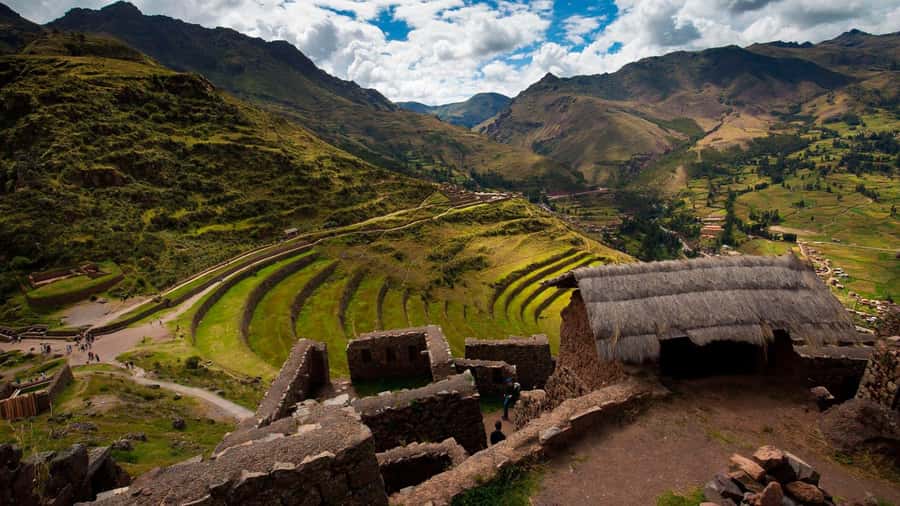
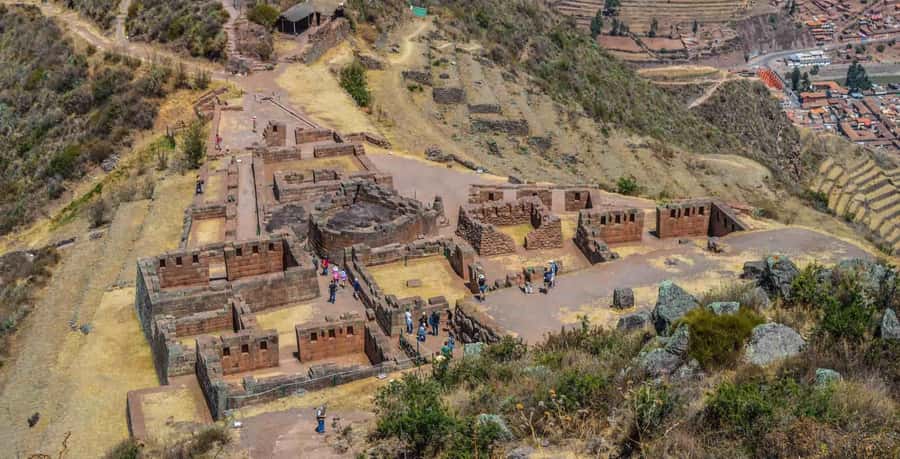
Your guide leads you through the Pisac archaeological park before the group leaves the area. The site is important within the Sacred Valley, and its terraces are central to understanding how the Incas used steep mountain slopes. Terraces were not simply decorative. They helped create usable agricultural ground and show how carefully the Incas adapted to difficult terrain.
The exact amount of time available at the market and ruins can depend on the day’s pace. If browsing is important to you, tell your guide early. The private format should make conversation easier than on a large coach tour, though the overall six-hour limit still applies.
The Taray viewpoint and the Sacred Valley
On the return toward Cusco, the tour stops at Taray Viewpoint. This is one of the strongest photo opportunities of the day because it lets you see the Sacred Valley from above rather than from the road floor.
The view helps put Pisac into context. From this height, the terraces appear in large patterns across the slopes, and you can better appreciate the amount of work required to shape the valley. I find viewpoints like this valuable because ruins can seem small when you stand beside one wall or platform. From Taray, the scale becomes easier to grasp.
Bring your camera, but do not forget to look up from the screen. The tour information warns you to expect changing weather, and the high setting means a hat, sunscreen, and water are sensible choices. Comfortable clothing matters too, since this is an outdoor route with walking at several stops.
Taray is a scenic pause rather than a long visit. That is good for keeping the day moving, but it also means you should not expect a detailed stop with facilities or extended free time. The value lies in the perspective: this is where the Sacred Valley’s terraces and mountain setting make the most visual sense.
Sacsayhuaman and the scale of Inca stonework
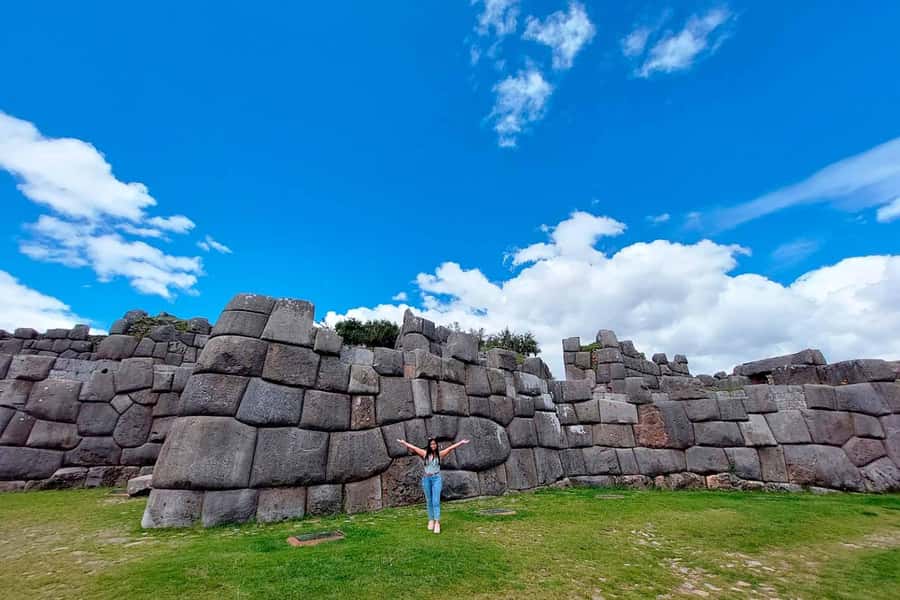
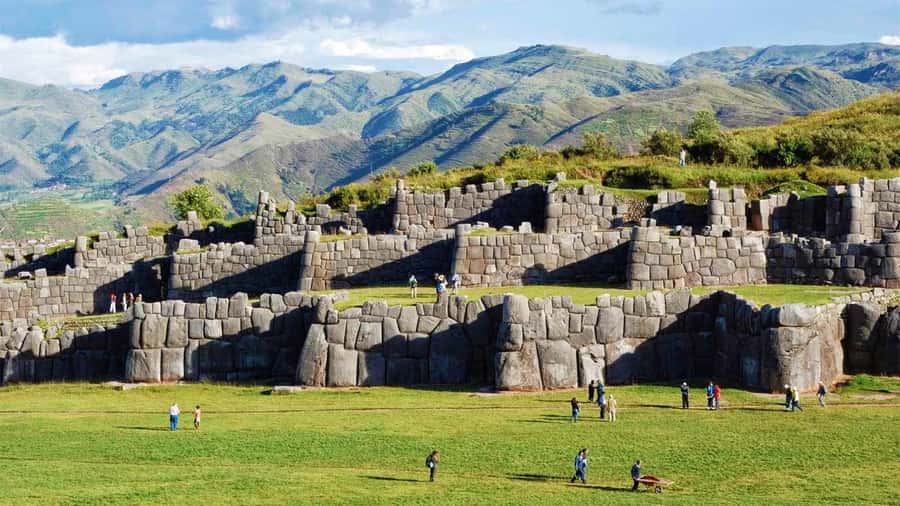
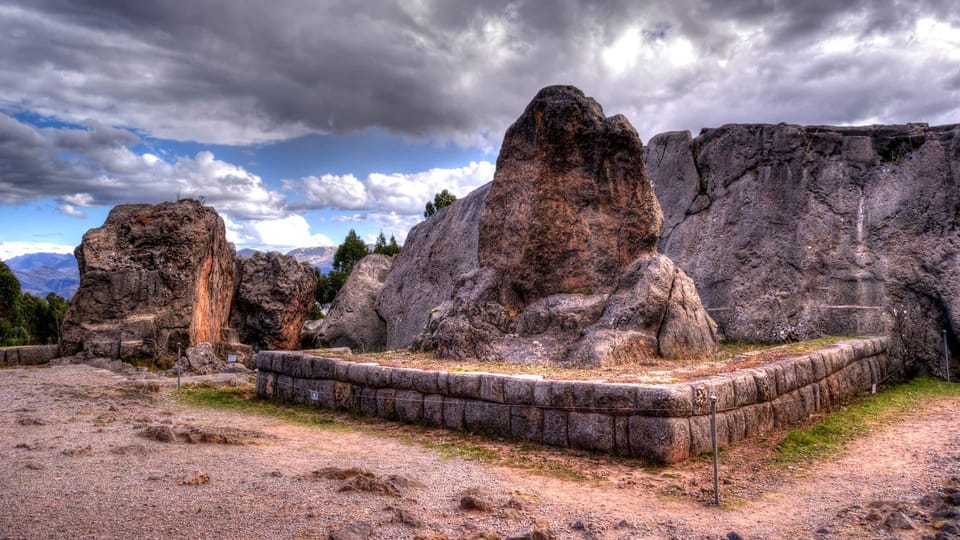
Back near Cusco, the route turns to Sacsayhuaman, a ceremonial fortification made from enormous stone monuments. It is often the most immediately impressive site on this part of the tour, even before your guide explains how the stones were fitted together.
A good guide can help you move beyond the usual claim that the stones are simply huge. Ask about the site’s ceremonial role, its position above Cusco, and the way it relates to the city below. The tour specifically covers Inca history and the Spanish conquest, so you should have a chance to place Sacsayhuaman within that larger story.
The open setting also makes this a stop where the weather matters. Sun can feel strong, while changing conditions may quickly alter your comfort. Wear walking shoes with good support, take water, and use sunscreen even if the morning begins cloudy.
Sacsayhuaman can attract attention because of its scale, but do not let the size of the stones crowd out the wider setting. Look across the site, then toward Cusco. The placement matters as much as the masonry. With only six hours for the full circuit, your guide will need to choose the most useful points rather than explain every corner.
More Ruins & Archaeology Tours in Sacred Valley
- Private Ollantaytambo, Pisac Ruins Tour with Farm Visit, Gourmet Picnic Lunch
★ 5.0 · 52 reviews - Sacred Valley Moray Ruins & Maras Salt Mines Tour From Cusco (Half Day Tour)
★ 5.0 · 24 reviews - From Cuzco: Salt Mines and Moray Ruins ATV Adventure
★ 4.3 · 15 reviews - Full day tour of Sacsayhuaman,Q’enQo, Puka Pukara, and Sacred Valley Tour
★ 5.0 · 10 reviews
Q’enqo and the ritual side of Inca belief
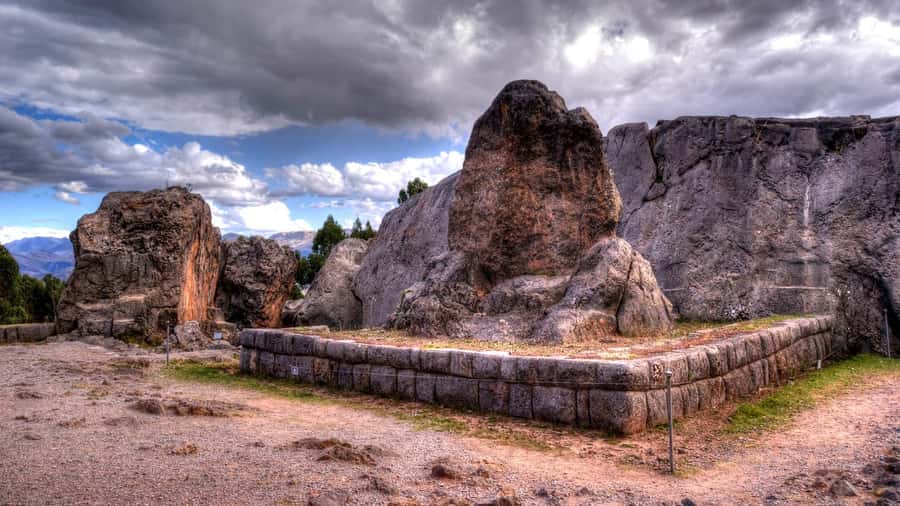
Q’enqo offers a different experience from Sacsayhuaman. It was a ritual site, and the tour explains that sacrifices took place there. The stop shifts your attention from public stone monuments to religious practice and carved spaces.
This is a place where interpretation matters. A short visit without context can leave you looking at rock surfaces without knowing what to notice. A guide who explains the site’s ritual purpose can make the stop far more meaningful. Juan Carlos was praised for answering difficult questions with clear, logical explanations, and that sort of approach is especially useful at a site where the remains may not be as visually obvious as those at Sacsayhuaman.
Q’enqo is also one reason the route suits visitors who want more than scenic stops. You are not just collecting photographs. You are seeing several parts of Inca society: food production at the terraces, ceremony at major stone sites, ritual at Q’enqo, water worship at Tambomachay, and road protection at Puka-Pukara.
Keep your expectations measured. The tour provides an introduction, not a long specialist visit. If religious history is your main interest, use your time with the guide well and ask direct questions.
Tambomachay and the Inca water system
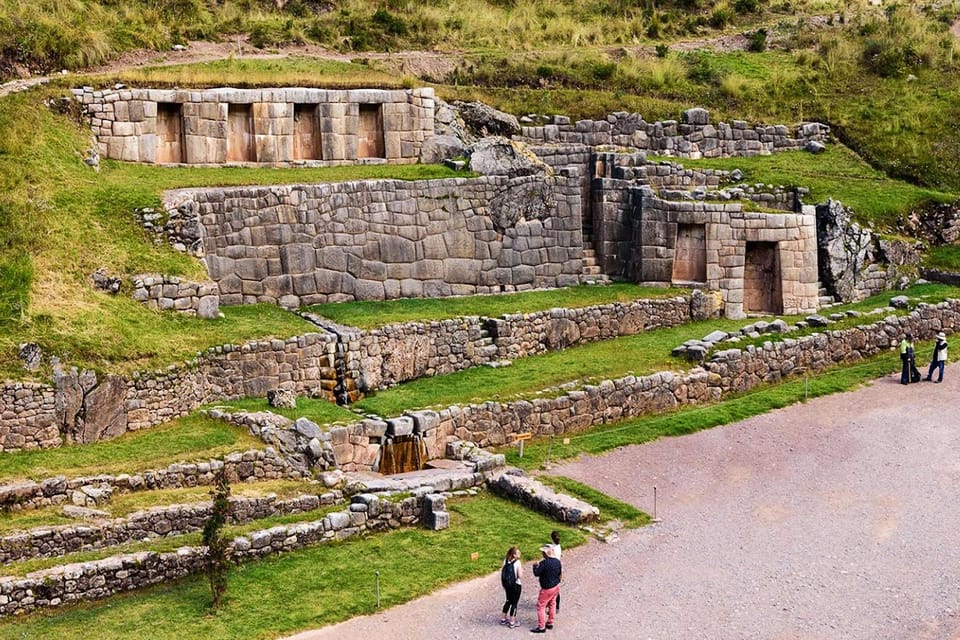
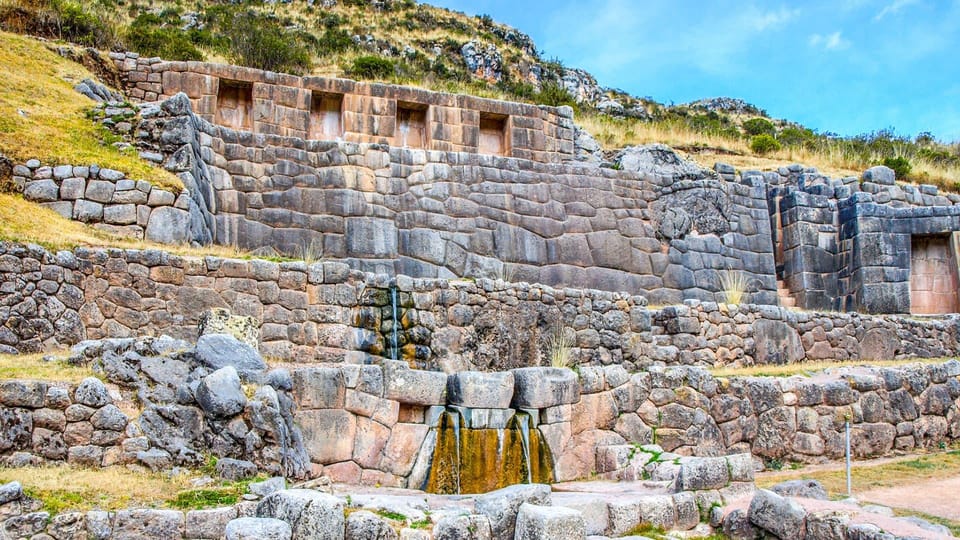
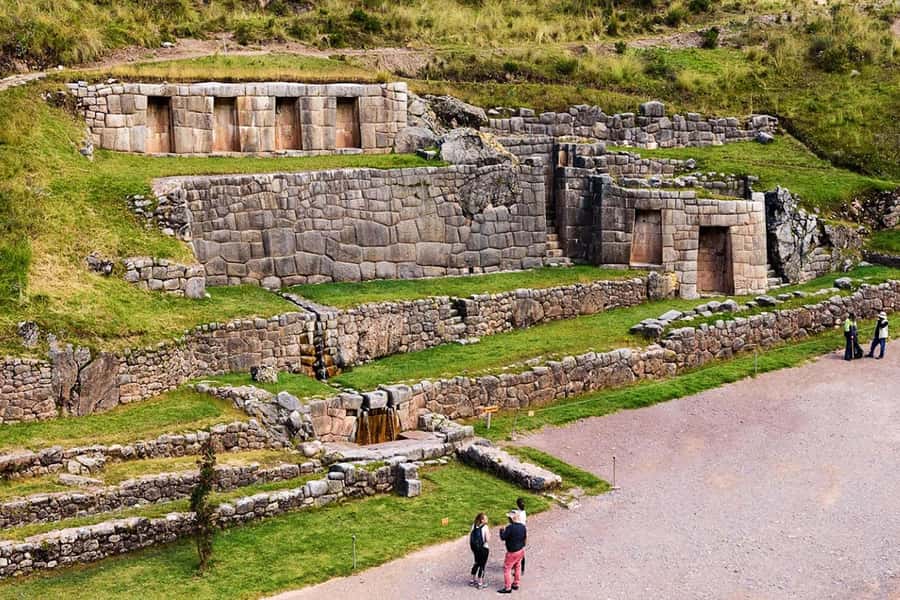
Tambomachay is described as a temple dedicated to the worship of the God of Water. After the broad stones of Sacsayhuaman and the ritual focus of Q’enqo, this stop brings water and sacred design to the front.
The site helps show that Inca planning was not limited to roads and defensive positions. Water had practical and ceremonial value, and Tambomachay gives your guide a chance to explain that connection. I like the way this stop rounds out the day because it adds a different subject instead of repeating the same type of ruin four times.
As with the other archaeological sites, you will be walking outdoors. The tour is not suitable for people with back problems or wheelchair users, so consider your physical comfort before booking. The supplied advice is simple and sound: wear comfortable shoes, bring water, use sunscreen, and carry a hat.
Tambomachay is not a place to rush through while thinking only about the next photo. Look for the water features and listen for how your guide connects them to worship. The quality of the explanation will shape how much you take away from this short stop.
Puka-Pukara from the road
The final archaeological sight is Puka-Pukara, seen from a panoramic viewpoint. It was an ancient tambo, or guard post, along the Inca roads. The name is often associated with the site’s reddish appearance, but the useful point here is its function within the road network.
Puka-Pukara helps connect the other stops. The Incas needed more than impressive ceremonial centers. They also required places linked to movement, supervision, and travel. Seeing the site in relation to the surrounding routes gives you a broader idea of how organized the empire was.
Because the itinerary specifies a panoramic view, do not expect the same close exploration as at Sacsayhuaman or Q’enqo. That is not necessarily a weakness. A roadside viewpoint keeps the final part of the route short and lets you complete the circuit without turning the day into a much longer excursion.
I would pay attention to the guide’s explanation here. A small roadside stop can carry real value when it clarifies how roads, guard posts, and settlements worked together. Without that context, Puka-Pukara may feel like a quick final photograph.
Guides, vehicles, and the private format
The tour is offered in English or Spanish with a live guide. The strongest praise went to the guides themselves. Juan Carlos, a trained archaeologist, was singled out for precise explanations, strong answers, and an ability to shed light on questions that had remained unclear elsewhere. He also recommended an excellent restaurant near Pisac, according to one account, though you should not assume a restaurant stop is guaranteed because it is not listed as part of the formal inclusions.
Jessica received similar praise for being kind, capable, and a good driver and guide. One booking had a vehicle that was not comfortable for four adults, caused by a misunderstanding about the number of people reserved. The lesson is practical: if your party has four adults, confirm that the assigned car or minibus will fit everyone comfortably before departure.
Private group travel gives you more room to ask questions and adjust the conversation. It does not mean the route can expand indefinitely. The tour still lasts six hours, and the guide must balance Pisac, the viewpoint, and four sites near Cusco.
Transport, hotel pickup, and drop-off are included. That saves you from arranging separate taxis between scattered sites. It also makes the tour useful if you have limited time in Cusco or prefer not to negotiate transport for each ruin.
What the US$77 price really covers
The listed price is US$77 per person. That includes hotel pickup and drop-off, transport by car or minibus, and an English or Spanish-speaking guide. The entrance tickets are separate, so foreign visitors should add S/ 70, about US$18.70, and Peruvians should add S/ 40, about US$10.70.
For the foreign visitor, the practical total is therefore about US$95.70 per person before any extra spending. I consider that fair if you value a private vehicle, hotel service, and a guide who can explain the sites well. It is less attractive if you mainly want transport and quick photographs, since the ticket cost raises the final price.
The value improves when you have a small private group and want flexibility in questions. It also improves if this is your only chance to see Pisac and the Cusco ruins. If you are staying in Cusco for several days and prefer very slow visits, separate outings may suit you better, though they would require more planning.
The price includes no food, so budget separately for meals. One guide took a group to a well-regarded restaurant near Pisac, but that should be treated as a possible personal recommendation, not a promised feature.
Who should book this route
I would recommend this tour to first-time visitors who want a strong overview of Inca sites around Cusco and the Sacred Valley. It suits couples, families with comfortable walkers, and small private groups who prefer a guide rather than arranging several taxis.
It is especially useful if you want both culture and scenery. Pisac gives you a market and valley setting, Taray gives you the big view, and the Cusco sites add ceremony, ritual, water worship, and road history.
I would hesitate if you have back problems, use a wheelchair, or dislike outdoor walking. I would also think twice if you want a slow market morning or extended time at each ruin. Six hours is a sensible survey, not an unhurried archaeological day.
Book with your guide preferences in mind. If you care deeply about archaeology, request the most academically trained guide available, though specific guide assignments cannot be guaranteed. And if four adults are in your group, confirm the vehicle before you pay.
FAQ
How long does the tour last?
The tour lasts six hours, including hotel pickup, transport between sites, guided visits, and return to hotels in Cusco.
What sites are included?
The route includes Pisac town and market, the Pisac archaeological park, Taray Viewpoint, Sacsayhuaman, Q’enqo, Tambomachay, and a panoramic view of Puka-Pukara.
Are entrance tickets included?
No. Archaeological admission costs S/ 70, about US$18.70, per foreign visitor and S/ 40, about US$10.70, per Peruvian visitor.
Is hotel pickup included?
Yes. Pickup and drop-off are included for hotels within Cusco’s historic center. If your hotel is farther away, a meeting point will be arranged in advance.
What languages are available?
The live guide is available in English or Spanish.
Is this a private tour?
Yes. The activity is described as a private group tour.
What should I bring?
Bring comfortable shoes, a hat, sunscreen, water, and a camera. You should also wear clothing suitable for walking and changing weather.
Is the tour suitable for wheelchair users?
No. The tour is not suitable for wheelchair users or people with back problems.
Should you book this Pisac and Cusco ruins tour?
Book it if you want an efficient private introduction to the Sacred Valley and Cusco’s main nearby ruins, especially if you value strong guiding. The route covers a lot in six hours, and the best guide can turn each stop from a quick look into a connected story about farming, ceremony, water, roads, and conquest.
Skip it if you need a slow pace, have mobility concerns, or want to spend most of the day shopping in Pisac. Before booking, add the separate entrance fee to your budget and confirm the vehicle size for your group. With those details settled, this is a practical, well-balanced way to see several major Inca sites without arranging the transport yourself.
More Sacred Valley Days Out
- From Cusco: Moray, Maras Salt Mines & Chinchero Weavers Tour
★ 4.8 · 1,925 reviews - 2-Day Tour: Sacred Valley and Machu Picchu by Train
★ 5.0 · 1,127 reviews - Cusco: Sacred Valley, Pisac, Ollantaytambo, Salt Mines Moray
★ 4.6 · 1,058 reviews - Cusco:Chinchero,Moray & Salt Mines drop-off in Ollantaytambo
★ 4.8 · 793 reviews
More Ruins and Archaeology near Cusco
- Cusco: City Tour | Half-Day Tour to 4 Archaeological Sites
★ 4.6 · 206 reviews - Cusco City Sightseeing and Sacsayhuaman Archeological Park Tour
★ 4.5 · 101 reviews - Cusco: Historical Guided City Tour with 4 Inca Ruins
★ 4.5 · 99 reviews - Cusco 4-Hour Private Tour Including Sacsayhuaman and Qenqo
★ 5.0 · 77 reviews
Added recently around Cusco
- Guided tour of the mountain of colors in Cusco★ 5.0 · 11 reviews
- 2-Day Private Short Inca Trail to Machu Picchu★ 5.0 · 15 reviews
- City Tour Cusco – Group★ 5.0 · 4 reviews
- Tour Sacred Valley with Maras and Moray★ 5.0 · 15 reviews
- San Pedro Market Tour with Peruvian Cooking Class★ 5.0 · 31 reviews
- Walking Culinary Experience★ 5.0 · 41 reviews
- City Tour in Cusco★ 4.5 · 10 reviews
- One Day Tour to Humantay Lagoon★ 5.0 · 8 reviews
Sacred Valley Tours, compared.
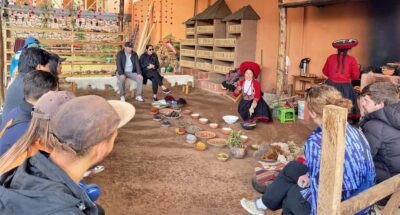
Sacred Valley & Maras Salt Mines Tour with Lunch
Read our review →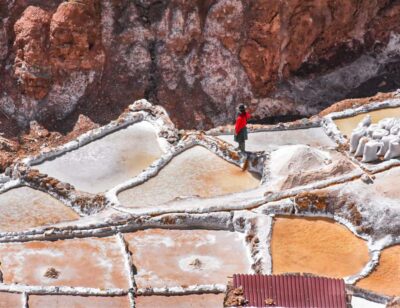
Moray, Maras Salt Mines & Chinchero Weavers Tour
Read our review →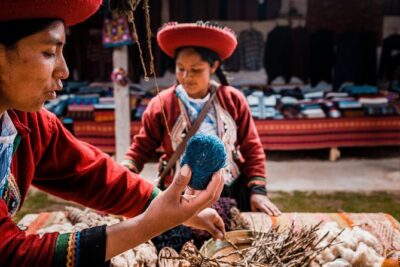
2-Day Tour: Sacred Valley and Machu Picchu by Train
Read our review →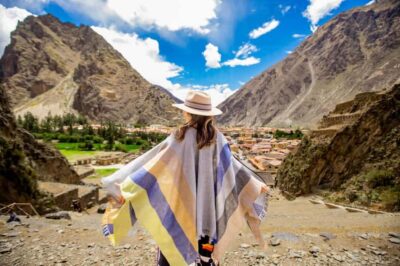
Sacred Valley, Pisac, Ollantaytambo, Salt Mines Moray
Read our review →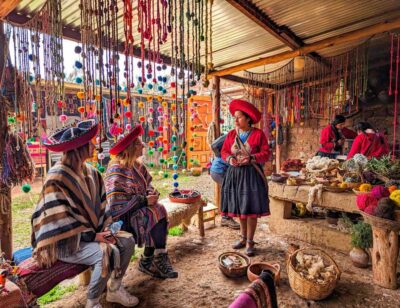
Chinchero,Moray & Salt Mines drop-off in Ollantaytambo
Read our review →
Sacred Valley and Maras Moray Tour with Full Day Buffet Lunch
Read our review →

Browse the lists this tour appears in